• KZT/USD = 0.00210
  • TJS/USD = 0.10810
  • UZS/USD = 0.00008
  • TMT/USD = 0.29850
  • KZT/USD = 0.00210
  • TJS/USD = 0.10810
  • UZS/USD = 0.00008
  • TMT/USD = 0.29850
  • KZT/USD = 0.00210
  • TJS/USD = 0.10810
  • UZS/USD = 0.00008
  • TMT/USD = 0.29850
  • KZT/USD = 0.00210
  • TJS/USD = 0.10810
  • UZS/USD = 0.00008
  • TMT/USD = 0.29850
  • KZT/USD = 0.00210
  • TJS/USD = 0.10810
  • UZS/USD = 0.00008
  • TMT/USD = 0.29850
  • KZT/USD = 0.00210
  • TJS/USD = 0.10810
  • UZS/USD = 0.00008
  • TMT/USD = 0.29850
  • KZT/USD = 0.00210
  • TJS/USD = 0.10810
  • UZS/USD = 0.00008
  • TMT/USD = 0.29850
  • KZT/USD = 0.00210
  • TJS/USD = 0.10810
  • UZS/USD = 0.00008
  • TMT/USD = 0.29850

Viewing results 1 - 6 of 95

Uzbekistan: a new model for reform in the Muslim world?

TASHKENT (TCA) — The economic and political reforms going on in Uzbekistan are changing the geopolitical landscape in Central Asia, which requires new policy attitudes to the region from the world’s leading powers. We are republishing this article on the issue, written by S. Frederick Starr and Svante E. Cornell*, originally published by the CACI Analyst: Continue reading

Tajikistan man sentenced to nearly 10 years for sharing banned party videos

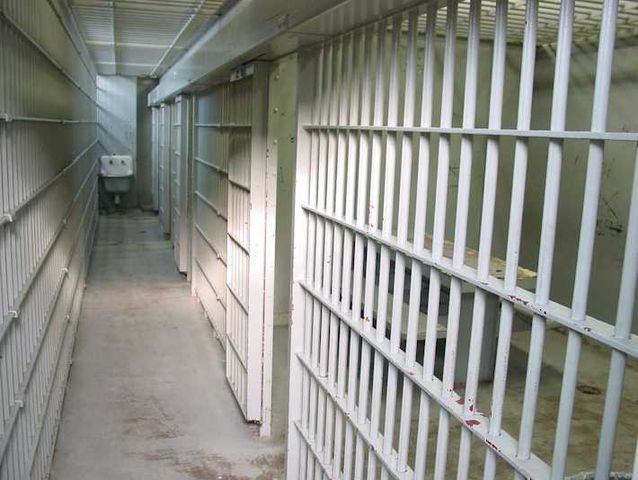
DUSHANBE (TCA) — A Tajik man has been sentenced to 9 1/2 years in prison for watching, liking, and sharing videos of a banned Islamic Party’s gatherings abroad, RFE/RL's Tajik Service reports. Continue reading

Uzbek government eases restrictions on Muslims

TASHKENT (TCA) — Under the previous president, Uzbekistan pursued restrictive and suppressive policies toward Muslims and used the fight against Islamist extremism as a pretext to suppress any dissent and opposition. Under the new head of state, things have begun to change. We are republishing this article on the issue by Fozil Mashrab, originally published by The Jamestown Foundation’s Eurasia Daily Monitor: This year, Uzbekistan is organizing its first ever nation-wide al-Quran reciters competition (Muslim.uz, December 22, 2017). Perhaps this kind of competition would be a run-of-the-mill event in any other Muslim majority country; but for Uzbekistan, which is trying to unshackle itself from the repressive policies of the past, it signals a major change in the government’s policy and carries a special meaning for the majority of its Muslim citizens (see EDM, February 27, 2018). Under the late Islam Karimov, the first president of Uzbekistan, who ruled with an iron fist for more than 25 years until his sudden death in September 2016, the country had a reputation for restrictive and suppressive policies toward the pious segments of its Muslim population. Harrowing stories abound of overtly religious Muslims being blacklisted as antisocial elements, jailed for choosing to wear a hijab or growing a beard, or undergoing even worse for having publicly complained about the state’s restrictions on their constitutional rights to freely practice their religion (Fergananews.com, August 8, 2002). Karimov, who is officially portrayed as the founder of Uzbekistan’s independence and is revered by state propaganda (Islomkarimov.uz, accessed April 12, 2018), had a complicated relationship with Islam throughout his time in power. He was suspicious of Islamic clerics, especially those who refused to follow his will. In fact, many accused his government of using the threat of Islamic radicalism and extremism as a convenient pretext to suppress all kinds of opposition in the country (Aljazeera.com, January 8, 2016). Over the years, all famous Muslim clerics with large followings inside the country were either jailed, eliminated or had to flee. Official propaganda still defends Islam Karimov’s record and heavy-handed tactics by highlighting the difficult domestic political situation in the country in the early years of independence. Moreover, the state narrative credits him for not allowing Uzbekistan to fall into chaos like in neighboring Tajikistan in the 1990s, where a civil war broke out between the United Islamic Opposition and Soviet-era secularist elites. Nevertheless, Uzbekistan’s current head of state, President Shavkat Mirziyoyev, who has gained the reputation of a reformer, has likened the various injustices and sufferings unleashed by the Uzbekistani law enforcement bodies toward their own people under Karimov’s rule to Soviet NKVD repressions of the 1930s. He has vowed that, under his watch, they will not be repeated (YouTube, December 25, 2017). Many senior officials and generals of the penitentiary system, the National Security Service (NSS) of Uzbekistan, and the Attorney General’s Office, who were responsible for creating the repressive state machinery, are now on trial. They face charges of jailing innocent people, subjecting inmates to torture and killings,...

Kyrgyzstan: Islamist couple jailed for not allowing children to attend school

BISHKEK (TCA) — A Kyrgyz court has handed down prison terms to a couple convicted of preventing its children to attend school, RFE/RL's Kyrgyz Service reports. Continue reading

For Tajikistan’s asylum seekers, Poland is a dead end

DUSHANBE (TCA) — The ban of the Islamic Renaissance Party of Tajikistan and subsequent persecution of the opposition party activists by Tajik authorities has forced many of them to seek political asylum in the European Union, where they often get unwelcome reception. We are republishing this article on the issue by Agnieszka Pikulicka-Wilczewska, originally published by Eurasianet: Kalandar Sadurdinov, a 70-year-old from Tajikistan, is one of thousands wanted back home for his opposition activism. He spends much of his time these days getting treatment for an array of ailments, ranging from liver trouble to brain damage. His wife and six children wait for him at the refugee facility in Biała Podlaska, on the far eastern edge of Poland, where the whole family now lives. And earlier this month, Polish authorities informed Sadurdinov, who is worn down by months of bureaucratic wrangling and has trouble speaking and can barely walk, that they have rejected his application for asylum. Sadurdinov is among a growing number of Tajik political refugees to find Poland an unwelcoming haven. He arrived in September 2017 through a border crossing near the Belarusian city of Brest. That crossing presents a natural approach point for Tajiks making their way across Russia and Belarus toward the relative safety of the European Union. Remaining in Russia, or even traveling to other once-secure locations like Turkey, leaves political figures open to murder and assaults at the hands of agents for the Tajik government. In some instances, governments in those countries have actively abetted Tajikistan in effecting extralegal extraditions – kidnapping, to all intents and purposes. The wave of Tajik flight began in the fall of 2015, when Tajikistan summarily banned the Islamic Renaissance Party, or IRPT. The existence of the opposition group had long been warily tolerated, but President Emomali Rahmon’s regime brought that to an end with a spate of arrests and the decision to dub the IRPT a terrorist organization. No country in the West endorses that decision, which is almost universally accepted as being politically motivated. In 2016, 882 Tajiks applied for asylum in Poland. With the exodus having attenuated, the number of applications is falling. Last year, only 154 Tajiks formally sought haven in the country. The number of rejections, meanwhile, is rising. According to the Office for Foreigners, 153 Tajik citizens were denied asylum last year. That number was 109 in 2016. Fleeing Poland Around 100 or so IRPT members have received asylum in Poland. Another 25 cases are pending review following initial rejections. Prolonged waiting generates anxiety. Fear of potential deportation to Tajikistan, where IRPT members face imprisonment and possible torture, compels many to try their luck in other EU nations like Germany, Austria and France, before they complete the asylum-seeking procedure in Poland. It isn’t just the specter of deportation that informs this strategy. “In other countries, like Germany, France and Austria, there are more migrants, people are used to different cultures and asylum seekers can meet people from their countries,” Muhamadjon Kabirov, an IRPT...

Tajikistan’s Islamist extremists concentrated in big cities at home and in Russia

DUSHANBE (TCA) — As Tajikistan is facing the threat of growing Islamist extremism, the government needs to understand that poverty, unemployment, and religious illiteracy are among the main causes of this phenomenon, and to develop a strategy to counter the threat. We are republishing this article on the issue by Paul Goble, originally published by The Jamestown Foundation’s Eurasia Daily Monitor: Despite popular misperceptions of religiosity in general and Islam in particular flourishing most strongly in poor rural areas, the Islamist revival of the last 30 years has been primarily an urban phenomenon. This has been the result of the loss of familial ties by those who moved from villages into the rapidly growing cities as well as the communication revolution, which has allowed Islamist activists to reach the new urbanites. That is what happened in Iran and in the countries affected by the Arab Spring. And it is now occurring in Central Asia—and nowhere more than in Tajikistan, the most Islamic, and one can also say Islamist, country in that region (see EDM, February 6). The rise of Salafists and Wahhabists in major Tajikistani cities and among Tajik diasporas in Russian cities like Moscow have long been a concern for officials in Dushanbe, who fear that these movements could link up with other forces, domestic and foreign, to produce an Islamist revolution. The authorities have, thus, tried to prevent these trends from overwhelming traditional Tajik Islam. Most of their methods have proved counterproductive—be they closing down rural mosques or calling home some 6,000 Tajikistanis studying in madrassahs abroad but not providing them with jobs on their return (News.tj, November 3, 2017; see EDM, February 6, 2018). As a result, the situation has reached critical mass, and an Islamist explosion in Tajikistan’s cities is increasingly likely. Two Tajikistani experts, Khokim Mukhabbatov and Mavdzhigul Ibadullayeva of the Muslims Against Narcotics, Extremism, Force and Terrorism, describe in some detail how that precarious situation came about (Islamio.ru, February 23). They note that Salafism or Wahhabism, as this trend is usually referred to in Tajikistan, arrived there already in the 1980s, as a result of the Iranian revolution and the war in Afghanistan. From the beginning, most of the Salafists and Wahhabists there were young men between the ages of 18 and 30 who had left their villages for the cities or for work in the Russian Federation. Lacking the stability their families and the local rural mullahs provided, they were prime candidates for recruitment by Salafists from abroad. That is still the case today. And the size of this cohort has increased as the cities have swelled in size and the number of Tajiks who have worked in Russian cities has risen over the last 15 years. These young people, the two experts say, have had their religious worldview formed not by imams and mullahs in their villages but by Internet sites that appealed to them as Muslims rather than as villagers or Tajiks. It was only a short step from there for...