• KZT/USD = 0.00210
  • TJS/USD = 0.10810
  • UZS/USD = 0.00008
  • TMT/USD = 0.29850
  • KZT/USD = 0.00210
  • TJS/USD = 0.10810
  • UZS/USD = 0.00008
  • TMT/USD = 0.29850
  • KZT/USD = 0.00210
  • TJS/USD = 0.10810
  • UZS/USD = 0.00008
  • TMT/USD = 0.29850
  • KZT/USD = 0.00210
  • TJS/USD = 0.10810
  • UZS/USD = 0.00008
  • TMT/USD = 0.29850
  • KZT/USD = 0.00210
  • TJS/USD = 0.10810
  • UZS/USD = 0.00008
  • TMT/USD = 0.29850
  • KZT/USD = 0.00210
  • TJS/USD = 0.10810
  • UZS/USD = 0.00008
  • TMT/USD = 0.29850
  • KZT/USD = 0.00210
  • TJS/USD = 0.10810
  • UZS/USD = 0.00008
  • TMT/USD = 0.29850
  • KZT/USD = 0.00210
  • TJS/USD = 0.10810
  • UZS/USD = 0.00008
  • TMT/USD = 0.29850

Viewing results 1 - 6 of 95

Central Asian terrorist groups join jihad against U.S. after declaration of Jerusalem as Israel’s capital

BISHKEK (TCA) — The Jerusalem problem is very sensitive to Muslims, Christians and Jews alike, and governments in the Middle East and the United States need to avoid steps that may escalate the problem and lead to a new wave of terrorism. We are republishing this article on the issue by Uran Botobekov*, originally published by the CACI Analyst: Continue reading

Kazakhstan steps up campaign against ultra-Orthodox Islam

ASTANA (TCA) — Authorities in Kazakhstan are trying to increase control over Islam in an effort to prevent radicalism, but hardline measures may prove counterproductive. We are republishing this article on the issue by Almaz Kumenov, originally published by Eurasianet: Continue reading

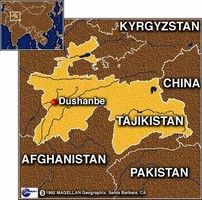
Tajikistan, most Muslim country in Central Asia, struggles to rein in Islam

DUSHANBE (TCA) — Authorities in Tajikistan are trying to exercise tight control of Islam in the impoverished country, but such steps may have an opposite effect — radicalizing Muslims that are being driven underground. We are republishing this article by Paul Goble on the issue, originally published by The Jamestown Foundation’s Eurasia Daily Monitor: In the last month alone, local authorities closed almost 100 mosques in the northern part of Tajikistan, the latest effort by Dushanbe to control Islam in the most fervently Muslim country in Central Asia. Yet, this campaign is exceedingly likely to backfire by driving both imams who have lost their jobs as well as their former parishioners and followers to go underground. Indeed, this move may be at least as counterproductive as Dushanbe’s decision two years ago to call home the 6,000 Tajikistani Muslims studying in madrassas (Muslim religious schools) and Islamic universities abroad and then refusing to allow them to work in government-registered mosques. And that entire situation was further exacerbated by the fact that the government has restricted higher Islamic education inside the country to a single Muslim center. By systematically going after mosques and places of Islamic study, Dushanbe is in large measure recapitulating the unsuccessful Soviet approach, dramatically expanding the Muslim underground in the most Muslim country in Central Asia. As a result, at least some of those Muslim faithful pushed to the shadows could ultimately link up with Islamist radicals coming into the country from Afghanistan, destabilizing the impoverished country still further. If that happens—and there is some evidence that it already is (see below)—the government in Dushanbe and those who want to block the export of Islamist radicalism from Afghanistan are likely to suffer a major defeat and possibly even the overthrow of the secular regime in Tajikistan. In large measure, they will have only themselves to blame for such a loss. At the end of January, officials in the Tajikistani city of Isfara (Sughd Region) announced that they had closed 45 mosques for failing to maintain “sanitary norms.” Apparently, these former places of worship will be converted into clubs and other social institutions (News.tj, January 25). Then, officials in the neighboring Ghafurov District announced that they were closing 45 mosques supposedly because some of them were built too close together—Tajikistani law bans having two religious facilities within 50 meters of one another—and transforming them into social centers as well (News.tj, January 30). Officials insist that a sufficient number of mosques will remain open. In the case of the latter closings, the Ghafurov District, which has 360,000 residents, will still have 136 mosques—one for every 2,700 people (Fergananews.com, January 30). The authorities claim there are “about 4,000” officially registered mosques throughout Tajikistan, of which 370 are so-called “cathedral mosques” of significant size. Moreover, according to the government, that there are some 3,914 imams, or one for every 2,210 people in the country, making Tajikistan the most Islamic state in Central Asia by either of these measures (Fergananews.com, November 2, 2017)....

Tajikistan: banned Islamic party leader on trial in absentia

DUSHANBE (TCA) — The Supreme Court of Tajikistan has put the leader of the banned Islamic Renaissance Party of Tajikistan (IRPT) on trial in absentia, RFE/RL's Tajik Service reports. Continue reading

Tajikistan: is Islamic banking the future?

DUSHANBE (TCA) — In Tajikistan, the country with a troubled banking sector and four large banks failing to meet their commitments to the customers, Islamic finance may become an effective alternative to traditional banking services. We are republishing this article on the issue, originally published by Eurasianet: Many of Tajikistan’s traditional banks are wobbling due to years of chronic mismanagement. Their troubles are creating a space for up-and-coming Islamic lenders to flourish. In 2014, the same year that the government adopted legislation regulating Islamic finance, Alif Capital opened its doors, becoming the first company in the country to offer banking services on strictly Islamic principles. Billboards sprung up around the capital, Dushanbe, advertising six-month, interest free loans for consumer purchases — quite a novelty at the time. “We do not provide our services with the aim of Sharia compliance for the sake of marketing or capturing some ‘unmet demand’ or some ‘niche,’” Abdullo Kurbonov, the head of Alif Capital, told Eurasianet.org in an email. “We provide our services in a Sharia-compliant manner — as much as possible under existing regulations — because of our personal stance, our own personal principles.” In broad terms, Islamic banking is predicated on the notion that using money purely to make more money is sinful. Accordingly, speculation and interest are forbidden. That gives rise to multiple alternative products, such musharaka, where the lender enters a partnership with the client and thereby makes a profit out of the business rather than just earning interest. With mudarabah, the lending institution acts as a silent partner providing all the funds. The returns are typically split down the middle. Businesses that source credit in these ways are not permitted to invest in sectors deemed haram, such as the manufacture of alcoholic goods or gambling establishments. If the government has been tentative in its support of the emerging Islamic banking sector, there appears to be more enthusiasm among the general population. In her research on the prospects for Islamic micro-finance institutions in Tajikistan, Manijeh Sabi, a scholar at The Sage Colleges, found that while many people were not wholly certain what exact services and conditions Islamic lenders might offer, most are generally positive about the concept in the abstract. “Tajik respondents reported that the reason for their preference was strong religious obligation,” Sabi wrote in her 2016 paper “Awareness and perceptions of Islamic microfinance among microfinance clients in Kyrgyzstan and Tajikistan.” Some of the distinctions between traditional and Islamic banking are arguably technical. On the consumer loan front, banks like Alif Capital assist their customers by dealing directly with retailers and paying for items — be it household appliances or cars — in full and upfront. The customer then pays back the bank in installments. The bank earns its cut by receiving a commission from the retailer. Deposits are notionally considered an investment, not simply a fund that exists to earn interest for clients. Mehurbon Burhonov, an expert on Islamic financing, told Eurasianet that the fact that creditors typically do...

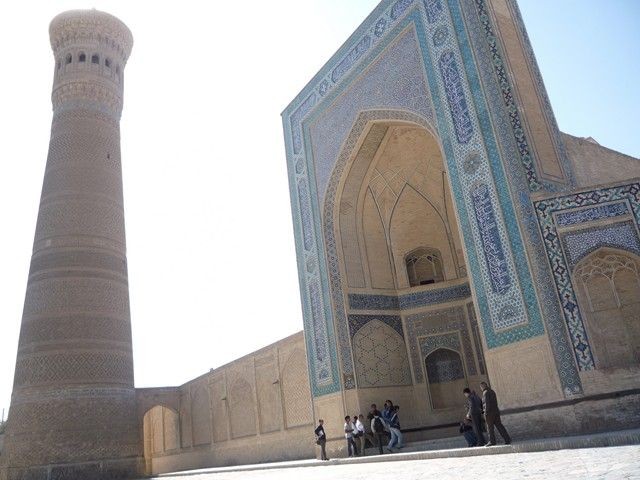
Uzbekistan to build small mosques to attract tourists from Muslim countries

TASHKENT (TCA) — Authorities in Uzbekistan plan to build numerous small mosques along roads and streets across the Central Asian country of 30 million, RFE/RL's Uzbek Service reports. Continue reading