• KGS/USD = 0.01143 -0%
  • KZT/USD = 0.00191 0%
  • TJS/USD = 0.10833 0.28%
  • UZS/USD = 0.00008 0%
  • TMT/USD = 0.28575 0%
  • KGS/USD = 0.01143 -0%
  • KZT/USD = 0.00191 0%
  • TJS/USD = 0.10833 0.28%
  • UZS/USD = 0.00008 0%
  • TMT/USD = 0.28575 0%
  • KGS/USD = 0.01143 -0%
  • KZT/USD = 0.00191 0%
  • TJS/USD = 0.10833 0.28%
  • UZS/USD = 0.00008 0%
  • TMT/USD = 0.28575 0%
  • KGS/USD = 0.01143 -0%
  • KZT/USD = 0.00191 0%
  • TJS/USD = 0.10833 0.28%
  • UZS/USD = 0.00008 0%
  • TMT/USD = 0.28575 0%
  • KGS/USD = 0.01143 -0%
  • KZT/USD = 0.00191 0%
  • TJS/USD = 0.10833 0.28%
  • UZS/USD = 0.00008 0%
  • TMT/USD = 0.28575 0%
  • KGS/USD = 0.01143 -0%
  • KZT/USD = 0.00191 0%
  • TJS/USD = 0.10833 0.28%
  • UZS/USD = 0.00008 0%
  • TMT/USD = 0.28575 0%
  • KGS/USD = 0.01143 -0%
  • KZT/USD = 0.00191 0%
  • TJS/USD = 0.10833 0.28%
  • UZS/USD = 0.00008 0%
  • TMT/USD = 0.28575 0%
  • KGS/USD = 0.01143 -0%
  • KZT/USD = 0.00191 0%
  • TJS/USD = 0.10833 0.28%
  • UZS/USD = 0.00008 0%
  • TMT/USD = 0.28575 0%
09 November 2025

Viewing results 1 - 6 of 14

Kazakhstan Boosts Animal Feed Exports to China

Kazakhstan has significantly increased its exports of compound animal feed to China, even as shipments of unprocessed grain have declined, according to Kazakhstan Temir Zholy (KTZ), the national railway operator. The shift in export dynamics is attributed to China’s record 700-million-ton grain harvest in 2025. In response to domestic supply, the Chinese authorities have tightened grain import regulations and introduced customs restrictions. As a result, Kazakhstan’s grain export structure has shifted toward processed goods with higher added value, most notably, compound animal feed. Animal feed is in high demand within China’s livestock sector and receives priority clearance at border checkpoints. This preferential treatment has contributed to a notable surge in Kazakh feed exports. During the first two months of the current marketing year (September-October 2025), KTZ transported 873,000 tons of grain for export, including 672,000 tons of animal feed, a 3.5-fold increase compared to the same period last year. Overall grain exports to China, however, rose 35% year-on-year to 3.5 million tons between January and October 2025, reflecting a shift toward higher-value processed goods rather than bulk grain. According to the Ministry of Agriculture, Kazakhstan continues to export most of its grain to countries across Central Asia and the Caucasus, including Uzbekistan, Tajikistan, Kyrgyzstan, Afghanistan, Turkmenistan, and Azerbaijan.

Central Asia’s Rail Corridors: U.S. and Chinese Partnerships in Perspective

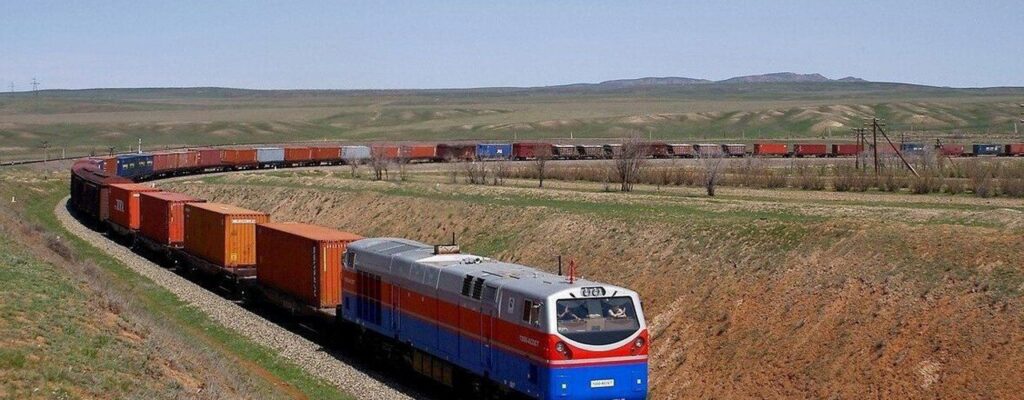
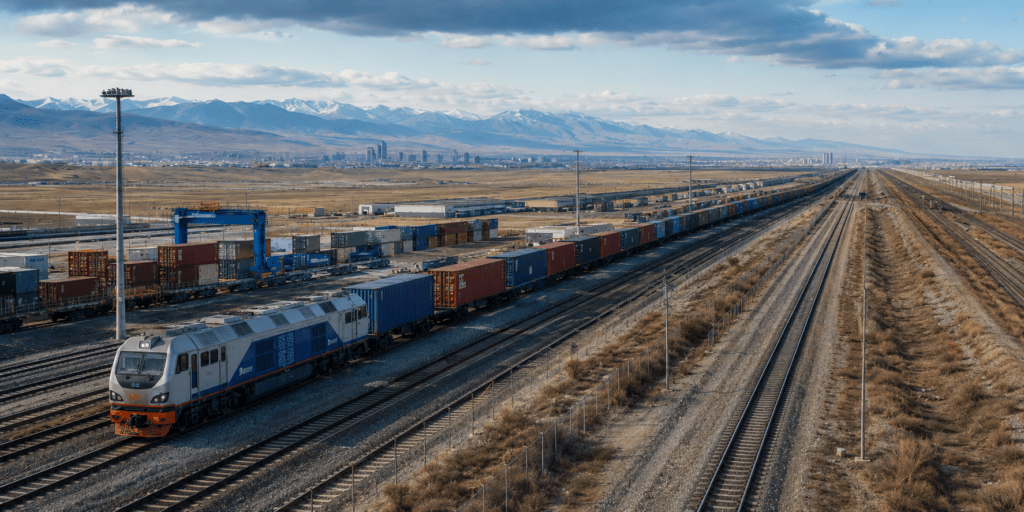
Kazakhstan’s railways are modernizing with a U.S. supplier, while Kyrgyzstan and Uzbekistan are advancing a new trans‑mountain link with China. On September 22, 2025, Wabtec and KTZ announced a multi‑year locomotive and services package worth about $4.2 billion, described by the company as its “largest” agreement. In parallel, China, Kyrgyzstan, and Uzbekistan formalized a joint company to build the long-planned CKU railway, with China holding a 51% stake. Central Asia’s rail networks are thus being reshaped by two major partnerships - one with the United States and one with China. Rather than a zero-sum rivalry, these projects show how regional governments are pursuing different infrastructure strategies to expand connectivity. Kazakhstan and Wabtec: Modernizing an Existing Network In September 2025, Kazakhstan’s railway operator KTZ signed a $4.2 billion agreement with U.S.-based Wabtec for 300 Evolution Series ES44ACi locomotives. The diesel-electric engines are tailored for Kazakhstan’s 1,520 mm gauge network and harsh climate, replacing aging Soviet-era stock. Wabtec finalized full ownership of the Astana locomotive plant in late 2023; production and services for 1,520-mm stock are now fully under Wabtec’s Kazakhstan subsidiary. Local manufacturing and long-term service contracts are expected to expand domestic engineering capacity. The locomotives’ digital diagnostic systems should improve fuel efficiency and maintenance intervals. According to the official Wabtec press release, the agreement “strengthens KTZ’s role as a critical and reliable hub for the Middle Corridor,” while KTZ CEO Talgat Aldybergenov said it “confirms our commitment to advanced technologies in the transport sector”. Rail accounts for about 64% of Kazakhstan’s freight turnover (2024), so locomotive performance directly affects Middle Corridor throughput. Financing details have not been disclosed, but the purchase appears to be domestically funded through KTZ and state support. For Astana, the order fits its multi-vector foreign-policy approach: Kazakhstan continues its partnerships with France’s Alstom, China’s CRRC, and Russia, maintaining balance across suppliers. While the locomotives are diesel, Kazakhstan is also electrifying key lines with European partners. Diesels provide an immediate boost without new catenary investment, and Wabtec claims lower emissions than previous models. Over time, expanded electrification could complement this upgrade. Overall, the Wabtec partnership represents incremental modernization. This is an interoperability-based approach that strengthens existing routes rather than building new corridors from scratch. [caption id="attachment_37655" align="aligncenter" width="950"] Image: trains.com - One of Kazakhstan’s modern Evolution Series diesel locomotives (model TE33A) produced through a partnership with U.S. firm Wabtec. Kazakhstan’s railways carry about 64% of the country’s freight, making such upgrades crucial for trade connectivity.[/caption] The China–Kyrgyzstan–Uzbekistan (CKU) Railway: Building a New Corridor After nearly three decades of discussion, China, Kyrgyzstan, and Uzbekistan launched construction of the CKU railway in late 2024. The 523 km line will run from Kashgar (Xinjiang) through the Kyrgyz mountain ranges to Andijan, Uzbekistan. It will provide a second direct China–Central Asia connection, bypassing reliance on Kazakhstan’s network. The CKU is designed with dual gauges: standard (1,435 mm) in China and broad (1,520 mm) in Kyrgyzstan and Uzbekistan, with a dry-port transshipment hub in Makmal, Kyrgyzstan. This compromise allows integration with existing Central...

Kazakhstan Bets on U.S. Technology to Modernize Railways

Kazakhstan’s railways are not just about moving freight - they are about positioning the country at the heart of Eurasia’s transport map. In a region where China’s Belt and Road, Russia’s transit corridors, and Europe’s markets converge, rail infrastructure has become a strategic asset. Against this backdrop, Kazakhstan Temir Zholy (KTZ) has signed a landmark $4.2 billion agreement with U.S.-based Wabtec for the supply of 300 TE33A locomotives and the maintenance of both existing and newly acquired rolling stock. The deal, which includes the construction of social infrastructure in regions where service centers are located, is one of the largest in the history of Kazakhstan’s rail sector, underscoring Astana’s ambition to cement its role as a key Eurasian logistics hub. To explore the agreement’s significance and the implications for Kazakhstan’s rail sector, The Times of Central Asia spoke with Asan Umbetov, Deputy General Director for Locomotive Operations at KTZ-Freight Transportation. TCA: What does this agreement mean for Kazakhstan’s railway sector? Umbetov: Kazakhstan is increasingly positioning itself as a key transport and logistics hub in Eurasia, with freight volumes having multiplied in recent years. To remain competitive, we need a modern and reliable locomotive fleet. Many of our diesel locomotives from the 1970s and 1980s are nearing the end of their service life. The TE33A series offers clear advantages: reduced fuel consumption, lower maintenance costs, operational readiness of up to 95%, enhanced traction, and resilience in extreme weather. They also improve working conditions for crews, featuring air conditioning, refrigerators, and onboard sanitation. This investment supports not only transport efficiency but also job creation, increased tax revenue, and the growth of adjacent industries, such as maintenance, warehousing, and logistics. In essence, modernizing our locomotive fleet is an investment in Kazakhstan’s broader economic and strategic positioning in Eurasian freight transport. TCA: How would you assess KTZ’s cooperation with Wabtec to date? Umbetov: Wabtec brings over a century of global experience and has operated in Kazakhstan for more than 27 years. Initially focused on modernizing 2Т10МК locomotives, the company launched the Locomotive Assembly Plant (LAP) in Astana in 2009. Today, the plant is staffed entirely by Kazakh citizens, including its management, and manufactures freight, passenger, and shunting locomotives certified under Eurasian Customs Union standards. In 2024, Wabtec opened an engineering center at LAP to provide technical expertise across the CIS. Its specialists will also participate in the development of the new TE33A series. Wabtec’s Astana Diesel Service plant handles major overhauls of Evolution-series diesel engines and other components, while seven service centers across Kazakhstan ensure ongoing maintenance. The company also supports the Bolashak program, offering paid internships for Kazakh students at its U.S. facilities. Since LAP’s launch, 572 locomotives have been produced for KTZ, and 40 units have been exported to Kyrgyzstan, Moldova, Tajikistan, Azerbaijan, Ukraine, Turkmenistan, and Mongolia. The plant has achieved a localization level of 40%. TCA: When will the new locomotives be delivered? Umbetov: Deliveries under the current contract will continue until 2026. The new agreement, covering 300 locomotives, spans the...

Kazakhstan and Turkey to Jointly Develop Trans-Caspian Transport Route

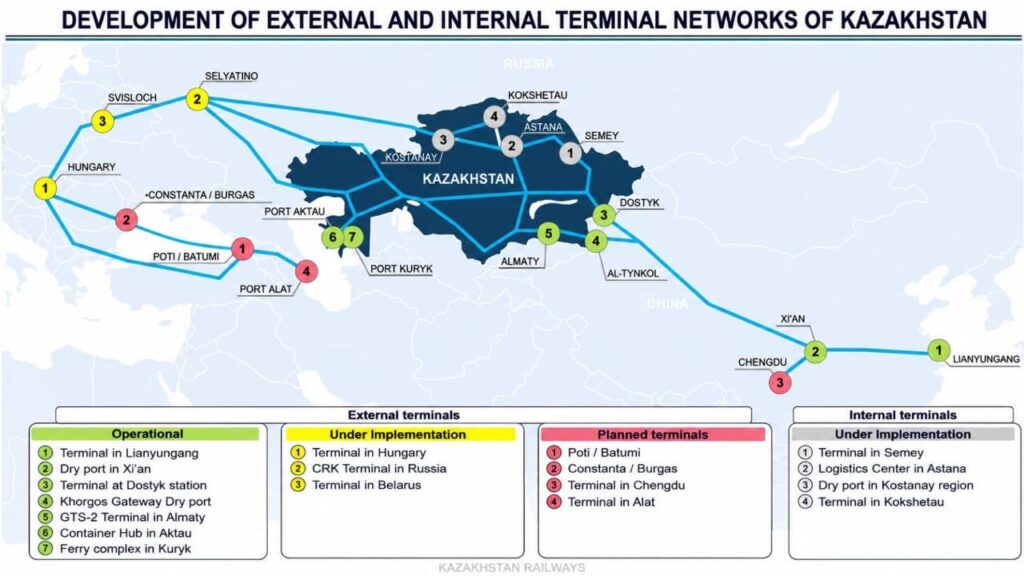
Kazakhstan’s national railway operator, Kazakhstan Temir Zholy (KTZ), and Turkey’s TCDD Taşimacilik A.Ş. have signed a cooperation agreement to enhance railway freight transportation along the Trans-Caspian International Transport Route (TITR), also known as the Middle Corridor. Bypassing Russia, the TITR links China and Europe via Central Asia and the Caspian Sea. Freight volumes along the corridor surged by 60% in 2024, reaching 4.5 million tons. Projections suggest that figure could surpass 10 million tons by 2030. According to KTZ, the agreement outlines several joint initiatives aimed at improving the route’s efficiency and competitiveness. Key measures include: Launching regular rail services between Kazakhstan and Turkey; Increasing freight volumes on the Baku-Tbilisi-Kars railway line; Expanding two-way cargo flows between China and Europe/Africa; Streamlining transit procedures and logistics coordination; Simplifying customs and administrative processes to speed up cross-border cargo movement. The partnership will also focus on implementing digital solutions such as paperless documentation and real-time tracking of containers and rolling stock. These initiatives are expected to enhance Kazakhstan’s transit and logistics capacity and reinforce its strategic role in global supply chains. The agreement was signed during President Kassym-Jomart Tokayev’s official visit to Turkey. During the visit, Tokayev reiterated Kazakhstan’s commitment to developing the Trans-Caspian route and highlighted interest in attracting Turkish investment in key infrastructure sectors, including railways, dry ports, cargo terminals, and shipbuilding. As part of the visit, KTZ also held talks with Mersin International Port, part of the PSA International Group, on expanding cooperation to develop the Middle Corridor and establish more efficient multimodal logistics links between Asia and Europe. KTZ Chairman Talgat Aldybergenov affirmed both sides’ commitment to ensuring stable freight volumes and underscored Mersin’s role as a strategic transshipment hub for the Middle Corridor. To further strengthen the logistics chain, Kazakhstan proposed leveraging the potential of KPMC, a joint venture between KTZ and PSA International, which is already involved in developing multimodal services along the Xi’an-Istanbul route.

KTZ Secures $540 Million Loan to Upgrade Trans-Kazakhstan Railway Corridor

Kazakhstan Temir Zholy (KTZ), the national railway operator, has secured a syndicated loan of up to 480 million Swiss francs (approximately $540 million) for a three-year term. Arranged through Abu Dhabi Commercial Bank and Deutsche Bank, the financing will support key infrastructure projects along the Trans-Kazakhstan Railway Corridor. According to KTZ, the loan will fund construction of the Moiynty-Kyzylzhar section, upgrades to congested segments of the national rail network, and the refinancing of existing debt. The Trans-Kazakhstan Railway Corridor is central to Kazakhstan’s strategy to solidify its role as a major overland transit hub connecting China and Europe. Infrastructure improvements are expected to reduce delivery times, lower logistics costs, create jobs, and diversify international trade routes, enhancing both the resilience of Kazakhstan’s economy and the competitiveness of its transport sector. Currently, more than 80% of overland freight from China to Europe passes through Kazakhstan via the Trans-Caspian International Transport Route (TITR), also known as the Middle Corridor. This route circumvents Russia and connects China to Europe through Central Asia and the Caspian Sea. In 2024, freight volumes along the TITR surged by 60%, reaching 4.5 million tons. Kazakhstan aims to more than double that volume to 10 million tons by 2030, as part of its broader ambition to expand its footprint in global supply chains.

Kazakhstan and Russia to Expand Rail Freight Volumes, Including China-Europe Transit

Kazakhstan Temir Zholy (KTZ), the national railway operator, and Russian Railways (RZD) are preparing to boost cargo transportation volumes in the second half of 2025 and into 2026, according to a statement released by KTZ. On July 21, KTZ Chairman of the Board Talgat Aldybergenov met in Moscow with Oleg Belozerov, CEO and Chairman of the Board of Russian Railways, to assess the implementation of their Strategic Partnership Agreement, signed in November 2024 in Astana. The agreement outlines plans to modernize railway infrastructure at nine key border crossings, expand capacity, and introduce a unified digital logistics system aimed at improving efficiency and cross-border freight operations. Boosting Rail Throughput During the July 21 meeting, the two sides signed a protocol to enhance operations at interstate junction points. Under the new framework, train throughput is expected to rise by 30%, from 65 to 85 train pairs per day, beginning in the second half of this year. They also discussed increasing freight volumes along the eastern branch of the North-South International Transport Corridor, which traverses Kazakhstan and connects Russia with Turkmenistan and Iran. With a current annual cargo capacity of 10 million tons, the corridor is gaining prominence as a strategic trade route. Advancing China-Europe Rail Transit KTZ and RZD further agreed to accelerate the automation of rail transit between China and Europe. Key upgrades will include the automatic registration of transit declarations and integration with the information systems of Russian and Belarusian railway operators. According to KTZ, freight volumes have continued to rise steadily. In the first half of 2025, total rail cargo volume surpassed 45 million tons, representing a 4.1% year-on-year increase. Container transit reached 273,300 twenty-foot equivalent units (TEU), marking an 18% rise compared to the same period in 2024.