• KGS/USD = 0.01144 0%
  • KZT/USD = 0.00211 0%
  • TJS/USD = 0.10802 -0.18%
  • UZS/USD = 0.00008 0%
  • TMT/USD = 0.28490 0%
  • KGS/USD = 0.01144 0%
  • KZT/USD = 0.00211 0%
  • TJS/USD = 0.10802 -0.18%
  • UZS/USD = 0.00008 0%
  • TMT/USD = 0.28490 0%
  • KGS/USD = 0.01144 0%
  • KZT/USD = 0.00211 0%
  • TJS/USD = 0.10802 -0.18%
  • UZS/USD = 0.00008 0%
  • TMT/USD = 0.28490 0%
  • KGS/USD = 0.01144 0%
  • KZT/USD = 0.00211 0%
  • TJS/USD = 0.10802 -0.18%
  • UZS/USD = 0.00008 0%
  • TMT/USD = 0.28490 0%
  • KGS/USD = 0.01144 0%
  • KZT/USD = 0.00211 0%
  • TJS/USD = 0.10802 -0.18%
  • UZS/USD = 0.00008 0%
  • TMT/USD = 0.28490 0%
  • KGS/USD = 0.01144 0%
  • KZT/USD = 0.00211 0%
  • TJS/USD = 0.10802 -0.18%
  • UZS/USD = 0.00008 0%
  • TMT/USD = 0.28490 0%
  • KGS/USD = 0.01144 0%
  • KZT/USD = 0.00211 0%
  • TJS/USD = 0.10802 -0.18%
  • UZS/USD = 0.00008 0%
  • TMT/USD = 0.28490 0%
  • KGS/USD = 0.01144 0%
  • KZT/USD = 0.00211 0%
  • TJS/USD = 0.10802 -0.18%
  • UZS/USD = 0.00008 0%
  • TMT/USD = 0.28490 0%

Viewing results 1 - 6 of 109

Kyrgyzstan: labor migrants need social protection, investment incentives

BISHKEK (TCA) — There are about 100 thousand Kyrgyz labor migrants in Kazakhstan, Kyrgyzstan’s State Migration Service says. Some of them work legally in the regions closer to Kyrgyzstan — the South-Kazakhstan, Karaganda and Almaty oblasts and Almaty city. Host state for migrants The problems faced by labor migrants in Kazakhstan including the absence of labor contracts and difficulties with the registration and obtaining of permits were discussed during a teleconference in Bishkek earlier this month. Citizens of Kyrgyzstan can stay in Kazakhstan for a month without registration. Within a pilot project, migration services of the two countries established a Migration Services Center in Astana which showed good results, and such centers will be created in all regional centers of Kazakhstan by the end of the year. When it comes to migration, Central Asian states are traditionally known as donor countries, whose migrants mainly look for jobs in Russia. The exception is Kazakhstan, which in recent years has become a host state for migrants, changing the economic balance in the region. In 2016, the influx of labor migrants to Kazakhstan doubled compared to 2000 and continues to grow. Many labor migrants from neighboring Central Asian states consider Kazakhstan more attractive than Russia. According to the International Organization for Migration in Almaty, the total amount of labor migrants in Kazakhstan in 2017 was two million people, mainly from neighboring countries. As a result, Kazakhstan is increasing its economic influence in the region. However, the situation may change when the Russian economy improves. At the same time, the economies of Kyrgyzstan and Tajikistan are dependent on remittances from labor migrants. According to the latest data, the amount of remittances from Russia is almost 37% of Tajikistan's GDP. Vulnerable migrants Women and children are still the most vulnerable migrants, says a report that monitored the implementation of the law of the Kyrgyz Republic on state support of compatriots abroad, which was recently discussed by the Kyrgyz Parliament. Women migrants experience serious difficulties with reproductive health. Women who have given birth to a child in a foreign state experience much more difficulties than their compatriots who gave birth to children in their homeland. Their children are also vulnerable, the report says. The legal status of migrants is important in obtaining access to medical services. If migrants have not entered into labor contracts with their employers and accordingly do not have social protection, they do not have access to medical services. Authorities of Kyrgyzstan should provide support to socially unprotected categories of compatriots on the basis of international treaties and in accordance with the legislation of the country. However, control over the implementation of the law showed that the Ministry of Labor and Social Development of Kyrgyzstan does not consider compatriots abroad to be beneficiaries of social protection services, the report says. Law execution The Law "On state policy to support compatriots abroad", adopted five years ago, remains valid but its legal regulation is outdated and requires improvement, MPs told a press conference in Bishkek....
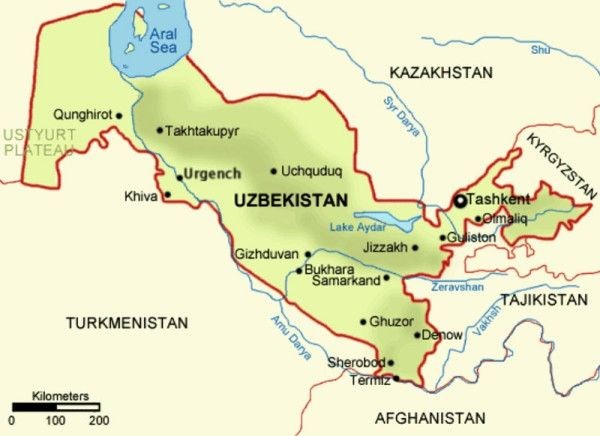
Uzbekistan: government decree to eradicate forced labor in the country

TASHKENT (TCA) — The government of Uzbekistan has issued a decree aimed at completely ending the practice of forced labor in the Central Asian country, RFE/RL reported. Continue reading

Kazakhstan is Central Asia’s migration outlier

ASTANA (TCA) — Hundreds of thousands of citizens of Kyrgyzstan, Tajikistan, and Uzbekistan have left their countries in search of work and better life abroad, mainly in Russia. In recent years, however, Kazakhstan has become a new magnet for labor immigrants. We are republishing this article on the issue by Sarah Calderone, originally published by Eurasianet: Central Asian states are collectively known as a wellspring of migrants, most of whom leave in search of work in Russia. But Kazakhstan is an outlier: The country in recent years has gone from a sending to a receiving state, and, in the process, appears to be altering the economic balance in the region. The tipping point for Kazakhstan occurred within the last decade or so; a lack of reliable hard data makes it difficult to say exactly when. Up until at least the mid-2000s, Kazakhstan, like other Central Asian states, experienced a net outflow of migrants. In recent years, however, it has registered more people coming than going. The United Nations estimates that total net migration for Kazakhstan flattened out between 2010 and 2015. Similar findings by Sergei Ryazantsev, a Russian migration scholar, indicate that Kazakhstan's migration numbers flipped even earlier, going from a deficit of 108,000 in 2000 (meaning there were 108,000 more emigrants than immigrants that year) to a surplus of 22,000 in 2005. A burst of labor in-migration has accompanied Kazakhstan's overall migration shift, fueled in part by explosive growth in the construction sector. While the country has experienced a modest influx of labor migrants since 2000, the official number doubled in 2010 and has kept climbing. As a result, Kazakhstan now enjoys an enhanced degree of regional economic clout. And Kazakhstani authorities are better positioned than their neighbors to resist Russia’s efforts to leverage labor migrants to coerce Central Asian states into supporting the Kremlin's economic and political agenda. Countries like Kyrgyzstan, Uzbekistan and Tajikistan, which together send millions of labor migrants to Russia each year, are vulnerable to Russian political pressure. The economies of Kyrgyzstan and Tajikistan are especially dependent on remittances sent home by labor migrants. According to the most recent data available, cash transfers from Russia account for the equivalent of almost 37 percent of Tajikistan’s GDP. Labor migration was also a major factor in Kyrgyzstan joining the Kremlin-dominated Eurasian Economic Union, which came into being in 2015. The uptick in labor migration to Kazakhstan can be attributed, in part, to Russia's economic woes; the Russian economy went into a downward spiral following the 2014 plunge in energy prices. At the same time, Russian officials also tightened regulations for labor migrants. Elena Sadovskaya, an Almaty-based migration expert, noted that a considerable number of labor migrants from neighboring Central Asian states now see Kazakhstan as offering better employment prospects than Russia. At the same time, she believes the shift is temporary, and that Russia will regain any lost stature as a labor migration magnet as soon as its economy picks up again. “The number of labor migrants...

Tajikistan needs more productive employment to boost growth, ADB says

DUSHANBE (TCA) — Tajikistan will need to create enough jobs to maximize productivity of the country's increasing working-age population and spur economic growth, says a new Asian Development Bank (ADB) report. Continue reading

Work permits to foreigners simplified in Kyrgyzstan

BISHKEK (TCA) — Kyrgyzstan has simplified the conditions for obtaining work permits for foreign citizens. Earlier, six documents were required to obtain such permits, while only two documents are needed now, Medetbek Aydaraliev, Chairman of the State Migration Service of Kyrgyzstan, said at a press conference in Bishkek. In addition, the period for considering applications for work permits for foreigners has been reduced from one month to ten working days. As a result, bureaucratic barriers companies have often complained about have been reduced. The State Migration Service (SMS) has also begun accepting documents electronically, thus fulfilling the Government's Taza Koom (Clean Society) program. This work has been intensified after Kyrgyzstan’s Prime Minister Sapar Isakov criticized the SMS for delaying the process of issuing work permits. The Government received many complaints from foreign citizens, including investors, entrepreneurs, employees, and university teachers. The process of issuing permits was opaque, slow and uncomfortable, they said. "We attract investors and good teachers to universities but state bodies do not allow them to develop due to the process of issuing permits," Isakov said. "The Government should create the most convenient process for applying for a work permit. Our legislation should be attractive for investors, so that large enterprises, businesses could open,” the Prime Minister said. He ordered to simplify the procedure for issuing work permits for investors in a week's time, as well as to shorten the list of documents and consider the possibility of extending the work permit for foreigners to three years if they have an appropriate confirmation of the duration of the contract or long-term investment plans. Isakov also ordered to develop clear criteria for a motivated refusal to issue a work permit. Russian FMS blacklist shortened The SMS Chairman Aidaraliev also told the press conference that every year, the number of Kyrgyz citizens on the blacklist of the Federal Migration Service of Russia is declining. The FMS blacklist is a list of foreigners who violated the current migration legislation of Russia and were banned from entering the Russian Federation. As of January 1, 2018, about 77 thousand Kyrgyz citizens were blacklisted, while there were 110 thousand on January 1, 2017, and 180 thousand in 2015. According to official data, 640 thousand Kyrgyz citizens are now working in Russia, which is 88% of the total number of Kyrgyz migrants. The State Migration Service of Kyrgyzstan proposed not to blacklist those Kyrgyz citizens who violated the rules once, and to blacklist them after three violations. Negotiations on this issue will continue in the near future in Moscow within the framework of the Eurasian Economic Union. EEU benefits Supporters of Kyrgyzstan's accession to the EEU say that Kyrgyzstan’s main benefit from the accession was the facilitation of the working conditions of migrants in comparison with those from Uzbekistan and Tajikistan (countries that are not EEU members). The migration statistics show that due to the economic crisis in Russia and the tightening of migration laws, the number of migrants from Uzbekistan and Tajikistan declined by...

ILO reports progress on child and forced labor in Uzbekistan cotton fields

TASHKENT (TCA) — A new International Labour Organization (ILO) report to the World Bank finds that the systematic use of child labour in Uzbekistan’s cotton harvest has come to an end, and that concrete measures to stop the use of forced labour have been taken. Continue reading