• KGS/USD = 0.01144 0%
  • KZT/USD = 0.00198 -0%
  • TJS/USD = 0.10901 0%
  • UZS/USD = 0.00008 0%
  • TMT/USD = 0.28490 0%
  • KGS/USD = 0.01144 0%
  • KZT/USD = 0.00198 -0%
  • TJS/USD = 0.10901 0%
  • UZS/USD = 0.00008 0%
  • TMT/USD = 0.28490 0%
  • KGS/USD = 0.01144 0%
  • KZT/USD = 0.00198 -0%
  • TJS/USD = 0.10901 0%
  • UZS/USD = 0.00008 0%
  • TMT/USD = 0.28490 0%
  • KGS/USD = 0.01144 0%
  • KZT/USD = 0.00198 -0%
  • TJS/USD = 0.10901 0%
  • UZS/USD = 0.00008 0%
  • TMT/USD = 0.28490 0%
  • KGS/USD = 0.01144 0%
  • KZT/USD = 0.00198 -0%
  • TJS/USD = 0.10901 0%
  • UZS/USD = 0.00008 0%
  • TMT/USD = 0.28490 0%
  • KGS/USD = 0.01144 0%
  • KZT/USD = 0.00198 -0%
  • TJS/USD = 0.10901 0%
  • UZS/USD = 0.00008 0%
  • TMT/USD = 0.28490 0%
  • KGS/USD = 0.01144 0%
  • KZT/USD = 0.00198 -0%
  • TJS/USD = 0.10901 0%
  • UZS/USD = 0.00008 0%
  • TMT/USD = 0.28490 0%
  • KGS/USD = 0.01144 0%
  • KZT/USD = 0.00198 -0%
  • TJS/USD = 0.10901 0%
  • UZS/USD = 0.00008 0%
  • TMT/USD = 0.28490 0%
08 December 2025

Viewing results 1 - 6 of 62

Reporters Without Borders Downgrades State Of Press Freedom in Uzbekistan To “Very Serious”

The international agency Reporters Without Borders (RSF) published its annual Press Freedom Index on May 3, World Press Freedom Day. The report draws attention to the dire state that reporting in Uzbekistan is in. Uzbekistan fell by 11 places in the global ranking, relegated to 148th out of 180 countries. RSF staff downgraded their rating of the state of freedom of speech in Uzbekistan from "severe" to "very serious”. “Following the 2016 death of President Islam Karimov, circumstances have only barely improved for the media, and criticizing those in power remains very complicated,” reads RSF's introduction to the Uzbekistan section of the report. To compile the index, RSF graded the state of media freedom in 180 countries around the world using five different indicators: political, legal, economic, social and security. Uzbekistan ranked 157th on the political indicator, which is 20 places lower than last year. For the legal indicator the result is similarly disappointing, a fall of 17 places. The country ranked 143rd in the economic indicator, which is 9 places lower than last year. The security indicator also worsened by 9 places. Only in the social indicator did Uzbekistan's position rise, by two places to a still-lowly 145th. RSF describes the political context in Uzbekistan as one where the authorities wield a great deal of control over the media -- and also over a large group of bloggers with close ties to the government. RSF also mentions in the report that officials don’t hesitate to exert economic pressure or attempt to corrupt or influence journalists. “The growth of independent media is also largely hampered by laws and regulations that restrict their funding, especially by foreign-based organizations that support a free press,” reads an assessment from the economic section. In its socio-cultural section, RSF notes that topics that aren't covered in official mass media are highlighted on social media, including on platforms like Russia’s Odnoklassniki, Facebook and Telegram. Some groups are said to share information about government corruption on these platforms. The report also points out that the last of the journalists who have been imprisoned, some for as long as 20 years, have now been released, but they have not been cleared of wrongdoing. Bloggers are still being threatened or arrested -- as was the case with Otabek Sattoryi, the founder of the YouTube channel “Xalq Fikri” (People’s Opinion). He was sentenced to six and a half years in prison in May 2021 on false charges of defamation and extortion. Journalists who tried to cover his trial were physically assaulted or unjustly persecuted. The crackdown on reporters covering demonstrations to support the republic of Karakalpakstan remaining autonomous shows the government's determination to silence all dissent. A report by Amnesty International published in April stated that the United Nations Working Group on Arbitrary Detention concluded that Otabek Sattoryi’s detention was unjustified, and called for his release. Of Uzbekistan's fall in the Press Freedom Index, a journalist from the BBC Uzbek Service, Ibrat Safo, wrote on his Facebook page: "[A] sharp drop... I’m...

Dushanbe Conference to Discuss New Mass Media Law

On May 14, Dushanbe will host a conference entitled "Favorable Media Environment - an Important Factor of Legal Education in Society." The meeting is being organized by the Tajik Parliament and the nonprofit organization, Homa, with the support of the European Union (EU). The purpose of the discussion is to review the draft law "On Mass Media" with participation from a wide range of representatives of government agencies, international, multilateral, nonprofit, non-governmental organizations (NGOs) and the media. According to representatives of civic organizations, the rapid development of technology and international norms oblige the government to adapt legislation to international standards and modern best practices. In March 2023, a working group was established to draft a law on the mass media. It included representatives of government agencies and civil society, who together studied the experience of various countries in the region and analyzed legislative acts regulating media activities. In Tajikistan, the activities of the media are regulated mainly by two laws: the law "On Periodical Press and Other Mass Media" and the law "On Television and Radio Broadcasting." Following crackdowns, only two significant independent media voices remain in Tajikistan; the privately owned Asia-Plus, and the U.S. Congress-funded Radio Free Europe/Radio Liberty’s local service, both of which have long been subjected to partial shutdowns.

Kazakhstan Debates Foreign Media Accreditation

Following their second reading, the Mazhilis (lower chamber of parliament) of the Republic of Kazakhstan has adopted the bills "On Mass Media" and "On Amendments and Additions to Certain Legislative Acts of the Republic of Kazakhstan in the Field of Mass Media," sending them to the Senate for consideration. The documents are designed to regulate the professional activities of mass media outlets. The new amendments are evoking mixed reactions. One of the key proposals was the right of the Ministry of Foreign Affairs to deny accreditation to foreign media and their representatives if they pose a threat to national security. This initiative provoked opposition from representatives of the media, who consider such regulations a mechanism for suppressing freedom of speech. "The draft law proposes a regulation on the introduction of press cards, granting the right to simplified accreditation to individual journalists. Frankly speaking, this norm caused great controversy in the working group and society as a whole. The overwhelming majority of the working group members regarded this rule as one that contradicts democratic principles, discredits journalists, and hinders the comprehensive dissemination of information. Therefore, a specific decision was made on this: the rule on press cards was excluded," said Mazhilis representative, Zhanarbek Ashimzhanov, answering journalists' questions. Other changes proposed in the draft laws include combining online publications and news agencies into the category of "internet publications," as well as shortening the statute of limitations for journalist legal requests and setting shorter deadlines for responding to media inquiries. Among other rules, members of the Mazhilis also proposed introducing a ban on the publication of materials about LGBT themes and topics. These changes were critically evaluated by experts, and these regulations were not included in the final document as members of the working group concluded that it contradicts both Kazakhstani and international legislation.

TikTok Users Struggle to Access App after Kyrgyzstan Announces Restrictions

Kyrgyzstan is restricting access to TikTok. The Ministry of Digital Development sent a letter to internet providers, asking them to block the TikTok social media platform, local media has reported. The ministry cited the network´s failure to comply with a law designed to “prevent harm to the health of children, their physical, intellectual, mental, spiritual and moral development.” The ministry said it took action after receiving a memorandum from Kyrgyzstan’s State Committee for National Security about TikTok, whose owner is the Chinese firm, ByteDance. Users reported “difficulties and interruptions” in using TikTok, which was still accessible via some providers, the 24.kg news agency reported on Thursday. Opponents of the restrictions on video-based TikTok say it is part of a clampdown on free speech and other basic rights in Kyrgyzstan. They note that the authorities arrested some journalists in a separate case, and the parliament passed a law tightening control over non-governmental groups that get foreign funding. In the wake of this, the George Soros funded, Open Society Foundations, which claims it has spent more than $115 million on projects in education, public health, criminal justice, supplying water to rural communities and other areas since it opened in 1993, said earlier this week that it was closing down its Kyrgyz branch. Government officials in Kyrgyzstan started to move against TikTok last year, saying that some social networks were having a negative effect on children. The U.S. Congress is also fast-tracking legislation that would ban TikTok unless ByteDance sells its stake, with a vote due on Saturday. There are concerns in the U.S. that the app could share user data with the Chinese government; TikTok has said it is owned by a private company and doesn’t share such data.

Kazakh News Publisher Says New Media Law Does Little for National Press

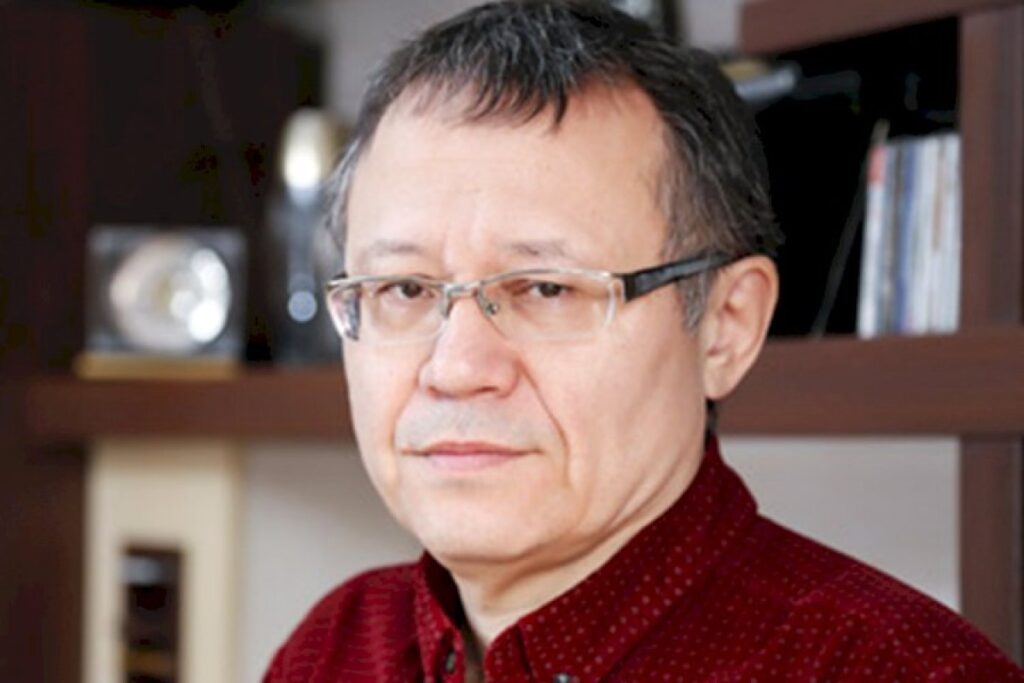
Kazakhstan's new law "On Mass Media," recently passed by its lower house of parliament (the Mazhilis), has agitated the country's reporters. In an interview with The Times of Central Asia, Dzhanibek Suleyev, the publisher of several news sites, remonstrates that the law should have been more supportive of the national press. An aspect of the law that has caused heated discussions is the Ministry of Foreign Affairs' new right to deny accreditation to foreign journalists "in case of a threat to the national security of the Republic of Kazakhstan." A few months ago the Ministry of Foreign Affairs didn't renew or refused to issue accreditation to 36 correspondents of the news website Azattyq, the Kazakh affiliate of the U.S. Government's Radio Free Europe/Radio Liberty (RFE/RL). No explanation was given for this rejection, and Azattyq has filed a lawsuit in court. Suleyev explained: "It is clear that the state wants to protect itself and society as much as possible from extremist publications and the spread of deviant morality, but what is proposed for those who simply do their work honestly, every day? We like to impose restrictions, but what about support? I think that if the state were to expand the field of cooperation, the press would be less critical." "Apparently, the state authorities have such an ambiguous opinion of Azattyq. In addition, the lack of accreditation clearly does not prevent 'going on the air,' the audience has access to the materials. I do not think that denial of accreditation to foreign media will become a mass phenomenon. The New York Times or leading sports publications and channels will hardly be denied accreditation. You have to understand that from the point of view of the state, there are ordinary media, and there are structures engaged in propaganda and counter-propaganda, and this should be taken into account," Suleyev explained. Suleyev said that the establishment of a one-year statute of limitations for media materials is a positive development, as it protects journalists' rights. It was initially proposed to set the term at three years from the date of publication. "It is good that it was reduced to a year, three years of limitation is the death of the publication. Of course, I would have liked to reduce the statute of limitations even further, but thanks for that. If journalists are always afraid of the court, how can they work? Because of the long statute of limitations, editorial offices need to keep archives, video, audio and documents, not everyone can do this. Besides, with a long statute of limitations, it is easier to settle scores with the press, to get unwanted people closed down," he said. Suleyev was happy to see more television programs in Kazakh. The new law aims to increase the amount of Kazakh-language and domestic content on television and radio. From 2025 at least 55% of TV and radio programs should be broadcast in Kazakh, rising to 60% from 2027. Retransmission of foreign TV and radio channels will be reduced to 10%...

Kyrgyzstan Minister Says Case Against Media Workers Not About Politics

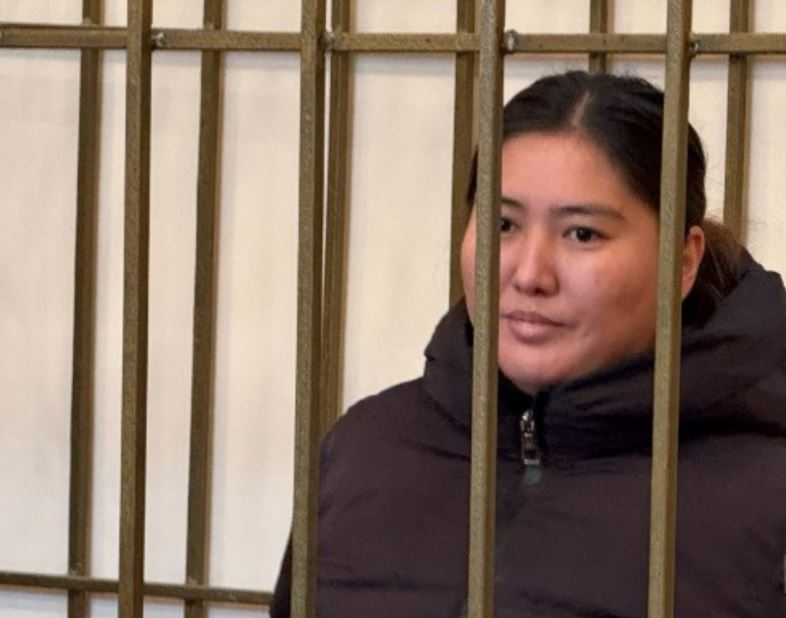
BISHKEK, Kyrgyzstan – Kyrgyzstan is pushing back against international criticism of a high-profile prosecution of media workers, saying the case is not politically motivated and that those facing charges of inciting mass unrest are poorly educated people masquerading as journalists. Minister of Internal Affairs, Ulan Niyazbekov, said the case against 11 former and current workers for media outlet Temirov Live stems from the publication of false information that flouts the basic rules of journalism. Free speech advocates say Kyrgyzstan is clamping down on what was once a relatively permissive environment for the media. “If they continue to write everything that comes to their mind without facts and evidence, just saying that they are journalists, then we will arrest them,” Niyazbekov said in an interview with Kabar, Kyrgyzstan’s national news agency. He said most of the people accused in the Temirov Live case are “bloggers,” not journalists. “They spread false information because they don't have education and make people panic. And there is no need to make noise about them saying that they are journalists,” he said. The minister’s comments were published on Thursday, two days after a court in Bishkek ordered the transfer of four of the journalists from prison to house arrest. Four others accused in the same case remain in pretrial detention. If convicted, they could be sent to prison for years. Temirov Live is a YouTube-based outlet that has published and broadcast reports on alleged corruption by senior officials. It was founded in 2020 by Bolot Temirov, who was expelled from Kyrgyzstan in 2022. He has said the ongoing case against his colleagues is in retaliation for Temirov Live’s investigations into alleged government misconduct. In an interview with Kabar, Niyazbekov noted that there were potential penalties in Europe and the United States for journalists who spread false or unconfirmed information. “They don't accuse someone without proof,” he said. “If someone tries to slander someone or spread false information about the activities of the authorities, they will be brought to court and pay a large compensation or be imprisoned.” The government in Kyrgyzstan tolerates criticism but its “only demand” is that critics “gather evidence or make the information very precise and then release it to the public,” Niyazbekov stated.