• KGS/USD = 0.01144 0%
  • KZT/USD = 0.00216 0%
  • TJS/USD = 0.10656 0%
  • UZS/USD = 0.00008 0%
  • TMT/USD = 0.28530 0%
  • KGS/USD = 0.01144 0%
  • KZT/USD = 0.00216 0%
  • TJS/USD = 0.10656 0%
  • UZS/USD = 0.00008 0%
  • TMT/USD = 0.28530 0%
  • KGS/USD = 0.01144 0%
  • KZT/USD = 0.00216 0%
  • TJS/USD = 0.10656 0%
  • UZS/USD = 0.00008 0%
  • TMT/USD = 0.28530 0%
  • KGS/USD = 0.01144 0%
  • KZT/USD = 0.00216 0%
  • TJS/USD = 0.10656 0%
  • UZS/USD = 0.00008 0%
  • TMT/USD = 0.28530 0%
  • KGS/USD = 0.01144 0%
  • KZT/USD = 0.00216 0%
  • TJS/USD = 0.10656 0%
  • UZS/USD = 0.00008 0%
  • TMT/USD = 0.28530 0%
  • KGS/USD = 0.01144 0%
  • KZT/USD = 0.00216 0%
  • TJS/USD = 0.10656 0%
  • UZS/USD = 0.00008 0%
  • TMT/USD = 0.28530 0%
  • KGS/USD = 0.01144 0%
  • KZT/USD = 0.00216 0%
  • TJS/USD = 0.10656 0%
  • UZS/USD = 0.00008 0%
  • TMT/USD = 0.28530 0%
  • KGS/USD = 0.01144 0%
  • KZT/USD = 0.00216 0%
  • TJS/USD = 0.10656 0%
  • UZS/USD = 0.00008 0%
  • TMT/USD = 0.28530 0%

Viewing results 1 - 6 of 63

Middle East Conflict Disrupts Logistics Routes for Deliveries to Kyrgyzstan

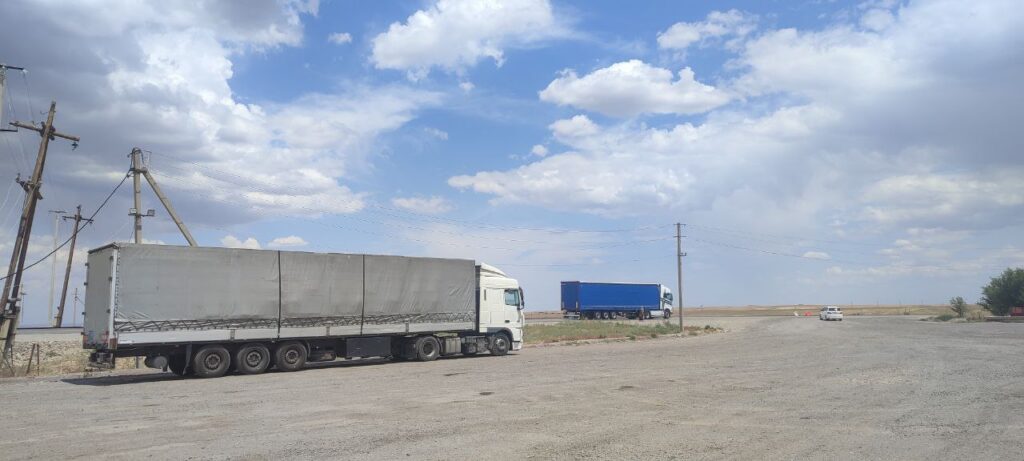
Military activity in the Middle East has caused serious disruptions to logistics routes used to deliver goods to Kyrgyzstan. In particular, the transit of cargo through Iran has completely stopped. This was reported to The Times of Central Asia by the Association of International Freight Forwarders of Kyrgyzstan. According to industry representatives, the auto parts market is already experiencing some of the most significant consequences. A substantial share of goods from the U.S., Europe, and the Middle East is delivered to Kyrgyzstan via the Iranian port of Bandar Abbas on the Persian Gulf. The port is considered a key transit hub through which a large volume of international cargo passes. However, due to the escalating situation in the region, maritime transport along this route has effectively been halted. As a result, many goods that have already been paid for and are intended for delivery to Kyrgyzstan remain stuck in ports of departure or transit zones. “A large volume of cargo used to be transported through the port of Bandar Abbas. We used this route for transit to the Emirates, to Dubai and Sharjah. Now we are effectively cut off from maritime transport. All the countries of the Persian Gulf are closed to us, and there are serious problems with air traffic in this region. A lot of cargo normally goes from Sharjah and Dubai to Kyrgyzstan, but these deliveries have now been suspended,” Igor Golubev, deputy chairman of the Association of International Freight Carriers of Kyrgyzstan, told The Times of Central Asia. According to him, equipment, auto parts, perfumes, and other goods are supplied to Kyrgyzstan from the countries of the Persian Gulf. If the conflict continues and logistics chains are not restored, Kyrgyzstan could face shortages of certain types of products. “Ships from all over the world used to arrive at the port of Bandar Abbas. It served as a transshipment hub from which we received a wide range of goods. Now this transit hub is effectively closed,” Golubev said. The disruptions have affected not only imports but also exports. According to the Association of Carriers, the transit of Kyrgyz cargo to Turkey and Europe, which previously passed through Iranian territory, has completely stopped. At present, more than 30 Kyrgyz trucks carrying goods remain in northern Iran, and their drivers are unable to return home. Additional difficulties have emerged due to fighting between Pakistan and Afghanistan. Kyrgyz logistics companies actively use the port of Karachi in Pakistan, and some cargo has traditionally been delivered to Kyrgyzstan through Afghanistan. This route is now also effectively closed. According to the Association of International Freight Carriers, negotiations are currently underway with Chinese partners on the possible use of alternative logistics corridors. The state-owned organization Kyrgyz Export told The Times of Central Asia that it is closely monitoring the situation and remains in constant contact with carriers. Authorities are also holding talks with Iran and other states in the region while considering alternative routes to restore the import and export of Kyrgyz goods.

Uzbek Citizen Evacuation Flights Continue from Middle East

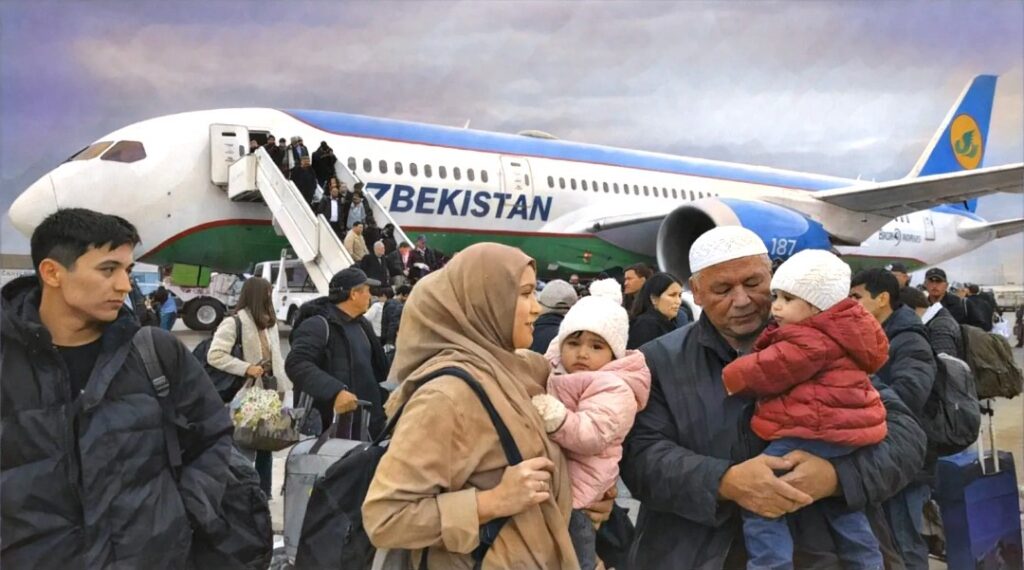
More than 9,300 citizens of Uzbekistan had been evacuated from countries in the Middle East as of March 5. According to the press service of Uzbekistan’s Ministry of Foreign Affairs, between March 1 and 10:00 a.m. local time on March 5, a total of 9,361 Uzbek citizens safely returned home from several countries in the region. Officials said the largest number of evacuees arrived from Saudi Arabia, where 8,114 people were transported to Uzbekistan on both regular and specially arranged charter flights. Another 1,192 citizens have so far been repatriated from the United Arab Emirates. Smaller groups were also evacuated from other countries in the region, including 23 citizens from Iran, 25 from Bahrain, and seven from Oman. The ministry said the return of Uzbek nationals is being organized in a structured and phased manner. Officials added that evacuation operations are currently focused on countries whose airspace remains open to civilian flights, with additional flights to be arranged once airspace restrictions are lifted elsewhere in the region. Separately, Uzbekistan’s Ministry of Transport reported that by March 5 a total of 41 special flights had been carried out to bring citizens home from the Middle East. According to the ministry, several Uzbekistan-based airlines, including Uzbekistan Airways, Centrum Air, Qanot Sharq, Fly One Asia, Fly Khiva, and Air Samarkand, have been operating evacuation flights. These included routes from Jeddah and Medina in Saudi Arabia to Tashkent, Andijan, Namangan, Urgench, Qarshi, and Samarkand, as well as flights from Dubai to Tashkent. Transport officials said that 36 flights departing from Jeddah and Medina transported 7,988 passengers to Uzbekistan. An additional five flights from Dubai carried 838 people. Several flights were still operating at the time of the ministry’s latest update, including routes from Dubai and Jeddah to Tashkent and Samarkand. Authorities stated that the evacuation process is continuing step by step and urged Uzbek citizens abroad to remain calm, follow local laws, and rely only on official information issued by Uzbekistan’s diplomatic missions and government agencies.

Prices in Turkmenistan Rise Sharply Due to the Situation in the Middle East

Military activity in neighboring Iran has begun to directly affect Turkmenistan’s economy. Disruptions to supplies from a key trading partner have triggered a sharp increase in prices for food, household chemicals, building materials, and cigarettes. According to retailers, this may only be the beginning as existing stocks are running low and prices continue to climb. Despite having domestic production, Turkmenistan remains heavily dependent on imports from Iran, particularly for food products, household chemicals, and construction materials. The conflict in Iran has disrupted established logistics routes, causing prices for several categories of goods to rise significantly across Turkmenistan. Vegetables and citrus fruits have seen some of the steepest increases. Prices for potatoes and cucumbers have risen by three to three-and-a-half times, while citrus fruits have become about 50% more expensive. Cigarette prices have already increased by roughly 40%, and traders warn that further rises are likely. At the end of February, a kilogram of potatoes imported from Iran cost between $1.45 and $1.74 in Ashgabat. The price has now risen to $4.93 per kilogram. A similar trend has been observed for cucumbers, whose price increased from $2.32 to $4.93 per kilogram. Citrus fruits have become even more expensive. Oranges have risen in price from $2.61 to $5.22 per kilogram, while mandarins have increased from $3.48 to $6.38. Residents of Turkmenistan are also facing higher prices for household chemicals. Although the increase has not yet been as dramatic, retailers say the upward trend is clear. Tobacco products have also risen significantly in price, with cigarettes increasing by an average of about 35%. The construction sector has also been affected. Prices for cement, wood, metal, and other building materials have increased by around 40%. These increases are linked to disruptions in established supply routes. Some construction materials were previously imported from the United Arab Emirates via Iran. Businesses are now being forced to search for alternative logistics routes, including through Georgia and Azerbaijan, which significantly increases transportation costs. On March 4, customs regulation issues were discussed at a meeting of Turkmenistan’s Security Council. However, according to a report by the state news agency TDH, the head of the State Customs Service, Maksat Khudaygulyev, did not address the current supply disruptions. His remarks focused on the planned development of the agency. Price increases linked to events in Iran are not new for Turkmenistan. A similar situation was observed in the summer during the 12-day war. Supply problems also emerged in the fall of 2024, when Iran temporarily closed its border. During that period, vegetable oil prices increased significantly and shortages were reported.

Iran War Highlights Central Asia’s Vulnerable Southern Trade Corridors

The widening war centered on Iran is reverberating far beyond the Middle East, exposing a structural vulnerability in Central Asia’s economic geography: the region’s reliance on transport corridors that pass through or near Iran and the Persian Gulf. As fighting escalates and shipping risks spread across the region, insurers, shipping companies, and logistics firms are reassessing operations across the Gulf. War-risk insurance premiums have surged while some commercial carriers have scaled back bookings to parts of the region amid growing security concerns. Tensions around the Strait of Hormuz have already pushed shipping costs higher as governments and logistics firms weigh the risks of operating in one of the world’s most important maritime chokepoints. For Central Asia’s landlocked economies, the crisis highlights how much regional connectivity strategies still depend on southern access routes linking the region to global markets. The conflict has also edged closer to the transport routes linking Central Asia with Europe after what were alleged to be Iranian drone strikes on Azerbaijan’s Nakhchivan region, damaging facilities at the exclave’s airport and prompting diplomatic protests from Baku. While the strike did not directly disrupt trade corridors, it underscored how quickly the conflict could spill over into the South Caucasus, a key segment of the Middle Corridor. Nakhchivan is a landlocked Azerbaijani exclave bordering Iran and Turkey, separated from mainland Azerbaijan by Armenia, and lies at the frontier where Iranian territory meets the transport networks of the South Caucasus. The South Caucasus also hosts energy infrastructure with wider geopolitical significance. The Baku–Tbilisi–Ceyhan (BTC) pipeline transports mostly Azerbaijani crude through Georgia to the Turkish Mediterranean port of Ceyhan, from where it is shipped to global markets. In 2025, Azerbaijani oil accounted for 46.4% of Israel’s crude imports, most of it moving through this supply chain before being shipped onward by tanker. The pipeline also carries limited volumes of Kazakh crude - 2-3% of Kazakhstan’s overall exports - making it far more significant for Israel’s energy supply than for Kazakhstan’s export system. Iran’s armed forces have denied responsibility for the drone incident, instead accusing Israel of attempting to provoke tensions and disrupt relations between Muslim countries. The Geography of Connectivity Since independence, Central Asian governments have sought to overcome the constraints of geography. Landlocked and long dependent on Soviet-era transport networks running north through Russia, the region has spent three decades developing alternative corridors in multiple directions. Routes leading south have held particular appeal, offering the shortest overland access to ports on the Persian Gulf and the Indian Ocean. Iran sits at the heart of several connectivity initiatives designed to connect Central Asian rail networks to ports on the Persian Gulf and the Indian Ocean. The Ashgabat Agreement — a multimodal transport framework linking Iran, Oman, Turkmenistan, and Uzbekistan and designed to connect Central Asia with ports on the Persian Gulf and the Gulf of Oman — was created specifically to facilitate international trade and transit between Central Asia and global shipping routes. For countries such as Turkmenistan and Uzbekistan, rail routes...

Middle East Conflict Tests Central Asia’s Trade Routes and Energy Security

The escalating conflict between Iran, the United States, and their regional partners is raising economic concerns across Central Asia. Turkmenistan shares a long border with Iran, while other Central Asian economies depend on energy markets and trade routes that pass through or around the Persian Gulf. A wider conflict there could ripple across Central Asia through higher fuel prices, disrupted logistics, and pressure on key transport corridors. For countries such as Kyrgyzstan and Tajikistan, the most immediate risk is rising fuel prices. Both depend heavily on imported fuel. Kyrgyz security expert Taalaibek Jumadylov has warned that Kyrgyzstan could face rising prices for food, clothing, and other essential goods. For Tajikistan, the closure of the Strait of Hormuz would significantly increase import costs. Tajik media reports that trade between Tajikistan and Iran has grown rapidly over the past five years. Tajik-Iranian trade turnover increased from $377.7 million in 2024 to approximately $484 million in 2025, a rise of around 28%. Tajikistan’s exports totaled about $113 million, while imports from Iran exceeded $371 million, giving Iran a 4.5% share of Tajikistan’s total foreign trade turnover. If global oil prices rise significantly, Tajikistan could also face additional pressure on its budget. There are indirect risks as well: a slowdown in the economies of Russia, China, or other major partners could affect Tajikistan through trade, investment flows, and remittances. In Uzbekistan, analysts note that in recent years Iran has actively pursued transport diplomacy with Central Asia, seeking to strengthen its position as a regional logistics hub. Uzbek analyst Nargiza Umarova says this trend aligns with China’s Belt and Road Initiative. Iran and China signed a 25-year cooperation agreement in March 2021, a deal widely described as deepening Iran’s role in Belt and Road-linked connectivity. Kazakh economist Almas Chukin highlighted the logistical advantages of transport routes through Iran. “If we take the point where the Turkmenistan railway connects with Iran and the route to the Persian Gulf, it is about 1,200-1,500 kilometers. This is comparable to the distance from Astana to Almaty. Once you cover this distance, you reach the Persian Gulf and its major ports, where you can handle anything from oil transshipment to grain shipments. From there, sea transport to Rotterdam takes about three to four weeks,” he stated. Chukin added that such routes could simplify exports compared with transporting oil through Russia to Novorossiysk and then via the Black Sea, the Bosphorus Strait, and the Mediterranean. According to his estimates, a rail route to Europe through Iran would be about 3,500 kilometers from the Turkmen border. The economist suggested that if Iran’s political system changes and sanctions are lifted, Central Asia could benefit significantly. “This would be a huge shift for Central Asia: a region with a population of 80 million, abundant resources, and a young workforce, but constrained by geography, suddenly gaining direct access to global markets,” Chukin argued. Some analysts also point to emerging competition among regional transport corridors. In the South Caucasus, a proposed Zangezur corridor has been promoted...

Turkmenistan Opens Additional Crossings as Uzbekistan Evacuates Citizens from Iran

Turkmenistan has opened several additional checkpoints on its border with Iran to allow foreign citizens to leave the country as fighting in the Middle East continues. The Russian Embassy in Ashgabat said the Turkmen authorities have opened four additional crossings along the Turkmen-Iranian frontier: Artyk–Lutfabad, Gaudan–Bajgiran, Akyayla–Incheburun, and Altyn Asyr–Incheburun. These operate alongside the Sarakhs crossing, which had already been used for evacuation transit. The move expands an overland route through Central Asia for foreigners seeking to leave Iran while air travel across parts of the Middle East remains disrupted. Uzbekistan has begun using this corridor to assist its citizens. The country’s Ministry of Foreign Affairs said diplomatic staff and official vehicles have been deployed to the Sarakhs crossing to receive Uzbek nationals arriving from Iran and organize their onward transport across Turkmenistan toward Uzbekistan. Uzbek outlet Daryo reported on March 4 that Uzbekistan had already repatriated 13 citizens from Iran via Turkmenistan. Russia has also pointed citizens toward the Turkmen route. The Russian Embassy in Ashgabat said its citizens unable to leave Iran by air could exit through Turkmenistan and should register with the Russian Embassy in Tehran, which is coordinating assistance for citizens inside Iran. The embassy noted that Turkmenistan maintains strict entry rules and normally requires special permits for foreign visitors. Despite those restrictions, the country has previously allowed evacuation transit from Iran during earlier regional crises. The additional crossings create another evacuation corridor alongside the route from Iran into Azerbaijan through the Astara border crossing on the Caspian coast. Foreign nationals have already used that crossing to leave Iran in recent days, including citizens from Central Asia. The Turkmenistan route provides a more direct path back into the region for evacuees traveling toward Uzbekistan and other Central Asian countries. Turkmenistan shares a 1,148-kilometer border with Iran. Ashgabat, the Turkmen capital, sits only about 25 kilometers north of the frontier, and several transport links connect the two countries. Sarakhs functions as an established rail and road gateway used for trade and freight movement between the two countries. In recent years, Turkmenistan and Iran have also discussed expanding rail and freight transit through the Sarakhs crossing as part of broader regional transport corridors linking Central Asia to southern markets. Turkmenistan also exports natural gas to northern Iran under swap arrangements in which Tehran delivers equivalent volumes to Azerbaijan, which could disrupt regional logistics and energy flows. The expansion of border crossings increases the capacity for organized departures from Iran and provides foreign governments with an additional land route when other exit corridors become congested. For Central Asian governments, the immediate priority remains the safe movement of their nationals out of the conflict zone. The opening of additional Turkmen checkpoints provides another corridor linking Iran to Central Asia and may ease pressure on evacuation routes through the South Caucasus.