• KZT/USD = 0.00224
  • TJS/USD = 0.10850
  • UZS/USD = 0.00008
  • TMT/USD = 0.29850
  • KZT/USD = 0.00224
  • TJS/USD = 0.10850
  • UZS/USD = 0.00008
  • TMT/USD = 0.29850
  • KZT/USD = 0.00224
  • TJS/USD = 0.10850
  • UZS/USD = 0.00008
  • TMT/USD = 0.29850
  • KZT/USD = 0.00224
  • TJS/USD = 0.10850
  • UZS/USD = 0.00008
  • TMT/USD = 0.29850
  • KZT/USD = 0.00224
  • TJS/USD = 0.10850
  • UZS/USD = 0.00008
  • TMT/USD = 0.29850
  • KZT/USD = 0.00224
  • TJS/USD = 0.10850
  • UZS/USD = 0.00008
  • TMT/USD = 0.29850
  • KZT/USD = 0.00224
  • TJS/USD = 0.10850
  • UZS/USD = 0.00008
  • TMT/USD = 0.29850
  • KZT/USD = 0.00224
  • TJS/USD = 0.10850
  • UZS/USD = 0.00008
  • TMT/USD = 0.29850
15 November 2026

Viewing results 1 - 6 of 253

Which Central Asian States Qualify as Middle Powers in 2025?

As global power shifts toward multipolarity, Central Asia’s states are emerging as active regional players. This article assesses which of the five republics—Kazakhstan, Uzbekistan, Turkmenistan, Kyrgyzstan, and Tajikistan—qualify as middle powers in 2025, based on economic strength, diplomatic reach, strategic capacity, and governance. Kazakhstan stands as the region’s only consolidated middle power, balancing fiscal stability, institutional reform, and multi-vector diplomacy. Uzbekistan is a rising aspirant, propelled by reforms but still reliant on external financing and centralized authority. The remaining states remain constrained by dependence and limited institutional depth. Together, they reflect a region increasingly capable of shaping, rather than merely absorbing, global and regional change. A comparative analysis of five Central Asian republics shows how far each has advanced toward this status. [vc_row][vc_column][vc_raw_html css=""]JTNDc3R5bGUlM0UlMEQlMEElMkYlMkElMjBCYXNlJTIwdGFibGUlMjBzdHlsaW5nJTIwJTJBJTJGJTBEJTBBLm1wLXdyYXBwZXIlMjAlN0IlMjBtYXgtd2lkdGglM0ElMjAxMDAwcHglM0IlMjBtYXJnaW4lM0ElMjAwJTIwYXV0byUzQiUyMHBhZGRpbmclM0ElMjAxNnB4JTNCJTIwY29sb3IlM0ElMjAlMjMwMDAlM0IlMjAlN0QlMEQlMEEubXAtdGFibGUlMjAlN0IlMjB3aWR0aCUzQSUyMDEwMCUyNSUzQiUyMGJvcmRlci1jb2xsYXBzZSUzQSUyMGNvbGxhcHNlJTNCJTIwJTdEJTBEJTBBLm1wLXRhYmxlJTIwdGglMkMlMjAubXAtdGFibGUlMjB0ZCUyMCU3QiUyMGJvcmRlciUzQSUyMDFweCUyMHNvbGlkJTIwJTIzMDAwJTNCJTIwcGFkZGluZyUzQSUyMDhweCUzQiUyMHRleHQtYWxpZ24lM0ElMjBsZWZ0JTNCJTIwY29sb3IlM0ElMjAlMjMwMDAlM0IlMjAlN0QlMEQlMEEubXAtdGFibGUlMjB0aGVhZCUyMHRoJTIwJTdCJTIwYmFja2dyb3VuZCUzQSUyMCUyMzAwMCUyMGNvbG9yJTNBJTIwJTIzZmZmJTNCJTIwZm9udC13ZWlnaHQlM0ElMjBib2xkJTNCJTIwcG9zaXRpb24lM0ElMjBzdGlja3klM0IlMjB0b3AlM0ElMjAwJTNCJTIwJTdEJTBEJTBBJTBEJTBBJTJGJTJBJTIwUmVzcG9uc2l2ZSUyMHN0YWNrJTIwb24lMjBzbWFsbCUyMHNjcmVlbnMlMjAlMkElMkYlMEQlMEElNDBtZWRpYSUyMCUyOG1heC13aWR0aCUzQSUyMDY0MHB4JTI5JTIwJTdCJTBEJTBBJTIwJTIwLm1wLXRhYmxlJTIwdGhlYWQlMjAlN0IlMjBkaXNwbGF5JTNBJTIwbm9uZSUzQiUyMCU3RCUwRCUwQSUyMCUyMC5tcC10YWJsZSUyQyUyMC5tcC10YWJsZSUyMHRib2R5JTJDJTIwLm1wLXRhYmxlJTIwdHIlMkMlMjAubXAtdGFibGUlMjB0ZCUyMCU3QiUyMGRpc3BsYXklM0ElMjBibG9jayUzQiUyMHdpZHRoJTNBJTIwMTAwJTI1JTNCJTIwJTdEJTBEJTBBJTIwJTIwLm1wLXRhYmxlJTIwdHIlMjAlN0IlMjBtYXJnaW4lM0ElMjAwJTIwMCUyMDEycHglMjAwJTNCJTIwYm9yZGVyJTNBJTIwMXB4JTIwc29saWQlMjAlMjMwMDAlM0IlMjAlN0QlMEQlMEElMjAlMjAubXAtdGFibGUlMjB0ZCUyMCU3QiUyMGJvcmRlciUzQSUyMG5vbmUlM0IlMjBib3JkZXItYm90dG9tJTNBJTIwMXB4JTIwc29saWQlMjAlMjMwMDAlM0IlMjBwb3NpdGlvbiUzQSUyMHJlbGF0aXZlJTNCJTIwcGFkZGluZy1sZWZ0JTNBJTIwNTAlMjUlM0IlMjBtaW4taGVpZ2h0JTNBJTIwNDJweCUzQiUyMCU3RCUwRCUwQSUyMCUyMC5tcC10YWJsZSUyMHRkJTNBJTNBYmVmb3JlJTIwJTdCJTBEJTBBJTIwJTIwJTIwJTIwY29udGVudCUzQSUyMGF0dHIlMjhkYXRhLWxhYmVsJTI5JTNCJTBEJTBBJTIwJTIwJTIwJTIwcG9zaXRpb24lM0ElMjBhYnNvbHV0ZSUzQiUwRCUwQSUyMCUyMCUyMCUyMGxlZnQlM0ElMjA4cHglM0IlMEQlMEElMjAlMjAlMjAlMjB0b3AlM0ElMjA4cHglM0IlMEQlMEElMjAlMjAlMjAlMjB3aWR0aCUzQSUyMGNhbGMlMjg1MCUyNSUyMC0lMjAxNnB4JTI5JTNCJTBEJTBBJTIwJTIwJTIwJTIwZm9udC13ZWlnaHQlM0ElMjBib2xkJTNCJTBEJTBBJTIwJTIwJTIwJTIwd2hpdGUtc3BhY2UlM0ElMjBub3JtYWwlM0IlMEQlMEElMjAlMjAlN0QlMEQlMEElMjAlMjAubXAtdGFibGUlMjB0ZCUzQWxhc3QtY2hpbGQlMjAlN0IlMjBib3JkZXItYm90dG9tJTNBJTIwMCUzQiUyMCU3RCUwRCUwQSU3RCUwRCUwQSUyRiUyQSUyMERlc2t0b3AlMjBkZWZhdWx0JTIwJTJBJTJGJTBEJTBBLm1wLXRhYmxlJTIwdGglMkMlMjAubXAtdGFibGUlMjB0ZCUyMCU3QiUyMGZvbnQtc2l6ZSUzQSUyMDEycHglM0IlMjAlN0QlMEQlMEElMEQlMEElMkYlMkElMjBCZWxvdyUyMDEwMjRweCUyMCUyQSUyRiUwRCUwQSU0MG1lZGlhJTIwJTI4bWF4LXdpZHRoJTNBJTIwMTAyNHB4JTI5JTIwJTdCJTBEJTBBJTIwJTIwLm1wLXRhYmxlJTIwdGglMkMlMjAubXAtdGFibGUlMjB0ZCUyMCU3QiUyMGZvbnQtc2l6ZSUzQSUyMDExcHglM0IlMjAlN0QlMEQlMEElN0QlMEQlMEElMEQlMEElM0MlMkZzdHlsZSUzRQ==[/vc_raw_html][vc_column_text css="" woodmart_inline="no" text_larger="no"] As global power shifts toward multipolarity, Central Asia’s states are emerging as active regional players. This article assesses which of the five republics—Kazakhstan, Uzbekistan, Turkmenistan, Kyrgyzstan, and Tajikistan—qualify as middle powers in 2025, based on economic strength, diplomatic reach, strategic capacity, and governance. Kazakhstan stands as the region’s only consolidated middle power, balancing fiscal stability, institutional reform, and multi-vector diplomacy. Uzbekistan is a rising aspirant, propelled by reforms but still reliant on external financing and centralized authority. The remaining states remain constrained by dependence and limited institutional depth. Together, they reflect a region increasingly capable of shaping, rather than merely absorbing, global and regional change. A comparative analysis of five Central Asian republics shows how far each has advanced toward this status. Economic Power Economic autonomy is a defining attribute of middle-power capability, enabling states to project influence, sustain policy independence, and finance external engagement. In Central Asia, dependence on Official Development Assistance (ODA) and remittances often reflects constrained fiscal capacity and limited domestic capital formation, while diversified, resilient economies underpin strategic autonomy. Key indicators—GDP per capita, credit ratings, debt sustainability, and export diversification—illuminate the region’s economic hierarchy. Kazakhstan stands as Central Asia’s only consolidated economic middle power. Resource-backed growth, a prudent fiscal regime, and a sovereign wealth fund (the National Fund of Kazakhstan) have anchored macroeconomic stability. With a “BBB” credit rating or equivalent from major agencies, Kazakhstan demonstrates sound debt management and policy credibility. Ongoing diversification efforts under the new economic policies—from renewables to financial modernization—aim to reduce hydrocarbon dependence and deepen integration into global supply chains. Its role as a trans-Caspian logistics hub enhances both strategic and commercial influence. Uzbekistan, by contrast, is an emerging frontier market propelled by post-2017 reforms in currency liberalization, taxation, and state-enterprise restructuring. Rapid GDP growth and expanding private-sector activity mark its trajectory toward fiscal autonomy, though continued ODA inflows averaging around $1.1 billion to 1.3 billion annually, primarily from the Asian Development Bank (ADB), the World Bank, and bilateral partners such as Japan, the United States, and the European Union, highlight its residual dependence on external concessional financing. To achieve genuine middle power status, Uzbekistan must roughly double its real economic output over the next decade, a scale of growth aligned with the shift...
Opinion: Victory Day Parade Puts China’s Military Might and Alliances on Full Display

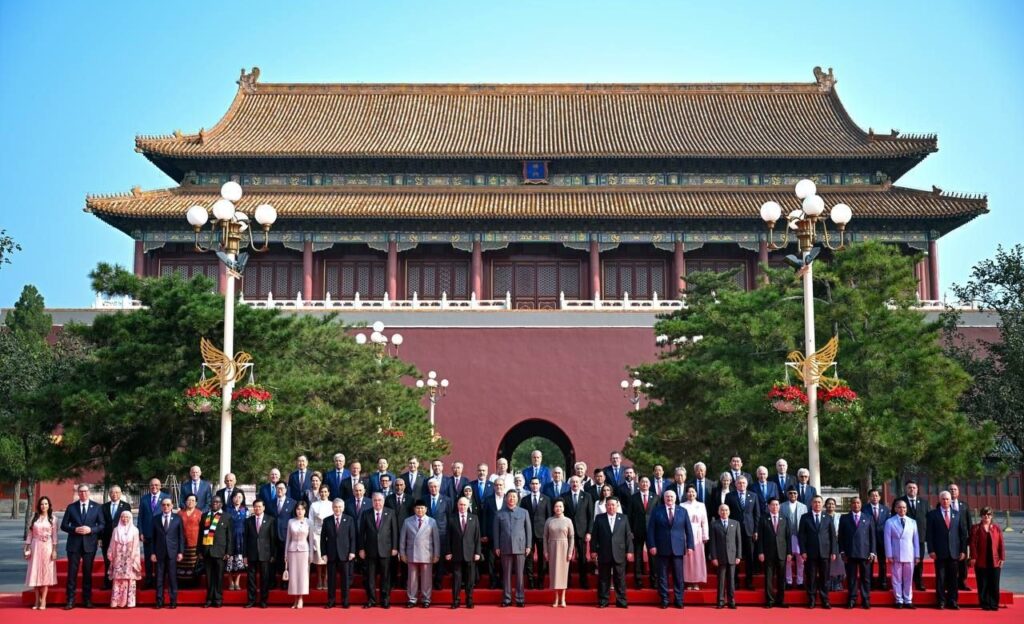
The Shanghai Cooperation Organization summit coincided with China’s lavish commemorations of the "80th anniversary of victory in the War of Resistance Against Japanese Aggression and the broader World Anti-Fascist War." The culminating moment, a grand military parade, was followed by a formal reception hosted by President Xi Jinping for visiting foreign dignitaries. All five Central Asian heads of state attended the parade. As the summit concluded, Xi seized the opportunity to issue a pointed warning to the West, particularly the United States and President Donald Trump, who had made it clear that he was closely following events in Tianjin and Beijing. In a post on Truth Social, Trump wrote, "Please give my warmest regards to Vladimir Putin and Kim Jong Un as you conspire against the United States of America." Kim Jong Un’s high-profile visit to Beijing, including a prolonged meeting with Putin, signaled the emergence of a visible military alignment between North Korea and Russia. This visit served as a strategic complement to China's Victory Day display of military might. [caption id="attachment_35739" align="aligncenter" width="1280"] Image: president.uz[/caption] For the first time, China publicly exhibited components of its strategic nuclear triad: the air-launched Jinglei1 missile, submarine-launched Julang3, and land-based ICBMs such as the Dongfeng61 and Dongfeng31 (and reportedly the DF5C). Analysts saw this as a deliberate signal to the U.S., regional powers like India and Russia, and potential international arms buyers, positioning China as a formidable strategic actor. Also on display were China’s anti-drone “triad”, missile-gun systems, high-energy lasers, and high-power microwave weapons, highlighting advances in counter-drone technology. Additionally, the parade showcased hypersonic and cruise missiles, unmanned aerial and underwater systems, and even robotic dog units, demonstrating China’s futuristic military capabilities. While noting the parade's impressive visuals, analysts cautioned that the true readiness of many showcased systems, for example, torpedo drones or laser weapons, remains uncertain. [caption id="attachment_35741" align="aligncenter" width="1280"] Image: president.uz[/caption] Diplomatically, the summit also reinforced Sino-Russian ties. Putin, who described relations with China as “unprecedentedly” close, and Xi signed over 20 bilateral agreements, including a major energy deal, Power of Siberia 2, a gas pipeline delivering 50 billion cubic metres annually to China via Mongolia. Meanwhile, China announced a trial visa-free entry policy for ordinary Russian passport holders, effective from September 15, 2025, to September 14, 2026, allowing visits up to 30 days for tourism, business, or family purposes. Together, the military spectacle and deepening diplomatic and people-to-people ties affirm Xi’s confidence as he prepares for crucial negotiations with President Trump, an unmistakable projection of strength and strategic resolve.

Kazakhstan: Aircraft Debris Found in Search for Missing Military Helicopter

Search teams in Kazakhstan have discovered an oil slick on a lake and aircraft fragments that appear to belong to a military-operated helicopter carrying three people that was reported missing. Kazakhstan’s Ministry of Emergency Situations launched an intensive search and rescue operation after contact with the EC145 helicopter was lost on Friday in the area of Otar, a village west of Almaty. Satellite detection methods spotted oily water on Lake Sorbulak, about 40 kilometers northwest of Almaty, and searchers working through the night found aircraft debris “presumably belonging to” Kazakhstan’s Air Defense Forces, the ministry said on Friday. It said echo sounders as well as aerial and underwater drones were being used in the operation. “About 200 personnel, 40 units of equipment, 15 watercraft, 4 canine units, and 2 aircraft of the Ministry of Emergency Situations are involved,” the ministry said. The Ministry of Defense said the helicopter had been on a scheduled flight and that “a special commission has been dispatched to determine the circumstances of the incident.” The Eurocopter EC145 is a twin-engine, light utility aircraft.

Opinion: A Sea of Discord? Intensifying Military Drills Threaten Stability in the Caspian Region

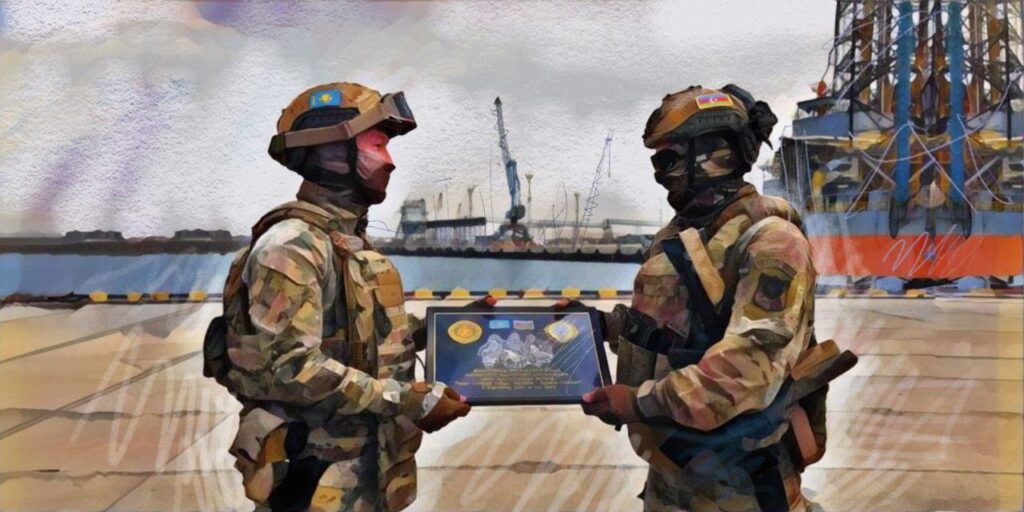
On Monday, Russia and Iran launched joint military exercises in the Caspian Sea under the banner “Together for a Safe and Secure Caspian Sea.” Officially, the drills aim to enhance maritime security and naval cooperation between the two countries and are being coordinated by Iran’s Northern Fleet. While such exercises might once have passed without much notice, their timing and frequency reflect a shifting dynamic: the Caspian region is rapidly emerging as a potential hotspot in global geopolitics. Just one month prior, the same waters hosted joint military exercises between Azerbaijan and Kazakhstan, held in Aktau, western Kazakhstan. These were followed by the “Tarlan-2025” air and tactical drills in Azerbaijan from July 8-10, which focused on enhancing UAV operations and military coordination. Baku’s strategic alliance with Ankara is a key factor here. Azerbaijan, a close Turkish partner, is now engaged in a more strained relationship with Russia. Moscow’s muted reaction to this cooling suggests an awareness that Ankara is increasingly shaping a Turkic military-political bloc, an emerging force in a region of strategic importance to both Russia and China. Earlier this month, Turkey launched its annual Anadolu-2025 special forces exercises. Participants included troops from 33 nations, Kazakhstan, Azerbaijan, Pakistan, Uzbekistan, and others but notably excluded Russia. For the first time, in 2024, military exercises were held in the Caspian without Russian involvement. The Birleistik (Unity) 2024 drills were conducted at Kazakhstan’s Oymasha training ground and Cape Tokmak along the Caspian coast. Troops from Azerbaijan, Kazakhstan, Kyrgyzstan, Tajikistan, and Uzbekistan rehearsed scenarios including conflict zone identification, night maritime operations, and amphibious landings. Previously, regional military cooperation had been limited to bilateral engagements, such as the 2023 UZAZ exercises (Azerbaijan-Uzbekistan), Kanzhar-2023 (Kazakhstan-Uzbekistan), and Hazri-2023 (Azerbaijan-Kazakhstan). The spike in joint drills during 2024-2025 underscores growing rivalries between regional and global powers. These operations are not mere formalities but reveal emerging security alignments and geopolitical signals. Three distinct blocs appear to be coalescing in the Caspian, with implications for Central Asia as well. The first bloc includes Russia, Iran, and China. These nations have held annual “Maritime Security Belt” exercises since 2019, with the most recent in March 2025 off the Iranian coast. The second bloc comprises Turkey, Azerbaijan, and members of the Organization of Turkic States (OTS). Defense ties among these countries are becoming a core element of OTS cooperation. At the 10th OTS Summit in Astana in 2023, Azerbaijani President Ilham Aliyev emphasized defense as the main guarantor of member state security, citing ongoing regional conflicts and violations of international law. The third bloc, more pragmatic and focused, is the Kazakhstan-Azerbaijan partnership. These countries are cooperating on the basis of the 2018 Caspian Convention to secure maritime communications. Azerbaijan contributes military expertise, particularly in UAV and drone warfare developed during the Karabakh conflicts. Kazakhstan brings diplomatic credibility and promotes regional governance and connectivity, offering a stabilizing complement to Azerbaijan’s military strengths. In sum, the Caspian Sea, once colloquially referred to as “Russia’s lake”, is steadily losing that identity. It is transforming into...

U.S. Veterans Exposed to Toxic Chemicals at K2 Uzbek Base Still Waiting for Recognition

After the 9/11 attacks, thousands of U.S. troops were deployed to Karshi-Khanabad Air Base (K2) in Uzbekistan in support of operations in Afghanistan. But what many service members didn’t know at the time was that they were entering a highly contaminated environment. K2, a former Soviet military facility, was riddled with toxic substances. Matthew “Nick” Nicholls, a U.S. Army environmental technician who was part of the initial assessment team, described the site to Fox News Digital as “probably the most toxic soup of chemicals that any service member has ever been exposed to.” Nicholls reported that yellowcake uranium leaked from the ground, while jet fuel and other hazardous chemicals permeated the air and soil. Toxic fumes and dust surrounded the base. His team recommended safety measures such as gravel coverage and restricted exposure times in certain zones. While some precautions were implemented, others were ignored. Today, many of the veterans who served at K2 are battling serious health conditions, including rare forms of cancer and debilitating joint issues. Some have died young. “These are not the cancers that young people normally get,” Nicholls said. “People I served with are dying.” Between 2001 and 2005, more than 15,000 U.S. troops and thousands of contractors passed through K2. Many now face difficulties receiving adequate medical care or recognition from the Department of Veterans Affairs (VA). Although the VA has acknowledged exposure risks, it maintains that available studies do not definitively link K2 service to the illnesses reported. However, U.S. lawmakers are pressing for action. Rep. Mark Green (R-Tenn.) has criticized the Pentagon for neglecting early warnings and underestimating the risks. Alongside Rep. Stephen Lynch (D-Mass.), Green introduced a provision in the 2021 National Defense Authorization Act mandating a study into toxic exposure at K2. Nearly four years later, the study remains incomplete. “This is unjust,” Green told Fox News Digital. “The Pentagon ignored the health and safety of our service members.” Green has renewed calls for the Department of Defense to complete its report, stating that veterans continue to wait for answers. While the Pentagon has pledged a private response, veterans and advocates demand public accountability. In 2024, the VA relaxed eligibility requirements for K2-related disability benefits. But Green argues that this is insufficient. He has proposed additional legislation to ensure that medical conditions linked to toxic exposure at K2 are formally recognized by the VA. “These veterans served their country with honor,” Green said. “Now it’s time for the country to stand by them.”

Kyrgyzstan to Unveil New Air Defense Systems at Military Parade

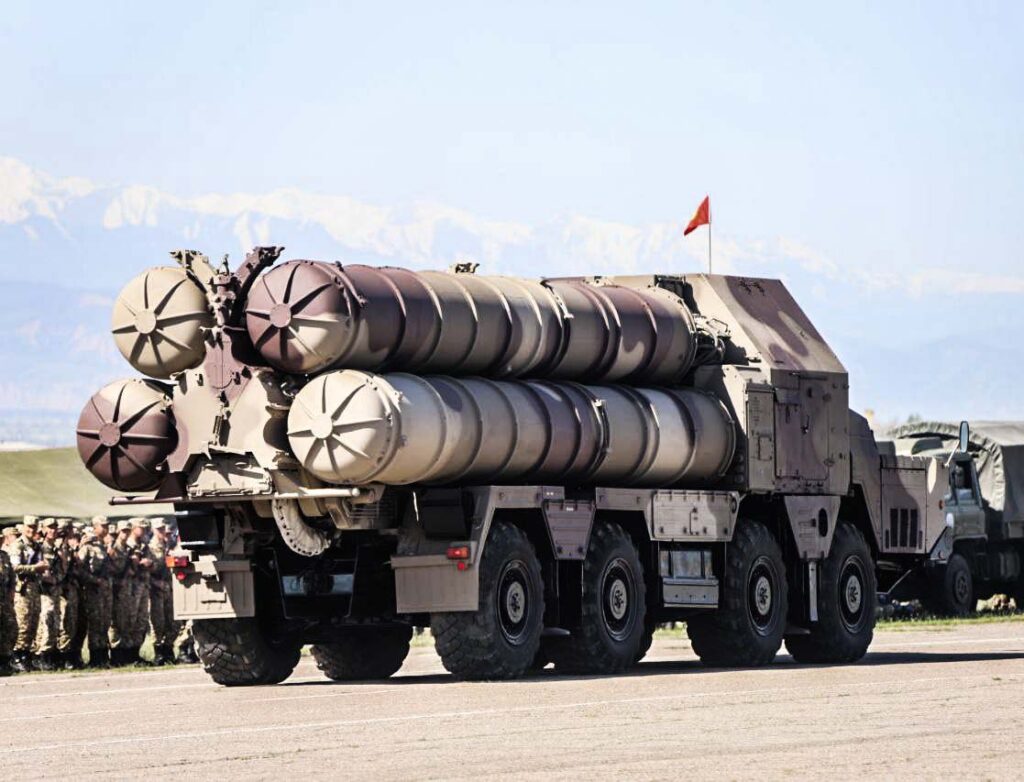
During recent rehearsals in the town of Tokmok, local residents spotted modern Tor-M2KM air defense systems mounted on KamAZ trucks, marking the first public appearance of these advanced missile systems in Kyrgyzstan’s arsenal. According to the General Staff of the Armed Forces of Kyrgyzstan, the country's Victory Day military parade will be held on May 8 in Ala-Too Square in Bishkek. More than 120 military and special-purpose vehicles, including artillery, armored vehicles, and air defense systems, will participate in the event, alongside 8,000 service personnel. The aerial portion of the parade will feature flyovers by both Kyrgyz and Russian aircraft, with the latter based at the Kant airbase. “The technical component of the parade will feature the most modern equipment acquired through the national budget,” the Defense Ministry stated. “For the first time, Tor-M2KM and Pechora-2BM missile systems, as well as S-300PS long-range surface-to-air missile launchers, will be on display in Ala-Too Square.” Residents of Tokmok were the first to capture images of the Tor-M2KM systems during rehearsals. The system, known for its short-range effectiveness, is designed to counter a wide range of aerial threats including aircraft, helicopters, drones, and cruise missiles. The units were painted in the camouflage colors of the Kyrgyz armed forces, indicating their official deployment. Notably, the appearance of the S-300PS systems comes just days after their reported transfer from the Russian armed forces to Kyrgyzstan. These long-range missile systems are designed to provide strategic air defense coverage. The upcoming parade is expected to highlight the rapid modernization of Kyrgyzstan’s military capabilities and will be closely watched both domestically and by regional observers.