• KGS/USD = 0.01144 0%
  • KZT/USD = 0.00205 0%
  • TJS/USD = 0.10784 0%
  • UZS/USD = 0.00008 0%
  • TMT/USD = 0.28490 0%
  • KGS/USD = 0.01144 0%
  • KZT/USD = 0.00205 0%
  • TJS/USD = 0.10784 0%
  • UZS/USD = 0.00008 0%
  • TMT/USD = 0.28490 0%
  • KGS/USD = 0.01144 0%
  • KZT/USD = 0.00205 0%
  • TJS/USD = 0.10784 0%
  • UZS/USD = 0.00008 0%
  • TMT/USD = 0.28490 0%
  • KGS/USD = 0.01144 0%
  • KZT/USD = 0.00205 0%
  • TJS/USD = 0.10784 0%
  • UZS/USD = 0.00008 0%
  • TMT/USD = 0.28490 0%
  • KGS/USD = 0.01144 0%
  • KZT/USD = 0.00205 0%
  • TJS/USD = 0.10784 0%
  • UZS/USD = 0.00008 0%
  • TMT/USD = 0.28490 0%
  • KGS/USD = 0.01144 0%
  • KZT/USD = 0.00205 0%
  • TJS/USD = 0.10784 0%
  • UZS/USD = 0.00008 0%
  • TMT/USD = 0.28490 0%
  • KGS/USD = 0.01144 0%
  • KZT/USD = 0.00205 0%
  • TJS/USD = 0.10784 0%
  • UZS/USD = 0.00008 0%
  • TMT/USD = 0.28490 0%
  • KGS/USD = 0.01144 0%
  • KZT/USD = 0.00205 0%
  • TJS/USD = 0.10784 0%
  • UZS/USD = 0.00008 0%
  • TMT/USD = 0.28490 0%

Viewing results 1 - 6 of 416

Transshipment of Russian Oil Through Kazakhstan to China to Become More Expensive

The Parliament of Kazakhstan has approved an increase in the cost of transit of Russian oil across Kazakhstan to China. At the same time, the volume of transportation will increase to ten million tons annually from the previous figure of seven. The document amends the agreement between Kazakhstan and Russia on the transportation of hydrocarbons through the territory of the Republic. The prior agreement was signed in December 2013. According to the new amendments, the tariff for transit on the pipeline section Tuimazy-Omsk-Novosibirsk (TON) will be set at $2.1 per ton, and through the territory of Kazakhstan - $15 per ton. According to Senator Suindik Aldashev, the agreement will be valid until January 1, 2034. Earlier, Kazakhstan Energy Minister, Almasadam Satkaliev said that Rosneft has signed an agreement with SNPS-Aktobemunaigas, which is controlled by the China National Petroleum Corporation (CNPC), to supply 100 million tons of oil over a period of ten years. The extension of the agreement will ensure that the Pavlodar petrochemical refining plant will be loaded with oil that comes through the Omsk-Pavlodar pipeline. It's forecasted that the Kazakh side's profit from transportation tariffs could reach $1.7 billion.

OPEC Fund to Allocate $500 Million for Tourism, Logistics Development in Uzbekistan

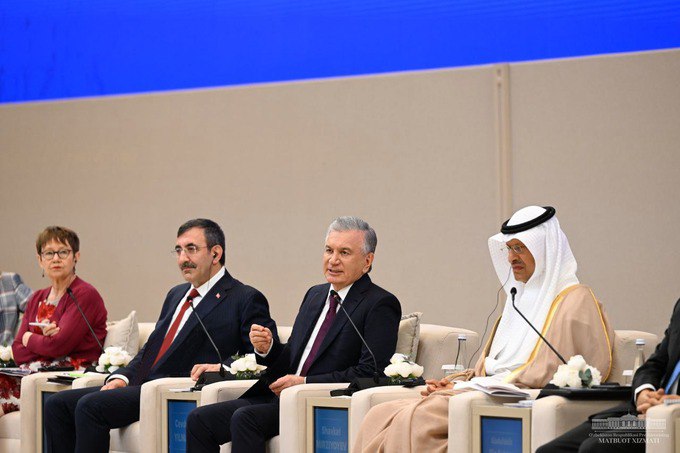
A delegation of the Organization of the Petroleum Exporting Countries (OPEC) International Development Fund headed by President Abdulhamid Alkhalifa participated in the events of the Tashkent International Investment Forum. The OPEC Fund and the Government of Uzbekistan signed agreements on joint activities and financial commitments worth $500 million. The funds will be used for the development of tourism, logistics, pharmaceuticals, ecology, support for women's entrepreneurship, and youth initiatives. The OPEC delegation will visit the facility of water supply and wastewater disposal in the Samarkand region, which was financed by the organization. This project provides the basic tools to improve health and living conditions for 70,000 local residents. For 25 years, the OPEC Fund has been working with Uzbekistan, providing it with $760 million in loans. This financial support has helped provide drinking water to remote areas and modernize Uzbekistan's energy sector. This year's Tashkent Investment Forum was attended by 2,500 delegates - government leaders, heads of major companies and representatives of the United Nations (UN), the European Bank for Reconstruction and Development (EBRD), the Organization of the Petroleum Exporting Countries (OPEC), and the Shanghai Cooperation Organization (SCO).

Kyrgyzstan Looks to Azerbaijan to Replace Russian Fuel

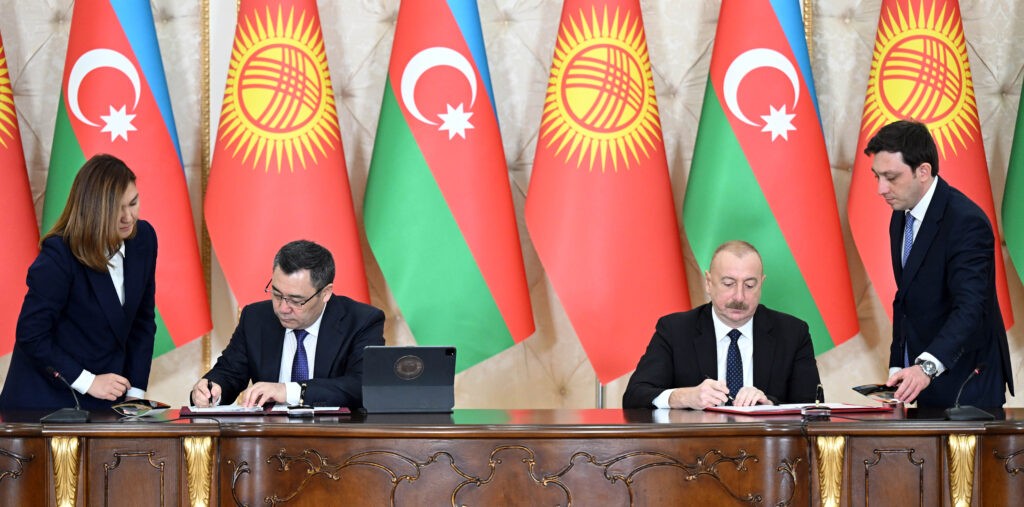
Geopolitical turbulence is forcing Kyrgyz authorities to diversify approaches to securing its fuel and lubricants supplies. Azerbaijan may become one of the sources of oil products. As part of Kyrgyz president Sadyr Zhaparov's recent visit to Azerbaijan, negotiations were held with representatives of the Baku Oil Refinery, which is run by the state oil company, SOCAR.  The two sides discussed the specific details of Azerbaijani oil supplies to the Junda oil refinery in Kyrgyzstan. "Azerbaijan is one of the largest exporters of oil products. In the near future, the Junda oil refinery will also start operating in Kyrgyzstan, the demand of which is more than 1 million tons of fuel per year. In this regard, the issues of oil supplies to Kyrgyzstan were discussed with the management of SOCAR. For their part, they are ready to cooperate," said Kyrgyz energy minister Taalaibek Ibrayev. Earlier, Kyrgyzstan's Ministry of Economy and Commerce discussed various risks in the fuel market. The ministry is preparing a package of measures in case of a sharp increase in prices for crude oil and petroleum products. Kyrgyzstan's economy minister Daniyar Amangeldiev referenced the agreements between Russia and Kyrgyzstan on duty-free supplies of oil products under the customs rules of the Eurasian Economic Union (EAEU). However, the ministry fears a sharp reduction in imports from Russia -- as Ukrainian forces use drones to bomb Russian refining capacity, and western sanctions make repairing and replacing parts more difficult. Currently, Kyrgyzstan's local capacity for refining petroleum products doesn't even cover 5% of domestic demand.

Kazakhstan Likely To Insist on Revisions to Kashagan Oil Contracts

Kazakhstan is demanding compensation for lost profits from the North Caspian Operating Company (NCOC), the consortium that manages the Kashagan oil field, and arbitration claims have risen to $150 billion. Sources close to Kashagan told The Times of Central Asia that this should send the message to western energy companies that Kazakhstan is looking to revise previously signed contracts. While Bloomberg has reported the sum of the claims, citing people familiar with the matter, Kazakh government officials have declined to comment on the situation, claiming that it is a "commercial dispute." In April 2023, proceedings against the companies developing the Kashagan and Karachaganak fields began as part of a dispute over cost deductions from oil-sale proceeds of more than $13 billion and $3.5 billion, respectively. An additional $138 billion claim relates to the calculation of the cost of oil production "that was promised to the government but not delivered by the field developers," according to Bloomberg. The Ministry of Energy has not yet commented on the new claims. It states that the Kazakh authorities seek to maximize profits from their oil-production projects with the participation of foreign investors, but have been relatively flexible in previous disputes with oil corporations. International sources note that Eni, Shell, Exxon and TotalEnergies have already invested around $55 billion in Kashagan, and currently the field produces about 400,000 barrels of oil per day. NCOC investors, led by Italy's Eni, are convinced that production can be increased to 1.5 million barrels per day. NCOC has stated that it acts in strict compliance with the contract. Representatives of Eni confirmed that the Kazakh authorities have applied to the court for arbitration settlement, but did not disclose details. Earlier, Kazakhstan won a lawsuit against the Kashagan consortium which required them to pay $5.1 billion for damage to the environment. Kashagan is developed by the NCOC consortium, which includes the national company KazMunayGas (KMG) and several foreign energy companies: Eni, Shell (Great Britain), ExxonMobil (USA), Total (France), Inpex (Japan), and CNPC (China). Member of the Public Council of the Kazakh Ministry of Energy, Olzhas Baidildinov believes that the sharp increase in the amount of the lawsuit is a signal from the Kazakh side to the consortium to revise the contracts. "In my opinion, it's obvious that Kazakhstan wants to revise the terms of work on large consortia. At the same time, I have proposed many times to exchange the frozen assets of the Russian Federation for stakes in major projects: Tengiz, Karachaganak and Kashagan. There is a nuance here: for example, the shares in Karachaganak and Kashagan are managed by PSA LLP, which is determined by the authorized body, while the share in Tengiz is managed by KazMunayGas. As we see, on Kashagan and Karachaganak there are arbitration claims filed in international arbitration, there is an environmental issue - but on Tengiz they are silent for some reason. This is either KMG's unprofessionalism, because the amount of investment expense is very high, or some other unknown issues that need...

Uzbek Refineries Abandoning Kazakh Oil in Favor of Cheaper Russian Crude

Uzbekistan is reducing oil imports from Kazakhstan in favor of cheaper Russian oil, according to a report by the specialized, energy-focused Telegram channel, Oil & Gas of Kazakhstan. According to this source, in the first quarter of 2024, companies in Uzbekistan imported 15,200 tons of crude oil from Kazakhstan by rail for processing. In January-March of 2023, imports amounted to 25,600 tons. The main volume of raw materials this year went to the Ferghana refinery. At the same time, Russia's Gazprom-Neft shipped 75,000 tons of oil through the pipeline in transit through Kazakhstan in the first quarter of 2024. This is almost seven times more than a year earlier, when this figure was just 10,700 tons. By the end of 2024, Russia plans a full-year supply volume to Uzbekistan of up to 550,000 tons of oil, against a total of 154,300 tons a year earlier, which will be supplied through Kazakh state oil-pipeline operator, KazTransOil's trunk pipelines. The reason for the growth of supplies is a more attractive price, which is in part pushed down by both the G7's price cap of $60 per barrel on Russian oil exports, and India's disinclination to pay for Russian oil in rubles - which is driving down Russian exports. If oil from Kazakhstan is supplied to Uzbekistan at a discount of $8-9 per barrel relative to the North Sea Dated Brent oil contract, then the size of the discount on Russian crude is reaching $11-12 per barrel.

Kazakhstan Imported 500 Million Cubic Meters of Russian Gas in First Quarter 2024

In the first quarter of 2024 Kazakhstan took delivery of 500 million cubic meters of Russian gas, according to a report by the Ministry of Energy of Kazakhstan, who said that the import of blue fuel from Russia is under a contract between state energy companies JSC QazaqGaz and PJSC Gazprom. According to the agreement between the companies, fuel imports are made only when necessitated by the gas demand of the domestic Kazakh market against the background of peak consumption in winter -- and exclusively at the request of the Kazakh side. According to QazaqGaz, the wholesale cost of Kazakh gas is more than 60% higher than the retail price in the country. At the end of last year, the national company incurred $392 million in losses from the sale of natural gas on the domestic market. Experts say that the possibility of gas shortages in the country depends on the growth rate of domestic consumption and stability of commercial fuel supplies from domestic natural gas producers. If there is a shortage, it can be covered by imports assured by the national company. However, in order to prevent shortages of gas in the medium and long term, QazaqGaz has increased its commercial gas reserves, started to develop new fields, and undertaken construction of new -- and refurbishment of existing -- gas processing and gas transportation facilities. Earlier, Boris Martsinkevich, an energy expert and editor-in-chief of the Russian publication Geoenergetika, described Kazakhstan as a gas-dependent country. In his opinion, 2024 will be a milestone year for Kazakhstan. This is the year when Kazakhstan's fields will not be able to meet the needs of the domestic market. Martsinkevich's statements were made against the backdrop of a sharp decline in gas exports and an increase in gas imports.