
• KGS/USD = 0.01144 0%
  • KZT/USD = 0.00212 0%
  • TJS/USD = 0.10864 0.56%
  • UZS/USD = 0.00008 0%
  • TMT/USD = 0.28571 0%
  • KGS/USD = 0.01144 0%
  • KZT/USD = 0.00212 0%
  • TJS/USD = 0.10864 0.56%
  • UZS/USD = 0.00008 0%
  • TMT/USD = 0.28571 0%
  • KGS/USD = 0.01144 0%
  • KZT/USD = 0.00212 0%
  • TJS/USD = 0.10864 0.56%
  • UZS/USD = 0.00008 0%
  • TMT/USD = 0.28571 0%
  • KGS/USD = 0.01144 0%
  • KZT/USD = 0.00212 0%
  • TJS/USD = 0.10864 0.56%
  • UZS/USD = 0.00008 0%
  • TMT/USD = 0.28571 0%
  • KGS/USD = 0.01144 0%
  • KZT/USD = 0.00212 0%
  • TJS/USD = 0.10864 0.56%
  • UZS/USD = 0.00008 0%
  • TMT/USD = 0.28571 0%
  • KGS/USD = 0.01144 0%
  • KZT/USD = 0.00212 0%
  • TJS/USD = 0.10864 0.56%
  • UZS/USD = 0.00008 0%
  • TMT/USD = 0.28571 0%
  • KGS/USD = 0.01144 0%
  • KZT/USD = 0.00212 0%
  • TJS/USD = 0.10864 0.56%
  • UZS/USD = 0.00008 0%
  • TMT/USD = 0.28571 0%
  • KGS/USD = 0.01144 0%
  • KZT/USD = 0.00212 0%
  • TJS/USD = 0.10864 0.56%
  • UZS/USD = 0.00008 0%
  • TMT/USD = 0.28571 0%

Viewing results 1 - 6 of 5

KazTransOil Opens First EU Office in Poland to Boost Oil Transit and Exports

Kazakhstan’s national oil pipeline operator KazTransOil has announced the opening of its first representative office in the European Union, selecting Poland as the location. The decision, approved by the company’s board of directors, aims to strengthen Kazakhstan’s presence in European energy markets, the company said in a statement. The new office will focus on protecting KazTransOil’s commercial interests in Poland and facilitating the transit of Kazakh crude oil through Belarus and Poland. It will also oversee the handover of oil at the Adamova Zastava delivery point on the Belarusian-Polish border, from where it is transported to the Schwedt refinery in eastern Germany. KazTransOil stated that the move is intended to expand alternative export routes, enhance supply reliability, and reinforce Kazakhstan’s role as a strategic energy partner to Europe. The expansion comes amid deepening oil cooperation between Kazakhstan and European countries. On December 18, KazTransOil and Russia’s state-owned pipeline operator Transneft signed a transit agreement for 2026, allowing Kazakh oil to continue flowing through Russian territory. While specific volumes were not disclosed, the agreement covers shipments to Russian ports such as Novorossiysk and Ust-Luga, and to the Russia-Belarus border for onward delivery to EU countries. Germany, in particular, has ramped up imports of Kazakh oil as part of its broader effort to reduce reliance on Russian energy. Following the 2022 invasion of Ukraine and subsequent EU sanctions, Berlin halted Russian oil imports and began receiving regular shipments of Kazakh crude in 2023. In 2024, Germany imported 1.5 million tons of Kazakh oil and plans to increase that to 1.7 million tons in 2025, with a long-term target of 2.5 million tons annually. In October 2025, KazMunayGas, Kazakhstan’s national oil and gas company, signed an updated agreement with Rosneft Deutschland GmbH to extend oil supply arrangements through the end of 2026. The revised deal boosts monthly deliveries from 100,000 to 130,000 tons. Additional volumes are expected from the Karachaganak field, while supplies from the Kashagan and Tengiz fields are set to begin in 2024 and 2025, respectively. According to KazMunayGas, approximately 1.5 million tons of Kazakh oil were delivered to the Schwedt refinery between January and September 2025. Rosneft Deutschland GmbH, which holds a stake in the refinery, remains under German government trusteeship as part of Berlin’s effort to minimize exposure to Russian energy assets. Deliveries of Kazakh oil to Europe are conducted via the Druzhba pipeline. Originating in Samara, Russia, the pipeline splits near Bryansk and Mozyr into two branches: the northern route through Belarus and Poland to Germany, and the southern route through Ukraine to Hungary, Slovakia, and the Czech Republic.

Poland Asks Turkmenistan to Open a Consulate in Warsaw

Poland has asked Turkmenistan to consider opening a consulate in Warsaw. The country's minister of external affairs, Rashid Meredov, announced this at a government meeting on July 5. Turkmenistan will send an official delegation to Poland in the fourth quarter of 2024 to study the possibility of opening a consulate. Turkmenistan and Poland have also formed a working group on economic cooperation and plan to organize an exhibition of the Museum of Turkmenistan's exhibits in Poland in 2025. The number of Turkmen immigrants in Poland has increased dramatically in recent years. In 2022, Turkey, the most popular destination for Turkmen labor migration, introduced a visa regime at the request of the Turkmen side. The report stated: “The decline of the Turkish economy and the devaluation of the lira also played an important role. Migrants began to look for other options, including Poland. The request to open a consulate is probably related to this, but Rashid Meredov did not mention it in his report. The government of Turkmenistan wants to curb labor migration with bureaucratic obstacles.” Meredov also announced the expansion of cooperation with other Eastern European countries that are members of the European Union: Hungary, the Czech Republic, Romania, and Slovakia.

Poland and Russia Ensure Continued Transit of Kazakh Oil to Germany

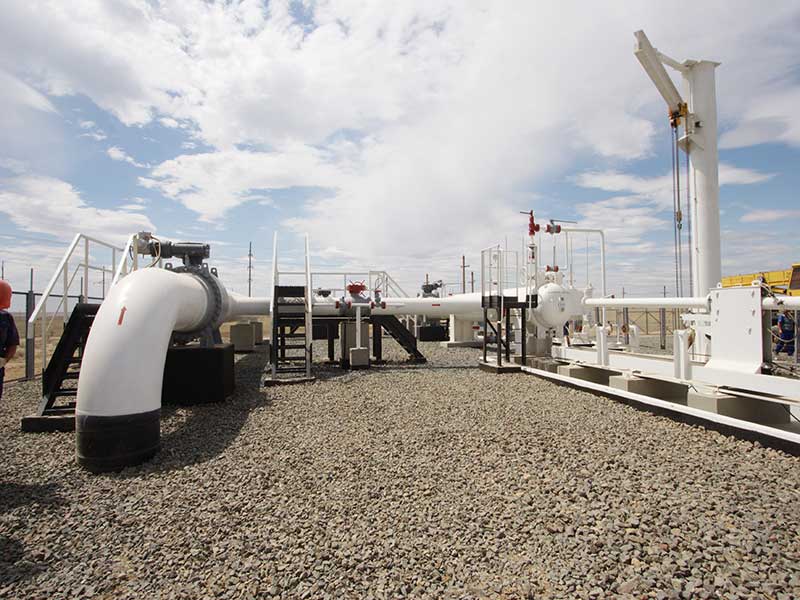
Pipeline operators PERN (Poland) and Transneft (Russia) have agreed to ensure the continued transit of Kazakh oil to Germany,  reported Reuters. The Druzhba pipeline runs through Russia to the Belarusian city of Mozyr, after which it splits northwards in the direction of Poland and Germany, and southwards, to Hungary, the Czech Republic, Slovakia and Croatia. The northern pipeline has the capacity to  carry  two million barrels of oil per day from Kazakhstan into Poland. Back in  April, Transneft warned Kazakhstan that the transit of its oil to Germany could cease as a result of the situation concerning the certification of oil flow meters in Poland. The devices must be periodically certified for compliance with Russian standards and the verification of oil flow meters on the Polish section of the Druzhba pipeline must be completed by June 5. To  address the issue , the  Polish pipeline operator PERN, Russian state-owned Transneft, and German refiner PCK Schwedt, which receives supplies from Kazakhstan, have agreed that the German company will maintain oil flow meters on the Polish section of the Druzhba pipeline. The work required to maintain metering on the Polish section and in turn, remove the risks imposed by  PERN's sanctions,  are to be undertaken by an unnamed Slovak company.
