• KGS/USD = 0.01144 0%
  • KZT/USD = 0.00207 0%
  • TJS/USD = 0.10407 -0.29%
  • UZS/USD = 0.00008 0%
  • TMT/USD = 0.28571 0%
  • KGS/USD = 0.01144 0%
  • KZT/USD = 0.00207 0%
  • TJS/USD = 0.10407 -0.29%
  • UZS/USD = 0.00008 0%
  • TMT/USD = 0.28571 0%
  • KGS/USD = 0.01144 0%
  • KZT/USD = 0.00207 0%
  • TJS/USD = 0.10407 -0.29%
  • UZS/USD = 0.00008 0%
  • TMT/USD = 0.28571 0%
  • KGS/USD = 0.01144 0%
  • KZT/USD = 0.00207 0%
  • TJS/USD = 0.10407 -0.29%
  • UZS/USD = 0.00008 0%
  • TMT/USD = 0.28571 0%
  • KGS/USD = 0.01144 0%
  • KZT/USD = 0.00207 0%
  • TJS/USD = 0.10407 -0.29%
  • UZS/USD = 0.00008 0%
  • TMT/USD = 0.28571 0%
  • KGS/USD = 0.01144 0%
  • KZT/USD = 0.00207 0%
  • TJS/USD = 0.10407 -0.29%
  • UZS/USD = 0.00008 0%
  • TMT/USD = 0.28571 0%
  • KGS/USD = 0.01144 0%
  • KZT/USD = 0.00207 0%
  • TJS/USD = 0.10407 -0.29%
  • UZS/USD = 0.00008 0%
  • TMT/USD = 0.28571 0%
  • KGS/USD = 0.01144 0%
  • KZT/USD = 0.00207 0%
  • TJS/USD = 0.10407 -0.29%
  • UZS/USD = 0.00008 0%
  • TMT/USD = 0.28571 0%

Viewing results 1 - 6 of 50

Tajikistan Mobilizes Civil Servants for Door-to-Door Anti-Radicalism Explanatory

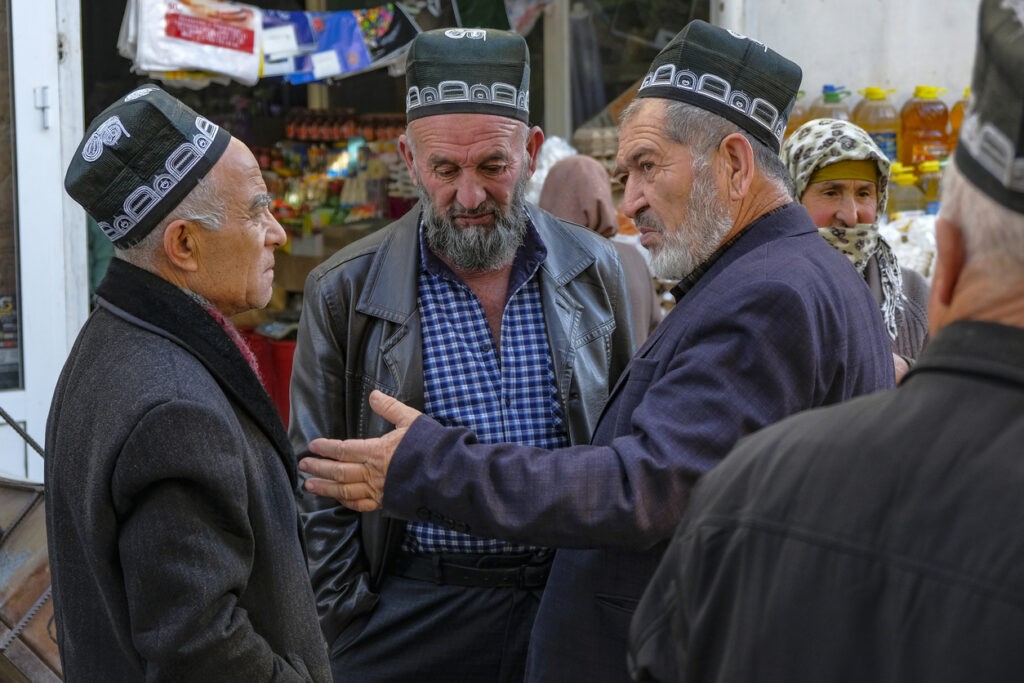
As reported, officials and civil servants in Tajikistan have been tasked with going door-to-door and holding explanatory talks with the population on radicalism and extremism. In the southern Khatlon region, 1,800 civil servants, including teachers, healthcare workers, and local council members, have been assigned to carry out these talks. Officials claim the primary goal of these conversations is to prevent young people from becoming radicalized. During the meetings, they discuss topics like promoting traditional women’s clothing instead of hijabs, which authorities associate with radicalism. They also ask about relatives living abroad who might be at risk of becoming extremists and encourage young people to join the army. In the first seven months of this year, campaign groups visited over 620,000 houses. At the same time, campaign groups film their interactions with people and publish reports on social networks. Critics of the government in this regard claim that officials' door-to-door visits are nothing more than intrusions into people’s homes and interferences in their personal affairs. However, officials deny this; they say that the chosen method only allows for identifying the “most vulnerable” families and is necessary to combat radicalism among young people. “The issue of radicalization in the region is alarming, especially the joining of young people to various extremist movements. There are many cases,” said Davlatali Said, the governor of Khatlon region.

CSTO to Finalize Tajik-Afghan Border Security Plan by End of Year

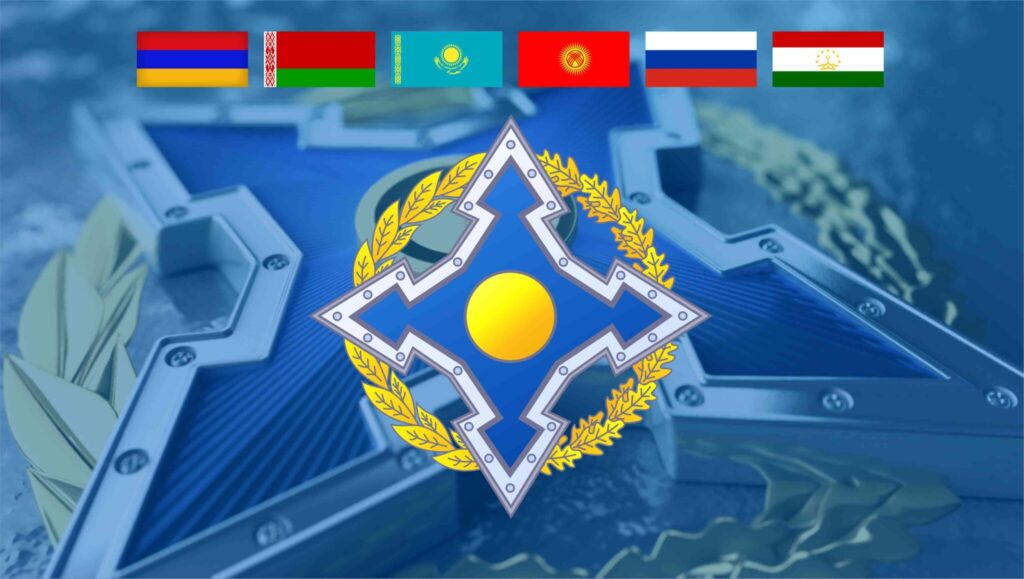
The program by the Collective Security Treaty Organization (CSTO) to strengthen the Tajik-Afghan border will be adopted by the end of 2024, the Secretary-General of the CSTO, Imangali Tasmagambetov, announced. “Continuous work is underway to develop and implement specific measures to strengthen our security space. The most striking example is the CSTO Targeted Interstate Program to Strengthen the Tajik-Afghan Border, scheduled for adoption this year,” he said. According to him, the CSTO is characterized by open and honest discussions of all current issues, without exception, in the mode of constructive and “soft” alliance and decision-making strictly in compliance with the principle of consensus. “And in terms of fundamental issues of mutual support and collective security, we act exclusively consolidated,” Tasmagambetov said. “Our common task for the foreseeable future is to strengthen the role and significance of the organization in the changing system of international relations while maintaining a commitment to established principles and priorities and at the same time corresponding to the modern context of regional and global security,” he added. The first decision to strengthen the Tajikistan-Afghanistan border was made in 2013. The program itself consists of three stages, the first of which is designed for five years. The state border between Tajikistan and Afghanistan is part of the southern border of the so-called CIS and post-Soviet territory. The total length of its border is 1374.2 km, of which 1184.4 km is a river border and 189.8 km is an island border.

Karakalpak Activist Loses Asylum Bid in Kazakhstan

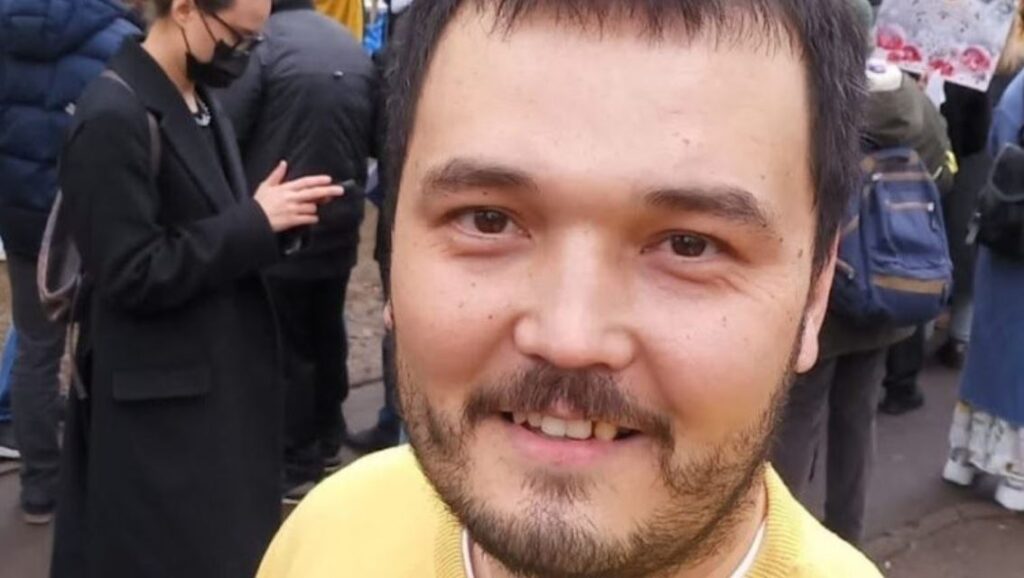
An Uzbek activist who has campaigned for the rights of people in the Uzbek region of Karakalpakstan faces possible extradition after Kazakhstan denied his asylum request, according to the activist´s supporters. Aqylbek Muratbai, who has lived in Kazakhstan for years, was arrested in February at the request of Uzbek authorities and a Kazakh commission ruled against his asylum request on Friday, his supporters said. New Kazakh regulations allow Muratbai to be moved to Uzbekistan “at any time,” according to Muratbai’s account on the X platform. His lawyer plans to appeal. Karakalpakstan is an arid, semi-autonomous area in the northwest of Uzbekistan that was the scene of deadly violence in 2022. Protesters marched in opposition to planned constitutional changes that would have removed that autonomous status, and security units used force to disperse the demonstrations. At least 21 people were killed, including 4 law enforcement officers, according to Human Rights Watch. Uzbek authorities have since prosecuted Karakalpak activists for crimes including the instigation of riots and sentenced some to long prison terms. At the same time, the government has launched an investment program to develop the long-neglected region. The Karakalpakstan question is particularly sensitive for Uzbekistan because the national constitution allows the region’s people to choose secession through a referendum. Muratbai’s camp had said that he would likely face unfair prosecution if he is extradited to Uzbekistan and that the Kazakh asylum process should take that possibility into account, even if maintaining good relations with the Uzbek leadership is also important.

Kyrgyzstan and EU Sign Enhanced Partnership and Cooperation Agreement

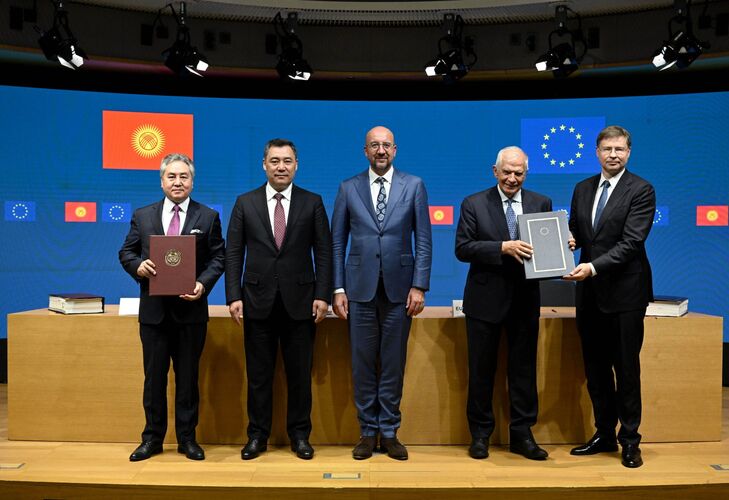
On June 25, President of the Kyrgyz Republic Sadyr Japarov met the President of the European Council Charles Michel in Brussels to discuss issues on Kyrgyzstan-EU interaction. Views were exchanged on prospects for trade and economic cooperation and the implementation of joint projects in energy, transport, rare metals, agriculture, and environmentally- friendly technologies Following the meeting, an Enhanced Partnership and Cooperation Agreement (EPCA) between the European Union and the Kyrgyz Republic was signed by the Minister of Foreign Affairs of the Kyrgyz Republic Jeenbek Kulubaev, High Representative of the European Union for Foreign Affairs and Security Policy/Vice-President of the European Commission Josep Borrell, and Executive Vice-President of the European Commission and Commissioner for Trade Valdis Dombrovskis. The new document replaces the Partnership and Cooperation Agreement (PCA) signed back in 1999. As reported by the Delegation of the European Union to the Kyrgyz Republic, the Agreement provides new legal grounds for reinforced political dialogue and deepening cooperation in areas such as trade and investment, sustainable development and connectivity, research and innovation, education, environment, and climate change, as well as rule of law, human rights, and civil society. It will also strengthen cooperation in foreign and security policy, including issues of conflict prevention and crisis management, risk reduction, cybersecurity, regional stability, disarmament, non-proliferation, arms and export control. In addition, the EPCA will create new opportunities for cooperation in critical raw materials, essential for green and digital transitions. High Representative of the European Union for Foreign Affairs and Security Policy/Vice-President of the European Commission Josep Borrell commented: “We are happy to count the Kyrgyz Republic amongst our close partners. The Enhanced Partnership and Cooperation Agreement demonstrates our steadfast commitment to strengthening and deepening our bilateral relations based on shared values and common interests in all areas of mutual benefit, reflecting new geopolitical and economic realities. We will continue working with Kyrgyzstan on further strengthening the protection of human rights and fundamental freedoms and promote cooperation with civil society which are essential pillars of an open democratic society.” Welcoming the initiative, Executive Vice-President and Commissioner for Trade Valdis Dombrovskis, announced: “This Enhanced Partnership and Cooperation Agreement marks a new chapter in the EU’s economic and trade relations with Kyrgyzstan. We have included an ambitious Trade and Sustainable Development Chapter that aims to promote fair and open competition, while also benefiting Kyrgyz consumers and SMEs. Through this Agreement, we are helping to create more opportunities for EU and Kyrgyz businesses and investors by facilitating trade flows and enhancing cooperation. We believe this partnership will contribute to the prosperity of our regions by generating new and better jobs and boosting economic development and resilience.” Since 2016, the Kyrgyz Republic has benefitted from unilateral and preferential access to the EU market through the Special Incentive Arrangement for Sustainable Development (GSP+) of the EU Generalised Scheme of Preferences. Kyrgyzstan is the EU’s third largest trading partner in Central Asia. GSP+ has contributed to an increase in EU-Kyrgyzstan trade in goods in 2023 by 116% (over 2022) reaching EUR 2.845 billion.    

Central Asia-EU Conference Focuses on Security Issues

On May 24, the International Institute for Central Asia (IICA) in collaboration with the European Union, hosted a conference in Tashkent entitled "Central Asia – the European Union: a new agenda for security cooperation." As reported by the EU Delegation to Uzbekistan, discussions focused on cooperation on security between Central Asian countries and the EU, and in particular, the need to develop new approaches in combating terrorism and organized crime, strengthening cybersecurity, and preventing violent extremism and human trafficking. Towards this goal and as part of EU-funded security-related projects, thousands of highly qualified specialists have been trained, and border and customs checkpoints modernized in the Central Asian region. Opening the meeting, European Union Special Representative for Central Asia Terhi Hakala stated: “I was present at the [EU and Central Asia] Leaders’ Meeting in Cholpon-Ata in 2023 when President of Uzbekistan Shavkat Mirziyoyev proposed this conference. We have achieved a lot in our regional cooperation since then and I am glad of this opportunity  to deepen our security cooperation. I am convinced that today’s dialogue  will help us to respond better to rapidly changing security challenges faced by both the EU and Central Asia.” Endorsing Hakala's statement, Deputy Minister of Foreign Affairs of Uzbekistan Muzaffarbek Madrahimov said, “Today's realities confirm the need for a deeper understanding of the indivisibility of threats to the security of Europe and Central Asia, and our common interests in combating transnational threats.” EU Ambassador to Uzbekistan Charlotte Adriaen likewise reiterated : “In an increasingly interconnected world, no country nor region can tackle the emerging unconventional security threats alone. During today’s discussions, we heard from security experts and practitioners from the EU and Central Asia and took stock of the ongoing cooperation and existing projects”.    

Central Asia’s “C5” Security Bloc Can Become a Reality

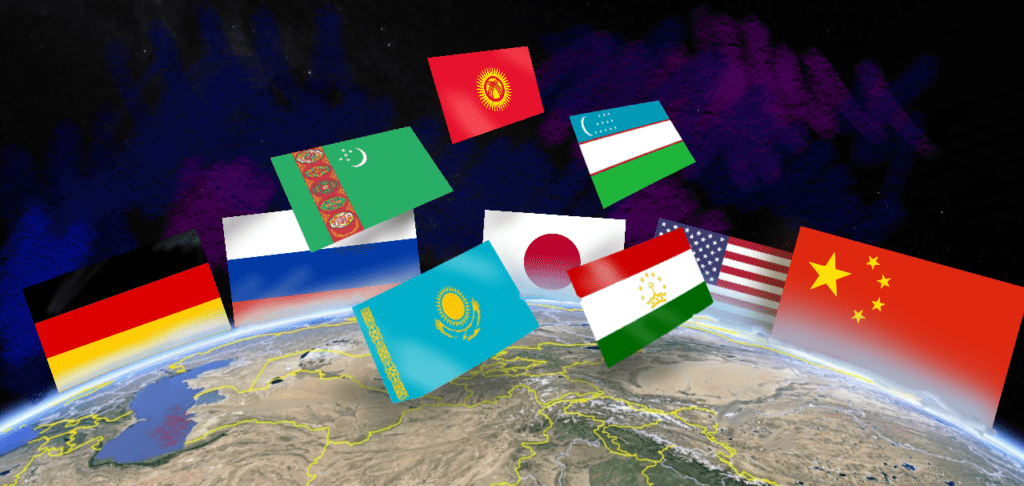
Central Asia is an emerging economic region that offers the world immense natural resources, a viable trade corridor, and a young, educated workforce. On a diplomatic level, major global powers have sometimes chosen to engage with the five Central Asian nations (Kazakhstan, Kyrgyzstan, Tajikistan, Turkmenistan, and Uzbekistan) as a bloc rather than individually, thus giving rise to the term C5+1. The United States, Germany, Japan, and the European Union have C5+1 initiatives grouping the five countries as a block. The C5+1 is not entirely a Western construct as, in addition to Japan, China also has its own C5+1 launched in 2023 that mirrors the U.S. version. Russia’s economic and security cooperation platforms are not all-inclusive when comes to Central Asia and include other CIS countries, such as Armenia, Azerbaijan, Belarus, and Moldova.   Cooperation vis-à-vis Afghanistan shows a united front on regional security On May 18, 2024, the heads of the Security Councils of Central Asian countries gathered in Astana, Kazakhstan, for a meeting aimed at enhancing regional security and cooperation. This high-level assembly brought together senior officials from the five states to discuss pressing security challenges and explore collaborative solutions. Kazakhstan’s President Kassym-Jomart Tokayev, who chaired the meeting, impressed that Afghanistan should be the focus of the region’s common attention as Central Asia’s most dire security challenges relate to this southern neighbor. Afghanistan has been a focal point for the spread of violent extremism and oppressive ideologies, impacting global peace and security. The country's history of conflict and provision of safe havens to extremist groups to train fighters and spread their ideologies have long posed threats to neighboring countries and beyond. In Central Asia, this has led to increased terrorism, with groups like the Islamic Movement of Uzbekistan (IMU) and ISIS-Khorasan exploiting Afghanistan's instability to establish bases and train fighters. They have carried out cross-border attacks, spreading violence into countries such as Uzbekistan, Tajikistan, and Kyrgyzstan. Additionally, the dissemination of radical ideologies from Afghanistan has recruited and radicalized individuals in Central Asia, contributing to other local insurgencies and destabilizing the region. An attack on a Russian concert hall in March 2024 by ISIS resulted in 144 deaths.  This event led President Tokayev to note that “there remains high risks associated with the activity of international terrorist organizations”. Narcotics trafficking funds terrorist operations in Afghanistan, fuels region-wide organized crime and increases addiction rates. Effective border control is essential to prevent the movements of militants and drug traffickers from Afghanistan into Central Asia, and thus enhance regional security and stability. In addition to combative and preventive measures, the UN wants Afghanistan to be brought into the international fold to manage these threats. Central Asian countries can facilitate this transition and have already made their own individual bilateral efforts to integrate the “Islamic Republic” into the international arena. Kazakhstan’s President Tokayev, for instance, proposed the creation of a UN Regional Center for Sustainable Development Goals for Central Asia and Afghanistan, to be based in Kazakhstan.   Regional unity helps withstand unwanted external...