• KZT/USD = 0.00210
  • TJS/USD = 0.10810
  • UZS/USD = 0.00008
  • TMT/USD = 0.29850
  • KZT/USD = 0.00210
  • TJS/USD = 0.10810
  • UZS/USD = 0.00008
  • TMT/USD = 0.29850
  • KZT/USD = 0.00210
  • TJS/USD = 0.10810
  • UZS/USD = 0.00008
  • TMT/USD = 0.29850
  • KZT/USD = 0.00210
  • TJS/USD = 0.10810
  • UZS/USD = 0.00008
  • TMT/USD = 0.29850
  • KZT/USD = 0.00210
  • TJS/USD = 0.10810
  • UZS/USD = 0.00008
  • TMT/USD = 0.29850
  • KZT/USD = 0.00210
  • TJS/USD = 0.10810
  • UZS/USD = 0.00008
  • TMT/USD = 0.29850
  • KZT/USD = 0.00210
  • TJS/USD = 0.10810
  • UZS/USD = 0.00008
  • TMT/USD = 0.29850
  • KZT/USD = 0.00210
  • TJS/USD = 0.10810
  • UZS/USD = 0.00008
  • TMT/USD = 0.29850

Viewing results 1 - 6 of 205

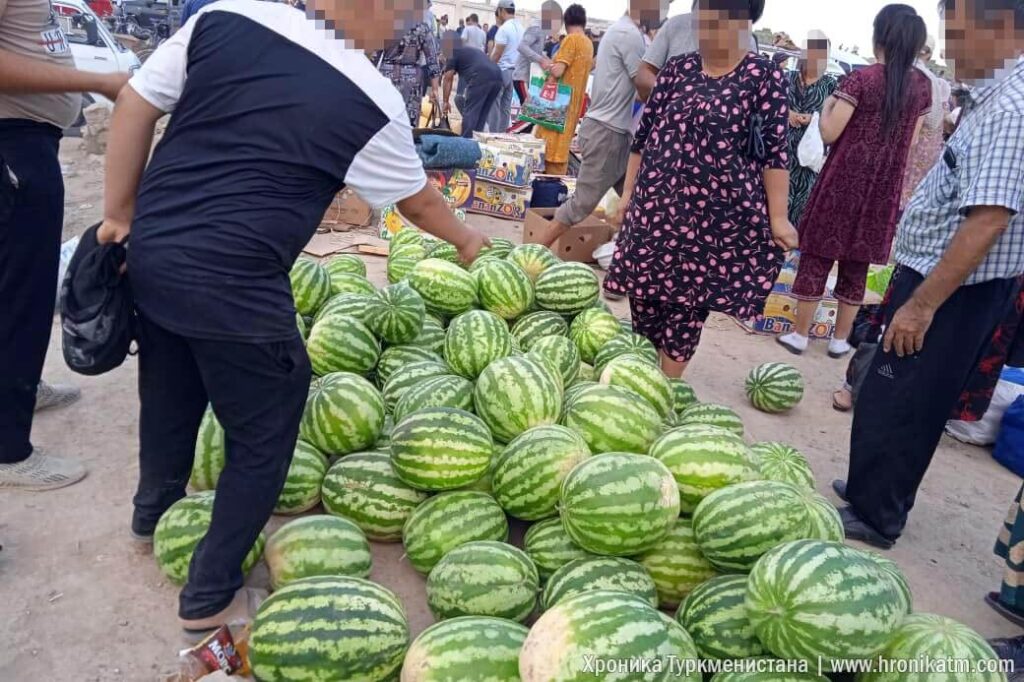
Turkmen Watermelons Struggle to Compete with Iranian Imports

Chronicles Turkmenistan reports that Iranian watermelons are now cheaper than those produced locally. Turkmen farmers were encouraged to plant watermelons on leased lands on the assurance that the crops would be irrigated at the state's expense. However, given the high volume of water required to cultivate the fruit and the need for farmers to irrigate their crops twice per season, only those with the means, could afford to pay for their own pumps. As stated in the publication's report, “-That- was not enough to get a good harvest. Also, the cost of production, including irrigation and other costs, was higher than expected." The vast stocks watermelons imported from Iran to markets  in Meri and Lebap Velayats are significantly cheaper than local produce, selling at  4–5 manats (TMT) ($1.14–1.43) per 6 to 9 kilogram compared to  1.50 TMT ($0.43) per kilogram or an average of  7-8 TMT ($2– 2.29) per Turkmen melon. As a result, Turkmen farmers struggle to sell their produce and are suffering significant losses.

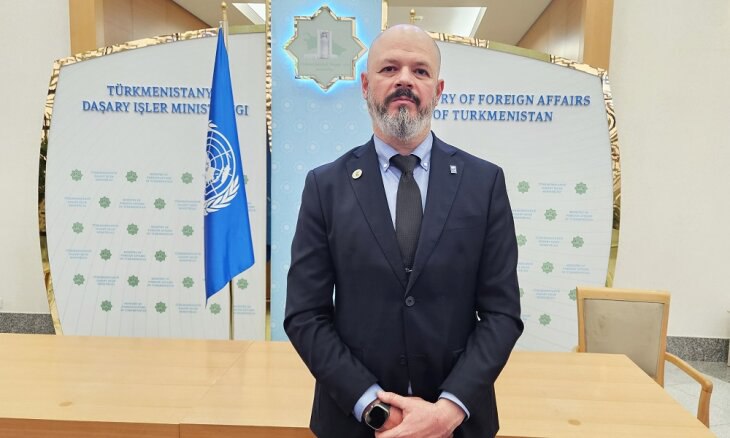
UNDP Launches Course on Gender Issues in Turkmenistan

Turkmenportal has reported that the United Nations Development Programme is launching a specialized online course on gender issues for Turkmenistan's civil servants. The course will cover topics such as basic gender definitions, international standards, gender in public policy, gender analysis tools, local gender stereotypes, strategies for achieving gender equality, national frameworks, the prevention of gender-based violence, and engaging men in efforts to promote gender equality. Training will be offered in English, Russian, and Turkmen, and will include texts, quizzes, presentations, and other content to aimed at providing the necessary knowledge and skills to promote gender equality in the workplace. The course is expected to provide civil servants with a comprehensive understanding of gender equality concepts and international standards, enhance their ability to integrate gender aspects into public policy, and enable them to actively promote gender-responsible governance. As Tomica Paovic, the UNDP Resident Representative in Turkmenistan, noted, mainstreaming gender issues and awareness into civil servants' work is crucial to promoting equality, enhancing policy effectiveness, and ensuring sustainable development. "We are confident that this important initiative, supported by the UNDP's partner, the Government of Canada, will strengthen the country's capacity for gender equality and women's empowerment, in line with the National Action Plans on Human Rights and Gender Equality in Turkmenistan," Paovic stated.

Kyrgyz Supreme Court Upholds Sentence of Activist Zarina Torokulova

Considering the appeal of convicted activist Zarina Torokulova, the Supreme Court of Kyrgyzstan upheld the sentence passed down on her by lower courts, lawyer Akmat Alagushev has reported. According to Alagushev, the charges against the defendant were not proven at the investigation or in court; despite this, the court found her guilty. On January 16, the Pervomaisky District Court of Bishkek found the activist guilty of violating Part 3 of Article 278 of the Criminal Code of the Kyrgyz Republic, which addresses "Calls for active disobedience to the lawful demands of authorities, mass disorder, and incitement to violence against citizens." Earlier, the prosecution noted that the activist shared two messages from the Facebook account "Umai Aruu." One was "Japarov Mafia," and the other was "Organizing an online rally," a repost of a video by journalist, Olzhobai Shakir, who opposed the transfer of four boarding houses on Issyk-Kul to Uzbekistan, and urged citizens to come out for a rally. He was detained on August 23, 2023, by officers of the State Committee for National Security, accused of calling for active disobedience to law enforcement officials, mass disorder, and attempted seizure of power. Torokulova was sentenced to five years' imprisonment with three years' probationary supervision.

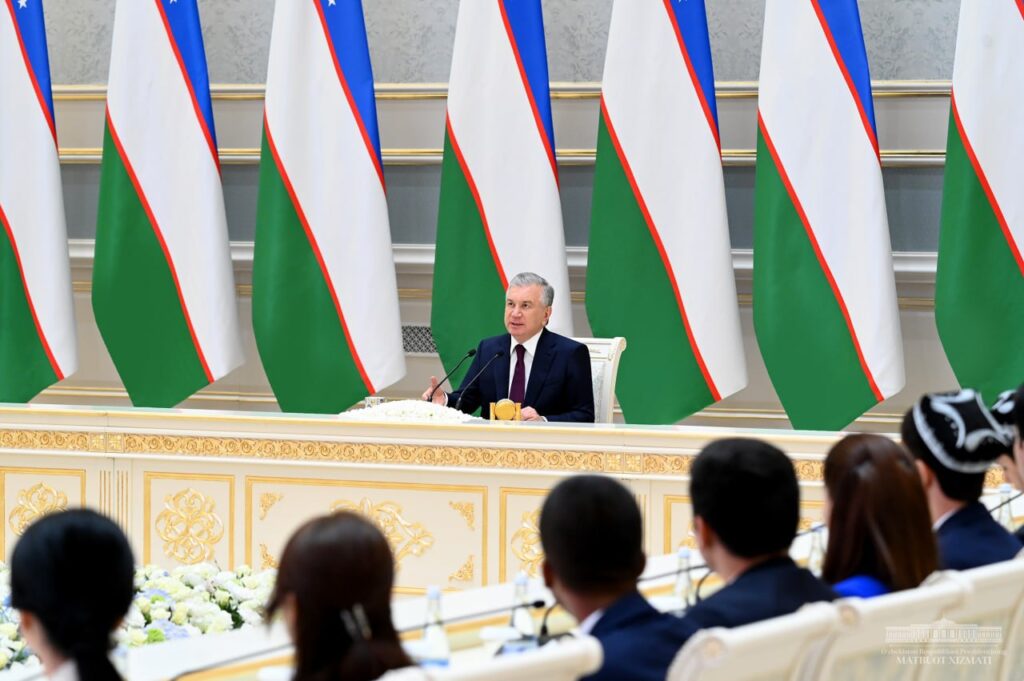
Push to Increase Youth Employment in Uzbekistan.

At the meeting on June 28, Uzbekistan president Shavkat Mirziyoyev forwarded a proposal for boosting employment amongst the country's youth. According to a report by press secretary Sherzod Asadov,  announced on Telegram, regional and district governors have been instructed to hold job fairs in schools, technical institutes, universities, and recreation parks over the summer, with the aim of placing some 150,000 young people in vacant positions. The president stressed the importance of organizing construction squads in the summer months and recruiting 100,000 young people for monthly jobs. He also noted that initiatives offered by businesses for vocational training and employment of young people continue to be supported. From the 2024/2025 academic year, expenses incurred by entrepreneurs in training and employing students from schools, colleges, and technical institutes are to deducted from the tax base. Student income tax and social tax are set at 1%.

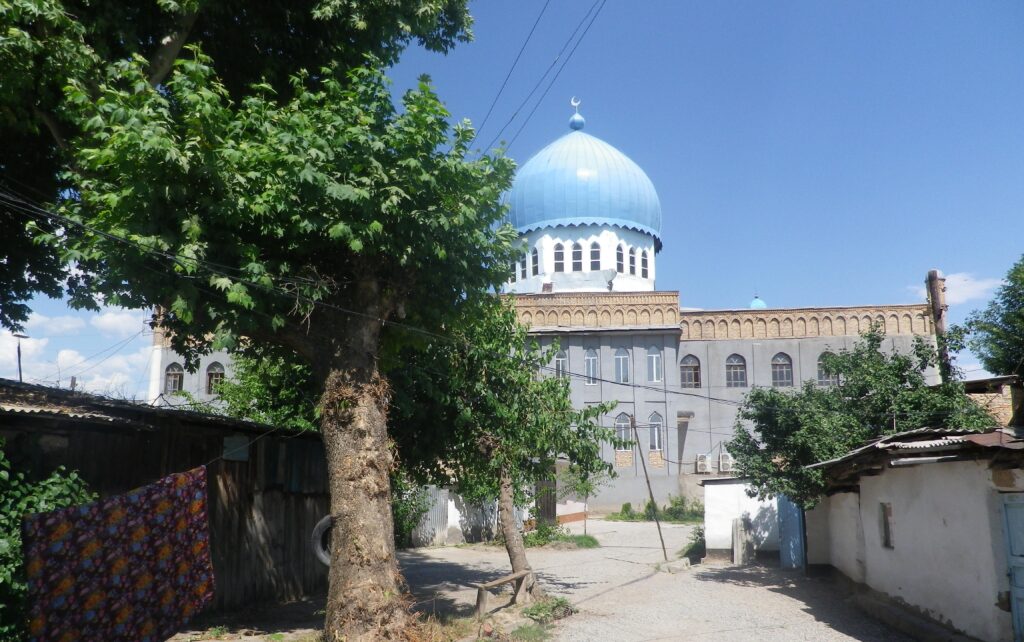
U.S. State Department Criticizes Tajikistan for Religious Restrictions

The U.S. State Department's 2023 World Religious Freedom Report lists Tajikistan as a country of "particular concern" due to "gross violations of religious freedoms." The report cited evidence of religious restrictions by the state, including a ban on the hijab, restrictions on minors and women performing namaz in mosques, and the harassment of Jehovah's Witnesses. The authors of the report also noted that residents of  Tajikistan refrain from freely discussing religion for fear of persecution by the authorities. This is not the first time the Tajik government has been criticized for restricting religious freedoms, including religious observance, but President Emomali Rahmon continues to support his government's policy on these issues. In Tajikistan, 90% of the population is Muslim, predominantly followers of the Hanafi madhhab, whilst 4% are Ismailis. The central part of the Christian community are followers of the Orthodox Church. There are 4,058 religious organizations and associations officially registered in the country, including 66 which are non-Muslim. The authors of the report noted that the activities of these organizations were under strict control. According to the Tajik Interior Minister, Ramazon Rakhimzoda, 195 alleged members of "extremist" and "terrorist" organizations were detained in Tajikistan in the first half of 2023. The Norwegian human rights NGO for religious freedom, Forum-18, reported that at least 19 people were convicted last year for exercising the right to freedom of worship.

Will Kumtor’s ‘Tails’ Benefit or Harm Kyrgyzstan?

The Finnish company Metso is set to  develop a tailings pond at Kyrgyzstan's Kumtor goldmine but local environmentalists are sceptical, claiming that recycling the waste will bring more damage to the environment than economic benefits. "Tailings" are liquid and solid metal (pulp) remnants of ore processing and according to various estimates, Kumtor's tailings pond contains 70 to 130 tons of gold that could not be mined at the plant.  The remnants of precious metal with harmful waste are mothballed, making secondary mining extremely difficult. The Kyrgyz government however, believes that cooperation with the Finns could provide the state with an annual revenue of some $3.5 billion. Isakbek Torgoev, head of the geo-environmental monitoring laboratory at the Institute of Geomechanics and Subsoil Development of Kyrgyzstan and a candidate of technical sciences, told the Times of Central Asia that the Kumtor tailings pond, grandiose in volume, has over a hundred million tailings. "Throughout the entire phase of the mine -over 30 years - ores were taken from different parts of the Kumtor deposit. At times, ores containing 1.8 grams of gold per ton were dumped in the tailings pond. By comparison, at the Boruu gold mine in Mongolia, that amount of gold is contained in the mined rock, but here it is in the tailings. This is a lot," notes Torgoev. The scientific institute believes that dangerous chemical processes occur in the abandoned ores. "Frankly speaking, I am sceptical about such a development, given that very few successful examples exist worldwide. Especially at Kumtor, with its difficult climatic conditions and frigid winters. Theoretically, the work can be carried out, but practically, we'll see," commented the scientist. According to Torgoev, the price of gold may fall, and because of unprofitability, the Finnish company could refuse to process tailings. Moreover, the reclamation of tailings is a very complicated technological process. In addition to constructing water drains, a layer of a meter thick soil is required to cover them. Otherwise, the waste will go into the rivers and soil, harming the environment. The former owners of Kumtor, the Canadian company Centerra Gold, accumulated about $60 million for the reclamation of the tailings pond after the mine was depleted (tentatively in 2027). However, after the nationalization of the mine, the fate of these funds remains unknown. According to the Ministry of Emergency Situations of Kyrgyzstan, there are 92 burial sites for toxic and radioactive substances in the country. Of these, 23 tailings contain uranium elements, while the rest are buried with radioactive rock residues, heavy metals, and cyanide.