• KGS/USD = 0.01143 0%
  • KZT/USD = 0.00213 0%
  • TJS/USD = 0.10593 0.47%
  • UZS/USD = 0.00008 0%
  • TMT/USD = 0.28571 0%
  • KGS/USD = 0.01143 0%
  • KZT/USD = 0.00213 0%
  • TJS/USD = 0.10593 0.47%
  • UZS/USD = 0.00008 0%
  • TMT/USD = 0.28571 0%
  • KGS/USD = 0.01143 0%
  • KZT/USD = 0.00213 0%
  • TJS/USD = 0.10593 0.47%
  • UZS/USD = 0.00008 0%
  • TMT/USD = 0.28571 0%
  • KGS/USD = 0.01143 0%
  • KZT/USD = 0.00213 0%
  • TJS/USD = 0.10593 0.47%
  • UZS/USD = 0.00008 0%
  • TMT/USD = 0.28571 0%
  • KGS/USD = 0.01143 0%
  • KZT/USD = 0.00213 0%
  • TJS/USD = 0.10593 0.47%
  • UZS/USD = 0.00008 0%
  • TMT/USD = 0.28571 0%
  • KGS/USD = 0.01143 0%
  • KZT/USD = 0.00213 0%
  • TJS/USD = 0.10593 0.47%
  • UZS/USD = 0.00008 0%
  • TMT/USD = 0.28571 0%
  • KGS/USD = 0.01143 0%
  • KZT/USD = 0.00213 0%
  • TJS/USD = 0.10593 0.47%
  • UZS/USD = 0.00008 0%
  • TMT/USD = 0.28571 0%
  • KGS/USD = 0.01143 0%
  • KZT/USD = 0.00213 0%
  • TJS/USD = 0.10593 0.47%
  • UZS/USD = 0.00008 0%
  • TMT/USD = 0.28571 0%

Viewing results 1 - 6 of 106

New Freight Port in Iraq Offers Kazakh Companies Long-Term Prospects

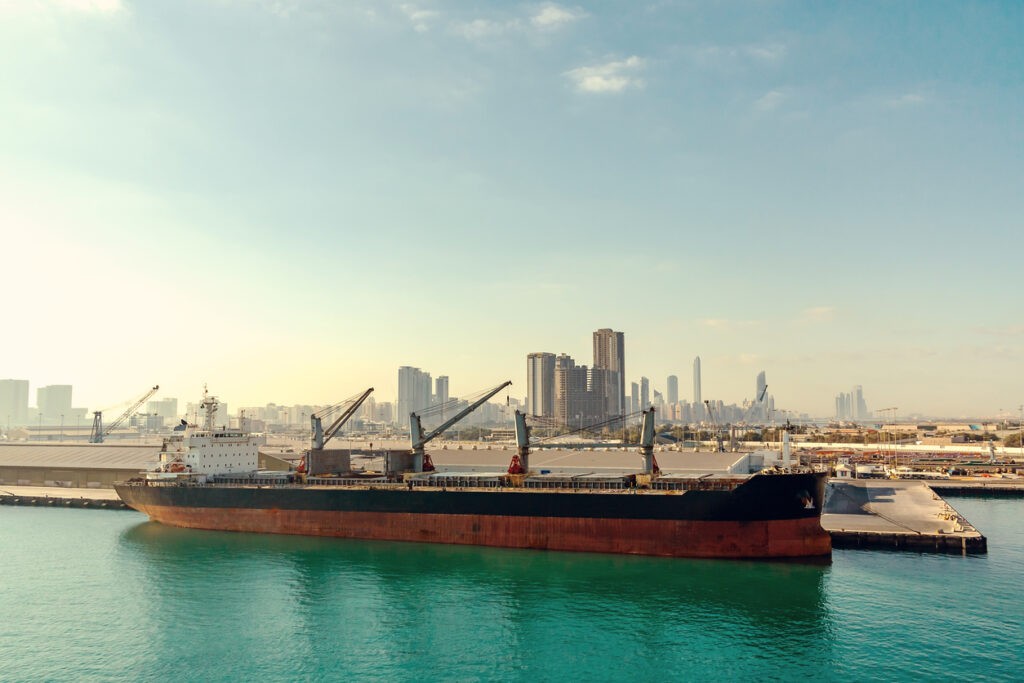
The Association of Kazakhstan Freight Railway Carriers is reporting that an Emirati company, AD Ports, is planning to build a new port and economic zone. The area that the company has identified for the zone is located to the south of the Iraqi city of Basra; if the project goes ahead, it will be an alternative to Egypt's Suez Canal in transcontinental freight shipping. "AD Ports (an Abu Dhabi-based port and logistics operator) has signed a preliminary agreement with the state-owned company managing Iraqi ports to establish a joint venture," commented the Kazakh freight association. According to them, AD's plan, centering on the new port called Grand Faw, is to create a corridor for Asian-European trade, bypassing the Egyptian city of Suez. The Grand Faw Port is set to become one of the largest in the Middle East, with terminals for handling containerized, bulk and liquid cargo. The corridor is expected to be ready by 2038. In Kazakhstani it is believed that the project is promising, but extremely costly. "We should not forget that all land logistics corridors are more costly than sea corridors. That's why Kazakhstan has such problems with logistics -- it has no access to the sea. Even if the Suez Canal is closed and the Panama Canal shoals [becomes shallow], sea transport will be more profitable. Yes, alternatives are needed. However, I would not count heavily on the new project," economist Andrei Chebotarev told The Times of Central Asia. Chebotarev referenced Kazakhstan's plan to build the North-South transport corridor. A new logistics route alternative to Suez would be a good addition; however, so far the UAE hasn't included Kazakhstan in its plans. Due to the recent attacks by Yemen's Houthi rebels on vessels in the Red Sea, the volume of maritime traffic through the Suez Canal has decreased, which in turn has increased demand for freight transport via multimodal routes.

Tokayev Celebrates Kazakh-Chinese Economic Ties at Boao Forum

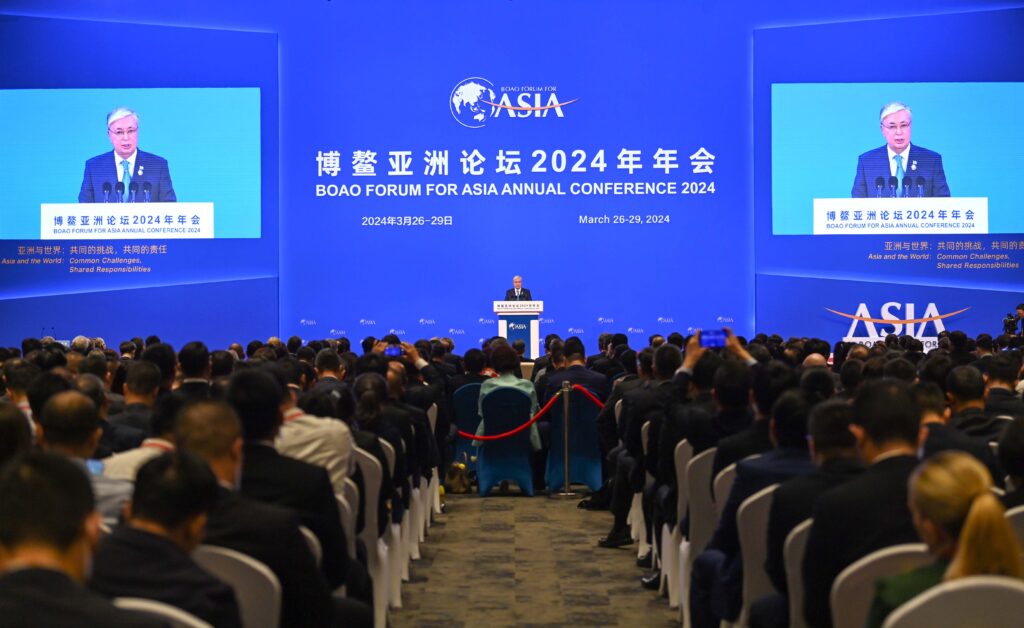
Kazakh President Kassym-Jomart Tokayev was feted as guest of honour at the 23rd Boao Asian Forum (BFA) : "Asia and the World: Common Challenges, Common Responsibility." He was joined at the opening ceremony of the plenary session in the Chinese province of Hainan by: Chairman of the BFA Board of Directors Ban Ki-moon, Chairman of the Standing Committee of the National People's Congress Zhao Leji, President of Nauru David Adang, Prime Minister of Sri Lanka Dinesh Gunawardena, Prime Minister of the Commonwealth of Dominica Roosevelt Skerrit, Chairman of the international non-governmental organization "Council of Elders" Mary Robinson, Secretary General of the OECD Matthias Kormann, and Director General of the UN's World Intellectual Property Organization (WIPO) Daren Tang. In his address to the forum, Tokayev made reference to the fact that against the backdrop of escalating world conflicts, there is tension in international trade and an assumption that the growth rate of global GDP will be the lowest in the past 30 years. However, Asia's role in this sphere is increasing, and the region is projected to provide 60 percent of global GDP growth this year. Global trade giants located in Asia are now attracting more and more foreign investment on account of Asia being home to the world's leading technology centres, responsible for 70 percent of patent developments. "Of the expected $30 trillion growth in middle-class consumption by 2030, only $1 trillion is expected to come from Western economies. Collectively, all these factors point to the so-called 'Asian Renaissance," stated Tokayev. He then emphasized the role of the current forum to demonstrate the advanced achievements of the region: "Kazakh-Chinese relations are based on an effective partnership that has made Kazakhstan China's main trade and economic partner in Central Asia. Kazakhstan accounts for half of Chinese trade and investment in the region. Last year, trade turnover between Kazakhstan and China reached a historic record of $41 billion. In 2023, the volume of cargo traffic between our countries increased by 22% to almost 30 million tons." The Kazakh president also mentioned that 80 percent of all land transportation between China and Europe is carried out through Kazakhstan, noting the role of the "One Belt, One Road" project in the creation of modern multimodal, environmentally safe and sustainable infrastructure in the region. With regard to the economic success of the Kazakh Republic, he drew attention to the fact that the country's economic growth of 5.1 percent last year almost exceeds the projected growth rate of the world economy twofold. Plans were outlined for further developments in the field with reference to an open-door policy, abundant resources, and liberal market reforms, aimed to create a favourable ground for mutually beneficial cooperation with China. Tokayev reported that his country is becoming increasingly attractive to investors due to measures to improve the fiscal and monetary system, market reforms, and a price-competitive economy. He also called on the world community to ensure equal opportunities for all countries: "The huge Asian bond market with its huge market capitalization...

Kazakhstan’s Potential to Overtake China in Production of Rare-Earth Metals

Kazakhstan has become a major participant in the international race for the extraction of valuable rare-earth metals or rare-earth elements (REEs). According to an https://asiatimes.com/ interview with international development expert Javier Piedra, the republic can not only compete with China -- but even overtake it in terms of production. Mr. Piedra, a financial consultant and former representative of the U.S. Agency for International Development (USAID), reported that China currently controls 70% of the global production REEs. He also explained that because of China's tense relations with the West, Kazakhstan was in an advantageous position to develop its domestic industry in the sector. In a report by the Asia Times, Piedra stated, "Kazakhstan could be on par with China in mining such rare earth elements as scandium, yttrium and 15 lanthanides, which are used in the production of computers, turbines and cars." European and American investors are actively seeking opportunities to develop the industry outside China, and the republic's subsoil, rich in rare metals, can provide a highly valuable resource to industries such as technology and manufacturing. In addition to Western countries, India also stands to benefit from the extraction of Kazakhstan's rare earth elements and according to the Indian business press,the republic could already cover India's demand for REEs. The REE potential of Kazakhstan has been known since 2010 but was largely ignored by foreign investors in preference to developing their businesses in China. Extraction of REEs is an expensive and financially risky business. Exploration for deposits is similarly costly and markedly time consuming. However, the strategic importance of rare metals is growing. As claimed by Piedra in the Asian Times, everything may well change; "Western governments should identify alternative suppliers, including Kazakhstan, to reduce possible risks for investors and the likelihood of supply disruptions." The U.S. and the European Union (EU) are now poised to invest heavily in large-scale mining projects and are exploring alternative supply channels. Today, all consumption of yttrium and scandium in the United States depends on imports -- and the EU imports 98% of its rare metals from China. . Last September, New York hosted a presidential summit at which representatives from Kazakhstan, Kyrgyzstan, Turkmenistan, Uzbekistan and the U.S. discussed the exploration and production of critical rare metals. Mr. Piedra believes that Kazakhstan is ready to benefit from its reserves of REEs but mining would first need to be updated to meet current environmental requirements. Care would also be required when choosing potential investors. "Astana will be wary of diplomats, foreign consultants and miners with an outdated view of the world and unfounded geopolitical ambitions. Central Asian countries will discourage attempts to penetrate them 'through the back door.' Such tricks may have worked in the 90s, but not now," warned Piedra via Asia Times. Meanwhile, Kazakhstan's authorities continue to explore opportunities to utilize rare-earth deposits. Last November in Astana, Kassym-Jomart Tokayev and Emmanuel Macron discussed the extraction of strategically important minerals, and last month an alternative dialogue was held between the presidents of Kazakhstan and the...

Kyrgyzstan Joins the International Maritime Organization (IMO) Despite Being a Landlocked Country

The Secretary General of the International Maritime Organization (IMO), Arsenio Dominguez announced its newest member state of Kyrgyzstan at a meeting on ship systems and equipment, according to the IMO's press service. Political scientists and economists in Kyrgyzstan note that, despite the fact that the country is landlocked, this is an important event for the economy in terms of access to world markets for export of domestic products. "If we join this organization, it means we start playing on the world market of transportation of people and goods by seas and oceans. Joining IMO opens the way for us to legally start our own merchant marine fleet," political scientist Denis Berdakov told the Times of Central Asia. An important point in Kyrgyzstan's IMO journey came in 2021, when Iranian authorities allocated Kyrgyzstan a place in the port of Bandar Abbas on the Persian Gulf, meaning that goods from Kyrgyzstan could be shipped to Europe by sea. "The main task now is access to the sea. We have already said that we have two priorities - investments and exports. And for exports, we need to first solve logistics issues. Now the volume of trade turnover with China is growing. In addition, if the China-Kyrgyzstan-Uzbekistan railroad starts functioning, we should become a hub for cargo transportation. To do this, we need to create conditions for logistics companies," Kyrgyz Economy Minister, Daniyar Amangeldiyev said earlier. For those same reasons, AD Ports Group from the UAE signed an agreement with the Kyrgyz Government two years ago on the allocation of 300,000 square meters in the free economic zone called KEZAD (Khalifa Economic Zone Abu Dhabi) near Khalifa Port, which is the main seaport of Abu Dhabi.  The Kyrgyz Ministry of Economy said this will allow duty-free exports from these ports to third countries, and now it will do so using its own ships. Gulf countries now buy meat, honey, nuts and other products from Kyrgyzstan. Local businessmen have repeatedly said they are ready to increase exports, and, as noted by the Ministry of Economy & Commerce of Kyrgyzstan, the republic is ready to increase exports to the UAE and. To date, the Kyrgyz Republic trades mainly with Eurasian Economic Union (EAEU) countries, but the potential for geographic expansion is great, especially given the robust opportunities for the re-export of Chinese goods. Using a combination of transport modes and goods, the Kyrgyz authorities can revive the ancient Silk Road route from China to Europe. Against the backdrop of the beginning of construction of the China-Kyrgyzstan-Uzbekistan railroad, Bishkek is thinking about transit of its goods by rail to Turkmenistan's Caspian Sea ports and beyond those to the ports of Russia and Iran. Kyrgyzstan became the 176th country to join the IMO. The organization last accepted Botswana into its ranks in 2021. According to the IMO charter, membership in the maritime organization is open to all states subject to compliance with the provisions contained in the maritime convention.

Central Asia’s Growing Economic and Strategic Importance Comes to Fore

The Central Asian region has experienced a tremendous economic transformation since the beginning of the century. Its aggregate gross domestic product (GDP) now totals $397 billion, growing 8.6-fold since the year 2000. Its share in global GDP in purchasing power parity (PPP) has also increased 1.8 times. The GDP per capita has tripled as the labor pool has grown to almost 80 million, representing a 1.4-fold increase since 2000. The region’s strategic importance, particularly thanks to its geographic position bridging major economies of Europe and Asia, makes it a key player in geopolitical dynamics. Central Asia’s dependence on commodity exports and remittances has so far limited its integration into global value-chains. The Central Asia Regional Economic Co-operation (CAREC) Program, established by the Asian Development Bank (ADB), plays an important role in fostering regional development and co-operation. CAREC includes the five Central Asia countries (namely Kazakhstan, Kyrgyzstan, Uzbekistan, Tajikistan and Turkmenistan) plus Afghanistan, Azerbaijan, China, Georgia, Mongolia and Pakistan. CAREC also partners with five multilateral international institutions in addition to the ADB (which serves as its Secretariat). These are the European Bank for Reconstruction and Development (EBRD), International Monetary Fund (IMF), Islamic Development Bank (IsDB), United Nations Development Program (UNDP) and the World Bank (a.k.a. International Bank for Reconstruction and Development or IBRD). The Program has constructively helped the countries of Central Asia to address challenges in trade governance. Nevertheless, inefficiencies in cross-border transport and customs procedures continue to hinder their commercial exchanges with one another as well as with external partners. CAREC’s current policy-implementation priorities are integration of regional trade, digitization, climate change, regional co-operation, development of financial technologies and financing in the water sector. There is still significant potential for further development given that the region’s trade within itself has been growing faster than its foreign trade. Enhancing Central Asia’s role in the global economy will require the implementation of co-operative initiatives already identified, especially in infrastructure. Such construction of new physical plants, as well as the renovation and building-out of those that already exist, is crucial for enhancing economic growth and sustainability. This strategy will leverage the region’s strengths such as its strategic location and resource endowments. In 2023, Central Asia’s economic growth is projected to remain relatively steady at 3.9 percent, but this may still be affected by the global challenges of weak external demand, rising inflation and supply-chain disruptions. These global economic conditions, along with the uncertainties that they engender, reflect continuing burdens of the ongoing post-COVID recovery as well as the effects of the war in Ukraine, which significantly impacts the region. In addition to the ADB, the IBRD also focuses on various development initiatives in Central Asia that aim to support regional infrastructure development and the strengthening of cross-border co-operation. These are implemented through relatively low-profile initiatives such as the Central Asia Water and Energy Program (CAWEP) to enhance energy and water security and the Central Asia Hydrometeorology Modernization Project (CAHMP) to improve weather, climate and hydrological services. The IBRD thus aims to increase...

First glimpses of Tokayev’s Kazakhstan: The listening state?

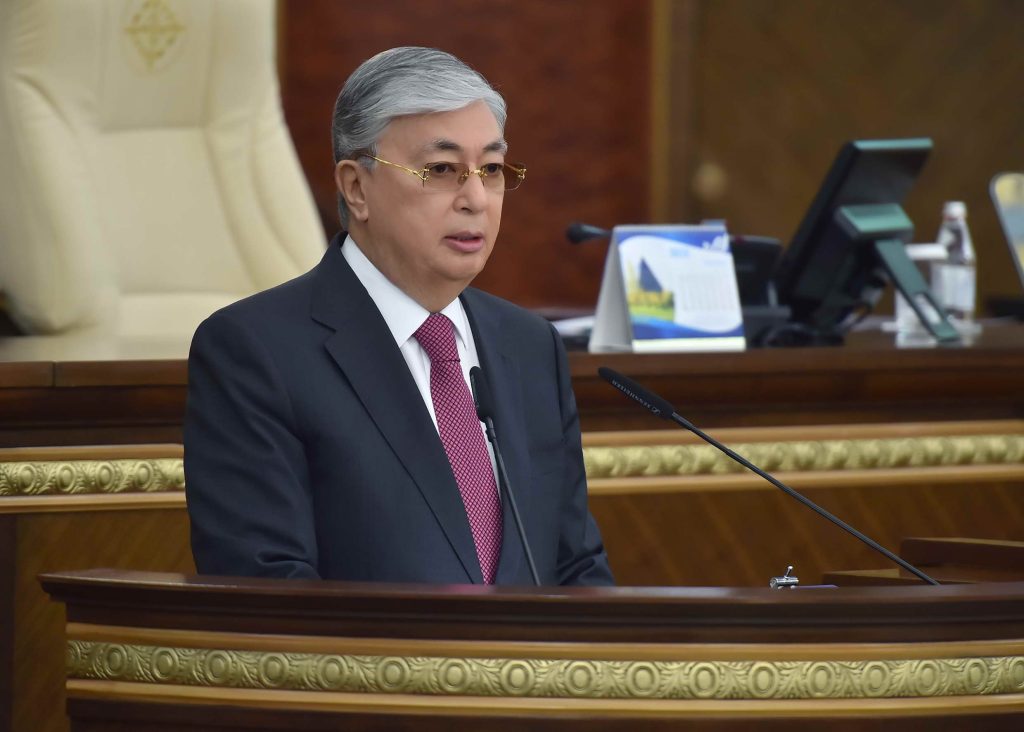
NUR-SULTAN (TCA) — While seeking to "maintain continuity" yet nonetheless calling for "systemic reforms," Kazakhstan’s new President Kassym-Jomart Tokayev appears to institute and seek to manage reforms from above. Kazakhstan will also seek increased engagement and investment from the West. We are republishing the following article on the issue, written by S. Frederick Starr, chairman of the Central Asia-Caucasus Institute at the American Foreign Policy Council: Continue reading