• KGS/USD = 0.01144 0%
  • KZT/USD = 0.00205 0%
  • TJS/USD = 0.10731 0%
  • UZS/USD = 0.00008 0%
  • TMT/USD = 0.28490 0%
  • KGS/USD = 0.01144 0%
  • KZT/USD = 0.00205 0%
  • TJS/USD = 0.10731 0%
  • UZS/USD = 0.00008 0%
  • TMT/USD = 0.28490 0%
  • KGS/USD = 0.01144 0%
  • KZT/USD = 0.00205 0%
  • TJS/USD = 0.10731 0%
  • UZS/USD = 0.00008 0%
  • TMT/USD = 0.28490 0%
  • KGS/USD = 0.01144 0%
  • KZT/USD = 0.00205 0%
  • TJS/USD = 0.10731 0%
  • UZS/USD = 0.00008 0%
  • TMT/USD = 0.28490 0%
  • KGS/USD = 0.01144 0%
  • KZT/USD = 0.00205 0%
  • TJS/USD = 0.10731 0%
  • UZS/USD = 0.00008 0%
  • TMT/USD = 0.28490 0%
  • KGS/USD = 0.01144 0%
  • KZT/USD = 0.00205 0%
  • TJS/USD = 0.10731 0%
  • UZS/USD = 0.00008 0%
  • TMT/USD = 0.28490 0%
  • KGS/USD = 0.01144 0%
  • KZT/USD = 0.00205 0%
  • TJS/USD = 0.10731 0%
  • UZS/USD = 0.00008 0%
  • TMT/USD = 0.28490 0%
  • KGS/USD = 0.01144 0%
  • KZT/USD = 0.00205 0%
  • TJS/USD = 0.10731 0%
  • UZS/USD = 0.00008 0%
  • TMT/USD = 0.28490 0%

Viewing results 1 - 6 of 6

Megaprojects Instead of Quotas: How Central Asia’s Water Diplomacy Is Changing

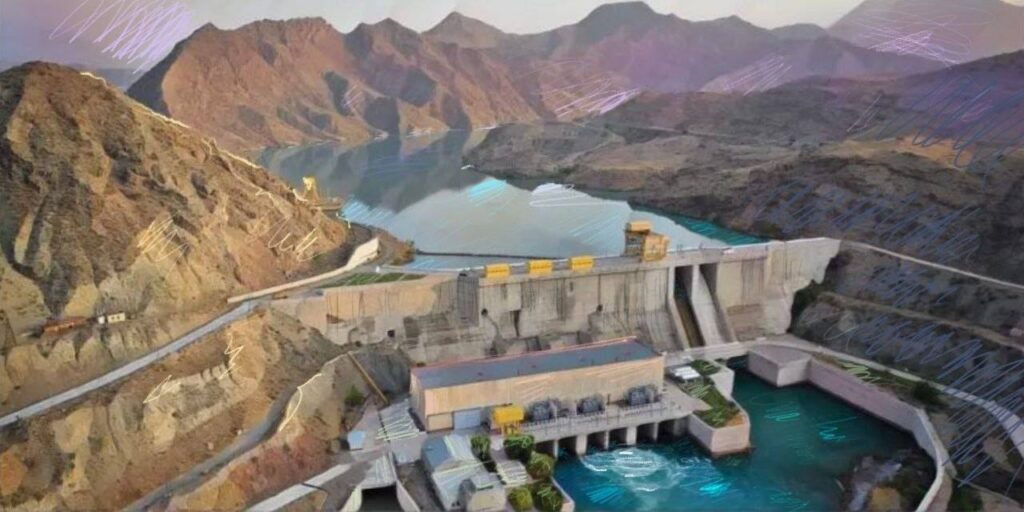
Central Asia’s water politics are moving beyond Soviet-era quotas. As glaciers in the Tien Shan retreat and climate pressure increases, river management has become a question of energy security, food production, and regional stability. The Soviet-era system of river-water allocation has reached its limits, forcing Central Asian states to look beyond traditional negotiations and toward joint ownership of strategic water infrastructure. Even as regional governments learn to cooperate more closely, a new challenge is emerging on Central Asia’s southern frontier, one that could disrupt the region’s hydrological balance. The Illusion of Control Formally, Central Asia’s water resources are governed through a network of interstate institutions. The principal mechanisms are the Interstate Commission for Water Coordination (ICWC) and the International Fund for Saving the Aral Sea (IFAS). On paper, the system appears effective. Twice a year, ahead of the spring-summer irrigation season and the autumn-winter period, representatives of the region’s countries meet to approve water-withdrawal quotas from the Syr Darya and Amu Darya river basins. At the end of 2025, for example, officials meeting in Ashgabat agreed on water allocations for 2026, setting total withdrawals from the Amu Darya at nearly 55.4 billion cubic meters. This framework has helped prevent open interstate conflicts by providing a permanent forum for dialogue. However, its foundation remains the 1992 Almaty Agreement, which essentially preserved a Soviet-era quota system designed for a single centrally planned state rather than a group of independent countries with competing interests. The greatest weakness of the system is the absence of any meaningful enforcement mechanism. If one country exceeds its agreed allocation during a drought year, there are no legal or economic penalties. Disputes are instead resolved through emergency negotiations between ministries or, in some cases, direct interventions by heads of state. A system dependent on political goodwill and personal relationships is increasingly fragile in an era of climate stress. Turning Water Disputes Into Joint Investments As the quota system shows signs of strain, Central Asian countries have begun experimenting with a more pragmatic approach: shared ownership of infrastructure. The central paradox of the Syr Darya basin is that upstream and downstream countries need water at different times of the year. Kyrgyzstan and Tajikistan, which control the river’s headwaters, require releases in the winter to generate electricity and heat their cities. Kazakhstan and Uzbekistan, meanwhile, need that same water in summer to irrigate millions of hectares of farmland. Winter releases often flow downstream when demand is low, while shortages emerge during the peak agricultural season. The proposed solution is the Kambarata-1 hydropower plant on Kyrgyzstan’s Naryn River, a project now estimated to cost around $4.2 billion. What makes the project unusual is its ownership structure. Under a 2024 agreement, Kyrgyzstan will hold a 34% stake, while Kazakhstan and Uzbekistan will each own 33%. By investing billions of dollars in infrastructure located outside their territory, Kazakhstan and Uzbekistan are effectively purchasing seats at the decision-making table. As shareholders, they gain a direct role in determining reservoir operations, helping ensure water is...

Eco Expo Opens in Samarkand as Uzbekistan Pushes Green Investment

Eco Expo Central Asia 2026 opened on June 2 at the Expo Center of Silk Road Samarkand, placing Uzbekistan’s green economy plans before officials, lenders, companies, scientists, and environmental groups already gathered in the city. The exhibition is scheduled to run through June 4 and is being held alongside the Eighth Assembly of the Global Environment Facility, one of the main global forums for environmental finance. The timing gives Uzbekistan a rare week of attention on climate, water, biodiversity, and clean technology. The GEF Assembly runs from May 30 to June 6 in Samarkand. The GEF says its Assembly is its highest governing body, made up of 186 member countries, and meets once every four years. GEF Council meetings are scheduled from May 31 to June 3, before the formal Assembly sessions later in the week. Eco Expo has a more practical focus. Its exhibition sections include protected natural areas, clean technology, green construction, transport, and energy, sustainable agriculture, green finance and green cities, ecotourism, water-saving technologies, environmental education, artificial intelligence in ecology, and the Aral Sea region. The business program includes lectures, seminars, panels, and roundtables for registered visitors. Uzbekistan’s state news agency UzA has said that approximately 10,000 participants from Uzbekistan and abroad are expected. The exhibition will include more than 68 pavilions for environmental products, plus 20 pavilions for startup projects from Central Asian countries. Organizers also plan more than 50 forums, presentations, and discussion platforms on green energy, waste recycling, water resource management, and sustainable development. The exhibition - organized by Uzbekistan’s National Committee on Ecology and Climate Change with Business Congress Management - is designed to turn local environmental plans into fundable projects. Regions and districts across Uzbekistan have prepared proposals for donors and investors, covering climate adaptation, better use of natural resources, and practical steps to make local economies more resilient. For Uzbekistan, the meetings are a chance to move from broad pledges to project lists, budgets, and partners. Farms need more efficient irrigation; cities need cleaner transport and better waste systems; protected areas need long-term funding. The expo brings those needs into one room with development banks, UN agencies, foreign governments, and companies looking for green projects. The GEF meetings bring the process closer to the expo floor. The fund says it has provided more than $26 billion in financing over three decades, and has helped mobilize another $148 billion for country-led environmental projects. In Samarkand, the 71st GEF Council meeting opened ahead of the Assembly and Eco Expo. Its agenda includes biodiversity protection, sustainable infrastructure, renewable energy, energy storage, the GEF-9 programming strategy, and support for vulnerable countries. Uzbekistan already has a working portfolio with the GEF, which includes 13 projects worth $56 million and five more projects worth more than $30 million in the pipeline. The projects cover biodiversity, snow leopard protection, restoration of ecosystems in the Aral Sea region, climate resilience, land management, and waste management. The week arrives as Uzbekistan faces rising climate stress. The World Bank has described...

Opinion: Water Without a Guarantor – Central Asia’s Next Security Test

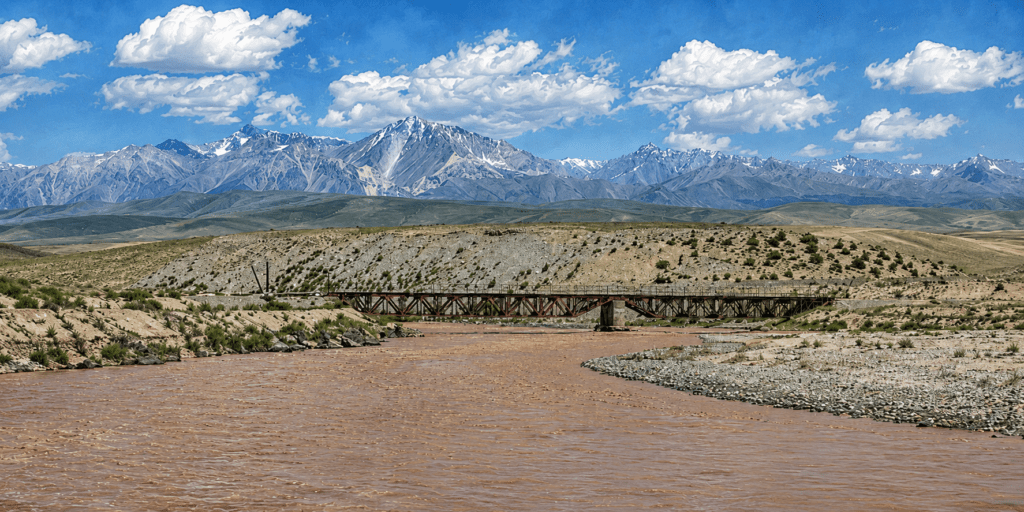
The Fourth High-Level International Conference on the International Decade for Action, “Water for Sustainable Development,“ taking place in Dushanbe on May 25-28, comes at a difficult moment. Central Asia's water problem is no longer only about environmental management; it is moving into the field of regional security. The conference agenda is familiar and necessary: climate, investment, innovation, transboundary cooperation, and the implementation of the Water Action Decade. The harder question is what happens outside the conference hall. Does Central Asia still have a credible way to stop water stress from becoming an interstate crisis? For decades, the region operated in a post-Soviet setting in which Moscow shaped many security calculations, even though it was never a formal water arbiter. That setting has weakened. Russia has not disappeared from Central Asia, and it still retains military, economic, and institutional leverage. But since 2022, its role as the assumed external stabilizer has become less convincing. The result is not a simple vacuum. It is a more awkward reality: a region with many outside actors, but no trusted water-security guarantor. The Old Backdrop Is Weakening Central Asia's water system was built around a Soviet-era division of functions. Upstream republics, Tajikistan and Kyrgyzstan, controlled the mountains, reservoirs, and hydropower potential. Downstream republics, Uzbekistan, Kazakhstan, and Turkmenistan, depended on seasonal water flows for agriculture, food security, and social stability. The Soviet system managed those tensions through central planning. After independence, cooperation became more fragile. Water, energy, borders, electricity, and agriculture were separated into national strategies. The rivers, however, remained transboundary. For many years, Russia remained the largest external power around which regional security calculations were organized. That did not make Moscow an effective water manager, but it helped shape the political environment. Today, that environment has changed. The CSTO did not prevent the Kyrgyz-Tajik border escalations of recent years. Kyrgyzstan and Tajikistan eventually reached a border agreement through direct negotiation rather than outside enforcement. That difference is not academic. Water disputes are rarely settled by conferences alone. They need trusted channels for mediation, compensation, and restraint when pressure builds. Central Asia has plenty of statements about cooperation. It has fewer tools for managing coercion when water becomes scarce. Three Pressure Points The region's water-security stress is already visible in three places. The first is Afghanistan's Qosh-Tepa Canal. The canal draws water from the Amu Darya, a river system critical for Uzbekistan and Turkmenistan. Because Afghanistan was not part of the old Soviet water-allocation arrangements, the Taliban government is creating a new upstream reality outside the inherited regional framework. Estimates of the canal's downstream impact vary widely. Some analyses suggest it could divert between 15 and 30% of the Amu Darya's flow, depending on the completion timeline, irrigation efficiency, and water-management practices. The Times of Central Asia previously reported that reduced Amu Darya flows could indirectly affect Kazakhstan if Uzbekistan compensates by drawing more heavily on the Syr Darya. Carnegie has described the Qosh-Tepa as a serious test for regional water cooperation. The second pressure point...

Kazakhstan, Tajikistan, and Uzbekistan Agree on Summer Water Releases from Bahri Tojik Reservoir

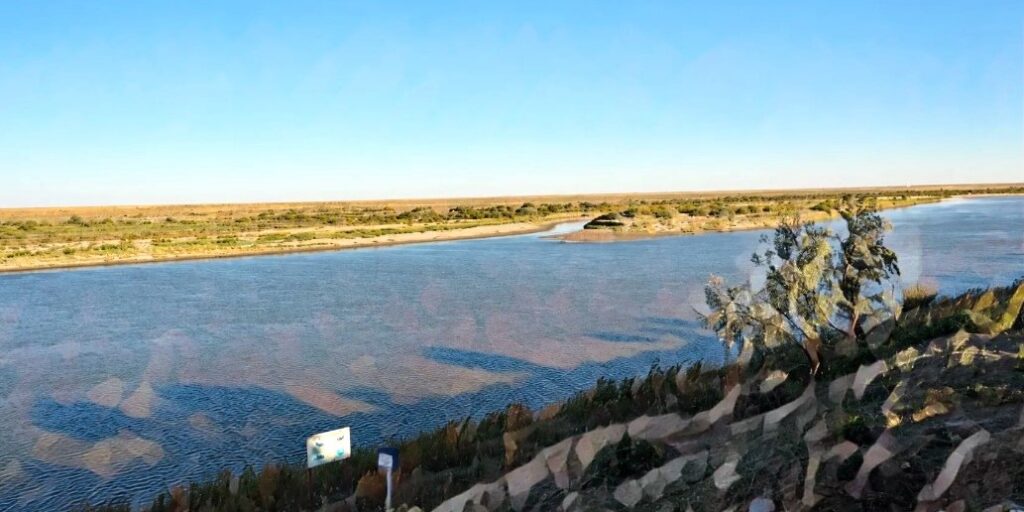
Kazakhstan, Tajikistan, and Uzbekistan have agreed on water releases from Tajikistan’s Bahri Tojik reservoir for the June-August 2026 irrigation period, Kazakhstan’s Ministry of Water Resources and Irrigation has announced. The agreement was formalized in a trilateral protocol signed by Kazakhstan’s Minister of Water Resources and Irrigation Nurzhan Nurzhigitov, Tajikistan’s Minister of Energy and Water Resources Juma Daler, and Uzbekistan’s Minister of Water Resources Shavkat Khamrayev. Under the agreed schedule, water from the Bahri Tojik reservoir will be released during the summer to support agricultural producers in Kazakhstan’s Turkestan region, particularly in the Maktaaral and Zhetysai districts, where irrigation demand rises sharply during the growing season. “The issue of supplying irrigation water to the southern regions remains under special control,” Nurzhigitov said in comments released by Kazakhstan's ministry. “The agreements reached are the result of constructive interaction and mutual support between Central Asian countries. The measures taken will help ensure a stable growing season and support domestic farmers.” The ministers also reaffirmed their intention to strengthen regional cooperation on the rational and mutually beneficial use of shared water resources, a longstanding challenge in Central Asia, where agriculture depends heavily on transboundary rivers and reservoirs. The Bahri Tojik reservoir, formerly known as the Kairakkum reservoir before being renamed in 2016, is one of Tajikistan’s largest artificial water bodies. Located in the northern Sughd region on the Syr Darya River, it has operated since 1959 and plays an important role in seasonal water distribution across the region. The latest agreement follows a similar arrangement reached in June 2025, when the three countries approved the coordinated use of reservoir water during the summer irrigation season. At the time, Kazakhstan expected to receive 491 million cubic meters of water to help offset shortages in southern farming areas.

Opinion: Can the Aral Sea Be Saved? Central Asia’s Water Cooperation Test

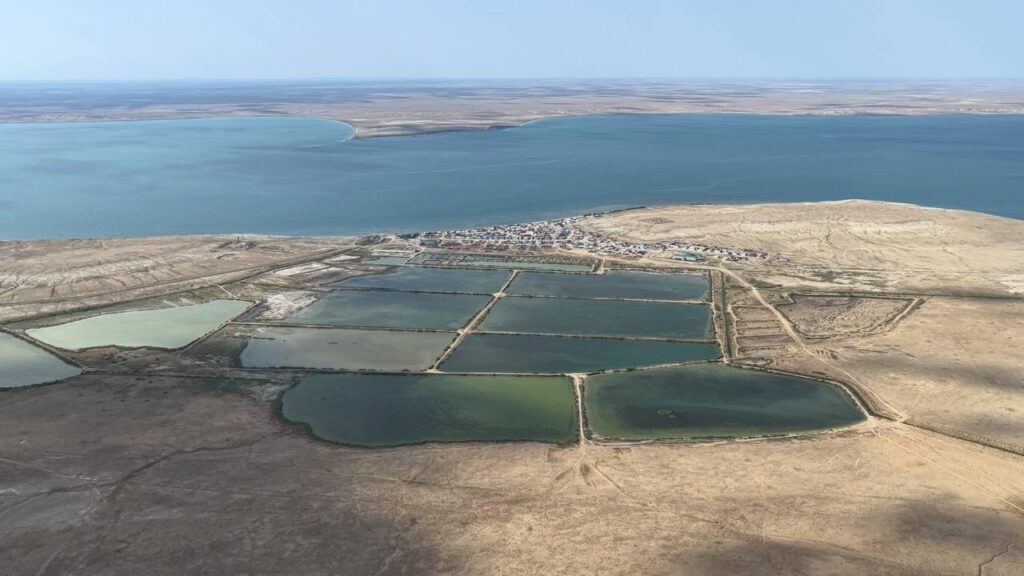
For most people, the Aral Sea is known through climate documentaries and satellite images as shorthand for ecological disaster. Once the world’s fourth-largest lake, it withered after Soviet planners diverted its two lifelines, the Amu Darya and Syr Darya, to turn Central Asia into a cotton empire. Over almost five decades, as much as three-quarters of the water in these river systems has leaked into desert soils rather than reaching the sea. NASA satellite data show that the blue inland ocean has been replaced by dusty basins. We all know that story. But the more urgent question is different: can the Aral Sea still be “saved” in any meaningful sense, in a century of climate stress and water shortages? Is it still capable of being restored to health? The honest answer is yes, but only if Central Asian states and their international partners stop treating it as a frozen symbol of Soviet failure and begin governing the entire basin as a shared, climate-vulnerable commons. Anything less is nostalgia with good drone footage. From Lake to Warning Signal The Aral Sea once covered about 68,000 square kilometers and supported fishing communities along what is now the Kazakhstan-Uzbekistan border. Before the large-scale Soviet irrigation projects of the 1960s, its level depended mainly on inflow from the Amu Darya and Syr Darya, with smaller contributions from precipitation and groundwater. In the arid climate of the basin, the sea’s stability depended on a fragile balance between river inflow and water loss through evaporation. That balance began to collapse after Soviet planners expanded irrigation for cotton and rice, diverting water from rivers that had fed the sea for centuries. Evaporation continued while river inflow fell, and the sea shrank rapidly. By the early 2000s, time-lapse images published by NASA’s Earth Observatory showed large areas of deep blue water turning into exposed seabed and dust plains within a generation. The consequences went far beyond a retreating shoreline. As the water receded, the exposed seabed became the Aralkum Desert, a source of toxic dust contaminated with salt as well as fertilizer and pesticide residues. Winds carry that dust across farms and towns, degrading soil and crops while exposing residents to serious health risks. The IFAS Agency in Uzbekistan, a working body of the International Fund for Saving the Aral Sea, coordinates projects and programs in the Aral Sea basin. The collapse of fisheries also devastated local livelihoods and food supplies. Researchers have linked the wider Aral Sea crisis to higher rates of respiratory disease and anemia. Some studies have also reported elevated cancer risks. The loss of such a large body of water has changed the local climate. Without the sea’s moderating effect, summers have become hotter and drier, while winters have become colder. These pressures are now compounded by climate change and the retreat of glaciers in the upstream mountains that feed Central Asia’s river systems. The Aral Sea is therefore more than an environmental tragedy. It is a warning of what can happen when political...

Kazakhstan, Kyrgyzstan, Uzbekistan Agree on Toktogul Water Releases

Energy and water ministers from Kazakhstan, Kyrgyzstan, and Uzbekistan signed a trilateral protocol in Tashkent on May 7 establishing agreed water release volumes and schedules from the Toktogul Reservoir for the next two months. The Toktogul Reservoir plays a central role in maintaining water and energy stability across Central Asia. The Toktogul Hydropower Plant, located on the Naryn River, the main tributary of the Syr Darya, is Kyrgyzstan’s largest power station and supplies around 40% of the country’s electricity. The reservoir serves a dual purpose: generating electricity for Kyrgyzstan while regulating water flows essential for downstream agriculture in Kazakhstan and Uzbekistan. During winter, Kyrgyzstan typically increases electricity generation to meet heating demand, often lowering reservoir levels and reducing the amount of water available for irrigation during the following spring and summer. According to Kazakhstan’s Energy Ministry, the newly signed protocol removes uncertainty for farmers in southern Kazakhstan at the start of the agricultural season and allows both Kazakh and Uzbek farmers to begin irrigation activities on schedule. To ensure stable water supplies throughout the remainder of the growing season, the three countries agreed to continue coordination in stages. The next ministerial meeting is scheduled for mid-June in Bishkek, where officials plan to finalize water release schedules for the critical summer months of July, August, and September. The agreement highlights the continued functioning of the region’s interstate water-energy exchange mechanism. Coordination over summer irrigation flows was preceded by extensive cooperation during the winter season. From September 2025 to April 2026, Kazakhstan supplied more than 1.5 billion kilowatt-hours of electricity to Kyrgyzstan, helping the upstream country reduce winter water releases for heating and preserve additional reserves in the Toktogul Reservoir for summer irrigation needs in Kazakhstan and Uzbekistan. According to Kyrgyzstan’s Deputy Energy Minister Altynbek Rysbekov, the Toktogul Reservoir held 7 billion cubic meters of water on April 1, 2026, down from 9.14 billion cubic meters on January 1 after the winter heating season. The reservoir’s so-called “dead water level,” the threshold below which turbines can no longer operate, stands at 6.5 billion cubic meters.