• KZT/USD = 0.00220
  • TJS/USD = 0.10820
  • UZS/USD = 0.00009
  • TMT/USD = 0.29760
  • KZT/USD = 0.00220
  • TJS/USD = 0.10820
  • UZS/USD = 0.00009
  • TMT/USD = 0.29760
  • KZT/USD = 0.00220
  • TJS/USD = 0.10820
  • UZS/USD = 0.00009
  • TMT/USD = 0.29760
  • KZT/USD = 0.00220
  • TJS/USD = 0.10820
  • UZS/USD = 0.00009
  • TMT/USD = 0.29760
  • KZT/USD = 0.00220
  • TJS/USD = 0.10820
  • UZS/USD = 0.00009
  • TMT/USD = 0.29760
  • KZT/USD = 0.00220
  • TJS/USD = 0.10820
  • UZS/USD = 0.00009
  • TMT/USD = 0.29760
  • KZT/USD = 0.00220
  • TJS/USD = 0.10820
  • UZS/USD = 0.00009
  • TMT/USD = 0.29760
  • KZT/USD = 0.00220
  • TJS/USD = 0.10820
  • UZS/USD = 0.00009
  • TMT/USD = 0.29760
08 September 2026

Viewing results 1 - 6 of 128

Navigation Seals in the EAEU: Digital Modernization or a New Barrier for Kazakhstani Businesses?

Since February 2026, the countries of the Eurasian Economic Union (EAEU), Kazakhstan, Kyrgyzstan, Tajikistan, Belarus, and Russia, have begun the phased introduction of a navigation seal system to track cargo shipments. The mechanism is designed to increase transit transparency, strengthen control over the movement of goods, and speed up logistics operations. However, business representatives warn that the new system could lead to higher logistics costs and create additional administrative barriers for carriers. Against the backdrop of the launch of the project’s first phase in Kazakhstan, debate is growing over whether digitalization will deliver the expected benefits, or become another source of pressure on the market. New Transport Control System The agreement on the use of navigation seals in the EAEU was signed by the heads of state on April 19, 2021, and ratified by Kazakhstan in 2023. The document provides for the tracking of goods transported through the territories of two or more member states of the union. In Kazakhstan, amendments were introduced to national legislation to implement the agreement, the information systems of controlling authorities were modernized, and pilot projects were conducted in both road and rail transport. Under a resolution of the Government of Kazakhstan dated September 10, 2024, the national operator of the transport tracking system is the Institute of Space Technology and Technologies LLP, which operates under the Aerospace Committee of the Ministry of Digital Development. By decision of the Eurasian Economic Commission’s Collegium dated September 23, 2025, phased transport tracking using navigation seals began on February 11, 2026, for goods transported between EAEU countries. In 2025, the national operator, together with the State Revenue Committee of the Ministry of Finance of Kazakhstan, conducted a pilot project on the use of navigation seals in transit transportation. Testing took place at road border crossings and along railway routes. The main objective was to test procedures for installing and removing seals, as well as to verify the interaction between government information systems and the Transit platform. As a result of the pilot project, more than 890 shipments involving 1,757 vehicles were tracked, and a total of 1,637 navigation seals were installed. The devices were used at key road checkpoints and along the railway route between Altynkol and Saryagash stations. Based on the results, authorities concluded that the system was technically and organizationally ready for large-scale implementation. How “Digital Seals” Work According to Osken Toishibekov, director of the Institute of Space Technology and Technologies, the system is based on the Transit information platform, which connects carriers, operators, and government agencies. He explained to The Times of Central Asia that a navigation seal is a device equipped with an electronic module and a sealing element with satellite navigation capabilities. It enables the location of a vehicle to be tracked via GPS, with data transmitted to the system through mobile networks. The device records attempts to open or damage the seal, break the sealing cable, interfere with the equipment, or trigger other abnormal events. All information is automatically transmitted to the...
The World Bank Backs Kazakhstan’s Rail Shortcut

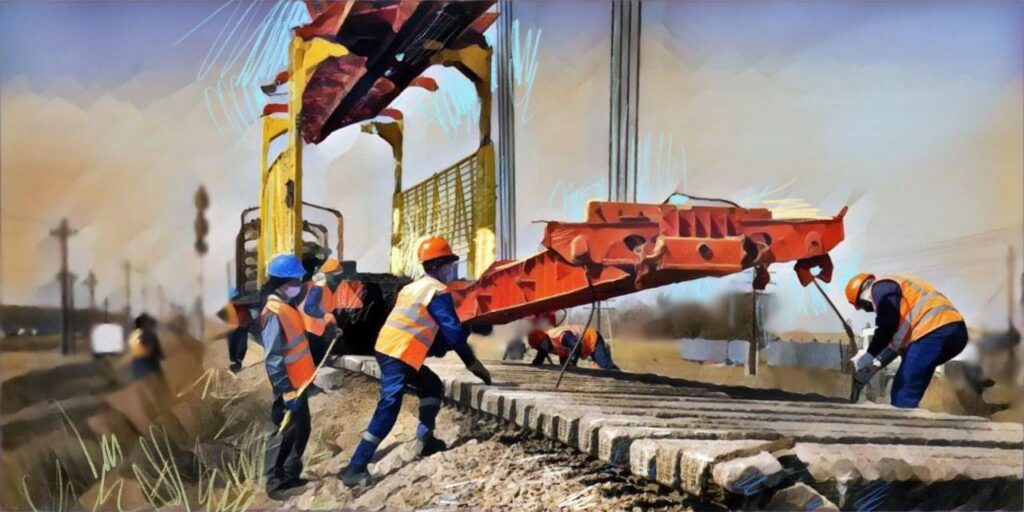
On February 19, 2026, the World Bank Board approved an $846 million IBRD guarantee to help the state-owned railway company Kazakhstan Temir Zholy (KTZ) mobilize $1.41 billion in long-term commercial financing. The financing is linked to a KTZ reform program under the umbrella “Transforming Rail Connectivity in Kazakhstan (Middle Corridor Development)” initiative. The purpose is to expand rail connectivity and upgrade logistics on Kazakhstan’s segment of the Trans-Caspian International Transport Route (TITR, Middle Corridor). The Asian Infrastructure Investment Bank (AIIB) will add a $564 million co-guarantee that shifts the financing away from a classic sovereign-loan model and toward private credit backed by multilateral risk coverage. The Multilateral Investment Guarantee Agency (MIGA) presents this operation as part of a wider World Bank Group approach that pairs corridor capital expenditure with steps to strengthen the operator’s financial sustainability and commercial viability. The operation is structured as a two-part package. First, it finances a new 322.3-kilometer railway on a new segment between Mointy and Kyzylzhar in central Kazakhstan. This segment is meant to remove a major network detour, shorten the TITR route within Kazakhstan by 149 kilometers, ease congestion on heavily used sections, and support double-stack container operations. The line is planned with modern signaling and telecommunications, plus design provisions for later expansion and electrification. Second, it ties the construction to a reform program at KTZ, including tariff reform, exploration of alternative financing mechanisms, stronger financial and environmental management, and preparatory work for a potential initial public offering. The World Bank is structuring delivery through a Multi-Phase Programmatic Approach with the stated aim of tripling freight volumes and halving end-to-end transit times on Kazakhstan’s Middle Corridor segment by 2030. Why This Segment Matters for the Middle Corridor Inside Kazakhstan, the Mointy–Kyzylzhar line is a central connector in the Trans-Kazakhstan east–west trunk carrying traffic from the China-facing gateways at Dostyk and Khorgos toward the Caspian outlets at Aktau and Kuryk. Mointy itself is a pivotal junction where train paths, locomotives, and crews are redistributed across multiple directions; as a result, any congestion there propagates quickly into corridor-wide delays. In early 2025, President Kassym-Jomart Tokayev directed acceleration of the Trans-Kazakhstan corridor. KTZ says the expected benefits include decreased pressure on heavily used central segments, fewer locomotive changeovers at key junction points, and, on some routings, the potential to cut more than a day from transit time between the Chinese border and Aktau. The World Bank’s 2023 Middle Corridor study stressed that the corridor’s most durable growth driver is regional trade among the core corridor economies: China–Europe movements remain important, but they compete with multiple alternatives, above all maritime shipping. An infrastructure upgrade adds economic value only if it reduces variability at the handoff points where delays accumulate, including rail-to-port interfaces, Caspian coordination, and national borders. Relieving the domestic bottleneck in Kazakhstan is economically meaningful only insofar as it stabilizes arrival times to Caspian terminals, creates more room for dispatching, and helps logistics providers offer shippers more predictable end-to-end service along the TITR. The emphasis is...

China–Kyrgyzstan–Uzbekistan Railway: What It Means for Central Asia

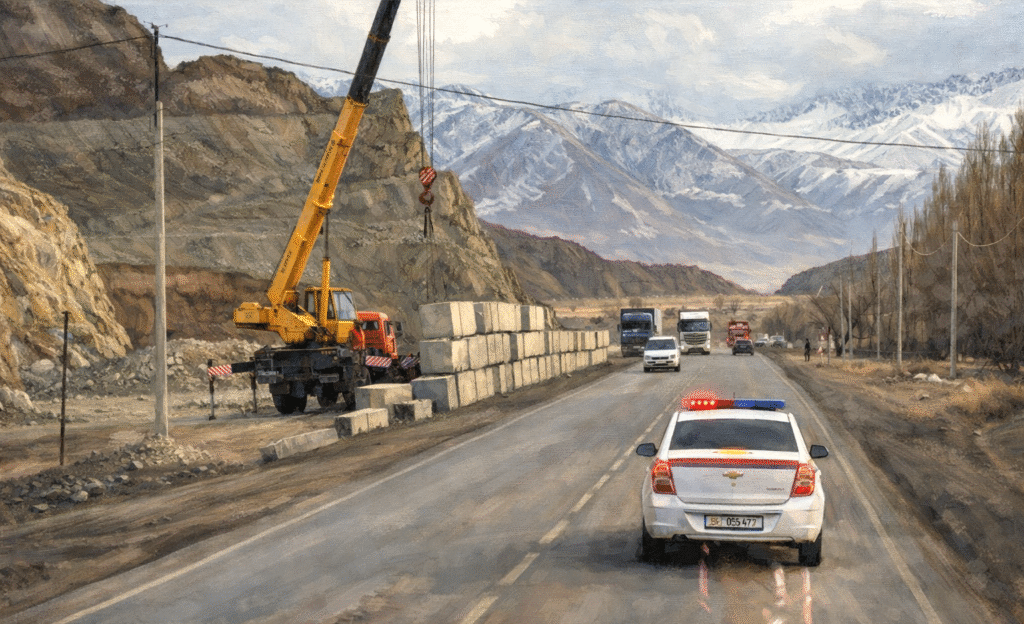
The China–Kyrgyzstan–Uzbekistan railway (CKU railway), also known as the Kashgar–Andijan railway line, is more than an infrastructure project. It represents a geopolitical initiative that could significantly shape the future of Central Asia. In June 2024, Beijing, Bishkek, and Tashkent signed the intergovernmental agreement to move the project forward. The project’s financing—estimated at $4.7 billion—was finalized in December 2025, sparking optimism in all three nations about regional connectivity, trade, and economic growth. Once completed, the railway is expected to become a vital strategic asset in China’s Belt and Road Initiative (BRI). From China’s perspective, the CKU project is a strategic line that diversifies its trade channels and strengthens overland access to Central Asia and beyond. Construction was ceremonially launched on 27 December 2024 in Kyrgyzstan, with major works progressing through 2025, including key tunnel works. For Uzbekistan, the railway could serve as a key link for commerce and transit. Tashkent aims to integrate the China–Kyrgyzstan–Uzbekistan line with existing international transport networks, including connections through Iran and Turkey. But how important is the project for Kyrgyzstan, through which, according to recent reporting, 304 km of the line will pass? According to Nurbek Satarov, Presidential Envoy in the Naryn Region, the project is vital for Kyrgyzstan’s most mountainous region, as roughly 90% of the route through the country will run through Naryn. As he told The Times of Central Asia, construction is in full swing, and the railway is expected to be completed between 2028 and 2030, despite the challenging terrain and technical difficulties. The project includes the construction of 50 bridges and 29 tunnels, underscoring the significant engineering complexities involved. But while regional and national authorities anticipate direct economic benefits from the project, critics argue that Kyrgyzstan may end up serving primarily as a transit country, with limited gains for the local economy. They also question the financial sustainability of the project, noting that it is backed by a long-term loan package of approximately $2.3 billion from Chinese banks. The financing, structured over 35 years and to be repaid by the joint venture company implementing the railway, increases Kyrgyzstan’s exposure to China-linked debt and has raised concerns about future repayment obligations. [caption id="attachment_44216" align="aligncenter" width="1536"] Site visit at the road construction project in the Naryn Oblast; image: TCA, Nikola Mikovic[/caption] However, Edil Baisalov, Kyrgyzstan’s Deputy Prime Minister, claims that the CKU will have a positive impact on the country’s economic development. “This railroad will virtually transform Kyrgyzstan – and not just Kyrgyzstan, but the whole of Central Asia,” he told The Times of Central Asia. Baisalov believes that the CKU railway, once completed, will be part of a larger transcontinental railroad that will cut transit times by at least seven days compared to the northern routes of the Trans-Siberian Railway and maritime transport. The CKU line could indeed bypass the usual northern rail routes through Russia and Kazakhstan, taking a significant share of freight from those countries and reducing their transit revenue. Kyrgyzstan, on the other hand, hopes to see direct gains...

Opinion: The New Silk Road to the Sea – Connecting Central Asia to Karachi and Gwadar

A historic shift is quietly but decisively reshaping the economic geography of Eurasia. On 5 February 2026, Pakistan and Kazakhstan agreed to elevate their bilateral relationship to a Strategic Partnership during the state visit of President Kassym-Jomart Tokayev to Pakistan— the first such visit by a Kazakh head of state in 23 years. This moment marked far more than a diplomatic renewal; it signaled a potential turning point in regional connectivity, one that could unlock long-suppressed economic potential across Central Asia and South Asia by overcoming longstanding geographical and logistical barriers. For decades, Central Asia’s landlocked status has imposed structural constraints on its economic growth. High transit costs, dependence on distant or politically sensitive routes, and extended distances to global markets have eroded competitiveness and limited diversification. These challenges were not the result of a lack of resources or ambition, but of geography itself. However, geography need no longer be destiny. Through strategic foresight—particularly under President Kassym-Jomart Tokayev—Kazakhstan and the wider Central Asian region have begun to convert constraint into opportunity by redefining connectivity. President Tokayev has consistently emphasized connectivity as the cornerstone of Kazakhstan’s long-term economic and strategic vision. During his engagements with Pakistan’s leadership, he demonstrated a clear understanding that sustainable prosperity for Central Asia depends on reliable, cost-effective access to warm-water ports. This conviction underpinned the decision to elevate Pakistan–Kazakhstan relations to a Strategic Partnership, recognizing Pakistan not merely as a bilateral partner, but as a gateway to global markets via the Arabian Sea. From a financial and logistical perspective, the implications are profound. Karachi and Gwadar are among the closest seaports to much of Central Asia, significantly closer than many traditional routes to global markets. Every additional kilometer of overland transit results in higher freight costs, longer delivery times, and reduced margins. By connecting Central Asia to Pakistani ports, Kazakhstan and its neighbors stand to substantially lower transportation costs, enhance export competitiveness, and attract greater foreign investment into manufacturing, mining, agriculture, and value-added industries. The most immediate and strategically sound connectivity model emerging from this partnership bypasses the troubled terrain of Afghanistan, long viewed as a chokepoint for regional trade. Under this framework, goods could move seamlessly from Karachi through Pakistan’s railway network to Haripur, then onward via the Karakoram Highway into China. From there, the cargo would seamlessly integrate with the China–Kazakhstan railway system through the established Dostyk–Alashankou corridor. This route is not theoretical; it builds on existing infrastructure, proven logistics, and political stability across all participating states. Financially, this corridor offers predictability—an essential ingredient for trade and investment. Reduced insurance premiums, fewer delays, and stable regulatory environments translate into lower transaction costs. For Central Asian exporters, particularly Kazakhstan, this means improved access to South Asian, Middle Eastern, and African markets. For Pakistan, it positions Karachi and Gwadar as indispensable nodes in Eurasian supply chains, generating port revenues, transit earnings, employment, and industrial growth. At the same time, Kazakhstan’s leadership has demonstrated pragmatic flexibility by supporting additional connectivity options. Regional discussions have included the possibility...

Kazakhstan Bets on Pakistan for Central Asian Connectivity

In early February, Kazakh President Kassym-Jomart Tokayev made a historic visit to Pakistan. The last such visit was a two-day trip in 2003 by then-President Nursultan Nazarbayev, during which he met with the Pakistani president at the time, General Pervez Musharraf. Kazakhstan’s outreach to Pakistan reflects a broader recalibration of its connectivity strategy, as Astana looks to secure more reliable southbound trade routes amid shifting geopolitical and logistical constraints across Eurasia. The topic of connectivity was already on the table in 2003, and it was also one of the most important issues during the latest visit, with Tokayev discussing the issue with Pakistani Prime Minister Shehbaz Sharif. The trip culminated in the signing of 37 agreements in various fields, including strategic sectors such as mining and, more generally, trade, with the aim of increasing trade from the current $250 million to $1 billion. Official statements indicate that both sides are aiming to reach that target within approximately the next two years. From a political point of view, the bilateral relationship has been elevated to the rank of Strategic Partnership. In an official statement released following the visit, great importance was placed upon the issue of connectivity and logistics between South and Central Asia. From this point of view, the Kazakhstan-Turkmenistan-Afghanistan-Pakistan railway took center stage. If completed, the project would connect Kazakhstan to the ports of Karachi and Gwadar and allow Pakistan to be included in the North–South International Transport Corridor and Trans-Caspian Middle Corridor logistics routes. Speaking to the Pakistani media in the days leading up to Tokayev's trip, the Kazakh ambassador to Pakistan, Yerzhan Kistafin, stated Astana's willingness to fully finance the construction of the infrastructure, at a total cost of around $7 billion. Kazakhstan's move represents an acceleration of a logistical competition in this arena involving various players, with some at the forefront, such as Pakistan and Iran, and others further behind, such as China and India. It has been talked about for some time, but the backbone of the Kazakhstan-Turkmenistan-Afghanistan-Pakistan railway has only recently begun to take shape, as confirmed to The Times of Central Asia by Dr. Nargiza Umarova, Head of the Center for Strategic Connectivity at the Institute for Advanced International Studies (IAIS), Uzbekistan: “In 2024, Kazakhstan joined the project to construct a railway through Afghanistan, also known as the western trans-Afghan route. The Turkmenistan-Afghanistan-Pakistan (TAP) railway corridor is designed to integrate the transport systems of Central and South Asia, which will stimulate trade and economic ties between the two regions. The TAP railway, which runs through western Afghanistan to the border with Pakistan, could be extended to Pakistani ports on the Indian Ocean. This would provide Central Asian countries with an alternative route to the open seas in addition to the southern ports of Iran.” Pakistan's importance as the destination for Kazakhstan's logistics ambitions was confirmed by Dr. Marriyam Siddique, Assistant Professor at the Pakistan Navy War College in Lahore: “Pakistan serves as the primary maritime gateway for Kazakhstan’s 'land-linked' strategy, offering the shortest...

Kyrgyzstan’s Rail Freight Turnover Emerges from Years of Stagnation

Kyrgyzstan’s rail transport sector is showing sustained growth after years of stagnation. By the end of 2025, the state-owned railway operator Kyrgyz Temir Zholu reported transporting 10 million tons of cargo, the highest volume in the company’s history. Just a few years ago, the country’s annual rail freight volume hovered around 7 million tons. The turning point came in 2022, and by 2024, the figure had already reached 9.2 million tons. Surpassing the 10 million ton milestone in 2025 has further solidified the sector’s recovery. Kyrgyz Temir Zholu acknowledged that prior to 2022, the national railway industry was largely unprofitable and in urgent need of systemic modernization. Early reforms focused not on major infrastructure projects but on managerial and institutional restructuring. “The main focus was on digitalizing processes, minimizing human error, preventing corruption, reducing costs, revising regulatory frameworks, and modernizing repair facilities and railway infrastructure,” the company stated. International partnerships have also played a key role in revitalizing the sector. Under its development strategy, Kyrgyzstan opened additional multimodal transport corridors between China and Europe, significantly enhancing the country’s transit potential. Despite its growth, Kyrgyzstan’s railway network remains one of the most compact in the region. It spans just 425 kilometers and includes 28 operational stations, divided into two geographically isolated segments: north and south. The northern section, 323.4 kilometers long, connects Rybachye station (in Balykchy) with Turksib in Kazakhstan and serves as a vital corridor for freight headed to Russia and other members of the Eurasian Economic Union. The southern section, 101 kilometers in length, links Kyrgyzstan with Uzbekistan’s rail network. “Both sections serve strategically important roles by ensuring Kyrgyzstan’s integration with regional transport systems and facilitating international trade,” Kyrgyz Temir Zholu noted. The growth in freight turnover has been accompanied by an ongoing digital transformation. A key milestone was the development and implementation of the Unified Transport Process Model software system, which consolidates every stage of freight transport, from planning to execution, into a single digital platform. Further momentum is expected from the construction of the China-Kyrgyzstan-Uzbekistan railway, which is already underway. Authorities view the project as a long-term catalyst for boosting Kyrgyzstan’s transit capacity and strengthening its role in Eurasian logistics chains.