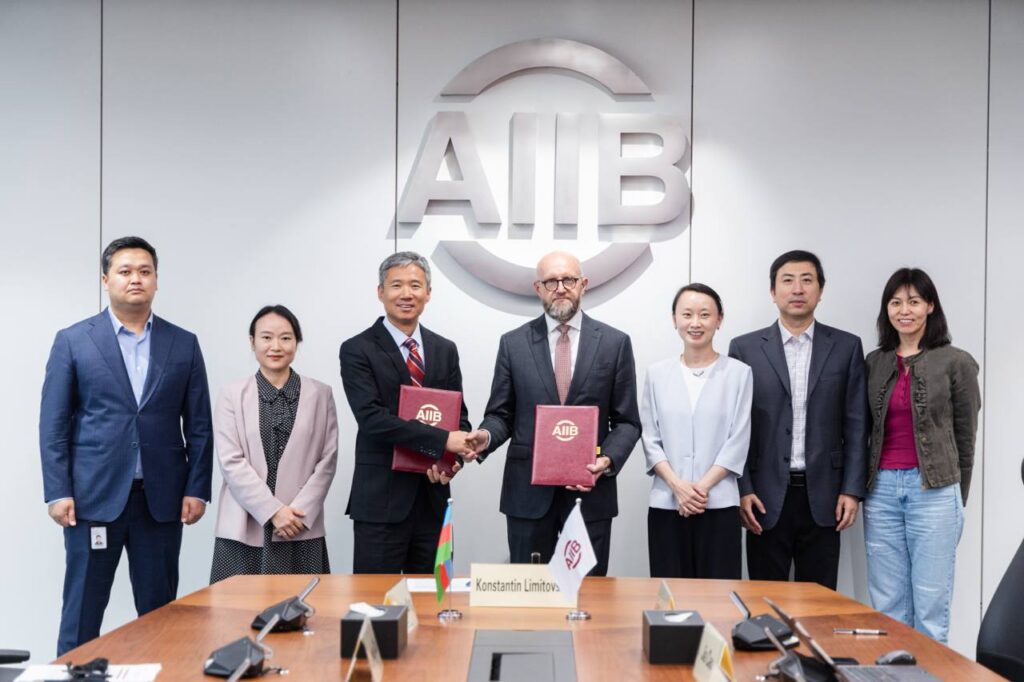
On February 19, 2026, the World Bank Board approved an $846 million IBRD guarantee to help the state-owned railway company Kazakhstan Temir Zholy (KTZ) mobilize $1.41 billion in long-term commercial financing. The financing is linked to a KTZ reform program under the umbrella “Transforming Rail Connectivity in Kazakhstan (Middle Corridor Development)” initiative. The purpose is to expand rail connectivity and upgrade logistics on Kazakhstan’s segment of the Trans-Caspian International Transport Route (TITR, Middle Corridor). The Asian Infrastructure Investment Bank (AIIB) will add a $564 million co-guarantee that shifts the financing away from a classic sovereign-loan model and toward private credit backed by multilateral risk coverage. The Multilateral Investment Guarantee Agency (MIGA) presents this operation as part of a wider World Bank Group approach that pairs corridor capital expenditure with steps to strengthen the operator’s financial sustainability and commercial viability.
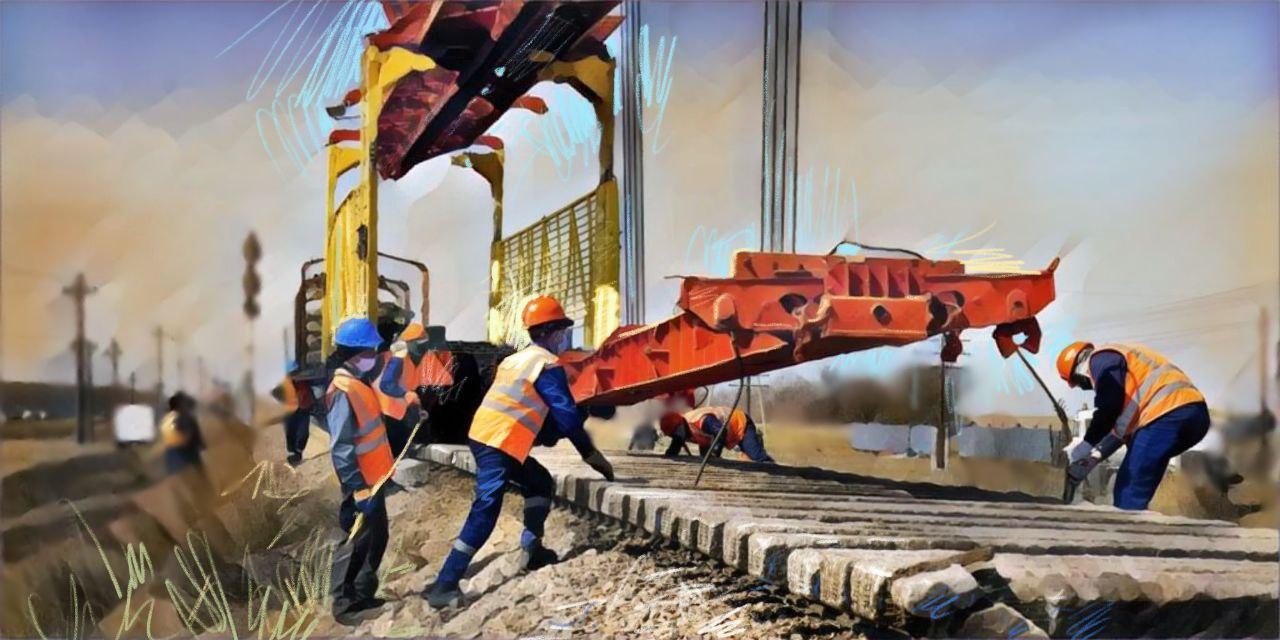
The operation is structured as a two-part package. First, it finances a new 322.3-kilometer railway on a new segment between Mointy and Kyzylzhar in central Kazakhstan. This segment is meant to remove a major network detour, shorten the TITR route within Kazakhstan by 149 kilometers, ease congestion on heavily used sections, and support double-stack container operations. The line is planned with modern signaling and telecommunications, plus design provisions for later expansion and electrification. Second, it ties the construction to a reform program at KTZ, including tariff reform, exploration of alternative financing mechanisms, stronger financial and environmental management, and preparatory work for a potential initial public offering. The World Bank is structuring delivery through a Multi-Phase Programmatic Approach with the stated aim of tripling freight volumes and halving end-to-end transit times on Kazakhstan’s Middle Corridor segment by 2030.
Why This Segment Matters for the Middle Corridor
Inside Kazakhstan, the Mointy–Kyzylzhar line is a central connector in the Trans-Kazakhstan east–west trunk carrying traffic from the China-facing gateways at Dostyk and Khorgos toward the Caspian outlets at Aktau and Kuryk. Mointy itself is a pivotal junction where train paths, locomotives, and crews are redistributed across multiple directions; as a result, any congestion there propagates quickly into corridor-wide delays. In early 2025, President Kassym-Jomart Tokayev directed acceleration of the Trans-Kazakhstan corridor. KTZ says the expected benefits include decreased pressure on heavily used central segments, fewer locomotive changeovers at key junction points, and, on some routings, the potential to cut more than a day from transit time between the Chinese border and Aktau.
The World Bank’s 2023 Middle Corridor study stressed that the corridor’s most durable growth driver is regional trade among the core corridor economies: China–Europe movements remain important, but they compete with multiple alternatives, above all maritime shipping. An infrastructure upgrade adds economic value only if it reduces variability at the handoff points where delays accumulate, including rail-to-port interfaces, Caspian coordination, and national borders. Relieving the domestic bottleneck in Kazakhstan is economically meaningful only insofar as it stabilizes arrival times to Caspian terminals, creates more room for dispatching, and helps logistics providers offer shippers more predictable end-to-end service along the TITR. The emphasis is thus on schedule reliability, not just shorter mileage.
This guarantee-backed model finances specific corridor constraints rather than treating the rail system as a single sovereign program. In January 2026, the International Finance Corporation (IFC) announced a separate Swiss-franc-denominated non-sovereign package of up to $300 million equivalent for KTZ, alongside AIIB, supported by a proposed MIGA guarantee to Standard Chartered, a London-based multinational banking and financial services company. This package is tied to the planned railway bypass around Almaty, designed to divert long-haul freight around a node where it competes for capacity with urban passenger needs. It reflects an effort to package corridor links into financeable projects while holding the operator to the more exacting operational and financial due diligence that long-term private lenders require. The deal is explicitly framed as a model for “upcoming railway projects.”
World Bank project documentation for the Mointy–Kyzylzhar segment assigns a high environmental risk rating, implying a nontrivial implementation burden. KTZ has to procure and deliver civil works while meeting safeguards, occupational health and safety, and financial oversight requirements, including external auditing and results measurement, in a way that keeps lenders confident across the multi-phase structure. The disclosed Environmental Social Impact Assessment (ESIA) package includes an environmental and social management plan, a land acquisition and resettlement plan, biodiversity management, stakeholder engagement, labor management procedures, and ongoing monitoring. International lenders will watch whether Kazakhstan’s administrative and governance capacity keeps pace with construction. If it does, the project can build market trust for the next one. The significance here would be in the fact that Kazakhstan is the only Central Asian economy large enough to sustain multiple corridor upgrades in parallel.
How Scale Makes Kazakhstan’s Corridor Strategy Plausible
Kazakhstan’s corridor ambitions are economically plausible largely because of the size of its economy. World Bank data put Kazakhstan’s 2024 gross domestic product (GDP) at $291.5 billion, with GDP per capita at $14,154.60 and annual growth at 5%. That GDP figure exceeds the combined 2024 GDP of Uzbekistan ($115 billion), Turkmenistan ($51.4 billion), the Kyrgyz Republic ($17.5 billion), and Tajikistan ($14.2 billion). These figures show that Kazakhstan can sustain long-term investment programs as well as procurement and oversight burdens across multiple projects. Moreover, its large domestic freight base can reduce exposure to any single international traffic segment. This constellation of strengths supports a sequencing logic: if delivery discipline and operating reforms remain credible, then corridor upgrades can be planned and executed in stages and refinanced as a portfolio. Kazakhstan’s export profile reinforces the point. World Bank trade data list high-volume commodities like petroleum oils, uranium, and copper products among Kazakhstan’s leading export lines. These exports can anchor rail utilization beyond container-cycle volatility because they require continuous logistics throughput.
The World Bank’s 2023 Middle Corridor report identified the Caspian crossing as the place where delays are most likely to compound. That is because for the corridor to function as a service (rather than a set of segments), there must be reliable connections among rail schedules, port handling, and the sea leg. In the World Bank’s scenarios, traffic routed via the Caspian is projected to triple to about 11 million metric tons by 2030, including roughly 4 million metric tons of container demand; if the improvement program is not implemented, the resulting transportation demand would be 35% lower. For Kazakhstan, this means that domestic upgrades deliver their full value only when they match the report’s corridor-wide constraints across Kazakhstan, Azerbaijan, and Georgia, including logistics performance and the quality of intermodal handoffs. Projected growth thus depends on sustained, coordinated upgrades, not on a single investment standing alone.
The most immediate competitive context for Kazakhstan’s Middle Corridor program is the China–Kyrgyzstan–Uzbekistan (CKU) railway. For Uzbekistan, CKU is meant to create a more direct rail link to western China and to strengthen westbound options for trade and logistics, including connections that can later be paired with routes toward the Caspian and onward markets. For Kyrgyzstan, it is also framed as a domestic development project; however, the line’s engineering is unusually difficult and therefore correspondingly expensive. The challenges include constructing 29 tunnels and 50 bridges, along with complex work in mountainous terrain that tends to amplify cost and increase schedule risk. Completion is often projected for the 2028–2030 window. Nevertheless, the regional scenario effects are straightforward. Because the project offers a credible southward alternative for some flows that today default to Kazakhstan’s east–west trunk, it can reshape expectations about future routing and pricing even before full completion. Such a prospect raises the premium on service quality for Kazakhstan’s existing route.
Kazakhstan does not have to race to replicate every alternative. Its best move is to focus on making its existing system the easier choice for high-volume traffic. The way to do this is to expand capacity, tighten schedules, and keep operating and financial practices predictable enough that logistics firms and banks can plan around them. This is exactly where Kazakhstan’s modernization plan for rolling stock complements its planned new infrastructure links. A useful marker here is the Wabtec–KTZ agreement for locomotives and services announced in September 2025, a multi-year package worth about $4.2 billion. This partnership between a private U.S.–based firm and a state company in Kazakhstan contrasts with the CKU, which is being advanced through a joint-company structure that gives China a majority stake.
Execution Will Decide the Corridor’s Future
The World Bank decision, alongside the AIIB co-guarantee, ties corridor capital spending to operating reforms at KTZ through a structure designed for staged delivery and repeatable financing. By removing a bottleneck that can trigger missed connections as traffic approaches the Caspian Sea crossing, it seeks to stabilize schedules and prevent multi-day disruption. The program, if it works as intended, will also push the operator toward tariff reform and balance sheet management that can support future private funding, including the preparatory pathway already built into the package.
In the near term, the test will be the quality of execution under demanding safeguards and monitoring requirements. The project will be judged not only on civil works delivery described in the ESIA, but also on procurement discipline, auditability, reporting quality, and consistent stakeholder processes. In the medium term, the test will be whether reforms translate into a service that shippers can plan around: fewer schedule shocks, tighter arrival times at ports, and clearer pricing signals. Routine indicators such as key-node dwell time, dispatch reliability, and intermodal handoff performance will show whether those reforms deliver the promised service discipline.
In such a competitive corridor environment, credibility becomes a strategic asset. The CKU railway can influence future routing and pricing well ahead of completion by giving shippers and forwarders a plausible southward option. Kazakhstan’s advantage remains the scale of its economy and the depth of its rail network. Sustaining that advantage, however, depends on whether the corridor becomes a dependable service or is viewed as a chain of weak links. Kazakhstan has to show that project delivery, safeguards compliance, and operating reforms visibly reinforce one another. If it succeeds, then the World Bank–AIIB approach can become an established template for additional upgrades and financing rounds.