• KGS/USD = 0.01144 0%
  • KZT/USD = 0.00208 0%
  • TJS/USD = 0.10407 -0.29%
  • UZS/USD = 0.00008 0%
  • TMT/USD = 0.28571 0%
  • KGS/USD = 0.01144 0%
  • KZT/USD = 0.00208 0%
  • TJS/USD = 0.10407 -0.29%
  • UZS/USD = 0.00008 0%
  • TMT/USD = 0.28571 0%
  • KGS/USD = 0.01144 0%
  • KZT/USD = 0.00208 0%
  • TJS/USD = 0.10407 -0.29%
  • UZS/USD = 0.00008 0%
  • TMT/USD = 0.28571 0%
  • KGS/USD = 0.01144 0%
  • KZT/USD = 0.00208 0%
  • TJS/USD = 0.10407 -0.29%
  • UZS/USD = 0.00008 0%
  • TMT/USD = 0.28571 0%
  • KGS/USD = 0.01144 0%
  • KZT/USD = 0.00208 0%
  • TJS/USD = 0.10407 -0.29%
  • UZS/USD = 0.00008 0%
  • TMT/USD = 0.28571 0%
  • KGS/USD = 0.01144 0%
  • KZT/USD = 0.00208 0%
  • TJS/USD = 0.10407 -0.29%
  • UZS/USD = 0.00008 0%
  • TMT/USD = 0.28571 0%
  • KGS/USD = 0.01144 0%
  • KZT/USD = 0.00208 0%
  • TJS/USD = 0.10407 -0.29%
  • UZS/USD = 0.00008 0%
  • TMT/USD = 0.28571 0%
  • KGS/USD = 0.01144 0%
  • KZT/USD = 0.00208 0%
  • TJS/USD = 0.10407 -0.29%
  • UZS/USD = 0.00008 0%
  • TMT/USD = 0.28571 0%

Viewing results 1 - 6 of 20

Uzbek Scholar Proposes Unified Writing System for Turkic Languages

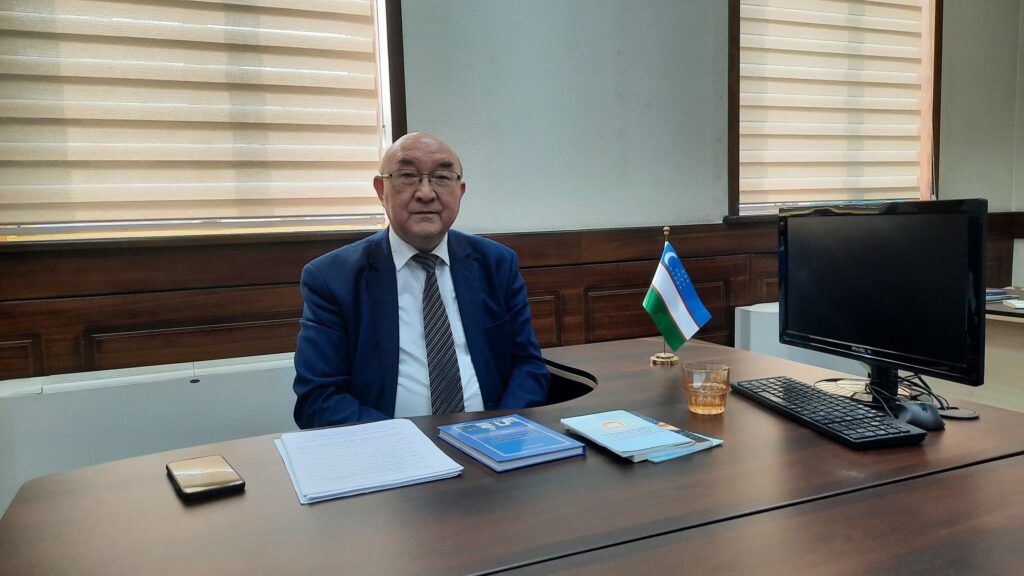
Across the Turkic-speaking world, debates over language policy and writing systems are gaining renewed importance. More than 300 million people across Eurasia speak Turkic languages, yet they use different scripts, Cyrillic, Latin, and Arabic. Uzbek scholar Bakhtiyor Karimov argues that this diversity of alphabets weakens cultural and intellectual connections among Turkic societies. Karimov, a linguist and professor who helped develop the pan-Turkic auxiliary language Ortaturk, is an academician of the Turon Academy of Sciences and director of its Ortaturk Language Research Institute. Together with Shoahmad Mutalov, he developed the concept of the Ortaturk language. In this interview, he discusses the challenges posed by alphabet diversity, his proposal for a new writing model, and his view that language policy is closely linked to political and geopolitical developments. A fragmented writing landscape Karimov describes alphabet diversity as one of the most serious challenges facing Turkic-speaking communities. “Roughly thirty Turkic languages exist,” he said. “About twenty use the Cyrillic alphabet, three use the Latin alphabet, two are transitioning toward Latin, and many communities still rely on the Arabic script. In numerical terms, around 100 million Turkic speakers use Arabic, another 100 million use Latin, and another 100 million use Cyrillic.” The situation has deep historical roots. Over the past century, shifting political systems and state policies have shaped the writing traditions of Turkic languages. As a result, speakers of closely related languages often find it difficult to read each other’s texts. For example, Uyghurs in China write using the Arabic script, while Uzbeks in Afghanistan also rely on Arabic-based writing. In Uzbekistan, both Cyrillic and Latin scripts are used. Azerbaijani communities in Iran use the Arabic script, whereas Azerbaijan employs a Latin-based alphabet. Most Turkic languages within Russia continue to use Cyrillic. Karimov also notes legal constraints. He points to Russian legislation requiring languages used in official contexts to employ the Cyrillic alphabet, arguing that this limits the ability of Turkic-speaking communities in Russia to adopt Latin scripts even if they wish to do so. “About twenty Turkic peoples living in Russia are effectively restricted to Cyrillic,” he said. Meanwhile, Turkey, Azerbaijan, and Turkmenistan have fully adopted Latin alphabets. Uzbekistan and Kazakhstan are gradually transitioning, although the process has been uneven. Kyrgyzstan continues to rely primarily on Cyrillic. “All of this means that the Turkic world is linguistically connected but graphically divided,” Karimov said. Efforts toward a common alphabet Recognizing this challenge, the Organization of Turkic States established a working group of linguists to explore the creation of a unified Turkic alphabet. Experts from Uzbekistan, Azerbaijan, Kazakhstan, Kyrgyzstan, Turkmenistan, and Turkey participated in the initiative. “They worked together for about two years and produced a draft proposal,” Karimov said. “However, the project remains under discussion and has not yet been formally adopted. Ultimately, political leaders must reach a consensus.” Karimov believes the draft proposal contains technical shortcomings, particularly in how certain sounds are represented. “In some cases, a single phoneme is represented by more than one graphic symbol,” he said. “From a computational...
Kazakhstan Boosts Trade with Turkic States on Back of Rising Exports

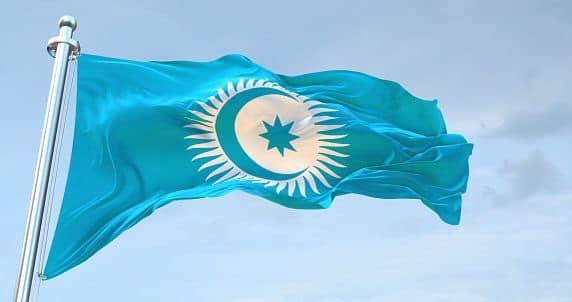
Kazakhstan has significantly increased mutual trade volumes with member states of the Organization of Turkic States (OTS), primarily driven by a surge in exports. According to data from the first ten months of 2025, trade turnover with OTS countries rose by nearly 11%, Deputy Minister of National Economy Asan Darbaev announced at the Third General Assembly of the Union of Turkic Chambers of Commerce and Industry (TCCI) in Astana. The OTS includes Azerbaijan, Kazakhstan, Kyrgyzstan, Turkmenistan, Turkey, and Uzbekistan as full members. Hungary and Northern Cyprus hold observer status and contribute to deepening economic, cultural, and political cooperation across the Turkic world. “At the end of ten months of 2025, the volume of mutual trade between Kazakhstan and OTS countries reached approximately $10.4 billion, which is almost 11% higher than the same period last year,” Darbaev stated. He noted that this growth was largely due to a 16.6% increase in Kazakhstani exports to OTS member states, which totaled $7.6 billion. Imports from these countries to Kazakhstan amounted to $2.8 billion. The export surge was driven by increased shipments of copper and copper cathodes, crude oil, wheat, petroleum products, sunflower oil, and a range of metallurgical and agro-industrial goods. According to Darbaev, this indicates not only the continued strength of Kazakhstan’s raw materials sector but also the gradual diversification of exports with higher value-added products. Turkey, Uzbekistan, Kyrgyzstan, and Azerbaijan remain Kazakhstan’s principal trading partners within the OTS. Turkey leads with a trade turnover of $4.36 billion, followed by Uzbekistan at $3.88 billion. Trade with Kyrgyzstan reached $1.78 billion, while trade with Azerbaijan stood at approximately $390 million. During the assembly, Kazakhstan assumed the rotating chairmanship of the TCCI for the first time since the Union's establishment in 2019. The organization includes chambers of commerce and industry from Azerbaijan, Kazakhstan, Kyrgyzstan, Turkey, Uzbekistan, Turkmenistan, and Hungary. It serves as a key platform for advancing trade, industrial cooperation, investment, and technology exchange among member and observer states. Raimbek Batalov, chairman of the presidium of Kazakhstan’s National Chamber of Entrepreneurs “Atameken,” was appointed head of the TCCI for a one-year term. “The Turkic economic space today possesses all the prerequisites for a qualitative leap forward, scale, resources, an institutional foundation, and political will. Our shared goal is to convert this potential into sustainable production, investment, job creation, and improved living standards,” Batalov said. Delegates at the assembly identified priority areas for future cooperation, including the development of joint industrial projects, operationalization of the Turkic Investment Fund, reduction of trade and technical barriers, and enhanced transport and logistics connectivity. Previously, The Times of Central Asia reported that energy ministers from OTS countries had discussed key joint initiatives in December 2025 as part of ongoing regional collaboration.

Family Album of 20th Century Kazakh Leader Mustafa Shokay Added to National Museum

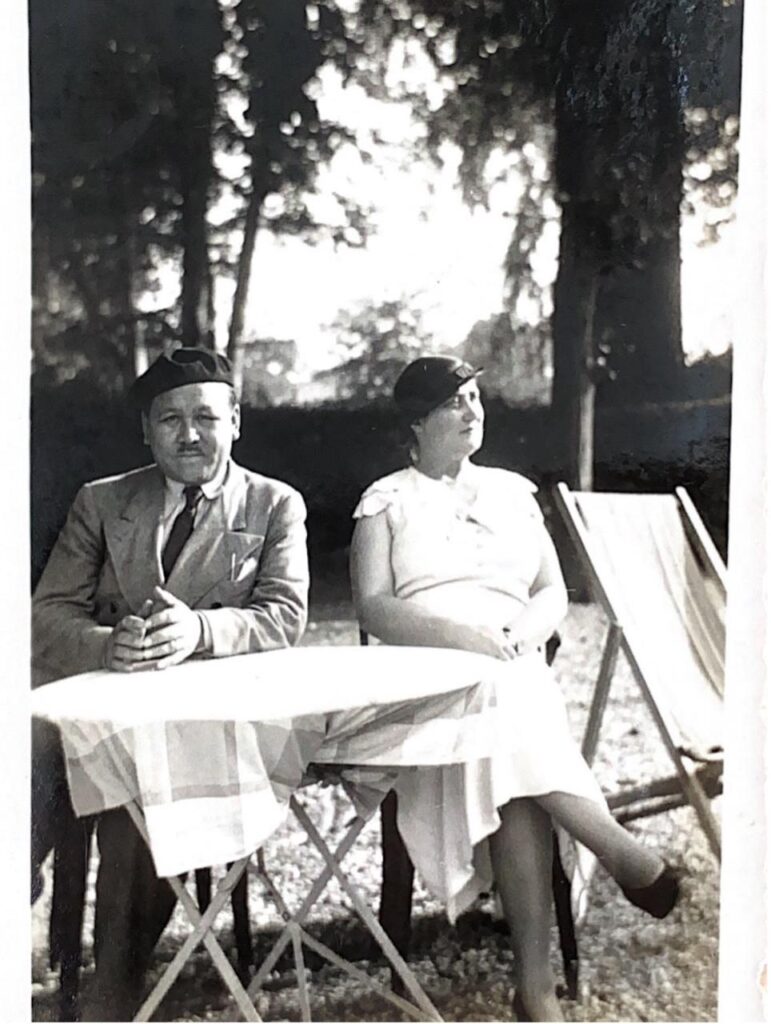
The National Museum in Astana has acquired a rare and historically significant family photo album belonging to Mustafa Shokay, a leader of the Alash Orda political movement of the 1920s that strove for Kazakh autonomy, and his wife, Maria Shokay. The original album was formally donated to the museum by Shokay’s relative, Gulbarshyn Zairova. For decades, the album was safeguarded by the distinguished violinist Alim Almat (born Galymzhan Absalyamov), who survived wartime imprisonment with the help of Mustafa Shokay and later became a spiritual son to Maria Shokay. Almat eventually entrusted this valuable heirloom to Shokay scholar Bakyt Sadykova, who in turn passed it on to Zairova in 2022. [caption id="attachment_41949" align="aligncenter" width="225"] From the Shokay family archive[/caption] Reflecting on the importance of the donation, Zairova said: “This artifact was preserved for many years by Alim Almat, the first violinist who survived captivity during the war thanks to Mustafa Shokay and who was taken under the care of Maria Shokay after the war. Following Kazakhstan’s independence, Alim Almat returned to the country and entrusted Mustafa Shokay’s typewriter, three seals used during the publication of the Yash Turkistan newspaper, the couple’s wedding portrait, and this album to Shokay scholar Bakyt Sadykova. In 2022, the album was entrusted to me, and on December 25, 2025, marking the 135th anniversary of Mustafa Shokay's birth, it found its permanent home at the National Museum in Astana. Honoring history means safeguarding the future.” [caption id="attachment_41950" align="aligncenter" width="225"] From the Shokay family archive[/caption] Mustafa Shokay was a statesman who dedicated his life to the struggle for the freedom and equality of the Kazakh people. Born in 1890 in the Syr Darya region, he showed remarkable intellectual ability and a passion for learning from an early age. [caption id="attachment_41951" align="aligncenter" width="226"] From the Shokay family archive[/caption] He studied law in St. Petersburg and was fluent in Kazakh, Russian, Turkish, and French. Equipped with deep knowledge and a strong sense of justice, Shokay devoted himself to defending the rights of his people. [caption id="attachment_41952" align="aligncenter" width="225"] From the Shokay family archive[/caption] Amid the political transformations of 1917, Shokay emerged as a leading advocate for the future of Turkestan. He played a central role in the establishment of the Turkestan Autonomy, envisioning a homeland where Kazakhs and other Turkic peoples could live freely and with equal rights. [caption id="attachment_41953" align="aligncenter" width="226"] From the Shokay family archive[/caption] Although this vision was never fully realized, Shokay continued his mission in exile following the rise of Soviet power. Living in Europe, he remained deeply connected to his homeland, publishing newspapers and journals, writing influential works, and drawing international attention to the struggles of the Turkic world. Mustafa Shokay passed away in 1941, yet his ideals of freedom, dignity, and national self-determination continue to resonate today.

Cyprus as a Mirror of Turkish Geopolitics: How Ankara Uses Northern Cyprus to Project Influence in Central Asia

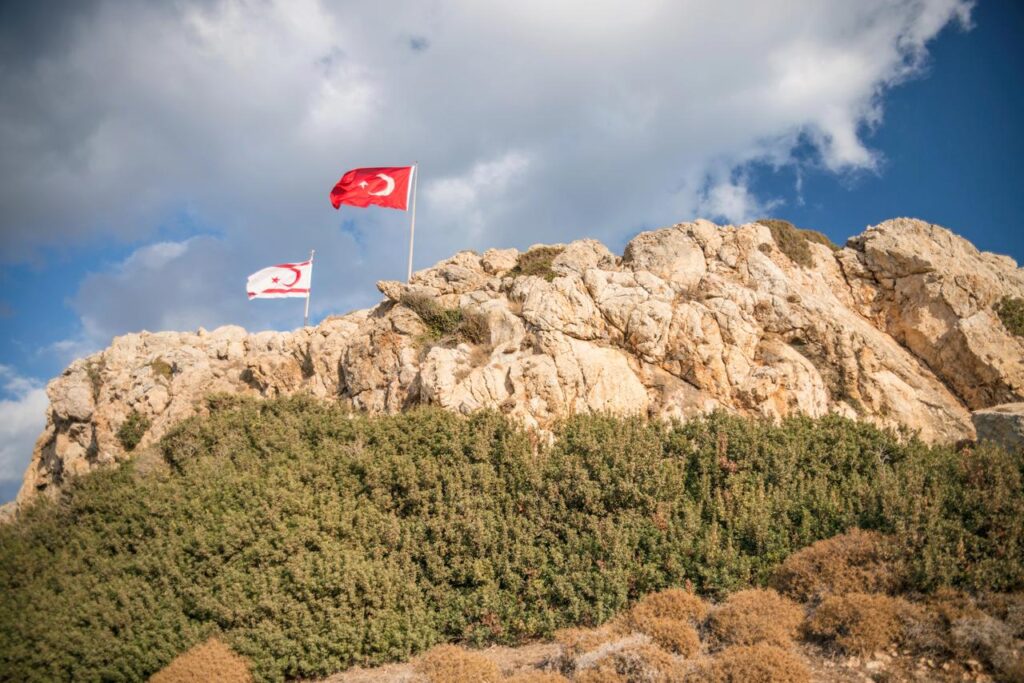
Northern Cyprus has become a microcosm of Turkish foreign policy, a space where Ankara combines military presence, the ideology of “Turkic brotherhood,” and economic leverage. For Turkey, this territory is not merely a long-standing geopolitical dispute but a laboratory for a new diplomatic model centered on the vision of a “great Turkic world.” As noted by Stratfor, despite the decisive victory of Republican Turkish Party leader Tufan Erhürman in the October 19, 2025, presidential elections in the self-declared Turkish Republic of Northern Cyprus (TRNC), a candidate who supports renewed negotiations with the Republic of Cyprus and advocates for a federal model, Ankara has shown no intention of revising its entrenched two-state doctrine. Analysts suggest Turkey may apply economic pressure and diplomatic isolation, including suspension of subsidies and credit lines, should Erhürman attempt to implement a federal solution. Concurrently, Turkey is lobbying for the TRNC’s recognition within the Organization of Turkic States (OTS), aiming to set a symbolic precedent: if Turkic-speaking nations will not support each other, who will? For Central Asia, this initiative reflects Ankara’s commitment to unifying the Turkic world under its political leadership, extending far beyond cultural solidarity. Political Implications for Central Asia Turkey’s push to incorporate the TRNC into the OTS shifts the organization from a cultural bloc to a geopolitical instrument. Should Northern Cyprus gain observer status, Ankara will likely expect symbolic support from its Turkic partners. This poses a significant dilemma for Central Asian states. Aligning with Turkey could be perceived by Western actors as a breach of international law, while maintaining neutrality might be viewed as a rejection of Turkic unity. Kazakhstan, Uzbekistan, and Turkmenistan have so far emphasized adherence to international law and sovereignty. At the April 2025 EU-Central Asia summit in Samarkand, these states jointly reaffirmed UN Security Council resolutions from the early 1980s, which declared the TRNC’s independence and all related separatist actions legally invalid. Kyrgyzstan may face a more delicate challenge due to its deep humanitarian and educational ties with Turkey. Northern Cyprus thus serves as a litmus test for Turkic integration: how closely can nations align without compromising their political autonomy? Economic and Energy Dimensions Cyprus plays a strategic role in Turkey’s energy policy, linking the Caspian region, the Caucasus, and the Eastern Mediterranean. Turkish control over Northern Cyprus bolsters its influence over maritime logistics, offshore gas development, and export corridors. This holds direct relevance for Central Asia. A stronger Turkish position in the Mediterranean enhances its leverage over energy transit routes from the Caspian to Europe, particularly in relation to the Trans-Caspian pipeline and the Middle Corridor. Over time, Ankara is expected to use energy infrastructure as a tool for political engagement, promoting an “economy of Turkic solidarity”, offering mutual benefits, but often tied to strategic conditions. Security and Military Presence The TRNC functions as a prototype for Turkey’s military protectorate model, a way to retain control while presenting itself as a guarantor of stability. This model is echoed across the Turkic region through Turkey’s expanding military partnerships...

Azerbaijan and Kazakhstan Deepen Strategic Partnership Through Middle Corridor

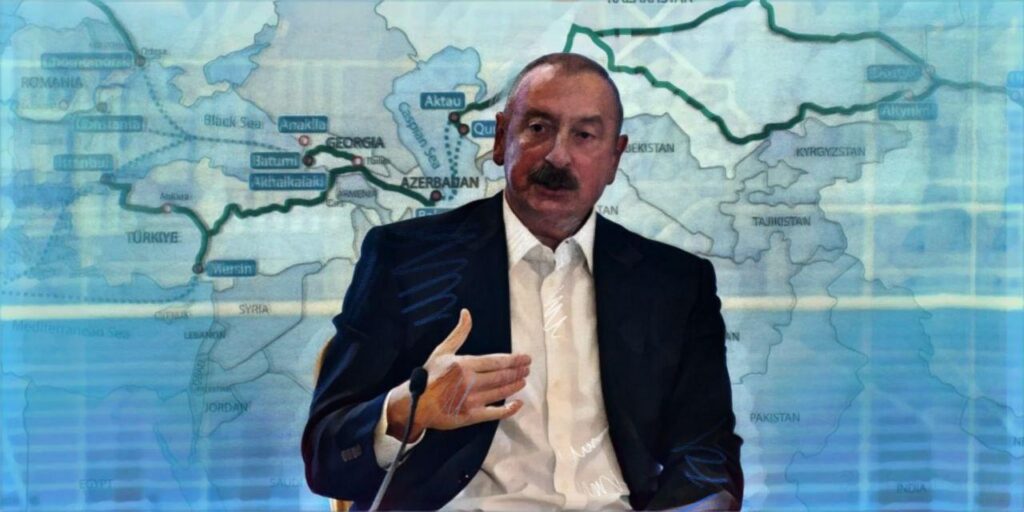
Azerbaijani President Ilham Aliyev’s recent state visit to Astana has marked a significant turning point in relations between Azerbaijan and Kazakhstan. President Kassym-Jomart Tokayev and President Aliyev underscored the rapid expansion of cooperation across transport, investment, and technology sectors. Political and cultural ties are also deepening, bolstering what both sides have described as a “brotherly” relationship. Economic Ties Strengthened by Infrastructure and Energy Projects Tokayev highlighted the strategic importance of the Trans-Caspian International Transport Route (Middle Corridor), noting a 62% increase in freight traffic in 2024 to 4.5 million tons, with a further 2% rise recorded so far in 2025. Kazakhstan is currently building a container hub in Aktau, while a new cargo terminal in the port of Alat, developed with foreign partners, including China, offers further growth potential. The two leaders also discussed establishing a Trans-Caspian ferry system to expand exports, with a long-term goal of boosting cargo traffic to 10 million tons. Tokayev further emphasized Kazakhstan’s use of the Baku-Tbilisi-Ceyhan pipeline for oil exports. In 2024, nearly 1.5 million tons of Kazakh oil transited through Azerbaijan, with plans to increase volumes significantly. He also cited efforts to deliver Kazakh uranium to foreign markets via Azerbaijan. Joint IT projects are also advancing, including plans to lay a fiber-optic communication line under the Caspian Sea. Tokayev commended the joint declaration on peace signed by Armenia and Azerbaijan in Washington under U.S. mediation, calling it a "historic" milestone in regional reconciliation efforts. Earlier on Monday, Aliyev had announced a significant policy shift, stating that Baku is lifting all restrictions on the transit of goods to Armenia. Middle Corridor as a Strategic Geopolitical Tool The Middle Corridor, connecting China and Europe through Kazakhstan, the Caspian Sea, and Azerbaijan, was a major focus of Aliyev's state visit. Amina Kosbaeva of the Institute for Eurasian Integration noted that the corridor - which carried about 2.7 million tons in 2023 and 4.5 million tons in 2024, as traffic shifted away from traditional routes via Russia - is evolving into a strategic asset that enhances regional autonomy and global connectivity. Kosbaeva highlighted that both countries have built a sustainable cooperation model grounded in cultural commonalities and mutual trust. She identified agriculture, petrochemicals, and machine-building as key sectors where new supply chains could emerge, boosting trade and resilience to global market fluctuations. Kosbaeva added that future cooperation is likely to grow within the framework of the Organization of Turkic States (OTS), which held its 12th Summit in Gabala, Azerbaijan, on October 6–7, 2025. further institutionalizing bilateral ties as a driving force within the Turkic world. “The history of the Turkic peoples goes back to common roots,” Tokayev said at the summit, expressing support for the idea of a broader “Turkic-speaking States +” platform to expand cooperation. Business Relations Rooted in Political Alignment Kazakh political analyst Gaziz Abishev noted that Astana and Baku often align on geopolitical issues. “The relationship between the two countries proves that rigid multilateral blocs are not necessary for close alliances. Unconditional mutual sympathy at all levels, leaders,...

Leaders of Turkic States Meet in Azerbaijan

The 12th Summit of the Heads of State of the Organization of Turkic States (OTS) convened in Gabala, Azerbaijan, bringing together leaders from Azerbaijan, Kazakhstan, Kyrgyzstan, Turkey, Uzbekistan, Hungary, Turkmenistan, and the Turkish Republic of Northern Cyprus. Discussions focused on regional stability, economic integration, and strengthening fraternal ties among Turkic nations. Aliyev: The OTS Is Becoming a Major Geopolitical Center Opening the summit, Azerbajani President Ilham Aliyev welcomed participants to Gabala and thanked Kyrgyzstan for its prior chairmanship. “Today, the Organization of Turkic States is not merely a platform for cooperation; it is forming as one of the serious geopolitical centers,” Aliyev said. He announced Azerbaijan’s $2 million contribution to support OTS activities and emphasized shared historical roots and cultural values across Turkic nations. Addressing peace and security, Aliyev added, “In light of modern geopolitical challenges, it is crucial that Turkic states act as a unified center of power,” and proposed hosting joint military exercises of OTS member states in 2026. South Caucasus Peace and Economic Connectivity Aliyev highlighted the recent peace agreement initialed between Azerbaijan and Armenia in Washington as a breakthrough for the South Caucasus: “This will turn the region into a space of peace.” He also noted Azerbaijan’s growing role in regional logistics: “Since 2022, cargo volumes along the Middle Corridor have increased by nearly 90%. Our Caspian fleet, the Alat Port, the Baku-Tbilisi-Kars railway, and nine international airports have made Azerbaijan a leading transport hub.” He stressed the importance of the Zangezur Corridor, intended to connect Azerbaijan with Nakhchivan and Central Asia, and cited Azerbaijan’s energy diversification, exporting natural gas to 14 countries and a projected 40% share of renewables in its energy mix by 2030. Unity and Vision from the Turkic Leaders Kyrgyz President Sadyr Japarov praised the summit location and the symbolic timing: “Gabala is an ancient city with a 2,000-year history, and it is no coincidence we gathered here.” He called the joint peace declaration with Armenia a historic step toward trust in the South Caucasus. Kazakh President Kassym-Jomart Tokayev echoed support: “This historic document has ended a conflict that had remained unresolved for more than 30 years.” He quoted poet Bakhtiyar Vagabzade: “A Turk has no right to be hostile to another Turk.” Turkish President Recep Tayyip Erdoğan called for developing a “Common Turkic Language Model” to protect cultural heritage and advance artificial intelligence research. “We once again demonstrate that the Turkic states, driven by solidarity, mutual respect, and brotherhood, are confidently looking to the future,” he said. Uzbek President Shavkat Mirziyoyev credited Aliyev’s leadership: “This peace declaration became possible thanks to your political will and is a common achievement of the Turkic world.” Turkmenistan and Hungary on Brotherhood and Energy Gurbanguly Berdimuhamedov, Chairman of Turkmenistan’s Halk Maslahaty, described the OTS as a unifying platform for brotherly nations with shared culture and language, committed to promoting cooperation at regional and international levels. Hungarian Prime Minister Viktor Orbán underscored Azerbaijan’s value to Europe: “Your incredible achievements, economic development, and investments in renewable energy...