• KGS/USD = 0.01143 0%
  • KZT/USD = 0.00206 0%
  • TJS/USD = 0.10811 -0.09%
  • UZS/USD = 0.00008 0%
  • TMT/USD = 0.28571 0%
  • KGS/USD = 0.01143 0%
  • KZT/USD = 0.00206 0%
  • TJS/USD = 0.10811 -0.09%
  • UZS/USD = 0.00008 0%
  • TMT/USD = 0.28571 0%
  • KGS/USD = 0.01143 0%
  • KZT/USD = 0.00206 0%
  • TJS/USD = 0.10811 -0.09%
  • UZS/USD = 0.00008 0%
  • TMT/USD = 0.28571 0%
  • KGS/USD = 0.01143 0%
  • KZT/USD = 0.00206 0%
  • TJS/USD = 0.10811 -0.09%
  • UZS/USD = 0.00008 0%
  • TMT/USD = 0.28571 0%
  • KGS/USD = 0.01143 0%
  • KZT/USD = 0.00206 0%
  • TJS/USD = 0.10811 -0.09%
  • UZS/USD = 0.00008 0%
  • TMT/USD = 0.28571 0%
  • KGS/USD = 0.01143 0%
  • KZT/USD = 0.00206 0%
  • TJS/USD = 0.10811 -0.09%
  • UZS/USD = 0.00008 0%
  • TMT/USD = 0.28571 0%
  • KGS/USD = 0.01143 0%
  • KZT/USD = 0.00206 0%
  • TJS/USD = 0.10811 -0.09%
  • UZS/USD = 0.00008 0%
  • TMT/USD = 0.28571 0%
  • KGS/USD = 0.01143 0%
  • KZT/USD = 0.00206 0%
  • TJS/USD = 0.10811 -0.09%
  • UZS/USD = 0.00008 0%
  • TMT/USD = 0.28571 0%

Viewing results 1 - 6 of 72

Geopolitical Posturing or Genuine Partnership? Key Takeaways from Putin’s Trip to Kazakhstan

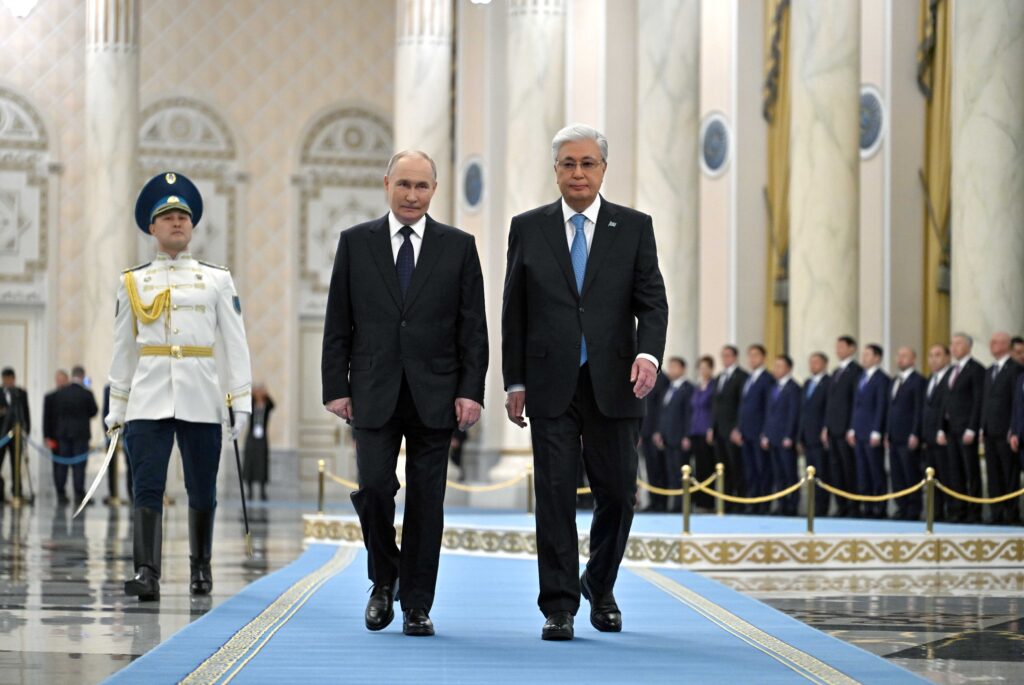
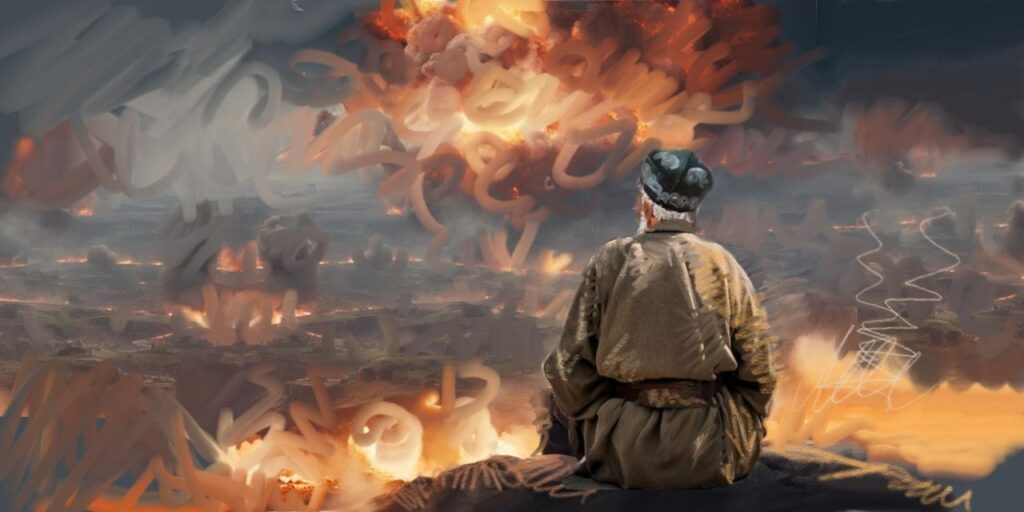
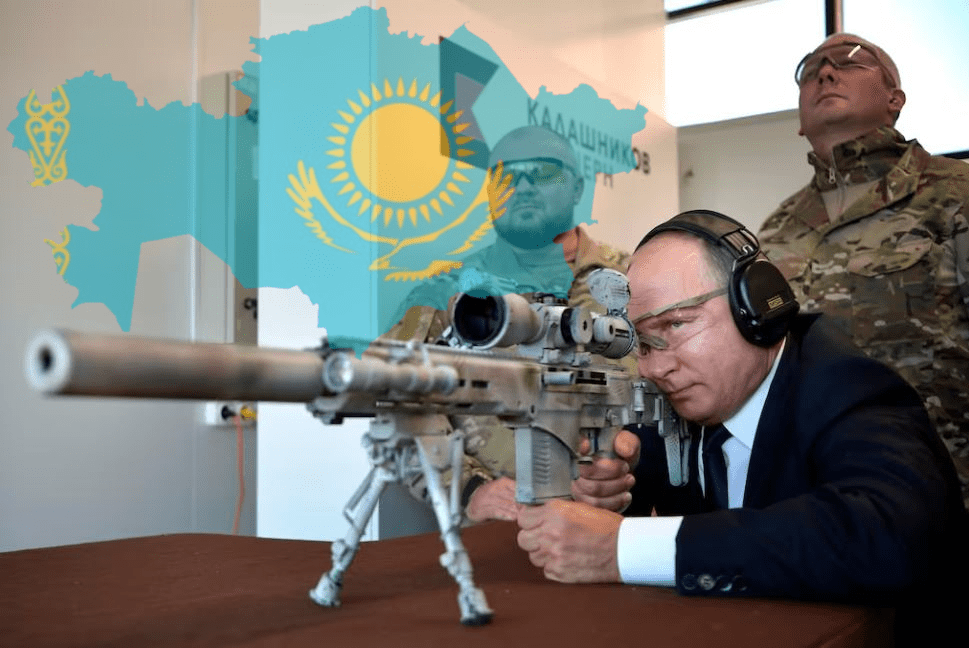
On November 27, Russian President Vladimir Putin arrived in Astana for a state visit. He was met at the airport by Kazakh President Kassym-Jomart Tokayev. The streets of Astana, along Putin’s motorcade route, were adorned with Russian flags, creating a ceremonial backdrop for a meeting touted as a symbol of strategic partnership between the two nations. At the Akorda Presidential Palace, Tokayev hosted a reception for Putin that blended official decorum with cultural displays. The program featured children reciting poetry and participation in a collaborative painting led by renowned Kazakh artist Assol (Asel Sabyrzhankyzy), who named the artwork Bridge of Friendship and presented it to Putin. However, not all Kazakhstanis welcomed the visit with enthusiasm. Some citizens, concerned by Russia’s imperial overtones or sympathetic to Ukraine, expressed their dissent through an online flash mob. A banner at Astana Airport referring to Putin as “Your Excellency” sparked outrage among critics, who viewed it as excessive deference. Political analysts later clarified that the term has been consistently used for other high-level visitors to Kazakhstan. Putin’s state visit, described as a rare diplomatic event typically occurring once per presidential term, was notably proposed by Kazakhstan. During a press briefing, Putin remarked, “At your suggestion, this visit was given the status of a state visit, but I want to note that the solemn protocol did not prevent us from working productively, as is characteristic of our meetings.” Heightened Security Amid Geopolitical Tensions The visit came against the backdrop of growing geopolitical instability. Less than a week earlier, on November 21, Tokayev had instructed government agencies to heighten security following Russia’s test of the Oreshnik ballistic system in Ukraine. This context, paired with the substantial security measures surrounding the state visit, led observers to speculate that Russia’s own security concerns may have influenced the format. The official discussions were framed by frequent references to “strategic partnership” and the “geopolitical situation.” These themes culminated in a joint declaration entitled “Joint Statement of the President of the Republic of Kazakhstan and the President of the Russian Federation on Deepening Strategic Partnership in the New Global Order.” The statement, structured in three main sections, outlined bilateral cooperation in political, economic, and security domains. Ambiguities in Counter-Terrorism and Political Statements The declaration’s political section raised some eyebrows, particularly the clause condemning recent “terrorist acts” in Russia and pledging closer intelligence cooperation to combat such threats. Questions remain over whether Kazakhstan considers only incidents like the Crocus City Hall attack on the outskirts of Moscow as terrorism, or whether the term extends to military actions tied to the Ukraine conflict. Another noteworthy point was the denunciation of “irresponsible statements” by public figures that undermine mutual respect between the two nations. This has been a sensitive issue for Kazakhstan, which has frequently faced provocative rhetoric from Russian propagandists and certain lawmakers. Tokayev himself rebuffed such remarks at the 2022 St. Petersburg International Economic Forum, firmly rejecting recognition of the Donetsk and Luhansk People's Republics. Economic Vision and Strategic Transport The economic...

Tokayev: Russia is “Militarily Invincible”

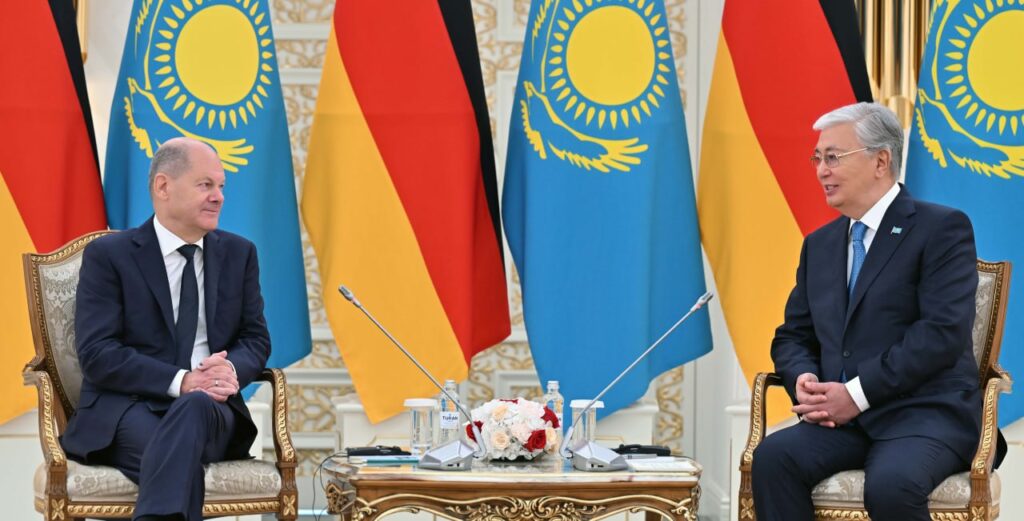
During a meeting in Astana with German Chancellor Olaf Scholz, Kazakhstan's President Kassym-Jomart Tokayev spoke about resolving the Russian-Ukrainian war. According to Tokayev, further escalation of the war will only lead to irreparable consequences for all mankind and, above all, for all countries directly involved in the war. Tokayev said: “The fact is that Russia is militarily invincible. Unfortunately, a good chance to achieve at least a truce was lost with the refusal to conclude the Istanbul Agreement. But the opportunity for peace still exists. We need to carefully consider all peace initiatives put forward by various states, come to a decision to stop hostilities, and then move on to discussing territorial issues. In our opinion, the peace plan of China and Brazil deserves support.” Tokayev reminded the public that Kazakhstan has the world's longest delimited land border with Russia. He further stated that “cooperation between our countries is developing within the framework of strategic partnership and alliance. In Kazakhstan, we have genuine sympathy for the Ukrainian people and their distinctive culture. There have never been any disagreements between our states. The embassy of our country continues to function in Kyiv.” While his comments about seeking peace before discussing territorial issues may seem like Tokayev is backing Russia, in 2022, he said that Kazakhstan would not recognize the independence of the so-called Donetsk and Luhansk people's republics (“DNR” and “LNR”). Speaking about the 'republics', he noted that the two basic principles of the UN Charter -- the right to self-determination for nations, and the territorial integrity of states -- have come into mutual contradiction. On this topic, Tokayev noted: "It is estimated that if the right of self-determination for a nation is realized on the globe, then instead of the current 193 states, more than 500-600 states will emerge on Earth. It will be chaos. For this reason, we do not recognize Taiwan, Kosovo, South Ossetia, or Abkhazia. We will apply this principle to all quasi-state territories, which, in our opinion, includes Luhansk and Donetsk.”

Ashgabat Exhibition to Mark Ukraine’s Independence Day

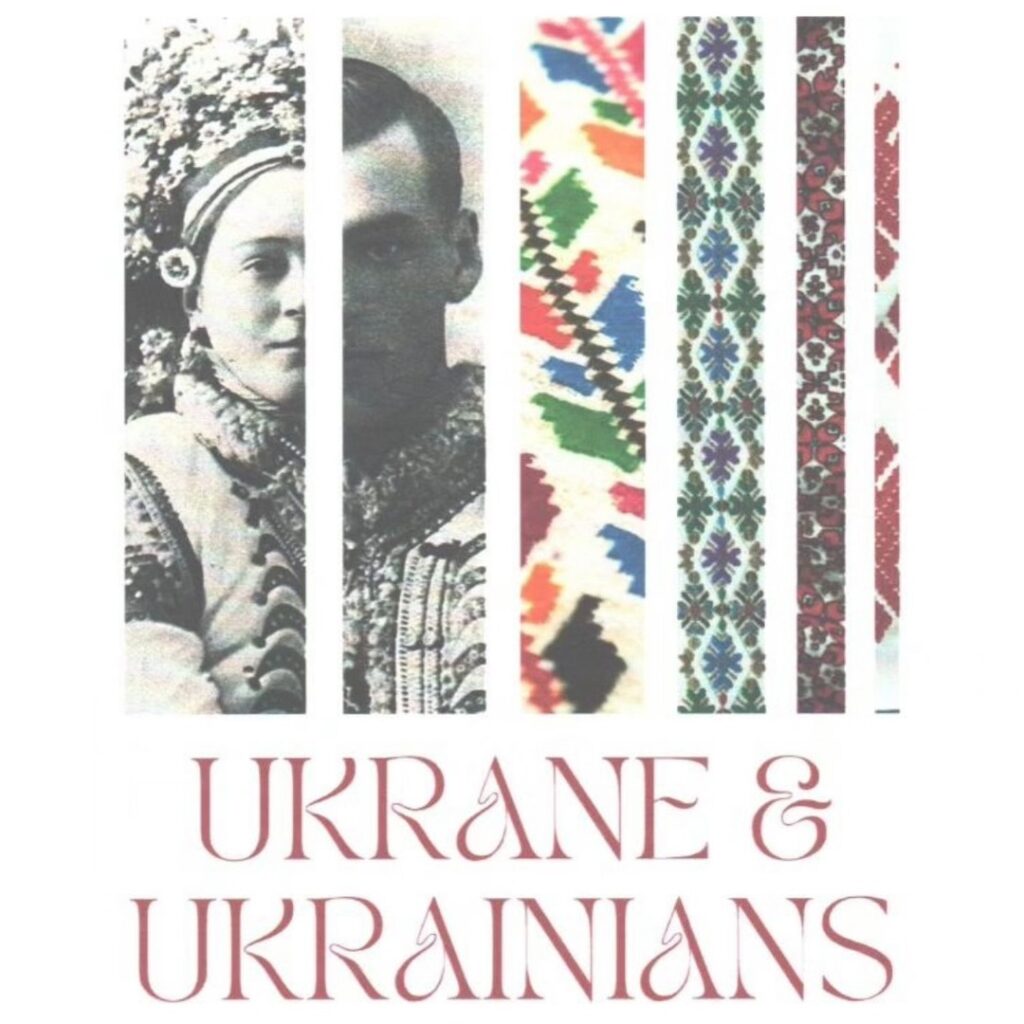
The Embassy of Ukraine in Turkmenistan is poised to display an exhibition of archival photographs in Ashgabat, dedicated to Ukraine's Independence Day. Titled “Ukraine and Ukrainians," the exhibition will run from August 30 - September 6 2024, and comprise a selection of rare images from the Ivan Honchar Museum. Funded by the National Center of Folk Culture, an organization actively engaged in preserving and disseminating folk cultural traditions, the museum's vast collections of historical photographs provide the younger generation with a deeper understanding of their cultural roots and heritage. The forthcoming exhibition follows “Cultural Values of the Turkmen People”; an exhibition of  photographs, books, and national dress previously mounted in Kyiv to celebrate the 300th anniversary of the birth of Turkmen poet and philosopher Makhtumkuli Fraghi. Aimed to attract young audiences, the exhibition was complemented by excursions for pupils of eight of Kyiv's  schools and lyceums, as well as students studying journalism, with talks presented on Turkmenistan's archaeological monuments located in the ancient cities of  Merv, Kunyaurgench, and Nisa fortresses, and included in the UNESCO World Heritage List.  

Controversial Kazakh Opposition Figure Aidos Sadykov Shot in Kyiv

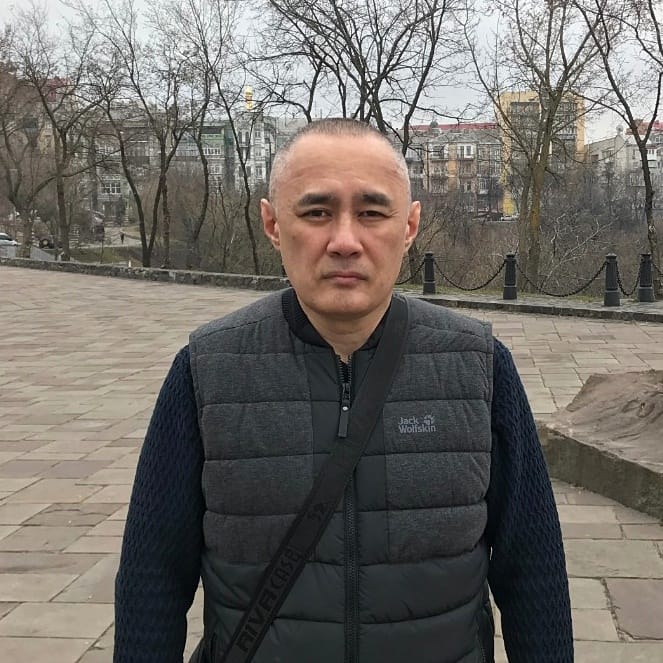
An unknown man in Kyiv fired several shots at Kazakh activist and oppositionist Aidos Sadykov, who has been granted official refugee status in Ukraine. It is reported that the incident occurred in the Shevchenkivskiy district of the Ukrainian capital when Sadykov was approaching his car with his wife, Natalia, who previously worked for Mukhtar Ablyazov’s opposition paper, Respublika. The gunman used a silencer on the firearm. Sadykov's condition is currently assessed as serious; his wife was not injured. As this is a case involving a high-profile individual, the head of the regional police, Andriy Nebytov, was called to the crime scene. Sadykov is the author of the Telegram channel 'Base', which has 59,000 subscribers, and has been permanently residing in Kyiv since 2014. Over the years, he has criticized the current Kazakh authorities, including the current president, Kassym-Jomart Tokayev. In 2020 Base, together with the initiative to create the opposition Democratic Party, became the co-organizers of a rally in Almaty demanding a boycott of the upcoming parliamentary election. The Democratic Party of Kazakhstan, an unregistered political party, was founded and led by Zhanbolat Mamai, a former journalist who was convicted for receiving funds from Ablyazov in 2017. Sadykov and Mamai both actively supported the protests in January 2022 in Kazakhstan, widely seen as an attempted coup. He is wanted in Kazakhstan under the articles on the incitement of discord.

Central Asian Public Opinion is the Latest Battle Front Between Putin and Zelenskiy

The settings were starkly different. An Uzbek honor guard in elaborate uniform greeted Russian President Vladimir Putin after he arrived at Uzbekistan’s Tashkent airport on May 26 for a state visit. Two days earlier, Ukrainian President Volodymyr Zelenskiy gave an interview to Central Asian media in his signature army-green combat-ready t-shirt, sitting in the ruins of a Kharkiv printing house destroyed by Russian missiles.  With the war in Ukraine into its third year, Putin’s trip to Uzbekistan represents part of his broader mission to nurture long-standing trade and security ties with Central Asian countries, who have been trying to walk a delicate line in their relationships with Russia. Uzbekistan’s President Shavkat Mirziyoyev welcomed Putin with a literal embrace. Their official meeting the next day was scheduled to address bilateral issues and views on “current regional problems,” reported Russia’s state-run news agency Tass.  While in Uzbekistan President Putin had boasted that Russia was Uzbekistan’s biggest trading partner with export growth by 23% this year and had invested over $13 billion in the country. He called Uzbekistan to be the biggest state in Central Asia; praised Mirziyoyev’s language policy that protects Russian language in schools and as an official language in Uzbekistan. Russia has started exporting gas to Uzbekistan through Kazakhstan, with some of the gas staying in Kazakhstan. Some analysts argue that Russia can circumvent sanctions by partly relying on imports, mainly from Europe, that come through Central Asia.  Over in the war-torn Ukrainian city of Kharkiv, President Zelenskiy’s interview with six journalists from Uzbekistan, Kyrgyzstan and Kazakhstan, some openly affiliated with Radio Free Europe and the Soros Foundation, included a discussion on how to deepen solidarity between the people of Central Asia and Ukraine over a shared anti-Russian sentiment. Zelenskiy tells Central Asians to drop their balancing act towards Russia In the interview, President Zelenskiy challenged Central Asian countries to overcome their economic dependencies and security vulnerabilities and adopt Ukraine’s hardline posture against Russia. The region’s leaders “are still [positioned] more in the Russian direction because of fear of the Kremlin. We [the Ukrainians] have made our choice, we are fighting,” Zelenskiy said, according to a Russian transcript of the interview published by Kazakh media outlet Orda.kz. Zelenskiy told Central Asians and others who are “trying to balance” their relationships with Russia to "not wake the beast" that this strategy will not work because “the beast does not ask anyone: he wakes up when he wants”.  Zelenskiy warned Central Asian people that alongside the Baltic states and Moldova, they, too, face a risk of being invaded by Russia given their Russian populations, which the Kremlin may decide to intervene to protect, as it did in Ukraine. He also added grimly, “if you, your people, resist becoming part of Russia, you will inevitably be waiting for a full-scale invasion, death and war.” Calling on the world to unite against Russia, President Zelenskiy recommended that Central Asians isolate Russia economically and diplomatically, arguing that “balancing acts” to help their economy in the...

Uzbekistan Considers Hosting Relocated Ukrainian Enterprises

Representatives of Uzbek and Ukrainian businesses have discussed the relocation of certain Ukrainian production enterprises to Uzbekistan. The meeting was held in Kyiv as part of a business council established in 2021. Heads of state bodies and businessmen -- including the founder of the korzinka.uz supermarket chain and co-founder of Newmax Technologies, Zafar Hashimov -- participated in the meeting to offer their perspectives on Ukrainian-Uzbek economic ties. Since the beginning of Russia's attack on Ukraine in February 2022 the countries' bilateral trade turnover has significantly decreased -- in 2023 it amounted to $320 million, down from $747 million in 2021. One of the issues discussed was the customs value of textile products exported from Uzbekistan to Ukraine. An important aspect of the discussion were proposals to transfer to Uzbekistan some Ukrainian production enterprises affected by military actions -- as well as to expand cooperation in the creative economy. Several Ukrainian investment projects are already being implemented in Uzbekistan. The pharmaceutical company Yuria-Pharm acquired the Reka-Myod enterprise in 2023. Another pharmaceutical company, Lekhim, entered the Uzbek market in 2021 and built a large production complex that opened in 2023.