• KZT/USD = 0.00213
  • TJS/USD = 0.10800
  • UZS/USD = 0.00008
  • TMT/USD = 0.29850
  • KZT/USD = 0.00213
  • TJS/USD = 0.10800
  • UZS/USD = 0.00008
  • TMT/USD = 0.29850
  • KZT/USD = 0.00213
  • TJS/USD = 0.10800
  • UZS/USD = 0.00008
  • TMT/USD = 0.29850
  • KZT/USD = 0.00213
  • TJS/USD = 0.10800
  • UZS/USD = 0.00008
  • TMT/USD = 0.29850
  • KZT/USD = 0.00213
  • TJS/USD = 0.10800
  • UZS/USD = 0.00008
  • TMT/USD = 0.29850
  • KZT/USD = 0.00213
  • TJS/USD = 0.10800
  • UZS/USD = 0.00008
  • TMT/USD = 0.29850
  • KZT/USD = 0.00213
  • TJS/USD = 0.10800
  • UZS/USD = 0.00008
  • TMT/USD = 0.29850
  • KZT/USD = 0.00213
  • TJS/USD = 0.10800
  • UZS/USD = 0.00008
  • TMT/USD = 0.29850

Viewing results 1 - 6 of 76

Kazakhstan and Tajikistan to Cooperate Over Rare-Earth Metals

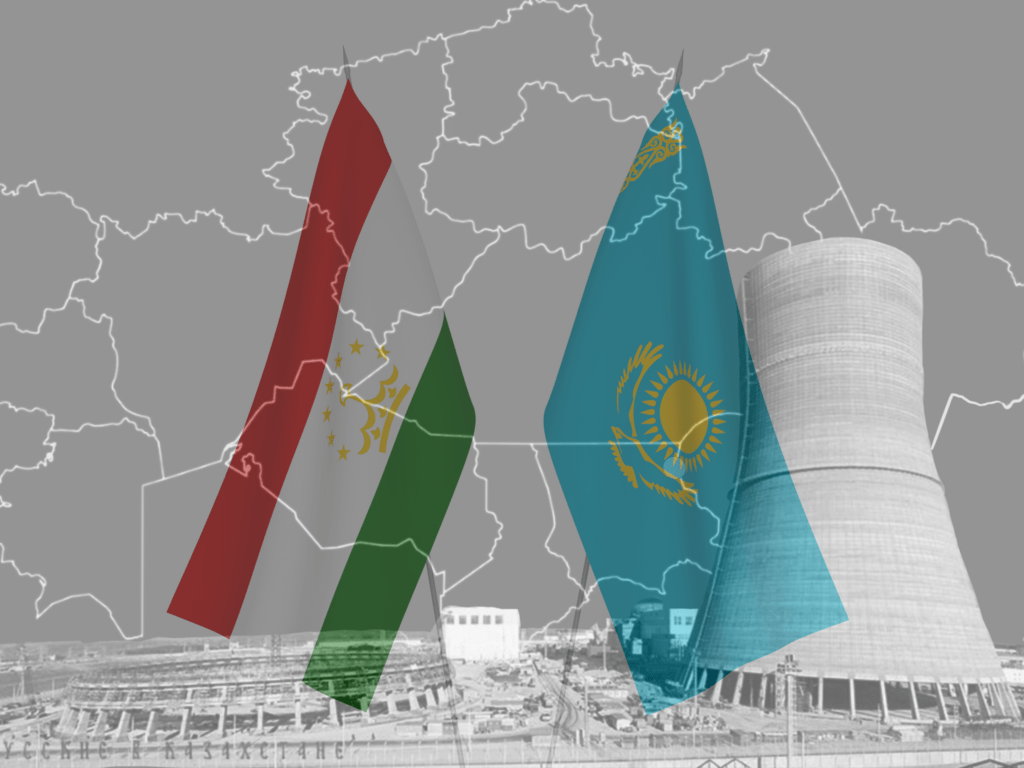
Kazakhstan’s national atomic company, Kazatomprom, the world's largest producer of uranium, has announced a new strategic partnership with Tajikistan’s TajRedMet (Tajik Rare Metals) in the mining and processing of uranium and rare and rare-earth metals. According to the parties' agreement, the companies will collaborate in exploring, mining, and processing uranium and other rare and rare-earth metals, conducting research and development work, introducing innovative technologies, and training personnel. Meirzhan Yussupov, CEO of Kazatomprom, commented: “This step is of great importance for strengthening the partnership between our companies. Although it is too early to talk about specific results, we are focused on promising joint projects in the uranium industry and rare and rare-earth metals, which can significantly benefit Kazakhstan and Tajikistan.” As part of the agreement, TajRedMet representatives will soon visit Kazakhstan to inspect Kazatomprom's production facilities and assess the potential for further cooperation in more detail. According to an IAEA research paper, Tajikistan has significant mineral resources awaiting development, including rare metals, earth elements, and uranium. Several countries have expressed interest in the development of Tajikistan’s uranium resources. Russia was considering assisting Tajikistan in developing its uranium resources, as well as assisting in geological prospecting, with the aim of involvement in the subsequent extraction and possible processing of uranium. China’s Guangdong Corporation has also expressed an interest in participating in projects to develop Tajik uranium deposits. The Tajik government has also agreed to allow Indian companies to explore for uranium mineralization. In his address to parliament in December 2023, Tajik President Emomali Rahmon ordered the government to focus on mining lithium, tungsten, nickel, and antimony, and develop a program for processing these metals domestically into finished products.

Uranium Lawsuit Against Kyrgyz Government To Be Considered in Washington, D.C.

A case against the Kyrgyz authorities will be heard in Washington, D.C. in November 2024. At the end of 2022, International Mining Company Invest Inc. - which is headquartered in the U.S. - filed a lawsuit in international arbitration, accusing the Kyrgyz authorities of illegally expropriating investments. The company estimated its losses at $63 million. In 2009, International Mining Company Invest Inc. received the right to use subsoil for geological exploration. In 2013, the country's authorities issued a license to the foreign company to search for uranium and other metals at one more site. International Mining Company Invest Inc. carried out work in three regions of the republic; however, in 2019, a moratorium on exploration and development of uranium and thorium deposits was introduced. The company lost its license and initiated arbitration proceedings at the International Center for Settlement of Investment Disputes. Speaking at a press conference in Bishkek, Kyrgyz Justice Minister Ayaz Baetov said the case will be heard in international arbitration in Washington in November 2024. "The so-called uranium moratorium was the reason for this case's emergence. The case is now being considered. We have our arguments; they have theirs," the official stated. The previous authorities imposed a moratorium on the mining and exploration of uranium and thorium deposits; the new administration lifted the ban, but announced that Kyrgyz companies would develop the deposits.

Uranium Purification Plant to be Rebuilt in Kyrgyzstan

The authorities in Kyrgyzstan will spend 1.6 billion som ($18m) to pay the Kara-Balta Mining Combine's tax debts. In addition, the enterprise's specialists will be paid wages they have yet to received in years. Earlier, Kyrgyz President Sadyr Japarov instructed the government to take measures to preserve jobs and assets. He also demanded that all the plant's facilities be restored for fully-fledged work with uranium. "Thus, the enterprise has created favorable conditions for sustainable work, and most importantly all unique specialists have been preserved," the General Director of the Karabalta Mining Company LLC, Kubanychbek Risbaev stated. The Kara-Balta Mining Combine was built in 1955 and was one of the largest uranium processors for the nuclear industry of the USSR. In the 1990s, the plant was privatized and sold to a foreign company. Unsuccessful management by the new investors led to a sharp decline in production, and in 2016, the mill suspended its uranium operations and was declared bankrupt in 2022. In 1998, Combine's laboratory was accredited by the UKAS service and was tested by the London Precious Metals Association a year later. Since then, Kyrgyzstan has officially become a trading participant at the London Metal Exchange. The ongoing modernization work includes the launching of additional facilities, and the introduction of new technologies and modern equipment.

Kyrgyzstan Lifts Ban on Mining of Uranium and Thorium

Deputies of the Kyrgyz Parliament have approved a bill lifting the ban on mining uranium and thorium by 69 votes in favor to three against. Parliamentarians are confident that the legislative changes will bring significant economic dividends to the country. The law banning uranium and thorium mining was passed in 2019. At that time, authorities wanted to sell the license to develop a deposit, but faced a significant pushback from residents who feared the project could harm the environment and damage the water table. The result was a complete ban on the entire territory of the Republic. In the Issyk-Kul region of Kyrgyzstan alone, 150,000 cubic meters of radioactive waste were accumulated from uranium mining in the last century. According to the Ministry of Emergency Situations, the country has 92 burial sites, with 23 tailing dumps containing uranium elements. Kyrgyzstan's total volume of poisonous and hazardous substances stands at 2.9 million cubic meters. The notes behind the new bill indicate that alternative sources of income are needed due to severe economic impacts over recent years. However, these activities must strictly comply with environmental norms and standards in uranium and thorium mining. Speaking in parliament, Minister of Natural Resources, Environment, and Technical Supervision, Melis Turganbayev assured deputies that the bill's passage would not harm the environment or the health of Kyrgyz citizens. “For uranium mining to be profitable, a deposit needs 40-50 tons. Kyrgyzstan lacks such reserves. There are occurrences from 0.01 to 0.08% in 83 locations. Our goal is not the uranium, but the associated metals,” Turganbayev said. Authorities plan to mine titanomagnetite, which is accompanied by uranium and thorium. Both elements will be processed at the Kara-Balta Combine in Chui Oblast. Thorium will be stored, while uranium will be sold to other states. Iskhak Masaliyev, one of the three deputies who voted against the bill, reminded his colleagues of discussions in the early 2000s on ecology. However, only now has it been possible to begin to eliminate harmful waste. Doctor of Geological and Mineral Sciences, academician Rozalia Jenchuraeva told The Times of Central Asia that the 2019 law banning mining was “a big folly” as it suspended all waste activities and impacted jobs, leaving hazardous materials lying no more than 20 meters deep are slowly contaminating the soil and water. “If they pull it all out, it will be wonderful. It will clean up the land. This is work for the Kara-Balta Combine. I think the government has decided to develop Kyzyl-Ompol, which is the right thing to do,” Jenchuraeva said. Jenchuraeva believes that Kyrgyzstan has qualified personnel who have previously worked at uranium sites, know how to mine uranium and thorium, and can develop the deposits using their expertise and resources. Earlier, President Japarov met with residents near the Kyzyl-Ompol deposit. “The development of Kyzyl-Ompol will create over a thousand jobs. This mine will become the second Kumtor (gold deposit). The local budget will cease to be subsidized, and the people will get richer,” the president said. Kyzyl-Ompol is...

Second shipment of low enriched uranium completes IAEA LEU Bank in Kazakhstan

UST-KAMENOGORSK, Kazakhstan (TCA) — The International Atomic Energy Agency (IAEA) on December 10 said it has received the second and final shipment of low-enriched uranium (LEU) at a purpose-built facility in Kazakhstan housing the IAEA LEU Bank, which was established to provide assurance to countries about the supply of nuclear fuel. The delivery completes the planned stock of the material that the IAEA LEU Bank will hold, following the first shipment in October. Continue reading

IAEA LEU Bank in Kazakhstan becomes operational with delivery of low enriched uranium

NUR-SULTAN (TCA) — The International Atomic Energy Agency (IAEA) said it took delivery of a shipment of low enriched uranium (LEU) at a purpose-built facility in Kazakhstan on October 17, officially establishing the IAEA LEU Bank aimed at providing assurance to countries about the availability of nuclear fuel. Continue reading