• KGS/USD = 0.01143 0%
  • KZT/USD = 0.00213 0%
  • TJS/USD = 0.10593 0.47%
  • UZS/USD = 0.00008 0%
  • TMT/USD = 0.28571 0%
  • KGS/USD = 0.01143 0%
  • KZT/USD = 0.00213 0%
  • TJS/USD = 0.10593 0.47%
  • UZS/USD = 0.00008 0%
  • TMT/USD = 0.28571 0%
  • KGS/USD = 0.01143 0%
  • KZT/USD = 0.00213 0%
  • TJS/USD = 0.10593 0.47%
  • UZS/USD = 0.00008 0%
  • TMT/USD = 0.28571 0%
  • KGS/USD = 0.01143 0%
  • KZT/USD = 0.00213 0%
  • TJS/USD = 0.10593 0.47%
  • UZS/USD = 0.00008 0%
  • TMT/USD = 0.28571 0%
  • KGS/USD = 0.01143 0%
  • KZT/USD = 0.00213 0%
  • TJS/USD = 0.10593 0.47%
  • UZS/USD = 0.00008 0%
  • TMT/USD = 0.28571 0%
  • KGS/USD = 0.01143 0%
  • KZT/USD = 0.00213 0%
  • TJS/USD = 0.10593 0.47%
  • UZS/USD = 0.00008 0%
  • TMT/USD = 0.28571 0%
  • KGS/USD = 0.01143 0%
  • KZT/USD = 0.00213 0%
  • TJS/USD = 0.10593 0.47%
  • UZS/USD = 0.00008 0%
  • TMT/USD = 0.28571 0%
  • KGS/USD = 0.01143 0%
  • KZT/USD = 0.00213 0%
  • TJS/USD = 0.10593 0.47%
  • UZS/USD = 0.00008 0%
  • TMT/USD = 0.28571 0%

Viewing results 1 - 6 of 27

Central Asia Faces Growing Water Risks as Qosh Tepa Canal Nears Completion

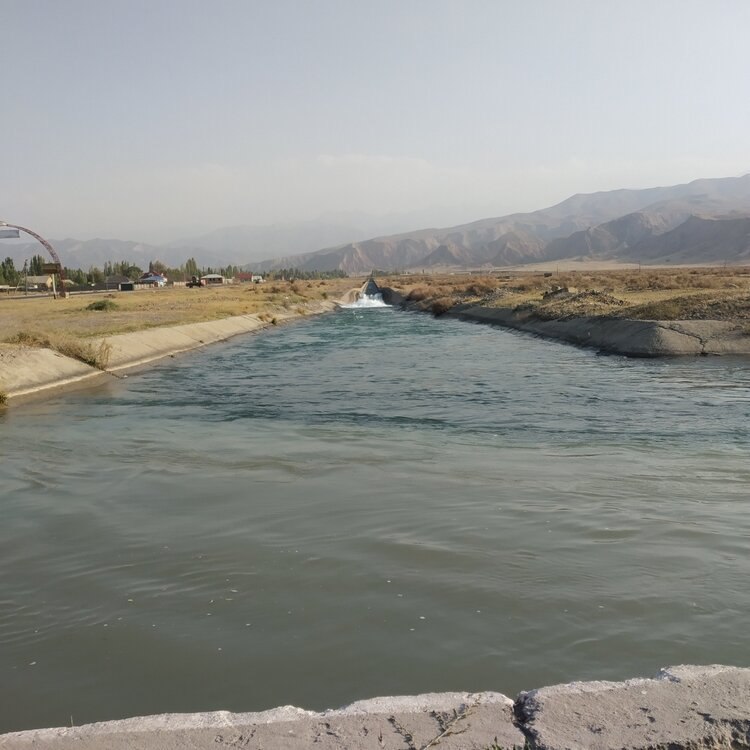
Kazakh media, Inbusiness.kz, reports that discussions within the Russian Academy of Sciences have revived a decadesold idea to redirect Siberian rivers toward Central Asia. Researchers have proposed that Russia’s Ministry of Science and Higher Education include a study of the project in its state research plan, arguing that the region is entering a critical phase of water scarcity. This renewed debate comes as Afghanistan advances construction of the Qosh Tepa Canal, a massive irrigation project in the country’s north. The first 108 kilometer section began operating in 2023, and work on the second phase is nearing completion. Once fully operational, the 285 kilometer canal is expected to divert more than 15% of the Amu Darya river’s flow to irrigate around 550,000 hectares of farmland in Afghanistan’s drought-prone regions. Construction began in March 2022 and its impact is already being felt across Central Asia. Experts warn the canal could reduce Uzbekistan’s water supply by around 15% and Turkmenistan’s by up to 80%, which may lead to lower crop yields, job losses, rising poverty and even potential migration or tensions. Scholars in Kazakhstan note rising alarm. Ravshan Nazarov, an associate professor based in Tashkent, said that failure to address water shortages could trigger mass population movements. He argued that redirecting Siberian rivers, though technically complex and costly, may become unavoidable. He warned that if Russia does not share its water resources, it might eventually face “an influx of 100 million refugees.” Data from the Food and Agriculture Organization (FAO) show that Turkmenistan is the region’s largest water consumer, using 53 cubic kilometres annually despite a population of just about 7 million. Experts attribute this to ageing infrastructure, high evaporation losses and a lack of concrete-lined canals. Meanwhile, Kyrgyzstan has faced water shortages since 2020.

In Kyrgyzstan, Nearly 50,000 Hectares of Arable Land Left Fallow Due to Water Shortages

In 2025, approximately 50,000 hectares of agricultural land in Kyrgyzstan were left uncultivated, according to the National Statistical Committee. This figure represents a significant portion of the country's total arable land area, which stands at 1.292 million hectares.  Experts attribute the sharp decline primarily to a lack of moisture during the spring growing season. More than half of the affected land, over 25,000 hectares, suffered from irrigation failures due to the deteriorating state of the country’s water infrastructure. An additional 5,000 hectares lie in inaccessible or rocky terrain, while about 8,000 hectares were previously reassigned for industrial or urban development. The committee also noted a year-on-year increase of 1,100 hectares in the area of fallow land. In the Talas region alone, 25% more land could have been cultivated under better conditions. Across Kyrgyzstan’s regions, the share of idle arable land currently ranges between 10% and 20%. The Ministry of Economy and Commerce reported that the water shortage not only reduced the amount of cultivated land but also impacted crop yields. Many crops ripened several weeks earlier than usual, accelerating the harvest period. As a result, the growth rate of gross agricultural output slowed by more than 2% in the first half of 2025. However, not all sectors were negatively affected. The gross harvest of melons and gourds rose by nearly 13%, vegetable production increased by 12%, and potato yields were up 10% compared to the previous year.

Kazakhstan’s Cotton Sector Continues to Shrink

Kazakhstan’s cotton industry is in protracted decline, with key indicators – acreage, harvest volume, and profitability – showing sustained deterioration. Analysts at Energyprom.kz report that small farms, which dominate the sector, are increasingly abandoning cotton in favor of less expensive crops. A Smallholder Sector in Crisis According to the National Statistics Bureau, raw cotton production totaled 61.2 billion KZT ($117.4 million) in 2023, down 8% in real terms from the previous year. This marked the second consecutive year of decline in the physical volume index (PVI), reflecting waning interest in cotton cultivation. The sector comprises around 25,000 agricultural enterprises and employs approximately 70,000 people. Small farms produce 91% of total output but are experiencing the steepest decline: their PVI fell to 88.6% in 2023. In contrast, large enterprises, which account for a minor share of production, saw a 50.7% increase in output. Cotton is grown exclusively in the Turkestan region, where the cultivated area has shrunk from 223,700 hectares in 2003 to just 106,400 hectares in 2023. The gross harvest last year was 301,700 tons, 35.4% less than two decades ago. Modern agricultural technologies have helped maintain relatively stable yields despite shrinking acreage. Water Shortages Undermine the Industry The Ministry of Agriculture identifies severe irrigation water shortages as the primary obstacle to cotton production. While some losses have been mitigated through drip irrigation systems, such technologies are affordable only to large or investor-backed farms. For most smallholders, cotton cultivation has become too costly, prompting a shift to alternative crops. The problem is systemic. In a parliamentary inquiry, Senator Murat Kadyrbek highlighted inadequate financing for agronomic measures and low purchase prices, which leave many farmers barely covering operating costs. Producers are seeking loan deferrals until they can secure income from harvests. Eighty-five percent of Kazakhstan’s cotton is exported as raw material, with only 15% processed domestically. Even this limited share struggles to find buyers. In 2023, domestic processing plants operated at just 19.5% of their design capacity, according to the Bureau of National Statistics. Despite the launch of new facilities, including some with foreign investment, processing remains the industry's weakest link. Rising Costs, Competitive Pressures High processing costs pose a major challenge. Processing cotton in Kazakhstan costs 150,000-170,000 KZT (approximately $300) per tonne, triple the cost in neighboring Uzbekistan and China. Compounding the issue is poor fiber quality. While the global market demands fiber lengths of 35-60 cm, Kazakh cotton typically falls in the 20-25 cm range. “To improve product quality and competitiveness, a dedicated state program for cotton development is urgently needed,” members of parliament urged. They advocate for collaborative action from both government agencies and producers to revitalize the sector.

Experts Warn Central Asia Faces Chronic Water Shortage by 2028

Central Asia is heading toward a severe water crisis as climate change, population growth, and outdated infrastructure put increasing pressure on the region’s water resources, experts have warned. At a recent roundtable on climate change and water management, Stanislav Pritchin, head of the Central Asia sector at the Russian Academy of Sciences, highlighted the growing threat. Climate change is a major factor, as rising temperatures accelerate glacier melt - the primary source of freshwater in Central Asia. Meanwhile, rapid population growth is driving up demand. Uzbekistan, the region’s most populous country, has seen its population increase from 22 million in 1991 to an estimated 37.5 million in 2025. Across Central Asia, the total population is approaching 80 million. Another challenge is outdated infrastructure. Pritchin noted that up to 50% of irrigation water is lost due to inefficient and aging systems. Moreover, the region lacks a strong institutional framework for managing water distribution and policy. While some cooperative projects exist - such as the joint construction of the Kambar-Ata hydropower plant - they are insufficient to address the broader crisis. In response to these challenges, on February 19, the Asian Development Bank (ADB) approved a $125 million loan to help Uzbekistan improve water security, reduce losses, and enhance distribution efficiency. The Climate-Smart Water Management Improvement Project aims to introduce advanced monitoring and management systems. Uzbekistan’s national water utility, Uzsuvtaminot, will implement digital technology to track water flow, minimize waste, and improve service delivery. The initiative will also establish a comprehensive inventory of water supply infrastructure and deploy a nationwide bulk flow metering and telemetry system. “Uzbekistan’s water resources are under acute threat from climate change and inefficient usage,” said ADB Country Director for Uzbekistan, Kanokpan Lao-Araya. “ADB’s project introduces smart water management systems to improve water usage, reduce energy consumption, and increase operational efficiency to lower Uzbekistan’s carbon footprint.” This initiative is part of Uzbekistan’s broader efforts to modernize infrastructure and prepare for future water challenges. However, experts caution that without stronger regional cooperation, no single country can fully resolve the crisis.

Uzbekistan’s Largest Glacier Melts by 20 Meters in 12 Months, Expedition Finds

BBC Uzbekistan has reported, quoting the country’s Hydrometeorology Research Institute, that at the beginning of August an expedition of Uzbek and German scientists trekked to the Pakhtakor glacier, situated in the eastern part of Uzbekistan. The study of the Pakhtakor glacier, which is extremely difficult to reach and located in the Bostonliq district of the Tashkent region, near the borders with Kyrgyzstan and Kazakhstan, started in July of last year. The latest expedition found that Uzbekistan's largest glacier tongue (an extension of a glacier or ice stream projecting seaward) had retreated by 20 meters in the last year. The surface of the ablation part (the initial part of the glacier where the ice melts faster) has melted by 3 meters. Pakhtakor is one of the largest glaciers feeding the Pskom River. There are about 140 large and small glaciers in the Pskom River basin, which has a total area of 128 square kilometers. According to the BBC report, after the collapse of the Soviet Union, studies of permafrost were rarely conducted in other Central Asian countries except Kazakhstan. Although there are few glaciers in Uzbekistan, they play an essential role in the ecosystem. In low-water years, glaciers provide up to 25% of the total flow. Maksim Petrov, the head of the Center for Glacial Geology at the Institute of Geology and Geophysics of Uzbekistan, says the country's glaciers are melting at different rates. “The melting rate is almost in line with the average rate in Central Asia. However, the melting rate in our mountains in the eastern part is not high, and the glaciers have melted only up to 20%. The glaciers in Surkhandarya have melted by 40%. The most catastrophic situation is in Kashkadarya — up to 70%,” Petrov said at a roundtable discussion held by Cabar Asia in May. Petrov added: “Large glaciers are breaking up and breaking into pieces. It seems the number of glaciers is increasing, but their area is shrinking.” Various scientists point out that the shrinking area of glaciers has yet to seriously affect the water balance in Central Asia, and the observed water shortage is mainly caused by population and industrial growth. But in 2015, German researchers warned that glaciers in the Tian Shan mountains, which play an essential role in maintaining the water cycle in the region, are rapidly melting. Half of the total ice mass is forecast to melt by 2050. “Today, Tian Shan is losing an amount of ice equivalent to twice the annual water consumption of all of Germany,” the 2015 study stated.

Is Afghanistan Ready for Dialogue with Central Asia on Water Issues?

Against the backdrop of the silence of Central Asian countries, as well as their lack of a coordinated position on the construction of the Qosh Tepa Canal in northern Afghanistan, the Taliban are moving forward with the project with growing confidence and without regard to their neighbors. Last October, at the ceremony to mark the launch of the second phase of the canal’s construction, Afghan Deputy Prime Minister Abdul Salam Hanafi called Qosh Tepa, “one of the most significant development projects in Afghanistan,” while its realization should remove all doubts about the capabilities of the new Afghan authorities, he added. There is no point in discussing the economic rationale for the canal; like other practical measures taken by the Taliban in the water and energy sphere, for Afghanistan, where 90% of the population is employed in agriculture, the provision of irrigation water is undoubtedly an important task. According to the UN, over the past four decades, desertification has affected more than 75% of the total land area in the northern, western, and southern regions of the country, reducing the vegetation of pasture land, accelerating land degradation, and impacting crop production. However, this socio-environmental problem affects the interests of all the peoples of Central Asia, which geographically includes the entire north of Afghanistan. It arose as an objective need for development, and solving it requires the combined efforts of all countries in the region, which is already on the verge of a serious water crisis that threatens not only economic development, but also the lives of millions of people. In general, the Taliban have emphasized their openness in matters of trans-boundary water management, but, so far, these are only statements. They are more motivated by political issues around their international recognition. That is why it is important for them to participate in global events, such as UN climate change conferences, but they have yet to take part in any climate talks. Hopefully, Afghan representatives will be invited to the COP29 Global Impact Conference in Baku this November, especially since one of the key topics of this forum will be a “just energy transition.” It would be interesting to hear what the Taliban have to offer. Though the authorities in Kabul have had some success in water regulation with Iran, the same cannot be said about Central Asia. This clearly owes to the fact that the five Central Asian republics have not taken a unified position on trans-boundary waters with Afghanistan. And their southern neighbor has taken advantage of this – to date, Kabul has not held any full-fledged official consultations with any Central Asian country on the Qosh Tepa Canal. However, just as bilateral formats will not yield results (unlike in Iran's case), the Taliban leadership will not be able to resolve water issues easily with the Central Asian countries. Afghanistan is not a party to the Central Asian Agreement on Cooperation in the Field of Joint Management on the Utilization and Protection of Water Resources from Interstate Sources. It was...