• KGS/USD = 0.01144 0%
  • KZT/USD = 0.00212 0%
  • TJS/USD = 0.10456 0.19%
  • UZS/USD = 0.00008 0%
  • TMT/USD = 0.28490 0%
  • KGS/USD = 0.01144 0%
  • KZT/USD = 0.00212 0%
  • TJS/USD = 0.10456 0.19%
  • UZS/USD = 0.00008 0%
  • TMT/USD = 0.28490 0%
  • KGS/USD = 0.01144 0%
  • KZT/USD = 0.00212 0%
  • TJS/USD = 0.10456 0.19%
  • UZS/USD = 0.00008 0%
  • TMT/USD = 0.28490 0%
  • KGS/USD = 0.01144 0%
  • KZT/USD = 0.00212 0%
  • TJS/USD = 0.10456 0.19%
  • UZS/USD = 0.00008 0%
  • TMT/USD = 0.28490 0%
  • KGS/USD = 0.01144 0%
  • KZT/USD = 0.00212 0%
  • TJS/USD = 0.10456 0.19%
  • UZS/USD = 0.00008 0%
  • TMT/USD = 0.28490 0%
  • KGS/USD = 0.01144 0%
  • KZT/USD = 0.00212 0%
  • TJS/USD = 0.10456 0.19%
  • UZS/USD = 0.00008 0%
  • TMT/USD = 0.28490 0%
  • KGS/USD = 0.01144 0%
  • KZT/USD = 0.00212 0%
  • TJS/USD = 0.10456 0.19%
  • UZS/USD = 0.00008 0%
  • TMT/USD = 0.28490 0%
  • KGS/USD = 0.01144 0%
  • KZT/USD = 0.00212 0%
  • TJS/USD = 0.10456 0.19%
  • UZS/USD = 0.00008 0%
  • TMT/USD = 0.28490 0%

Viewing results 565 - 570 of 3334

Ukrainian Prosecutors Say 13 Uzbek Workers Held in “Inhumane Conditions”

Prosecutors in Ukraine say they have detained four members of a human trafficking operation that exploited 13 Uzbek laborers and subjected them to humiliating treatment that included scheduled visits to the toilet. Two Chinese citizens, an Uzbek national and a Ukrainian woman used coercion and deception to recruit vulnerable people with few resources outside Ukraine and move them to the Kyiv region for use in forced work for profit, the Kyiv Regional Prosecutor’s Office said on Thursday. Images provided by the office show the farm workers standing in front of greenhouse-like structures covered in plastic tarpaulins in a rural area. Other photos show the cramped, unsanitary conditions in which the men and women lived. “To maintain control, the perpetrators used coercion and restrictions on freedom of movement, which indicates the exploitative nature of their actions,” the Ukrainian prosecutors said. “The victims were humiliated to the extreme: even visits to the toilet were allowed only according to a set schedule, and any minor violation was punished with fines.” Ukrainian authorities said they searched the suspects’ residences and business sites on Wednesday, finding 13 Uzbek citizens who were being held in “inhumane conditions.” Officials from the Uzbek embassy in Ukraine visited the greenhouse facility in the Kyiv region following the publication of reports in Ukrainian media about Uzbek citizens being treated as “slaves,” the embassy said on Friday. “At present, it has been established that all our citizens are safe and in good health, and they have been placed in one of the local hospitals in the Kyiv region to receive the necessary medical treatment,” the embassy said. It said steps are being taken to return the group to Ukraine, while noting that court proceedings are underway against the suspects. In a reference to the war against Russia, the embassy repeated guidance that Uzbek nationals should avoid travel to Ukraine because of safety concerns. Under Ukrainian law, the four suspects could face long prison terms if convicted of human trafficking and other charges. Glavcom, a Ukrainian news agency, said a 51-year-old Chinese citizen with a temporary residence permit in Ukraine was the head of the alleged human trafficking operation. The Uzbek workers were between the ages of 22 and 42 and had been offered high salaries to persuade them to go to Ukraine, an enticement that turned out to be false, according to Glavcom. Once in Ukraine, the Uzbek nationals had to surrender their passports to their employers, the agency reported.


From Hydropower to Human Capital: Japarov Plans Strategic Visit to Japan

Kyrgyz President Sadyr Japarov is preparing for a visit to Japan that underscores growing strategic ties between the two countries. Kyrgyz officials say they plan to sign energy and infrastructure agreements in Tokyo, including support for a training center for the national electric grid and upgrades at the Kurpsai hydropower plant, according to Trend, citing the Kyrgyz Energy Ministry. The same report notes that grant funding from Japan’s international cooperation programs will back grid training and modernization efforts. The timing reflects Tokyo’s recent step-up in activity vis-à-vis Central Asia. As previously reported by The Times of Central Asia, in late August 2025, Japan’s foreign minister undertook a multi-country tour that emphasized long-term engagement and connectivity across the region. Japanese officials framed their approach as trust-building, focused on people-to-people links, infrastructure, and practical cooperation. Energy cooperation is expected to feature prominently during the visit. Kyrgyz officials say the Japan-backed training center is moving through final approval, and modernization of the Kurpsai facility is planned with Japanese grant support. Bishkek has also invited Japanese participation in additional hydropower projects, positioning Japan as a technology and financing partner in Kyrgyzstan’s power sector. Labor mobility and skills are another focus. The authorities in Kyrgyzstan have been working with Japanese counterparts to create safe, legal pathways for Kyrgyz workers. In July, Kyrgyz officials met with Japan’s construction human-resources association to align training standards and prepare workers for job opportunities in Japan, and free Japanese-language courses were launched in Bishkek to improve employability for prospective migrants. Education and cultural exchange underpin the relationship. Over three decades, Japan has funded scholarships, exchanges, and language programs that connect Central Asian students to Japanese universities. An overview of these initiatives highlights how education has become a durable pillar of Japan’s regional engagement, building familiarity with Japanese business practices and technology among Kyrgyz graduates. For Bishkek, the visit is about turning ongoing cooperation into signed projects and new resources. Officials point to the grid training center and Kurpsai upgrades as near-term deliverables, while the broader agenda includes workforce programs and academic ties. The message from both sides is continuity: steady, practical steps rather than headline-grabbing announcements. Regionally, Japan’s approach offers Central Asian countries additional partners for finance, training, and technology. For Kyrgyzstan, deeper ties with Tokyo complement existing relationships while helping diversify investment sources and markets. The outcome to watch is whether the visit locks in concrete funding and timelines for priority energy and skills initiatives outlined by the Kyrgyz side.

Next Stop, Wi-Fi: Kazakhstan Pilots Satellite Internet on Rails

Just a few years ago, internet access on passenger trains in Kazakhstan seemed like an unattainable dream. Today, this service is becoming a reality. In an interview, Anuar Akhmetzhanov, Chairman of the Board of JSC Passenger Transport, told The Times of Central Asia that providing passengers with access to high-speed internet on trains is one of the key directions in the digitalization of the passenger transportation sector. Since the beginning of this year, the national company, Kazakhstan Temir Zholy (Kazakhstan Railways), together with the official distributor of the low-orbit satellite network OneWeb in Kazakhstan, has launched a pilot project to provide internet access on passenger trains. The service was first introduced on the Astana–Almaty route, and in the spring, on the Astana–Oskemen route. According to Akhmetzhanov, Kazakhstan is among the first countries in the world to implement low-orbit satellite internet on passenger trains. In addition, internet access based on Starlink technology was recently launched in pilot mode on the Astana–Borovoe electric train. “The preliminary results of the pilot project show strong demand from passengers. According to surveys, 87% of our passengers are satisfied with the quality of the internet, and the service meets their expectations,” said Akhmetzhanov. High-speed internet of up to 150 Mbps benefits both passengers and the carrier. Travelers can remain connected throughout the journey, have access to various online services, make online payments during the trip, and enjoy unlimited entertainment options. JSC Passenger Transport will, in turn, gain additional opportunities to sell tickets, control passenger boarding, provide additional services, and ensure safety control by connecting an onboard video surveillance system. “As of today, only three trains are equipped with internet. Work is underway to expand the service to all types of trains. Based on testing results, we plan to roll out the solution to all major routes as early as next year,” noted Akhmetzhanov. One of the main questions for passengers is whether the introduction of internet services on trains will affect ticket prices. On this point, Akhmetzhanov stated that an increase in ticket prices is not currently under consideration. “However, to reduce and offset expenses, the national carrier, together with its partner, is conducting market research on the demand for paid internet packages with higher speeds,” he said. For example, the operator Jusan Mobile offers paid internet services; currently, passengers can choose tariffs for the entire trip or purchase 1 GB packages with the option to increase the volume as needed. There are no restrictions on which internet resources can be accessed. In the near future, JSC Passenger Transportation is preparing to launch internet services on trains traveling on western routes, such as Aktobe–Almaty, Kyzylorda–Semey, and others. The Train Internet project, based on satellite technology, ensures a stable, high-speed connection even in remote and hard-to-reach regions where traditional mobile services are limited. For Kazakhstan, with its vast territory and long travel distances, providing internet access on passenger trains is a service in high demand.

From Astana to the World: Kazakhstan Expands Academic Frontier

Kazakhstan is rapidly establishing itself as a regional center for higher education, attracting students from around the world. The number of branches of foreign universities operating in the country is steadily increasing, complemented by a growing domestic academic base, especially in fields such as artificial intelligence. Today, Kazakhstan is viewed as a viable regional alternative to Russia, which has long been considered a destination for affordable, high-quality education. Expanding Options for Students In June, the Ministry of Science and Higher Education of the Republic of Kazakhstan unveiled a map of foreign university branches operating in the country. The government is positioning Kazakhstan as a leading academic hub in Central Asia by enhancing international cooperation and expanding opportunities for students. Partnerships have already been established with 39 foreign universities. Currently, 23 branches of institutions from the UK, Italy, China, Russia, the U.S., France, and South Korea operate in Kazakhstan. [caption id="attachment_36320" align="aligncenter" width="1201"] Map of foreign university partnerships; image: Ministry of Science and Higher Education of Kazakhstan.[/caption] Seven more branches are expected to open in the 2025-2026 academic year, namely Coventry University, the Moscow State Institute of International Relations (MGIMO) in Astana, Gazi University in Shymkent, Woosong University in Turkestan, Anhalt University in Almaty, Politecnico della Marche in Taldykorgan, and Dong Eui University in Kostanay. A standout example of this strategy arrived in early September: Notably, on September 3, Cardiff University opened its first campus outside the UK in Astana. It is also the first member of the prestigious Russell Group to begin operations in Kazakhstan. The Russell Group comprises 24 leading UK universities responsible for two-thirds of all research grants and contract funding in the UK, and 56% of doctoral degrees awarded. Cardiff University Kazakhstan is now accepting students for four-year bachelor’s programs in computer science, business management, civil engineering, and geology and mineral exploration. Kazakhstan has witnessed a surge in the establishment of foreign university branches since 2021. These include the Peking University of Languages and Culture at Astana International University, and the National Research Nuclear University MEPhI (Russia) at Al-Farabi Kazakh National University. Additional branches include the University of Lorraine (France) at the Kazakh National Pedagogical University named after Abai, and the University of Anhalt (Germany) at the Almaty University of Power Engineering and Telecommunications named after Gumarbek Daukeev. Other notable branches include the University of Hong Kong at Satpayev University in Almaty, Berlin Technical University in Aktau, De Montfort University (UK) in Almaty, and Queen’s University Belfast (Ireland) at Narxoz University, among others. These branches offer programs in mining, water resource management, and mineral exploration and extraction, along with biotechnology, electrical engineering, energy, mechatronics, logistics, chemical technology, robotics, and related disciplines. In 2023, Korkyt Ata University in Kyzylorda launched an Institute of Artificial Intelligence, in partnership with Seoul National University of Science and Technology. It currently offers programs in computer science, cybersecurity, software development, and information systems. An Ambitious Vision Observers note that Kazakhstan’s education drive is unfolding amid growing global competition for international students. Neighboring Uzbekistan...

Central Asia Deepens Trade Links with India Amid Growing Economic Ties

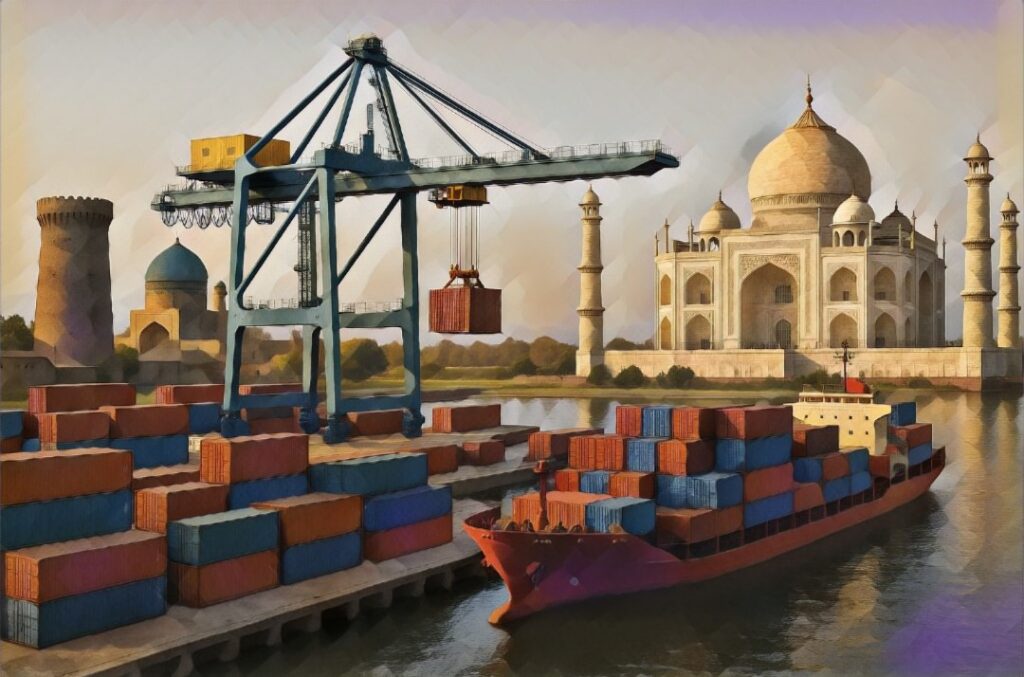
Trade between the countries of Central Asia and India is growing, edging closer to the $2 billion mark and signaling a new phase in cooperation across the Eurasian continent. According to data from the Eurasian Development Bank (EDB), this surge reflects the expanding economic footprint of both regions. Nikolay Podguzov, Chairman of the EDB, emphasized that Central Asia and India are not only continental neighbors but also markets with significant untapped potential. Of the bank’s seven member states, four — Kazakhstan, Kyrgyzstan, Tajikistan, and Uzbekistan — form the heart of Central Asia. Their growing engagement with New Delhi is now setting the tone for broader regional cooperation. Strong Growth as a Foundation The economic fundamentals supporting this trend are healthy. Central Asia has maintained steady growth of around 4.5% annually, while India’s economy continues to expand even faster, at roughly 6% per year. But despite this positive backdrop, there are still logistical hurdles. Trade routes between India and Central Asia must pass through intermediary countries such as Iran, Russia, or Azerbaijan — each adding layers of bureaucracy, customs costs, and delays. Experts argue that overcoming these transit bottlenecks will be crucial if India and Central Asia are to unlock the full potential of their partnership. New initiatives like the International North-South Transport Corridor and discussions on India’s role in developing Chabahar Port in Iran reflect ongoing efforts to make these pathways more efficient. Kazakhstan: The Leading Partner Kazakhstan is India’s largest trading partner in Central Asia, with bilateral trade crossing $1 billion — more than half of the region’s total trade with India. Astana supplies uranium, which is important for India’s civilian nuclear energy program, along with crude oil and steel products. In return, India exports pharmaceuticals, textiles, and consumer goods, with exports valued at around $260 million. The two countries also collaborate in strategic sectors such as energy security and defense. In 2022, India and Kazakhstan conducted joint military drills under the Kazind exercise, which reflects a broadening relationship beyond commerce. Uzbekistan: A Growing Market Trade with Uzbekistan has risen steadily, approaching $500 million in bilateral turnover, while India’s exports to Uzbekistan are valued at around $1.3 billion. Pharmaceuticals, machinery, and agricultural products dominate New Delhi’s exports, while Uzbekistan provides fruits, minerals, and cotton to the Indian market. Uzbekistan and India recently increased engagement through forums like the India-Central Asia Dialogue, where issues of connectivity, counterterrorism, and energy cooperation are regularly discussed. Tajikistan: Small but Strategic Although trade volumes with Tajikistan hover around $100 million, the partnership has strategic importance. Aluminium from Tajikistan’s massive TALCO smelter is a key export, while India provides medicines and consumer goods to Tajikistan. Beyond commerce, Dushanbe is a vital security partner for New Delhi. India operates a military facility in Tajikistan — the Farkhor Air Base, its only such presence abroad. Kyrgyzstan: Modest Trade, Strong Ties Kyrgyzstan’s trade with India is relatively small, at about $50 million, but the relationship is significant in the context of regional institutions like the Eurasian Economic Union...

Opinion: Ex-U.S. Ambassador Warns Washington Has Ceded Information Space in Central Asia

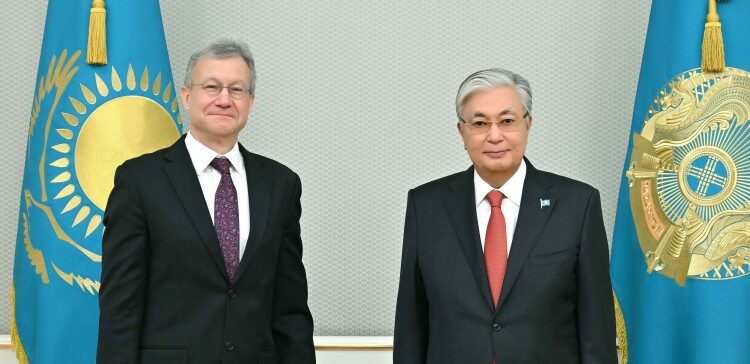
Former U.S. Ambassador to Uzbekistan and Kazakhstan, Daniel Rosenblum, has warned that Washington has “surrendered” its influence in Central Asia’s information sphere, allowing Russia and China to dominate the narrative. His remarks were reported by the Yale Daily News following a lecture at Yale University on September 15. Rosenblum, who served as U.S. ambassador to Uzbekistan from 2019 to 2022 and to Kazakhstan from 2022 to 2025, delivered a speech titled “Battling the Firehose of Falsehood: Confronting Russian Disinformation in Central Asia.” He described how Russian disinformation campaigns frequently portrayed U.S. diplomats as destabilizing actors. In one example from 2023, Russian outlets falsely claimed a NATO base had opened in Kazakhstan. “While it is easy to joke about such an absurd idea,” Rosenblum said, “the intent behind such Russian information operations is deadly serious.” Rosenblum noted that U.S. embassies attempted to counteract these narratives by highlighting tangible achievements, including COVID-19 health initiatives, agricultural partnerships, and academic exchange programs. However, he argued that much of this work has unraveled since 2023, citing the dismissal of over 1,300 State Department personnel, the elimination of USAID programs in the region, and recent cuts to Voice of America and Radio Free Europe/Radio Liberty. “Eight months into the second Trump administration, it seems clear that the information war is over in Central Asia, not because the Russians won. We have simply surrendered,” he said. Rosenblum also emphasized China’s expanding influence through the Belt and Road Initiative, observing that Beijing “was doing a pretty good job of winning friends and influencing people” via infrastructure investment and cultural outreach. In a post-lecture interview, Rosenblum underscored that the challenge is now largely domestic. “The biggest challenge today is ourselves,” he said. “We have to decide as a country, do we want to be engaged in the world or not? If we cut ourselves off from the world, we will ultimately be less secure and less prosperous.” This concern was echoed in earlier analysis for The Times of Central Asia by Arman Amini, a term member of the Council on Foreign Relations and an Atlantic Council Millennium Fellow. “Over the past decade, China has steadily expanded its presence in Central Asia, not through military force, but by building roads, trade corridors, and digital infrastructure,” Amini noted. “As the United States scaled back its regional footprint following its withdrawal from Afghanistan, Beijing moved quickly to fill the void. Today, China has positioned itself as the region’s dominant external power, while the U.S. risks being left on the sidelines.” The lecture was attended by approximately 80 people in person and online. It was organized by the Central Asia Initiative of the MacMillan Center, the Edward J. and Dorothy Clarke Memorial Fund, and Asian Crossroads, a student group dedicated to raising awareness of Central Asia.