• KGS/USD = 0.01144 0%
  • KZT/USD = 0.00194 0%
  • TJS/USD = 0.10872 0.18%
  • UZS/USD = 0.00008 0%
  • TMT/USD = 0.28571 0%
  • KGS/USD = 0.01144 0%
  • KZT/USD = 0.00194 0%
  • TJS/USD = 0.10872 0.18%
  • UZS/USD = 0.00008 0%
  • TMT/USD = 0.28571 0%
  • KGS/USD = 0.01144 0%
  • KZT/USD = 0.00194 0%
  • TJS/USD = 0.10872 0.18%
  • UZS/USD = 0.00008 0%
  • TMT/USD = 0.28571 0%
  • KGS/USD = 0.01144 0%
  • KZT/USD = 0.00194 0%
  • TJS/USD = 0.10872 0.18%
  • UZS/USD = 0.00008 0%
  • TMT/USD = 0.28571 0%
  • KGS/USD = 0.01144 0%
  • KZT/USD = 0.00194 0%
  • TJS/USD = 0.10872 0.18%
  • UZS/USD = 0.00008 0%
  • TMT/USD = 0.28571 0%
  • KGS/USD = 0.01144 0%
  • KZT/USD = 0.00194 0%
  • TJS/USD = 0.10872 0.18%
  • UZS/USD = 0.00008 0%
  • TMT/USD = 0.28571 0%
  • KGS/USD = 0.01144 0%
  • KZT/USD = 0.00194 0%
  • TJS/USD = 0.10872 0.18%
  • UZS/USD = 0.00008 0%
  • TMT/USD = 0.28571 0%
  • KGS/USD = 0.01144 0%
  • KZT/USD = 0.00194 0%
  • TJS/USD = 0.10872 0.18%
  • UZS/USD = 0.00008 0%
  • TMT/USD = 0.28571 0%
22 December 2025

Viewing results 313 - 318 of 1823

Israel Strikes Mashhad, an Iranian City Near Turkmenistan and a Hub for Central Asia Trade

Mashhad, a northeastern Iranian city near the border with Turkmenistan and a significant hub for trade with Central Asia, is among the targets hit by the Israeli military in the intensifying conflict between Israel and Iran. The Israeli military said a strike on Mashhad’s airport on Sunday was the furthest since it launched airstrikes on Iran, including nuclear facilities, on June 13 and Iran promptly retaliated. The attack on the city highlights the potential fallout for some countries in Central Asia that do business with Iran across the border with Turkmenistan. “The IAF (Israeli Air Force) struck an Iranian refueling aircraft at Mashhad Airport in eastern Iran, approximately 2,300 kilometers from Israel. The IAF is operating to establish aerial superiority over Iranian airspace. This marks the longest-range strike conducted since the beginning of Operation Rising Lion,” the Israeli military said on X. Mashhad, which has a population of up to 3.5 million, is Iran’s second most populous city after the capital Tehran, which has nearly 10 million people. The northeastern city is an Islamic pilgrimage site and is the birth place of Ayatollah Ali Khamenei, Iran’s supreme leader. U.S. President Donald Trump said on social media on Tuesday that “we know exactly” where Ayatollah Khamenei is hiding and that he is an “easy target” even if he is safe for now. Trump has also demanded Iran’s “unconditional surrender,” though it was unclear whether his comments meant the U.S. could directly join Israel’s military campaign against Iran. While the whereabouts of Iran’s supreme leader are not publicly known, Mashhad and other major Iranian cities have been thrown into turmoil by the Israeli attacks. Some people have fled to other towns or places in the countryside that they think might be safer. Flights have been canceled and there are reports of widespread internet disruptions. Mashhad is about 75 kilometers from the nearest point on the border with Turkmenistan, and a driving distance of about 275 kilometers to Ashgabat, Turkmenistan’s capital to the northwest. Last month, Iran and Turkmenistan signed an agreement aimed at increasing bilateral trade to $3 billion, the Tehran Times reported. The neighbors also agreed to establish joint free trade zones, build up border markets, ready a bilateral gas contract and take other steps to develop economic cooperation. In April, Iran and Turkmenistan agreed to start a cross-border passenger train as a way to strengthen economic ties. The route would link Mashhad with Merv, a city in Turkmenistan. The extent of disruption to these economic plans is unclear as fighting between Israel and Iran continues. Fears of a wider war are circulating and numerous countries, including those in Central Asia, have appealed for an end to hostilities.

China Strengthens Partnerships Across Central Asia at Landmark Summit

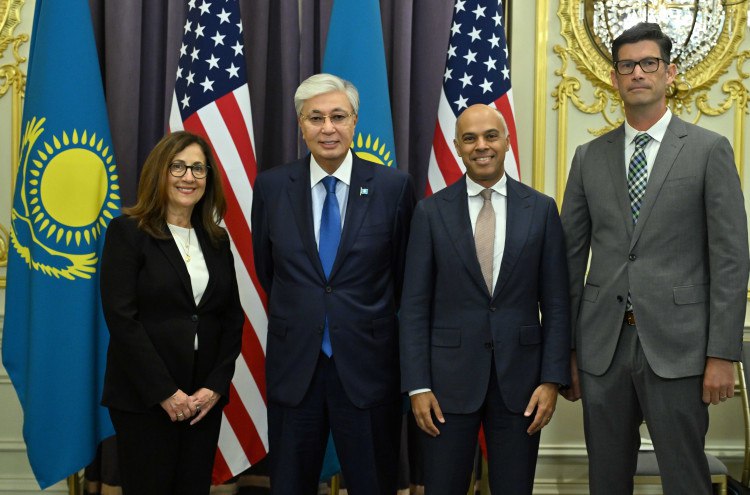
Chinese President Xi Jinping’s visit to Astana on June 16, ahead of the Second China-Central Asia Summit, marked a significant milestone in fostering deeper partnerships between China and Central Asia. With all of the region’s nations in attendance, the summit saw agreements signed across sectors such as energy, infrastructure, agriculture, and technology, solidifying China’s growing influence in the strategically vital region. According to Kazinform, China and the Central Asian nations are poised to finalize over 35 memorandums collectively valued at more than $17 billion during the second China-Central Asia Business Council meeting in Astana on June 17. A Lavish Welcome and Key Agreements [caption id="attachment_33021" align="aligncenter" width="2560"] Image: Akorda[/caption] Xi Jinping arrived in Astana amid unprecedented pomp and ceremony, including an honor guard, traditional dances, children in national costumes, and an escort of Kazakh Air Force fighter jets. This grand welcome highlighted the importance of the China-Kazakhstan partnership. During talks with Kazakh President Tokayev, the two leaders oversaw agreements spanning areas such as energy, space, agriculture, intellectual property, tourism, healthcare, science, and the digital economy. Tokayev spoke about Kazakhstan’s plans to build several nuclear power plants, including one with the involvement of China National Nuclear Corporation (CNNC). Characterizing CNNC as a “reliable strategic partner,” he also emphasized Kazakhstan’s role as a supplier of natural uranium and nuclear fuel to China. “CNNC is known worldwide for its high competence, so it will certainly occupy a worthy niche in our market,” Tokayev stated. Infrastructure development under China's Belt and Road Initiative (BRI) also took center stage. Plans to modernize logistics corridors, simplify customs procedures, and build new border facilities were discussed, reinforcing Kazakhstan’s role as a critical transit hub. The bilateral meeting was preceded by joint events, where business leaders from both nations signed dozens of agreements, including a $1 billion loan from the China Development Bank to the Development Bank of Kazakhstan. Another significant agreement saw Kazakhstan partnering with CNNC, Xiamen Wanli Stone, and the Satpayev Institute of Geological Sciences to explore cross-border ore belts and uranium extraction. Kazakhstan’s Role as a Regional Leader Kazakhstan has become central to China’s regional strategy, a focus reinforced during Xi Jinping’s visit, where Tokayev described China as a “close friend and reliable partner.” Kazakh Deputy Prime Minister and Minister of the National Economy, Serik Zhumangarin, meanwhile, highlighted the increasing significance of cooperation in agriculture and logistics within the region. “Central Asia is a key region for the development of dryland farming in the world. Currently, the countries of the region are actively promoting and diversifying the export of organic agricultural products to the Chinese market. Camel milk from Kazakhstan, cherries from Uzbekistan, dried fruits from Tajikistan, honey from the Kyrgyz Republic, and cotton from Turkmenistan are increasingly entering the Chinese market and are highly appreciated by consumers,” he stated. Zhumangarin also stressed the critical role of transport infrastructure in facilitating connectivity. At present, over 80% of land transportation between China and Europe passes through Kazakhstan. “We are interested in further deepening cooperation within China’s...

Is Central Asia China’s Backdoor to Global Power?

As Russia remains preoccupied with the war in Ukraine and the United States is focused on the ongoing Israel-Iran conflict, China is seeking to increase its presence in Central Asia. In the current circumstances, the European Union and Beijing appear to be the most active players in the strategically important region; but who is in a better position? Central Asia has become a region where various foreign powers are competing for influence. On June 5, New Delhi hosted the 4th India-Central Asia Dialogue, during which the foreign ministers of the regional nations, along with their Indian counterpart, Subrahmanyam Jaishankar, discussed anti-terrorism cooperation amid rising regional extremism. Earlier, on April 3–4, the European Union sought to expand its ties with the region through the EU–Central Asia Summit format. Given China’s extensive economic cooperation with Kazakhstan, Uzbekistan, Kyrgyzstan, Turkmenistan, and Tajikistan, it is unsurprising that Beijing is seeking to strengthen its strategic influence in the region. The 2nd China-Central Asia Summit, taking in Astana on June 16-17, is yet another opportunity for Beijing to demonstrate that it has the capacity to position itself as an alternative to the growing European presence in the region. According to Dr. Habib Al-Badawi, Professor of International Relations at the Lebanese University, China is also aiming to limit the influence of other powers in the region – especially the United States, and to a lesser extent, Russia. “Moscow appears to accept China's growing economic dominance while trying to maintain its traditional security role. However, Beijing's expanding presence represents a long-term challenge to Russia's historical sphere of influence in the region,” Dr. Al-Badawi told The Times of Central Asia, emphasizing that Moscow and Beijing are more inclined to cooperate rather than compete in the region. Mark N. V. Temnycky, a Nonresident Fellow at the Atlantic Council’s Eurasia Center, believes that Moscow is showing a high degree of tolerance toward Beijing’s increased economic, energy, and security presence in Central Asia. Both countries, in his view, share similar objectives in the region, where they act as major trading partners and energy suppliers. The European Union seems to be their major rival in the Central Asia. In Dr. Al-Badawi’s view, unlike the EU that is “solely pursuing the region’s critical minerals,” China appears focused on broader economic integration through infrastructure development and trade partnerships. Dr. Tugrul Keskin, Professor at Cappadocia University and Moderator of Global China Academic Network, seems to share this view. “Beijing’s objectives in Central Asia are driven by a blend of strategic, economic, and security imperatives. While access to critical minerals – including rare earth elements vital for green technologies – is an emerging interest, it is not the primary driver. Unlike the European Union, whose recent engagement has focused heavily on securing raw materials, China’s approach is more comprehensive. It aims to shape the region’s long-term political alignments and economic structures in ways that favor Chinese leadership and diminish Western influence,” Dr. Keskin told The Times of Central Asia. At the same time, Beijing is actively increasing...

Kazakhstan Launches Construction of Strategic Center-West Highway Corridor

Kazakhstan has officially commenced construction of the long-anticipated Center-West highway corridor, a strategic infrastructure project designed to enhance national connectivity and boost the country’s transit capacity. The groundbreaking ceremony took place in the Kostanay region on June 14, marking a major milestone in the implementation of Kazakhstan’s national transport development strategy. According to the Ministry of Transport, the new highway will stretch 865 kilometers along the route Astana-Zhanteke-Egindikol-Arkalyk-Torgai-Irgiz. Once completed, the corridor will directly link the central and western regions of Kazakhstan and integrate into the Trans-Caspian International Transport Route (TITR), a critical freight corridor connecting China and Europe via Kazakh territory. One of the most significant logistical benefits of the project is a 573-kilometer reduction in travel distance between Astana and Irgiz, which is expected to substantially cut transit times and enhance freight movement efficiency. Construction began simultaneously in two directions: one from the town of Arkalyk toward Astana, and the other from the village of Torgai toward Irgiz. This dual-front approach is intended to accelerate the project timeline and streamline construction efforts across Kazakhstan’s expansive steppe terrain. Speaking at the launch event, Deputy Minister of Transport Satzhan Ablaliyev emphasized the strategic importance of the initiative. He noted that the corridor would not only improve national transport infrastructure and transit capabilities but also enhance regional interconnectivity and accessibility. Beyond its national scope, the project is expected to deliver substantial local benefits by boosting economic activity in adjacent areas. Increased mobility, expanded trade routes, and job creation, both during construction and in the long term, are among the anticipated outcomes. The Center-West highway corridor forms a key component of Kazakhstan’s broader strategy to modernize its transport network and solidify its role as a pivotal transit hub between East and West.

Tashkent Turns to Beijing: Uzbekistan’s Military Realignment Reflects Regional Shifts

Uzbekistan is reportedly preparing to acquire fifth-generation fighter jets from China, a move that signals a significant shift in the country’s military strategy, according to the Tashkent Times. Historically dependent on Russian arms, Tashkent is now actively diversifying its defense partnerships, prompting analysts to see this as part of a broader regional realignment in Central Asia’s security architecture. Experts from Uzbekistan and Kazakhstan told Exclusive.kz that the transition has been years in the making. Zakir Usmanov, a defense analyst at Uzbekistan’s National Scientific Research Center “Bilim Karvoni,” noted that dissatisfaction with Russia’s performance in the Collective Security Treaty Organization (CSTO) was a turning point. “It became clear that Russia was no longer fulfilling its obligations under the CSTO,” he said. In response, Uzbekistan withdrew from the bloc and began upgrading its military with Chinese-made systems, affordable, functional, and supported by flexible financial and logistical arrangements. “The example of Turkey shows that military modernization can be achieved relatively quickly,” Usmanov explained. “Uzbekistan’s decision to acquire Chinese aircraft is deliberate, they’re cost-effective and come with training and maintenance packages.” Kazakhstan, by contrast, is taking a more cautious approach. Military expert Daulet Zhumabekov acknowledged similarities in both countries’ efforts to diversify military procurement but emphasized Kazakhstan’s deeper institutional ties to Russia through the CSTO, open borders, and economic integration within the Eurasian Economic Union (EAEU). “For Kazakhstan, strategic balance is essential,” said Zhumabekov. “Turning completely away from Russia would be impractical, but relying solely on Moscow is also a strategic liability.” Nevertheless, Kazakhstan has made incremental moves toward diversification, including the purchase of Turkish drones and Airbus transport aircraft, mainly for logistics and peacekeeping rather than combat roles. Zhumabekov pointed out that around 80% of Kazakhstan’s arms and ammunition still come from Russia, which he views as a significant vulnerability. Kuat Dombay, director of the C5+ Central Asia Studies Center in Kazakhstan, noted that Uzbekistan has moved more decisively. “China’s willingness to share military technology makes it an attractive partner,” he said. He cited Pakistan’s jointly developed JF-17 fighter jet as evidence of Beijing’s growing capabilities. Uzbekistan has already begun pilot training on Chinese platforms, indicating that this is more than a procurement deal, it represents strategic integration. Dombay also emphasized that defense cooperation with China and Turkey tends to be less politically provocative than with Western nations. “Deals with the U.S. or Europe can provoke backlash from Moscow,” he said. “But agreements with Beijing or Ankara are seen as more neutral.” China’s ambitions in Central Asia are expanding. A recently released White Paper from Beijing positions China as a potential guarantor of regional security, a role long associated with Russia. With relations with the West under strain, China seeks stability along its borders, particularly in regions critical to its energy and infrastructure initiatives. Dombay highlighted symbolic diplomacy, such as President Xi Jinping’s first post-pandemic state visits to Kazakhstan and Uzbekistan, during which he explicitly affirmed support for Kazakhstan’s sovereignty, an unusual gesture widely interpreted as a message to Moscow. “Central Asia can...

Central Asia Unites: Evacuations Amid Middle East Turmoil

As hostilities between Israel and Iran escalate in the Middle East, Kazakhstan, Kyrgyzstan,  and Uzbekistan have initiated a comprehensive evacuation of their citizens from high-risk areas, drawing on regional cooperation and humanitarian assistance to ensure their safe return. Regional Support in Evacuation Efforts Azerbaijan and Turkmenistan have stepped in to aid the Central Asian nations' evacuation operations, providing transit routes and logistical support. At the Astara border checkpoint, six Kazakh citizens crossed from Iran into Azerbaijan, where they were offered medical assistance and meals before continuing their journeys. Turkmenistan has also facilitated the safe passage of approximately 120 evacuees, including citizens of Kazakhstan, Kyrgyzstan, Uzbekistan, Tajikistan, and Romania, through its border checkpoints with Iran. Turkmenistan’s Ministry of Foreign Affairs confirmed that foreign diplomats and their families were recently evacuated from Iran through Turkmenistan. The country provided comprehensive humanitarian assistance to the evacuees, offering transportation, food, accommodation, and essential supplies. Turkmenistan’s authorities highlighted that the operation was carried out in close cooperation with foreign embassies and international organizations, reflecting its commitment to humanitarian values, international cooperation, and good neighborly relations, particularly during the “Year of Peace and Trust,” as declared by the United Nations General Assembly at Turkmenistan’s initiative. Uzbekistan has evacuated over 30 citizens of its citizens from Iran via Turkmenistan and Azerbaijan, according to the Ministry of Foreign Affairs. “All necessary measures are being taken to ensure the safety of our citizens. The embassies of Uzbekistan in Iran and Israel are operating around the clock,” the ministry stated. Kyrgyzstan has also successfully evacuated 28 of its citizens from Iran via Azerbaijan. "Currently, the necessary assistance is being provided to facilitate the swift return of the evacuees from Azerbaijan to Kyrgyzstan," a Foreign Ministry official stated. Flight Bans and Alternative Routes Kazakhstan’s Civil Aviation Committee has meanwhile implemented a full ban on flights over or near the airspace of Iran, Iraq, Israel, Jordan, Lebanon, and Syria following intensified airstrikes in the region. This decision disrupted flights for hundreds of Kazakh travelers, particularly those in the United Arab Emirates and other Middle Eastern nations. To address the situation, alternative evacuation routes were established. On June 15, two FlyDubai flights arrived in Almaty, carrying a total of 332 Kazakh citizens. These flights included passengers initially stranded after the airspace ban and others who had been scheduled to depart after the interruption. Following rerouting operations, airlines such as Air Astana and FlyArystan have warned of disruptions to flights to and from the Gulf and North Africa. Passengers have been advised to check schedules in advance and to expect delays. Mirziyoyev Addresses the Conflict’s Impact The conflict between Israel and Iran has raised serious concerns across Central Asia. Speaking during a government meeting held via videoconference, Uzbekistan’s President Mirziyoyev warned that the hostilities could negatively impact newly developing trade and transport routes in the region. The growing conflict will “have an impact not only on the Middle East, but also on our region. If the escalation continues, trade relations and logistics routes that are...