• KGS/USD = 0.01144 0%
  • KZT/USD = 0.00209 0%
  • TJS/USD = 0.10429 0.1%
  • UZS/USD = 0.00008 0%
  • TMT/USD = 0.28530 0%
  • KGS/USD = 0.01144 0%
  • KZT/USD = 0.00209 0%
  • TJS/USD = 0.10429 0.1%
  • UZS/USD = 0.00008 0%
  • TMT/USD = 0.28530 0%
  • KGS/USD = 0.01144 0%
  • KZT/USD = 0.00209 0%
  • TJS/USD = 0.10429 0.1%
  • UZS/USD = 0.00008 0%
  • TMT/USD = 0.28530 0%
  • KGS/USD = 0.01144 0%
  • KZT/USD = 0.00209 0%
  • TJS/USD = 0.10429 0.1%
  • UZS/USD = 0.00008 0%
  • TMT/USD = 0.28530 0%
  • KGS/USD = 0.01144 0%
  • KZT/USD = 0.00209 0%
  • TJS/USD = 0.10429 0.1%
  • UZS/USD = 0.00008 0%
  • TMT/USD = 0.28530 0%
  • KGS/USD = 0.01144 0%
  • KZT/USD = 0.00209 0%
  • TJS/USD = 0.10429 0.1%
  • UZS/USD = 0.00008 0%
  • TMT/USD = 0.28530 0%
  • KGS/USD = 0.01144 0%
  • KZT/USD = 0.00209 0%
  • TJS/USD = 0.10429 0.1%
  • UZS/USD = 0.00008 0%
  • TMT/USD = 0.28530 0%
  • KGS/USD = 0.01144 0%
  • KZT/USD = 0.00209 0%
  • TJS/USD = 0.10429 0.1%
  • UZS/USD = 0.00008 0%
  • TMT/USD = 0.28530 0%

Viewing results 37 - 42 of 2302

EU Targets Kyrgyz Financial Sector Over Russia Sanctions Evasion

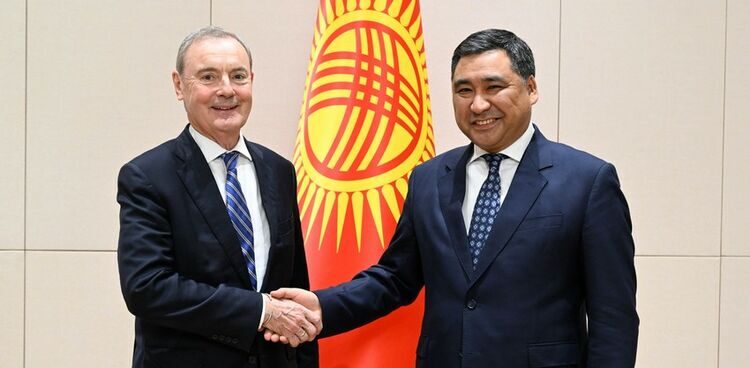
At the beginning of the year, the news agenda surrounding Kyrgyzstan shifted dramatically. Several media outlets reported that the European Union is considering restrictive measures affecting Kyrgyzstan as part of its 20th sanctions package against Russia. This does not imply direct sanctions against the state itself, but rather potential measures targeting banks, oil companies, and cryptocurrency services that, according to Brussels, may facilitate circumvention of the sanctions regime. For Kyrgyzstan’s economy, which is highly sensitive to cross-border capital flows, this represents a serious warning signal. EU Special Envoy for Sanctions David O’Sullivan, who visited Bishkek, outlined Brussels’ principal concern: a sharp increase over the past year in imports of machine tools and radio equipment into Kyrgyzstan. According to O’Sullivan, exports of certain categories of goods have risen by several hundred percent compared with the pre-war period. These goods fall into the category of dual-use products, and even relatively inexpensive components can be incorporated into drones or missile systems. The EU’s core argument is that such goods are neither produced nor consumed in significant volumes within Kyrgyzstan but are imported from Europe for subsequent re-export to Russia. Brussels views this pattern as evidence of systematic transit. The European Commission is also advocating restrictions on exports of certain machine tools and radio equipment to Kyrgyzstan. According to cited sources, exports of sanctioned technologies to Kyrgyzstan have increased eightfold since the start of the war in Ukraine, while shipments of equipment from Kyrgyzstan to Russia have risen by approximately 1,000%. O’Sullivan stated that the EU “does not impose sanctions on countries,” but rather on specific companies and banks. In practical terms, however, the distinction can be largely formal for the national economy. In October 2025, the EU added two Kyrgyz banks, Tolubay Bank and Eurasian Savings Bank, to its sanctions lists. According to the special envoy, the measures do not prohibit domestic operations, but they do restrict transactions with European financial institutions. In practice, this means the loss of correspondent banking relationships and limited access to SWIFT. Previously, Keremet Bank, Capital Bank, and the cryptocurrency platforms Grinex and Meer were sanctioned by the United Kingdom and the United States. In November 2025, Canada imposed sanctions on Capital Bank of Central Asia and the A7 platform. Brussels has formally stated that it respects Kyrgyzstan’s sovereignty and its legitimate trade relations with Russia and does not seek to halt lawful trade or remittance flows from migrant workers. According to O’Sullivan, preventing transit should not generate significant economic losses, as the goods in question represent only a “tiny fraction” of trade and do not create substantial added value within Kyrgyzstan. A Delicate Balancing Act The situation is further complicated by the lack of full consensus within the EU itself regarding the new sanctions package. Kyrgyzstan finds itself at a difficult intersection of interests. On one side are longstanding economic ties with Russia; on the other, the growing importance of the EU as a source of investment, grants, and institutional support. Following an extended meeting between First...
The Number of Migrants from Tajikistan to Russia Has Decreased Significantly

The number of citizens of Tajikistan applying to participate in Russia’s state "Program for the Voluntary Resettlement of Compatriots" has declined sharply, according to data from the Russian Ministry of Internal Affairs. The issue drew public attention following remarks by the head of the Russian cultural organization Rossotrudnichestvo, Yevgeny Primakov. He stated that in the first three quarters of last year, 27,700 people received certificates to participate in the program, of whom 21,400 have already relocated to Russia. Applicants originated from Kazakhstan, Uzbekistan, Kyrgyzstan, Turkmenistan, Tajikistan, and Armenia. However, official statistics indicate that Tajikistan is no longer among the leading source countries. In the first quarter of 2023, Tajik citizens accounted for 37.2% of all applications submitted under the program. By the first quarter of 2025, their share had fallen to 4.1%, moving the country from first place to seventh. In the third quarter of 2025, the share of applicants from Tajikistan dropped further to 2.4%, the lowest level recorded during the period under review. Kazakhstan ranked first in terms of the number of applications submitted. In the second and third quarters of 2025, most applications came from Kazakhstan, Kyrgyzstan, and Uzbekistan. As a result, Tajik citizens no longer play a leading role in the program, while the relative positions of other Central Asian countries have strengthened. Experts attribute the decline primarily to changes in program requirements. Since January 1, 2024, applicants have been required to demonstrate proficiency in the Russian language. Following the introduction of this requirement, the number of applications from Tajik citizens decreased markedly. Demographic factors may also have contributed. The average migrant family consists of approximately 2.3 people. This profile is more typical of Russian-speaking and non-indigenous populations in the region, which may have influenced the redistribution of applicants among participating countries. Official reports from the Russian Ministry of Internal Affairs indicate a steady decline in the share of applicants from Tajikistan and challenge claims of mass migration of Tajik citizens to Russia under the program.

Uzbekistan’s Ambassador to Kazakhstan on Regional Integration and a Shifting Global Order

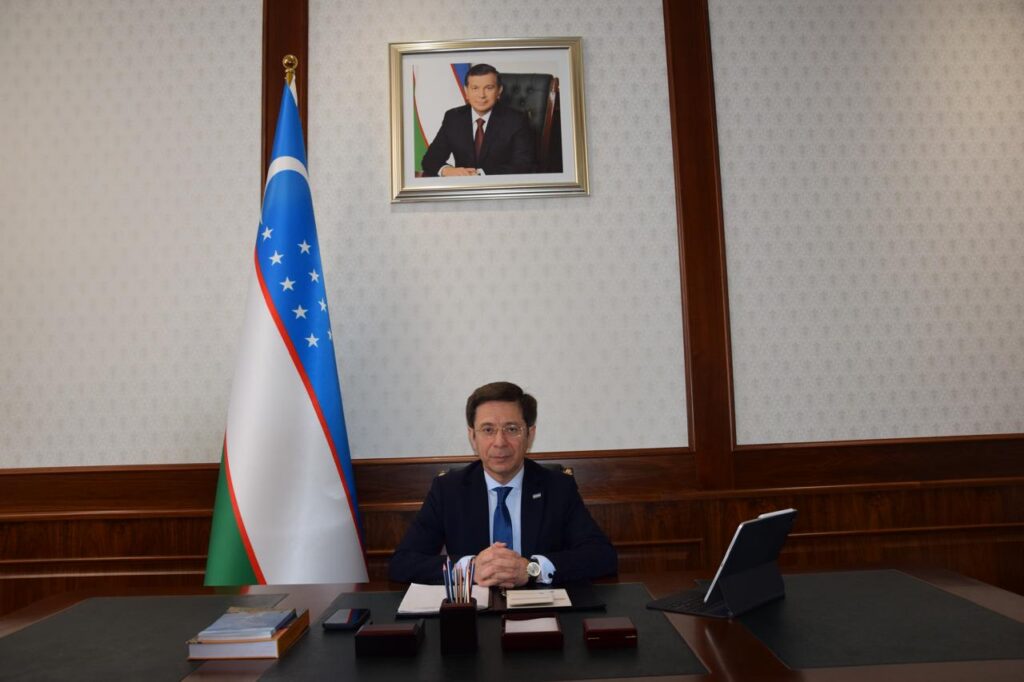
Amid shifting regional dynamics and an evolving global order, Uzbekistan has emerged as one of Central Asia’s most proactive diplomatic and economic actors. Since 2016, Tashkent has pursued an ambitious reform agenda at home while expanding cooperation with its neighbors and major global powers. In a wide-ranging interview with TCA, His Excellency Bakhtiyor Ibragimov, Ambassador Extraordinary and Plenipotentiary of the Republic of Uzbekistan to Kazakhstan, discusses regional integration, strategic partnerships, Afghanistan, China, and the future of economic diplomacy in Central Asia. TCA: Mr. Ambassador, Uzbekistan has demonstrated significant economic progress in recent years. What do you see as the key drivers behind this success? Ambassador Ibragimov: First of all, welcome to the Embassy of the Republic of Uzbekistan in Astana. We are familiar with your publication. We read it often, follow it, and analyze it. I would start with President Shavkat Mirziyoyev taking office at the end of 2016. It is no secret that until 2016, the Republic of Uzbekistan, despite its potential, was a fairly closed country. Our president always asks us, his representatives abroad, to speak openly about this. You cannot rewrite history or hide it. Relations with our neighbors were, frankly, at a very low level, and with some, there were no relations at all. The end of 2016 was a turning point, when reforms were not only declared but implemented and are now yielding results. One of President Mirziyoyev’s first foreign-policy priorities was normalization, and I want to emphasize this: normalization and then improving relations with neighbors. There is a saying in Uzbekistan: "If your neighbor is doing well, then you will also do well." Today, nearly a decade later, we can see that this policy is yielding results. Please note: this is not my personal assessment, but the assessment of international experts who recognize that the President has managed to achieve what once seemed impossible. I am speaking about regional integration with our neighbors. For example, a key issue for Central Asia is water. Many analysts warn that competition for water resources could, in the future, become a potential source of conflict. Two main rivers feed the region. Unfortunately, due to climate change, water volumes are not increasing year by year, while consumption is rising. We have managed to resolve almost all issues to date. In particular, based on the level of accumulation in the autumn-winter period in the upper reaches of the Amu Darya and Syr Darya rivers, and taking into account irrigation needs during the growing season, our water specialists jointly agree on and ensure the necessary water discharge within an agreed time frame. Uzbekistan, as you know, is located in the very center of Central Asia, bordering all Central Asian states, as well as Afghanistan. Today, border issues have largely been resolved. The final chord was struck on March 31, 2025, when the leaders of Uzbekistan, Tajikistan, and Kyrgyzstan signed an agreement on the border junction point, confirming the point of convergence of the three countries’ state borders. It should also be...

Vučić in Astana: Trade, Defense, and Technology Drive Kazakhstan–Serbia Talks

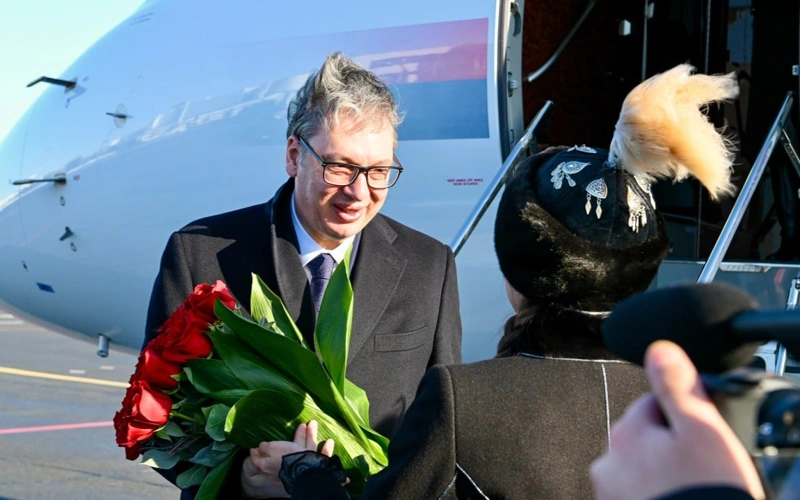
Serbian President Aleksandar Vučić arrived in Astana on February 26 for a two-day official visit. Prime Minister Olzhas Bektenov and Astana Mayor Jenis Qasymbek received him at the airport. Vučić is scheduled to hold talks with President Kassym-Jomart Tokayev on February 26–27. The agenda includes political dialogue, trade, digital transformation, healthcare, science, culture, and judicial cooperation. The two presidents are expected to adopt a joint statement and oversee the signing of ten memorandums. Kazakhstan also plans to award Vučić the Order of the Golden Eagle, the country’s highest state honor. The Serbian delegation includes Minister of Internal and External Trade Jagoda Lazarević, Minister without Portfolio Nenad Popović, and Mihailo Jovanović, director of Serbia’s Office for eGovernment and IT. Economic ties form a central pillar of the visit. Kazakhstan’s government stated that bilateral trade grew by 7.6% in 2025. At the first meeting of the Kazakhstan–Serbia Business Council and Business Forum in Astana, Nenad Popović said trade turnover reached about $117 million in 2025, an increase of roughly 7%. “The free-trade agreement between our countries ensures a strong institutional basis. It is now important to further strengthen this foundation with concrete projects and targeted mechanisms to support entrepreneurship in Kazakhstan and Serbia, as well as their business communities,” he stated. Defense cooperation has also emerged as a significant outcome of the business meetings. Kazakhstan’s LLP SP Kaztechnology and Serbia’s Yugoimport SDPR agreed to cooperate on the repair and modernization of 122mm and 152mm self-propelled artillery systems from the Nora and Soko/Soho families. LLP Great Sky and Yugoimport SDPR also signed a framework agreement on technology transfer and the organization of high-energy materials production. The visit extends beyond defense. Astana Hub signed memorandums with Serbia’s Digital Transformation Center, SEE UP Accelerator, and Science Technology Park Belgrade. Kazakhstan’s National Biotechnology Center also signed a memorandum with Serbia’s Bio4 Campus. Diplomatic relations between Kazakhstan and Serbia were established in December 1996. As previously reported by The Times of Central Asia, momentum in bilateral ties increased in late 2024 when Tokayev visited Serbia, and the sides signed multiple cooperation agreements in trade, investment, and industry. The Astana meetings signal a practical expansion of relations between Central Asia and the Balkans. Trade remains modest in absolute terms, but the new agreements in defense, digital technology, and biotechnology point to the growth of a broader industrial partnership.

Belarus Aims to Increase Trade with Uzbekistan to $2 Billion by 2030

Belarus plans to increase its trade turnover with Uzbekistan to $2 billion by 2030, according to a statement issued by the Council of Ministers of the Republic of Belarus following high-level talks between the two countries’ prime ministers. Belarusian Prime Minister Aleksandr Turchin announced the target during a meeting with Uzbekistan’s Prime Minister Abdulla Aripov on February 24, underscoring the growing importance of bilateral cooperation. “Undoubtedly, Uzbekistan is one of our key partners in Central Asia and beyond,” Turchin said, adding that relations are supported by what he described as a trusting dialogue between the two presidents. He noted that both governments are focused not only on implementing previously reached agreements but also on developing new initiatives ahead of a planned high-level meeting later this year. According to the Belarusian government, a bilateral cooperation roadmap is being prepared in advance of President Shavkat Mirziyoyev’s upcoming visit to Belarus. Turchin described the $2 billion trade target as ambitious but achievable, pointing out that current trade turnover is already approaching $1 billion. “We are committed to fruitful work and open dialogue. A number of large-scale projects are already being implemented,” he said. Economic cooperation between the two countries has expanded into several strategic sectors. Last year, Uzbekistan and Belarus moved to strengthen collaboration in nuclear energy following talks in Minsk hosted by Belarusian Energy Minister Denis Moroz and attended by a delegation from Uzbekistan’s Uzatom Atomic Energy Agency led by Director Azim Akhmedkhadjaev. Discussions focused on nuclear infrastructure development, specialist training, and radioactive waste management.

Uzbekistan Eyes UKEF Backing and Market Access at C5–UK Talks

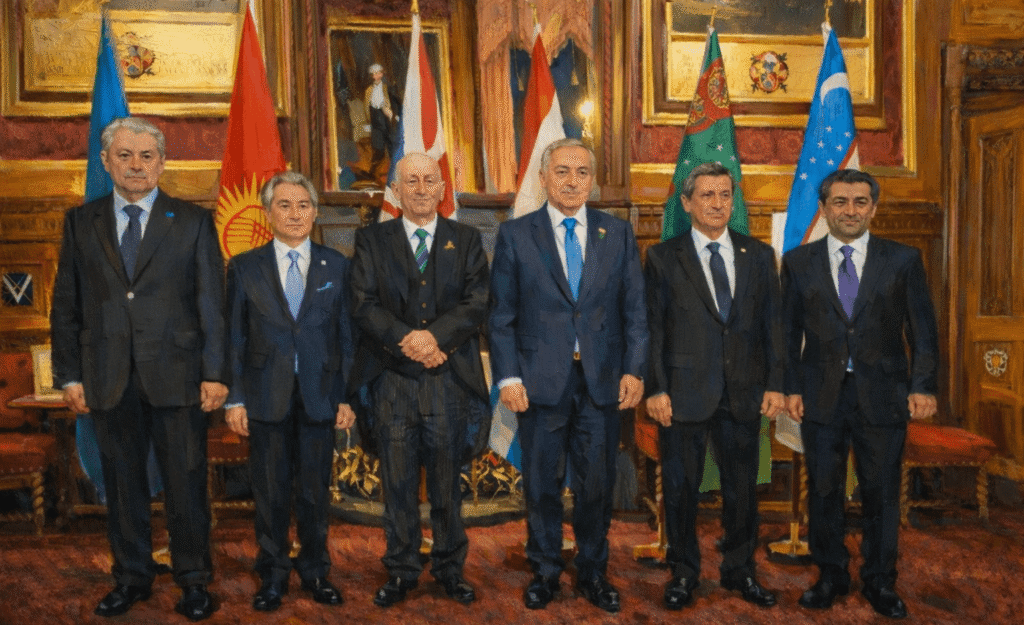
London is hosting the first formal meeting of Central Asian foreign ministers with the United Kingdom on February 26, opening a new “Central Asia–UK” ministerial track after a broader parliamentary program in London earlier in the week. Foreign ministers from Kazakhstan, Kyrgyzstan, Tajikistan, Turkmenistan, and Uzbekistan are attending. Kyrgyzstan’s Foreign Minister Jeenbek Kulubayev is expected to hold bilateral talks with UK Foreign Secretary Yvette Cooper, while Kazakhstan’s Foreign Minister Yermek Kosherbayev has also been holding meetings in London focused on trade, investment, and critical minerals cooperation. With delegations from all five Central Asian countries present, the format provides scope for further bilateral engagements on the margins. On the eve of the ministerial meeting, Central Asian foreign ministers, led by Kazakhstan’s Yermek Kosherbayev, held a session with the UK’s All-Party Parliamentary Group on Cooperation with Central Asia, with British MPs emphasizing political dialogue, legislative exchange, and deeper interparliamentary ties as foundations for advancing economic and regional cooperation. For Tashkent, the London meeting comes after a burst of bilateral engagement that has put finance and infrastructure at the center of the relationship. On February 17, President Shavkat Mirziyoyev received the UK Prime Minister’s Trade Envoy to Central Asia and Azerbaijan, Lord John Alderdice, and highlighted how heavily Uzbekistan has leaned on London’s markets: Uzbek sovereign and corporate bonds worth more than $15 billion have been placed on the London Stock Exchange, while trade turnover has doubled over the past five years, according to the presidential press service. Mirziyoyev also flagged potential projects spanning energy, finance, geology, and transport, and the sides agreed to prepare a joint roadmap. That roadmap is already acquiring project language. Uzbekistan’s Deputy Prime Minister and Minister of Economy and Finance, Jamshid Kuchkarov, met Alderdice in Tashkent with representatives of the London Stock Exchange Group, Arup, and UK Export Finance (UKEF), as well as the UK ambassador, Timothy Smart. According to the Uzbek government, talks focused on transport and logistics infrastructure—rail and road projects, airport modernization—alongside green energy and public–private partnerships. The same meeting produced a memorandum of understanding between Arup and the Ministry of Economy and Finance aimed at engineering and transport infrastructure planning and capacity-building for regions. Alderdice has also put a number on the UK’s offer. Speaking at a UK–Uzbekistan infrastructure conference, he said the UK has “about £4 billion available for export guarantees in Uzbekistan specifically,” linking the figure to potential backing for projects ranging from rail and airports to urban development. He pointed to London as a venue for Uzbek IPOs and bond issuance and said he was exploring potential collaboration with Uzbekistan’s mining sector, noting that the city also hosts the London Metal Exchange. The data suggests why Uzbekistan is pushing: the UK reported total trade in goods and services with Uzbekistan of £2.2 billion in the four quarters to the end of Q3 2025, including £545 million in UK exports and £1.6 billion in imports. Uzbek borrowers have already treated London as more than a diplomatic stop. In 2024, Uzbekistan’s National Bank...