• KGS/USD = 0.01144 0%
  • KZT/USD = 0.00211 0%
  • TJS/USD = 0.10582 0%
  • UZS/USD = 0.00008 0%
  • TMT/USD = 0.28530 0%
  • KGS/USD = 0.01144 0%
  • KZT/USD = 0.00211 0%
  • TJS/USD = 0.10582 0%
  • UZS/USD = 0.00008 0%
  • TMT/USD = 0.28530 0%
  • KGS/USD = 0.01144 0%
  • KZT/USD = 0.00211 0%
  • TJS/USD = 0.10582 0%
  • UZS/USD = 0.00008 0%
  • TMT/USD = 0.28530 0%
  • KGS/USD = 0.01144 0%
  • KZT/USD = 0.00211 0%
  • TJS/USD = 0.10582 0%
  • UZS/USD = 0.00008 0%
  • TMT/USD = 0.28530 0%
  • KGS/USD = 0.01144 0%
  • KZT/USD = 0.00211 0%
  • TJS/USD = 0.10582 0%
  • UZS/USD = 0.00008 0%
  • TMT/USD = 0.28530 0%
  • KGS/USD = 0.01144 0%
  • KZT/USD = 0.00211 0%
  • TJS/USD = 0.10582 0%
  • UZS/USD = 0.00008 0%
  • TMT/USD = 0.28530 0%
  • KGS/USD = 0.01144 0%
  • KZT/USD = 0.00211 0%
  • TJS/USD = 0.10582 0%
  • UZS/USD = 0.00008 0%
  • TMT/USD = 0.28530 0%
  • KGS/USD = 0.01144 0%
  • KZT/USD = 0.00211 0%
  • TJS/USD = 0.10582 0%
  • UZS/USD = 0.00008 0%
  • TMT/USD = 0.28530 0%

Viewing results 19 - 24 of 2418

India–Central Asia: Connectivity, Security, and Sustainable Partnerships in a Multipolar World

A widening conflict in West Asia is forcing India and Central Asia to reassess trade routes, diplomacy, and regional security, with key projects such as Iran’s Chabahar port now facing growing uncertainty. These risks framed discussions in New Delhi on March 25–26, where experts gathered under the banner of “India–Central Asia: Connectivity, Security, and Sustainable Partnerships in a Multipolar World,” with The Times of Central Asia in attendance. The conference unfolded against the backdrop of two active Eurasian wars—the Russo-Ukrainian and the Israel/U.S.-Iran conflict. Central Asian and Indian participants agreed that the West Asian crisis is widening, putting not only ports and logistics routes but also economies across the globe under serious threat. India's Chabahar link to Afghanistan and Central Asia is now a high-risk, uncertain investment, weakening overall continental strategic thinking across Eurasia, including efforts to consolidate new trans-Caspian trade corridors. If the conflict cripples or destroys Chabahar, years of progress, hard-won partnerships, and millions in strategic investment would be erased. On the sidelines, some participants suggested that India could help cool what's becoming a dangerously global conflict. Unbeknownst to them, India had already held an all-party meeting on March 25 on the West Asia crisis. External Affairs Minister S. Jaishankar's message: India will not mediate. The revelation surprised some participants—others, not at all. In any event, Central Asian states, in principle, have backed any diplomatic push for peace. With West Asia in turmoil and platitudes in abundance, conference participants emphasized the need to rethink geopolitics, trade, security, and cultural ties beyond stale frameworks at a time of conflict. Four themes defined the Central and South Asian moment: the dangers of bloc politics, even as regional organizations continue to evolve and expand their influence, the ascendancy of national interests over external pressure, and the emergence of a firm refusal to pick sides in the midst of frictions between competing global pressures. Dr. Raj Kumar Sharma, a member of the India Central Asia Foundation, stated: “The conference provided an important platform to move beyond theoretical discussion and toward practical engagement. With Central Asia’s ambassadors to India present, we focused on exploring concrete mechanisms to promote peace through sustained diplomatic efforts. Despite the proximity of the conflict in West Asia to both Central Asia and India, participants expressed confidence that dialogue and restraint – buttressed by trade and investment – will ultimately guide outcomes, with particular concern for civilians and those enduring hardship. Notably, the crisis did not overshadow the conference’s primary agenda or its scholarly contributions. Overall, the gathering can be seen as a constructive step in reinforcing diplomatic initiatives dedicated to peace and stability in a conflict-affected region.” The conference witnessed the release of three significant publications on India–Central Asia relations: India – Kazakhstan Partnership in a Changing Geopolitical Order (eds. Ramakant Dwivedi, Lalit Aggarwal, Kuralay Baizakova), Manas: Kirgiz Vir Gatha Kavya by Ramakant Dwivedi & Hemchandra Pandey and India and Central, East and Southeast Asia: Enhancing the Partnership (eds. Ramakant Dwivedi & Lalit Aggarwal). [caption id="attachment_46364" align="aligncenter" width="1379"]...

Georgia May Replace Russian Oil with Imports from Turkmenistan and Kazakhstan

Georgia’s only oil refinery, owned by Black Sea Petroleum (BSP), plans to completely stop importing Russian oil and instead switch to crude supplies from Turkmenistan and, potentially, Kazakhstan. This was announced by the company’s CEO, David Potskhveria. According to Potskhveria, the shift would not only diversify supply sources but also open access to European markets. “We will completely replace Russian oil with Turkmen oil, and then with Kazakhstani oil. This will give us the opportunity to export products to the EU,” he said. The rationale is straightforward: imports of Russian petroleum products into the European Union are currently prohibited. Maintaining previous supply arrangements would effectively block access to European markets. However, switching suppliers presents logistical challenges. As Potskhveria noted, processing of Turkmen crude can begin only after transit issues through Azerbaijan are resolved. For now, logistics remain the main bottleneck. While the refinery is technically ready, implementation depends on securing reliable transport routes. The proposed move away from Russian oil follows earlier developments. In late February, the EU considered including the Kulevi port on a preliminary sanctions list due to its import and processing of Russian crude. The trigger was a shipment delivered in October 2025 by Russneft, involving approximately 105,000 tons of oil to the port of Kulevi. The shipment prompted criticism from the Georgian opposition, which accused the authorities of undermining the sanctions regime and appealed to European institutions. The Kulevi refinery is a relatively new entrant to the regional oil market. It began operations in December last year and has already outlined expansion plans. Its current processing capacity is around 1.2 million tons per year, with plans to increase this to 4.5 million tons. At present, the facility produces fuel oil, diesel, and other petroleum products. Future plans include expanding output to Euro-5 standard gasoline, jet fuel, and Eurodiesel. BSP’s international partners reportedly include Trafigura and Saudi Aramco.

Uzbekistan and Russia Focus on Trade and Transit at Termez Meeting

Uzbekistan and Russia used a conference in Termez on March 30–31 to highlight the breadth of their relationship, from trade and industrial projects to transport links and regional planning. The meeting was organized by Uzbekistan’s Institute for Strategic and Regional Studies and Russia’s Kremlin-linked policy forum, the Valdai Discussion Club. Participants included Russian Deputy Foreign Minister Mikhail Galuzin, Uzbek Deputy Foreign Minister Bobur Usmanov, ISRS director Eldor Aripov, Russian Ambassador Alexei Yerkhov, and other Uzbek and Russian officials, analysts, and business representatives. The meeting comes at a time of shifting regional dynamics, as Central Asian states recalibrate ties with Russia while managing new economic and political pressures from multiple directions. Termez sits by the Friendship Bridge on Uzbekistan’s border with Afghanistan and has become one of Tashkent’s main platforms for trade, logistics, and diplomacy aimed southward. The conference program focused on transport, infrastructure, interregional ties, and industrial cooperation, so the location matters. This aligns Uzbekistan’s relationship with Russia with a wider push for new routes across Eurasia and toward South Asia. The economic backdrop is also substantial. Official Uzbek figures put bilateral trade with Russia at around $13 billion in 2025, making Russia Uzbekistan’s second-largest trading partner after China. Uzbek reporting says that trade has grown sharply since 2017, with Russian investment in Uzbekistan approaching $5 billion. Officials have described the relationship as moving beyond simple trade toward industrial cooperation, technological partnerships, and longer value chains. The conference emphasized the growing role of direct regional links. Uzbek officials highlighted more than 200 regional initiatives worth over $4 billion and identified Tatarstan as a key partner in industry, petrochemicals, engineering, information technology, and education. Projects linked to the Himgrad industrial park model and branches of Kazan Federal University in Uzbekistan show how cooperation now extends through regions, universities, and industrial zones, not just central governments. Energy remains a key part of the relationship. As previously reported by The Times of Central Asia, on March 24, Uzbekistan and Russia advanced work on Uzbekistan’s planned nuclear power project in the Jizzakh region. Uzbekistan’s nuclear agency, Uzatom, and Russia’s Rosatom signed new documents and began initial concrete works for a small-capacity unit, describing the step as moving the project into a new implementation phase. Transit formed another major part of the agenda. Uzbek reporting states that participants discussed modernizing northern routes and developing a southern route through Afghanistan toward ports on the Indian Ocean. This fits Uzbekistan’s longer effort to turn Termez into a logistics hub for Afghan and South Asian trade. The city hosts the Termez International Trade Center, designed to simplify border trade and business access. The timing also reflects wider regional pressures. TCA previously reported that the war involving Iran is placing a strain on southern routes and increasing the importance of alternative corridors. In that context, a Russia–Uzbekistan meeting focused on trade and transport in Termez underscores how both countries are linking bilateral cooperation to shifting regional logistics. The meeting in Termez did not produce a major treaty or a...

Global Terrorism Index: Kazakhstan, Kyrgyzstan, Turkmenistan Show Zero Risk of Terrorism

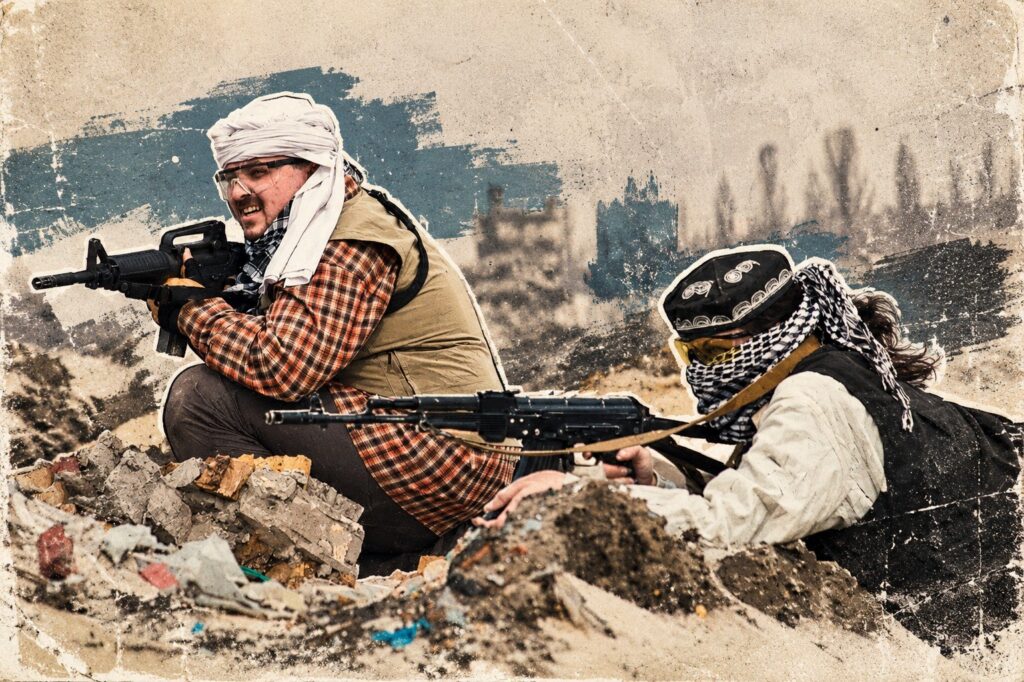
The countries of Central Asia are among those least affected by terrorism globally, according to the newly published Global Terrorism Index 2026 report. However, the report suggests that the region’s stability is increasingly influenced by external factors, particularly its proximity to Afghanistan. Country scores are a composite measure made up of four indicators: incidents, fatalities, injuries and hostages. To measure the impact of terrorism, a five-year weighted average is applied. The main concentrations of terrorist activity remain in Africa and South Asia. The overall level of terrorism worldwide declined in 2025, although the nature of the threats became more complex and less predictable. The report indicates that no terrorist incidents were recorded in Kazakhstan, Kyrgyzstan, or Turkmenistan, who all scored 0 for terrorism risk, placing them all joint 163rd out of the 163 nations researched. Uzbekistan (95th) remains in the minimal-risk category. Tajikistan is the only country in the region with a higher threat level, ranking 41st globally. Central Asia’s relative stability is attributed to several factors, including robust security measures, the absence of active armed conflicts, and the limited presence of international terrorist organisations. Despite relative internal stability, risks to Central Asia are increasingly emerging from outside the region. The report highlights growing activity by extremist groups in Afghanistan and Pakistan, as well as worsening relations between the two countries, which could potentially escalate into open conflict by 2026. Particular concern is focused on the Tajik-Afghan border, where structural vulnerabilities persist. In addition to external pressures, experts are drawing attention to internal dynamics. The report notes an acceleration of radicalisation, particularly among young people, with digital platforms and online content playing a significant role.

EAEU Trade Frictions Deepen Despite Shymkent Integration Push

The Eurasian Economic Union (EAEU) met in Shymkent on March 26-27 with a long agenda and a familiar promise: deeper integration, smoother trade, and a more modern common market. Kazakhstan, which holds the bloc’s 2026 chairmanship, used the meeting to push artificial intelligence, digital logistics, industrial cooperation, and the removal of internal barriers. Twelve documents were signed, covering areas including industrial cooperation, transport, and digital integration. “Kazakhstan aims to become a fully-fledged digital country. We have built a modern ecosystem, including Astana Hub and the Alem.ai AI center, and are ready to share experience with EAEU partners on digital regulation and economic transformation,” Kazakh Prime Minister Olzhas Bektenov stated. That sounds ambitious, but it also highlights the bloc’s central weakness. The EAEU has no shortage of plans; it has a shortage of trust between its members, and that matters more. The dynamics extend across the bloc, but are most visible in Kazakhstan and Kyrgyzstan. The EAEU was built to ensure the free movement of goods, services, capital, and labor across Armenia, Belarus, Kazakhstan, Kyrgyzstan, and Russia. But the reality keeps drifting away from the treaty. Kazakhstan’s chairmanship agenda calls for a barrier-free internal market, yet the bloc is entering a new phase of tighter controls, retaliatory measures, and disputes over who really benefits. Shymkent made that contradiction impossible to miss. Prime Minister Olzhas Bektenov promoted an AI-based system to coordinate cargo flows across the union and speed up transit. He also backed the full electronic handling of veterinary and phytosanitary checks, all of which are practical ideas. Central Asia needs faster, cheaper, and more predictable logistics, but digital tools do not solve a political problem. A system becomes more efficient only if its members want it to be open. When they want leverage instead, technology can only make the controls smarter. [caption id="attachment_46024" align="aligncenter" width="1920"] Image: primeminister.kz[/caption] Kazakhstan’s priorities already show where the friction lies. President Kassym-Jomart Tokayev opened his chairmanship by calling for digital transformation, better transport links, and the elimination of internal trade barriers. He also pushed a stronger external profile for the EAEU, with wider links across Asia, the Arab world, and the Global South. That is a serious agenda for a bloc trying to present itself as a Eurasian logistics hub. That push for external expansion comes at a time when internal frictions are becoming harder to manage. It sits uneasily beside everyday trade practice inside the union, where growing trade disputes have become part of the EAEU’s normal life, not an exception to it. The clearest recent example is Russia’s SPOT import-control system, which takes effect for road shipments from EAEU countries on April 1. Importers must submit shipment information two days before trucks reach the border and receive a QR code. Moscow has presented the change as a tax-compliance and anti-fraud measure, with additional financial guarantees expected in later phases of its implementation. In practice, it adds cost, time, and uncertainty before goods even reach the border, the opposite of what a customs union...

Repeated Drone Incidents Expose Airspace Risks on Russia–Central Asia Frontier

A new drone-related incident in western Kazakhstan has reinforced a pattern that is becoming harder to dismiss. Police in West Kazakhstan Region confirmed that an object resembling an unmanned aerial vehicle was found in the Akzhayik district near the village of Karaulytobe. Images circulating locally appeared to show a largely intact fixed-wing drone. No casualties or damage were reported. “The object was discovered outside a populated area. All circumstances of the incident are being investigated,” the department said. Reports and images of the object initially circulated on messaging apps before being confirmed by regional authorities. This latest discovery fits a sequence of similar incidents across the same region over the past year. As previously reported by The Times of Central Asia, on March 18, 2025, a drone about three meters long was found near Atameken village in Taskala district, around 60 kilometers from the district center. That case followed another discovery on February 18, 2025, in the Bokeyorda district, where a smaller unidentified object was recovered in a remote area. Within days, further debris was found near the Russian border in Zhanibek district, marking the third such case in a single month. The pattern continued later in the year. On October 23, 2025, a drone of unknown origin exploded near Kyzyltal village in the Burlin district. Residents reported an explosion that damaged rooftops and left a crater near the village, although no casualties were recorded. Authorities opened a criminal case, with the military prosecutor’s office involved alongside police and emergency services. Similar findings have appeared beyond the West Kazakhstan Region. On June 19, 2025, fragments resembling a UAV were found in Mangistau Region near the Bolashak border station. The debris was located in an uninhabited area, and no damage was reported. Taken together, these incidents form a clear geographic cluster along Kazakhstan’s western frontier. Most occurred near the Russian border and in sparsely populated areas. The objects were typically discovered after impact, with no confirmed flight paths or official attribution. Investigations into earlier cases have linked several incidents to areas used for Russian military testing. Western Kazakhstan includes zones connected to long-standing Russian defense activity under bilateral agreements, and parts of the region remain associated with testing operations. This context explains the cautious official response. None of the incidents have been described as attacks, and none have been attributed to a foreign state. At the same time, the repeated discoveries point to a growing exposure that goes beyond routine testing. The wider regional environment has shifted rapidly. The war in Ukraine has driven a sharp expansion in drone use across Eurasia. Both Russia and Ukraine deploy long-range UAVs for reconnaissance and strikes, often over extended distances. Drone activity has already affected infrastructure linked to Kazakhstan’s economy. On February 17, 2025, a drone attack targeted the Caspian Pipeline Consortium’s Kropotkinskaya pumping station in Russia’s Krasnodar region, part of a key export route for Kazakh oil. Further attacks on offshore loading facilities and terminals continued later in the year, with additional incidents...