• KGS/USD = 0.01144 0%
  • KZT/USD = 0.00208 0%
  • TJS/USD = 0.10429 0.1%
  • UZS/USD = 0.00008 0%
  • TMT/USD = 0.28530 0%
  • KGS/USD = 0.01144 0%
  • KZT/USD = 0.00208 0%
  • TJS/USD = 0.10429 0.1%
  • UZS/USD = 0.00008 0%
  • TMT/USD = 0.28530 0%
  • KGS/USD = 0.01144 0%
  • KZT/USD = 0.00208 0%
  • TJS/USD = 0.10429 0.1%
  • UZS/USD = 0.00008 0%
  • TMT/USD = 0.28530 0%
  • KGS/USD = 0.01144 0%
  • KZT/USD = 0.00208 0%
  • TJS/USD = 0.10429 0.1%
  • UZS/USD = 0.00008 0%
  • TMT/USD = 0.28530 0%
  • KGS/USD = 0.01144 0%
  • KZT/USD = 0.00208 0%
  • TJS/USD = 0.10429 0.1%
  • UZS/USD = 0.00008 0%
  • TMT/USD = 0.28530 0%
  • KGS/USD = 0.01144 0%
  • KZT/USD = 0.00208 0%
  • TJS/USD = 0.10429 0.1%
  • UZS/USD = 0.00008 0%
  • TMT/USD = 0.28530 0%
  • KGS/USD = 0.01144 0%
  • KZT/USD = 0.00208 0%
  • TJS/USD = 0.10429 0.1%
  • UZS/USD = 0.00008 0%
  • TMT/USD = 0.28530 0%
  • KGS/USD = 0.01144 0%
  • KZT/USD = 0.00208 0%
  • TJS/USD = 0.10429 0.1%
  • UZS/USD = 0.00008 0%
  • TMT/USD = 0.28530 0%

Viewing results 151 - 156 of 1395

Russia Announces ‘Deportation Regime’ for Migrant Laborers

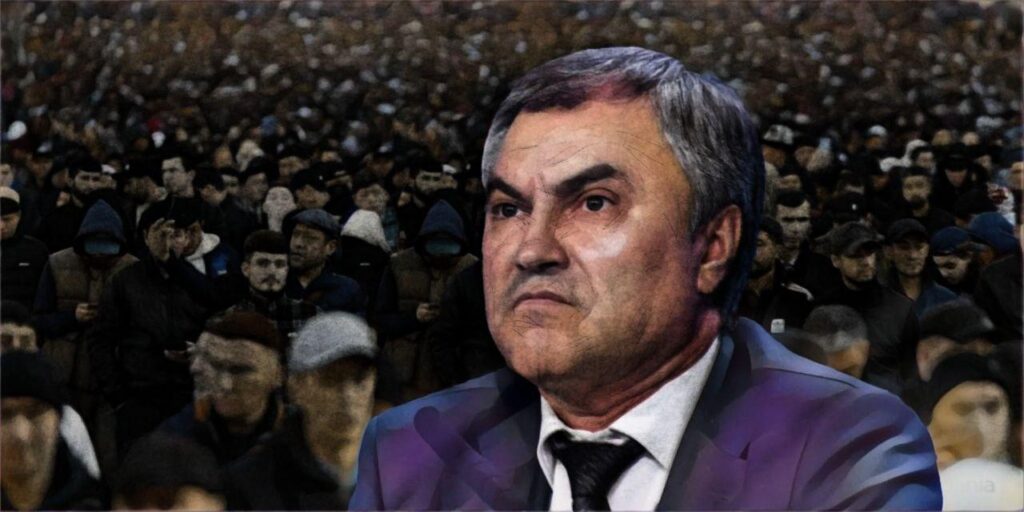
It has been more than a month since the deadline for migrant laborers working in Russia to complete their registration documents or face expulsion. The anticipated mass deportations have not happened, but Russian State Duma Chairman, Vyacheslav Volodin, indicated on October 13 that could change soon. Volodin warned, “A new migration regime is now in effect… the deportation regime.” The Final Bell Several months ago, Russian officials announced the September 10 deadline for all migrant laborers to legalize their status to work and live in Russia. Russia’s Federal Migration Service created a list in the summer of 2024 of “controlled persons,” those who still did not have all the required documentation to remain in Russia. The list was posted on the service’s website in February 2025. Volodin said those on the list lacked one or more of the following: “documents or certificates required for obtaining migration status or citizenship, registration of a place of stay or residence.” Volodin said the list also included those who failed to complete mandatory procedures such as “annual medical examinations for [their] presence… as well as fingerprinting and photographing” or have failed to show that their “patent, work permits, or employment contract” was renewed. The Duma Chairman said some 35,000 “foreign citizens” had already been expelled between January and August of this year. September 10 arrived, and in the days that followed, there were no reports of Russian law enforcement rounding up migrants and sending them back to their homelands. However, it was clear the Russian government was not bluffing. In his remarks to the Duma, Volodin explained that as of September 1, there were still some 770,000 migrants on the register of controlled persons, and that one-third of them were women and children. If these people have not taken care of their requirements, Volodin said, “They need to leave our country, informing [us] of the date, place, and route of their departure.” The Dwindling Number of Central Asian Migrant Laborers in Russia There are several million foreign workers in Russia, and the largest group is those from Central Asia, though fewer of them work there than was previously the case. The terrorist attack on Moscow’s Crocus City Hall in March 2024 that left more than 140 people dead was blamed on citizens of Tajikistan. It sparked a wave of xenophobia in Russia aimed at Central Asians, and prompted a raft of new laws and regulations for migrant laborers. Uzbekistan’s citizens have long been the largest group of Central Asian migrant laborers working in Russia, numbering between 4 to 6 million, depending on the season, during 2016. Figures vary for how many Uzbek citizens are working in Russia now, but Uzbekistan’s Migration Agency said at the start of October that it was about 1.3 million, noting the figure fluctuates depending on the time of the year, and that during the warmer months of 2025, it was closer to 2 million. During his recent visit to Tajikistan for a CIS summit and a separate meeting with...

Afghanistan Offered Opportunity to Regain Role as Central Asian Transit Hub

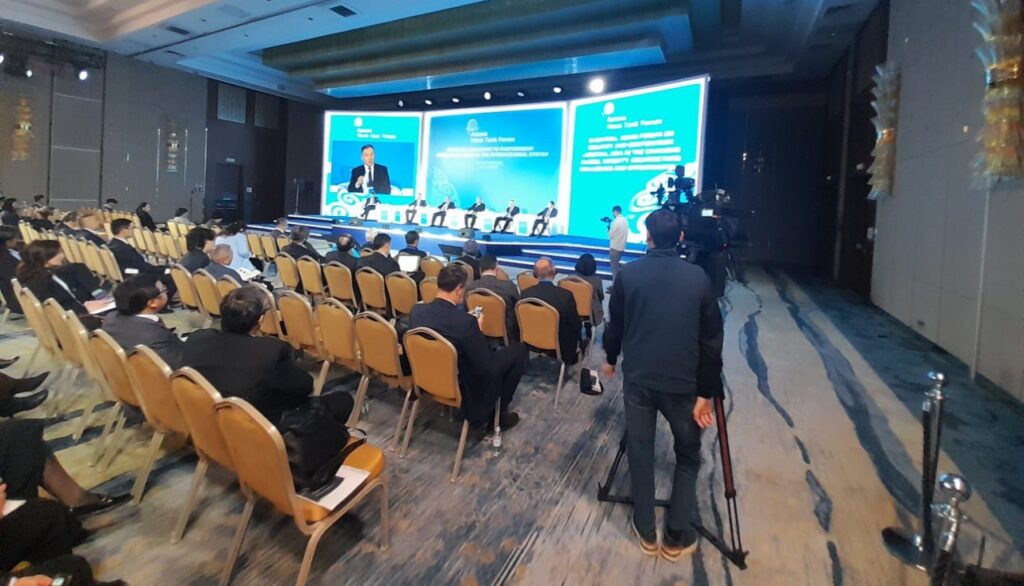
Erkin Tukumov, Special Representative of the President of Kazakhstan for Afghanistan, has called on Central Asian nations to intensify efforts to develop new transport corridors linking the region with Afghanistan and further to South Asia, including Pakistan and India. He made the remarks during the 2025 Astana Think Tank Forum at a session titled “Vision for Central Asia.” “Afghanistan has historically served as a transit hub, with the Great Silk Road and other trade corridors passing through its territory,” Tukumov stated. “Today, like the countries of Central Asia, Afghanistan is interested in developing stable and reliable transport routes that facilitate the movement of goods and provide access to South Asian markets. In the past, the region was primarily oriented toward the West, and later toward the East, particularly China. The southern direction remained largely overlooked for an obvious reason: Afghanistan endured nearly half a century of war.” Tukumov noted that the security situation is evolving, and although complete safety cannot yet be guaranteed, the level of risk has notably decreased. He emphasized that the Taliban now exercises effective control over the entirety of Afghan territory, which has contributed to an overall sense of stability. Trade and economic cooperation between Central Asian countries and Kabul, grounded in bilateral agreements, is also growing. “The next logical step is the establishment of new transport corridors connecting Central Asia with Afghanistan and South Asia. This objective can only be achieved through a coordinated regional effort,” he said. Javlon Vakhabov, Director of the International Institute for Central Asia (Uzbekistan), supported this view. He advocated for a unified regional approach to infrastructure development, including a strategic focus on the Afghan direction, and called for the creation of a sustainable coordination mechanism. “It is also necessary to convene an international forum titled ‘Central Asia - Afghanistan’ to foster expert dialogue, align policy efforts, share research, and develop joint strategies,” Vakhabov added. He further proposed involving Afghanistan in the regional water dialogue, particularly regarding the joint management of the Amu Darya, and establishing a multilateral framework to ensure equitable water use. Younes Zangyabadi, Executive Director of the Institute for Peace and Diplomacy (Canada-USA), referred to the “Group of Neighbors and Friends of Afghanistan” (6+2 format), a diplomatic initiative established in the late 20th century under UN auspices. The group included Iran, Pakistan, Tajikistan, Uzbekistan, Turkmenistan, China, Russia, and the US. Zangyabadi suggested that this format could be revived with Central Asian countries taking a leading role. “Central Asia is well-positioned to take the initiative in reviving this platform, which once brought together regional and global powers to discuss the future of Afghanistan in an inclusive manner,” he said. Valiullah Shahin, Director of the Center for Strategic Studies at the Afghan Ministry of Foreign Affairs, expressed Kabul’s readiness to participate in water negotiations and emphasized Afghanistan’s interest in boosting trade, economic ties, and regional security. He also voiced support for collaborative efforts focused on development and stability in Central Asia. Previously The Times of Central Asia reported that Kazakhstan...

Astana Renews Call for Nuclear Dialogue, Global Security Reform

Kazakhstan has reiterated its call for the resumption of high-level dialogue among nuclear powers and a renewed focus on multilateralism to bolster global security. The appeal was made by First Deputy Foreign Minister Yerzhan Ashikbayev during the Astana Think Tank Forum 2025, held on the theme “From Polarization to Partnership: Restoring Trust in the International System.” Ashikbayev reaffirmed Kazakhstan’s support for forming a unified Euro-Atlantic and Eurasian security community and its commitment to contributing to a new international order. “We call for the resumption of dialogue between nuclear powers and a scaling up of multilateral efforts to reduce the threat of weapons of mass destruction. Kazakhstan is committed to making a world without nuclear weapons the key goal of the 21st century,” he said. The forum gathered around 40 international experts from 20 countries, including diplomats, researchers, and heads of leading think tanks. UN Reform and Regional Equity Ashikbayev called for reforming the UN Security Council to ensure broader, more equitable representation for countries in Asia, Africa, and Latin America. He also highlighted the growing role of “middle powers” in fostering trust and regional stability. “We advocate strict adherence to the UN Charter and a modernized institutional architecture that reflects today’s global challenges, not outdated procedures. Sovereignty, territorial integrity, and peaceful conflict resolution must be upheld universally,” he said. He proposed a new global security framework based on “regional stability as the foundation for global peace,” grounded in international law and multilateral cooperation. Digital Sovereignty and AI Governance In addressing the implications of emerging technologies, Ashikbayev stressed the need for a global regulatory framework for artificial intelligence. “Access to AI must be fair, inclusive, and non-discriminatory. This is not just a technological issue, it’s about digital sovereignty and equitable global development,” he said, affirming Kazakhstan’s readiness to participate in shaping international AI standards. Environmental Diplomacy and Climate Strategy Ashikbayev also emphasized environmental priorities, urging greater international involvement in addressing ecological challenges and protecting shared water resources in the Aral and Caspian Seas. He noted that Kazakhstan plays an active role in the global climate agenda and will host a regional climate summit in Astana in 2026 to advance collective environmental strategies in Central Asia. “Kazakhstan is pursuing carbon neutrality by 2060 through pragmatic steps, including economic diversification and a balanced energy approach. We are expanding renewables while ensuring energy security through traditional sectors,” he said. The Rise of Middle Powers Ashikbayev underscored the rising influence of middle powers in today’s fragmented geopolitical landscape, positioning them as vital mediators and conveners of dialogue. Charles Maclean, founder and managing director of Borderless Consulting Group, echoed this view. “While the spotlight is often on great powers, middle powers are emerging as drivers of constructive reform. Kazakhstan’s growing role and the presence of its leadership on global platforms reflect this new leadership model,” he said. As previously reported by The Times of Central Asia, independent studies by Institut Montaigne (France) and the Institute for Security and International Studies (Germany) have both identified Kazakhstan as...

Kazakhstan Proposes ‘Expert Alliance’ to Reform Global Governance

Zhandos Shaimardanov, director of the Kazakhstan Institute for Strategic Studies (KazISS) under the President of the Republic of Kazakhstan, has called for the formation of an international network of think tanks to act as an intellectual capacity for reforming the global governance architecture. He said the proposal stems from lessons learned in regional cooperation efforts across Central Asia. Speaking at the session “Central Asia in the Changing Architecture of Global Security: Challenges and Opportunities” during the Astana Think Tank Forum 2025, Shaimardanov said the world is experiencing a period of geopolitical flux. The old global rules no longer function effectively, while new norms have yet to take shape. “History is giving our region a chance to show leadership,” he said. “Central Asia is realizing its agency and unity, ready to formulate collective responses to global challenges and offer a positive agenda. Trust and mutual respect have made us resilient, and now this political capital must be transformed into institutional resources.” Shaimardanov stressed that the existing global security architecture is in crisis, with mechanisms such as the UN Security Council and arms control frameworks losing effectiveness. “In September, at the UN General Assembly, the President of Kazakhstan rightly observed that serious violations of international law have become the new norm. This is a sign that global institutions need intellectual renewal. When multilateral mechanisms fail, it is the regions that retain the potential for agreement,” he said. From Regional Unity to Global Contribution Shaimardanov recalled that at the sixth Consultative Meeting of the Heads of State of Central Asia, held in Astana last August, regional leaders adopted the "Central Asia 2040" concept, which sets out a long-term vision for cooperation across the region. “Now is the time not just to implement this document without slogans,” he said, “but to present this regional experience to the broader world.” He said that Central Asia’s cooperative model could help redefine the principles of global governance. As a bloc of “middle powers,” the region can offer a constructive and non-hegemonic voice. “In this context, Kazakhstan proposes creating an expert alliance of middle powers, a global network of think tanks and institutions that could help rethink international systems,” Shaimardanov said. He suggested that such a body could cooperate with international organizations, including the United Nations, to develop joint strategies on security, sustainable development, and institutional accountability. “Central Asia can not only adapt to new realities but also offer new ideas that security can be built not on fear but on trust,” he said. Focus Areas: Digital Trust, Water Security, Human Capital Shaimardanov noted that an expert network would help Central Asian countries coordinate on key development challenges, including digitalization, water management, and innovation. He highlighted the example of Kazakh startup Higgsfield AI, which recently achieved unicorn status with a valuation exceeding $1 billion. The company developed a generative AI tool that creates videos from text prompts. “This is a major milestone not only for Kazakhstan but for the entire region,” he said. “It reflects Central Asia’s growing...

EU Launches Major Initiative to Boost Digital Connectivity in Central Asia

The European Union has unveiled a major initiative to expand digital connectivity across Central Asia, aiming to bridge the region’s digital divide and promote inclusive socio-economic development, according to the EU Delegation to Kazakhstan. The initiative, part of the EU’s Global Gateway strategy, was formally introduced during the political launch of the Team Europe Initiative (TEI) on Digital Connectivity in Central Asia. It seeks to deepen cooperation with Central Asian governments and accelerate digital transformation through investments in infrastructure, satellite technologies, and human capital. “The Global Gateway and the Team Europe Initiative on Digital Connectivity in Central Asia are opening a new chapter,” said Aleska Simkic, EU Ambassador to Kazakhstan. “Through them, the European Union is connecting remote regions and villages in Central Asia to the internet via satellite connections. Today’s event marks an important milestone in advancing sustainable connectivity and strengthening EU-Central Asia cooperation for the years ahead.” The TEI will be implemented through two core components. The Soft Pillar, known as the C4CA Project, will be carried out by a consortium of EU cooperation agencies led by Expertise France. It will focus on promoting safe and inclusive satellite connectivity, especially for women, youth, and marginalized groups, while supporting broader socio-economic inclusion through improved digital access. The Hard Pillar, titled “Satellite Connectivity for Underserved Populations of Central Asia,” will be coordinated by the European Investment Bank and implemented by satellite operator SES. This component will finance and deploy satellite constellations and ground infrastructure to deliver high-speed internet to remote and underserved areas, boosting access to education, healthcare, and business opportunities. “Connectivity, in all its forms, whether digital, infrastructural, or economic, lies at the heart of today’s global challenges,” said Sylvain Guiaugue, France’s Ambassador to Kazakhstan. “Working hand in hand with our partners in Central Asia, the consortium led by Expertise France will help develop the policies, skills, and technologies needed to ensure equal access to digital services and innovation.” EU officials emphasized that the initiative aligns with the national digital strategies of Central Asian countries and represents a pivotal step in fostering long-term regional cooperation. Governments across the region voiced strong support for the program, highlighting its strategic importance for Central Asia’s sustainable and connected future.

Kazakhstan’s Emerging Role in Global Rare-Earth Supply Chains

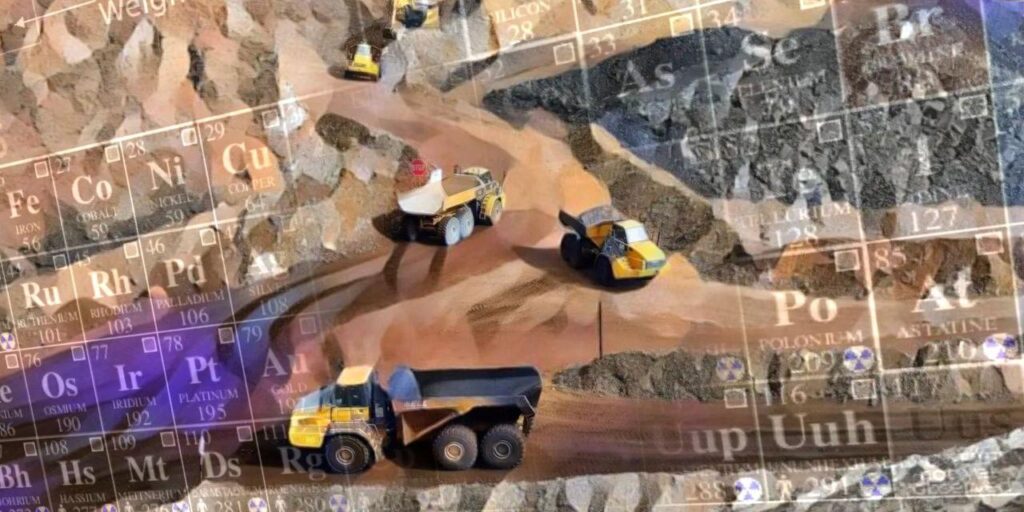
October 10 was one of the most consequential days for global trade policy and one of the most volatile for world markets since the U.S.–China tariff conflict first reignited. After China announced tighter export controls on rare earths, U.S. President Donald J. Trump first posted on Truth Social that “there seems to be no reason” anymore for him to meet with the Chinese leader Xi Jinping at the APEC summit in two weeks' time. Several hours later, the official White House account on X posted a message from Trump that he had learned that "effective November 1st, 2025, [China will] impose large-scale Export Controls [sic] on virtually every product they make, and some not even made by them." He then followed with the declaration that the U.S. will impose a 100% tariff on Chinese imports starting November 1, "or sooner," and launch export controls on critical software. As Washington and Beijing escalate their economic confrontation, the scramble for stable rare-earth supply chains has broadened beyond East Asia. Attention is shifting to Central Asia, where mineral potential and trade corridors align with the broader effort to reduce dependence on China. Kazakhstan has drawn particular attention, not as a single solution, but as a state seeking to leverage its Soviet-era industrial base and access to the Caspian to help meet emerging supply chain needs. Although Kazakhstan has made the most progress in translating its mineral reserves into a functioning mining industry, it remains part of a broader regional effort to diversify away from a single external partner, most notably China. Other Central Asian states are testing their own capabilities to meet global supply chain demands, though most remain constrained by infrastructure, financing, or lack of processing capability. Kazakhstan’s Position in the Emerging Supply Realignment On reserves, Kazakhstan’s rare-earth potential is rooted as much in continuity as it is in discovery. Decades of geological mapping under Soviet administration established its mineral profile, and recent joint surveys by Kazgeology and private firms have both confirmed and expanded those earlier findings. New delineated deposits in the east and center of the country, including the Zhana Kazakhstan site in Karagandy, have reinforced its status as a prospective non-Chinese source of critical materials, with verified concentrations of neodymium, praseodymium, dysprosium, terbium, and samarium. If current resource estimates are validated, the Zhana Kazakhstan deposit could rank among the largest rare-earth reserves in the world. These elements are essential inputs for high-efficiency magnets used in electric vehicles, wind turbines, and advanced defense systems. The U.S. Department of Defense classifies these rare earths as “critical defense materials,” a designation that underscores their strategic relevance rather than any immediate shift in supply. Both the Pentagon and the Defense Logistics Agency have begun increasing stockpiles and exploring alternative processing sources, but for now, the question in Kazakhstan is not geological endowment, which is established, but the terms under which that endowment can be brought to market. On processing capacity, Kazakhstan’s experience in large-scale mining of uranium, copper, and other critical minerals has...