• KGS/USD = 0.01144 0%
  • KZT/USD = 0.00209 0%
  • TJS/USD = 0.10429 0.1%
  • UZS/USD = 0.00008 0%
  • TMT/USD = 0.28530 0%
  • KGS/USD = 0.01144 0%
  • KZT/USD = 0.00209 0%
  • TJS/USD = 0.10429 0.1%
  • UZS/USD = 0.00008 0%
  • TMT/USD = 0.28530 0%
  • KGS/USD = 0.01144 0%
  • KZT/USD = 0.00209 0%
  • TJS/USD = 0.10429 0.1%
  • UZS/USD = 0.00008 0%
  • TMT/USD = 0.28530 0%
  • KGS/USD = 0.01144 0%
  • KZT/USD = 0.00209 0%
  • TJS/USD = 0.10429 0.1%
  • UZS/USD = 0.00008 0%
  • TMT/USD = 0.28530 0%
  • KGS/USD = 0.01144 0%
  • KZT/USD = 0.00209 0%
  • TJS/USD = 0.10429 0.1%
  • UZS/USD = 0.00008 0%
  • TMT/USD = 0.28530 0%
  • KGS/USD = 0.01144 0%
  • KZT/USD = 0.00209 0%
  • TJS/USD = 0.10429 0.1%
  • UZS/USD = 0.00008 0%
  • TMT/USD = 0.28530 0%
  • KGS/USD = 0.01144 0%
  • KZT/USD = 0.00209 0%
  • TJS/USD = 0.10429 0.1%
  • UZS/USD = 0.00008 0%
  • TMT/USD = 0.28530 0%
  • KGS/USD = 0.01144 0%
  • KZT/USD = 0.00209 0%
  • TJS/USD = 0.10429 0.1%
  • UZS/USD = 0.00008 0%
  • TMT/USD = 0.28530 0%

Viewing results 157 - 162 of 1395

Kazakhstan Maintains Diplomatic Balance Following Gaza Ceasefire

On Monday, the Palestinian group Hamas handed over the final 20 surviving hostages to Israel in a two-stage exchange, reportedly mediated with the involvement of Qatari representatives. By midweek, the outcome of the latest ceasefire attempt between Israel and Hamas may become clearer. On October 13, U.S. President Donald Trump addressed the Knesset in Israel, before traveling to Egypt for a summit. The hostages had been held for more than two years, mirroring the duration of Israel’s military campaign that has reverberated across the region. The two-stage exchange formed part of a broader ceasefire framework backed by the United States, Egypt, and Qatar. Washington has framed the deal as a cornerstone of its renewed Middle East peace initiative, which aims to establish a long-term truce and pave the way for gradual reconstruction in Gaza. Trump described the agreement as the "beginning of a new security architecture for the region,” though analysts caution that deep mistrust between the parties could still derail implementation. The ongoing war in the Middle East is impacting Kazakhstan, as it is across Central Asia. Anti-Israeli sentiment has grown in this majority-Muslim country, though the government continues to advocate for a balanced and diplomatic approach. For Astana, maintaining neutrality amid the polarized reactions to the war is not just a matter of diplomacy, but also a matter of regional stability. Kazakhstan’s leadership views itself as a potential bridge between Muslim-majority nations and Western partners, drawing on its history of multivector foreign policy. Officials stress that Astana’s engagement is guided by the principles of dialogue and international law rather than religious or ideological alignment. A Delicate Diplomatic Position Kazakhstan has consistently supported international peacekeeping efforts. On September 30, President Kassym-Jomart Tokayev backed Trump's Gaza peace plan, and on October 9, Tokayev welcomed the ceasefire agreement in the Gaza Strip and the release of hostages, as announced by his press secretary, Ruslan Zheldibay. Tokayev commended the mediation efforts of Egypt, Qatar, and Turkey, and acknowledged the contributions of the United States and President Trump in advancing peace negotiations in the region. Kazakhstan recognized the State of Palestine in 1992 and established diplomatic ties. While economic relations remain minimal, the recognition holds symbolic political significance. At the same time, Kazakhstan maintains relatively strong relations with Israel, with a notable volume of bilateral trade. The country's longstanding diplomatic stance emphasizes the principle of “two states for two peoples.” Bilateral trade between Kazakhstan and Israel exceeded $450 million in 2023, driven primarily by exports of Kazakh metals and imports of Israeli technology and agricultural products. Cooperation in water management, healthcare, and defense technologies has continued despite regional instability. Kazakh officials have also emphasized the importance of Israeli investment in innovation and renewable energy sectors. Kazakhstan's diplomatic position has been reiterated consistently. In November 2023, the Ministry of Foreign Affairs reaffirmed that the only sustainable solution to the conflict lies in the creation of two sovereign states. Amid intensified hostilities in October 2023, Israel imposed a blockade on Gaza. At that time, 76...
Clashes on Afghan-Pakistani Border Hinder Central Asian Trade Hopes

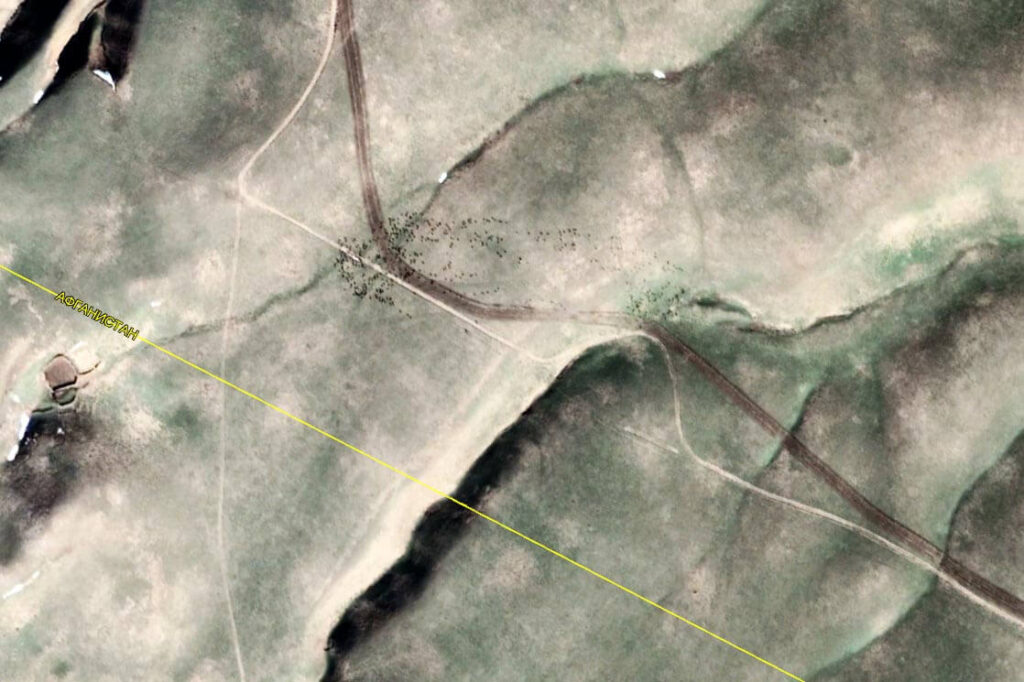
A recent surge in border fighting between Pakistan and Afghanistan is a reminder that Central Asian prospects for developing trade and energy networks through both those countries rest on fragile hopes for long-term security in the region.  Some of the worst clashes since the Taliban took power again in Afghanistan in 2021 appeared to have tapered off by Sunday. While both sides have professed their openness to dialogue, there was little sign of a sustained move to address grievances that have simmered for many years.  On Sunday, Pakistan accused Afghanistan of “unwarranted aggression” and said it had repulsed attacks by the Afghan Taliban and other armed groups at the border, inflicting heavy losses. On Saturday night, Afghanistan’s Ministry of National Defense said its military had conducted a “successful retaliatory operation” against Pakistani security forces following Pakistani ground incursions and airstrikes on Afghan soil.  The conflicting claims were difficult to verify. But the Afghan ministry said its military operation had ended, signaling that it did not intend to prolong this round of fighting. Pakistan, which closed border crossings, said it wanted good relations with its neighbor. The clashes come as Central Asian countries seek to diversify trade routes, looking to Afghanistan as a path to ferry goods to Pakistani seaports and onward to the Indian Ocean. Such a route offers an alternative to more traditional corridors that were disrupted after Russia’s full-scale invasion of Ukraine in early 2022.  But projects such as the Trans-Afghan railway, which is awaiting a feasibility study, depend on a stable political environment in a part of the world that is also prone to conflict. The TAPI natural gas pipeline project, which would connect Turkmenistan, Afghanistan, Pakistan, and India, is also vulnerable to regional instability.  Afghan Foreign Minister Amir Khan Muttaqi visited Pakistan’s chief rival, India, on October 9, just before the weekend escalation of border clashes.

Russia Seeks to Reassert Role at Central Asia Summit, but Kazakhstan and Uzbekistan Push Their Own Agendas

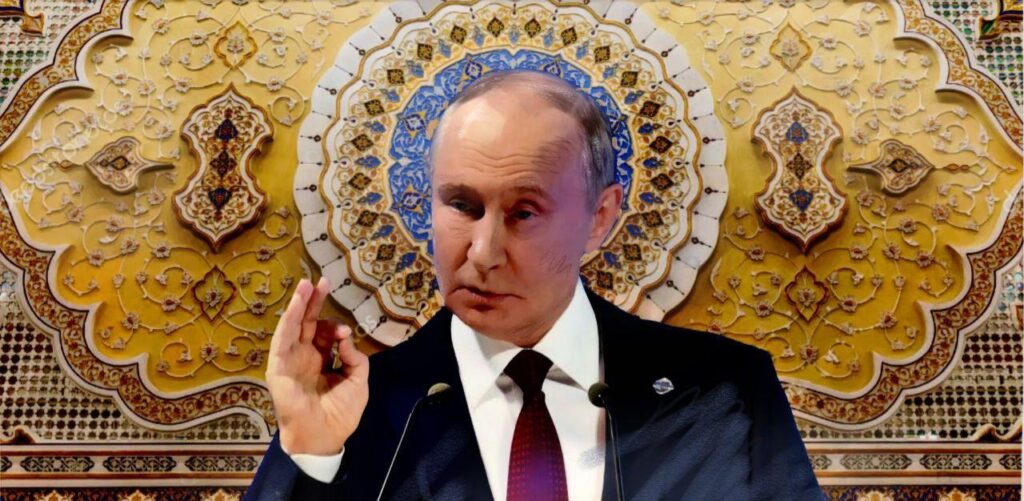
The second Central Asia-Russia summit, held ahead of the Commonwealth of Independent States (CIS) leaders’ meeting, reaffirmed the Kremlin’s continued intent to assert influence over the region. Russian President Vladimir Putin used the platform not only to signal discontent with the pace of economic integration but also to critique the Central Asian republics for what he portrayed as insufficient engagement in bilateral trade. Despite growing ties between Central Asian states and external partners, exemplified by the “C5+1” dialogue format that includes major powers such as the U.S. and China, Putin made clear that Russia does not view its influence in the region as diminished. Opening the summit, Putin took a veiled swipe at the “C5+1” initiative, which has gained traction in recent years. “I am in constant contact with each of the Central Asian presidents,” he said, before adding, “But I am sure that this multilateral format of communication is also very useful and has its obvious ‘added value’, so to speak.” By “added value,” the Russian leader appeared to suggest that multilateral engagement enables Central Asian states to present a more unified front in foreign negotiations, an approach that complicates Moscow’s ability to exert influence through bilateral channels. Putin also expressed dissatisfaction with the current levels of mutual trade and Russian investment in the region. While acknowledging that trade between Russia and Central Asia had surpassed $45 billion, he pointedly compared this figure to trade with Belarus, which exceeds $50 billion despite its far smaller population. “Our trade turnover with Belarus exceeds $50 billion. Let me remind you that Belarus has a population of 10 million. Uzbekistan already has nearly 40 million, Tajikistan over 10 million, and Kazakhstan more than 20 million. Can you imagine what a colossal resource this is?” Putin said. “This means there are strong prospects for expanding our economic relations.” Putin described Russia’s current $20 billion in regional investments as inadequate and called for increased engagement, but also tempered expectations surrounding major infrastructure and logistics projects championed by Astana and Tashkent, while positioning Russia as a central player in their development. He proposed integrating existing North-South and East-West corridors into a unified Eurasian logistics network supported by digital and transport services. “This will allow us to significantly increase international transport volumes through our common region,” Putin said. Kazakh President Kassym-Jomart Tokayev responded directly, updating figures presented by Putin and reaffirming Kazakhstan’s commitment to regional integration. He noted that Russia’s total trade with Central Asia exceeded $50 billion in 2024, with $28 billion in trade between Russia and Kazakhstan alone. Tokayev emphasized the strategic importance of transport cooperation with Russia, stating that “Russia is a key gateway for the region’s countries to global markets. Therefore, cooperation in the transport and logistics sector is a matter of heightened strategic importance.” [caption id="attachment_37343" align="aligncenter" width="1600"] Image: Akorda.kz[/caption] Tokayev outlined Kazakhstan’s existing transport infrastructure, eleven international corridors, including five rail and six road routes, that carry about 85% of land freight between Asia and Europe. Over 15 years, Kazakhstan has...

Kazakhstan Labor Migration Report Shows Most Citizens Working in Russia

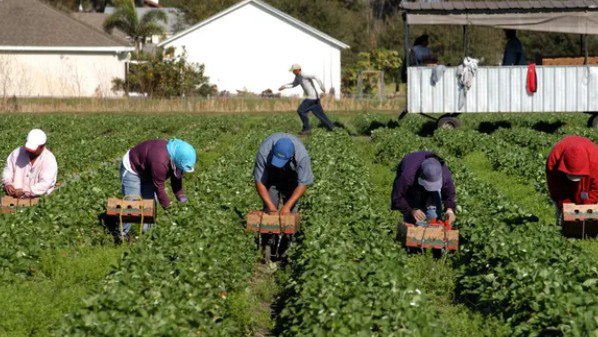
The Ministry of Labor and Social Protection has released updated data on the number of Kazakh citizens working abroad. According to the ministry, 126,000 citizens are currently employed outside the country, which has a population of more than 20 million. The vast majority, over 80%, have found work in neighboring Russia. The figures were shared by First Deputy Minister of Labor and Social Protection Askarbek Yertayev during a briefing with journalists on the sidelines of a Senate meeting. Of the 126,000 citizens working abroad, 102,000 are employed in Russia, 15,000 in South Korea, and approximately 2,000 in the United Kingdom and European Union member states. Yertayev noted that Kazakhstan has yet to finalize bilateral labor agreements with all countries where its citizens are working. “In particular, an agreement with South Korea is still under discussion, we have been negotiating for two years. Talks were paused due to the domestic political situation there,” Yertayev said, referring to the ongoing standoff between South Korean President Yoon Suk Yeol and the country’s parliament. “Negotiations resumed this fall, and we plan to continue them, as 11,000 of the 15,000 Kazakh citizens in South Korea are working illegally. Measures must be taken, but the Korean side has several conditions, including that Kazakhstan address the issue of its undocumented migrants,” he added. Seoul has requested a “road map” from Kazakhstan to address the problem of illegal labor migration. The document is expected to include mechanisms to prevent undocumented employment. Yertayev expressed confidence that an agreement would be reached before the end of the year. He noted that legal employment in South Korea would allow Kazakh workers to access higher wages and social protections, including healthcare and insurance. “Currently, our citizens in South Korea who are working illegally cannot even send their earnings back home: banks refuse to process the transfers, forcing them to rely on informal channels, which often leads to fraud,” the deputy minister said. As previously reported by The Times of Central Asia, Kazakh authorities have also intensified domestic efforts to formalize the labor market by cracking down on employers who pay “gray” wages, off-the-books income that evades taxes and social contributions.

From Belt and Road to Backlash: Edward Lemon and Bradley Jardine Discuss China in Central Asia

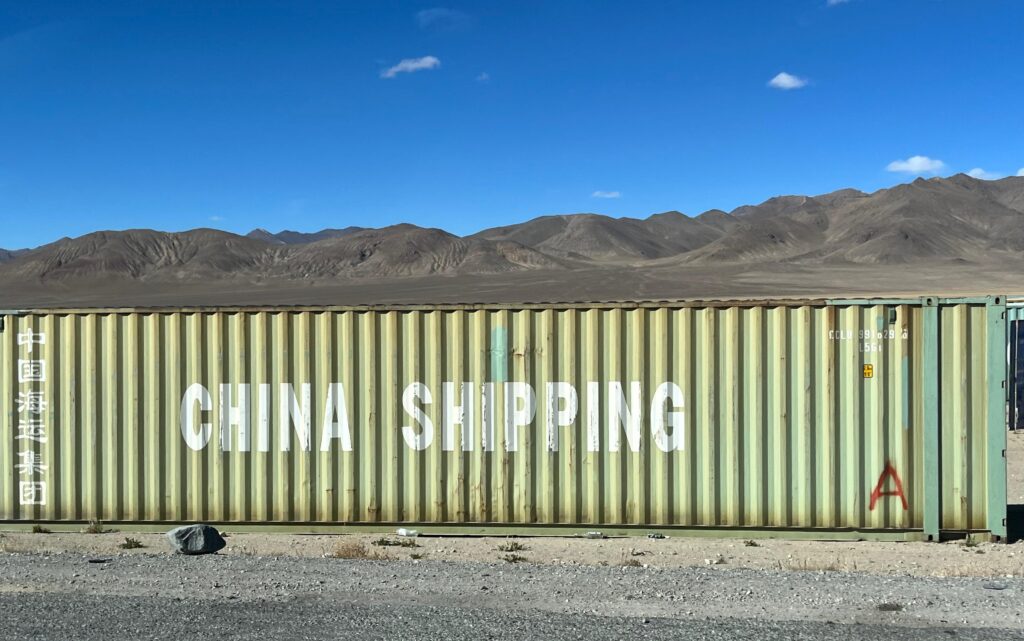
As China invests billions in Central Asian oilfields, railways, and cities, the region’s response is anything but passive. In Backlash: China’s Struggle for Influence in Central Asia, Bradley Jardine and Edward Lemon document how Central Asians – from government halls to village streets – are responding to Beijing’s expanding footprint. The book provides a nuanced look at China’s engagement in Kazakhstan, Kyrgyzstan, Tajikistan, Turkmenistan, and Uzbekistan over the three decades since these nations gained independence. Drawing on more than a decade of fieldwork, Jardine and Lemon ask a timely question: can Beijing maintain its growing influence in an environment where local voices and interests are increasingly assertive? The Times of Central Asia spoke with the authors. TCA: Central Asia has become an increasingly strategic crossroads, rich in resources, young in demographics, and positioned between major powers. Yet China’s engagement appears far more ambitious than that of Western or regional players. In your view, what accounts for this asymmetry? Is it primarily a matter of geography and financial capacity, or has China been more politically and diplomatically attuned to Central Asia’s priorities than others? J/L: China’s dominance in Central Asia stems from both geography and political attunement. As we note in Backlash, Beijing views the region as an extension of its own security frontier, as both a buffer protecting Xinjiang and a potential source of terrorism. It has built deep ties through consistent, elite-level engagement since the 1990s. Its approach blends vast financial capacity with political instincts that resonate with local elites: prioritizing sovereignty, stability, and non-interference rather than the governance conditionalities that often accompany Western aid and investment. Through the Belt and Road Initiative, which was launched in the region in 2013, the Shanghai Cooperation Organization, which was established in 2001 with four Central Asian republics as founding members, and newer platforms like the China-Central Asia (C+C5) summit, China offers infrastructure, energy investment, and regime security in ways tailored to the needs of authoritarian partners. Unlike the episodic or values-driven engagement of Western actors, and with Russia’s attention increasingly divided, China’s steady, pragmatic diplomacy, backed by proximity and resources, has allowed it to entrench itself as the region’s indispensable power. TCA: China’s expanding presence across trade, infrastructure, and finance has reshaped Central Asia’s economic landscape. To what extent do these investments remain primarily commercial, and when do they start to carry political or strategic implications? How do local governments manage the risks of dependency or debt while pursuing development gains? J/L: China’s expanding economic footprint in Central Asia may be driven by trade and infrastructure, but the lines between commerce and strategy have become increasingly blurred. As we note in Backlash, Beijing’s investments, roads, pipelines, railways, and energy grids are rarely purely commercial. They create structural dependencies that bind Central Asian economies to China’s markets, finance, and technology. By 2020, roughly 45% of Kyrgyzstan’s external debt and more than half of Tajikistan’s were owed to China, while around 75% of Turkmenistan’s exports flowed to Chinese buyers. These imbalances give Beijing...

Putin Admits Russian Missile Shrapnel Hit Azerbaijani Airliner

Russian President Vladimir Putin said on Thursday that Russian missile fire had damaged an Azerbaijani airliner that crashed in Kazakhstan on Dec. 25, 2024, offering new details about an incident that fueled tension between Moscow and Baku this year. Putin spoke about the crash, which killed 38 of the 67 people on board, in a meeting with Azerbaijani President Ilham Aliyev on the sidelines of a regional summit in Dushanbe, Tajikistan. The Russian leader’s comments represented an effort to repair relations with Azerbaijan, which had harshly criticized what it described as Russian efforts to avoid responsibility for the disaster. Kazakhstan is leading an investigation of the crash, which occurred near the city of Aktau after the Azerbaijan Airlines plane was struck while trying to land in Grozny, Chechnya, and then diverted across the Caspian Sea. Details about the extent of Russia’s collaboration with the probe led by Kazakhstan have not been publicly announced. But Putin, who previously made a general apology without taking full responsibility, said Russia is providing “every possible assistance” to the investigation as it nears a conclusion. "The first thing is that there was a Ukrainian drone in the sky. We were tracking three such drones, which crossed the Russian Federation border at night," Putin said, according to RIA Novosti, a Russian state-owned news agency. He also said there was a technical failure in the air defense system. "The two missiles that were fired did not directly hit the aircraft (if that had happened, it would have crashed on the spot), but exploded - perhaps self-destructing - a few meters away, somewhere around ten meters,” RIA Novosti quoted Putin as saying. “And so, the hit occurred, but not primarily from the warheads, but most likely from debris from the missiles themselves. That's why the pilot perceived it as a collision with a flock of birds, which he reported to Russian air traffic controllers, and all of this is recorded in the so-called ‘black boxes.’" Some security analysts have said the missiles may have been designed to explode near targets and spray them with shrapnel, a theory that would raise questions about Putin’s account of a technical failure. Putin said compensation and other matters related to the crash will be done, but it will "require some time." AZERTAC, Azerbaijan’s state news agency, carried a similar account of Putin’s comments, which were welcomed by Aliyev. “You are personally overseeing the course of the investigation, and we had no doubt that it would thoroughly and objectively determine all the circumstances,” Aliyev said, according to AZERTAC. “Therefore, I would like once again to express my gratitude that you deemed it important to address this issue during our meeting.” Even so, questions remain about whether Azerbaijan will secure everything it has asked for in connection with the crash. While Russia says insurance payments have been made to crash survivors, victims’ relatives, and Azerbaijan Airlines, there is no word on whether those believed to have fired on the aircraft will face judgment. At...