• KZT/USD = 0.00215
  • TJS/USD = 0.10810
  • UZS/USD = 0.00009
  • TMT/USD = 0.29760
  • KZT/USD = 0.00215
  • TJS/USD = 0.10810
  • UZS/USD = 0.00009
  • TMT/USD = 0.29760
  • KZT/USD = 0.00215
  • TJS/USD = 0.10810
  • UZS/USD = 0.00009
  • TMT/USD = 0.29760
  • KZT/USD = 0.00215
  • TJS/USD = 0.10810
  • UZS/USD = 0.00009
  • TMT/USD = 0.29760
  • KZT/USD = 0.00215
  • TJS/USD = 0.10810
  • UZS/USD = 0.00009
  • TMT/USD = 0.29760
  • KZT/USD = 0.00215
  • TJS/USD = 0.10810
  • UZS/USD = 0.00009
  • TMT/USD = 0.29760
  • KZT/USD = 0.00215
  • TJS/USD = 0.10810
  • UZS/USD = 0.00009
  • TMT/USD = 0.29760
  • KZT/USD = 0.00215
  • TJS/USD = 0.10810
  • UZS/USD = 0.00009
  • TMT/USD = 0.29760
29 August 2026

Viewing results 37 - 42 of 1139

Huizenga Warns Kyiv Further Strikes on CPC “Will Not Be Tolerated”

The House Foreign Affairs subcommittee chair invoked nearly $200 billion in U.S. support as attacks around Kazakhstan’s principal oil-export route forced production cuts and sharpened questions about Europe’s response. Representative Bill Huizenga has warned that further strikes affecting the Caspian Pipeline Consortium terminal will not be tolerated, explicitly linking Ukraine’s obligation to protect legitimate allied energy exports with the scale of American support for Kyiv. Huizenga, a Michigan Republican who chairs the House Foreign Affairs Subcommittee on South and Central Asia, was asked by The Times of Central Asia what immediate diplomatic steps the administration should take to safeguard Kazakhstan’s principal oil-export route and civilian vessels carrying its crude. He responded: “The Administration must be clear with the Ukrainians: Targeting the CPC Terminal poses a risk not only to civilians, but also to US interests. Ukraine has an obligation to steer clear of any legitimate allied energy exports and infrastructure that contributes to global energy security and economic stability. The generosity of the American people, nearly $200 billion in direct support to the Government of Ukraine, is not charity. Further strikes will not be tolerated.” Huizenga was warning that U.S. support for Ukraine is not unconditional. By linking American aid to Ukraine’s duty to avoid striking allied energy infrastructure, he signaled that further attacks on vital facilities like the CPC terminal could put that support at risk. American support, as Huizenga framed it, comes with obligations. A government receiving aid on this scale cannot repeatedly disregard safeguards protecting U.S. interests, allied energy exports, and civilian shipping without jeopardizing that support. The U.S. Ukraine Oversight tracker currently lists total appropriations for Operation Atlantic Resolve and broader Ukraine assistance at $195 billion — a figure that includes military replenishment and other U.S. costs beyond direct transfers to Kyiv. Washington Had Already Drawn the Boundary Huizenga’s intervention follows two earlier warnings from the administration. In February, Ukraine’s ambassador to the United States, Olha Stefanishyna, acknowledged that the State Department had delivered a formal démarche after a Ukrainian attack on Novorossiysk affected American and Kazakh economic interests. Stefanishyna said the communication was directed at the harm caused to those interests rather than Ukraine’s campaign against Russian military and energy infrastructure more broadly. Ukraine, she said, had taken note of the message. The same distinction emerged again on July 21. The Wall Street Journal reported that the Trump administration had urged Kyiv to curb attacks on non-Russian vessels following four strikes in four days on tankers serving the CPC terminal. The warning drew a boundary around foreign commercial shipping and third-country trade without calling on Ukraine to abandon its broader campaign against Russian targets. Huizenga has now carried that position further. The State Department communicated the boundary privately in February, and the White House reiterated it in July. By invoking the scale of American assistance and warning that further strikes would not be tolerated, Huizenga made clear that continued violations could place U.S. support at risk. The latest disruption also continued after the White House...

CPC Reportedly Stops Accepting Kazakh Oil as Storage Tanks Reach Capacity After Tanker Attacks

Citing three industry sources, on July 21 Reuters said the Caspian Pipeline Consortium had stopped accepting crude from Kazakhstan after tanker attacks halted Black Sea loadings. Two of the sources said the terminal's storage tanks were full. CPC has so far declined to comment. The stoppage marks a sharper disruption than the loading suspension announced on July 20. LSEG ship-tracking data showed that at least two tankers due to collect crude changed direction. Chevron owns 15% of CPC, while ExxonMobil is also a shareholder through Mobil Caspian Pipeline Company. Chevron told Reuters that "Chevron continues to monitor the situation at CPC. The safety and security of personnel remain our top priority." ASIA was one of the tankers struck before loadings were suspended. It was hit on July 19 while loading Tengizchevroil crude at the CPC terminal. Following the attack on ASIA, a Chevron spokesperson told The Times of Central Asia: “Chevron is aware of reports of an incident involving a vessel loading at Caspian Pipeline Consortium facilities near Novorossiysk. All crew are safe, and the vessel remains stable. The vessel has been moved to a safe anchorage, and we are coordinating with the ship operator and relevant authorities. There has been no impact to TCO operations or exports. Further questions regarding CPC operations should be directed to CPC.” As of early July 22, no producer had announced new output cuts in response to the CPC halt. The intake stoppage nevertheless removes the main export outlet for crude from Tengiz, Kashagan, and Karachaganak. The 1,510-kilometer pipeline carries oil from western Kazakhstan to the terminal near Novorossiysk. Terminal tanks normally buffer crude flows before tankers load offshore, but once they are full, the system has little room to receive additional oil. A prolonged shutdown could force producers to reduce output. Kazakhstan has not confirmed such reductions. CPC oil supplies fell 7% from May to 1.699 million barrels a day in June. Reuters linked the fall to a late-May accident at Tengiz and lower Russian volumes. The route handles about 80% of Kazakhstan's oil exports and almost 2% of global oil supply. The latest halt followed attacks on four tankers over four days. Nordic Zenith was hit on July 17 while approaching the terminal empty. ASIA and NISSOS IOS were struck on July 19 while loading Kazakh crude. NISSOS IOS was loading crude from Kashagan B.V. and Maten. Loadings briefly resumed that evening. A drone then struck NELSA at SPM-1 on July 20. A fire broke out on deck and in several compartments. CPC evacuated 20 of the ship's 22 crew members by tugboat, while the captain and chief officer remained aboard. The tanker stayed afloat; no casualties or oil spill were recorded, and the crude in its cargo tanks did not ignite. The NELSA was carrying Russian Urals crude, according to S&P Global shipping data. CPC then suspended oil loading. Kazakhstan's Energy Ministry said it remained in contact with the consortium while specialists assessed the vessel and the consequences of the strike....

Ukraine Says No Evidence of Role in Attacks on Tankers Loading Kazakh Oil: Statement in Full

The Times of Central Asia has reported on drone attacks against tankers serving the Caspian Pipeline Consortium’s Black Sea terminal, including vessels loading Kazakh crude. Kazakhstan condemned the attacks on July 17 and 19 and called for an immediate halt. A fourth tanker, NELSA, was struck while loading on July 20. TCA asked Victor Mayko, Ukraine’s ambassador to Kazakhstan, to respond. His statement is published below in full. “Ukraine understands the concerns of the Kazakhstani side regarding the incidents that occurred on July 17 and 19 involving tankers loading Kazakhstani oil through the Caspian Pipeline Consortium’s marine terminals in the waters of the Port of Novorossiysk. Let me put it this way—we understand and share these concerns. “At the same time, I am convinced that any conclusions must be based solely on verified facts. As of today, there is no evidence whatsoever that the attacks in question were carried out by the Ukrainian side. Therefore, I ask that you refrain from making hasty and unfounded accusations, whether direct or indirect, against Ukraine. “I would like to point out that the relevant Ukrainian authorities very recently warned of the possibility of Russian provocations, including those involving the use of Ukrainian drones. We have informed our international partners that Russia is actively employing various tactics: Russian electronic warfare systems are capable of disrupting the operation of Ukrainian drones, disabling them, and, in some cases, taking control of them. “That is precisely why the possibility that the Russian side may be using such drones to carry out provocations and attempts to discredit Ukraine must be thoroughly investigated. “War always brings immeasurable suffering and grief to millions of people. But even in the midst of this immense tragedy, there are certain rules recognized by international law, and violations of these rules constitute war crimes. It is forbidden to kill civilians. It is forbidden to torture children, women, and the elderly. It is forbidden to destroy civilian infrastructure in the middle of winter, leaving millions of people without heat, water, electricity, or even shelter. It is forbidden to deliberately kill rescue workers and medical personnel who are rushing to the scene of the tragedy to help the victims. It is forbidden to shoot at ambulances transporting the seriously wounded. The use of chemical weapons, including against the civilian population, is prohibited. It is unacceptable to attack civilian ships carrying Ukrainian grain bound for countries in Southeast Asia and Africa, thereby condemning millions of people to starvation. I could go on with this tragic list. Everything listed here constitutes war crimes. And those responsible for them must inevitably be punished. “Our principled position, even against this backdrop, remains unchanged. The Armed Forces of Ukraine do not strike civilian targets, including those located on the territory of the Russian Federation. Legitimate military targets are exclusively military facilities and infrastructure that support the Russian war machine, which for more than four years now has been waging an armed, unprovoked aggression of unprecedented severity against Ukraine, its army, its...

When the War Reaches Kazakh Oil

Russia’s full-scale invasion of Ukraine unleashed the war now expanding across the Black Sea, but it did not erase the distinction between Russian military logistics and the lawful commerce of other states. Kazakhstan is not a party to the war, yet its principal oil export route passes through an expanding maritime target zone. The attacks near the Caspian Pipeline Consortium terminal therefore raise a larger question: can civilian trade carrying Kazakh crude be treated as part of Russia’s war economy simply because geography places its outlet on the Russian coast? Four vessels were attacked near CPC’s Black Sea terminal on July 17, 19, and 20. Nordic Zenith, chartered by ExxonMobil according to Reuters, was empty and approaching the terminal when it was hit on July 17. Two days later, ASIA and NISSOS IOS were struck at single-point moorings off Novorossiysk while loading Kazakhstan-produced oil. ASIA was taking Tengizchevroil (TCO) crude; NISSOS IOS was loading oil from Kashagan B.V. and Maten. A fire on ASIA was extinguished; no one was injured, both vessels remained afloat, and no oil entered the sea. Chevron told The Times of Central Asia that the crew was safe, the vessel was stable, and there had been “no impact to TCO operations or exports.” Loading briefly resumed that evening, but on July 20 a drone struck NELSA while it was loading at SPM-1. The impact on the tanker’s starboard side caused a fire on deck and in several compartments. Its 22-member international crew was evacuated except for the captain and chief officer; the vessel remained afloat, the fire was extinguished, and no oil spill occurred. CPC suspended loadings again. Ukraine’s General Staff said separately that its forces had struck two tankers used to transport Russian oil, petroleum products, and fuel for the Russian military in the Black Sea. It did not identify the vessels or connect the claim to the attacks at the CPC terminal. Russia’s Foreign Ministry blamed Kyiv, while CPC itself did not publicly attribute the attacks. Astana’s response to the attacks has remained measured and legalistic. The Foreign Ministry called the attacks an infringement on Kazakhstan’s economic interests and a threat to lawful international trade. It said an agreed mechanism for sharing information on civilian vessels entering the Black Sea to load CPC oil had been disregarded, endangering crews. It reserved Kazakhstan’s right to seek compensation under international law. Following the strike on NELSA, the Energy Ministry said it remained in constant contact with CPC while the tanker’s technical condition and the consequences of the attack were assessed. The statements focused on Kazakhstan’s rights. That is the distinction Astana is asserting: Kazakh cargoes, revenues, crews, and commercial partners should not be treated as extensions of Russia’s war economy merely because they use a terminal on Russian territory. Kazakh Crude and the Western Stake Russia’s invasion created the maritime battlefield in which these incidents occurred, and Ukraine has a legitimate interest in weakening the military logistics that sustain Russia’s campaign. But Kazakhstan is not Russia,...

Kazakhstan Condemns Drone Attacks as CPC Oil Loadings Halt

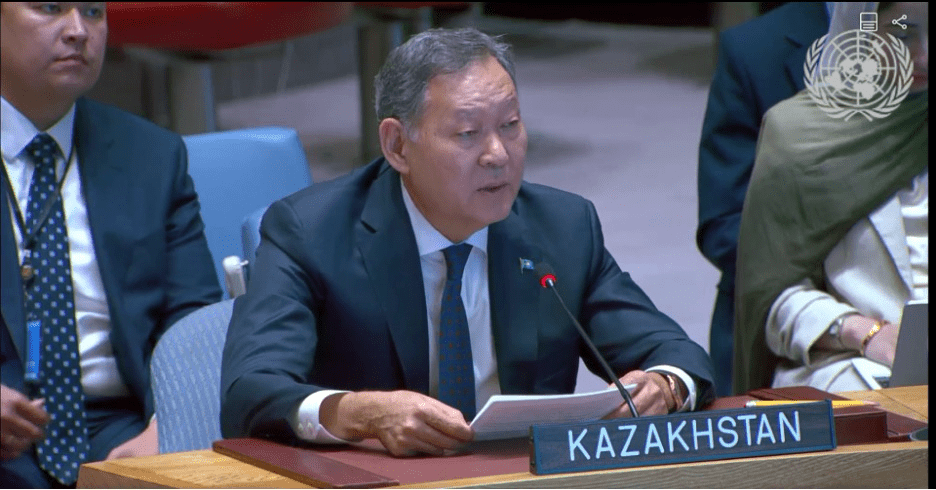
Oil loadings at the Caspian Pipeline Consortium’s Black Sea terminal have been suspended again after a fourth tanker was struck by a drone on July 20. The NELSA was loading at single-point mooring SPM-1 when the drone hit the stern on its starboard side, between the superstructure and engine compartment. A fire broke out on the deck and inside the vessel but was extinguished after several hours. CPC said 22 crew members were evacuated aboard its tugboats, while the captain and chief officer remained on the tanker. NELSA stayed afloat. No oil spill occurred, and the crude in its cargo tanks did not ignite. Loading had resumed briefly on the evening of July 19 before the latest attack forced another suspension. Kazakhstan had previously condemned drone attacks on three tankers near the Caspian Pipeline Consortium’s Black Sea terminal on July 17 and 19, two of which were hit while loading Kazakh oil. The Liberia-flagged ASIA and the Marshall Islands-flagged NISSOS IOS were attacked at single-point moorings SPM-1 and SPM-3 near Novorossiysk. ASIA was loading Tengizchevroil crude. The Marshall Islands-flagged NISSOS IOS was loading oil from Kashagan B.V. and Maten. A fire broke out on ASIA and was extinguished with CPC emergency support. No crew members, CPC employees, or contractors were injured. Both tankers remained afloat, no oil entered the sea, and the moorings were not damaged. Loading was suspended while specialists assessed the damage. Following the attack on ASIA, a spokesperson for Chevron, whose Tengizchevroil crude was being loaded onto the vessel, told TCA: “Chevron is aware of reports of an incident involving a vessel loading at Caspian Pipeline Consortium (CPC) facilities near Novorossiysk. All crew are safe, and the vessel remains stable. The vessel has been moved to a safe anchorage, and we are coordinating with the ship operator and relevant authorities. There has been no impact to TCO operations or exports. Further questions regarding CPC operations should be directed to CPC.” The Kazakh Foreign Ministry described the strikes as an unacceptable infringement on Kazakhstan’s economic interests and a deliberate attempt to disrupt lawful international trade. “Kazakhstan demands an immediate halt to these attacks,” the ministry stated. The ministry said an agreed system for sharing information on civilian vessels entering the Black Sea to load CPC oil had been deliberately ignored. It said the failure endangered crews, called for practical security measures, and reserved Kazakhstan’s right to seek full compensation under international law. Ukraine’s General Staff said its forces struck two tankers in the Black Sea overnight on July 19. It said the vessels were used to transport Russian oil, petroleum products, and fuel for Russia’s armed forces. The post did not name the tankers. CPC said both ships at its terminal were loading oil produced in Kazakhstan and did not publicly identify the attacker. The July 19 incident followed an attack on Nordic Zenith on July 17. The Suezmax tanker was empty and approaching the terminal when two drones hit it. The crew extinguished a fire. Nearby CPC...

Tokayev Offers Astana to Host New Global AI Body’s First Meeting

President Kassym-Jomart Tokayev put Astana forward at the opening of the World Artificial Intelligence Conference in Shanghai on July 17, saying that Kazakhstan is ready to host the first meeting of a new global AI organization. He also proposed placing the organization’s Central Asian office in Kazakhstan. Together, the offers set out Tokayev’s wider aim: Kazakhstan wants a role in writing AI rules as well as building the technology at home. Twenty-nine countries signed the agreement establishing the World AI Cooperation Organization on July 16. The founding states included Kazakhstan, Kyrgyzstan, Tajikistan and Uzbekistan, while Turkmenistan did not sign. China first proposed the Shanghai-based intergovernmental body at last year’s conference. Tokayev called the creation of the organization a historic decision and said it could underpin a universal framework for AI governance. “No country should remain merely a consumer of AI,” he said. “Every state must have the opportunity to develop its own human capital, digital infrastructure, and institutional capacity. Here too, the issue is fairness and integrity.” Tokayev also endorsed the conference’s guiding principle, “AI for good, AI for all,” arguing that technological progress should benefit people broadly rather than deepen inequalities within and between countries. His offer to host the new organization’s first meeting in Astana and to establish its Central Asian office in Kazakhstan were aimed at giving the country a role in shaping that agenda. [caption id="attachment_52389" align="aligncenter" width="2560"] Image: Akorda[/caption] Astana Bids for a Role in the New AI Body Tokayev’s proposals went beyond hosting a ceremonial gathering. He called for a permanent expert platform on AI regulation, standards and ethics. He also proposed an international network of schools, centers of excellence and academic partnerships. The Kazakh president urged members to develop common standards for testing and certifying AI systems. He said safeguards should address malicious uses, including cyberthreats, deepfakes and digital fraud. AI should remain under human control, he said. Tokayev placed those proposals within his wider diplomatic agenda. He argued that AI could help spot crises earlier and improve humanitarian work and peacekeeping. He said governments spend too much effort dealing with conflicts after they begin and too little preventing them. The new organization adds another layer to Kazakhstan’s technology policy. Citing a person familiar with the U.S. position, Reuters reported that Kazakhstan is the only country listed in both the 29-member body and Washington’s AI Opportunity Statement. Kazakhstan had already joined the U.S.-backed Pax Silica framework on June 25, which covers chips, critical minerals, energy and secure AI supply chains. That overlap carries Kazakhstan’s long-standing multi-vector diplomacy into AI policy. Astana is deepening ties with China while expanding ties to U.S.-linked technology and supply chains. Tokayev’s speech showed that Kazakhstan also wants a voice in the institutions shaping global AI rules. A Digital Bridge With China In Shanghai, Tokayev also proposed a “Kazakhstan-China Digital Bridge.” He said the project should promote digital trade and provide a working model for connecting digital economies through the Belt and Road Initiative. He asked China to support...