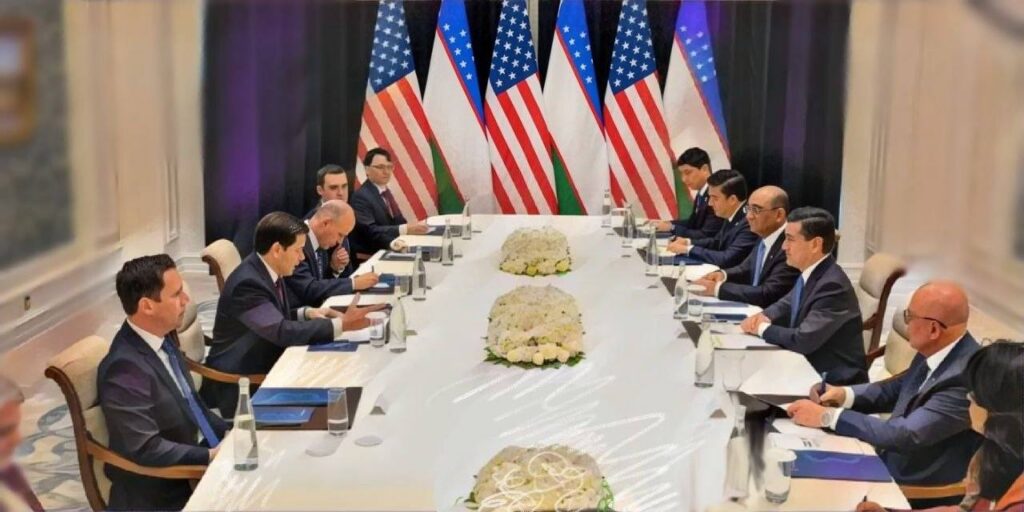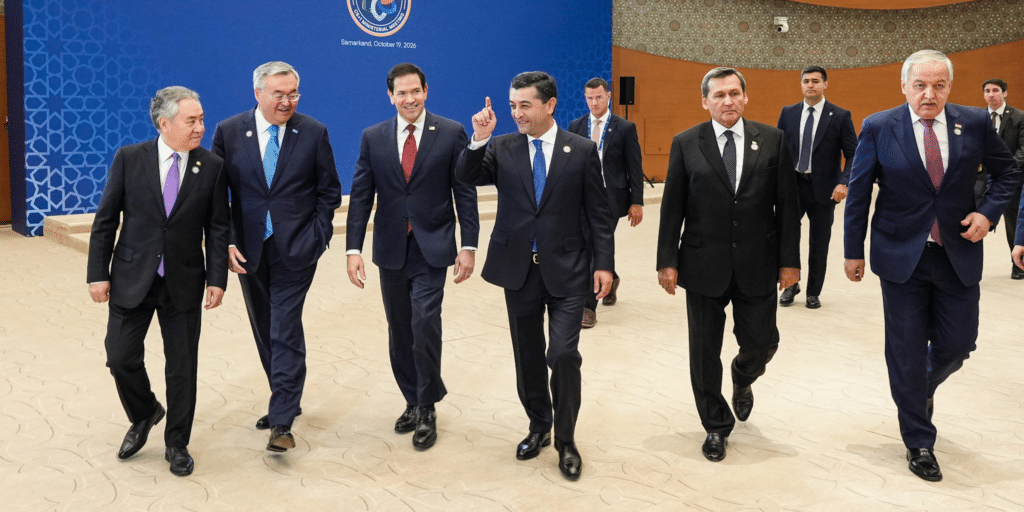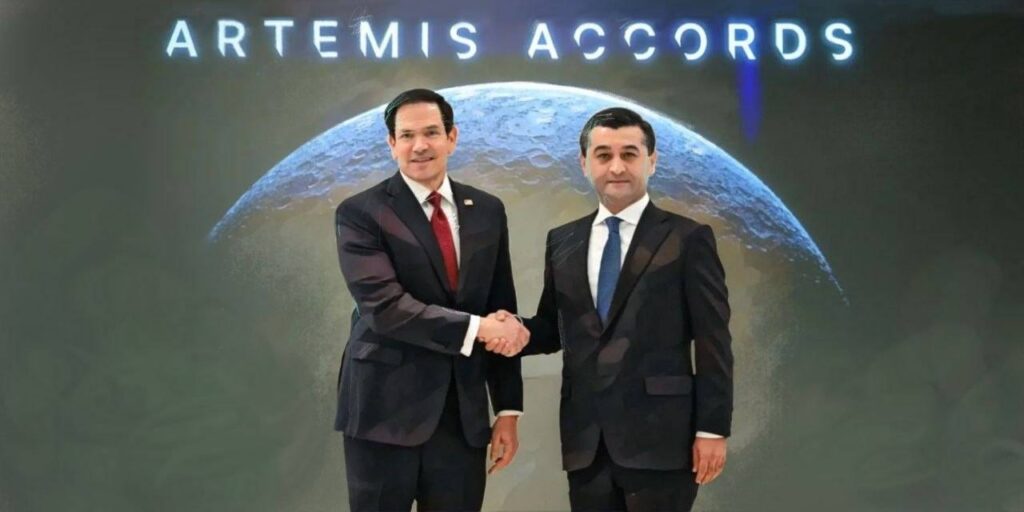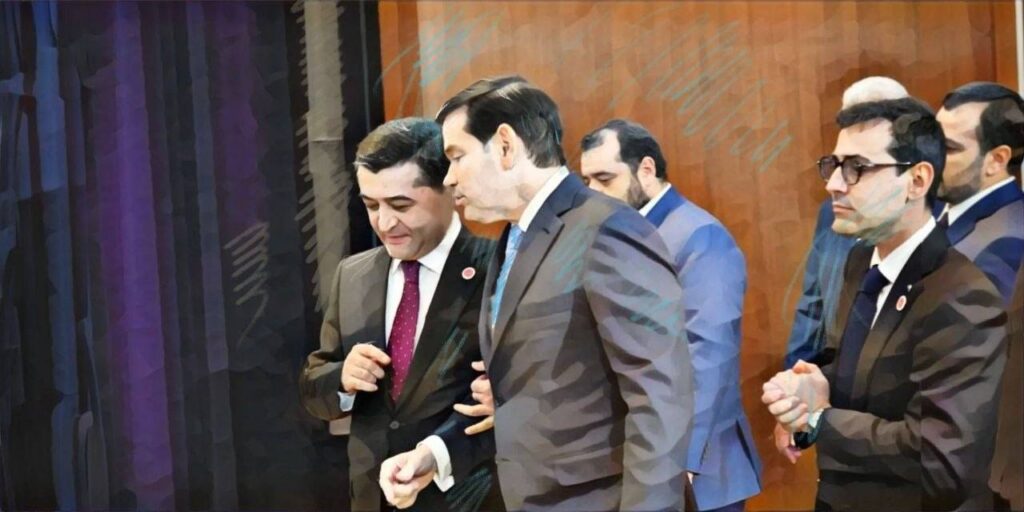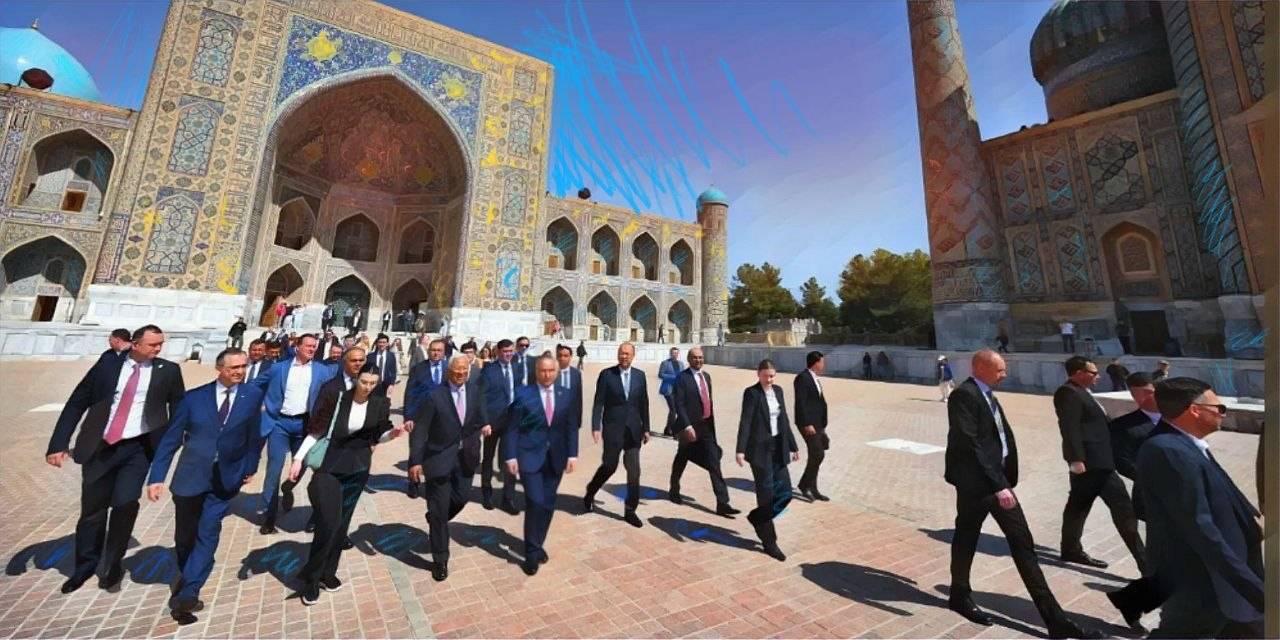
In mid-October, C5+1 will meet again in Samarkand, where its first ministerial was held in November 2015. The regional actor it was created to engage has, however, changed substantially. Secretary of State Marco Rubio is expected to arrive with representatives of more than 100 American companies for talks focused on regional economic connectivity, energy security, trade, private investment, and economic modernization.
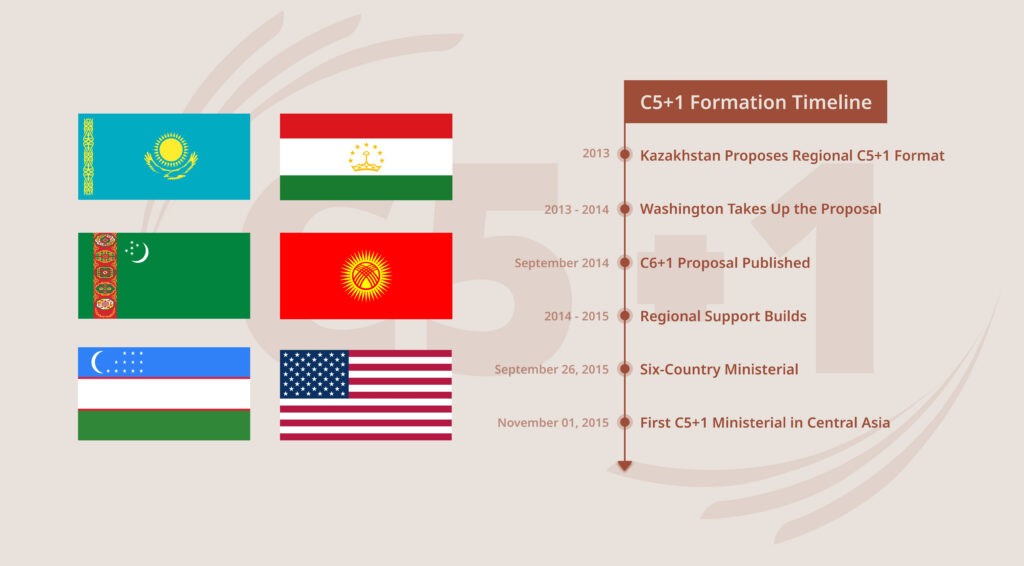
John Kerry convened the first C5+1 ministerial in Samarkand on November 1, 2015, after the six governments had met in New York that September and agreed to regular consultations. The initial agenda already treated security, economic connectivity, and environmental problems as fields where regional approaches could add value. The question is what purposes C5+1 serves now.
C5+1 itself began with a Kazakhstani initiative. As S. Frederick Starr recently reconstructed the history, Ambassador Kairat Umarov, after consulting Astana, proposed in 2013 that Washington create a regular mechanism for engaging Central Asia collectively rather than only through five bilateral relationships. The State Department subsequently developed the proposal, and the format took institutional shape in 2015. That origin rules out any account in which regional agency appears only later. Kazakhstan helped create the mechanism through which Washington would engage the region collectively; the five states’ own capacity for regional coordination deepened substantially thereafter.
The second ministerial in Washington in 2016 launched joint projects in economic connectivity, renewable energy, climate resilience, and security, while explicitly recognizing the value of regional approaches. A secretariat was established in 2022; the format reached presidential level for the first time in New York a year later. That summit also produced plans for a private-sector business platform and a Critical Minerals Dialogue, which held its inaugural meeting in February 2024. Its basic structure has remained the same: the United States engages the five Central Asian states collectively.
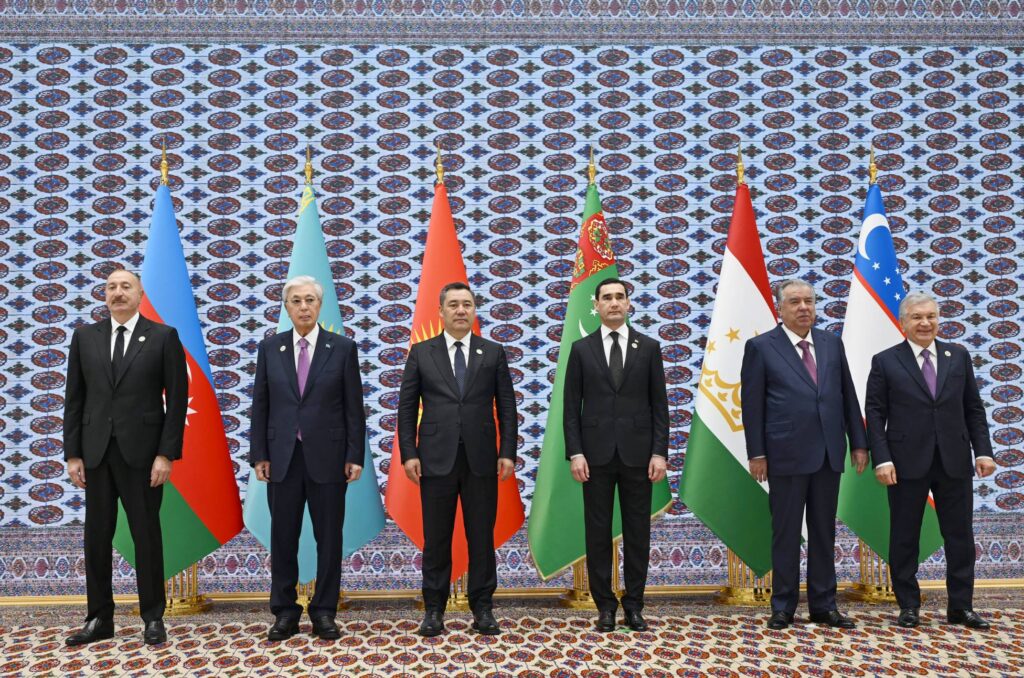
Alongside C5+1, the five developed their own regional process, independent of any outside partner. President Shavkat Mirziyoyev proposed regular consultations among the Central Asian leaders in 2017, and their first Consultative Meeting took place in Astana in March 2018. Further meetings followed in Tashkent in 2019 and Turkmenistan in 2021 before the process moved to Cholpon-Ata in 2022. Subsequent meetings extended the process into trade, transport, energy, water, security, and cultural cooperation. The process remained intergovernmental and did not require policy uniformity among the five states. It gave them a recurring political process of their own.
By 2022, the process had expanded from consultation among the five to coordination in dealing with outside partners. At the fourth Consultative Meeting in Cholpon-Ata, the leaders adopted a regional cooperation roadmap for 2022–2024, a Green Agenda, and a Concept of Interaction of the Central Asian States in Multilateral Formats. A treaty on friendship, good-neighborliness, and cooperation for the development of Central Asia in the twenty-first century was also opened for signature. President Kassym-Jomart Tokayev had proposed regular foreign-minister consultations to develop coordinated approaches to regional and international issues. He specifically connected the multilateral-formats concept to cooperation with non-regional strategic partners. The Concept of Interaction in Multilateral Formats made that external coordination explicit.
Subsequent steps gave that coordination a more permanent institutional form. At the fifth Consultative Meeting in Dushanbe in 2023, the leaders established a Council of National Coordinators to prepare and implement agreements reached by the heads of state. Security consultations and interparliamentary cooperation also became more regular. In 2024, the “Central Asia–2040” concept set longer-term priorities for regional security and development. By 2025, the consultative process had also produced a Concept of Regional Security and Stability and a catalogue of security risks and preventive measures for 2026–2028.
Institutional development was accompanied by more practical interaction: official Uzbekistani figures put intraregional trade at about $11 billion, roughly double the level eight years earlier; meanwhile, joint investment funds and industrial cooperation programs multiplied. These expanding trade and investment relationships give the consultative process an economic basis as well as a diplomatic one, without implying political integration.
By 2025, an official account of the regional process described the 2022 concept as a framework for coordinating positions in “Central Asia Plus” formats and developing agreed priorities toward external partners. The concept is intended to help the five derive greater economic benefit from extra-regional cooperation, develop joint regional projects, and attract investment, technology, and advanced practices.
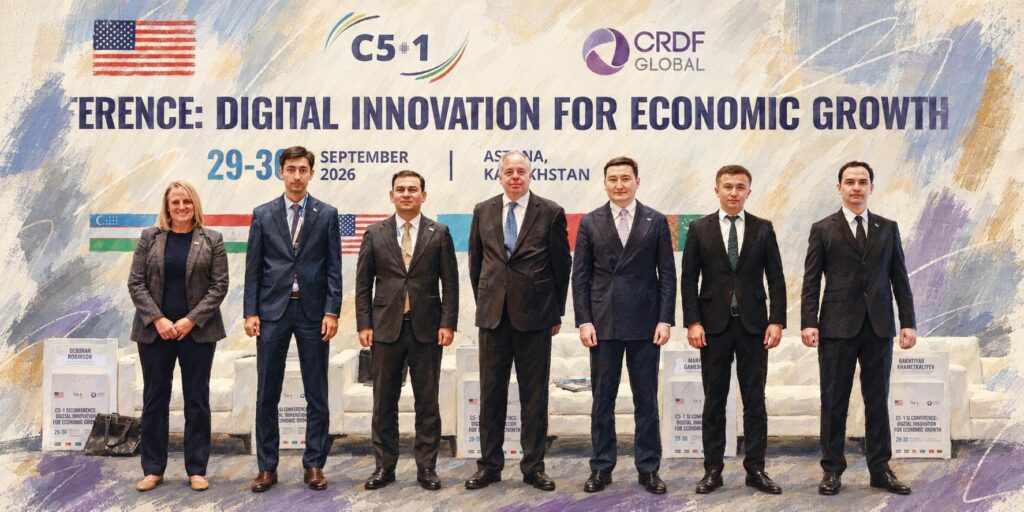
In Astana this week, representatives of the five Central Asian states discussed how they might approach digital policy and govern artificial intelligence collectively. During a parallel C5+1 conference, the five met with the United States to discuss how to govern AI, develop digital infrastructure, strengthen cybersecurity, and attract investment in new technologies. The agenda was new to the regional process, but the way the five handled it was not: they worked out a regional approach among themselves and dealt with the United States as a group.
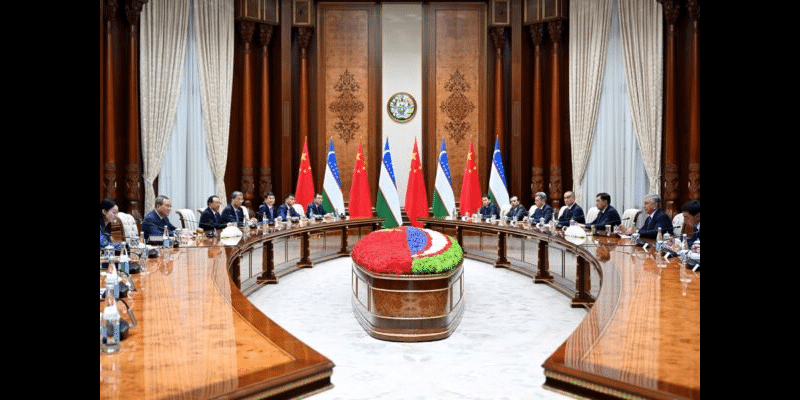
The five now use multiple “Central Asia Plus” formats to deal collectively with outside powers. Germany’s Z5+1 has reached summit level; Japan held the first leaders’ summit of its long-running Central Asia plus Japan Dialogue in 2025; China has established a biennial summit mechanism and permanent secretariat; and the European Union elevated its relationship with Central Asia to a strategic partnership at its first summit in Samarkand in April 2025. By 2025, more than ten such formats existed, and an increasing number had reached summit level. The American mechanism itself provides a precedent: the 2016 C5+1 declaration called for aligning projects and dialogues with other international-partner C5 formats where interests overlapped.
The agendas differ in emphasis but overlap substantially. Germany has stressed energy, raw materials, transport, and economic ties; Japan’s summit agenda included green transition and connectivity; China’s mechanism spans trade, investment, transport, energy, agriculture, and technology. The formats do not amount to a neat division of labor among external partners.
When Rubio arrives in Samarkand, he will find substantially stronger mechanisms of Central Asian regional coordination than existed when Kerry was there in 2015. The meeting’s emphasis on connectivity, energy, and investment addresses areas where the five increasingly coordinate among themselves. In transport and energy in particular, growing trans-governmental coordination among Central Asian states now frames engagement with external investors and governments. Washington will be dealing with five governments that now meet regularly among themselves, maintain regional coordinating institutions, and have articulated common principles for external engagement.
The five now pursue regional cooperation independently of C5+1, while the format provides a collective channel for cooperation with the United States. Bilateral relations with Washington remain important to all five governments, but C5+1 now enters a regional process already underway. As this regional process increasingly precedes C5+1 engagement, the format serves more clearly as a channel through which a more organized Central Asia engages Washington.
The C5+1 has changed less in eleven years than Central Asia itself. The Samarkand meeting therefore has a different institutional meaning from the first ministerial in 2015, when the question was how the United States could engage the five Central Asian states collectively. In 2026, the five have their own sustained regional process and an explicit framework for coordinating relations with outside partners. C5+1’s continued relevance will lie increasingly in how well Washington uses it to engage a regional process that the five states themselves now sustain.