• KGS/USD = 0.01144 0%
  • KZT/USD = 0.00217 0%
  • TJS/USD = 0.10456 0%
  • UZS/USD = 0.00008 0%
  • TMT/USD = 0.28571 0%
  • KGS/USD = 0.01144 0%
  • KZT/USD = 0.00217 0%
  • TJS/USD = 0.10456 0%
  • UZS/USD = 0.00008 0%
  • TMT/USD = 0.28571 0%
  • KGS/USD = 0.01144 0%
  • KZT/USD = 0.00217 0%
  • TJS/USD = 0.10456 0%
  • UZS/USD = 0.00008 0%
  • TMT/USD = 0.28571 0%
  • KGS/USD = 0.01144 0%
  • KZT/USD = 0.00217 0%
  • TJS/USD = 0.10456 0%
  • UZS/USD = 0.00008 0%
  • TMT/USD = 0.28571 0%
  • KGS/USD = 0.01144 0%
  • KZT/USD = 0.00217 0%
  • TJS/USD = 0.10456 0%
  • UZS/USD = 0.00008 0%
  • TMT/USD = 0.28571 0%
  • KGS/USD = 0.01144 0%
  • KZT/USD = 0.00217 0%
  • TJS/USD = 0.10456 0%
  • UZS/USD = 0.00008 0%
  • TMT/USD = 0.28571 0%
  • KGS/USD = 0.01144 0%
  • KZT/USD = 0.00217 0%
  • TJS/USD = 0.10456 0%
  • UZS/USD = 0.00008 0%
  • TMT/USD = 0.28571 0%
  • KGS/USD = 0.01144 0%
  • KZT/USD = 0.00217 0%
  • TJS/USD = 0.10456 0%
  • UZS/USD = 0.00008 0%
  • TMT/USD = 0.28571 0%

Viewing results 127 - 132 of 969

TCA Interview: Author Judith Lindbergh on Her Novel “Akmaral”, Set on the Kazakh Steppe

In recent years, many international writers have written books about Kazakhstan. One of these is the American author Judith Lindbergh, whose latest historical novel, Akmaral, is set on the Kazakh steppe. TCA: The story of Akmaral is related to Central Asia, and particularly, Kazakhstan... JL: Absolutely correct. Akmaral is about a nomadic woman warrior on the Central Asian steppes in the 5th century BCE. It’s based on archaeology that many of your readers are likely familiar with: the Siberian Ice Maiden discovered in Tuva and the Issyk Golden Warrior of Kazakhstan. These two burials were just the beginning of my research, which also included the writings of the Greek historian Herodotus about the Amazon warrior women who fought in the Trojan War. I delved deeply into the history, landscape, and cultures of Central Asia, both ancient and modern. In writing my novel, I worked hard to understand how people lived, and still live, on the steppes: their traditional nomadic ways of herding and hunting, and especially how this ancient, often-forgotten culture fits into the broader story of human civilization. [caption id="attachment_38735" align="aligncenter" width="349"] Judith Lindbergh[/caption] TCA: How did the idea to write such a novel come about? JL: It all started with a documentary about the Siberian Ice Maiden. I love ancient history and archaeology, especially when they reveal truths about women’s lives. The Ice Maiden burial was fascinating. Her body was so well preserved that I could almost imagine her standing before me. I wanted to understand how she might have lived, and to uncover the mystery of why she was buried in such an isolated place. As I continued my research, I realized that she was not the only important female burial from that era in Central Asia. There were, in fact, countless others. Many women who had died of war wounds were buried with weapons. I began combining these burials in my imagination to create my main character, Akmaral, which I learned means “White Deer.” The name felt connected to the Siberian Ice Maiden’s famous tattoo, which became an important spiritual symbol in my novel. I used extensive research to try to accurately represent what life might have been like for these ancient women. In historical fiction, as in history itself, women rarely play significant roles in public life. Yet these artifacts and burials show us that many nomadic women once held important military and spiritual positions.   There are almost no works written in English about nomadic peoples, including the real life and history of the Kazakhs. In fact, nomads were people who lived freely and truly in their time. And now we are not able to glorify their values, their way of life. What do you think about this? You’re right that there’s very little written in the West about the Sarmatians, or really much about Central Asia at all. I wanted to bring my fascination with this vital, “forgotten” part of history to new readers. In many ways, it can be hard for modern...

Kazakh Boxing Legend Gennadiy Golovkin Nominated to Lead World Boxing

Gennadiy Golovkin, Kazakhstan’s former middleweight world champion, and current head of the National Olympic Committee, has been nominated for the presidency of World Boxing, the international boxing federation. He is also running concurrently for a vicepresidential post and a seat on the Board of Directors.  World Boxing was created in April 2023 as an alternative to the International Boxing Association (IBA) after the International Olympic Committee (IOC) suspended it from hosting Olympic qualifying tournaments citing governance problems, corruption scandals and nontransparent refereeing.  At its founding the association included only six countries, United States, Great Britain, Germany, the Netherlands, Sweden and the Philippines but by late 2025 it has grown considerably. In September 2024 Golovkin became Chair of World Boxing’s Olympic Commission, whose key task is to work with the IOC to keep boxing in the Olympic programme and gain official recognition for the new organisation.  The next World Boxing leadership elections will take place on 23 November 2025 in Rome as part of the World Boxing Congress. The incumbent president, Dutchman Boris van der Vorst, has announced he will not seek reelection.  According to the organisation’s press service, Golovkin has been nominated for three positions simultaneously, president, vicepresident and board member. Election to one position automatically excludes voting for the others.  Two other candidates for the presidency have been announced: Mariolis Charilaos of Greece. A number of other candidates are also running for the vicepresidential and board seats. As previously reported by The Times of Central Asia, in 2025 World Boxing held its first amateur world championship, with Kazakhstan’s team winning the overall team competition.

New “Air Gates”: How Two Airports Will Transform Eastern Kazakhstan

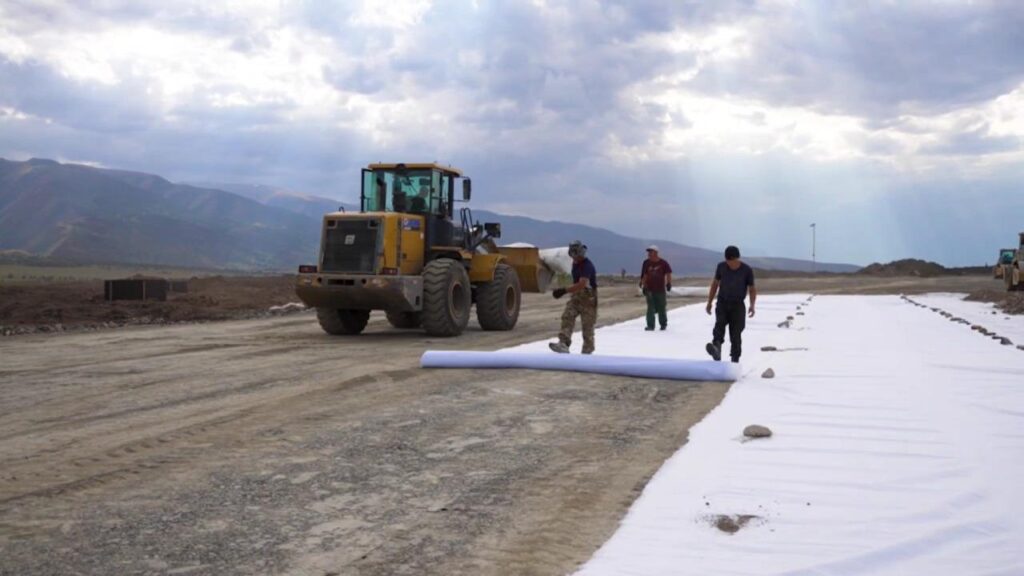
The construction of new airports in the Katon-Karagai and Zaisan districts of eastern Kazakhstan is entering its final phase. For these remote region, once accessible only by winding mountain roads, the arrival of runways, terminals, and control towers marks a historic milestone. But these projects are more than just transportation infrastructure. They are poised to become engines of regional development, restoring the area's appeal to both tourists and investors. An Airport in the Mountains Katon-Karagai is the heart of Kazakhstan’s Altai region. Between the villages of Belkaragai and Ornek, a large-scale construction effort is underway to build a modern airport complex. Spanning 266 hectares, the project includes a 2,260 meter runway, a terminal, a command-and-control center, and state-of-the-art navigation and meteorological equipment. According to project manager Nurzhan Eskendirov, 80% of the work is now complete. “Next summer, we will lay the final layer of asphalt. This airport is not just a construction project, it’s a new chapter in the region’s history,” he told TSA. [caption id="attachment_38662" align="aligncenter" width="300"] @gov.kz[/caption] For local residents, the construction has become the event of the decade. Workers from across the country have joined the effort. “The nature here is simply amazing,” said one of the builders, Manash Baigonov. “I want people from all over the world to be able to see it.” Katon-Karagai is renowned for its pristine lakes, snow-covered peaks, and protected nature reserves. The airport will drastically reduce travel time, making the region far more accessible to tourists who previously faced hours of rugged road travel. Zaisan: The Eastern Gateway In the Zaisan district, another major airport project is nearing completion near the village of Satpay. The runway and apron are fully finished, the drainage system is being finalized, and terminal and control tower construction is ongoing. This airport is expected to play a vital role in expanding cross-border tourism and logistics. Currently, Zaisan receives about 20,000 tourists annually, a number that could increase four- to five-fold once the airport opens. Regular flights are planned to Ust-Kamenogorsk, Almaty, and Astana, with future international routes to Urumqi in China and Lake Kanass. This would position Zaisan as Kazakhstan’s “eastern gateway,” linking the country to China not only by road, but also by air. “The airport is creating new routes, but more importantly, it’s creating meaning,” said one of the project’s designers. “It’s not just a runway, it’s the take-off of a region.” [caption id="attachment_38663" align="aligncenter" width="300"] @gov.kz[/caption] From Roads to People Airport development is also driving broader infrastructure upgrades. A new road to the village of Urunkhaika on Lake Markakol, planned in partnership with China’s Heilongjiang Province Bada Road, will connect even more of Altai’s secluded landscapes to the broader transport network. Until now, many of these areas were accessible only by footpaths. These infrastructure projects are transforming not just the regional map, but daily life. In Katon-Karagai, which was once served only by narrow serpentine roads and sporadic buses, officials are now preparing for the arrival of investors, climbers, photographers, and nature lovers....

AI Creator Ilona Brazhnik on Kazakh Myths and Creative Freedom

Alena Brazhnikova, better known by her pseudonym Ilona Brazhnik, is in many ways a product of her time. A decade ago, she was transferring art onto skin as a tattoo artist. Today, she creates viral videos powered by artificial intelligence, bringing to life mermaids, Zvezdy, and mythological girls with hooves and wings, symbols of a digital era in which neural networks replace paintbrushes, yet the pursuit of beauty, meaning, and freedom remains unchanged. TCA: Ilona, did your artistic journey begin with tattooing? Brazhnik: Yes, it all started rather quickly. When I began, there weren’t many artists in Karaganda, a mining town in central Kazakhstan, offering the style I worked in. At the time, "old school" tattoos with bold, rough lines were popular. But I wanted to explore subtlety, fine lines, and detailed work. Inspired by European artists, I posted an ad online. Within a month, I was fully booked for the next three months. My client base grew on its own because I was offering something different. TCA: Are there particular tattoo motifs that resonate with you? Brazhnik: I wouldn’t say I have one favorite. I rotate motifs regularly to avoid burnout. But I do love working with thin lines and soft dot shading, it gives the image depth and detail. [caption id="attachment_38469" align="aligncenter" width="417"] @ilona_brazhnik[/caption] TCA: The tattoo trend seems to have quieted. Is that your impression too? Brazhnik: Absolutely. The hype has passed. There was a time when everyone was getting tattooed just for the sake of it. Now, people are more thoughtful. They take their time, consult with others, and carefully choose their designs. The “everyone’s doing it, so I will too” trend ended around eight years ago. TCA: You’ve transitioned to AI and now earn money creating videos? Brazhnik: You could put it that way. There’s definitely demand for AI-generated content. But I didn’t start doing it for the money, I just found it interesting. When people started to respond positively to my work, I thought, why not? TCA: Your videos are visually striking. How much does a project like that cost? Brazhnik: It depends on the complexity. Is it a brand advertisement or a fantasy story? Do you need to showcase clothing, jewelry, or a specific location? Will the same character appear throughout? And of course, duration matters. I can only quote a price once I receive the technical brief. TCA: Are brand commissions more expensive? Brazhnik: Not necessarily. I never charged tattoo clients more just because they could afford it. It depends on the task. Brand work is usually more technically demanding. AI doesn’t like repetition; it redraws objects each time, so logos, packaging, and inscriptions often need to be added manually. I once made a video where glasses were disassembled into ornaments and then reassembled. When asked to replicate it, it took 20-30 failed attempts. AI just doesn’t do “exactly the same.” TCA: Did you start making videos to grow your TikTok and monetize content? Brazhnik: In Kazakhstan, you can’t earn money from...

World Happiness Index: Central Asian Countries Stand Out With “Warm Social Climate”

Kazakhstan has been named the happiest country in Central Asia, according to the World Happiness Report 2025 published by the Oxford Wellbeing Centre. Ranking 43rd globally, Kazakhstan outperformed its regional neighbors in metrics such as social support, trust, and freedom of choice.  The report evaluates national well-being based on six key indicators: GDP per capita Social support (help from family, friends, and society) Healthy life expectancy Freedom to make life choices Generosity (willingness to help others) Perceived absence of corruption Kazakhstan scored 6.38 out of 10, demonstrating especially strong performance in trust and honesty. The country ranked 30th globally for the likelihood of returning a wallet to a neighbor and 42nd for returning it to a stranger. Uzbekistan followed at 53rd place with a score of 6.2. The country stood out for its high levels of charitable giving (29th) and public trust in law enforcement (19th). Kyrgyzstan ranked 75th with 5.9 points and was recognized as the regional leader in helping strangers. Tajikistan placed 90th with a score of 5.4 but made the global top four in volunteering, an indicator linked to longstanding traditions of mutual aid. Turkmenistan was excluded from the ranking due to insufficient data. The report highlights that Central Asian countries exhibit some of the world’s highest levels of kindness. The region's mutual aid index ranges from 0.30 to 0.36, compared to the global average of 0.33. “Despite economic differences, the region maintains strong social ties and a culture of collectivism, where helping others and participating in community life remain important values,” the report notes. According to the authors, happiness is influenced less by income than by trust, stability, and personal freedom. Central Asia, they conclude, fosters a “warm social climate,” where interpersonal kindness often offsets institutional shortcomings and economic hardship. Globally, Finland topped the 2025 rankings, followed by Denmark, Iceland, Sweden, and the Netherlands. At the bottom of the list were Sierra Leone (146th) and Afghanistan (147th), where happiness levels remain the lowest worldwide.

U.S. Envoys Experience Kazakhstan’s Living Nomadic Traditions

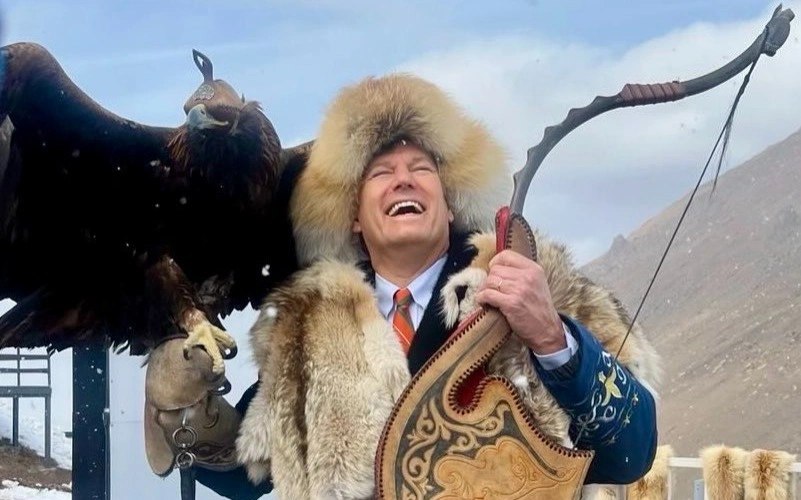
U.S. Special Representative for South and Central Asia Sergio Gor and Deputy Secretary of State Christopher Landau recently visited Kazakhstan as part of preparations for the upcoming C5+1 summit. While official releases highlighted meetings on regional cooperation and stability, local media also noted cultural engagements showcasing Kazakhstan’s living nomadic traditions. While in Almaty, the U.S. delegation also toured the Shymbulak ski resort and the Medeu high-altitude skating rink. Amidst the picturesque alpine scenery, they participated in traditional archery, an enduring symbol of the nomadic peoples’ skill and heritage. Archery: A Living Legacy Traditional archery, known as sadak atu, is experiencing a revival in Kazakhstan. As in the past, both boys and girls train in the discipline, a tradition rooted in the realities of steppe life, where women were equally taught to hunt and defend their communities. Far more than a sport, archery reflects a nomadic philosophy. In ancient times, the bow served both as a hunting tool and a weapon of war, requiring intricate craftsmanship using wood, bone, and animal tendons. Archers learned to shoot from horseback, relying on instinct and experience rather than sights. Today, this heritage is inspiring a resurgence of interest among young Kazakhs. Archery clubs are opening across the country, competitions are being held, and the traditional art is gaining popularity. The 5th World Nomad Games, held in Astana in 2024, prominently featured sadak atu among other ethnic sports. Petropavl also hosted the Kazakhstan Youth Traditional Archery Championship, drawing 400 participants aged 10 to 17, many in national attire. Meanwhile, Uralsk hosted the 4th Republican Traditional Archery Championship, with 270 athletes from 18 regions competing. Coaches expect the popularity of sadak atu and zhamba atu, mounted archery, to grow, offering Kazakhs a tangible link to their ancestral culture and a spectacle that continues to impress international visitors. [caption id="attachment_22863" align="aligncenter" width="909"] Horseback archery at the World Nomad Games 2024; image: TCA, Ilyas Otan[/caption] The Tazy: A National Symbol The Tazy dog, sometimes referred to as the Kazakh or Central Asian greyhound, holds a special place in Turkic heritage. Once indispensable to nomadic hunters, the breed’s cultural and historical value is now protected by state policy. In 2023, Kazakh President Kassym-Jomart Tokayev was gifted a Tazy puppy called Nauryz, which is named after the spring festival celebrating renewal. The president emphasized the importance of promoting the Tazy and Tobet breeds internationally and called on the Ministry of Foreign Affairs to participate in preservation efforts. A special law was adopted to support this cause. By 2024, President Tokayev had three Tazy dogs under his care. He is known to walk them personally in his free time. That same year, he gifted two Tazy puppies to French President Emmanuel Macron. Delivered to Paris, the puppies were named Jules and Jeanne. [caption id="attachment_38363" align="aligncenter" width="1200"] The Tazy; image: TCA, Stephen M. Bland[/caption] Hunting with Birds of Prey: The Wings of Victory The tradition of hunting with birds of prey, kusbegilik, has deep roots in Turkic culture, dating back millennia. Archaeological...