• KZT/USD = 0.00212
  • TJS/USD = 0.10810
  • UZS/USD = 0.00008
  • TMT/USD = 0.29760
  • KZT/USD = 0.00212
  • TJS/USD = 0.10810
  • UZS/USD = 0.00008
  • TMT/USD = 0.29760
  • KZT/USD = 0.00212
  • TJS/USD = 0.10810
  • UZS/USD = 0.00008
  • TMT/USD = 0.29760
  • KZT/USD = 0.00212
  • TJS/USD = 0.10810
  • UZS/USD = 0.00008
  • TMT/USD = 0.29760
  • KZT/USD = 0.00212
  • TJS/USD = 0.10810
  • UZS/USD = 0.00008
  • TMT/USD = 0.29760
  • KZT/USD = 0.00212
  • TJS/USD = 0.10810
  • UZS/USD = 0.00008
  • TMT/USD = 0.29760
  • KZT/USD = 0.00212
  • TJS/USD = 0.10810
  • UZS/USD = 0.00008
  • TMT/USD = 0.29760
  • KZT/USD = 0.00212
  • TJS/USD = 0.10810
  • UZS/USD = 0.00008
  • TMT/USD = 0.29760

Viewing results 25 - 30 of 165

Opinion: A New Southern Gate – How the EU-Armenia Summit Unlocks a Critical Branch for the Middle Corridor

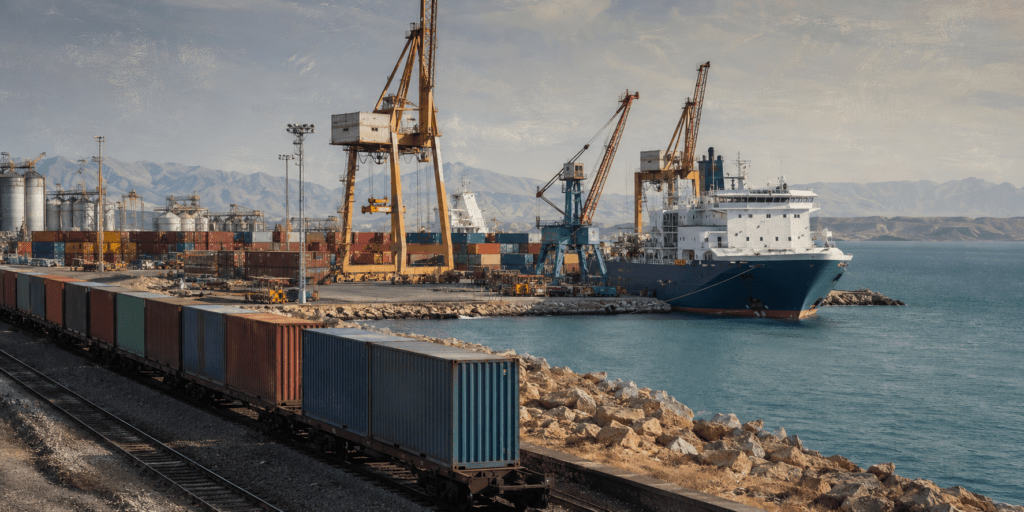
For the first time in its history, the European Union held a full summit with Armenia. The meeting, which took place in Yerevan on 4–5 May 2026, was not merely a diplomatic milestone for Armenia. It also sent a signal to governments thousands of kilometers away in Central Asia that the trade route linking Asia to Europe through the South Caucasus is becoming more real, and more politically backed, than ever before. The centerpiece of the summit saw the signing of a “Connectivity Partnership” between Brussels and Yerevan. The European Commission President, Ursula von der Leyen, described Armenia as "uniquely positioned" to connect Europe with the South Caucasus and Central Asia. Under the EU's Global Gateway program, investments in Armenia are expected to reach €2.5 billion. A further €3 billion is earmarked specifically for the Middle Corridor – the trade route that runs from China across Central Asia, over the Caspian Sea, through the South Caucasus, and into Europe. “We will support your integration into key transport networks like the Trans-Caspian Corridor. It is a route that is also of strategic importance for Europe, given the growing flows of trade between our two regions,” von der Leyen stated. A Route That Is Already Moving Fast The Middle Corridor, formally known as the Trans-Caspian International Transport Route (TITR), has grown at a pace that few predicted. Cargo volumes rose 70 percent in the first nine months of 2024 alone, reaching 3.4 million tons. By the end of that year, the total had climbed to 4.1 million tons – up from just 350,000 tons in 2021. The World Bank projects that the route could handle up to 11 million tonnes a year by 2030. It's important to maintain some perspective. These numbers are small fry when compared to the billions of tons of trade that moves between Europe and Asia by sea. However, the Middle Corridor does offer important diversification, particularly given the spillover effects of wars in the Middle East and piracy in the Red Sea. [caption id="attachment_48602" align="aligncenter" width="1274"] Image: Trans Caspian International Transport Route and it’s southern part, China-Kyrgyzstan-Uzbekistan Railway project. Source: middlecorridor.com[/caption] Where Uzbekistan Stands For Uzbekistan, the Middle Corridor is both an opportunity and a work in progress. In January 2025, President Mirziyoyev signed a decree to upgrade road and rail connectivity, and in September 2024, Tashkent co-founded the Eurasian Transport Route Association alongside Austria, Azerbaijan, China, Kyrgyzstan, Tajikistan, and Turkey. In December 2024, Uzbekistan sent its first block train all the way to Brazil – through Turkmenistan, Azerbaijan, and the Georgian port of Poti – proving the route is operationally viable. But costs remain a challenge. Shipping a 40-foot container via the Middle Corridor currently costs between $3,500 and $4,500, compared to $2,800–$3,200 on the Northern Corridor through Russia. Europe, meanwhile, accounts for only around 3 percent of Uzbekistan's exports and 13 percent of its imports — a share that Tashkent wants to grow significantly. The China–Kyrgyzstan–Uzbekistan (CKU) railway — a $8 billion, 573-kilometre project whose...

Opinion: What May 9 Means to a Generation Without War Memories

One evening, sitting beside my grandmother, we opened an old photo album, the kind with thick pages and photographs tucked carefully beneath thin plastic sheets. We turned the pages slowly. At one photograph, she stopped. It showed her as a young girl beside a close relative she rarely speaks about, a man who never came home from the war. The mood changed almost instantly. For her, May 9 is not simply a date. It belongs to a family story shaped by absence, grief, and survival. For me, it is inherited. For many people of my generation, May 9 is no longer a memory of war itself, but a memory passed down by those who lived closer to it. That distance is changing the meaning of Victory Day in Kazakhstan and across much of Central Asia. The day still carries enormous symbolic weight, but the link between public commemoration and private family memory is becoming less direct. What older generations remember, younger generations are increasingly asked to learn. What Remains for Those Who Remember For older generations, May 9 remains deeply personal. It is tied to lives shaped by loss, names repeated year after year, stories retold within families, and the enduring presence of those who never returned. The meaning of the day is not abstract for people who lived through the war or grew up in its immediate aftermath. It is part of their family history. In many households, remembrance is expressed less through public slogans than through quieter acts: visiting memorials, keeping photographs, passing down names, or sharing stories that do not need much explanation. For those generations, the past has not fully receded. It remains close to the surface of the present. A Generation That Learns, Not Remembers For younger people, the connection is often weaker and less detailed. The war may still be respected, but it is no longer remembered in the same way. It is encountered through family fragments, school lessons, monuments, ceremonies, and public language rather than through the direct emotional force of lived experience. This generational gap is visible in recent polling. A 2025 survey by the Center for Social and Political Research “Strategy,” based on 1,100 respondents across nine regions of Kazakhstan, found that 46% of people aged 18-24 knew someone in their family had participated in the war but could not recall any details. Another 33% had no information at all. Among respondents over 55, only 13% reported similar uncertainty. The same survey found that many respondents could not identify a significant historical figure connected to the war, while nearly one in five could not name a single wartime event. These gaps suggest more than a decline in historical knowledge. They point to a weakening personal connection to what was once a defining collective experience. When Memory Exists Without Experience As lived experience gives way to inherited knowledge, remembrance changes form. Historical events are preserved through families, schools, state ceremonies, monuments, and media, but the emotional connection becomes harder to sustain. A...

Opinion: Hormuz Crisis Pushes Afghanistan Aid Routes Toward Central Asia

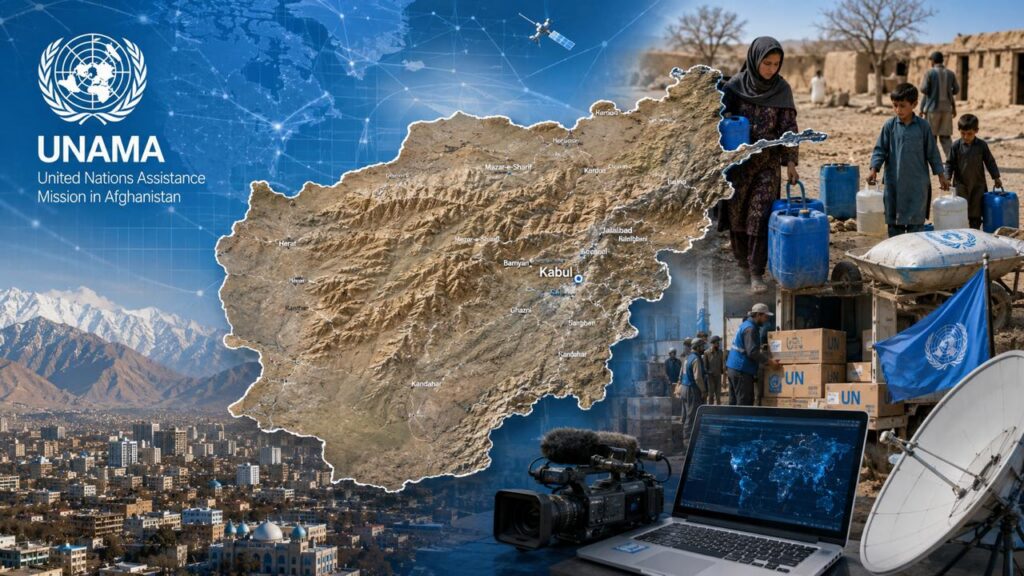
The crisis surrounding the Strait of Hormuz is usually viewed through the lens of energy security or military escalation. But it also has another, less visible, humanitarian dimension. A recent article in The Guardian, “Calls for humanitarian corridor through Strait of Hormuz as Iran war hits vital aid,” points to a critical shift: because of the conflict involving the United States, Israel, and Iran, along with instability around Hormuz, traditional humanitarian supply routes are beginning to break down. For Afghanistan, this is no longer a theoretical concern but an operational reality. According to the World Food Programme (WFP), cited by The Guardian, the cost of delivering food to Afghanistan has tripled. Cargo that previously moved by sea through Hormuz and onward to Pakistani ports must now travel overland across multiple countries, adding weeks to delivery times. The consequences are felt most acutely by vulnerable populations, particularly children. Predictability is one of the core requirements of any humanitarian system, and that predictability is now disappearing. Some shipments are stranded in regional hubs. Routes are constantly changing. Fuel costs continue to rise. Even modest increases in oil prices significantly raise operational expenses for humanitarian agencies. For Afghanistan, the implications are severe. The country has been in a prolonged food crisis for several years, with millions dependent on external aid. Delays of even one or two weeks can directly affect malnutrition and mortality rates. According to United Nations estimates, around 3.7 million Afghan children are currently suffering from wasting, nearly one million of them from severe wasting, a condition associated with sharply elevated mortality risks. UNICEF estimates that in 2026 alone, 1.304 million children aged 6-59 months will require treatment for acute malnutrition, including severe cases and other high-risk groups. Another 1.2 million pregnant and breastfeeding women are also suffering from acute malnutrition. Under these conditions, even temporary disruptions in aid deliveries become a direct threat to human life. The situation is being compounded by several overlapping factors. First, instability around the Strait of Hormuz has made maritime routes both more expensive and riskier. Second, the Pakistani corridor, previously the main overland route, has become unreliable, as repeated border closures and restrictions have tied humanitarian deliveries to the fluctuating political and security relationship between Kabul and Islamabad. Third, Iran has imposed restrictions on food exports and has itself become part of the conflict zone, undermining its role as both a supplier and transit route for Afghanistan. Together, these developments are creating what can be described as a “triple crisis” for humanitarian logistics into Afghanistan. The previous aid delivery system is effectively ceasing to function. In response, the WFP is restructuring its logistics network. One solution has been increased use of the Lapis Lazuli Corridor: Turkey-Georgia-Azerbaijan via the Caspian Sea-Turkmenistan and Afghanistan. Although this route is longer and more expensive, it offers predictability and an alternative to disrupted maritime pathways. The key issue is no longer which route is cheapest, but which is reliable. This shift places Central Asia increasingly at the center of...

Opinion: The Regional Ecological Summit and the Making of a Central Asian Voice

On 22–24 April, Astana hosted the Regional Ecological Summit—a gathering of governments, international organizations, financial institutions, and civil society that marked a new level of ambition in Central Asia’s environmental diplomacy. Fifty-eight sessions were held across three days at a moment when Central Asia’s ecological agenda is becoming inseparable from its political and economic future. The opening ceremony was attended by the presidents of all five Central Asian states. The summit adopted the Astana Declaration on Ecological Solidarity in Central Asia and brought renewed attention to the need to reform the International Fund for Saving the Aral Sea (IFAS). Taken together, these developments signal more than procedural diplomacy. They point to growing political momentum. The region has never lacked shared history or channels of communication. Russian remains a practical language of intergovernmental exchange, and borders, economies, rivers, energy systems, and labor markets have tied these countries together long before contemporary climate diplomacy gave this interdependence a new vocabulary. For decades, much external analysis of Central Asia expected this interdependence to produce confrontation, particularly around water and energy. Those risks remain real. Yet the Astana summit showed a more complex trajectory. Climate change, biodiversity loss, water insecurity, land degradation, and food security are not separate national problems neatly contained within borders. Addressing them is becoming one of the fields through which regional coherence is being built. The significance of the Summit lies less in ceremonial language than in the consolidation of multiple ecological agendas into a visible diplomatic architecture. Through its panels and high-level discussions, the Summit placed Central Asia’s natural heritage not at the margins of development but at its center. Ecosystems, rivers, glaciers, mountains, and landscapes are not only environmental assets. They are conditions for prosperity, stability, and resilience. Kazakhstan’s chairmanship of IFAS reopened the question of whether the Fund, long criticized for its limitations, can be reworked rather than left as a symbol of failed regional environmental governance. Kazakhstan’s proposal for an International Water Organization should be read in the same frame: it is not merely a technical proposal about water governance but an attempt to move a Central Asian concern into the language of global institutional reform. Kyrgyzstan’s mountain agenda and Tajikistan’s glacier diplomacy also belong to this broader pattern. They are not just isolated national branding exercises. Together with Uzbekistan’s increasingly active regional posture, they form a wider mosaic: each country brings a distinct ecological priority, but these priorities are becoming legible as parts of one regional perspective, and its voice carries more weight when presented as such. This is particularly important in the current geopolitical moment. As larger powers turn inward, compete over corridors, or speak about Central Asia through the old grammar of influence, the region is attempting to define itself not as terrain for another “Great Game" but as a pole of its own. This does not mean distance from external partners. On the contrary, the United Nations was a strategic partner of the Summit, and many formats involved major international organizations, European...

Opinion: Kazakhstan’s Critical Minerals Promise Is Running Out of Time

Kazakhstan has long been defined by what lies beneath its soil. Oil, uranium, copper, zinc, lead, chromium, gold, and other minerals have shaped the country’s post-Soviet economy and supplied the budget, export revenues, and industrial base that supported three decades of state-building. That model is now entering a more complex phase. In the first quarter of 2026, Kazakhstan’s industrial output slipped as mining and quarrying fell by 11.4%, with crude oil production down 19.8%, natural gas output down 20%, and other mineral extraction down 15.1%, according to figures reported from the Bureau of National Statistics. The oil decline also reflected specific disruptions. Kazakhstan’s energy minister said oil and gas condensate production fell 20% year-on-year in the first quarter, while production at Tengiz had only recently resumed after an outage linked to a fire at a power unit. Reuters reported that the field’s restart was gradual. Those short-term shocks should not be confused with the whole story. They expose a deeper vulnerability: Kazakhstan has been highly successful at extracting known deposits, but far less successful at replacing them. The World Bank’s mining sector diagnostic put the problem plainly. Kazakhstan is underexplored, greenfield exploration has been almost non-existent for about 30 years, and much of the geological data inherited from the Soviet period is incomplete or outdated. This is not a story of geology alone. It is a story of institutions, incentives, and time. Deposits deplete whether governments plan for it or not. The difference between a mature resource economy and a vulnerable one is whether exploration, processing, regulation, and regional diversification keep pace with extraction. The Arithmetic of Depletion Kazakhstan still has one of the strongest mineral endowments in Eurasia. President Kassym-Jomart Tokayev has described rare and rare-earth metals as having “essentially become new oil,” and told the government to expand geological and geophysical exploration from 1.5 million square kilometers to at least 2.2 million by 2026, according to Akorda. OECD analysis published in 2026 underlines why the stakes are high. Kazakhstan’s metals mining sector accounted for 12.1% of GDP in 2024. The country is the world’s largest uranium producer, can currently export 21 of the 34 critical raw materials on the European Union’s official list, and has some of the world’s largest reserves of chromium, zinc, and lead. Yet reserve strength on paper does not remove the operational pressure at existing mines. In 2022, Kazakhstan’s prime minister warned that reserve growth for many minerals had not been compensated and that major metal deposits in eastern Kazakhstan, including Orlovskoye, Maleyevskoye, Tishinskoye, and Ridder-Sokolnoye, could be mined out within the next decade, according to the government’s own account of its 2023-2027 geology concept. Gold shows a similar tension between headline potential and mine-level pressure. Industry reporting has linked a fall in Kazakhstan’s 2025 mining output targets partly to changes at Vasilkovskoye, one of the country’s largest gold deposits, where operations are shifting from open-pit to underground mining as easily accessible ore becomes harder to extract. MINEX Forum reported that the transition reduced...

Opinion: Kazakhstan’s Human Capital Problem – How State Scholarships Are Building a Talent Pipeline for the West

Kazakhstan spends millions of dollars every year sending its brightest students to the world's best universities through two flagship programs: the Nazarbayev Intellectual Schools (NIS) and Bolashak. For NIS, the state invests millions with no public record of what becomes of its graduates once they enter foreign educational institutions. For Bolashak, the return figures look reassuring on paper, but only until one asks what happens the moment the obligation expires. For Kazakhstan’s economy, heavily reliant on oil and gas exports, human capital is what can bring the country to its goal of economic diversification through the ideas and skills that no natural resource can replicate. Students from Kazakhstan studying abroad, with access to the world’s best professors and cutting-edge technologies, are exactly the human capital the country cannot afford to lose. However, they are also the ones the government has been paying to send away without a sustainable retention strategy in place. Nazarbayev Intellectual Schools Founded in 2008, the Nazarbayev Intellectual Schools network offers an internationally recognized 12-year curriculum, directly compatible with many foreign university admissions systems. It also provides some of its students with grants covering the full cost of attendance. The state funds NIS generously: in 2023 alone, more than $37 million was invested into the network. The results are extraordinary: from 2010 to 2024, 654 students received offers from the top 100 universities in the world, with 32 of them from the Ivy League. However, which country these graduates end up in is a different question, and the available statistics offer no public answer to. One former NIS student, who received a full scholarship to study abroad, says, "I'm extremely grateful for all the resources that the NIS provided me with. However, after my graduation from the university, I will be moving to San Francisco to work as an AI engineer. It would take me at least seven years to make the same salary I'll be earning here in a year." Another says, "It is not only about the higher wages in the U.S. It’s about the opportunities and autonomy one gets. The research lab I've joined since graduation has far more funding and resources for the work I'm actually passionate about." Bolashak Program Unlike NIS, the Bolashak program, established in 1993 and widely regarded as one of the most generous scholarship programs in the world, does require its recipients to return. Graduates must work in Kazakhstan for up to four years or face financial penalties. On paper, this looks like a solution to the human capital problem. In practice, it is only a delay. While the state at least partially recovers its investment, it is developed markets that eventually inherit the talent. "After completing my requirement back home, I was able to get an American company to sponsor my visa," says one Bolashak recipient. "I moved to the U.S. shortly after." "I was offered a transfer to the European branch of my company," says another, one year after fulfilling their obligation. The Solution to the Brain...