• KZT/USD = 0.00223
  • TJS/USD = 0.10810
  • UZS/USD = 0.00009
  • TMT/USD = 0.29850
  • KZT/USD = 0.00223
  • TJS/USD = 0.10810
  • UZS/USD = 0.00009
  • TMT/USD = 0.29850
  • KZT/USD = 0.00223
  • TJS/USD = 0.10810
  • UZS/USD = 0.00009
  • TMT/USD = 0.29850
  • KZT/USD = 0.00223
  • TJS/USD = 0.10810
  • UZS/USD = 0.00009
  • TMT/USD = 0.29850
  • KZT/USD = 0.00223
  • TJS/USD = 0.10810
  • UZS/USD = 0.00009
  • TMT/USD = 0.29850
  • KZT/USD = 0.00223
  • TJS/USD = 0.10810
  • UZS/USD = 0.00009
  • TMT/USD = 0.29850
  • KZT/USD = 0.00223
  • TJS/USD = 0.10810
  • UZS/USD = 0.00009
  • TMT/USD = 0.29850
  • KZT/USD = 0.00223
  • TJS/USD = 0.10810
  • UZS/USD = 0.00009
  • TMT/USD = 0.29850
22 September 2026

Viewing results 25 - 30 of 61

Opinion: The Contact Group on Afghanistan – Central Asia Formulates a Regional Position

On August 26, special representatives on Afghanistan from Kazakhstan, Kyrgyzstan, Tajikistan, and Uzbekistan met for the first time in Tashkent. The meeting resulted in the creation of a permanent regional platform: the Contact Group on Afghanistan. This gathering was not only a continuation of commitments outlined in the joint statement from the most recent Consultative Summit of Central Asian heads of state, but also a step toward preparing for the next high-level format, scheduled for November in Tashkent. Formally, Turkmenistan was absent. Available information suggests the reasons were purely technical. Ashgabat was ready to join and expressed support for the results through its foreign ministry channels. The key outcome is that Central Asian states have, for the first time, shown their readiness to speak with one voice on an issue long shaped by competing external interests. This is not the start of forming a common position; that had already developed de facto in recent years. All Central Asian countries have supported trade and transit with Afghanistan, continued supplying electricity and food, and maintained working contacts with the Taliban, while avoiding extremes. The Tashkent meeting institutionalized this approach: parallel tracks have now shifted, cautiously, toward coordination. Informal unity has been formalized into a tool. Unlike external players, who often cloak interests in grand rhetoric, Central Asia acts openly and pragmatically. The logic is simple: whatever is done for Afghanistan is, in fact, done for oneself. That is the distinctive feature of the regional approach - no ideological cover, no attempts to reshape Afghanistan. Examples are straightforward. Electricity continues to flow even when payments are delayed - not as charity, but as an investment in security. A blackout in Afghanistan could trigger refugee flows and threats heading north. Exports of flour and fuel sustain Afghan markets but also expand outlets for Central Asian producers. Participation in trans-Afghan corridors is not a gift to Kabul but an opportunity for Central Asia to anchor itself in southern logistics routes. Ultimately, every step “for Afghanistan” is primarily for the region itself. If Kabul ignores basic rules, cooperation will simply stop. In politics, there are no eternal friends, only eternal interests. The new format does not yet imply collective pressure on the Taliban. Rather, it creates conditions for each country to conduct more substantive bilateral dialogue, but grounded in a shared position. Until now, Central Asia has mainly spoken to the Taliban about trade, transit, and infrastructure. The Contact Group now makes it possible to add another dimension: clarifying boundaries of what is acceptable on issues like extremism, border escalation, or water pressure. For now, “red lines” are unlikely, since the Taliban have not crossed them. The situation remains manageable, leaving room for constructive dialogue. Equally important, the Contact Group is not a threat or ultimatum. Coordination is meant to expand opportunities for dialogue, not limit them. In the long run, this could evolve into a sustainable C5+A format. Afghanistan would then be integrated into regional frameworks not as a problem to be managed, but as...

Opinion: China’s Diplomatic Power Play Unfolds in Tianjin

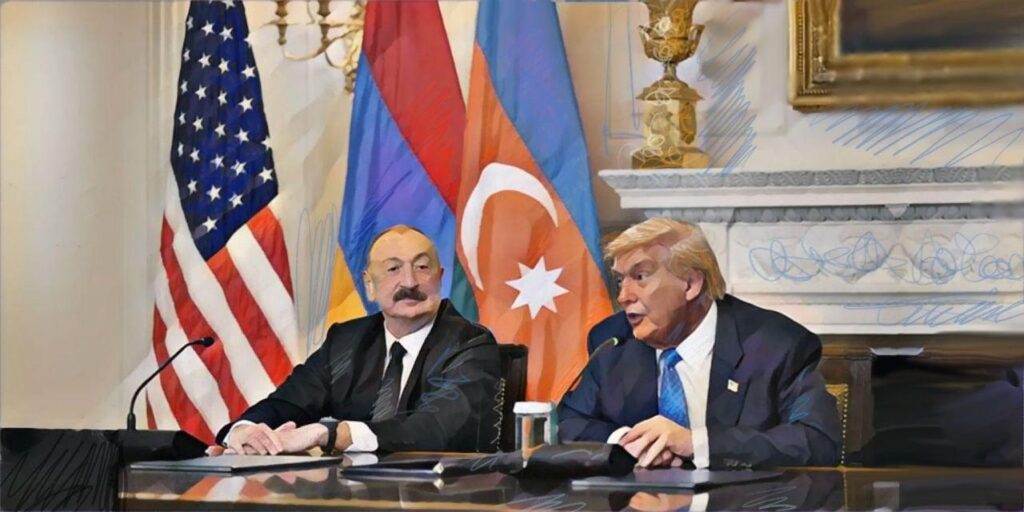
On August 31, the next SCO Plus summit will begin in the Chinese city of Tianjin and run through to September 1. Judging by the list of participants, China, under Chairman Xi Jinping, is positioning itself to challenge the United States for influence over the global geopolitical agenda. As part of the Shanghai Cooperation Organization (SCO) summit, Xi will host a formal banquet for the attending heads of state, according to the Chinese Foreign Ministry. Xi is also scheduled to chair the 25th meeting of the SCO Council of Heads of State and lead the expanded SCO Plus session - the largest since the establishment of the organization - where he will deliver a keynote address. Clues to the themes of Xi’s speech can be found in the diverse array of leaders expected to attend. Chinese Deputy Foreign Minister Liu Bin confirmed at a Beijing press conference that among the SCO member states, participants will include Russian President Vladimir Putin, Indian Prime Minister Narendra Modi, Pakistani Prime Minister Shahbaz Sharif, Iranian President Masoud Pezeshkian, Belarusian President Alexander Lukashenko, Kazakh President Kassym-Jomart Tokayev, Kyrgyz President Sadyr Japarov, Tajik President Emomali Rahmon, and Uzbek President Shavkat Mirziyoyev. Several leaders from non-member states will also join, including Turkish President Recep Tayyip Erdoğan; Mongolian President Ukhnaagiin Khurelsukh; Azerbaijani President Ilham Aliyev; Indonesian President Prabowo Subianto; and Turkmen President Serdar Berdimuhamedov, whose participation suggests Ashgabat’s cautious but growing interest in regional dialogue. Also in attendance will be the prime ministers of Armenia (Nikol Pashinyan), Cambodia (Hun Manet), Nepal (Khadga Prasad Sharma Oli), Egypt (Mostafa Madbouly), Malaysia (Anwar Ibrahim), and Vietnam (Pham Minh Chinh). The summit will also host key international institutional leaders, including UN Secretary-General António Guterres; SCO Secretary-General Nurlan Yermekbayev; CIS Secretary-General Sergey Lebedev; ASEAN Secretary-General Kao Kim Hourn; CSTO Secretary-General Imangali Tasmagambetov; EAEU Chairman Bakytzhan Sagintayev; and AIIB President Zhou Ji. Kazakhstan will be prominently represented. In addition to President Tokayev, three high-profile Kazakhs mentioned above - Yermekbayev, Tasmagambetov, and Sagintayev - will attend in their capacities as heads of international organizations. Their presence signals Astana’s growing diplomatic weight and reflects the strategic outreach led by Tokayev, himself a former UN Deputy Secretary-General. This background likely contributes to the rapport between Kazakhstan and Guterres. The summit will also inevitably draw attention due to the presence of the Armenian and Azerbaijani leaders, figures central to the ongoing realignment in the South Caucasus. Both Baku and Yerevan have increasingly distanced themselves from Moscow, favoring closer ties with Turkey and the United States. The recent peace agreement between Aliyev and Pashinyan, signed in the presence of President Trump, underscored the growing American role in the region and the diminishing influence of Russia. While Moscow appears willing to tolerate this shift, Tehran views it with deep concern, especially after its recent 12-day conflict with Israel. Russia, for its part, seems to be signaling disengagement from the region. Its silence in response to Baku and Yerevan’s Western overtures suggests strategic apathy, if not withdrawal. Beijing, of course, is...

The Rise of Regionalism in Central Asia: From Divisions to Dialogue

In recent years, Central Asia has undergone a remarkable transformation — from a region historically marked by political divisions and competing national interests, to one increasingly characterised by cooperation and dialogue. Today, Central Asian countries are exploring the idea of strategic autonomy and greater regional solidarity, not as an abstract ambition, but as a practical response to the shared challenges and opportunities they have. A key institutional vehicle for this evolving cooperation is the Consultative Meeting of Central Asian Leaders. Unlike formal international summits, this forum allows for open and informal dialogue between heads of state. It is valued precisely because it enables leaders to discuss sensitive regional matters candidly, without the constraints of protocol. The momentum for regional cooperation is clearly growing, and this forum has become a symbol of Central Asia’s desire to take its future into its own hands. Beyond this, the countries of Central Asia cooperate through platforms such as the Shanghai Cooperation Organization (SCO) and the Organisation of Turkic States, both of which offer multilateral mechanisms for addressing regional security, economic integration, and cultural exchange. Importantly, what was once a region of competing national agendas is now evolving into a space of shared strategic vision, including coordinated positions in international forums such as the United Nations. Additionally, in recent years, the foreign policies of Central Asian countries have demonstrated more and more coordination and regional alignment, especially in their engagement with external partners. This shift is reflected in the emergence of multilateral dialogue formats between Central Asia and key global actors. Notably, the European Union–Central Asia Summit, most recently held in Samarkand in 2025, underlined a shared commitment to regional connectivity, sustainable development, and mutual security. Similar formats have been institutionalised with other global players, such as the C5+1 format with the United States, focusing on green transition, economic reforms, and regional security. Germany has also advanced a Central Asia–Germany high-level dialogue, including the “Berlin Initiative,” aimed at promoting green energy, vocational training, and the rule of law. Meanwhile, Italy has launched its Central Asia + Italy format as part of its strategy to diversify partnerships in Eurasia and promote economic diplomacy. These platforms reflect a common approach, where Central Asian countries are increasingly choosing to engage as a bloc, rather than solely through bilateral channels. This enhances their negotiating capacity, visibility, and strategic coherence on the global stage. While each country maintains its sovereignty and specific foreign policy priorities, there is a growing recognition that regional solidarity amplifies voices and leverage in an increasingly complex geopolitical landscape. This shift aligns with the broader regional identity-building efforts under the Consultative Meetings of Central Asian Leaders, and reflects a pragmatic understanding that shared challenges — such as water management, climate adaptation, and migration — are better addressed collectively and in concert with international partners. Common regional challenges also drive this growing convergence. Climate change, water scarcity, and labor migration are issues that transcend borders. One of the most pressing concerns is the region’s vulnerability due to...

Opinion: From Xi’an to Astana – Elevating China–Central Asia Cooperation to a New Height

As summer awakens the vibrant landscapes of Kazakhstan, with lilac blossoms aglow and the Ishim River meandering through the capital, Astana is once again at the center of regional diplomacy. From June 16 to 18, Chinese President Xi Jinping will visit Kazakhstan to attend the Second China–Central Asia Summit — an event of both symbolic weight and strategic substance. This year’s summit marks more than a diplomatic gathering — it signifies the maturing of a young but increasingly impactful multilateral framework born from centuries-old ties. From the ancient Silk Road to today’s modern infrastructure corridors, the five Central Asian nations and China are deepening a relationship rooted in trust, driven by mutual benefit, and destined to shape the region’s collective future. Ancient Friendship, Strategic Renewal More than 2,100 years ago, Chinese envoy Zhang Qian opened the first pathway to Central Asia, laying the groundwork for millennia of exchange. In 2013, standing in Kazakhstan, President Xi unveiled the Silk Road Economic Belt, the founding vision of what would become the Belt and Road Initiative (BRI), reviving the spirit of the ancient Silk Road for a new era. Since then, cooperation between China and Central Asia has grown from historical affinity into a full-spectrum partnership. Over the past decade, this partnership has reached “three completions”: the full establishment of comprehensive strategic partnerships between China and all five Central Asian countries, full coverage of BRI cooperation documents, and full alignment with the concept of a shared future for humanity. These milestones demonstrate not just diplomatic intent but a shared strategic outlook that has withstood global uncertainties. As Xi noted, the decision to deepen China–Central Asia cooperation is not a product of convenience, but a generational choice made by leaders with long-term vision, responding to the will of their peoples and the imperatives of regional stability. Tangible Results: A Shared Path to Modernization Since the launch of the China–Central Asia mechanism in 2020, progress has accelerated. The elevation of this platform to the leaders’ level in 2023 during the Xi’an Summit underscored its growing relevance. From the Xi’an Declaration to the establishment of a permanent secretariat, institutional foundations are now firmly in place. More importantly, the mechanism is delivering real results. Trade between China and the five Central Asian states reached a record $94.8 billion in 2024, a $5.4 billion increase from the previous year. New cooperation structures in transport, agriculture, customs, and emergency management are enabling efficient multilateral coordination. A flagship example is the China–Kyrgyzstan–Uzbekistan railway, now under active construction, marking a milestone in physical connectivity. This long-anticipated project, personally championed by the three heads of state, will reshape regional logistics and unlock new trade routes across Eurasia. Beyond rail, a web of cooperation is forming: the high-functioning Khorgos Gateway and the newly launched Kazakhstan Xi’an Terminal, increased Caspian Sea corridor traffic, and regularized freight trains between China and Central Asia. These are not mere infrastructure projects — they are lifelines of mutual development. Kazakhstan, in particular, is actively reinforcing its role as...

Opinion: The Engine of Turkic Integration – Why TURKPA Is No Longer “Just Talk”

On June 12, in Astana, the 14th Plenary Session of the Parliamentary Assembly of Turkic States (TURKPA) was held under the theme: TURKTIME: The Role of Parliamentary Diplomacy. TURKPA has existed since 2008, but it is only now that the multifaceted activities of Turkic states are drawing close attention from external observers, first and foremost, from Russia. This is unsurprising since the driving forces behind Turkic initiatives are often Ankara and Astana. While Turkey promotes its national interests, Kazakhstan appears to play both of its powerful neighbors, Russia and China, against each other. Moscow, at times, does not hide its ire, hinting that its influence over Astana is diminishing in favor of Beijing. Kazakhstan’s President Kassym-Jomart Tokayev skillfully engages with China, securing benefits such as investments and a visa-free regime, which gives Kazakhstani carriers an advantage over their Russian and regional competitors. TURKPA was officially founded a year before its 'sister' organization, the Organization of Turkic States, was established. The first proposal to create TURKPA was made by Kazakhstan’s President Nursultan Nazarbayev at the 8th Summit of Turkic Heads of States in November 2006. Interestingly, TURKPA is also listed on the website of the Commonwealth of Independent States (CIS), although it includes Turkey, a country outside the CIS and a geopolitical rival to Russia, which dominates the organization. Equally interesting is the composition of TURKPA and its governance structure. Its full members comprise Turkey, Kazakhstan, Azerbaijan, and Kyrgyzstan, whilst Hungary and Turkmenistan are observers. The day-to-day operations of the organization are managed by a Secretariat headquartered in Baku, and the Secretary General of TURKPA is always an Azerbaijani citizen. Strategic direction is provided through annual plenary sessions, which are presided over by the Speaker of Parliament of the country currently holding the Chair. “The chairmanship rotates annually in alphabetical order according to the Latin alphabet,” explained Kazakh MP Aigul Kuspan. This brings us to a curious contradiction that nobody focuses much upon. It is believed that Azerbaijan is Turkey’s proxy state in the South Caucasus and Central Asia. At the same time, Kazakhstan and Kyrgyzstan, to a lesser or greater degree, pursue a Russian policy in the region. As explained, in recent years Kazakhstan has also gravitated toward promoting Chinese interests. Thus, in practice, Turkey leads TURKPA through its own presidency and via Azerbaijan for two out of every four years, while Russia/China exert influence through Kazakh and Kyrgyz speakers in the other two. In theory, this tug-of-war could have rendered both TURKPA and the OTS, where geopolitical tensions are similar, meaningless forums for routine summits. That was true until recently; however, now we observe a growing geopolitical subjectivity in Central Asia and a reorientation toward its own interests. Therefore, OTS summits and TURKPA plenaries have become more purposeful. This is demonstrated by the words of President Kassym-Jomart Tokayev, who met with delegates of the 14th Plenary Session of the Parliamentary Assembly of Turkic States. “Last year, Kazakhstan chaired the Organization of Turkic States. Under the motto 'TURKTIME', we implemented...

Opinion: China–Central Asia Partnership – Seeking Opportunity in a World of Uncertainty

Leaders from China and the five Central Asian countries will gather in Astana on Monday, two years after their inaugural summit in the Chinese city of Xi’an. However, as Chinese President Xi Jinping has often noted, “Our world is undergoing profound changes unseen in a century." The geopolitical landscape is markedly different from that of their first meeting, with both China and the Central Asian nations now facing a world of increasing uncertainty. In April, foreign ministers from China and the Central Asian countries convened in Almaty, Kazakhstan, where Chinese Foreign Minister Wang Yi expressed concern over the rising tide of protectionism and unilateralism. He criticized the United States for launching a tariff war against more than 180 countries, saying it undermines international trade and destabilizes the global economy. Wang reaffirmed China’s commitment to openness. “China will consistently promote a high degree of openness, share opportunities with the world, and take responsibility for upholding international norms,” he said. Wang’s remarks were echoed by the Central Asian representatives, who voiced strong support for China’s vision of building a “community with a shared future” and pledged to deepen cooperation under the Belt and Road Initiative (BRI). Kazakhstan’s Foreign Minister Murat Nurtleu, said that China and Central Asian nations have set clear guidelines for collaboration in trade, energy, transport and logistics, education, and science. The ties between China and Central Asia stretch back to the ancient Silk Road camel caravans that carried not only goods but also cultures. At the first China-Central Asia summit in Xi’an, Chinese President Xi said: “Back in 2013, I put forward the initiative of jointly building a Silk Road Economic Belt during my first visit to Central Asia as Chinese president.” Like an echo of millennia past, the ancient Silk Road now finds its modern expression through connectivity and cooperation. In May, the first tourist train linking the Chinese city of Xi’an and Almaty, the largest city in Kazakhstan, made its inaugural journey. Also in May, Kyrgyzstan’s State Civil Aviation Agency reached an agreement with Chinese aviation authorities to open a new air route to the Chinese city of Kashgar. As part of the Air Silk Road initiative, this will become the second direct air link between Central Asia and Western China. [caption id="attachment_32911" align="aligncenter" width="1179"] The first tourist train between Xi'an and Almaty; image: CGTN[/caption] This is in addition to a key milestone in the China–Kyrgyzstan–Uzbekistan railway project. In April, construction began on a 12-kilometer tunnel in Kyrgyzstan’s Jalal-Abad region. At the groundbreaking ceremony, Kyrgyz Deputy Chairman of the Cabinet of Ministers, Bakyt Torobayev, stated: “This project is not only of infrastructural importance. It paves the way for improved quality of life, economic growth, and stronger ties between regions and peoples.” [caption id="attachment_32913" align="aligncenter" width="1179"] China–Kyrgyzstan–Uzbekistan railway; image: CGTN[/caption] Beyond infrastructure, Kyrgyzstan is working to integrate with China’s banking payment system. A significant step was taken during a recent meeting in Beijing, where the finance ministers of both countries agreed to establish financial infrastructure for cross-border settlements...