• KZT/USD = 0.00219
  • TJS/USD = 0.10850
  • UZS/USD = 0.00008
  • TMT/USD = 0.29850
  • KZT/USD = 0.00219
  • TJS/USD = 0.10850
  • UZS/USD = 0.00008
  • TMT/USD = 0.29850
  • KZT/USD = 0.00219
  • TJS/USD = 0.10850
  • UZS/USD = 0.00008
  • TMT/USD = 0.29850
  • KZT/USD = 0.00219
  • TJS/USD = 0.10850
  • UZS/USD = 0.00008
  • TMT/USD = 0.29850
  • KZT/USD = 0.00219
  • TJS/USD = 0.10850
  • UZS/USD = 0.00008
  • TMT/USD = 0.29850
  • KZT/USD = 0.00219
  • TJS/USD = 0.10850
  • UZS/USD = 0.00008
  • TMT/USD = 0.29850
  • KZT/USD = 0.00219
  • TJS/USD = 0.10850
  • UZS/USD = 0.00008
  • TMT/USD = 0.29850
  • KZT/USD = 0.00219
  • TJS/USD = 0.10850
  • UZS/USD = 0.00008
  • TMT/USD = 0.29850
28 October 2026

Viewing results 37 - 42 of 2010

Rare Medieval Coins Discovered in Kyrgyzstan’s Lake Issyk-Kul

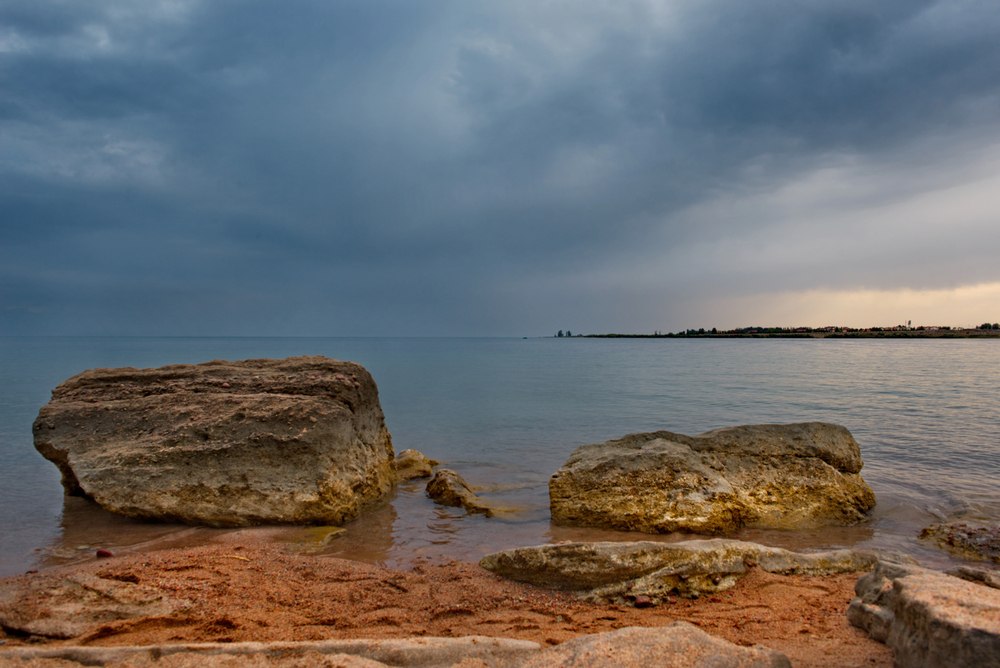
Archaeologists have discovered rare coins dating to the 10th–11th centuries at the bottom of Lake Issyk-Kul in Kyrgyzstan. The coins, from the Karakhanid period, may contain as much as 90% lead, an unusual composition that researchers believe could reflect a shortage of copper. Their discovery is particularly valuable for understanding monetary circulation in medieval Central Asia. The coins were found during underwater excavations at the Toru-Aygyr archaeological complex in northwestern Issyk-Kul. The site contains the remains of a large medieval settlement on the northern branch of the Silk Road. According to the Institute of Archaeology of the Russian Academy of Sciences, the settlement existed from at least the 10th to the 13th centuries and was submerged in the 15th century. Expedition co-leader and archaeologist Maxim Menshikov said the coins were poorly preserved. The metal is brittle and porous, with inclusions resembling sand, making the inscriptions difficult to decipher. Their precise composition has yet to be confirmed through laboratory analysis. Archaeologists also discovered part of a cast-iron cauldron, believed to be among the earliest finds of its kind at the site, and large fragments of ceramic vessels. Seven medieval structures built from fired bricks have been discovered at Toru-Aygyr. According to Menshikov, only about six comparable buildings are known from other archaeological sites in Kyrgyzstan. Research at the settlement resumed in 2023, with the latest round of fieldwork taking place in September 2026. Archaeologists are studying remains at depths of around four meters, using underwater imaging and specialized equipment. So far, only 15–20% of the site has been surveyed. One of the expedition's main objectives is to establish why the settlement was submerged. Researchers are investigating two possible explanations: an earthquake that caused part of the shoreline to collapse, or a gradual rise in water levels due to tectonic changes. The remains of a 7th–8th-century Buddhist temple were discovered at the Ak-Beshim archaeological site, the location of ancient Suyab in Kyrgyzstan's Chuy Valley. Suyab was a major Silk Road center and the capital of the Western Turkic Khaganate.
Central Asia and Azerbaijan Discuss Trade Expansion at Turkmenistan Summit

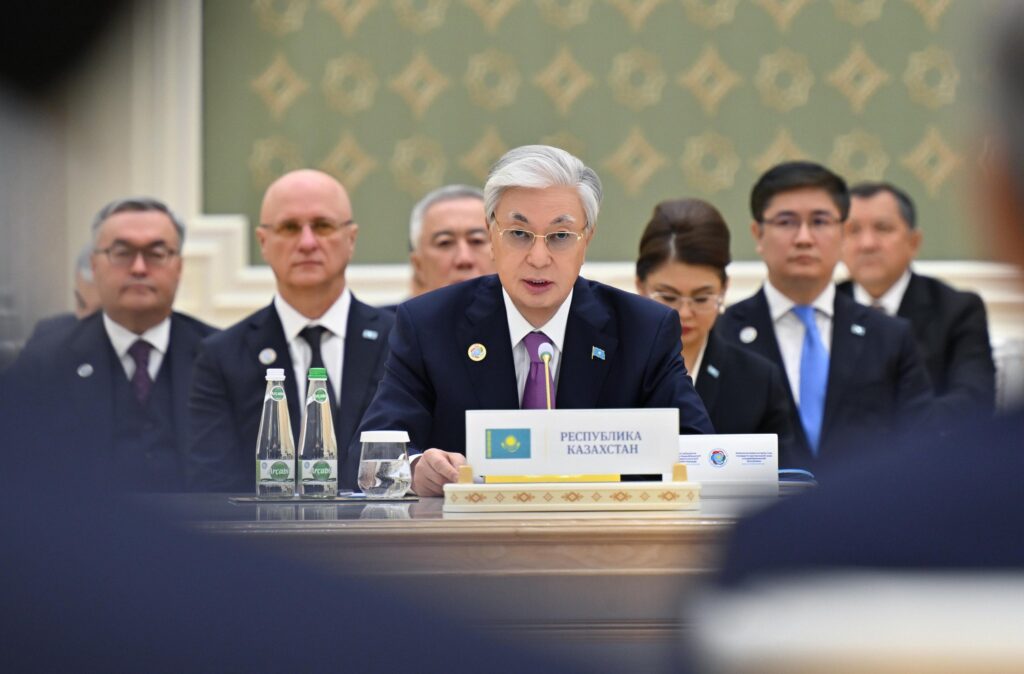
The leaders of Central Asia and Azerbaijan met in Turkmenistan on October 8, with expanding trade between their countries high on the agenda. Kazakhstan's President Kassym-Jomart Tokayev called for trade among the six countries to rise to at least $20 billion, up from approximately $13 billion in 2025. The eighth Consultative Meeting of the Heads of State of Central Asia and Azerbaijan was held in the resort of Avaza, with Azerbaijan participating as a full member of the grouping for the first time. According to Tokayev, trade between the six countries accounted for just 8% of their combined trade turnover last year. He proposed that governments develop a joint action plan to increase that share. Other leaders put forward proposals for closer economic ties. Uzbekistan's President Shavkat Mirziyoyev called for greater cooperation in manufacturing and a Central Asia-Azerbaijan Business Forum in 2027, while Kyrgyzstan's President Sadyr Japarov proposed creating a shared e-commerce platform to make regional products more accessible. One problem is the insufficient integration of national markets. Even where countries share a border, trade is hampered by logistical constraints and differences in business operating conditions. Tokayev proposed bringing existing and planned cross-border trade and logistics complexes and industrial centers into a single network. The idea is to enable businesses from different countries to sell finished products to one another and produce them jointly. However, Kazakhstan's major transport projects are not designed solely for its neighbors. Astana is investing in railways and highways to increase freight transit between China, Central Asia, and Europe. The projects include the Moyynty–Kyzylzhar, Darbaza–Maktaaral, and Bakhty–Ayagoz railway lines, as well as the Aral–Caspian highway project. The Middle Corridor holds a particularly important place in these plans, running from China through Kazakhstan, the Caspian Sea, Azerbaijan, and Georgia to Europe. It allows freight to bypass Russian territory and is viewed as an alternative to traditional northern routes. Kazakhstan is now proposing to explore linking the Middle Corridor with the Trump Route for International Peace and Prosperity (TRIPP), a transport project through Armenia intended to connect mainland Azerbaijan with Nakhchivan. Plans for the route were outlined during talks in Washington in August 2025, and Armenia and the United States signed a framework agreement in June 2026. The route is to remain under Armenian sovereignty and jurisdiction. Astana has already established a technical group to assess its potential participation in TRIPP. For now, Tokayev is proposing that the integration of the two transport initiatives be discussed only at the expert level. At the Avaza summit, Turkmen President Serdar Berdimuhamedov emphasized the importance of developing North–South transport corridors alongside East–West routes. Turkmenistan also supports the eastern branch of the International North–South Transport Corridor, which connects Russia with Iran through Kazakhstan and Turkmenistan. However, an increase in freight traffic through Central Asia does not in itself mean that trade among its countries will grow. For that to happen, local producers need access to neighboring markets. The summit also addressed cooperation over shared water resources, with Tokayev proposing a regional framework...

Farewell to Russia: An Interview with Joe Luc Barnes on Central Asia’s Changing Role

In Moscow, before Russia’s full-scale invasion of Ukraine, Joe Luc Barnes met residents who distrusted their government but believed its assurances that war was not coming. The shock that followed opens his book, Farewell to Russia: A Journey Through the Former USSR. Barnes, a journalist, editor and contributor to The Times of Central Asia, has visited all 15 former Soviet republics since February 2022. His book explores how people have built their lives since independence, and how deeply Russia remains woven into them. Speaking to TCA, Barnes recalls meeting rural residents in Central Asia who were more supportive of Russia than their urban, Russian-speaking counterparts. He also reflects on why Russia remains a destination for young people seeking opportunities, despite the discrimination many face there. TCA: At the start of the book, you describe Muscovites’ conviction that Russia would not invade Ukraine. What sustained that certainty, and how did people respond when events shattered it? Joe Luc Barnes: I think it was mainly down to people not wanting to believe it. The amazing thing is that Muscovites (and Russians at large, in my experience) are fully aware that their government is full of crooks whom they wouldn’t trust with anything, but simultaneously most of them are in lockstep with the Kremlin’s foreign policy position. The war started just as Russia was trying to get the country vaccinated against Covid. In the end, the government struggled to persuade even 50% of people to have a single dose of the vaccine, but meanwhile those same people were sure the Kremlin was telling the truth when it said that its soldiers were massing on Ukraine’s borders as part of “routine exercises”. When the war did begin and that illusion collapsed, the main reaction was shock. For the first few days, there was a kind of numbness over the city. Many people had friends or relatives in Ukraine; others were stunned that something they had been denying had actually come to pass. Many in their 20s or 30s were disgusted with their government and began to look for a way out of the country. But people were generally focused on looking after themselves – worrying about things like finances, getting money out of their bank accounts, things like that. I think there was also a belief among many that it would be a short war. When I left Russia in March 2022, I don’t think I, or anyone around me, expected the war to still be raging four and a half years later. [caption id="attachment_58058" align="aligncenter" width="1774"] Lenin still stands in Bishkek, though not on his original plinth. Image: Joe Luc Barnes[/caption] TCA: Your title suggests a departure from Russia. Where in Central Asia did that feel most real, and where did everyday life complicate the idea? Joe Luc Barnes: I think in urban Central Asia, you can often feel like you’re in a Russian city. People speak Russian, you get around using Yandex Taxi, your mobile provider is Beeline, and architecturally you still...

Kyrgyzstan Public Debt Exceeds $10 Billion as Repayment Costs Rise

Kyrgyzstan’s public debt reached $10.16 billion by the end of July 2026, with the government expecting to spend about $1.83 billion servicing its external debt between 2027 and 2029. According to Ministry of Finance figures, external debt stood at $5.19 billion as of July 31, while domestic debt totaled $4.96 billion. External borrowing consists mainly of loans from foreign governments and international financial institutions, while domestic debt is raised primarily through government bonds. Total debt was equivalent to about 38% of the government’s projected gross domestic product (GDP) for 2026. At the end of 2025, the debt-to-GDP ratio stood at 39.5%, up from 36.2% a year earlier. The International Monetary Fund (IMF) expects the ratio to reach 41.4% by the end of 2026. The country’s debt burden is relatively high compared with those of its Central Asian neighbors. IMF figures put Kazakhstan’s public debt at 25.2% of GDP in 2025, while the equivalent figures were 28.6% for Uzbekistan and a projected 24.7% for Tajikistan. For comparison, United States government debt stood at 123.9% of GDP in 2025. China remains Kyrgyzstan’s largest foreign creditor. According to Deputy Finance Minister Umutjan Amanbaev, Bishkek owes Beijing about $1.4 billion, equivalent to 27% of its external debt. Much of the remainder is owed to international development banks and financial institutions. Most external loans were obtained on concessional terms, generally carrying low interest rates and long repayment periods. However, the country has also begun taking on more expensive commercial debt. In May 2025, the government issued its first sovereign Eurobonds, raising $700 million through five-year notes carrying an annual interest rate of 7.75%. The bonds, placed on the London Stock Exchange, now account for about 13.5% of external debt. They are due to mature in 2030, when external debt repayments are projected to reach about $1.1 billion, based on the repayment schedule for existing obligations. The draft budget for 2027–2029, published by the Ministry of Finance, allocates about $606 million to external debt servicing in 2027, $600 million in 2028, and $621 million in 2029. These payments cover principal and interest on existing debt. More than 80% are denominated in U.S. dollars, so a weaker som could increase the budget cost of meeting the same obligations. The government also expects to spend 82.2 billion soms servicing domestic debt. Public debt remains below the government’s benchmark of 70% of GDP. The Ministry of Finance expects debt sustainability to be maintained over the medium term, although exchange-rate fluctuations and economic shocks remain significant risks. The IMF also considers the debt sustainable, while assessing its risk of debt distress as moderate. However, it has warned that growing repayment costs, particularly on domestic and non-concessional borrowing, could place increasing pressure on public finances.

Kyrgyzstan Court Jails Kadyr Atambayev and Temirlan Sultanbekov

A court in Kyrgyzstan has sentenced Kadyr Atambayev, the son of former President Almazbek Atambayev, to four years in prison and opposition Social Democrats leader Temirlan Sultanbekov to seven years over an alleged plot to seize power following last year's parliamentary elections. The defendants denied the allegations, and Sultanbekov described the prosecution as politically motivated shortly before the October 8 verdict. The trial at Bishkek’s Pervomaisky District Court was held behind closed doors despite defense lawyers’ requests for public hearings, preventing independent scrutiny of much of the evidence. Kadyr Atambayev entered politics in 2021, when he was elected to Bishkek's city council as a Social Democrats representative. His father served as Kyrgyzstan's president from 2011 to 2017 but fell into conflict with his successor, Sooronbay Jeenbekov, and subsequently faced several criminal prosecutions. Sultanbekov leads the Social Democrats, a party closely associated with the former president's political circle. He is also a vice president of the Socialist International, an international association of socialist and social democratic parties. He was previously convicted in a separate case involving allegations of vote buying during the November 2024 local elections. His new seven-year prison term takes into account the earlier sentence. The latest case began on November 22, 2025, eight days before Kyrgyzstan's early parliamentary elections. Police detained ten people, including Social Democrats members, former lawmakers, and associates of Almazbek Atambayev. Investigators alleged that the group was preparing to organize unrest after the vote. Atambayev and Sultanbekov were among those charged with preparing a forcible seizure of power. Defense lawyers challenged the prosecution's evidence. Lawyer Asel Argymbaeva questioned a recording used in the case, alleging that it was made before investigators obtained judicial authorization for surveillance and that expert examinations found no calls for violence. The court acquitted former lawmaker Kubanychbek Kadyrov, while some other defendants received lesser penalties or were released from custody. Those convicted have the right to appeal. The verdicts come less than four months before Kyrgyzstan's presidential election on January 27, 2027, in which incumbent President Sadyr Japarov intends to seek a second term. Since Japarov came to power in 2020, Kyrgyzstan has adopted a presidential system that concentrates greater authority in the head of state. The presidential election is taking place amid criminal prosecutions of several prominent political figures and restrictions on rallies in central Bishkek.

They Went to Russia for Work and Ended Up at War: How Central Asians Enter the Russian Military

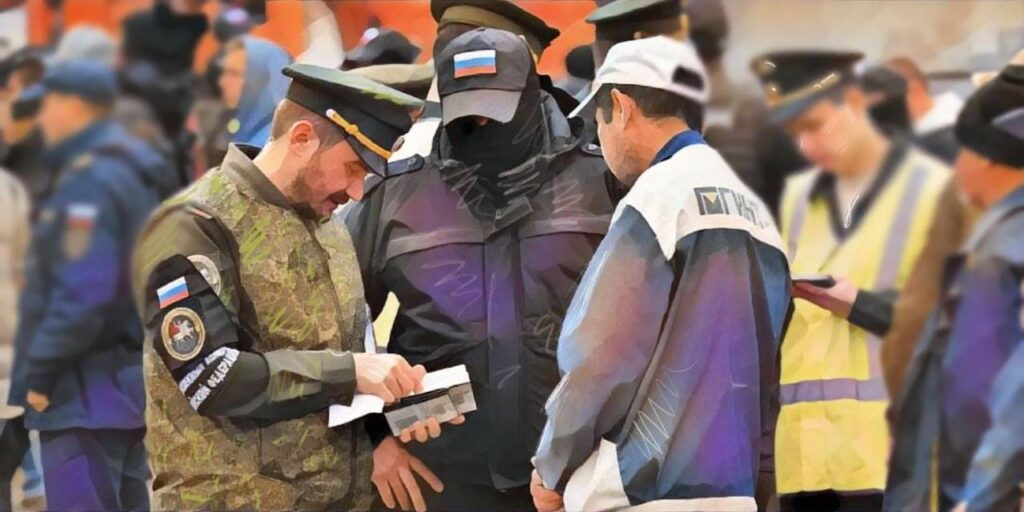
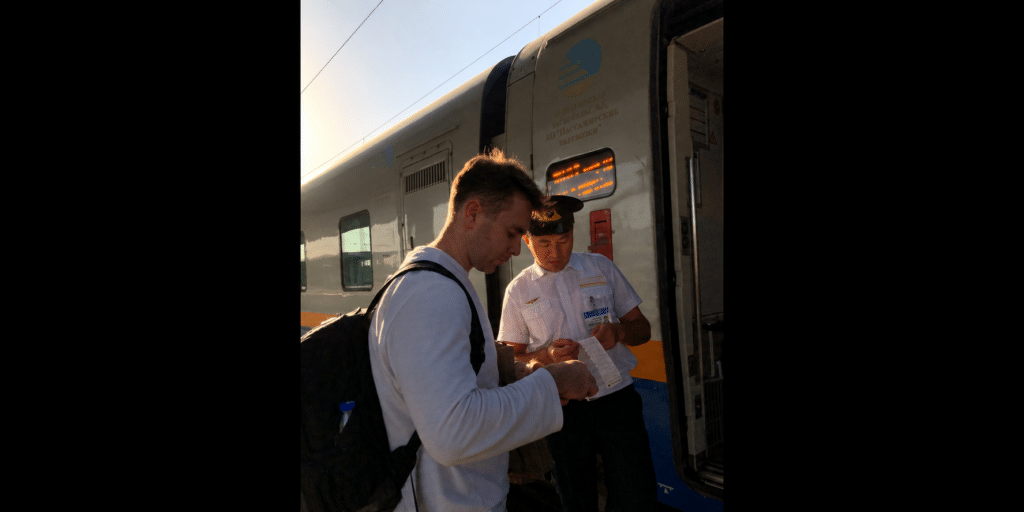
Twenty-year-old Ainabek Keldibek went to Russia expecting to work as a security guard. Relatives of other young Kazakh men say they had taken jobs at a sausage factory and a poultry farm. But according to reports aired in early October on Kazakhstan’s KTK television channel, the men later ended up in or near the combat zone in Ukraine. Some appeared in videos wearing Russian military uniforms and asked Kazakhstan to help bring them home. On October 7, relatives of Kazakh citizens who had reportedly ended up in Russia’s military visited the Foreign Ministry in Astana to seek help bringing them home. Lawyer Meirman Shekeyev, who accompanied the families, said his list had grown from eight to 21 people as more relatives contacted him. The same day, ministry spokesperson Zhanbolat Ussenov said officials were checking appeals and would send Russia a list of citizens after verification. Negotiations over their return were underway, he said. Exactly how the men ended up in the Russian military remains unclear. One family said their relative had already been wounded, while KTK reported that the circumstances surrounding the signing of the military contracts have not been independently established. For now, much of what is known comes from the men themselves and their relatives. Their stories raise a broader question that neither Moscow nor the capitals of Central Asia have fully answered: how many people from the region have ended up in the Russian military, and under what circumstances did they get there? Nearly 13,000, According to a Ukrainian Database Russia does not publish comprehensive statistics on foreign contract soldiers. Central Asian governments have only fragmented data from criminal cases, consular appeals, and reports from relatives. The most detailed country-by-country breakdown comes from the Ukrainian government project I Want to Live. By May 2026, the project said it had identified 12,919 citizens of the five Central Asian states who had signed contracts with the Russian Ministry of Defense: 4,955 citizens of Uzbekistan, 3,489 of Tajikistan, 2,420 of Kazakhstan, 1,474 of Kyrgyzstan, and 581 of Turkmenistan. These figures cannot be regarded as complete or independently verified. I Want to Live operates within Ukraine’s Coordination Headquarters for the Treatment of Prisoners of War, and Ukraine is a party to the war. In addition, 12,919 is a cumulative figure, not the number of Central Asians currently at the front. Some may have been killed or captured, completed their service, returned home, or obtained Russian citizenship. Another major estimate comes from the International Federation for Human Rights (FIDH), Truth Hounds, and the Kazakhstan International Bureau for Human Rights and Rule of Law. Their report estimates that Russia recruited at least 27,000 foreign nationals from more than 130 countries after February 2022. More than 10,000 of them, according to the study, came from Central Asia. The study is based on open sources, consultations with Ukrainian authorities and experts, and interviews with 16 prisoners of war and former Russian servicemen. There are no comparable publicly available Russian statistics, meaning it is impossible to...