Tajikistan has officially renamed the country’s largest glacier, previously known as the Vanchiakh Glacier, as the Tajikistan Glacier, according to a government decree signed on June 3.
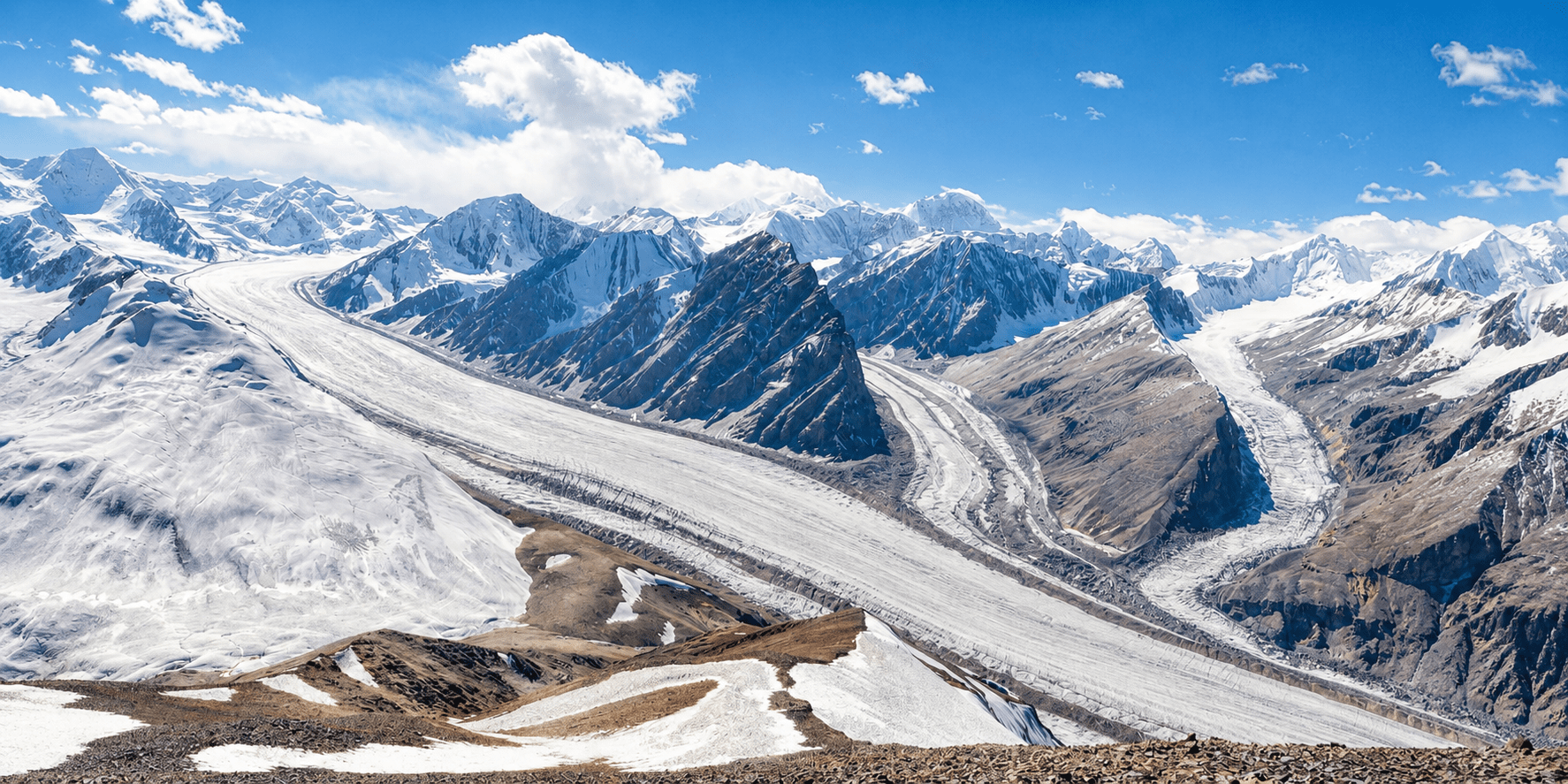
The glacier, also widely known internationally as the Fedchenko Glacier, is the longest glacier outside the polar regions. Stretching approximately 77 kilometers and covering about 700 square kilometers, it forms part of a vast glacial system that includes around 100 smaller glaciers.
The glacier is one of the largest in Eurasia, surpassed in area only by the Siachen and Baltoro glaciers in the Karakoram mountain range. Siachen extends roughly 76 kilometers and covers about 750 square kilometers, while Baltoro stretches 62 kilometers and covers a similar area.
The newly renamed Tajikistan Glacier plays a critical role in the hydrology of Central Asia, serving as one of the region’s most important freshwater reserves.
Last year, the glacier became the focus of a major international scientific expedition conducted under the Research on Climate and Cryosphere in the Pamirs (RECAP) project. Between July 19 and August 23, 2025, researchers from Tajikistan, Germany, and France carried out extensive fieldwork aimed at establishing a permanent monitoring system to track climate change and glaciological processes in the Pamir Mountains.
Scientists faced challenging conditions during the expedition, transporting heavy equipment by hand to elevations exceeding 5,000 meters above sea level. Despite low oxygen levels, freezing temperatures, and difficult terrain, the team successfully installed an autonomous monitoring station capable of transmitting real-time data to a central database.
Researchers said all planned monitoring stations were successfully deployed. Data collected from the glacier will now become part of an international climate observation network, providing scientists with new tools to assess glacier retreat and better understand the long-term implications for Central Asia’s water resources.
The Tajikistan Glacier remains not only one of the region’s most significant glacial formations, but also an important indicator of the future availability of freshwater resources upon which millions of people across Central Asia depend.