• KZT/USD = 0.00220
  • TJS/USD = 0.10860
  • UZS/USD = 0.00008
  • TMT/USD = 0.29850
  • KZT/USD = 0.00220
  • TJS/USD = 0.10860
  • UZS/USD = 0.00008
  • TMT/USD = 0.29850
  • KZT/USD = 0.00220
  • TJS/USD = 0.10860
  • UZS/USD = 0.00008
  • TMT/USD = 0.29850
  • KZT/USD = 0.00220
  • TJS/USD = 0.10860
  • UZS/USD = 0.00008
  • TMT/USD = 0.29850
  • KZT/USD = 0.00220
  • TJS/USD = 0.10860
  • UZS/USD = 0.00008
  • TMT/USD = 0.29850
  • KZT/USD = 0.00220
  • TJS/USD = 0.10860
  • UZS/USD = 0.00008
  • TMT/USD = 0.29850
  • KZT/USD = 0.00220
  • TJS/USD = 0.10860
  • UZS/USD = 0.00008
  • TMT/USD = 0.29850
  • KZT/USD = 0.00220
  • TJS/USD = 0.10860
  • UZS/USD = 0.00008
  • TMT/USD = 0.29850
03 November 2026

Viewing results 31 - 36 of 293

Turkmenistan Signs Regional Cooperation Treaty, Reaffirm $1 Billion Kazakh Trade Target

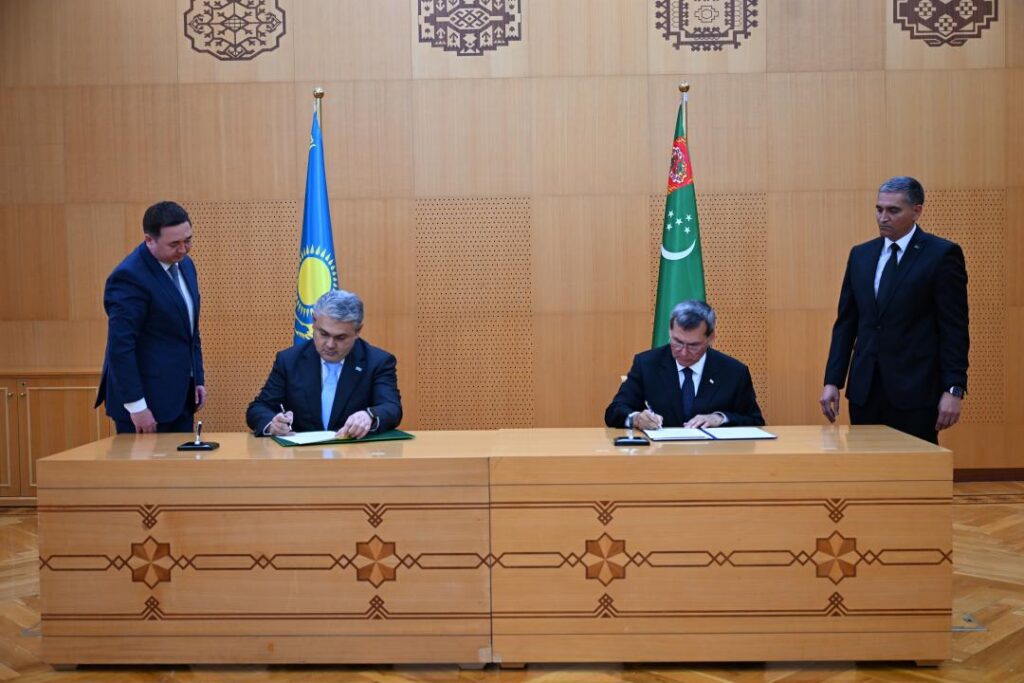
Turkmenistan has signed the Treaty on Friendship, Good-Neighborliness, and Cooperation for the Development of Central Asia in the 21st Century, completing another step in the five-country regional agreement during Kazakh Foreign Minister Yermek Kosherbayev’s official visit to Ashgabat, Kazakhstan’s Foreign Ministry said. During the visit, Kosherbayev was received by Turkmen President Serdar Berdimuhamedov and held talks with Turkmen Foreign Minister Rashid Meredov. The sides discussed political ties, trade and investment, transport and logistics, energy cooperation, and humanitarian exchanges. The two countries also signed a cooperation program between their foreign ministries for 2027-2028. Trade expansion was one of the key issues on the agenda. Bilateral trade turnover rose 6.8% year-on-year in January-April 2026 to around $180 million, according to the Kazakh side. Both governments reaffirmed plans to raise annual trade to $1 billion, in line with instructions from their presidents. Kazakhstan has also signaled plans to expand non-commodity exports to Turkmenistan. At the Kazakhstan-Turkmenistan business forum in Astana, the Kazakh side presented 178 export product categories with a combined potential exceeding $200 million. The products include metallurgy, machinery, food, chemicals and petrochemicals, pharmaceuticals, transport equipment, and construction materials. According to Kazakhstan’s Ministry of Trade, bilateral turnover has more than doubled over the past five years, surpassing $530 million. Kazakh exports to Turkmenistan rose nearly 50% to $316.3 million, while imports from Turkmenistan increased fivefold to $215.8 million. The two sides also discussed expanding trade houses, digital commerce, trade financing, and a roadmap for increasing bilateral trade. Transport and logistics cooperation was another focus, including development of the Trans-Caspian International Transport Route, seen as a strategic route linking Asian and European markets. More than 100 Kazakh companies and around 40 Turkmen businesses took part in the forum. Several agreements were signed in logistics, e-commerce, investment, and business support.
Central Asian Labor Migration Shifts as Russia Loses Some of Its Pull

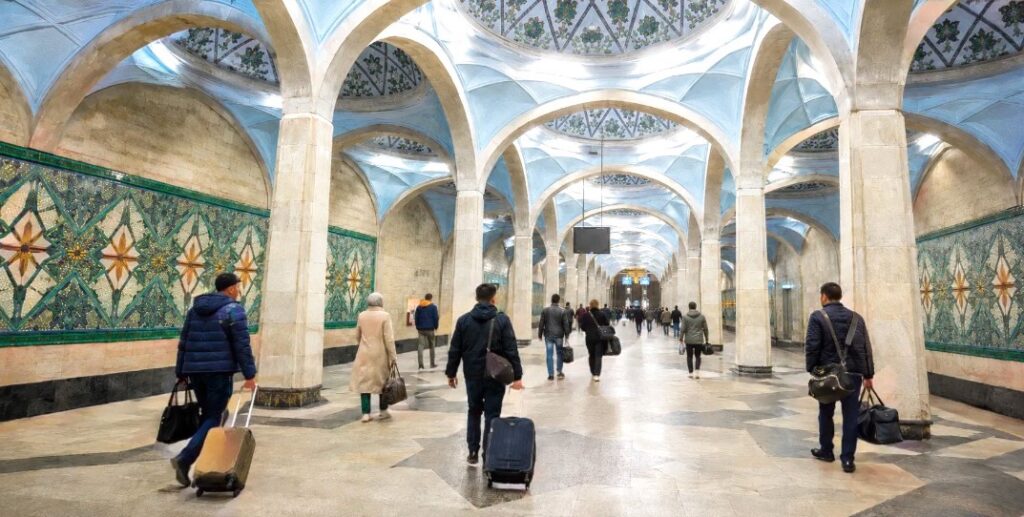
Russia remains the main destination for many Central Asian labor migrants, but its dominance is weakening. Since the start of the war in Ukraine, Western sanctions, tougher Russian migration rules, and rising hostility toward migrants have pushed workers from the region to look elsewhere. South Korea, the Gulf states, the United Kingdom, Poland, Belarus, and other destinations are increasingly competing with Russia for Central Asian labor. The result is not a collapse of the old migration model, but a visible diversification of flows as the geography of labor migration from the region expands. Kazakhstan: From Destination Country to Source of Skilled Migrants Since the collapse of the Soviet Union, most labor migrants from Central Asia have traveled to Russia in search of work. A shortage of local labor, relatively decent wages, familiarity with the language, and a similar mentality have driven many to seek jobs in major Russian cities. Kazakhstan is an exception. It has not seen mass migration of its own citizens into lower-skilled jobs in Russia such as janitorial or construction work. Kazakhstan’s own economy offers such jobs, unemployment has remained low, and employers continue to report shortages in both manual work and skilled professions. The Bureau of National Statistics put unemployment at 4.5% in the first quarter of 2026. For this reason, Kazakhstan has also long been a destination for migrants from neighboring states, even if Russia has traditionally attracted larger flows. Kazakh citizens working abroad generally aim for higher-paying jobs in sectors requiring qualifications. The government was already tracking this in 2024, when the Ministry of Labor and Social Protection reported, using Foreign Ministry data, that 137,000 Kazakh citizens were abroad for employment purposes. The largest numbers were in Russia, South Korea, Turkey, and the UAE, with smaller numbers in Europe, North America, and elsewhere. A later Ministry report showed the same pattern, with Russia still dominant but alternatives clearly visible: of 126,000 Kazakh citizens employed abroad, 102,000 were in Russia, 15,000 in South Korea, and around 2,000 in the United Kingdom and European Union member states. Those leaving include economists, lawyers, technical specialists, teachers, and medical workers. Although outward labor migration remains limited compared with Uzbekistan, Kyrgyzstan, or Tajikistan, it is adding to official concerns about the loss of qualified specialists. Officials believe Kazakhstan’s labor market is vulnerable to external competition, and a large share of those leaving have higher or technical vocational education. Salary gaps and differences in living standards make these destinations attractive. Qatar has recently joined the list of preferred destinations for labor migration. This has been made possible in large part by intergovernmental agreements signed between Qatar and Kazakhstan. Qatar is now actively recruiting Kazakh specialists, particularly in the oil and gas sector. According to Arman Shokparov, co-founder of People Consulting, around 600-700 Kazakh white-collar professionals currently work in Qatar. Nearly half work in the oil and gas sector, mainly in engineering and production roles. This trend does not mean Kazakhstan is only losing workers. It continues to attract immigrants and...

Turkmenistan Says Air Belgium Will Launch Cargo Flights via Ashgabat

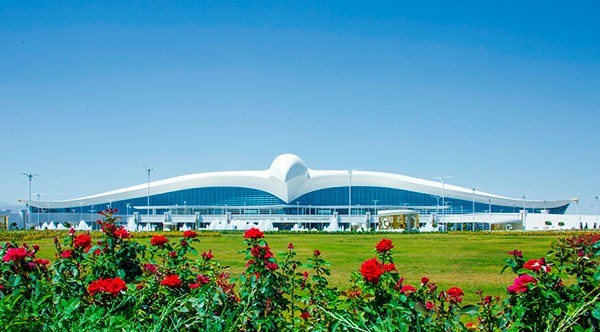
Air Belgium will start cargo flights through Ashgabat International Airport in early August, reflecting Turkmenistan’s hopes of becoming an air cargo hub between Asia and Europe despite its traditional restrictions on the aviation market. Sapar Palvanov, Turkmenistan’s ambassador in Brussels, discussed the plan with Air Belgium CEO Georges Chachati during a recent visit to the headquarters of the Belgian carrier, which focuses on cargo operations through aircraft charter and leasing operations. “Special attention was paid to the practical aspects of the upcoming launch of cargo flights, as well as to technical details related to the organization of this process,” the Turkmen embassy in Belgium said on Friday. “The parties also discussed the possibility of holding a symbolic ceremony to mark the first launch of cargo flights, which is expected to take place in early August of this year.” The embassy said that Chachati, who had met transport leaders during a visit to Turkmenistan, noted the “attractive conditions” at Ashgabat International Airport, including refueling services and technical support. Palvanov said “the development of air logistics is an important part of the country’s broader strategy to expand international transport connectivity and diversify cargo transportation routes,” according to the embassy. Air Belgium’s fleet includes Boeing B747-8F and Airbus A330-243F freighters, according to the Belgian Air Transport Association. The carrier originally served passengers but ran into financial trouble in the early 2020s and shifted its focus to cargo traffic. After entering bankruptcy last year, Air Belgium was rescued when CMA CGM, a French multinational that is one of the world’s top shipping groups, took over the carrier’s cargo operations. Relatively few foreign carriers fly to Turkmenistan compared with other Central Asian countries, including Kazakhstan and Uzbekistan, which have taken more robust steps to welcome competition and visitors. Although Turkmenistan tightly regulates aviation and favors its national carrier, the country has invested in airport infrastructure and says it hopes to attract more international cargo carriers. Central Asia has become more important as a regional hub for air traffic because many carriers are seeking alternative routes between Europe and Asia amid Russia’s war in Ukraine and periodic conflict in the Middle East.

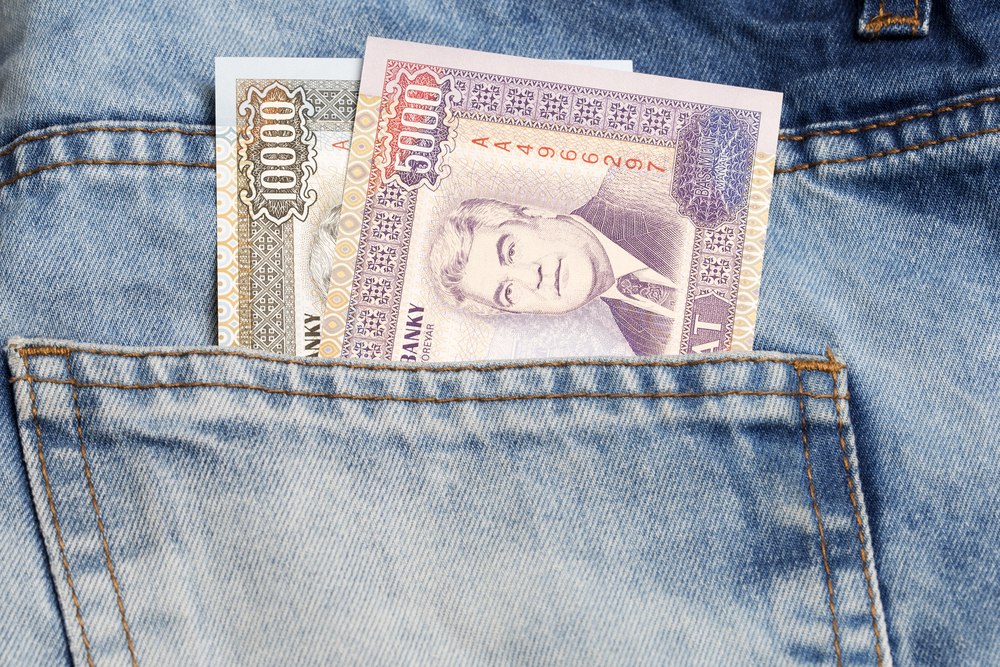
Turkmenistan Cash Shortage Forces Residents to Pay Middlemen for Their Own Money

Residents of the town of Kaka in Turkmenistan’s Ahal region are facing a shortage of cash. Queues at ATMs stretch for dozens of people, but many residents are unable to withdraw money because the machines quickly run out of banknotes. As a result, some are turning to intermediaries who help them obtain cash for a fee. In recent weeks, an unusual service has become widespread in the town. So-called “cash-out agents” travel directly to customers with a bank terminal, check the balance on their card, and immediately hand over the requested amount in cash. For this service, they charge a commission of 10 manats for every 1,000 manats withdrawn, or roughly 1%. The intermediaries then take the owner’s bank card and withdraw the money themselves to recover the amount they have advanced. According to local residents, these agents likely know of ATMs with few or no queues, such as those located inside government institutions. The card is later returned to the owner. Despite the relatively small commission, residents use the service less for convenience than because of constant difficulties accessing cash. Many prefer paying a middleman to standing in line for several hours, only to find that the ATM is empty. The exact reasons for the current cash shortage remain unclear. So far, Turkmen.news sources have reported such difficulties only in Kaka. However, similar situations are not new in Turkmenistan. In spring 2025, the same problem was reported in the Mary and Lebap regions, while during the economic crisis of 2020-2021, cash was distributed across the country using vouchers. Authorities have regularly tried to ease the consequences of such crises. Measures have included restrictions on cash withdrawals, limits on withdrawal amounts, assigning specific ATMs to employees of particular enterprises, and allowing customers to use only machines linked to their servicing branch. In some cases, ATMs have even been moved to the outskirts of towns to keep long queues out of public view. Turkmenistan has also periodically imported new banknotes, which are printed in Malta. Residents cannot simply switch to cashless payments. Non-cash transactions are often disrupted by frequent internet outages, while the country’s banking system remains underdeveloped. According to sources, customers have reported missing funds, international transfers can take weeks, and foreign currency can be purchased at the official exchange rate only in limited circumstances and in small amounts. Under these conditions, alternative payment methods have become widespread. For domestic transfers, money is often sent to a mobile phone balance, after which it can be converted into cash through intermediaries for a commission. A similar system is also used for transfers from countries with large Turkmen diaspora communities. Money is handed over to intermediaries abroad, while their partners inside Turkmenistan provide recipients with the equivalent amount in manats. Such informal networks complicate oversight of financial flows. They have also emerged in response to the limitations and weak development of the country’s banking system.

EU Launches Platform to Mobilize Up to €2 Billion for Europe–Central Asia Connectivity

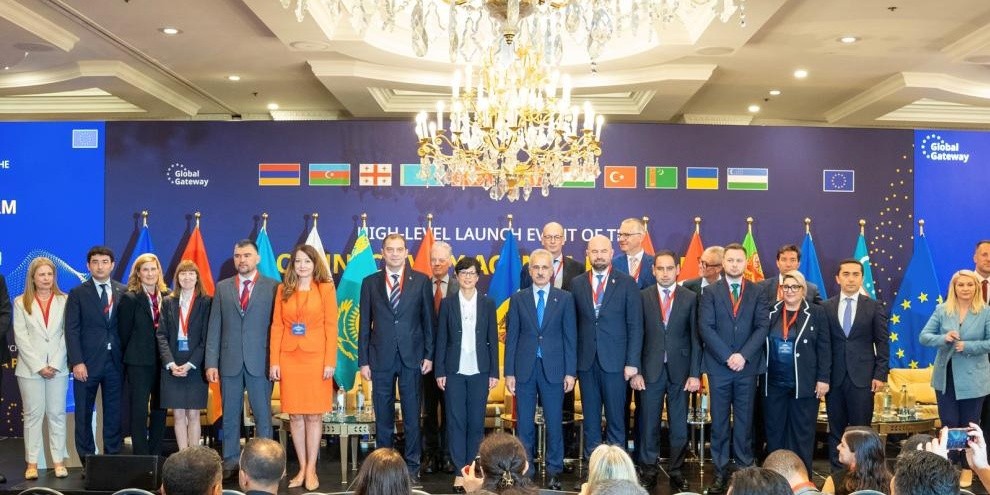
The European Commission launched a Connectivity Agenda Platform on June 23, 2026, and concluded statements of intent with international financial institutions expected to mobilize up to €2 billion ($2.3 billion) for transport, border-crossing and trade-facilitation projects across the Black Sea region and the South Caucasus. The initiative was unveiled at a high-level ministerial meeting in Brussels, hosted by European Commissioner for Enlargement Marta Kos, Commissioner for International Partnerships Jozef Síkela, and Commissioner for Sustainable Transport Apostolos Tzitzikostas. The meeting brought together transport ministers and senior officials from EU member states, as well as representatives from Armenia, Kazakhstan, Kyrgyzstan, Moldova, Tajikistan, Turkmenistan, Türkiye, Ukraine, and Uzbekistan, alongside international lenders, to advance connectivity projects under the EU’s Global Gateway strategy. The new platform is designed to coordinate investments and policy actions across transport, energy, digital connectivity, and trade. Participants also agreed to improve the operational efficiency of the Trans-Caspian Transport Corridor, a wider framework that includes the Trans-Caspian International Transport Route, or TITR, also known as the Middle Corridor. The route links China and Europe through Central Asia and the South Caucasus, offering an alternative to transport routes crossing Russia. The European Commission said the expected financing would support transport infrastructure, border-crossing modernization, and trade-facilitation projects aimed at improving freight movement across the corridor. “The Trans-Caspian Transport Corridor is becoming a vital bridge between Europe and Asia,” Síkela said, adding that the investments would help make the route faster, more reliable, and better integrated. Tzitzikostas said stronger transport links were critical for economic competitiveness and regional resilience. The platform’s launch came during Kazakh President Kassym-Jomart Tokayev’s official visit to Brussels, where he met with European Council President António Costa and European Commission President Ursula von der Leyen. In an EU–Kazakhstan joint statement, the leaders reaffirmed the strategic importance of the Trans-Caspian corridor and pledged deeper cooperation under the EU’s Global Gateway strategy. They also highlighted the EU’s role as Kazakhstan’s largest trade and investment partner and agreed to deepen cooperation in critical minerals, energy, transport, digitalization, and emerging technologies. Speaking at the Kazakhstan-EU roundtable in Brussels, Tokayev said Kazakhstan was investing heavily in infrastructure to position itself as a regional logistics hub connecting Europe, Central Asia, China, the Caucasus, and the Middle East. According to Tokayev, cargo volumes along the Middle Corridor have risen fivefold over the past six years, from 0.8 million tons to 4.1 million tons annually, with Kazakhstan targeting a capacity of 10 million tons. He said Kazakhstan has invested more than $35 billion in transport and logistics infrastructure over the past 15 years, with the Caspian ports of Aktau and Kuryk serving as major transit gateways. Tokayev also welcomed logistics agreements worth nearly $1 billion signed on June 23 by the Development Bank of Kazakhstan: one with the European Investment Bank, and a separate agreement with a banking syndicate including Commerzbank, JPMorgan Chase, and Standard Chartered, backed by guarantees from the Multilateral Investment Guarantee Agency (MIGA). A day earlier, Kazakhstan and European partners announced four transport-related agreements worth...

Petronas Turkmenistan Deal Deepens Malaysia Energy Ties

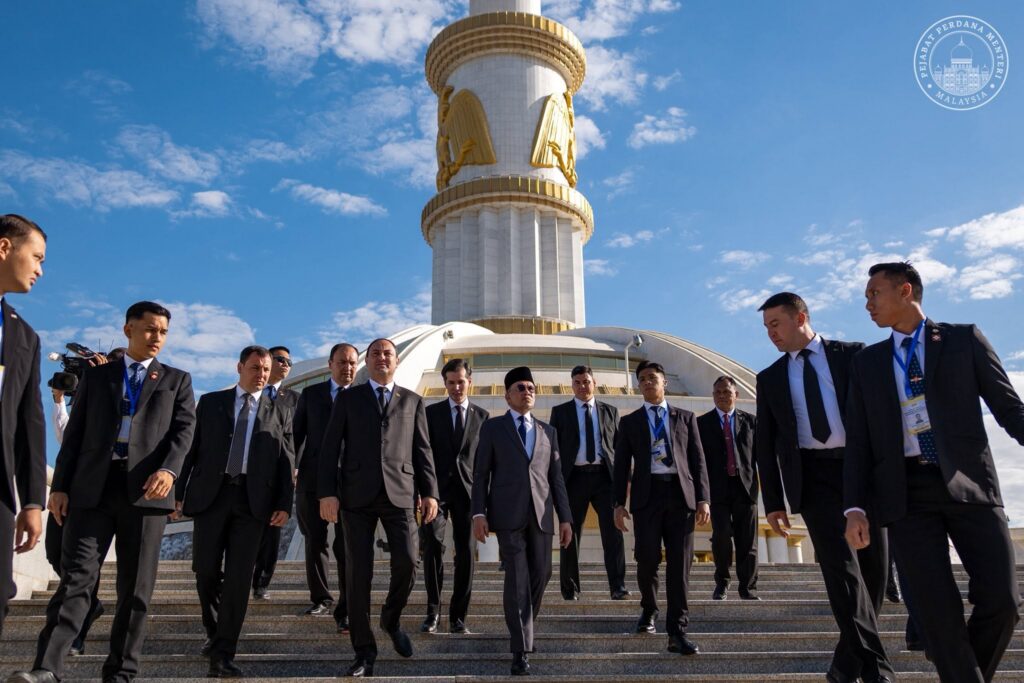
Malaysian Prime Minister Anwar Ibrahim arrived in Turkmenistan on June 18 for an official visit focused on energy cooperation, with the two countries signing a new strategic partnership involving Petronas and Turkmenistan’s energy authorities the following day. Anwar and Turkmen President Serdar Berdimuhamedov witnessed the signing on June 19, Malaysian media reported. The agreement followed earlier comments by Malaysian Deputy Economy Minister Akmal Nasrullah Mohd Nasir, who said Malaysia was seeking to strengthen its energy supply chains through long-term hydrocarbons cooperation with Turkmenistan. Anwar's visit follows Turkmen President Serdar Berdimuhamedov’s official trip to Malaysia in 2024, which Turkmen officials have described as opening a new stage in bilateral relations. Energy is the central pillar of economic ties between the two countries. Malaysian state energy company Petronas has operated in Turkmenistan since 1996, when it became one of the first foreign companies to develop offshore oil and gas fields in the Turkmen sector of the Caspian Sea. Since then, the company has invested about $11 billion in Turkmenistan’s hydrocarbon sector. Petronas’ main asset is Block 1, linked to the Kiyanly Gas Treatment Plant and Onshore Gas Terminal on Turkmenistan’s Caspian coast. Block 1 currently produces about 400 million cubic feet of natural gas per day, equivalent to roughly 4.1 billion cubic meters per year, and holds more than 7 trillion cubic feet of gas resources. In 2025, Petronas signed a new production-sharing contract for the block with Abu Dhabi’s XRG, state enterprise Hazarnebit, and state concern Türkmennebit. Under that arrangement, Petronas retained 57% as operator, XRG took 38%, and Hazarnebit held 5%. Berdimuhamedov also approved a resolution authorizing Türkmennebit to conclude an agreement with Petronas and Hazarnebit on the development of licensed offshore blocks in Turkmenistan’s sector of the Caspian Sea. Malaysia’s role in Turkmenistan is smaller than China’s, but more technical and operational. Petronas has been an upstream investor and offshore operator, while China is Turkmenistan’s dominant gas customer. Turkmenistan exports around 30 billion cubic meters of gas a year to China. In April 2026, China and Turkmenistan signed an agreement on the fourth phase of the Galkynysh gas field, under which China National Petroleum Group (CNPC) is to build gas-processing facilities capable of handling an additional 10 billion cubic meters of gas per year. Reuters reported the project value at $5.1 billion. Turkmen state media said the two countries are also seeking to broaden cooperation across a range of sectors from transport to science and education. Talks in Ashgabat are expected to focus on energy cooperation, investment projects, and expanding trade links.