In most Central Asian countries, checking the average salary is as simple as visiting the national statistics agency’s website. In Turkmenistan, however, wage data remain largely inaccessible.
The State Statistics Committee does not publish salary figures online, and its annual statistical yearbooks are available only in printed form inside the country. Nevertheless, occasional official figures emerge, offering a glimpse into a labor market that differs markedly from those of its regional neighbors.
As of January 1, 2025, Turkmenistan’s monthly minimum wage stands at 1,410 manats, equivalent to approximately $403 at the official exchange rate. An increase was introduced by presidential decree in July 2024 as part of a nationwide 10% rise in wages, pensions, and social benefits. The minimum wage was about $366 in 2024, and roughly $331 in 2023 at the official exchange rate.
Unlike neighboring economies, where wages are increasingly shaped by labor-market conditions, inflation, and private-sector demand, Turkmenistan’s minimum wage is established exclusively by presidential decree and applies uniformly across all sectors, occupations, and age groups. The centralized system leaves little room for market-based wage formation.
Although comprehensive official wage statistics remain unavailable, one rare set of figures attributed to the State Statistics Committee was published in 2017. According to those figures, the country’s highest-paid employees worked in the Merchant Marine Fleet, earning 2,387.6 manats per month, or about $682 at the official exchange rate then in use. They were followed by the National Space Agency under the President of Turkmenistan, at 1,909.9 manats, or about $546, and the state-owned Turkmenneft oil company, at 1,861.4 manats, or about $532. The lowest salaries were reportedly paid to employees of the Ministry of Trade and Foreign Economic Relations.
The ranking, although dated, is revealing. Rather than finance or technology, which dominate wage tables in many countries, Turkmenistan’s highest-paid sectors in that snapshot were closely tied to state prestige projects and strategic natural-resource industries.
A key factor complicating any assessment of income is the country’s dual exchange-rate system. The official rate has long been fixed at about 3.5 manats per U.S. dollar, which is used to calculate salaries in dollar terms for international reporting. However, the parallel market rate is substantially weaker, reducing the real international purchasing power of household incomes. Consequently, official salary figures converted into dollars should be interpreted with caution because they do not necessarily reflect the exchange rate available to ordinary citizens.
The gap between official wages and actual living costs also appears significant. While the government continues to subsidize basic food staples such as bread and flour, shortages have often forced households to buy goods in private markets at much higher prices. Free natural gas and water supplies ended in 2019, and utility costs have gradually increased since then, despite continuing subsidies.
Public cost-of-living data should be treated carefully, but they point in the same direction. The user-submitted database Numbeo estimates monthly costs for a single person in Ashgabat at about 6,475 manats before rent, more than four times the official minimum wage.
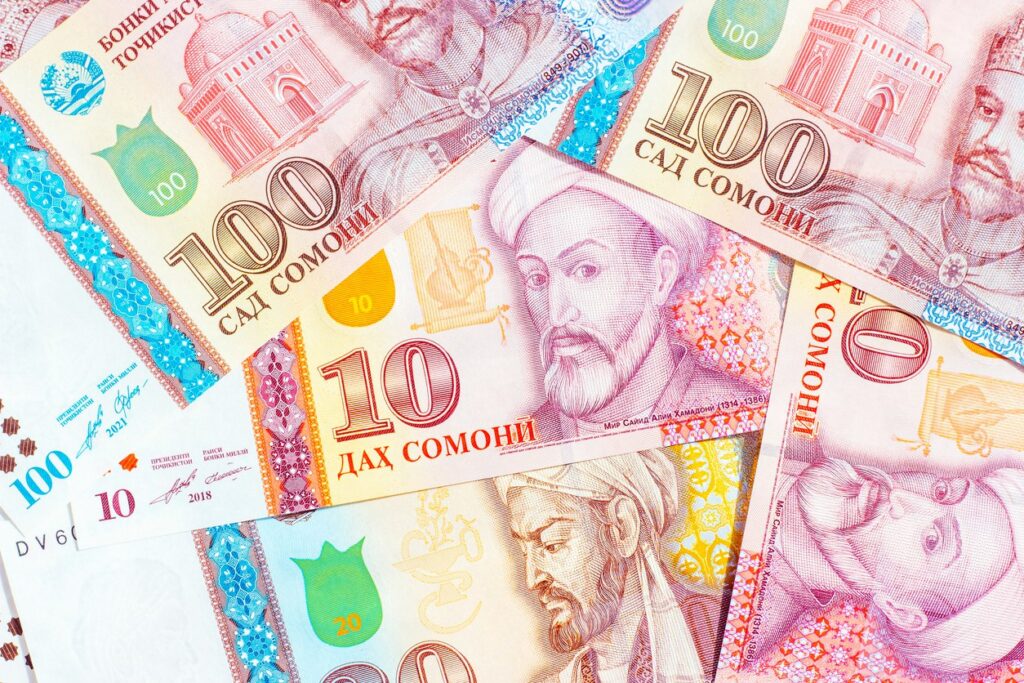
Regional comparisons further illustrate the ambiguity surrounding Turkmenistan’s official figures. As of mid-2025, the average monthly salary stood at approximately $314 in Tajikistan, $481 in Kyrgyzstan, $484 in Uzbekistan, and $790 in Kazakhstan. These figures come from different national reporting periods and methodologies, so they are useful as indicators rather than direct like-for-like comparisons.
On paper, Turkmenistan’s official minimum wage of about $403 does not appear to be the lowest in Central Asia. Yet the country’s limited statistical transparency, combined with its dual exchange-rate system, makes direct comparisons with neighboring economies considerably more difficult than official figures alone would suggest.
For now, Turkmenistan’s annual wage increases reveal less about household income than about how little economic data the state is willing to release.