• KGS/USD = 0.01143 0%
  • KZT/USD = 0.00205 0%
  • TJS/USD = 0.10433 0.1%
  • UZS/USD = 0.00008 0%
  • TMT/USD = 0.28577 0%
  • KGS/USD = 0.01143 0%
  • KZT/USD = 0.00205 0%
  • TJS/USD = 0.10433 0.1%
  • UZS/USD = 0.00008 0%
  • TMT/USD = 0.28577 0%
  • KGS/USD = 0.01143 0%
  • KZT/USD = 0.00205 0%
  • TJS/USD = 0.10433 0.1%
  • UZS/USD = 0.00008 0%
  • TMT/USD = 0.28577 0%
  • KGS/USD = 0.01143 0%
  • KZT/USD = 0.00205 0%
  • TJS/USD = 0.10433 0.1%
  • UZS/USD = 0.00008 0%
  • TMT/USD = 0.28577 0%
  • KGS/USD = 0.01143 0%
  • KZT/USD = 0.00205 0%
  • TJS/USD = 0.10433 0.1%
  • UZS/USD = 0.00008 0%
  • TMT/USD = 0.28577 0%
  • KGS/USD = 0.01143 0%
  • KZT/USD = 0.00205 0%
  • TJS/USD = 0.10433 0.1%
  • UZS/USD = 0.00008 0%
  • TMT/USD = 0.28577 0%
  • KGS/USD = 0.01143 0%
  • KZT/USD = 0.00205 0%
  • TJS/USD = 0.10433 0.1%
  • UZS/USD = 0.00008 0%
  • TMT/USD = 0.28577 0%
  • KGS/USD = 0.01143 0%
  • KZT/USD = 0.00205 0%
  • TJS/USD = 0.10433 0.1%
  • UZS/USD = 0.00008 0%
  • TMT/USD = 0.28577 0%

Viewing results 97 - 102 of 307

International Human Rights Defenders Demand Release of Turkmen Activist

Turkmen civil activist Murat Dushemov, who has completed a four-year prison sentence, was not released on June 14 as expected. Instead, he was transferred to a pre-trial detention facility in Turkmenabat just days before his anticipated release. Sentence Served, Yet No Freedom According to Turkmen.News, new criminal charges were filed against Dushemov following an alleged altercation with another inmate, an incident human rights defenders claim was fabricated. Dushemov asserts he was framed in a deliberate provocation: "The person who filed the complaint started hitting the wall, injuring himself, and smearing the wall with blood. They want to slander me again to prolong my stay here," he said. Human rights advocates argue the authorities are using these new accusations as a tactic to extend Dushemov's imprisonment. Retaliation for Criticism Dushemov was arrested in 2021 and sentenced to four years on charges of extortion and bodily harm. International watchdogs have consistently stated that the charges were politically motivated. Prior to his arrest, Dushemov had openly criticized the Turkmen government's COVID-19 policies, questioning the legal basis for mask mandates and mandatory vaccination, which he refused to comply with. One allegation involved the chief doctor of a medical facility, whom Dushemov allegedly blackmailed by threatening to release a compromising video. Another accusation stemmed from a supposed provocation in prison, where two inmates, allegedly encouraged by authorities, fought each other and later claimed Dushemov had assaulted them. Global Advocacy Five human rights groups, including the Norwegian Helsinki Committee, Turkmen.News, the Turkmen Human Rights Initiative, the International Partnership for Human Rights, and the Association for Human Rights in Central Asia, have issued a joint statement calling for Dushemov’s immediate release. They condemned the new charges as retaliation for his civic activism: “The authorities must drop the new criminal charges brought against civil society activist Murat Dushemov as clear retaliation for his activities and release him immediately,” they stated. The groups also urged Turkmenistan’s international partners to exert diplomatic pressure on Ashgabat to halt its persecution of activists and journalists. Human Rights Watch echoed this call, stating on June 25 that the Turkmen authorities must “immediately and unconditionally release activist Murat Dushemov and end all abuses aimed at prolonging his detention.” The case of Murat Dushemov illustrates the ongoing suppression of dissent in Turkmenistan. Despite growing international criticism, the government continues to use the criminal justice system as a tool to silence civil society.
From Eurasia to Greater Central Asia: A Region Reclaims Its Voice

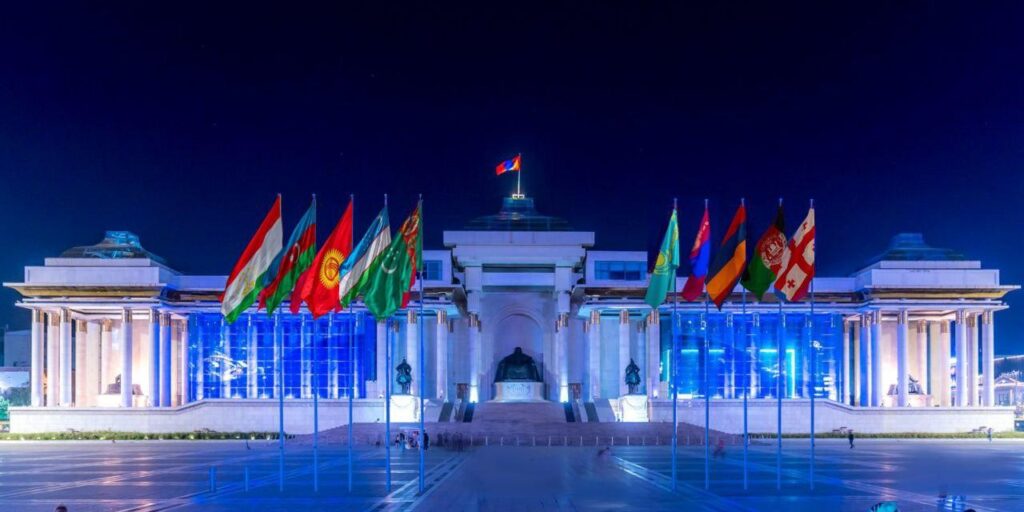
At its most basic, Eurasia refers to the combined landmass of Europe and Asia, stretching from the Atlantic Ocean in the west to the Pacific in the east, and from the Arctic in the north to South and Southeast Asia in the south. Yet when defined in political or economic terms, the concept becomes more complex. This vast region—covering over 36% of the world’s surface area—includes influential Western institutions in the west, such as the European Union and the Council of Europe. In contrast, the east is shaped by post-Soviet and Sino-Russian groupings, including the Commonwealth of Independent States (CIS), the Shanghai Cooperation Organization (SCO), and the Eurasian Economic Union (EAEU). In policy circles, the term "Eurasia" often refers more narrowly to the Caucasus (Armenia, Azerbaijan, Georgia) and Central Asia (Kazakhstan, Kyrgyzstan, Uzbekistan, Tajikistan, Turkmenistan, Mongolia, and Afghanistan). Yet countries in these regions rarely lead the institutions that shape their future. Instead, most regional organizations are dominated by larger powers, primarily Russia and China. One partial exception is the Organization of Turkic States (OTS), though it excludes non-Turkic members such as Tajikistan, Georgia, and Armenia. Many external actors—beginning with Japan's "Central Asia plus Japan" initiative in 2001—have formed dialogue platforms with the five post-Soviet Central Asian republics, often referred to collectively as the "C5." More recently, Turkey, China, the EU, and others have created similar frameworks. While these engagements have value, they are usually shaped by external agendas. The fundamental issue remains: Central Asia lacks strong, self-directed institutions of its own. In response to this institutional vacuum, Professor S. Frederick Starr proposed in 2015 a broader regional framing: Greater Central Asia. He called for moving beyond the Soviet-era definition of Central Asia to include neighboring regions with shared historical, cultural, and strategic ties. He also noted a stark reality: Greater Central Asia is the only region of its kind without its own exclusive institutions—ones not directed by outsiders. That may be starting to change. A more distinct regional identity is emerging, with new frameworks for cooperation gradually taking shape. As countries in the region increasingly define their own development priorities and diversify partnerships beyond Moscow and Beijing, there is growing momentum for a more autonomous and inclusive model of regional integration. One of the clearest examples is CAMCA—an initiative that reflects the full geographic and political scope of Greater Central Asia. Over the past decade, the Central Asia-Caucasus Institute (CACI), founded by Professor Starr, has worked with the Rumsfeld Foundation to support a new generation of regional leaders through the CAMCA Fellowship Program. Originally conceived by alumni of a joint initiative between Starr and former U.S. Secretary of Defense Donald Rumsfeld more than fifteen years ago, the CAMCA Network has become one of the few institutions uniting the entire Greater Central Asia region. Each year, the fellowship culminates in a regional forum hosted by a different CAMCA country. The most recent—held last week in Ulaanbaatar—marked the 11th such gathering and the second time the event has been hosted by CAMCA...

Experts Warn of Escalating Climate Risks for Central Asia

As global temperatures rise, Central Asia is emerging as one of the world’s most vulnerable regions to the impacts of climate change. This warning comes from three recent reports by the World Meteorological Organization (WMO), which predict intensified warming, more frequent droughts, and rapid glacier retreat in the region. Without urgent adaptation and coordinated policy responses, the region faces growing risks to its water resources, agriculture, and energy systems. Beyond the Climate Norm According to the WMO’s Climate Outlook for 2025-2029, Central Asia is projected to experience sustained warming and greater variability in precipitation. Every year in the 2025-2029 period is expected to be hotter than the 1991-2020 average. Particularly troubling is the growing likelihood that global temperatures may temporarily exceed +1.5°C above pre-industrial levels in the near term. One contributing factor is the heightened intensity of the South Asian monsoon, which is 82% more likely to be stronger than normal. While this could increase rainfall, the unpredictability raises concerns, periods of heavy rain could be followed by prolonged droughts, severely impacting regional agriculture. Another alarming development is the rapid retreat of glaciers in the Pamirs, which feed the region’s primary waterways, including the Amu Darya and its major tributary, the Vakhsh.  The loss of these glaciers threatens long-term water availability and necessitates a rethinking of regional water management strategies. The WMO forecasts that the 2025-2029 period could be the warmest on record, with global temperatures projected to rise by 1.2-1.9°C. Although the chance of exceeding +2°C during this period is currently low, about 1%, the probability is rising. Spring Floods, Summer Droughts A second WMO report, though focused on the Pacific region, reinforces global climate trends relevant to Central Asia. It confirms that 2024 was the hottest year on record, with global average temperatures 1.55°C above pre-industrial levels. For high-altitude countries like Tajikistan, the implications are already evident. Snow is melting earlier, shortening the runoff season. Water that once lasted through summer now disappears within weeks in the spring, heightening the risks of spring flooding followed by summer droughts. The region lacks sufficient reservoir infrastructure to capture and store water during periods of excess. The report also highlights the looming disappearance of Indonesia’s glaciers by 2026, a fate that may soon await Central Asia’s glaciers. The consequences are serious, particularly for countries like Tajikistan, where over 90% of electricity is generated by hydropower. Climate anomalies across the region are increasing, including dust storms, intense rainfall, extreme heat, and landslides. The WMO stresses the urgent need for adaptation measures such as modernized infrastructure and improved climate monitoring and water management systems. The Need for a Regional Strategy The third WMO report emphasizes Central Asia’s unique vulnerability to droughts, which often cross national borders. This underscores the need for a coordinated regional approach, especially in the Amu Darya and Syr Darya river basins. The report advocates for transboundary mechanisms for monitoring, data sharing, and joint response strategies. While Central Asia is part of the Global Network of Climate-Resilient River Basins, progress...

Turkmen Authorities Order Social Media Campaign to Showcase “Positive Image”

Authorities in Turkmenistan have launched a new initiative aimed at promoting a positive image of the country on social media platforms abroad. The campaign, ordered by the presidential administration in late May, is designed to counter what officials call “foreign centers of ideological subversion”, a term reminiscent of Soviet-era rhetoric used to describe independent media and opposition groups. Scripted Positivity: Who Films What Under the directive, regional administrations have been tasked with producing video content that highlights the country’s “achievements.” Cultural and arts workers are now expected to travel to rural areas to film staged interviews with farmers, gardeners, cotton growers, and artisans. These interviews must portray high living standards, rising incomes, modern amenities, and open support for the country's leadership. Visual presentation is tightly controlled: if a villager’s home is deemed sufficiently presentable, new construction, clean yard, the interview may be conducted there. Otherwise, filming must take place in fields or gardens to ensure an appealing backdrop. Begenchmyrat Orazov, khyakim (local governor) of the Mary region, emphasized that all content must be shot on ordinary mobile phones and without the involvement of professional teams or extra payment. “You get paid,” he reportedly reminded cultural workers during a May 28 meeting with local officials, law enforcement, and agricultural representatives. Millionaires on Paper Participants are instructed to describe their “decent earnings” using the outdated currency system, speaking in millions of old manats, despite the redenomination in 2009 (1 new manat = 5,000 old manats). This approach is intended to suggest inflated incomes to an international audience less familiar with the country's currency history. Cultural workers are encouraged to enhance the content by incorporating traditional songs, musical performances, or recitations of poetry by former president Gurbanguly Berdimuhamedov or the revered Turkmen poet Makhtumkuli. A Question of Translation Similar meetings have been held across all regions, and filming is reportedly underway. Villagers are required to submit documentation of completed work to the leadership of their agricultural associations, which must then report daily to district heads (etraps). However, a critical gap remains unresolved: how the video content will reach international viewers. The issue of translation into foreign languages has yet to be addressed. Posting videos exclusively in Turkmen is unlikely to appeal to a global audience. Additionally, many Turkmen migrants, one of the campaign’s implicit targets, are well aware of the country’s internal challenges. Old Tools for a New Image This initiative appears to be a response to increasing criticism from independent Turkmen media and social media platforms, which frequently report on the country’s socio-economic problems and human rights violations. These platforms, widely followed in the diaspora, have become a growing concern for the authorities in Ashgabat. Rather than engaging with the criticism through reform or transparency, the government is opting for a top-down media campaign reminiscent of earlier propaganda models. The focus seems less on improving conditions and more on reshaping perceptions. Whether this strategy will resonate beyond the bureaucratic machinery of the state remains to be seen.

Iraq Seeks Alternative Gas Import Routes Through Turkmenistan Amid Sanctions Challenge

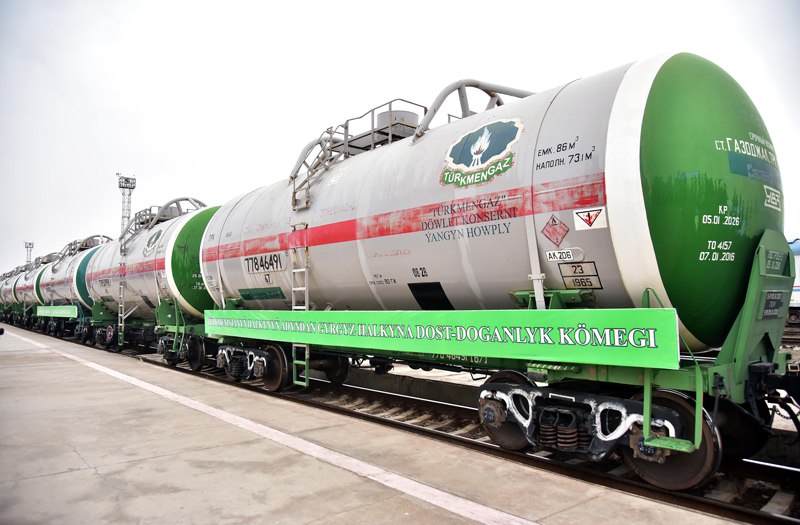
Iraq is intensifying efforts to implement a long-discussed agreement on natural gas imports from Turkmenistan, seeking to stabilize its energy sector and diversify supply sources. According to Ahmed Musa, spokesperson for Iraq’s Ministry of Energy, the plan involves importing around 20 million cubic meters of gas per day through pipelines connecting Turkmenistan and Iran. The route is intended to offset a shortfall caused by reduced gas flows from Iran, which currently supplies approximately one-third of Iraq’s energy needs. However, the implementation of this deal has faced significant hurdles. Chief among them is the issue of payments: the Trade Bank of Iraq (TBI) has been unable to issue a letter of credit due to U.S. sanctions on Iran, through whose territory the gas must transit. In an effort to resolve the deadlock, Iraqi Energy Minister Ziad Ali Fadel visited Turkmenistan to explore potential mechanisms to bypass the sanctions and operationalize the agreement. The foundations of this partnership were laid in 2023, when Iraq and Turkmenistan signed a memorandum of understanding, agreeing to continue negotiations on the logistics of fuel transit via Iran. Progress followed in November 2023, when both sides signed a protocol outlining the key commercial terms. Under the deal, Iraq is set to receive 45 billion cubic meters of gas over five years, equivalent to 9 billion cubic meters annually. The arrangement is structured as a swap: Turkmenistan will deliver gas to Iran, which in turn will transfer an equivalent volume to Iraq. Further advancing bilateral ties, Turkmenistan’s President Serdar Berdimuhamedov discussed gas supplies and the potential opening of an Iraqi embassy in Ashgabat with Iraqi Prime Minister Mohammed Shia Al-Sudani in March 2025. The talks underscored the growing strategic importance of energy cooperation between the two nations. A Strategic Energy Lifeline Iraq's reliance on natural gas to power its electricity grid makes securing reliable fuel sources a national priority. Given the country’s frequent power shortages and its current dependence on Iranian gas, diversifying suppliers is seen as crucial for both energy security and political autonomy. Turkmen gas is viewed as a strategically vital resource that could help stabilize Iraq’s energy sector and reduce vulnerability to geopolitical disruptions. The five-year agreement with Ashgabat aims to establish predictable, long-term supplies. Nevertheless, full-scale gas deliveries have yet to begin. The main obstacle remains the inability to process payments due to U.S. sanctions on Iran. Baghdad must either secure exemptions or devise alternative payment mechanisms to activate the contract. Simultaneously, technical discussions continue among Iraq, Iran, and Turkmenistan on ensuring reliable transport and infrastructure under the swap scheme. If these issues are resolved, Iraq could gain a dependable new energy partner, while Turkmenistan would expand its reach into a key southern market, strengthening both nations' strategic positions.

Forced Labor Rampant in Turkmenistan’s 2024 Cotton Harvest, Say Rights Groups

Despite public pledges of reform and cooperation with the International Labor Organization (ILO), Turkmenistan's government continues to enforce widespread forced labor during its annual cotton harvest. This is the core finding of a report released on May 19 by Turkmen.news, the Turkmen Initiative for Human Rights (TIHR), the Progres Foundation, and the Cotton Campaign coalition. Systemic Abuse: The Role of the State The report, titled “State-imposed Forced Labor in the 2024 Harvest and Links to Global Supply Chains,” identifies the Turkmen state as the primary orchestrator of forced labor practices. Observers documented conditions in the country’s key cotton-producing regions, Balkan, Dashoguz, Lebap, and Mary, while withholding personal identifiers to protect sources. Public sector workers, particularly junior staff from schools, healthcare facilities, and utilities, were either compelled to harvest cotton or to finance hired laborers from their own wages. Private entrepreneurs also faced coercive financial pressure. Although child labor remains officially banned, instances were reported, often incentivized by promises of payment. Reforms on Paper, Resistance in Practice While Ashgabat adopted a roadmap in 2024 for eradicating forced labor in coordination with the ILO, human rights defenders report negligible progress. Central to the issue is the state’s monopolistic control over every stage of the cotton supply chain, land allocation, seed distribution, pricing, and collection, enabling local officials to enforce arbitrary quotas and extort farmers. “Boosting productivity or upgrading equipment is futile unless workers are shielded from coercion and can organize to defend their rights,” the report concludes. Women disproportionately bear the burden, as they make up the majority of social sector employees and often lack the financial means to avoid fieldwork by hiring substitutes. Supervised Compliance and Global Implications The report also describes how Turkmen officials obstructed genuine engagement with the ILO. In Mary region, state workers were coached on how to respond to ILO queries, while others were excluded from meetings entirely. International supply chains are not immune. As one of the world’s top 15 cotton producers, Turkmenistan exports textiles primarily to Turkey, Italy, and Pakistan. Turkish-made goods incorporating Turkmen cotton are subsequently sold in the EU, while firms from Germany and Italy supply industrial machinery to Turkmen producers. Recommendations and Global Accountability The report urges the Turkmen government to hold corrupt officials accountable, uphold labor laws, and guarantee fundamental freedoms, including the right to form independent trade unions. International actors are advised to enhance import scrutiny and exclude goods linked to forced labor from supply chains. Foreign diplomats are encouraged to raise the issue during negotiations with Ashgabat and in investment discussions. The ILO, Turkmenistan’s Ombudsman, and international brands are called upon to maintain rigorous oversight and actively prevent labor violations. In a rare move, ILO experts were permitted to monitor the 2024 cotton harvest. Despite limited access, they published critical findings on wage inadequacies, child labor persistence, and repercussions for public employees who resisted field assignments.