• KZT/USD = 0.00223
  • TJS/USD = 0.10820
  • UZS/USD = 0.00009
  • TMT/USD = 0.29850
  • KZT/USD = 0.00223
  • TJS/USD = 0.10820
  • UZS/USD = 0.00009
  • TMT/USD = 0.29850
  • KZT/USD = 0.00223
  • TJS/USD = 0.10820
  • UZS/USD = 0.00009
  • TMT/USD = 0.29850
  • KZT/USD = 0.00223
  • TJS/USD = 0.10820
  • UZS/USD = 0.00009
  • TMT/USD = 0.29850
  • KZT/USD = 0.00223
  • TJS/USD = 0.10820
  • UZS/USD = 0.00009
  • TMT/USD = 0.29850
  • KZT/USD = 0.00223
  • TJS/USD = 0.10820
  • UZS/USD = 0.00009
  • TMT/USD = 0.29850
  • KZT/USD = 0.00223
  • TJS/USD = 0.10820
  • UZS/USD = 0.00009
  • TMT/USD = 0.29850
  • KZT/USD = 0.00223
  • TJS/USD = 0.10820
  • UZS/USD = 0.00009
  • TMT/USD = 0.29850
16 September 2026

Viewing results 37 - 42 of 141

Turkmenistan Tightens Internet Blocks to Promote State-Controlled VPNs

Internet restrictions in Turkmenistan have intensified sharply in recent weeks, according to sources who spoke with turkmen.news. Authorities have reportedly expanded the national IP blacklist by adding numerous /16 subnets, each covering over 65,000 IP addresses. While such sweeping blocks might appear politically motivated, insiders claim the real motive is commercial: corrupt officials are using the restrictions to market and sell VPN services and “whitelist” access they control themselves. In July 2024, Turkmen authorities briefly restored access to around 3 billion previously blocked IP addresses, raising hopes of a more open digital environment and a boost to the stagnant online economy. However, that reprieve proved temporary. The blocks soon returned, initially targeting smaller /24 subnets (255 IP addresses each). This summer, the government's cybersecurity department escalated efforts by blocking entire /16 subnets, cutting off hundreds of thousands of websites in a matter of weeks. Restrictions Without Justification Turkmenistan already ranks among the most digitally isolated nations. Independent media, global social networks, and any platforms perceived to host criticism of the government have long been inaccessible. However, the latest wave of blocks is not driven by political considerations, as most politically sensitive platforms were already restricted. Instead, the scale and targets of the new blocks suggest other motivations. According to turkmen.news, even benign and essential online services, such as update servers for antivirus software like Bitdefender and some Google utilities, have been caught in the dragnet. Experts warn that this poses a growing cybersecurity risk in a country with limited digital literacy and inadequate access to software updates. Selling Access in a Closed System Sources allege that Turkmen officials are using the crackdown to corner the market for virtual private networks. VPN keys now cost around 1,000 manats (roughly $50) per month, while access to a whitelist, ensuring uninterrupted connectivity, can run up to $2,000 monthly. The officials reportedly behind the scheme are said to be deliberately blocking alternatives to force users into purchasing their products. Last year, turkmen.news identified several figures allegedly involved in this scheme: Maksat Geldyev, Allanazar Kulnazarov, and Didar Seyidov. While these individuals reportedly profit from the artificial scarcity they create, the broader economy suffers. Analysts estimate that Turkmenistan loses millions of dollars daily due to the constraints on digital development, which is a key factor in modern GDP growth. Official Denials Amid International Scrutiny Despite mounting evidence, the Turkmen government continues to deny the severity of the situation. The Foreign Ministry recently issued a statement condemning Ukrainian television channel FreeDom for what it described as “biased and false” coverage of the country’s internet restrictions. Nonetheless, experts warn that unless the government reverses course, Turkmenistan’s digital isolation will continue to hinder economic development, deepen cybersecurity vulnerabilities, and further disconnect its population from the global information space.

Turkmenistan Still Requires COVID Tests and Visas for All Visitors

Turkmenistan continues to enforce some of the strictest entry requirements in the world, including COVID-19 testing and complex visa procedures. According to a recent report by The Telegraph, all international arrivals are still subject to a mandatory PCR test at Ashgabat International Airport, despite the global rollback of pandemic-era measures. The nasal swab test, which costs approximately US$31, remains a compulsory step for entry, even though proof of COVID-19 vaccination is not required. All foreign nationals must also obtain a visa and an official invitation letter before travel. For tourists, this invitation must come from a licensed Turkmen travel agency. Business travelers need a letter from the host organization, whether a private company or a government ministry. Applicants must then submit their visa request, along with the invitation, to a Turkmen embassy. Processing can take up to a month unless expedited service is requested, available for approximately US$150 for a 24-hour turnaround. Travelers holding a certified invitation may be eligible for a visa on arrival at Ashgabat airport, but they must present the invitation letter upon entry. Without proper documentation, visitors risk being detained at the airport and denied entry. Even transit passengers are subject to the same strict requirements, including a visa and invitation letter. A special short-term transit visa, valid for stays under five days, is available in limited cases. In addition, anyone staying in Turkmenistan for more than three days must register with the State Migration Service within 72 hours of arrival. All foreign guests must also pay mandatory entry fees: a US$14 “migration fee” and a tourism tax of roughly US$2 per day. A potential shift is on the horizon. In April 2025, President Serdar Berdimuhamedov approved legislation introducing an electronic visa system. Once implemented, travelers will be able to complete a simplified online application process without the need for the traditional invitation letter. Authorities say the e-visa initiative is designed to streamline travel and boost tourism. Until the new system is in place, however, Turkmenistan remains a tightly controlled destination with elaborate entry requirements and limited flexibility for international visitors.

Lenin Falls in Osh: Central Asia Redefines Its Soviet Legacy

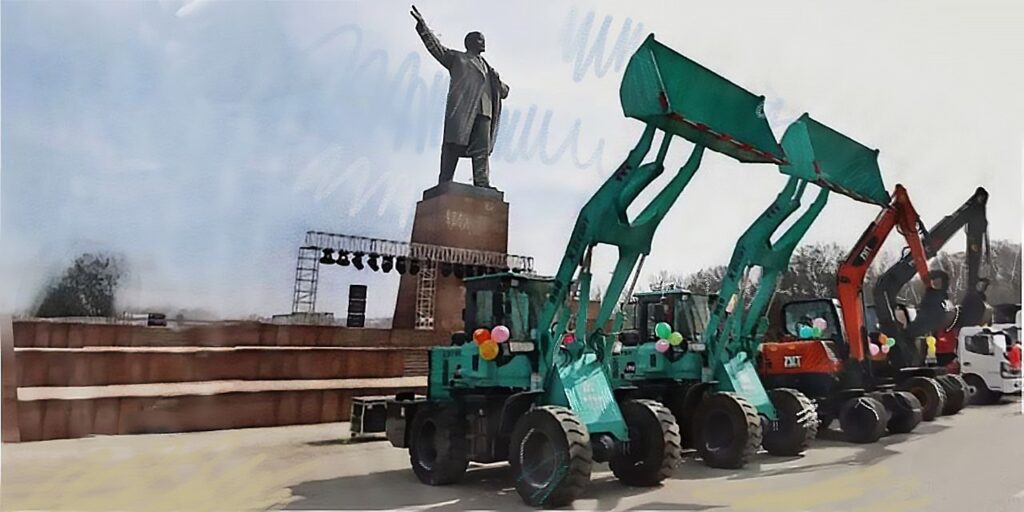
The recent removal of a towering 23-meter-tall monument to Vladimir Lenin in Osh, Kyrgyzstan, has ignited heated debate both domestically and abroad. While many are surprised the monument remained in place for more than three decades after the fall of the Soviet Union, its dismantling is part of a broader regional trend of de-Sovietization, a complex process involving the renaming of cities, removal of Soviet-era symbols, and the reassertion of national identity across Central Asia. A Symbol Removed, A Debate Ignited [caption id="attachment_32769" align="aligncenter" width="2560"] Lenin Monument in Osh, October 2024; image: TCA, Jonathan Campion[/caption] On June 7, Osh authorities dismantled what was once the tallest Lenin statue in Central Asia. Originally installed in 1975, the monument is to be relocated to a city park, according to the local government. Officials stressed the move was intended to improve the city’s architectural landscape, not to make a political statement, and have warned against "politicizing" the issue. Despite official reassurances, the move has sparked sharp reactions on social media and in the press, with Russian media outlets characterizing the relocation as an anti-Russian gesture. Generational divides have become apparent: younger residents tend to support the removal, while older citizens have expressed dismay over what they see as the erasure of history. “It’s a shame. It was more than a monument, it was part of our lives,” Elena, a local schoolteacher told The Times of Central Asia. “We joke that Lenin crossed the ‘red line’ and got demolished.” Irina Bayramukova, a 68-year-old public figure, called the decision a mistake. “The Lenin monument by Nikolai Tomsky was not only artistically significant, it represented an era. Removing it is like declaring war on those who identify with that past,” she told TCA. Kyrgyzstan, like other Central Asian republics, has been distancing itself from its Soviet legacy since gaining independence in 1991. One of the earliest symbolic moves was the renaming of the capital, once called Frunze after a Bolshevik military leader, back to Bishkek, a modified version of its pre-Soviet name. A Museum to Mikhail Frunze still stands in Bishkek, where the thatched-roof hut of his boyhood was purportedly transported brick by brick. A supporter of Stalin’s rival Zinoviev, when forced to undergo routine surgery by Uncle Joe in 1925, Frunze “mysteriously” died of chloroform anesthetic poisoning. Redefining History [caption id="attachment_32778" align="aligncenter" width="2560"] Lenin Monument in Bishkek; image: TCA, Stephen M. Bland[/caption] Originally erected in 1984 in the Central Square of Bishkek, a Lenin statue was relocated behind the State Historical Museum in 2003. As previously reported by TCA, earlier this year a debate on removing the monument altogether flared up. In 2022, the National Historical Museum of the Kyrgyz Republic in Bishkek finally reopened its doors after being closed in 2016 for renovations which were planned to take less than a year but ended up taking six years. Several government officials were charged with misappropriating funds designated for the renovations, with former Prime Minister Sapar Isakov sentenced to 18 years in prison. Reportedly, over...

Turkmen Authorities Order Social Media Campaign to Showcase “Positive Image”

Authorities in Turkmenistan have launched a new initiative aimed at promoting a positive image of the country on social media platforms abroad. The campaign, ordered by the presidential administration in late May, is designed to counter what officials call “foreign centers of ideological subversion”, a term reminiscent of Soviet-era rhetoric used to describe independent media and opposition groups. Scripted Positivity: Who Films What Under the directive, regional administrations have been tasked with producing video content that highlights the country’s “achievements.” Cultural and arts workers are now expected to travel to rural areas to film staged interviews with farmers, gardeners, cotton growers, and artisans. These interviews must portray high living standards, rising incomes, modern amenities, and open support for the country's leadership. Visual presentation is tightly controlled: if a villager’s home is deemed sufficiently presentable, new construction, clean yard, the interview may be conducted there. Otherwise, filming must take place in fields or gardens to ensure an appealing backdrop. Begenchmyrat Orazov, khyakim (local governor) of the Mary region, emphasized that all content must be shot on ordinary mobile phones and without the involvement of professional teams or extra payment. “You get paid,” he reportedly reminded cultural workers during a May 28 meeting with local officials, law enforcement, and agricultural representatives. Millionaires on Paper Participants are instructed to describe their “decent earnings” using the outdated currency system, speaking in millions of old manats, despite the redenomination in 2009 (1 new manat = 5,000 old manats). This approach is intended to suggest inflated incomes to an international audience less familiar with the country's currency history. Cultural workers are encouraged to enhance the content by incorporating traditional songs, musical performances, or recitations of poetry by former president Gurbanguly Berdimuhamedov or the revered Turkmen poet Makhtumkuli. A Question of Translation Similar meetings have been held across all regions, and filming is reportedly underway. Villagers are required to submit documentation of completed work to the leadership of their agricultural associations, which must then report daily to district heads (etraps). However, a critical gap remains unresolved: how the video content will reach international viewers. The issue of translation into foreign languages has yet to be addressed. Posting videos exclusively in Turkmen is unlikely to appeal to a global audience. Additionally, many Turkmen migrants, one of the campaign’s implicit targets, are well aware of the country’s internal challenges. Old Tools for a New Image This initiative appears to be a response to increasing criticism from independent Turkmen media and social media platforms, which frequently report on the country’s socio-economic problems and human rights violations. These platforms, widely followed in the diaspora, have become a growing concern for the authorities in Ashgabat. Rather than engaging with the criticism through reform or transparency, the government is opting for a top-down media campaign reminiscent of earlier propaganda models. The focus seems less on improving conditions and more on reshaping perceptions. Whether this strategy will resonate beyond the bureaucratic machinery of the state remains to be seen.

Victory Day in Central Asia: Honoring Sacrifice Amid Shifting Narratives

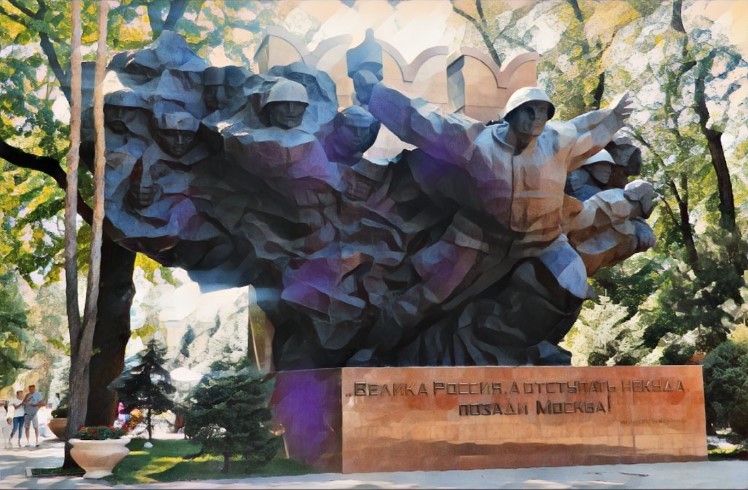
For the countries of Central Asia, Victory Day holds a deep significance. Although debates over the nature of the May 9 commemorations have intensified in recent years, the importance of the holiday remains unchallenged. A War That Touched Every Family Attitudes toward the celebration marking the defeat of Nazi Germany are largely shaped by each nation's level of participation in the war effort. Kazakhstan mobilized over 1.2 million people, nearly 20% of its pre-war population of 6.5 million. Of these, more than 600,000 perished at the front, with an additional 300,000 dying in the rear due to malnutrition, forced labor, and inadequate medical care. With a similar sized population, Uzbekistan sent approximately 1.95 million people to the front - or one in every three residents. Around 400,000 Uzbeks did not return home. Over 500 Kazakhstani and more than 300 Uzbekistani soldiers were awarded the title Hero of the Soviet Union. [caption id="attachment_31602" align="aligncenter" width="2560"] Eternal flame and Crying Mother Monument, Tashkent; image: TCA, Stephen M. Bland[/caption] Kyrgyzstan, home to just 1.5 million people at the time, sent over 363,000 to the front. Approximately 100,000 perished, and 73 received the Hero of the Soviet Union medal. Tajikistan mobilized more than 300,000 troops, with over 100,000 never returning. Fifty-five Tajiks received Hero of the Soviet Union honors. Turkmenistan, with a population of 1.3 million, sent around 200,000 soldiers and officers; 16 received Hero status. Central Asian soldiers played vital roles in major battles, including the defense of Moscow. They helped liberate territories across the Soviet Union and Eastern Europe. The region also contributed 20-30% of its horse population, then a central component of local economies, for military use. The war profoundly reshaped Central Asia. Thousands of Soviet enterprises were relocated to the region, fueling industrialization. Millions of refugees from Nazi-occupied zones found sanctuary in Central Asian republics. Many children were taken in by local families and raised as their own. Today, many in Central Asia feel that outsiders fail to grasp the weight of Victory Day. While countries like the UK, U.S., Italy, and France recorded wartime deaths of 380,000, 417,000, 479,000, and 665,000 respectively, the USSR suffered over 26 million losses. German losses are estimated at 8.4 million. Celebrating Amid Controversy Recent years have brought a shift in how Victory Day is perceived in Central Asia. Symbols such as the Guards ribbon, criticized for echoing imperial Russian motifs, have sparked debate. Some argue that the holiday reflects colonial oppression, as the peoples of Soviet Asia were conscripted into a foreign war. These debates have grown louder since Russia annexed Crimea in 2014, with some now viewing the May 9 celebrations as a tool of Russian influence in the region. Nonetheless, Central Asian leaders have rejected efforts to "cancel" Victory Day, reaffirming its deep personal and national resonance. Efforts to distinguish the celebration from Russian state narratives are evident. Many events now emphasize patriotism rather than Soviet nostalgia. On May 7, Kazakhstan held its first military parade in Astana in seven years,...

Turkmen Cultural Workers Fired Over Refusal to Fund Presidential TV Monitor

Another case of forced financial contributions among civil servants has emerged in Turkmenistan. In early April, four employees of the Kerki district's cultural department were dismissed after protesting salary deductions. The funds were intended to finance the purchase of a television monitor designated to display images of President Serdar Berdimuhamedov. Salary Deductions Without Consent According to an order from local authorities, 230 Turkmenistan Manat (TMT) was deducted from the March salaries of employees at urban and rural cultural centers to pay for a large monitor at the Kerki Palace of Culture. Given that average monthly salaries range between 1,800-2,100 TMT (officially $514-$600, unofficially $92-$108), the deduction represented a significant portion of income. The monitor was meant to display the president's image against a national flag backdrop during official events. At other times, it remained unused. Several employees independently refused the deduction and were subsequently dismissed. Among them was a cleaning staff member. Coercion and Unofficial Duties One of the dismissed workers, a resident of Taze Usul village, reported that such deductions are routine. Employees are also compelled to engage in activities beyond their job descriptions, such as growing silkworm cocoons, harvesting cotton, and cleaning streets ahead of official visits. These tasks often occur on weekends and public holidays. Following their refusal to pay, the dismissed workers were allegedly visited by police, who pressured them into signing resignation letters citing “health reasons.” “I wrote several letters to the etrap and velayat hakims, and to the Minister of Culture in Ashgabat. No action was taken, except my dismissal,” said one of the affected employees. As a result of the dismissals, only two individuals remain at each cultural center in the Kerki district, now personally bearing the costs of maintenance, repairs, and event organization. Pattern of Enforced Contributions This incident is part of a broader pattern. In January 2025, civil servants in the newly built city of Arkadag, including teachers and librarians, were reportedly pressured to purchase homes on mortgage, with down payments ranging from 75,000 to 80,000 TMT ($21,428-$22,857). In May 2024, state agency heads in Balkan velayat were ordered to purchase souvenir watches featuring portraits of former President Gurbanguly Berdimuhamedov and his son, President Serdar Berdimuhamedov. Prices ranged from 1,500 to 3,000 TMT ($428-$857) depending on seniority. Similar practices go back years. In August 2020, civil servants in Farap were compelled to buy domestically manufactured televisions, with 2,400 TMT ($685) deducted from their salaries in advance. Delivery was delayed by months. In February 2018, state employees had to pay for bicycles to join a mass bike ride, with contributions per worker depending on the institutional size. The cost of a bicycle reached 4,000 TMT ($1,142). According to civil servants, refusal to participate in such initiatives increasingly results in job loss, a sign of deepening authoritarian control in Turkmenistan's public sector.