• KGS/USD = 0.01143 -0%
  • KZT/USD = 0.00192 -0%
  • TJS/USD = 0.10820 0.19%
  • UZS/USD = 0.00008 0%
  • TMT/USD = 0.28575 0%
  • KGS/USD = 0.01143 -0%
  • KZT/USD = 0.00192 -0%
  • TJS/USD = 0.10820 0.19%
  • UZS/USD = 0.00008 0%
  • TMT/USD = 0.28575 0%
  • KGS/USD = 0.01143 -0%
  • KZT/USD = 0.00192 -0%
  • TJS/USD = 0.10820 0.19%
  • UZS/USD = 0.00008 0%
  • TMT/USD = 0.28575 0%
  • KGS/USD = 0.01143 -0%
  • KZT/USD = 0.00192 -0%
  • TJS/USD = 0.10820 0.19%
  • UZS/USD = 0.00008 0%
  • TMT/USD = 0.28575 0%
  • KGS/USD = 0.01143 -0%
  • KZT/USD = 0.00192 -0%
  • TJS/USD = 0.10820 0.19%
  • UZS/USD = 0.00008 0%
  • TMT/USD = 0.28575 0%
  • KGS/USD = 0.01143 -0%
  • KZT/USD = 0.00192 -0%
  • TJS/USD = 0.10820 0.19%
  • UZS/USD = 0.00008 0%
  • TMT/USD = 0.28575 0%
  • KGS/USD = 0.01143 -0%
  • KZT/USD = 0.00192 -0%
  • TJS/USD = 0.10820 0.19%
  • UZS/USD = 0.00008 0%
  • TMT/USD = 0.28575 0%
  • KGS/USD = 0.01143 -0%
  • KZT/USD = 0.00192 -0%
  • TJS/USD = 0.10820 0.19%
  • UZS/USD = 0.00008 0%
  • TMT/USD = 0.28575 0%
13 December 2025

Viewing results 7 - 12 of 750

Why Regional Connectivity Is Reshaping Central Asia: Insights from ISRS Director Eldor Aripov (Part Two)

The Times of Central Asia presents the second part of an interview in Washington, D.C. with Eldor Aripov, Director of the Institute for Strategic and Regional Studies under the President of Uzbekistan. Dr. Aripov sat down with our Washington Correspondent, Javier M. Piedra, to discuss Uzbekistan’s geoeconomic and geopolitical strategic thinking. The conversation focused on Uzbekistan’s and the region’s efforts to cooperate diplomatically to maintain peace and stability with neighbors, irrespective of historical “hotspots,” cultural sensitivities, or the all-important matter of water resources. Aripov comments on Afghanistan, Chabahar Port (Iran), Ferghana Valley, and business development – key for U.S. investors thinking about Uzbekistan and the broader Central Asian region. TCA: What message do you have for businesses and private investors who do not have any experience in Central Asia? Many companies are sniffing around at this time – what do you want to tell them? Aripov: Uzbekistan is ready for committed investors - those who deliver lasting benefits, quality jobs, and shared prosperity. A decade of reforms has strengthened our fiscal discipline, boosted SMEs, and anchored stability. Coupled with our focus on good relations and a secure, integrated Central Asia, we offer a reliable platform for long-term, sustainable investment. While we have more work to do, we invite you to be part of our momentum. TCA: What are the risks that companies might face when considering long-term investment? Aripov: No country is immune to downside risks – not only in the developed but developing world. Having said that, downside risks, including trade shocks, commodity price volatility, tighter external financing, and contingent liabilities from state-owned enterprises, are mostly exogenous factors driven by global conditions. Risks are mitigated through political stability, diversification of the economy, prudent macroeconomic management, and reforms to state-owned enterprises and governance. For more in-depth commentary, I refer you to recent IMF, World Bank, and Asian Development Bank assessments about our economic conditions and trends. TCA: Let me move on to more regional issues. The first Ferghana Peace Forum was held in October 2025. How can it serve as a replicable model for other regions seeking sustainable peace? Aripov: First of all, I’d like to put this important forum on everyone’s radar. I’d like to underscore that peace is possible when hard work, respect for others, and a commitment to understanding guide our actions, despite historical memories and past differences. Someone should write a case study about our ability to bring consensus into an otherwise challenging region. In any event, the inaugural Ferghana Peace Forum brought together over 300 participants from more than 20 countries — representatives of Central Asian governments, international organizations, leading think tanks, research institutions, and local communities. A joint communiqué was adopted, confirming the intention to institutionalize the Forum as a permanent platform with rotating hosts. This broad participation highlighted an important reality: the Ferghana Valley is no longer viewed as a fragile zone; it is now viewed as a model of pragmatic peacebuilding. The Forum demonstrated how regional leadership — particularly the openness and...

The New Geoeconomics of Uzbekistan: Insights from ISRS Director Eldor Aripov

The Times of Central Asia presents a two-part interview in Washington, D.C. with Eldor Aripov, Director of the Institute for Strategic and Regional Studies under the President of Uzbekistan. Dr. Aripov sat down with our Washington Correspondent, Javier M. Piedra, to discuss Uzbekistan’s strategic thinking regarding its diplomatic posture, regional integration, and relations with Central Asian and global partners. The conversation includes commentary on “Great Game” geopolitics, U.S.–Uzbekistan relations, trade, the meaning of “Uzbekistan First,” the historically explosive Ferghana Valley, and water management. Recognizing the link between investment, a stable geopolitical ecosystem, and the need to de-risk potentially conflictive issues, Aripov further sheds light on Tashkent’s practical approach to internal governance and business development. [caption id="attachment_40284" align="aligncenter" width="2360"] Central Asia on the Front Lines; image: Defense.info[/caption] TCA: “America First” refers to U.S. policies prioritizing national interests, often associated with non-interventionism, nationalism, and protectionist trade. Given Uzbekistan’s pragmatic foreign policy, can we speak of an “Uzbekistan First” policy? It is certainly not isolationist — but how is it manifested on a day-to-day basis? Aripov: What you describe as “Uzbekistan First” is, in our understanding, fundamentally about prioritizing national interests – stability and predictability for the people of Uzbekistan. Yet Uzbekistan’s uniqueness lies in the fact that our national interests are closely intertwined with those of the entire region – this means shared upsides at the transactional and strategic levels and thinking long-term. We border every Central Asian country as well as Afghanistan, and therefore any issue — security, trade, transport, or water management — directly depends on the quality of our relationships with neighbors. From his first days in office, President Shavkat Mirziyoyev — with his strategic vision and deep understanding of regional dynamics — declared that regional unity and mutual benefit stand at the core of Uzbekistan’s foreign policy. The essence of his doctrine is to resolve agreeably any historically or materially problematic issues with neighbors, remove barriers to understanding, and create predictable, stable conditions for mutually beneficial cooperation and the free movement of goods, ideas, and people. That is the true meaning of “Uzbekistan First”: not isolation, but openness, predictability, and regional consolidation. TCA: How are you realizing “Uzbekistan First” in practice? Aripov: Uzbekistan is strengthening its economy domestically and global track - putting in place the building blocks for internal sustainable development and accelerating accession to the World Trade Organization. The latter means expanding the geography and composition of exports and increasing the country’s investment attractiveness. This approach is rooted in the logic of sustainable development within the broader international context: long-term national interests are best served by Uzbekistan integrating into global value chains and markets. The results speak for themselves: in 2024, Uzbekistan’s GDP grew by 6.5%, foreign direct investment increased by more than 50% to reach $11.9 billion, and the target for 2025 is to attract $42 billion. This performance is also a tribute to our style of diplomacy, grounded in respect and having a constructive attitude towards others. Thus, “Uzbekistan First” represents a modern model...

Mirziyoyev Orders Crackdown on Pollution and Waste

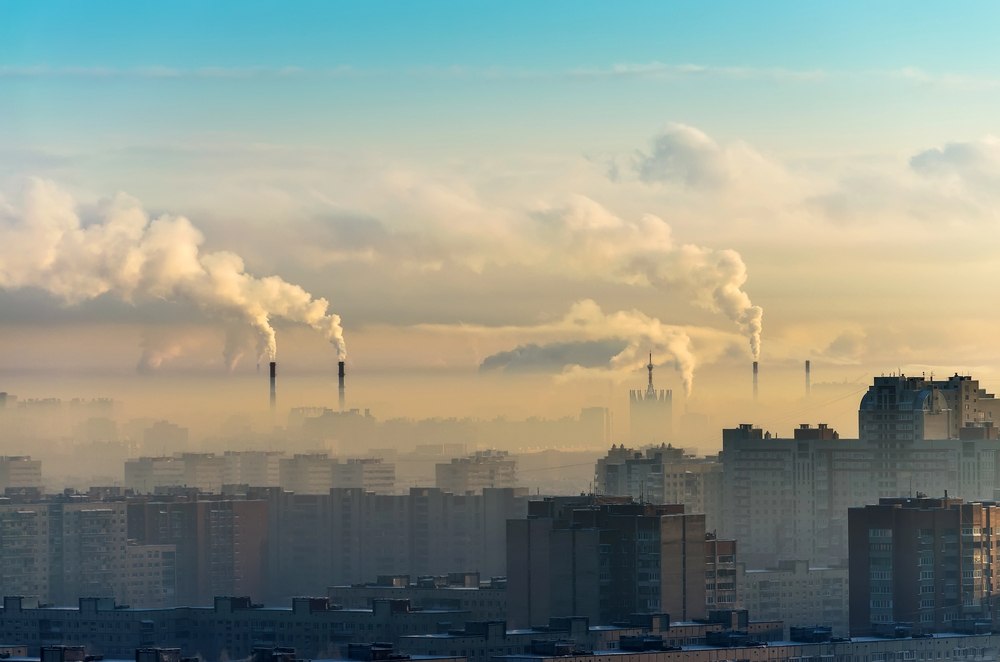
Uzbekistan is intensifying its environmental oversight as President Shavkat Mirziyoyev convened a high-level government meeting on December 1 to address mounting pollution, delays in waste-to-energy infrastructure, and preparedness for the winter season. The session highlighted the rising social and economic risks of air-quality deterioration in Tashkent, and chronic failures in waste management nationwide. Officials attributed recent spikes in air pollution in the capital not only to industrial emissions and construction activity but also to a severe cold anticyclone blanketing much of the country. This weather system caused high atmospheric pressure and temperature inversions, trapping fine particulate matter and inhibiting air circulation. In response, authorities launched inspections of construction sites, greenhouses, and vehicle emissions, while emergency measures, such as watering streets, cleaning canals, and activating fountains, were deployed to stabilize air quality. Mirziyoyev ordered regional officials to enforce stricter environmental compliance, eliminate violations promptly, and take proactive steps to prevent further degradation. He emphasized that growing public frustration demands “decisive and coordinated action” from all levels of government. Stalled Waste-to-Energy Projects Under Scrutiny Waste-to-energy development, a cornerstone of Uzbekistan’s sustainability agenda, also came under fire. Although $933 million in investment has been pledged, several regions have yet to launch projects. Existing facilities in Andijan, Namangan, Ferghana, Samarkand, Kashkadarya, and Tashkent continue to face critical infrastructure deficiencies, including inadequate roads, electricity, and water supply. Mirziyoyev instructed officials to remove these bottlenecks and ensure the nationwide rollout of waste-to-energy projects in 2026. The government has set a target of reducing household waste disposal areas by 50% by 2030. To date, 47 landfill sites have been closed and rehabilitated, restoring over 240 hectares of land for environmental use. Yet the majority of Uzbekistan’s 132 active landfills still lack protective barriers, green belts, and basic safety systems. The president ordered the transformation of these sites into “environmentally safe zones” and called for greater public engagement through environmental education. Starting in 2026, the government will allocate at least 150 billion soums annually from the state budget for this initiative. Hazardous Waste and Digital Tracking Industrial and hazardous waste management also remains underdeveloped. Processing rates have improved but still fall short of international norms. Mirziyoyev demanded a full inventory of hazardous waste generation and storage sites and directed each region to launch its own recycling or disposal initiatives. A unified digital platform will be introduced to monitor hazardous waste nationwide. Winter Readiness and Public Safety Winter preparedness was another major focus. Persistent issues with liquefied gas distribution prompted the president to order operational reforms and faster responses to citizen complaints. Authorities reported substandard repairs along 1,800 kilometers of power lines; the Prosecutor General’s Office will investigate, and the Energy Inspectorate has been tasked with strengthening oversight to ensure stable electricity supply during the winter. Mirziyoyev also called for updated fire-safety standards in residential buildings, including a ban on highly flammable façade materials. Presidential Decree and Long-Term Strategy The December 1 meeting followed a presidential decree issued on November 25 introducing emergency environmental measures and creating a special...

Icy Relations Between Pakistan and Afghanistan Threaten Central Asian Trade Plans

On November 25, the Afghan authorities accused Pakistan of a new round of airstrikes in eastern Afghanistan. The bombing killed nine children and a woman, injuring several others. The attacks are the latest escalation in rapidly worsening tensions between Islamabad and the Taliban-led government in Kabul, with key border crossings currently closed, and Afghan refugees being expelled from Pakistan. At the heart of the crisis is Pakistan’s claim that Kabul is providing support to the Tehrik-e-Taliban Pakistan (Pakistani Taliban, or TPP), a militant group seeking to topple Pakistan’s government and impose its strict interpretation of Islamic law. The fallout may ripple beyond bilateral relations, with significant consequences for Central Asian trade, particularly the Pakistan-Afghanistan-Uzbekistan plan for a Trans-Afghan railway. The planned 647-kilometer line is set to connect the northern Afghan city of Mazar-e-Sharif with Peshawar in Pakistan. When combined with existing infrastructure, this will mean that trains can travel from southern Uzbekistan all the way to the Pakistani ports of Gwadar and Karachi, granting landlocked Uzbekistan and Afghanistan a long-sought gateway to the Indian Ocean. But mounting instability, along with Islamabad’s willingness to shut borders as leverage, may now place the project in serious jeopardy. “The moment a state weaponizes geography, every financier in Tashkent, Moscow, or Beijing prices in risk, delays commitments, and quietly explores alternative alignments,” Anant Mishra, Marie Skłodowska-Curie Research Fellow at the International Centre for Policing and Security at the University of South Wales, told The Times of Central Asia. So, what are the prospects for salvaging the Trans-Afghan railway? How can Pakistan and Afghanistan de-escalate? And what does this turmoil mean for Central Asia’s wider economic ambitions? A sudden frost On July 17, Uzbekistan’s Transport Minister Ilkhom Makhkamov, Pakistan’s Railway Minister Muhammad Hanif Abbasi, and Afghanistan’s acting Public Works Minister Mohammad Esa Thani signed an agreement to conduct a feasibility study for the proposed railway. Many hoped the railway would presage a new era of fraternal relations between Central and South Asia. “Civil society, the intelligentsia, media, and business community of Pakistan have been loudly calling for intimate trade relations with the Central Asian Republics,” Khadim Hussain, Research Director at the Centre for Regional Policy and Dialogue (CRPD), Islamabad, told TCA. For Uzbekistan, which has aggressively pursued diversification of trade routes to reduce reliance on transit through Iran and Kazakhstan, the project promised a cheaper, faster corridor to global markets. According to Nargiza Umarova, Head of the Center for Strategic Connectivity at the Institute for Advanced International Studies, University of World Economy and Diplomacy in Tashkent, the trans-Afghan is one of two high-priority transport projects, along with the China-Kyrgyzstan-Uzbekistan railway – work on which began in April 2025. But the ink had barely dried on the July accord when tensions between Afghanistan’s Taliban government and Islamabad began escalating, throwing the ambitious railway into doubt. [caption id="attachment_40211" align="aligncenter" width="1600"] Uzbek passenger and freight trains parked in Andijan; image: TCA, Joe Luc Barnes[/caption] In early October, Pakistan launched an airstrike in Kabul targeting the leader of the...

Samarkand’s CoP20 Opens with High-Stakes Debates on Wildlife Trade and Species Protection

The world’s largest conference on wildlife trade opened last week in Samarkand, drawing nearly 3,000 delegates to Uzbekistan for two weeks of critical negotiations that could reshape global conservation policy. The 20th meeting of the Conference of the Parties to the Convention on International Trade in Endangered Species of Wild Fauna and Flora (CITES CoP20) is being held in Central Asia for the first time, a region increasingly impacted by transcontinental wildlife trafficking routes connecting Africa and Asia. Hosted by Uzbekistan’s National Committee on Ecology and Climate Change, CoP20 carries the theme “CITES at 50 in Samarkand: Bridging Nature and People,” commemorating five decades of global conservation under the Convention and echoing the city’s legacy as a historic crossroads of commerce and ideas. One of the central issues dominating this year’s meeting is a series of proposals concerning African megafauna, particularly elephants, rhinos, and giraffes. These proposals, submitted by several African range states, challenge the extent to which legal trade in vulnerable species should be permitted, given decades of poaching and habitat degradation. Audrey Delsink, Senior Director at Humane World for Animals, warned of the dangers these proposals pose. “All the species proposals concerning African megafauna are highly concerning because of the impact they will have on the respective species and the repercussions on illegal trade should the proposals be accepted,” she told The Times of Central Asia. Among the most controversial is a joint proposal by Namibia, South Africa, Tanzania, and Zimbabwe to remove most southern African giraffe populations from CITES Appendix II. Delsink cautioned that this would create a fragmented regulatory regime, complicating enforcement. “It is very difficult to differentiate bones and pelts of the different species and subspecies, making it easy to launder endangered giraffe species through the system,” she said. With wild giraffe populations estimated at fewer than 120,000, any weakening of controls could prove disastrous. Similar concerns surround Namibia’s proposal to sell ivory from registered government stockpiles. Delsink warned that the legal ivory trade has historically masked illicit flows and could trigger renewed poaching. “Legal trade provides a cover for illegal ivory and fuels illegal trade, poaching, and consumer demand,” she said, noting that CITES members have rejected such proposals for nearly two decades. Central Asian countries, increasingly used as transit corridors for high-value wildlife contraband, are becoming key players in enforcement. Smuggling networks exploit Eurasian air, rail, and road links to move products such as ivory, rhino horn, and exotic animals. Delsink highlighted the “Samarkand Declaration and Action Plan (2025-2032),” signed this week by Kazakhstan, Kyrgyzstan, Tajikistan, Turkmenistan, and Uzbekistan, as a major step toward regional coordination. The agreement commits signatories to harmonize laws and improve intelligence-sharing mechanisms. [caption id="attachment_40166" align="aligncenter" width="2560"] Image: National Committee on Ecology of Uzbekistan[/caption] “Intelligence-led operations and rapid information exchange between agencies can disrupt organized crime networks that exploit porous borders,” Delsink said. She also underscored the need for customs modernization and officer training, supported by organizations such as TRAFFIC and the UN Office on Drugs and Crime. Beyond...

U.S. Waiver of Sanctions on Iran’s Chabahar Port is Good News for Central Asia

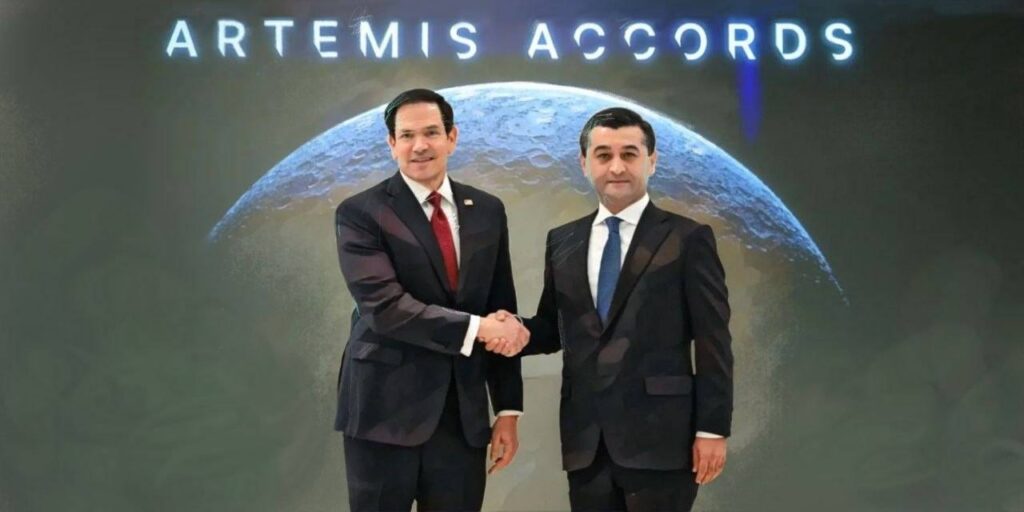
U.S. sanctions on Iran’s Chabahar Port on the Gulf of Oman have been on again/off again since 2013, when the U.S. Congress passed the Iran Freedom and Counter-Proliferation Act (IFCA) to curb Iran’s regional influence and strategic capabilities through targeted economic pressure, aka sanctions. In the decade following IFCA’s passage, Washington’s sanctions on Chabahar had a negative impact on Central Asia, largely by complicating its efforts to deepen economic ties with South Asia and the Gulf. But geopolitics are shifting. Washington is increasing its involvement in Central Asia and India, and is doing the same in Afghanistan. These factors may well induce the U.S. Department of State to keep the waiver in place. Washington first waived its sanctions on Chabahar in 2018—a strategic move to support India's role in Afghanistan's post-war development and to provide a crucial trade route for that landlocked country. Six years later, India's Indian Ports Global Limited secured a 10-year deal with Iran to manage Chabahar port, in part, to offset Pakistan’s Gwadar port at the end of the China-Pakistan Economic Corridor, a mere 100 miles from Chabahar. For all the fanfare, Central Asia held little real priority in Washington in those years. Seven years later, the U.S. changed course. It announced on September 16, 2025, much to Central Asia’s surprise and concern, that “the State Department has revoked the sanctions exception issued in 2018 under the IFCA”, making individuals involved in Iran’s Chabahar port operations subject to penalties, resulting in another snag in Central Asia’s desire for a southern breakout route. And then, in a swift reversal, the U.S. restored India’s sanctions waiver some six weeks later, on October 30. Whatever might explain the sudden change, Central Asia breathed a sigh of relief, and, by all accounts, now feels confident that the waiver will be evergreened. Time will tell if this confidence is justified. The U.S. waiver enables India to work to enhance Chabahar’s infrastructure and functionality, offering Central Asian exporters a more direct and profitable trade route than those via China, Russia, or the Middle Corridor, which stretches from East Asia to Europe via Kazakhstan, the Caspian Sea, Azerbaijan, Georgia, and Türkiye. As a result, goods like minerals, cotton, and energy products can reach regional and global markets faster. Central Asian capitals are quietly reveling in Washington’s flexible realpolitik in the face of convulsive U.S.-Iranian relations and heated Indo-Pakistan tensions. Without fear of punitive measures, India can now continue its work at Chabahar.  To be sure, the waiver affirms India’s rising global presence and accelerates New Delhi’s drive into Central Asia, including Afghanistan. Washington’s decision signaled to traders, investors, and think tankers that it has no intention of spoiling India’s export ambitions and Central Asia’s desire for north-south economic integration. The waiver shows Washington’s pragmatism—and is welcomed by those who have little or no use for Washington’s penchant for foreign policy moralism. Chabahar Port complements not only the Trans-Caspian corridor—a multimodal trade route connecting Asia and Europe by linking China to Europe through Central...