• KGS/USD = 0.01144 0%
  • KZT/USD = 0.00200 0%
  • TJS/USD = 0.10494 0%
  • UZS/USD = 0.00008 0%
  • TMT/USD = 0.28490 0%
  • KGS/USD = 0.01144 0%
  • KZT/USD = 0.00200 0%
  • TJS/USD = 0.10494 0%
  • UZS/USD = 0.00008 0%
  • TMT/USD = 0.28490 0%
  • KGS/USD = 0.01144 0%
  • KZT/USD = 0.00200 0%
  • TJS/USD = 0.10494 0%
  • UZS/USD = 0.00008 0%
  • TMT/USD = 0.28490 0%
  • KGS/USD = 0.01144 0%
  • KZT/USD = 0.00200 0%
  • TJS/USD = 0.10494 0%
  • UZS/USD = 0.00008 0%
  • TMT/USD = 0.28490 0%
  • KGS/USD = 0.01144 0%
  • KZT/USD = 0.00200 0%
  • TJS/USD = 0.10494 0%
  • UZS/USD = 0.00008 0%
  • TMT/USD = 0.28490 0%
  • KGS/USD = 0.01144 0%
  • KZT/USD = 0.00200 0%
  • TJS/USD = 0.10494 0%
  • UZS/USD = 0.00008 0%
  • TMT/USD = 0.28490 0%
  • KGS/USD = 0.01144 0%
  • KZT/USD = 0.00200 0%
  • TJS/USD = 0.10494 0%
  • UZS/USD = 0.00008 0%
  • TMT/USD = 0.28490 0%
  • KGS/USD = 0.01144 0%
  • KZT/USD = 0.00200 0%
  • TJS/USD = 0.10494 0%
  • UZS/USD = 0.00008 0%
  • TMT/USD = 0.28490 0%

Viewing results 517 - 522 of 1054

Taliban Asks Uzbekistan to Prohibit Music at Border Market

Taliban officials have asked Uzbekistan to cancel concerts and musical programs at the joint border market in Termez. According to Atlas Press, Afghan citizens will not be allowed to enter this market if the programs continue. The recently reopened Afghanistan-Uzbekistan joint border market in Termez stages music concerts with performances by Uzbek artists but according to the publication’s sources, the Taliban have now asked the Uzbek government to discontinue such programs. To date, neither the Taliban nor Uzbek officials have officially commented on the issue and it remains unclear as to whether Uzbekistan will respond positively to the Taliban’s request. In an agreement between the Taliban and Uzbekistan, Afghan citizens can visit and trade in the international Termez market in the Surkhandarya region of Uzbekistan for 15 days without a visa. However, as stated in the report, “It seems that the Taliban are trying to implement their controversial laws outside of Afghanistan. This recently announced law, in addition to playing and listening to music, also imposes other severe restrictions on Afghan citizens, especially women, and has faced international condemnation." Previous protests issued by the Taliban include the detention of Afghan military aircraft in Uzbekistan.

Central Asia’s Increasing Profile in Global Climate Policy

Between 11 and 22 November, the 29th Conference of the Parties (COP29) to the United Nations Framework Convention on Climate Change (UNFCCC) will take place in Baku, Azerbaijan. In the run-up to this global event, Central Asian countries have been continuing their integration into the cooperative implementation of the global energy and environmental agenda. Such measures include, but are not limited to, commitments to reducing methane emissions, contributions to green supply chains, and — for Kazakhstan in particular — its nuclear policy based on multi-vector diplomacy. One may anticipate their especially enhanced presence in view of the fact that several them have strategic-partner relations with Azerbaijan, which is cooperating with them also in the implementation of the Trans-Caspian International Trade Corridor (TITR or "Middle Corridor"). The Central Asian states are using their implementation of global energy and environmental priorities as an instrument to integrate further into the international system. Following their participation at COP28 (30 November – 23 December 2023, in Dubai, United Arab Emirates), all five of them signed the Global Methane Pledge to reduce methane emissions by at least 30% by 2030. They have also stepped up their contributions to green supply chains, signalling their ambitions to become more important players in global geoeconomics. At the same time, these initiatives also seek to promote domestic economic diversification. Kazakhstan, in particular, continues to play a central role with its multi-vector approach, notably in the nuclear energy sector, positioning itself at the intersection of sustainability and global energy security. Kazakhstan holds 12% of global uranium reserves. It became the world’s leading producer in 2009 and in 2022 accounted for 43% of global production. In Central Asia, Uzbekistan has a Rosatom-sponsored NPP project under way, as does Kyrgyzstan. Along with Kazakhstan, Uzbekistan and Turkmenistan in particular actively engaged in discussions on climate policy at COP28, acknowledging the need to balance their resource-rich economies with global sustainability goals. One of the key outcomes was the region's collective involvement in the Global Methane Pledge. Global environmental policy bodies have assessed that methane emissions are a significant concern for global climate policy. The effect of this assessment will be to load still greater financial burdens on oil and gas companies by making development of hydrocarbon deposits, and the transmission of hydrocarbon resources to market, more expensive. Kazakhstan’s commitment to cutting methane emissions by 30% by 2030 exemplifies this shift, signalling a readiness to reform domestic industries in line with global climate targets. Turkmenistan has the highest methane emissions intensity in the region, but challenges remain in terms of monitoring and implementation. Uzbekistan’s leadership was also highlighted at COP28. The country’s ambitious plans to scale up solar and wind energy by 2030 align with broader regional goals of reducing dependence on hydrocarbons. This is Tashkent's (and the region's) way of enhancing their profile as "good global citizens" as policy decisions by political bodies at the international level increasingly emphasize decarbonization. Uzbekistan has made strides in "green supply chains" by focusing on the renewable energy sector...

Uzbek Blogger Prosecuted for Post about Daughter’s Birth

A criminal case has been opened against Kashkadarya-based blogger Sardor Safarboyev, aka 'Sardor Gangster', on account of his statement on TikTok that he does not want to have a daughter. “I'm not having a daughter. If a daughter is born, I'll throw my wife out. I don't need a daughter... if it's a girl, I'll throw it straight into the dustbin. I don't need a daughter. Even if I go to hell, I will [have] a son,” Safarboyev said on air. Following heavy criticism from social media users and activists, the blogger apologized, saying that his words had been provoked by live comments on air. A girl who participated in the broadcast also spoke in Safarboyev's defense, stating that users of the site had deliberately provoked him. Iroda Rasulova, head of the press service of the Kashkadarya Oblast Department of Internal Affairs, announced that the Nishan District Department of Internal Affairs had opened a case under Article 140, Part 2 of the Uzbek Criminal Code. This article deals with insults published in the media or on the internet and provides for punishments such as a fine, community service, or correctional labor.  Investigative work into the case is ongoing. Prior to TikTok being blocked in Uzbekistan, Safarboyev had over 700,000 followers on the platform and over 500,000 on Instagram. This recent incident is not the first time the blogger has been condemned. As recently as February, Safarboyev was arrested for ten days after being found guilty of petty hooliganism and manufacturing, possession, or distribution of materials propagandizing national, racial, ethnic, or religious hatred. In Uzbekistan, the preference for the birth of sons persists due to traditional attitudes and gender stereotypes. This problem, characteristic of many Asian countries, is deeply rooted in cultural and social norms. According to reports by international organizations such as UNFPA, the preference for sons leads to gender imbalance, limits women's rights, and is an issue frequently raised in international forums concerning the combating of gender discrimination.

New Report From World Bank Condemns Tashkent Air Quality

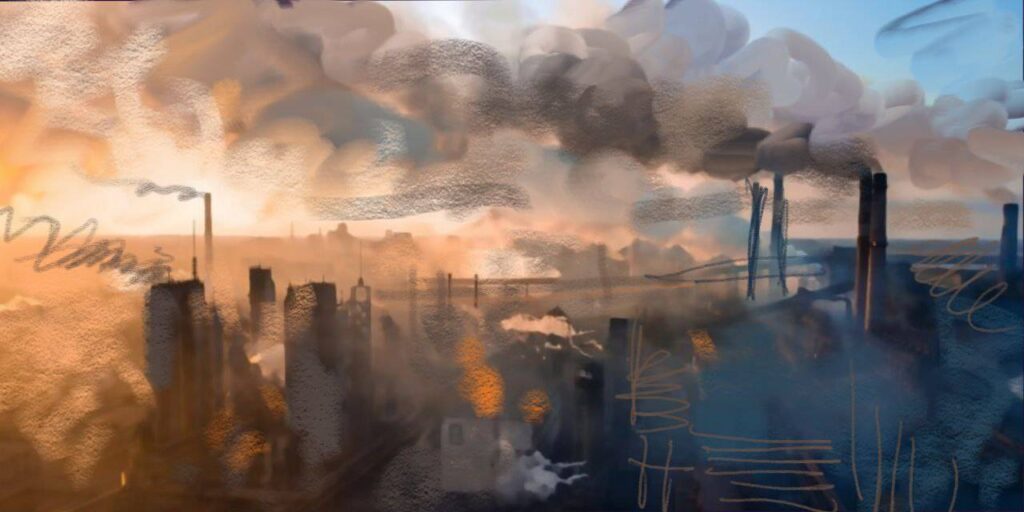
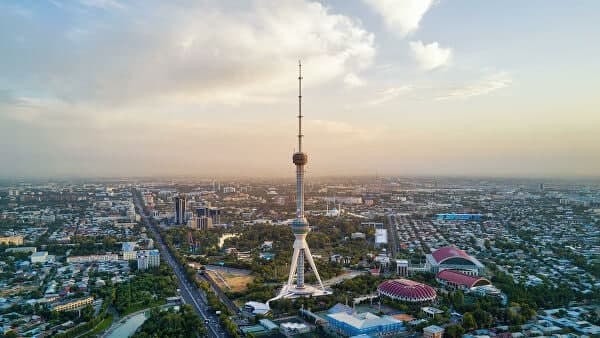
A new World Bank report entitled "Air Quality Assessment for Tashkent and the Roadmap for Air Quality Management Improvement in Uzbekistan" gives a frightening assessment of the air quality in the country’s capital. The report finds that ambient PM2.5 concentrations in Tashkent, which peak in winter, substantially exceed international air quality standards. The annual average concentration exceeds six times the WHO’s average yearly guideline of 5 µg/m3. In Tashkent, PM2.5 ambient air pollution has considerable health and economic costs. It can be linked to health costs equivalent to 0.7% of Uzbekistan’s gross domestic product (GDP). Most air quality-related diseases and premature deaths in Uzbekistan and worldwide are linked to PM2.5, which the World Health Organization (WHO) has identified as the pollutant with the gravest health risk. According to IQAir, Tashkent, like other Central Asian cities, frequently ranks among the world's most polluted urban areas. According to the report, the primary sources of human-caused PM2.5 pollution in Tashkent are the heating (28%), transport (16%), and industrial sectors (13%). Cross-boundary sources like windblown dust (36% PM2.5 pollution) dominate in the summer, while commercial and residential heating is the primary source of PM2.5 pollution in the winter. The report’s AQM roadmap for Uzbekistan formulates priority actions such as updating air quality standards and legislation, developing a national AQM strategy and coordination mechanism, and taking measures in the industrial, transport, and heating sectors, which are most responsible for air pollution. The AQM roadmap recommends investments in emission reduction measures. The roadmap suggests that emissions from the heating sector can be reduced by improving the quality of fuels used and the efficiency of heating appliances, implementing energy efficiency measures, and switching to cleaner heating alternatives. At a government meeting on October 9, Uzbekistan’s President Shavkat Mirziyoyev reviewed a draft master plan for the city of Tashkent until 2045. Today the population of Tashkent is more than 3 million people, and it keeps growing. Over the past ten years, the average air temperature in Tashkent has increased by 1 degree Celsius. The number of cars is rising, and traffic is becoming increasingly congested. The new master plan takes these aspects into account. It plans to increase green areas in Tashkent and its suburbs threefold to 25,000 hectares, which will increase per capita green area from the current 3 to 6 square meters. Mirziyoyev emphasized the need to turn Tashkent into a city where at least 7.5 million people can live and work.

Qatar To Help Restore Uzbekistan’s UNESCO World Heritage Site, Bibi-Khanym Mosque

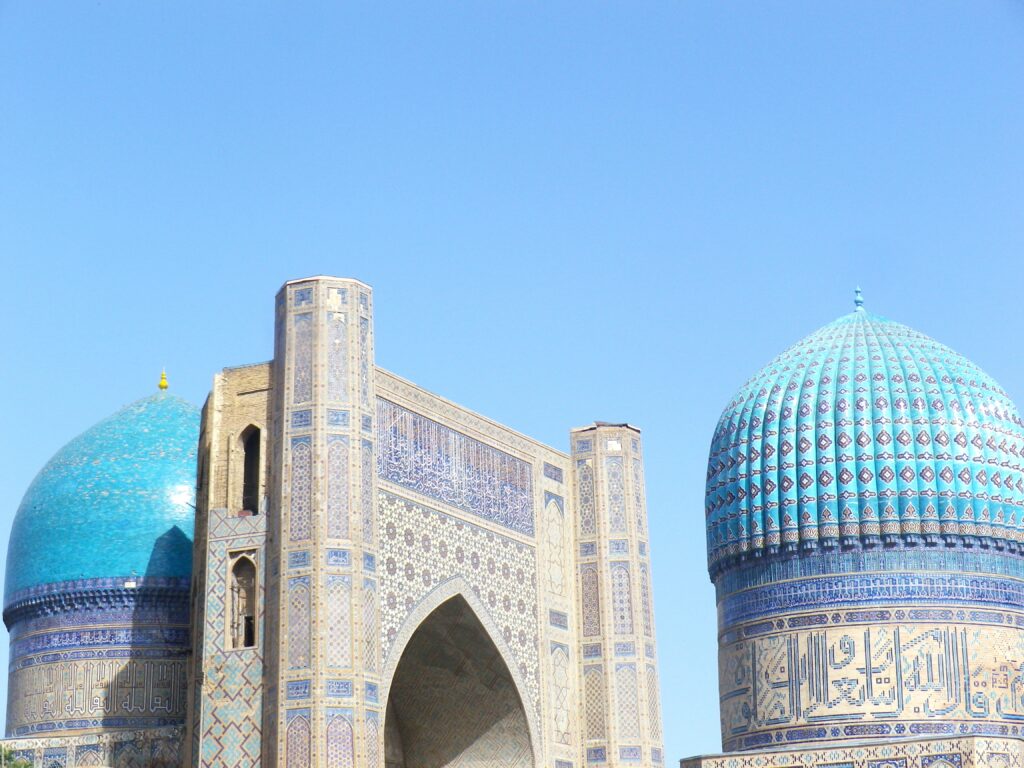
During a recent meeting between the Assistant to the President of Uzbekistan Saida Mirziyoyeva and Sheikha Al Mayassa bint Hamad bin Khalifa Al Thani, bilateral cooperation agreements were signed between the Foundation for the Development of Culture and Arts of Uzbekistan, the Aga Khan Trust, and the Qatar Development Foundation. These agreements envisage not only financial support, but also the exchange of experience in the field of restoration of cultural monuments. In particular, the talks focused on restoring the Bibi-Khanym Mosque, built in the 15th century by Timur and a UNESCO World Heritage Site. According to local media reports, Qatar will actively revitalize this important monument, which attracts tourists from all over the world. Although details of the funding have not yet been disclosed, the work is expected to restore the mosque to its historic appearance, preserving its uniqueness for future generations. The Bibi-Khanym Mosque in Samarkand was built on the orders of Timur (Tamerlane) after his victorious campaign to India in 1399. The construction used 95 elephants to transport materials. Its high tympanum coated in cobalt blue tile-work, the Mosque stands in a grassy courtyard around a large marble carving of the Quran. Named after Timur's Chinese wife, local folklore tells how the architect fell in love with her and stole a kiss. Escaping the wrath of Timur by jumping from the minaret, he sprouted wings and flew to Mecca. At its peak, the mosque could hold up to 10,000 worshipers and became a symbol of Timur's greatness; however, due to its enormous size, the structure began to deteriorate before it was completed. Since then, the building has undergone numerous restorations, especially during the Soviet era.

Navigating Diplomacy: Central Asia’s Strategic Balancing Act Amid Middle East Tensions

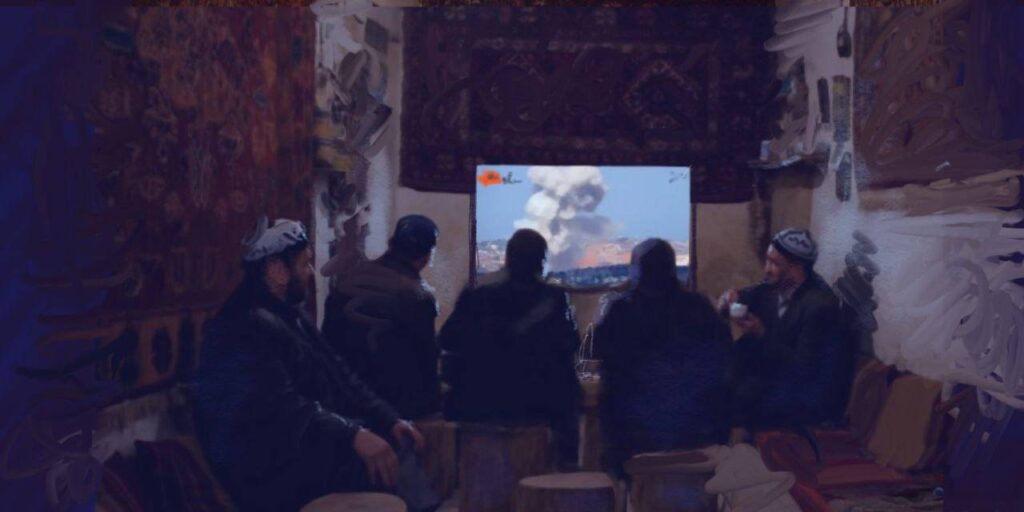
The five Central Asian republics are actively building ties with the outside world, trying to balance the influence of China and Russia in the region. For the former Soviet republics, the Middle East was, until recently, a kind of terra incognita since Moscow carried out all contacts with the area. However, since the nineties, thanks to a growing friendship with Turkey, Kazakhstan, followed by other Central Asian republics, have begun establishing diplomatic, cultural, and trade ties with the Middle East and North African countries. Another escalation in the Middle East has forced the diplomatic departments of the Central Asian countries, whilst avoiding any accusations against either side in the conflict, to inform their citizens about and the address the fate of their compatriots who have found themselves at the epicenter of events. Kazakhstan In Kazakhstan, law enforcement agencies reacted before diplomats. Shyngys Alekeshev, head of the Interior Ministry's Information Policy Department, said in response to journalists' inquiries that police in the republic have brought their patrol routes closer to synagogues and Israeli diplomatic facilities. Later, official representative of the Ministry of Foreign Affairs of Kazakhstan, Aibek Smadiarov, said that no Kazakh citizens were injured as a result of the armed escalation between Iran and Israel, and urged Kazakh citizens in the Middle East to exercise caution. “The Kazakh Foreign Ministry expresses deep concern about the increasing escalation of tensions in the Middle East. We call on all parties involved to exercise restraint and refrain from using forceful methods to avoid civilian casualties and further escalation of the situation in the region, which could provoke a full-scale war. In this regard, we note the importance of taking early measures to resolve differences exclusively through political and diplomatic means within the framework of the principles of the UN Charter and international law,” said Smadiarov. According to the representative, 120 citizens of the Republic of Kazakhstan, including diplomats and their family members, are registered as being present in Israel, 102 in Iran, and 139 in Lebanon. “Communication channels have been created with citizens who are in these countries. Constant communication is maintained with them, and necessary recommendations are given depending on the development of the situation in one country or another. Several times, embassies have announced the need to leave the country due to the aggravation of military and political situations. At the same time, the Ministry and authorized bodies are monitoring the situation to work out possible repatriation flights. The evacuation of our citizens is still under consideration and the special control of the Ministry of Foreign Affairs,” said Smadiarov. Kyrgyzstan The Kyrgyz Foreign Ministry stated on October 2 that it is deeply concerned about events taking place in the Middle East, stating that it is calling on “the conflicting parties to respect the fundamental principles and norms of international law, including refraining from actions leading to an escalation of the situation in the region. The Kyrgyz Republic urges the global community to completely stop military action as soon as possible, and start...