Tashkent Launches Emergency Measures as Air Pollution Worsens
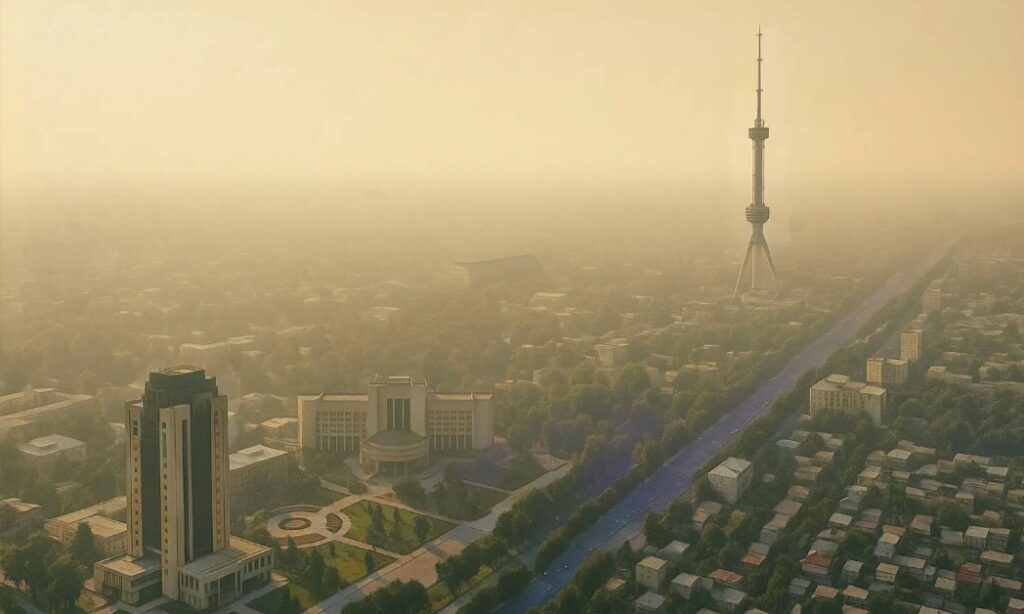
Tashkent is experiencing a significant decline in air quality, prompting President Shavkat Mirziyoyev to sign a decree on November 25 implementing urgent environmental measures. According to the presidential press service, the decree establishes a special commission to take immediate steps to stabilize the situation. The decision follows a high-level meeting on November 24 chaired by Saida Mirziyoyeva, head of the Presidential Administration, to discuss “urgent measures to improve the ecological situation in Tashkent.” Experts at the meeting presented a series of short, medium, and long-term proposals, ranging from immediate restrictions to structural reforms aimed at preventing future pollution spikes. The new plan includes enhanced environmental monitoring, stricter controls on major polluters, tighter regulations for construction sites, and citywide greening initiatives. Authorities also intend to develop a modern air quality assessment system supported by new scientific infrastructure. A key component of the initiative is the establishment of a specialized laboratory under the State Committee for Ecology to analyze sources of PM2.5 pollution, one of the primary contributors to the current smog. To expedite the process, the decree exempts a broad range of imported equipment from customs duties. These exemptions apply to automated monitoring stations, dust-gas filtration systems, localized water-treatment devices, and thousands of quartz filters required for sampling. The measure also extends to household air purifiers brought into the country by individuals and businesses, as demand for such devices has surged. In response to the prolonged dry conditions, the Muslim Board of Uzbekistan announced the performance of istisqo, a traditional Islamic prayer for rain, to be held on November 28 following Friday prayers in mosques nationwide. “In Islamic history, istisqo has been performed during periods of drought, and its benefits have been noted in hadith literature,” the Board stated. Teachers and students from Islamic institutions will also recite the entire Sahih of Imam al-Bukhari before the prayer. This call for collective prayer comes as climate change continues to intensify environmental stress in Uzbekistan. According to a newly released Atlas of Environmental Change by the UN Environment Programme (UNEP), Uzbekistan’s average annual temperature has risen by 1.6°C over the past 60 years, nearly three times the global average of 0.6°C. In the Aral Sea region, warming has reached 1.8 to 2.5°C, contributing to more frequent droughts, particularly in summer and autumn, and placing further strain on already limited water resources. UNEP describes Uzbekistan’s water resources as “among the country’s most valuable and vulnerable,” noting that they depend almost entirely on sources located outside its borders. The atlas highlights the increasing importance of integrated water-resource management and cross-border cooperation, which officials say have already helped address local water-security issues. The agency also points to the adoption of water-saving technologies such as drip irrigation, which are critical to sustaining the country’s irrigated agricultural sector, the backbone of many rural economies. Despite demographic and environmental pressures, the report finds that Uzbekistan has achieved near self-sufficiency in food production. Reforestation is also a national priority. UNEP praises the Yashil Makon (Green Space) initiative, launched in 2021...