• KGS/USD = 0.01144 0%
  • KZT/USD = 0.00193 -0%
  • TJS/USD = 0.10851 0%
  • UZS/USD = 0.00008 0%
  • TMT/USD = 0.28571 0%
  • KGS/USD = 0.01144 0%
  • KZT/USD = 0.00193 -0%
  • TJS/USD = 0.10851 0%
  • UZS/USD = 0.00008 0%
  • TMT/USD = 0.28571 0%
  • KGS/USD = 0.01144 0%
  • KZT/USD = 0.00193 -0%
  • TJS/USD = 0.10851 0%
  • UZS/USD = 0.00008 0%
  • TMT/USD = 0.28571 0%
  • KGS/USD = 0.01144 0%
  • KZT/USD = 0.00193 -0%
  • TJS/USD = 0.10851 0%
  • UZS/USD = 0.00008 0%
  • TMT/USD = 0.28571 0%
  • KGS/USD = 0.01144 0%
  • KZT/USD = 0.00193 -0%
  • TJS/USD = 0.10851 0%
  • UZS/USD = 0.00008 0%
  • TMT/USD = 0.28571 0%
  • KGS/USD = 0.01144 0%
  • KZT/USD = 0.00193 -0%
  • TJS/USD = 0.10851 0%
  • UZS/USD = 0.00008 0%
  • TMT/USD = 0.28571 0%
  • KGS/USD = 0.01144 0%
  • KZT/USD = 0.00193 -0%
  • TJS/USD = 0.10851 0%
  • UZS/USD = 0.00008 0%
  • TMT/USD = 0.28571 0%
  • KGS/USD = 0.01144 0%
  • KZT/USD = 0.00193 -0%
  • TJS/USD = 0.10851 0%
  • UZS/USD = 0.00008 0%
  • TMT/USD = 0.28571 0%
22 December 2025

Viewing results 19 - 24 of 858

Uzbekistan Gains ASEAN Approval to Join Cooperation Treaty

Uzbekistan’s efforts to strengthen its ties with Southeast Asia advanced significantly this week after all member states of the Association of Southeast Asian Nations (ASEAN) approved Tashkent’s application to join the Treaty of Amity and Cooperation in Southeast Asia (TAC). The decision was made during a meeting of ASEAN foreign ministers chaired by Malaysia in Kuala Lumpur, according to the Dunyo news agency. Signed in Bali in 1976, the TAC outlines core principles for regional cooperation, including peaceful dispute resolution, non-interference, renunciation of force, and respect for sovereignty. ASEAN now comprises 11 countries with a combined population nearing 700 million, forming one of the world’s most dynamic economic regions. Uzbekistan’s accession to the TAC is expected to enhance its political and economic presence in Southeast Asia, facilitate state-to-state cooperation, boost trade and investment, and increase confidence among international companies operating in or considering expansion into Central Asia. Political analyst Jahongir Akramov described the approval as a significant diplomatic achievement for Uzbekistan. Speaking to The Times of Central Asia, he said the move aligns closely with Uzbekistan’s foreign policy principles: “Uzbekistan’s joining this treaty can be seen as a very significant diplomatic success. One of the key reasons is that the core principles of the TAC fully match the principles set out in Article 17 of Uzbekistan’s Constitution, non-use of force, resolving conflicts peacefully, negotiating disputes, and respecting the sovereignty of states.” Akramov noted that since 2016, Uzbekistan’s foreign policy has evolved along three strategic vectors, all of which are reinforced by the TAC: “First, Uzbekistan adopted a multi-vector foreign policy. Second, the country has taken major steps to develop economic diplomacy. Third, we have been deepening regional integration. All three of these trends are fully consistent with joining the TAC.” He emphasized that the timing is especially relevant amid growing geopolitical strains: “Geopolitical tensions have intensified, particularly among the United States, China, and Russia. In this situation, participating in platforms such as ASEAN can help reduce pressure and maintain diplomatic balance.” Akramov also positioned Uzbekistan’s move as part of a broader Global South cooperation trend. “Central Asian and ASEAN countries are both part of the Global South. Building closer relations ensures our interests are better represented in shaping new international norms.” Economically, Akramov pointed to ASEAN’s size and diversity as highly advantageous. “ASEAN includes Indonesia, the world’s most populous Muslim-majority country, Singapore, a global innovation hub, Malaysia, an advanced and diversified economy, and Thailand, a leading tourism destination. Closer ties with these states could expand tourism, improve Uzbekistan’s international image, and boost the competitiveness of Uzbek products.” He added that ASEAN’s extensive experience with regional integration offers a model for Central Asia. “As one of the first Central Asian countries to join the TAC, Uzbekistan could take a leading role in fostering ASEAN-Central Asia cooperation. A regional office or cooperation structure based in Tashkent or Samarkand would be a major diplomatic achievement.” However, Akramov cautioned that the partnership would require careful navigation. “Southeast Asia has its own geopolitical tensions, such...
CSTO Summit in Bishkek: Armenia’s Boycott, Russia’s Agenda, and a New Secretary General

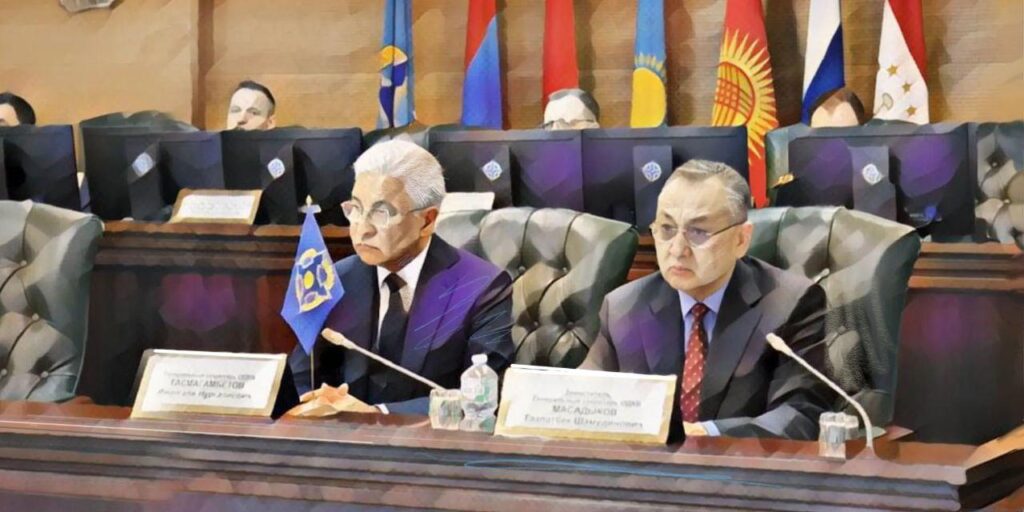
On November 27, Kyrgyzstan will host the annual summit of the Collective Security Treaty Organization (CSTO) in Bishkek, bringing together foreign ministers, defense ministers, and security council secretaries from member states. While often portrayed in Russian media as an Eurasian analogue to NATO, the CSTO remains an organization heavily dependent on Russian military power. Should Moscow withdraw or reduce its support, the Organization’s relevance would likely collapse. A stark illustration of this fragility is Armenia, whose Prime Minister Nikol Pashinyan will boycott the summit entirely. Russian Presidential Aide Yuri Ushakov confirmed that Armenia will not attend the session of the Collective Security Council, the CSTO’s highest governing body, though it does not object to the adoption of bloc-wide documents. According to the CSTO press service, the Council is expected to adopt a declaration outlining member states’ joint positions on current security challenges. Also on the agenda is the formal appointment of the next Secretary General for the 2026-2029 term, and the unveiling of Russia’s priorities for its upcoming presidency in 2026. President Vladimir Putin’s speech on these priorities is expected to dominate the summit. Armenia’s withdrawal highlights the CSTO’s waning cohesion, maintained largely by members' reliance on Russian security assistance, a dynamic in place since the Treaty’s inception in Tashkent on May 15, 1992. The original signatories included Armenia, Kazakhstan, Kyrgyzstan, Russia, Tajikistan, and Uzbekistan, with Azerbaijan, Belarus, and Georgia joining in 1993. The treaty entered into force in 1994. Its central provision, Article 4, mandates collective defense: an attack on one member is considered an attack on all, obligating military and other forms of assistance in line with Article 51 of the UN Charter. In 1999, Armenia, Belarus, Kazakhstan, Kyrgyzstan, Russia, and Tajikistan signed a protocol extending the treaty, establishing an automatic renewal every five years. The formal CSTO was created in 2002; its charter was registered with the UN the following year, and it has held observer status at the UN General Assembly since 2004. For Armenia, the CSTO’s relevance has waned dramatically since the bloc declined to intervene during the final phase of the Nagorno-Karabakh crisis. Yerevan’s disenchantment, however, predates 2023 and stretches back to the 2021–2022 border clashes, when it also felt the organization had failed to provide meaningful support. Kazakhstan, by contrast, remains a key beneficiary: the rapid CSTO deployment in January 2022 played a central role in stabilizing the country during a period of acute domestic unrest. As the current Secretary General, Imangali Tasmagambetov - an influential figure from the “Old Kazakhstan” elite - completes his term, the position is scheduled to rotate to Taalatbek Masadykov of Kyrgyzstan. Ushakov confirmed that Tasmagambetov will deliver a final report on the Organization’s activities and security concerns before officially stepping down on January 1. Masadykov, currently Deputy Secretary General, is expected to assume the role seamlessly. While Masadykov brings diplomatic gravitas, the question remains whether he can restrain Moscow and Minsk from pushing CSTO allies toward confrontation with NATO. Tasmagambetov leaves behind a significant legacy and an...

U.S. Treasury Blacklists Uzbek IT Firm Over Alleged Links to Russia’s Tech Sector

The U.S. Department of the Treasury’s Office of Foreign Assets Control (OFAC) has updated its Specially Designated Nationals and Blocked Persons (SDN) list, adding an Uzbekistan-based company over alleged ties to Russia’s technology sector. The Tashkent-registered firm Datavice was designated for its alleged role in supporting Russia’s IT industry. According to OFAC, the company is involved in schemes connected to Russian cyber operations and efforts to help sanctioned entities evade U.S. restrictions. As a result, all Datavice assets under U.S. jurisdiction are frozen, and U.S. persons and businesses are barred from engaging in financial transactions with the company. The updated SDN list also includes firms based in the United Kingdom, Serbia, and Russia. U.S. officials described the move as part of a broader package targeting entities believed to be aiding Moscow in circumventing international sanctions imposed following the invasion of Ukraine. The blacklisting comes amid growing economic cooperation between Uzbekistan and the United States. On November 12, President Shavkat Mirziyoyev signed a decree establishing the Uzbekistan-U.S. Business and Investment Council. The council will be jointly chaired by senior officials from both countries and is expected to oversee major trade and investment initiatives. The council’s goals include attracting foreign capital through a dedicated investment fund, with backing from the U.S. International Development Finance Corporation, the European Bank for Reconstruction and Development, and the Asian Development Bank.

New York Mayor Eric Adams Discusses Expanding Economic Ties During Visit to Uzbekistan

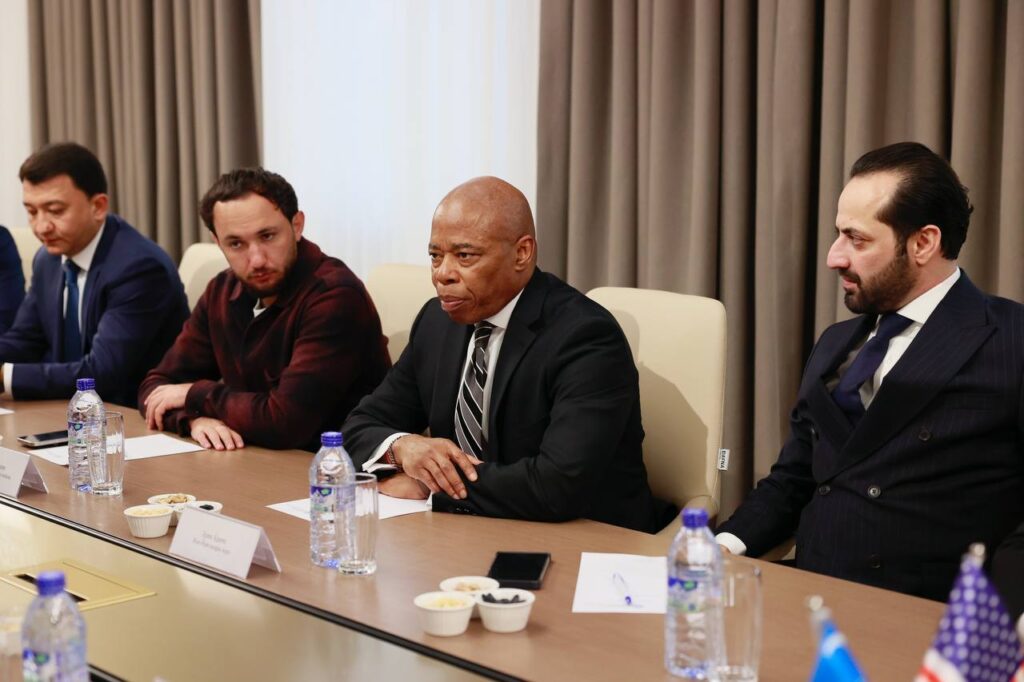
A delegation led by New York City Mayor Eric Adams met with the Chamber of Commerce and Industry of Uzbekistan on 19 November to explore new avenues for economic and business cooperation. The session brought together Adviser to the Chairman Umid Safarov, prominent Uzbek entrepreneurs and businessassociation representatives. Discussions focused on strengthening trade and investment links between Uzbekistan and New York. Safarov proposed collaboration with the New York Stock Exchange to help prepare Uzbek companies for U.S. capitalmarket access, creating business schools and accelerator programmes in partnership with leading American universities, and opening a joint vocationaltraining college in Tashkent. Kamolat Mirzaaliyeva, head of Uzbekistan’s Small Business Association, sought support in building ties between Uzbek and New York smallbusiness networks and expanding exports of Uzbek products to the U.S. market. Other entrepreneurs at the meeting raised proposals to increase agricultural exports, develop biochemical production and support innovative projects. Officials described the talks as constructive and expect them to lift bilateral business cooperation to a new level. Mayor Adams also met with Tashkent Mayor Shavkat Umurzoqov. The two agreed to begin drafting a partnership agreement between New York and Tashkent to cover longterm cooperation in urban development, culture, innovation and economic projects. The visit comes amid renewed interest in the U.S.-Uzbekistan economic corridor and at a time when Adams’ international engagements are under scrutiny.

Opinion: Central Asia Is Consolidating Its Role as a Full-Fledged Actor in Global Processes

The seventh Consultative Meeting of the Heads of State of Central Asia, held in Tashkent, was far more than a routine regional gathering. It marked a pivotal moment with the potential to shape the political and economic architecture of the region for the next decade or two. President Shavkat Mirziyoyev’s keynote address stood out for articulating a forward-looking and comprehensive strategic vision. Notably, he proposed redefining the format itself from a loose “consultative mechanism” into a more cohesive and institutionalized “Central Asian Community.” At the summit, leaders endorsed several landmark documents: the Concept for Regional Security and Stability in Central Asia, the Catalogue of Threats to Central Asia’s Security and measures for their prevention for 2026-2028 and its implementation plan, a joint appeal supporting the Kyrgyz Republic’s candidacy for the UN Security Council, and the decision to admit Azerbaijan as a full-fledged participant. Taken together, these steps signal that Central Asia increasingly sees itself not as a passive bystander amid global geopolitical turbulence, but as an emerging regional actor capable of shaping its own trajectory. Two broader trends deserve special emphasis. First, the region is moving beyond reactive engagement with external initiatives and power blocs. Rather than relying solely on structures created by outside actors, Central Asia is beginning to develop its own institutions. This shift mirrors a global pattern: as the international order becomes more fragmented and unpredictable, regional communities are strengthening their internal mechanisms as a means of resilience. Second, the format envisioned in Tashkent diverges from “Brussels-style integration.” It does not require the transfer or dilution of sovereignty. Instead, it relies on soft integration, consultation, consensus-building, and phased convergence. As President Mirziyoyev noted, having a shared and realistic sense of “what we want our region to look like in 10-20 years” is essential. Without such a vision, Central Asia risks remaining the object of great-power competition rather than an autonomous participant in it. One of the summit’s most consequential developments was the decision to welcome Azerbaijan as a full-fledged member of the format. The emerging political and economic bridge between Central Asia and the South Caucasus is quickly becoming not only a transit nexus but also a cornerstone of a broader geopolitical space. The strengthening of Trans-Caspian corridors, the advancement of the “China – Kyrgyzstan – Uzbekistan” railway, the Trans-Afghan corridor, and the alignment of Caspian Sea transport routes will significantly expand the region’s strategic and economic potential. A further nuance is worth highlighting: Azerbaijan’s long-standing ties with the Western political and security architecture, through NATO partnership mechanisms and energy corridors, as well as its membership in the Organization of Turkic States, introduce new layers of connectivity. Its inclusion repositions the “Central Asian Community” from a post-Soviet platform into a wider geopolitical constellation spanning Eurasia, the South Caucasus, and the Middle East. For Central Asian states, this new configuration opens additional room for multi-vector diplomacy and reduces the risks of unilateral dependence.   The views expressed in this article are those of the author and do not...

NYC Mayor Adams Heads to Uzbekistan in Final Weeks in Office

New York City Mayor Eric Adams, who suspended his re-election campaign this year and leaves office on January 1, is traveling to Uzbekistan and will return to New York on Sunday. The New York Post and other media outlets said Adams, who met Prime Minister Benjamin Netanyahu in Israel on Monday, will visit Tashkent and Samarkand during the taxpayer-funded trip. The mayor’s office said late Monday that Adams will meet “government, business, tech, sports, and religious leaders to discuss how New York City can partner with Uzbekistan” to generate jobs and innovation in the city and will also visit “religious sites of importance to the Muslim community,” according to media reports. Mayor-elect Zohran Mamdani will succeed Adams, a former New York City police officer and Brooklyn borough president. As mayor, Adams has been credited with some accomplishments on housing, steering New York out of the pandemic and other issues, but his tenure was tarnished by ethics concerns and investigations. Last year, federal prosecutors charged Adams with conspiracy, fraud and other crimes for an alleged scheme involving Turkish officials. Adams pleaded not guilty. This year, the U.S. Department of Justice ordered that the case be dropped. The federal investigation of Adams included an angle involving Uzbekistan. In a 2024 affidavit, investigators alleged that Adams solicited illegal foreign donations, via a so-called “straw” donor scheme designed to conceal the identity of the real contributor of the funds. It said that one such donor “is connected to the Government of Uzbekistan and works to influence Adams on behalf of Uzbek and Central Asian causes.” Uzbekistan’s government has not commented publicly on the case. Hosting an Uzbekistan heritage reception last month, Adams said “New York is the Tashkent of America,” a reference to the large Uzbek community in the city. “I love all of my stans, Kazakhstan and the others, but Uzbekistan is growing, your country is becoming stronger and stronger every day,” Adams said.