• KGS/USD = 0.01144 0%
  • KZT/USD = 0.00206 0%
  • TJS/USD = 0.10699 -0.19%
  • UZS/USD = 0.00008 0%
  • TMT/USD = 0.28571 0%
  • KGS/USD = 0.01144 0%
  • KZT/USD = 0.00206 0%
  • TJS/USD = 0.10699 -0.19%
  • UZS/USD = 0.00008 0%
  • TMT/USD = 0.28571 0%
  • KGS/USD = 0.01144 0%
  • KZT/USD = 0.00206 0%
  • TJS/USD = 0.10699 -0.19%
  • UZS/USD = 0.00008 0%
  • TMT/USD = 0.28571 0%
  • KGS/USD = 0.01144 0%
  • KZT/USD = 0.00206 0%
  • TJS/USD = 0.10699 -0.19%
  • UZS/USD = 0.00008 0%
  • TMT/USD = 0.28571 0%
  • KGS/USD = 0.01144 0%
  • KZT/USD = 0.00206 0%
  • TJS/USD = 0.10699 -0.19%
  • UZS/USD = 0.00008 0%
  • TMT/USD = 0.28571 0%
  • KGS/USD = 0.01144 0%
  • KZT/USD = 0.00206 0%
  • TJS/USD = 0.10699 -0.19%
  • UZS/USD = 0.00008 0%
  • TMT/USD = 0.28571 0%
  • KGS/USD = 0.01144 0%
  • KZT/USD = 0.00206 0%
  • TJS/USD = 0.10699 -0.19%
  • UZS/USD = 0.00008 0%
  • TMT/USD = 0.28571 0%
  • KGS/USD = 0.01144 0%
  • KZT/USD = 0.00206 0%
  • TJS/USD = 0.10699 -0.19%
  • UZS/USD = 0.00008 0%
  • TMT/USD = 0.28571 0%

Viewing results 13 - 18 of 811

OTS Summit in Turkistan Reveals Strains Beneath Turkic Unity

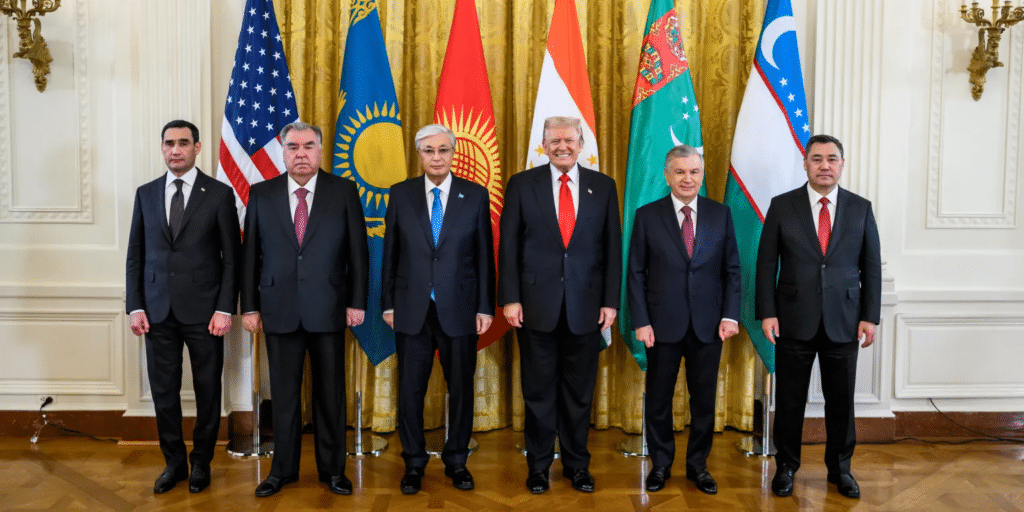
Last Friday, the Kazakh city of Turkistan, officially promoted as the “spiritual capital” of the Turkic world, hosted an informal summit of the Organization of Turkic States (OTS). The official theme was artificial intelligence and digital development, but the meeting also highlighted older questions about the OTS’s political identity, its relationship with Russia, and Ankara’s influence within the Turkic world. Because the gathering was informal, much of what took place remained behind closed doors. Yet public statements, official readouts, and subsequent commentary offered clues about the tensions and competing agendas within the organization. The summit brought together the presidents of Turkey, Azerbaijan, Kyrgyzstan, and Uzbekistan, as well as Tufan Erhurman, president of the Turkish Republic of Northern Cyprus, which is recognized only by Turkey. The meeting followed Turkish President Recep Tayyip Erdoğan’s state visit to Kazakhstan, during which the two countries signed 15 agreements, including a Declaration on Eternal Friendship and an Enhanced Strategic Partnership between Kazakhstan and Turkey. In Turkistan, summit participants visited the mausoleum of Khoja Ahmed Yasawi, where Erdoğan donated a handwritten Quran manuscript to the historic site. Leaders also launched the construction of a Center for Turkic Civilization. The presidents of Kazakhstan and Uzbekistan separately visited a newly built mosque donated to Turkistan by Tashkent. Despite the atmosphere of symbolism and fraternity, however, the summit also exposed clear differences between Ankara’s wide-ranging vision for the OTS and Astana’s insistence that the organization should remain a practical cooperation platform. Those differences became especially visible in President Kassym-Jomart Tokayev’s speech at the summit. “Recently, opinions have been voiced portraying our organization as a military alliance. It is obvious that those spreading such speculation pursue malicious goals and seek to sow discord. Kazakhstan considers it necessary to reject such positions,” Tokayev said. “The Organization of Turkic States is neither a geopolitical project nor a military organization. It is a unique platform aimed at strengthening trade, economic, technological, digital, cultural, and humanitarian cooperation among brotherly nations.” Kazakh political analyst Daniyar Ashimbayev argued that Tokayev’s remarks reflected a growing internal debate within the OTS. “On the one hand, some media interpreted his words as a response to foreign experts warning about the emergence of a ‘Turanic NATO.’ On the other hand, it should be noted that some fellow presidents within the OTS persistently promote the development of military cooperation. Kazakhstan is equally persistent in defining which forms of interaction it considers acceptable within the organization,” Ashimbayev wrote. Another analyst, Andrei Chebotarev, also argued that the core message of Tokayev’s speech was to frame the OTS primarily as a platform for economic, technological, digital, cultural, and humanitarian cooperation. “In this context, he rejected the idea of transforming the organization into a military-political bloc. This sent a signal both to pan-Turkic political forces interested in such a transformation and to political elites in countries that view the organization’s activities with caution,” Chebotarev said. Chebotarev also noted that Tokayev referenced the “OTS+” format launched at the organization’s previous summit in Azerbaijan and voiced support...

Erdoğan Visit Puts Trade, Transit, and Turkic Economic Integration at Center of Kazakhstan’s OTS Push

Turkish President Recep Tayyip Erdoğan’s visit to Kazakhstan comes as Astana is trying to give the Organization of Turkic States a more practical economic role, linking trade, investment, transport, digital development, and business financing across the Turkic world. The visit centered on three connected events: Erdoğan’s official visit to Astana, the sixth meeting of the Kazakhstan-Turkey High-Level Strategic Cooperation Council, and the informal summit of the Organization of Turkic States in Turkistan. Erdoğan arrived in Astana ahead of talks with President Kassym-Jomart Tokayev, while Turkish media reported that the agenda included transport links through the Middle Corridor, Caspian transit routes, energy security, logistics, defense industry cooperation, trade and investment. The visit also carried strong symbolic staging. According to Akorda, Erdoğan’s aircraft was escorted by Kazakh Air Defense fighter jets after entering Kazakhstan’s airspace. At Astana airport, he was greeted by an honor guard, children waving the flags of Kazakhstan and Turkey, and military helicopters displaying the national symbols of both countries. Erdoğan later said the welcome had brought his delegation “enormous joy,” adding, “We certainly will not forget this.” [caption id="attachment_48862" align="aligncenter" width="1280"] Kazakh aircraft fly over Astana during the ceremonial welcome for Erdoğan. Image: Akorda[/caption] The OTS summit is being hosted by Kazakhstan on May 15 in Turkistan under the theme “Artificial Intelligence and Digital Development.” According to the organization, the summit is intended to advance cooperation on artificial intelligence, digital innovation, emerging technologies, public services, sustainable economic growth, and regional connectivity. The digital theme reflects Kazakhstan’s effort to give the OTS a more practical economic role, beyond its cultural and diplomatic foundations. Ahead of the summit, Astana hosted a business forum on May 13 under the title “Economic Integration and Cooperation of the OTS Countries: New Opportunities in Industry, Agro-Industrial Complex, Logistics and Digitalization.” Kazakhstan’s prime minister’s office said the forum brought together state bodies, financial institutions, chambers of commerce, international organizations, and business representatives from OTS countries. Kanat Sharlapayev, chairman of the Union of Chambers of Commerce and Industry of Turkic States and of the presidium of Kazakhstan’s Atameken National Chamber of Entrepreneurs, urged Turkic countries to move toward deeper industrial and digital integration. He said the task was to create a unified digital environment, reduce the distance between producers and consumers, increase transparency, and speed up transactions. The forum also discussed plans for joint industrial facilities and manufacturing zones along transport corridors, an idea that would push OTS cooperation beyond transit toward processing and value-added production. Deputy Prime Minister and Minister of National Economy Serik Zhumangarin used the forum to frame OTS cooperation as one of Kazakhstan’s foreign economic priorities. He said the OTS countries form a market of more than 170 million people and have significant industrial, transport, agricultural, and human potential. He also said the main task was to move from declarations to joint projects, new production, technology alliances, and mutual investment. Silk Way TV reported that Murat Karimsakov, chairman of the Kazakh Chamber of International Commerce, said trade turnover among OTS countries increased...

Uzbekistan Expands U.S. Labor Migration Talks in New York

A delegation from Uzbekistan held a series of meetings with international organizations, educational institutions, employers, and law firms during the International Migration Review Forum (IMRF) in New York, as Tashkent seeks to expand legal labor migration opportunities in the United States. According to Uzbekistan’s Migration Agency, the delegation included officials from the agency, the Ministry of Foreign Affairs, and Uzbekistan’s embassy in Washington. The push comes as labor migration remains a major part of Uzbekistan’s economy. The Central Bank of Uzbekistan said remittance inflows reached high levels in 2025, with $9.9 billion arriving through traditional money transfer systems and another $8.6 billion credited directly to bank cards through P2P transfers. That scale has made overseas employment both a household income issue and a policy priority for Tashkent. The forum opened with remarks by UN Secretary-General António Guterres and Amy Pope, director general of the International Organization for Migration (IOM), who outlined priorities for global migration policy and international cooperation. During the event, Behzod Musayev, the head of Uzbekistan’s Migration Agency, presented information on migration reforms underway in Uzbekistan, including vocational and language training programs designed to prepare citizens for overseas employment. Musayev said labor migration should be viewed as an economic necessity and an investment in human capital. The delegation also met with Ugochi Daniels, IOM’s deputy director general for operations, to discuss protecting the rights of citizens of Uzbekistan working abroad and organizational issues related to an international migration forum scheduled to be held in Tashkent. Several meetings focused on expanding cooperation with U.S. educational institutions and employers. Uzbekistan signed a cooperation agreement with Logan University in Missouri on training medical personnel for the U.S. labor market, launching joint educational programs, and developing human resources. Representatives of Missouri Trucking School discussed creating a 160-hour training program to prepare drivers from Uzbekistan according to U.S. standards and support their employment opportunities. Talks with the National Council of Agricultural Employers focused on organizing labor forums with employers and expanding seasonal work programs for citizens of Uzbekistan. The delegation also reached agreements with the recruitment organization Head Honchos on H-2A visa processing, promoting agricultural workers from Uzbekistan in the U.S., and launching preparatory programs lasting eight to ten weeks. In meetings with the New York-based law firm Ballon Stoll, officials discussed work opportunities through O, H-2A, H-2B, H-1B, and E visas, as well as stronger legal protections for citizens of Uzbekistan employed in the U.S. The U.S. route is still at an early stage and will depend on American visa rules and employer demand. Under U.S. regulations, H-2A and H-2B petitions are generally limited to nationals of countries designated by the Department of Homeland Security, though USCIS can approve petitions for workers from non-designated countries on a case-by-case basis if it determines that doing so is in the U.S. interest. The discussions follow statements made earlier this year by President Shavkat Mirziyoyev, who instructed Uzbekistan’s diplomats to begin talks with Washington on including the country in U.S. seasonal labor recruitment programs. The...

Opinion: The U.S. Still Doesn’t Know Where Central Asia Belongs

Washington cannot decide where Central Asia belongs. Is it part of Europe? Asia? The Middle East? The confusion is on full display in how the House of Representatives has reassigned the region across subcommittees in rapid succession. In the 116th Congress, which convened in 2019, Central Asia fell under the Subcommittee on Europe, Eurasia, Energy and the Environment. Two years later, in the 117th Congress, it was moved to the Subcommittee on Asia, the Pacific, Central Asia and Nonproliferation. That arrangement barely settled before the 118th Congress shifted it again—this time to the Subcommittee on the Middle East, North Africa, and Central Asia. Now, in the 119th Congress, it has been relocated to the Subcommittee on South and Central Asia. On the banks of the Potomac, Central Asia has taken on a nomadic life of its own—constantly on the move, never quite settling in one place. At the State Department, Central Asia is grouped under the Bureau of South and Central Asian Affairs alongside Afghanistan, India, Pakistan, and Sri Lanka. At the Pentagon, by contrast, the Middle East team oversees relations with Central Asia, alongside countries like Israel, Saudi Arabia, Iran, and Pakistan. These mismatches are not just clumsy; they are strategically dangerous. By misplacing Central Asia, Washington is misreading the geography of China’s rise. It is time for Washington to stop the bureaucratic musical chairs and place Central Asia within a coherent grand strategy. Far from being an afterthought, the region is one of the most consequential pieces of the geopolitical puzzle facing the United States: how to respond to China’s strategy. This is because Central Asia sits at the heart of China’s decades-long effort to move its critical lifelines away from the Indo-Pacific and onto the Eurasian landmass. Over the past 15 years, China has quietly reoriented its energy routes, reducing reliance on maritime pathways vulnerable to U.S. naval dominance—particularly chokepoints such as the Strait of Hormuz and the Strait of Malacca—and expanded overland imports across Eurasia. Today, China imports significant volumes of natural gas via pipelines from Turkmenistan and Russia, as well as crude oil from Kazakhstan. These continental routes are largely insulated from maritime interdiction, giving Beijing strategic resilience. Central Asia should be understood through this lens. For China, the region is not peripheral—it is essential. The pipelines, railways and trade corridors that underpin China’s resilience all pass through Xinjiang and Central Asia. In this sense, Central Asia is not merely adjacent to China; it is embedded in China’s vision of the future. This is why Washington’s practice of grouping Central Asia with South Asia misses the mark. The two regions operate under fundamentally different strategic logics. South Asia is centered on the Indian subcontinent, shaped by maritime dynamics and the India‑Pakistan rivalry. Central Asia, by contrast, is a continental crossroads—defined by overland connectivity, energy flows and great‑power competition across Eurasia. India, meanwhile, is geographically constrained—lacking direct land access to Central Asia due to territory administered by Pakistan and separated from China by the Himalayas—leaving it...

Opinion: A New Southern Gate – How the EU-Armenia Summit Unlocks a Critical Branch for the Middle Corridor

For the first time in its history, the European Union held a full summit with Armenia. The meeting, which took place in Yerevan on 4–5 May 2026, was not merely a diplomatic milestone for Armenia. It also sent a signal to governments thousands of kilometers away in Central Asia that the trade route linking Asia to Europe through the South Caucasus is becoming more real, and more politically backed, than ever before. The centerpiece of the summit saw the signing of a “Connectivity Partnership” between Brussels and Yerevan. The European Commission President, Ursula von der Leyen, described Armenia as "uniquely positioned" to connect Europe with the South Caucasus and Central Asia. Under the EU's Global Gateway program, investments in Armenia are expected to reach €2.5 billion. A further €3 billion is earmarked specifically for the Middle Corridor – the trade route that runs from China across Central Asia, over the Caspian Sea, through the South Caucasus, and into Europe. “We will support your integration into key transport networks like the Trans-Caspian Corridor. It is a route that is also of strategic importance for Europe, given the growing flows of trade between our two regions,” von der Leyen stated. A Route That Is Already Moving Fast The Middle Corridor, formally known as the Trans-Caspian International Transport Route (TITR), has grown at a pace that few predicted. Cargo volumes rose 70 percent in the first nine months of 2024 alone, reaching 3.4 million tons. By the end of that year, the total had climbed to 4.1 million tons – up from just 350,000 tons in 2021. The World Bank projects that the route could handle up to 11 million tonnes a year by 2030. It's important to maintain some perspective. These numbers are small fry when compared to the billions of tons of trade that moves between Europe and Asia by sea. However, the Middle Corridor does offer important diversification, particularly given the spillover effects of wars in the Middle East and piracy in the Red Sea. [caption id="attachment_48602" align="aligncenter" width="1274"] Image: Trans Caspian International Transport Route and it’s southern part, China-Kyrgyzstan-Uzbekistan Railway project. Source: middlecorridor.com[/caption] Where Uzbekistan Stands For Uzbekistan, the Middle Corridor is both an opportunity and a work in progress. In January 2025, President Mirziyoyev signed a decree to upgrade road and rail connectivity, and in September 2024, Tashkent co-founded the Eurasian Transport Route Association alongside Austria, Azerbaijan, China, Kyrgyzstan, Tajikistan, and Turkey. In December 2024, Uzbekistan sent its first block train all the way to Brazil – through Turkmenistan, Azerbaijan, and the Georgian port of Poti – proving the route is operationally viable. But costs remain a challenge. Shipping a 40-foot container via the Middle Corridor currently costs between $3,500 and $4,500, compared to $2,800–$3,200 on the Northern Corridor through Russia. Europe, meanwhile, accounts for only around 3 percent of Uzbekistan's exports and 13 percent of its imports — a share that Tashkent wants to grow significantly. The China–Kyrgyzstan–Uzbekistan (CKU) railway — a $8 billion, 573-kilometre project whose...

No Tanks on Red Square as Moscow’s Victory Day Pull Fades in Central Asia

Russia’s Victory Day parade on May 9 is set to be more restrained this year, with tanks, armored vehicles, and missile systems absent from Red Square for the first time in nearly two decades. The Russian Defense Ministry cited the “current operational situation,” while the Kremlin blamed what it called Ukrainian “terrorist activity.” Russia also reported drone attacks aimed at Moscow in the days before the ceremony, and security around President Vladimir Putin has been tightened. The reduced scale of the parade carries a resonance beyond Russia. Victory Day remains one of the most emotionally charged dates in the post-Soviet calendar, including in Central Asia, where families still remember relatives who fought, died, or labored during World War II. But across the region, the holiday has increasingly been placed inside national calendars rather than left as part of Russia’s political script. The contrast with last year is sharp. In 2025, Moscow marked the 80th anniversary of Nazi Germany’s defeat with its largest Victory Day parade since the start of Russia’s full-scale invasion of Ukraine. Chinese troops marched on Red Square, Xi Jinping sat beside Putin, and foreign leaders attended from across Asia, Africa, Latin America, and the former Soviet space. Tanks, rocket launchers, missile systems, drones, and other military hardware rolled through the square. This year’s guest list is more limited. The Kremlin’s initial list of foreign delegations included leaders and senior figures from Belarus, Laos, Malaysia, Slovakia, the breakaway republics of Abkhazia and South Ossetia, and representatives from Bosnia and Herzegovina’s Republika Srpska. Attendance has also been hard to read. Earlier reports said Kazakhstan’s Kassym-Jomart Tokayev and Kyrgyzstan’s Sadyr Japarov were expected in Moscow, while the Kremlin’s initial published list of foreign guests did not include any Central Asian presidents. On May 8, however, Kazakh and Uzbek media reported that Tokayev and Uzbekistan’s Shavkat Mirziyoyev were traveling to Moscow for Victory Day events. The late confirmations complicate the picture, but they do not restore the full regional show of unity seen in the last two years, when all five Central Asian presidents were present at the Moscow parade. It does suggest, however, that Moscow’s political ownership of the date is less automatic than it once was. Victory Day, which commemorates the Soviet defeat of Nazi Germany in what Russia calls the Great Patriotic War, has long been one of the main rituals of modern Russian power. It draws large television audiences, fills public space with military symbolism, and presents the Kremlin as the guardian of a sacred national memory. The holiday speaks of sacrifice and family loss, but also of nationalism and state control over history. Putin has used that language repeatedly. On May 9, 2024, after appearing on Red Square in snowfall, he said Russia was going through a “difficult, milestone period,” and warned: “We will not allow anyone to threaten us. Our strategic forces are always in combat readiness.” In 2025, he used the 80th anniversary parade to link Soviet wartime memory to Russia’s current war, saying...