Uzbekistan’s first national exhibition at Milan Design Week 2026 has closed with strong international recognition, drawing large crowds and earning praise from critics for its focus on culture, craft, and environmental change.
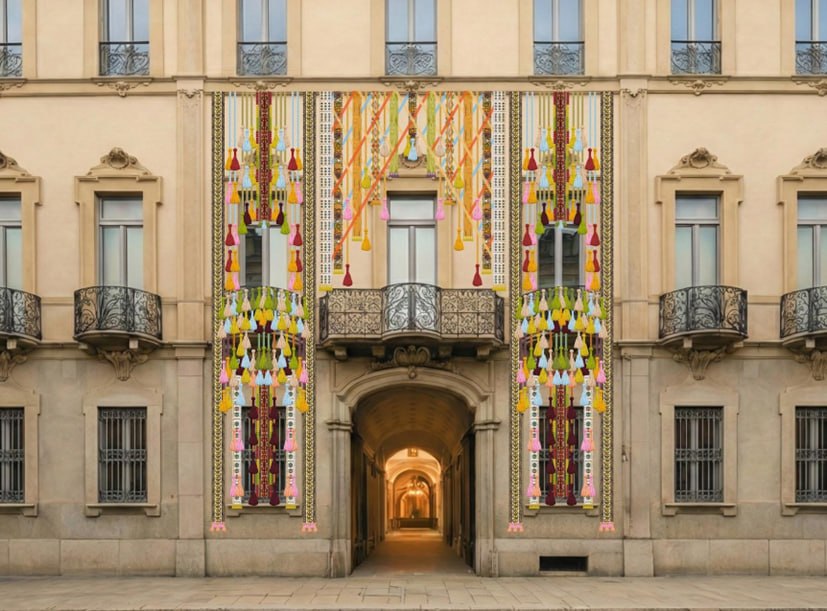
Titled When Apricots Blossom, the exhibition ran from April 20 to 26 at Palazzo Citterio, welcoming around 25,000 visitors over seven days. Organized by the Uzbekistan Art and Culture Development Foundation (ACDF), the project was commissioned by its chairperson Gayane Umerova and curated by architect Kulapat Yantrasast, founder of WHY Architecture.
The exhibition was shortlisted for the main Fuorisalone Award, which recognizes leading installations among the thousands of events held across Milan during the week. It also received a Special Mention from a panel of media partners and critics. The jury praised the project for creating “a dialogue between the space and the content” and for encouraging deeper engagement with its themes.
Uzbekistan’s debut comes at a time when design is increasingly addressing global challenges, including climate change and sustainability. In this context, When Apricots Blossom stood out for its focus on the Aral Sea region, one of the world’s most widely recognized environmental disasters.
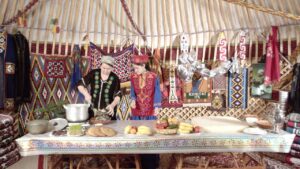
Cooking demonstration led by Bayrangul. Still from the film Where the Water Ends by Manuel Correa and Marina Otero 2026. Courtesy of ACDF
Over the past six decades, the Aral Sea has largely disappeared, reshaping life in Karakalpakstan, an autonomous region in northwestern Uzbekistan. The exhibition explored how communities in the area have adapted to these changes, not only through new solutions but also through long-standing traditions.
Rather than presenting craft as something of the past, the project framed it as a form of living knowledge.
“Our intention was for the Aral Sea to be recognized not only as a site of loss, but as a lens through which design considers broader questions of climate, culture, and responsibility,” Umerova said.
She emphasized that collaboration played a key role in the exhibition. Designers from different countries worked alongside Uzbek and Karakalpak artisans, creating a space for exchange between tradition and contemporary practice.
“The knowledge exchange between our craftspeople and international designers has helped reconnect past, present, and future,” she said.
Inside Palazzo Citterio, visitors moved through installations centered on three fundamental aspects of life: food, shelter, and clothing. These were represented through bread-making, yurt-building, and textile weaving, practices that have helped communities adapt to changing environments.
Twelve designers created new works inspired by these traditions, including bread trays and stamps used in the preparation of non, a staple of Uzbek cuisine. Made from materials such as wood, ceramics, felt, and reeds, the objects reflected both local resources and evolving design approaches.
The exhibition also included artifacts selected by participants of the Aral School, an international educational program focused on the region through design and research. A film, Where the Water Ends, offered visitors a closer look at the lives and landscapes shaped by the disappearance of the sea.
For Yantrasast, the project marks the beginning of a longer process.
“This is not about preserving craft as something from the past,” he said. “It is about understanding where it can go in the future, as something essential, resilient, and alive.”
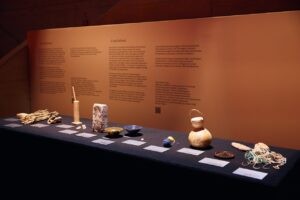
Artefacts selected by participants of the Aral school – When Apricots Blossom. Courtesy of ACDF.
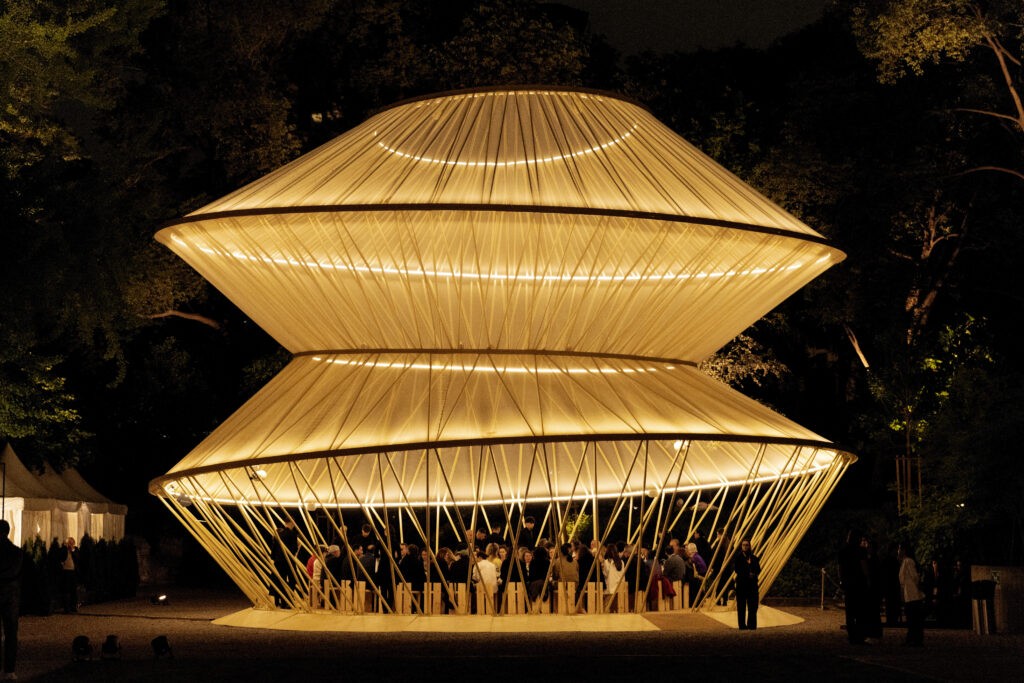
One of the most discussed elements of the exhibition was the Garden Pavilion, a structure inspired by traditional yurts. Designed by WHY Architecture, the installation reinterpreted portable homes used by nomadic communities, transforming them into a space for discussions, workshops, and reflection.
Yantrasast described the pavilion as both an architectural concept and a symbol.
“It shows how design can hold absence while creating new meaning,” he said, referring to environmental changes in the Aral Sea region.
Following its success in Milan, parts of the exhibition will return to Uzbekistan. The Garden Pavilion, a large textile installation, and the collection of bread-related objects are expected to be displayed again, extending the project beyond the design week.
According to the Uzbekistan Art and Culture Development Foundation, the exhibition is part of a broader effort to support long-term development in the Aral Sea region. This includes cultural, educational, and research initiatives aimed at strengthening local communities and encouraging new ideas.
Upcoming projects linked to this work include Uzbekistan’s national pavilion at the Venice Biennale, the first Tashkent Design Week, and the second Aral Culture Summit, scheduled to take place in Nukus in September.