• KGS/USD = 0.01143 0%
  • KZT/USD = 0.00205 0%
  • TJS/USD = 0.10433 0.1%
  • UZS/USD = 0.00008 0%
  • TMT/USD = 0.28577 0%
  • KGS/USD = 0.01143 0%
  • KZT/USD = 0.00205 0%
  • TJS/USD = 0.10433 0.1%
  • UZS/USD = 0.00008 0%
  • TMT/USD = 0.28577 0%
  • KGS/USD = 0.01143 0%
  • KZT/USD = 0.00205 0%
  • TJS/USD = 0.10433 0.1%
  • UZS/USD = 0.00008 0%
  • TMT/USD = 0.28577 0%
  • KGS/USD = 0.01143 0%
  • KZT/USD = 0.00205 0%
  • TJS/USD = 0.10433 0.1%
  • UZS/USD = 0.00008 0%
  • TMT/USD = 0.28577 0%
  • KGS/USD = 0.01143 0%
  • KZT/USD = 0.00205 0%
  • TJS/USD = 0.10433 0.1%
  • UZS/USD = 0.00008 0%
  • TMT/USD = 0.28577 0%
  • KGS/USD = 0.01143 0%
  • KZT/USD = 0.00205 0%
  • TJS/USD = 0.10433 0.1%
  • UZS/USD = 0.00008 0%
  • TMT/USD = 0.28577 0%
  • KGS/USD = 0.01143 0%
  • KZT/USD = 0.00205 0%
  • TJS/USD = 0.10433 0.1%
  • UZS/USD = 0.00008 0%
  • TMT/USD = 0.28577 0%
  • KGS/USD = 0.01143 0%
  • KZT/USD = 0.00205 0%
  • TJS/USD = 0.10433 0.1%
  • UZS/USD = 0.00008 0%
  • TMT/USD = 0.28577 0%

Our People > Andrei Matveev

Andrei Matveev's Avatar

Journalist

Andrei Matveev is a journalist from Kazakhstan.

Articles

Kyrgyzstan’s Sanctions Dilemma: Drifting from the Central Asian Consensus?

While Kyrgyzstan is improving relations with the United States by hosting the second B5+1 forum in its capital, with the participation of U.S. Special Representative for South and Central Asia Sergio Gor, Bishkek’s relations with Brussels appear to be deteriorating. The European Union is discussing possible sanctions against Kyrgyzstan, and is reportedly considering a ban on the import of certain categories of goods into the country. According to Bloomberg, which was the first to disclose details of the EU’s upcoming 20th package of sanctions against Russia, Brussels is prepared to restrict Kyrgyzstan’s trade in machine tools and radio equipment over allegations of helping the Kremlin circumvent existing bans. The Kyrgyz government has already responded to the report. On February 3, Deputy Prime Minister Daniyar Amangeldiev held a video conference with EU sanctions envoy David O’Sullivan, during which the sides agreed to engage in “constructive and substantive dialogue on issues related to sanctions.” Further discussions are expected during O’Sullivan’s visit to Bishkek at the end of the month, scheduled for February 26. Even before the EU representative’s visit, Kyrgyz officials have publicly commented on the prospect of sanctions, offering a clear sense of the tone likely to shape the dialogue. In an interview with Azattyk, Amangeldiev stressed that Kyrgyzstan has imposed restrictions on the export of dual-use goods, including weapons, and therefore sees no grounds for measures against the state. He also suggested that any potential restrictions might not take the form of sanctions against Kyrgyzstan itself, but rather recommendations to individual EU member states not to supply certain goods to the republic. Deputy Chairman of Kyrgyzstan's Cabinet of Ministers, Edil Baisalov, emphasized that Bishkek consistently communicates its position to European officials, arguing that its “trade relations with Russia do not cause any damage to third countries.” As a negotiating advantage, Baisalov pointed to what he described as growing international attention toward Kyrgyzstan. “Compared to the past, interest in our country and in the history of its socio-economic strengthening has grown significantly,” Baisalov said. “I believe the European authorities have enough patience, wisdom, and understanding not to damage relations with the Kyrgyz Republic. There is no need to create the impression that they intend to restrict us in any way or undermine our policy of national development and economic strengthening.” At the same time, small and medium-sized businesses in Kyrgyzstan are already facing serious difficulties due to the existing sanctions regime, even though these measures do not directly target the country’s key economic sectors. The logistics sector has been hit hardest. Delivery times have increased, costs have risen, visa requirements for drivers have tightened, and the volume of required documentation has expanded significantly. International payments have emerged as a separate challenge. Transfers in dollars, euros, and other currencies are increasingly delayed. Banks demand additional explanations, scrutinize the origin of funds, and in some cases suspend transactions indefinitely, creating cash-flow gaps. To reduce risks, companies are spreading payments across multiple banks: one for ruble transactions, another for Europe, and a third for...

1 month ago
Why Kazakhstan Is Not Celebrating Its Multi-Billion-Dollar Win in the Karachaganak Oil Arbitration Just Yet

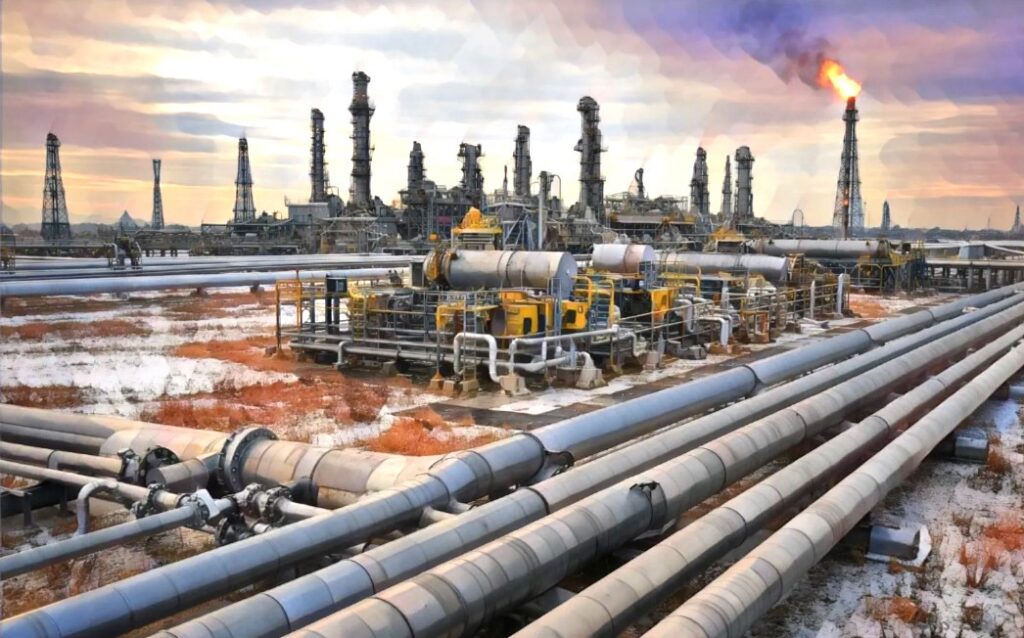
In late January 2026, international media reported that Kazakhstan had won a significant arbitration case against the shareholders of the Karachaganak oil field, with compensation estimated between $2 billion and $4 billion. The Ministry of Energy has not commented on the substance of the ruling, citing confidentiality, though experts say it strengthens Kazakhstan’s position in ongoing legal proceedings related to the Kashagan oil field. According to Bloomberg and Reuters, the Kazakh government initiated legal action in 2023 over what it described as unjustified cost deductions. Originally filed for $3.5 billion, the claim later expanded to include additional allegations, such as inflated expenses tied to corruption. In 2025, the shareholders of Karachaganak Petroleum Operating proposed settling the dispute by financing a domestic gas processing plant in Kazakhstan. The government rejected the proposal, however, and arbitration continued, resulting in a ruling in favor of Kazakhstan. Sources familiar with the proceedings said the consortium, led by Eni and Shell, has been ordered to pay compensation of up to $4 billion. The tribunal has yet to finalize the exact amount. As the arbitration process remains confidential, sources requested anonymity, noting that the Karachaganak consortium still has the option to appeal. While the ruling represents a partial victory, Kazakhstan had originally sought a significantly higher sum; the tribunal accepted the government's core argument: under the production sharing agreement (PSA), the consortium charged the state for unapproved and non-reimbursable expenses. Kazakhstan’s external legal advisers estimate the final payment will range between $2 billion and $4 billion. According to sources familiar with the proceedings, the recovery mechanism will likely involve revisions to the oil distribution formula within the PSA. In its written decision, the tribunal referenced Kazakhstan’s own admission that it had tolerated “corruption and kleptocracy” until 2022. A source familiar with the ruling said Kazakh officials had accepted bribes to approve inflated costs at Karachaganak, expenses that were then inappropriately reimbursed by the state. During the arbitration, Kazakhstan’s legal team presented documents from criminal proceedings in Italy. These revealed that, in 2017, several Italian contractors pleaded guilty to bribing Kazakh officials to secure contracts at both Karachaganak and the Kashagan offshore field. Oil and gas analyst Olzhas Baidildinov said the ruling gives Kazakhstan a stronger position in the Kashagan case. He asserted that Kazakhstan can now “firmly defend its rights in major oil and gas projects,” and that the "decades of privileged status enjoyed by foreign oil and gas majors in Kazakhstan's oil industry are over.” Baidildinov added that the operating models at Karachaganak and Kashagan are likely to be restructured and possibly “de-Italianized”. He also criticized the national oil company, KazMunayGas, for its silence on the Tengizchevroil (TCO) expansion project, whose capital expenditure has surged from $12 billion to $48.5 billion. Drawing comparisons to Uzbekistan, Baidildinov noted that former Uzbekneftegaz head Bahodir Sidikov was dismissed in December 2025 and later detained on corruption charges. In the same month, presidential energy adviser Alisher Sultanov was also removed. “I’m astonished that, while regional Kazakh officials are being...

1 month ago

Oil Eclipse: Power Cuts Expose Fragility of Western Kazakhstan’s CPC-Linked Energy System

Production at the Tengiz oil field in Kazakhstan is set to resume, according to the Ministry of Energy, which has been monitoring the situation since January 18. The restart does not, however, represent a full return to pre-shutdown production levels. While the disruption had no immediate impact on global oil prices, which continued to decline at the time of the outage, it triggered widespread electricity restrictions across western Kazakhstan. On January 21, Brent crude futures fell by 79 cents (1.22%) to $64.13 per barrel, while West Texas Intermediate dropped by 64 cents (1.06%) to $59.72 per barrel, Reuters reported. By then, production at Tengiz had already been suspended for three days, with sources indicating that the downtime would continue for another seven to ten days. From January 20, local authorities in Atyrau and Mangistau regions reported systemic electricity supply restrictions, including altered street-lighting schedules in Atyrau to conserve power, amid reduced gas deliveries to regional generators. The Ministry of Energy did not publicly respond to this until January 22, when, in a statement, it confirmed that gas turbine units at Tengiz were shut down on January 18. At the direction of Minister Erlan Akkenzhenov, his deputy was dispatched to oversee the situation on the ground. A special commission was established to investigate the incident, including representatives from the State Energy Supervision and Control Committee, the Atyrau Region Akimat’s Energy Department, KEGOC JSC, and Tengizchevroil LLP. No official explanation for the shutdown has yet been provided. However, some Kazakh energy experts have publicly speculated about a possible link to recent Ukrainian drone attacks on the infrastructure of the Caspian Pipeline Consortium (CPC), which plays a vital role in exporting Kazakh oil. Oil and gas analyst Olzhas Baidildinov drew a connection between the attacks and cascading effects on domestic energy supply: “They hit the CPC; exports declined, followed by oil production. Gas production declined along with oil. Gas is essential for electricity generation in western Kazakhstan,” he said. Baidildinov added that imported gas and electricity from Russia helped prevent more severe outages, though the energy crunch underscores longstanding vulnerabilities in Kazakhstan’s infrastructure. Baidildinov also referred to recent criticism from President Kassym-Jomart Tokayev, who at the 5th session of the National Kurultai voiced dissatisfaction with the energy sector, signaling potential personnel changes. On January 26, the Ministry of Energy announced that production at Tengiz would restart “in the near future,” and, at 4 a.m., the second-generation plant resumed operations, initiating raw material flows from the Royal field. “The current flow to the ZVP is 2,500 tons per day. Specialists are systematically increasing the supply of multiphase flow (oil and gas) to reach design capacity. At Tengiz, all technical and human resources have been mobilized to inspect energy facilities and power distribution systems,” the ministry stated. Officials emphasized that restoration efforts are under constant oversight. “TCO remains committed to ensuring reliable production and will increase volumes in stages, as infrastructure readiness and safety have been confirmed.” While the ministry has yet to publicly acknowledge...

2 months ago

Kazakhstan, Uzbekistan, and Azerbaijan Join Trump-Initiated Board of Peace

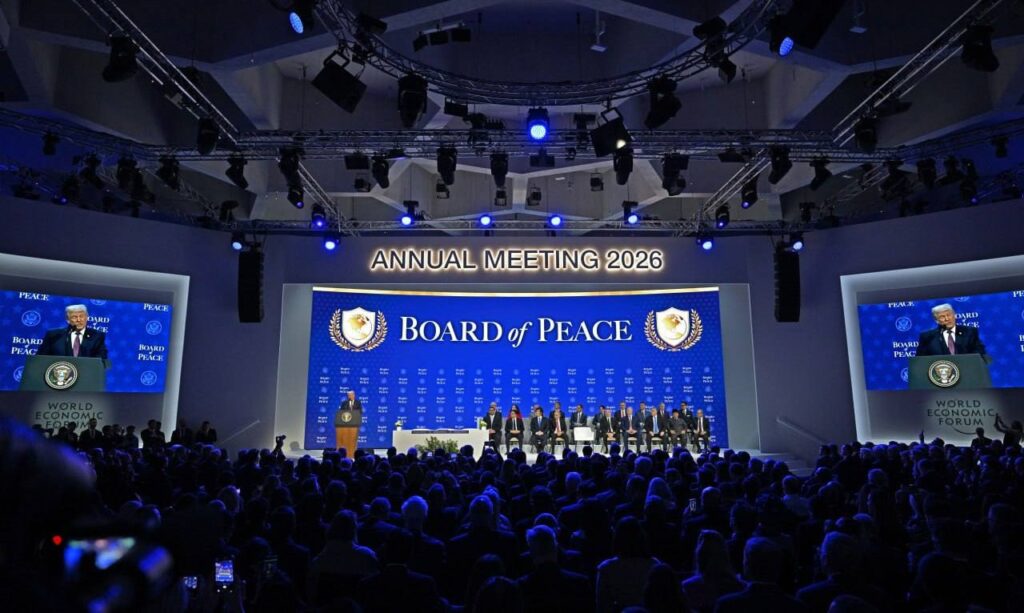
A new international organization, the Board of Peace, was formally established yesterday on the initiative of U.S. President Donald Trump. The charter for the board was signed on the sidelines of the World Economic Forum in Davos by representatives from 19 countries. Joining Kazakhstan and Uzbekistan as founding signatories, the other parties are Argentina, Armenia, Azerbaijan, Bahrain, Bulgaria, Hungary, Indonesia, Jordan, Qatar, Saudi Arabia, Turkey, the United Arab Emirates, Morocco, Mongolia, Pakistan, Kosovo, and Vietnam. The United States is not counted among the 19 signatories, acting instead as the initiative’s convener and chair. The Board of Peace is designed as a consultative platform rather than a treaty-based organization, with no enforcement powers and voluntary participation by member states. Following the signing, a comprehensive development plan for the Gaza Strip was unveiled, which envisions transforming the enclave into a regional economic hub by 2035, with a projected GDP of over $10 billion under the proposal. The plan includes restoring water, electricity, sewage systems, and hospitals, creating jobs, and developing coastal tourism. The concept was presented by entrepreneur Jared Kushner, Trump’s son-in-law. Kushner will serve on the Board of Peace’s executive board, alongside U.S. Secretary of State Marco Rubio, Special Envoy Steve Witkoff, World Bank President Ajay Banga, and former British Prime Minister Tony Blair, among others. The inclusion of Kazakhstan and Uzbekistan, the two largest economies in Central Asia, as founding members underscores their growing role in global diplomacy. Azerbaijan, which has recently expressed interest in joining the Central Asia-focused C5 regional format, also signed the charter. Separately, observers have begun referring to the growing cooperation between Central Asia and Azerbaijan as the “C6,” which could pave the way for greater collaboration on the development of the Trans-Caspian International Transport Route, including the Zangezur Corridor through Armenia. [caption id="attachment_42672" align="aligncenter" width="1280"] Image: president.uz[/caption] Uzbekistan’s participation reflects Tashkent’s increasingly active multi-vector foreign policy under President Shavkat Mirziyoyev, which has sought to expand the country’s diplomatic footprint beyond its immediate neighborhood. In recent years, Uzbekistan has stepped up engagement with the United States, the European Union, and the Middle East, while positioning itself as a pragmatic regional actor on development, connectivity, and post-conflict reconstruction initiatives. During the signing ceremony, President Kassym-Jomart Tokayev of Kazakhstan and Trump reportedly had a brief but cordial exchange. In a statement to the press, Ruslan Zheldibay, spokesperson for the Kazakh president, said Tokayev pointed out that Kazakhstan’s accession to the Abraham Accords was listed as item 177 in a document titled 365 Victories of President Donald Trump in 365 Days, distributed at the Davos Forum. Tokayev also wished Trump success in pursuing a “common sense” domestic policy. Trump, in turn, thanked Tokayev for supporting the Board of Peace initiative. [caption id="attachment_42673" align="aligncenter" width="2560"] Image: Akorda.kz[/caption] The press service of Akorda, the presidential residence of Kazakhstan, later clarified that joining the Board of Peace is based on a sovereign decision and entails a standard three-year term. Participation does not require a financial contribution, though the charter allows member states...

2 months ago

Tokayev Unveils Major Political Reforms as Kazakhstan Moves to Replace the National Kurultai

The fifth and final session of the National Kurultai in Kazakhstan, held on January 20, marked the announcement of plans to dismantle and replace two key institutions: the National Kurultai and the Assembly of the People of Kazakhstan, structures that have played central roles in the country’s civic dialogue, particularly over the past three decades. In a sweeping address, President Kassym-Jomart Tokayev declared that these legacy institutions would be replaced by new mechanisms for state-society interaction, crafted with an eye toward modern governance models and constitutional reform. The move reflects Tokayev’s long-running criticism of consultative bodies that, while symbolically inclusive, have often duplicated functions or lacked clear decision-making authority. Tokayev’s address, which included references to U.S. President Donald Trump, prompted analysts to draw deeper geopolitical and institutional parallels. As Tokayev enters the second phase of his presidency, analysts note a shift in strategy and control. His first term (2019-2022) was marked by attempts to correct the excesses and structural stagnation of his predecessor, Nursultan Nazarbayev. At the time, Tokayev faced entrenched resistance from the political establishment, with some officials reportedly appealing directly to Nazarbayev to circumvent presidential directives. The January 2022 unrest, an attempted power shift, marked a turning point. Tokayev consolidated power and launched a comprehensive reform agenda across the political and economic spectrum. The analogy with Trump, some analysts argue, lies in this dual-phase leadership: an initial struggle with the establishment, followed by a more assertive, transformation-driven second term. Since then, Tokayev has framed political reform as a safeguard against elite capture and institutional paralysis, arguing that fragmented authority contributed to the crisis. Yet Tokayev continues to face political resistance, particularly to structural reforms. Political analyst Daniyar Ashimbayev, commenting on Tokayev’s Kurultai speech, described the president’s evolving approach as both methodical and tactical. “Sometimes, the head of state announces strategic steps he has been considering for over a year, but only unveils them at the last moment, when no one has the opportunity to influence the message,” Ashimbayev observed. He cited Tokayev’s September 2025 proposal for a unicameral parliament as an example of such strategic maneuvering, an initiative that caught even senior officials by surprise. Ashimbayev argues that Tokayev’s aim was to sideline speculation about succession by announcing long-term institutional reforms. The president further solidified this strategy by reviving the position of vice president, abolished under Nazarbayev, while proposing the dissolution or merging of overlapping structures such as the Senate, the Assembly of the People, and the Kurultai into a proposed National People’s Council. This consolidation, Ashimbayev notes, serves both symbolic and strategic purposes. “The image of a 'lame duck' has vanished, and a self-confident Uncle Scrooge, so to speak, with complex plans, has returned. Everyone expected the discussions to take a year or a year and a half, but the president decided to seize the initiative again and unexpectedly moved the Kurultai to January, where he announced a huge package of new ideas,” he remarked. The announcement of the vice presidency, one of the most consequential changes, reportedly...

2 months ago