• KGS/USD = 0.01144 0%
  • KZT/USD = 0.00206 0%
  • TJS/USD = 0.10760 -0.46%
  • UZS/USD = 0.00008 0%
  • TMT/USD = 0.28571 0%
  • KGS/USD = 0.01144 0%
  • KZT/USD = 0.00206 0%
  • TJS/USD = 0.10760 -0.46%
  • UZS/USD = 0.00008 0%
  • TMT/USD = 0.28571 0%
  • KGS/USD = 0.01144 0%
  • KZT/USD = 0.00206 0%
  • TJS/USD = 0.10760 -0.46%
  • UZS/USD = 0.00008 0%
  • TMT/USD = 0.28571 0%
  • KGS/USD = 0.01144 0%
  • KZT/USD = 0.00206 0%
  • TJS/USD = 0.10760 -0.46%
  • UZS/USD = 0.00008 0%
  • TMT/USD = 0.28571 0%
  • KGS/USD = 0.01144 0%
  • KZT/USD = 0.00206 0%
  • TJS/USD = 0.10760 -0.46%
  • UZS/USD = 0.00008 0%
  • TMT/USD = 0.28571 0%
  • KGS/USD = 0.01144 0%
  • KZT/USD = 0.00206 0%
  • TJS/USD = 0.10760 -0.46%
  • UZS/USD = 0.00008 0%
  • TMT/USD = 0.28571 0%
  • KGS/USD = 0.01144 0%
  • KZT/USD = 0.00206 0%
  • TJS/USD = 0.10760 -0.46%
  • UZS/USD = 0.00008 0%
  • TMT/USD = 0.28571 0%
  • KGS/USD = 0.01144 0%
  • KZT/USD = 0.00206 0%
  • TJS/USD = 0.10760 -0.46%
  • UZS/USD = 0.00008 0%
  • TMT/USD = 0.28571 0%

Our People > Anton Chipegin

Anton Chipegin's Avatar

Anton Chipegin

Anton was born and grew up in Bishkek, Kyrgyzstan. He worked as a television correspondent, editor and TV presenter on the main television channels of the republic, such as NTS and MIR 24, and also as an economic observer at international news agencies and other media resources of Kyrgyzstan.

Articles

300 OSCE Observers to Monitor Kyrgyzstan’s Parliamentary Elections

The Organization for Security and Co-operation in Europe (OSCE) will deploy 300 observers to monitor Kyrgyzstan’s upcoming parliamentary elections. The country’s Central Election Commission (CEC) confirmed the news in a statement published on its official website. According to the CEC, 30 long-term observers will begin work next week, monitoring the electoral process across all regions of Kyrgyzstan. An additional 300 short-term observers will arrive closer to election day to assess voting procedures and the vote count. Ahead of the vote, CEC Chairman Tyntyk Shainazarov met in Bishkek with representatives from the OSCE’s Office for Democratic Institutions and Human Rights (ODIHR). Mission head Tamás Mészáros stated that the team had arrived in full and was ready to begin its work. The CEC noted that OSCE representatives expressed interest in attending meetings of the election commission and its working groups, both prior to and following the elections. Both sides affirmed their commitment to open and comprehensive cooperation. Shainazarov highlighted that Kyrgyzstan’s revised electoral system is designed to ensure fair representation of all regions in parliament, uphold gender balance, and facilitate remote voting. For the first time, a remote voting system will allow citizens to vote in any district without needing absentee ballots or additional paperwork. Ballots will be generated at polling stations, listing candidates from the relevant constituency. “We have achieved our goal: voters will vote only once and only for one candidate. This eliminates the possibility of fraud and other violations. I believe this is a great achievement,” Shainazarov said. The OSCE mission also showed particular interest in the technical details of the new system. Observers were briefed on the equipment and voting procedures ahead of the election, which will take place on November 30. As previously reported by The Times of Central Asia, the parliament voted on September 25 to dissolve itself, setting the stage for early elections. The decision was approved by 84 deputies, with five abstentions and one absence. The upcoming vote will be conducted under revised rules. The country has been divided into 30 constituencies, each of which will elect three deputies.

8 months ago

Natural Barriers: Kyrgyzstan Fights Disasters with Reforestation

Kyrgyzstan’s Ministry of Emergency Situations, in collaboration with representatives of the World Bank, has surveyed floodplain areas in the Jalal-Abad region to identify zones most vulnerable to erosion and flooding. The ministry's press service reported that environmental protection efforts will soon begin in these areas, aimed at strengthening soil stability and reducing the risk of natural disasters. The Forestry Institute had earlier designated the region as a pilot site for environmental initiatives. Emergency services personnel and forestry specialists plan to plant trees to establish protective forest belts. The trees’ root systems are expected to reinforce the soil and serve as natural barriers against landslides and mudflows. Last year, the region suffered severe rainfall, triggering mudslides that nearly destroyed two villages. A 10-year-old child lost their life, and over 300 families were evacuated. The disaster also inundated a section of the Bishkek-Osh highway, paralyzing traffic for several hours. “Visiting the ravines allowed us to assess their current condition and identify the areas most vulnerable to erosion. The timely implementation of protective measures, such as planting trees and applying bioengineering solutions, will not only mitigate flood risks but also help restore ecological balance,” the ministry stated. The project is funded by the World Bank and the International Development Association. The Jalal-Abad region has been selected for the pilot phase, with similar initiatives planned for other regions across the country. A recent World Bank report emphasized the economic costs of forest loss, noting its impact on the water cycle, soil stability, and drought resilience, factors that contribute to billions of dollars in global losses. “People and communities around the world are facing not only an environmental crisis but also an economic one. The good news is that solutions exist. If countries start investing now, natural systems can be restored, delivering strong returns in economic growth and job creation,” said Axel van Trotsenburg, Senior Managing Director at the World Bank. Experts argue that environmental programs should not be viewed as obstacles to development, but rather as key to building more sustainable and resilient economies.

8 months ago

Kyrgyzstan to Eliminate Service Charges in Cafes and Restaurants

Kyrgyzstan's Cabinet of Ministers has approved amendments to the regulations governing public catering establishments, effectively banning separate service charges in cafes and restaurants. Beginning January 1, 2026, businesses across the country will no longer be allowed to list service fees, typically 10-15% of the total bill, as a separate line item. Under the new rules, the full cost of service must be incorporated into the listed prices of food and beverages on the menu. According to the Ministry of Economy and Commerce, the reform aims to enhance price transparency and better protect consumer rights. “The consumer must see the final price before placing an order. Information about the cost of services must be transparent, accessible, and understandable,” the ministry stated. While customers may still tip at their discretion, the tipping culture in Kyrgyzstan remains underdeveloped, largely due to the existing practice of automatically including service charges. Authorities expect the new pricing model to gradually shift public attitudes toward discretionary tipping. Government officials emphasized that the primary objective of the reform is to eliminate hidden charges and simplify oversight. “Consumers should understand how much they are paying and what they are paying for. This not only protects citizens’ rights but also streamlines tax control,” the Ministry of Economy and Commerce added. Restaurant and café operators have been urged to adjust their menu pricing and update point-of-sale systems ahead of the new regulation’s implementation. Staff are advised to inform customers about the changes and ensure that menu prices match the final bill.

8 months ago

Moody’s Assigns Kyrgyzstan First-Ever Positive Outlook

For the first time, international credit rating agency Moody’s has assigned Kyrgyzstan a positive outlook, while reaffirming the country’s sovereign credit rating at B3. According to the Ministry of Finance, the shift reflects Kyrgyzstan’s stable economic growth. Finance Minister Almaz Baketaev met with Moody’s Managing Director David Aldrich on the eve of the announcement. Discussions covered areas of future cooperation, Kyrgyzstan’s investment profile, strategies for attracting external financing, and the country's credit trajectory. “Moody’s has revised its outlook on the Kyrgyz Republic’s sovereign credit rating from stable to positive, confirming the long-term rating at B3. The economy is demonstrating steady growth: real GDP for January to July 2025 rose by 11.5%,” the Ministry of Finance stated. “In May 2025, Kyrgyzstan successfully issued its first Eurobonds, raising $700 million. Investor demand exceeded supply threefold, with a five-year maturity and a 7.75% coupon rate.” The ministry noted that all proceeds from the Eurobond issuance have been placed in a dedicated account to manage public debt responsibly. Kyrgyzstan’s B3 rating has remained unchanged in recent years. While Moody’s upgraded the country’s outlook from negative to stable in 2024, this year marks the first time the outlook has been revised to positive. The Ministry of Economy described the revised outlook as recognition of the government’s efforts to stabilize and grow the economy. “The updated forecast reflects improvements in Kyrgyzstan’s macroeconomic and fiscal indicators, as well as stronger long-term development potential,” the ministry noted. “These results stem from key reforms, economic diversification, and sustained infrastructure investment.” According to official figures, all sectors of the economy posted growth in the first half of 2025. Construction recorded the highest increase at 45% since the start of the year, while agriculture saw the most modest growth at 3.8%. Total GDP for the first six months of the year amounted to 711 billion soms.

8 months ago

500 Meters of Illegal Fishing Nets Seized in Lake Issyk-Kul

Inspectors from the Issyk-Kul Department of the Environmental and Technical Supervision Service have confiscated approximately 500 meters of synthetic fishing nets during a recent raid on Lake Issyk-Kul. Large-scale efforts to clean and protect the lake have been underway since 2023. Ahead of this year’s tourist season, Kyrgyz President Sadyr Japarov issued a decree banning the import and use of synthetic fishing nets nationwide. He later participated in a raid on the lake himself, publicly criticizing officials for failing to fully implement the ban. Despite the government’s strict measures, poaching continues to pose a threat. According to inspectors from the Ministry of Natural Resources, although the latest seizure is not the largest on record, it is still substantial enough to harm the lake’s delicate ecosystem. Raids have been conducted almost continuously throughout the summer. Just days earlier, divers from the Kyrgyz Ministry of Emergency Situations retrieved 1,500 meters of nets from the lake and rescued 114 fish caught in them. Since the beginning of the year, authorities have removed a total of 80,900 meters of illegal fishing nets from Issyk-Kul. The State Customs Service also reported intercepting a large shipment of synthetic nets at the border with China. During a routine inspection of freight trucks, 750 kilograms of fishing nets were discovered and subsequently destroyed. Authorities warn that synthetic fishing nets are especially hazardous because they often contain lead, which can release toxic substances into the water. These toxins poison fish and destabilize the lake’s aquatic ecosystem.

8 months ago

Kyrgyz Authorities Open Public Debate on Death Penalty Bill

Following a series of high-profile murders and sexual assaults targeting young women, Kyrgyz authorities have initiated a public discussion on the possible reinstatement of the death penalty for convicted murderers and rapists. President Sadyr Japarov proposed the nationwide debate in response to growing public outrage. The president’s office has prepared a draft bill that would allow for the introduction of capital punishment for particularly grave crimes committed against women and children. “Currently, Kyrgyzstan is witnessing an increase in particularly serious crimes against children and women, including rape and murder involving rape, which are causing deep concern to both society and the state,” reads the explanatory note to the document. According to the bill, its primary aim is to protect the lives and health of women and children from violent crimes. The Constitution of Kyrgyzstan identifies life and health as the highest values of the state, while guaranteeing special protection of citizens’ sexual integrity. The authors of the bill also reference the UN Declaration on the Elimination of Violence against Women, adopted by General Assembly Resolution 48/104 on December 20, 1993, which calls on member states to develop legal measures, including criminal and administrative sanctions, to combat physical and sexual violence against women. Statistics from the Prosecutor General’s Office indicate a steady rise in violent crimes in recent years. In 2021, there were 39 murders; 36 of the victims were women and three were children. By 2024, the number had increased to 43 (34 women and nine children). In the first eight months of 2025 alone, 28 people were killed. Official data also show that more than 80 women, most of them minors, are raped each year. A large proportion of such crimes remain unreported or unresolved, as families often avoid publicizing the cases due to stigma and fear of reprisal. The draft legislation proposes reinstating the death penalty only for two categories of crimes: the rape of minors and murders committed in conjunction with rape. “The facts of violence against children and the murder of women accompanied by rape no longer shock society, it is becoming commonplace, and that is alarming,” the bill’s authors stated. Public consultation on the proposal will continue until October 28, with parliamentary consideration scheduled until November 4. Kyrgyzstan formally abolished the death penalty in 2007; the last execution was carried out in 1998. In December 2010, the country ratified the Second Optional Protocol to the International Covenant on Civil and Political Rights, committing to the eventual and permanent abolition of capital punishment.

8 months ago

European Banks to Allocate up to $1 Billion for Kambarata-1 Hydropower Project in Kyrgyzstan

Kyrgyzstan’s Minister of Energy, Taalaibek Ibraev, has signed agreements with European financial institutions to advance the construction of the Kambarata-1 hydropower plant, a flagship regional energy project on the Naryn River. The deals were concluded in Brussels during the Global Gateway Forum, organized by the European Union to mobilize sustainable investment in partner countries. According to an official EIB statement, the EU and the European Investment Bank (EIB) signed €900 million in memoranda of understanding with Kyrgyzstan, Kazakhstan, and Uzbekistan to support the project, which aims to strengthen regional energy security and accelerate the green transition in Central Asia. The European Bank for Reconstruction and Development (EBRD) also signed parallel agreements with the three governments and is assessing a financing package worth up to €1.3 billion. At the Brussels forum, Ibraev met with his counterparts from Kazakhstan and Uzbekistan to discuss coordination on implementation, following last year’s intergovernmental agreement establishing the Kambarata-1 project as a trilateral initiative. Under that framework, the countries will cooperate on construction, power-sharing, and environmental safeguards, with additional technical support from the World Bank. The World Bank’s project brief describes Kambarata-1 as a key step toward integrated energy and water management in the region. The 1,860-megawatt facility - one of the largest planned in Central Asia - will supply clean power domestically and to neighboring markets through regional transmission links. The EIB and EBRD agreements were signed by Minister Ibraev, EIB Global Director General Andrew McDowell, and EBRD Regional Director Hüseyin Özhan. It was reported that each institution has preliminarily earmarked up to $500 million in financing as part of its broader engagement. European Commission President Ursula von der Leyen said during the forum that the EU’s Global Gateway initiative will mobilize more than €400 billion by 2027 to strengthen sustainable infrastructure worldwide, including renewable energy projects in Central Asia. “This is a great opportunity for Europe, and this year, together with our partners, we are turning this demand into real action,” she said.

8 months ago

Kyrgyzstan Warns of Potential Fuel Shortage

Kyrgyzstan’s Antimonopoly Regulation Service has urged oil traders to avoid unjustified price increases and to ensure continuous fuel supplies, amid concerns about dwindling gasoline reserves. According to participants in a recent meeting convened by the Antimonopoly Regulation Service, including representatives from the presidential administration, the country’s current gasoline reserves are sufficient for only one month. Oil traders attributed recent price hikes at gas stations to rising wholesale prices at Russian refineries and a reduction in fuel shipments from Russia, Kyrgyzstan’s primary supplier. “Following the meeting, proposals were prepared to stabilize the situation on the fuel market, which will be sent to the Ministry of Economy and Commerce,” the Antimonopoly Regulation Service said in a statement. The regulator called on market players to “maintain fair competition,” refrain from unjustified price increases, and prevent disruptions in fuel availability. Traders reportedly pledged to maintain uninterrupted supplies through the end of the year, despite ongoing challenges in Russia. Kyrgyzstan relies heavily on Russian fuel imports, which it receives at preferential rates and without export duties. However, deliveries have fallen due to scheduled maintenance at Russian refineries and recent attacks on oil infrastructure. Fuel industry representatives said a new supply agreement with Russia for 2026 is expected to be signed by the end of this year.

8 months ago

Kyrgyzstan to Open 100 Overseas Polling Stations for 2025 Parliamentary Elections

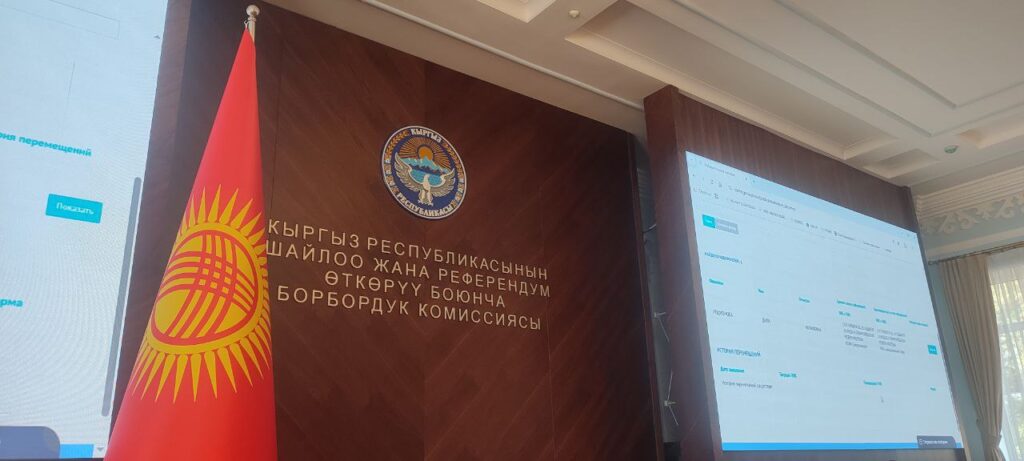
The Central Election Commission and Referenda (CEC) of Kyrgyzstan will open 100 polling stations abroad for the parliamentary elections scheduled for November 30, 2025, nearly double the number established during the previous election cycle, when 51 polling stations operated globally. The announcement was made by CEC Chairman Tynchtyk Shainazarov during a press conference in Bishkek. According to Shainazarov, the largest number of polling stations will be set up in Russia, 40 in total, including seven in Moscow and others across major Russian cities. Approximately 400,000 Kyrgyz citizens are officially registered as residing in Russia, the highest figure among all foreign countries. Additional polling stations will be opened in Turkey (8), the United States (6, including two in Chicago), South Korea (4), Italy (3), and in Germany and China (2 each). Several other capital cities worldwide will also host single polling stations. Shainazarov noted that the CEC has already dispatched five teams to Russian cities to conduct trial runs of the voting process. Test elections will be held on October 10, 20, and 30 in both Kyrgyzstan and Russia to identify potential technical or procedural issues. “I urge our citizens living in Russia to come and observe how the new system will function, how the equipment operates and how it prints ballots corresponding to the voter’s home district. Seeing the process firsthand will help people understand how the upcoming elections will be conducted,” Shainazarov said. Responding to a question from The Times of Central Asia about whether Kyrgyz citizens abroad would be able to vote remotely, Shainazarov confirmed that remote (electronic) voting has been fully suspended for the 2025 parliamentary elections. The decision, he said, was made to reduce the risk of vote-buying and electoral manipulation. “Electronic voting allows people to vote from home using a smartphone. Technically and legally, we are ready for it, but the risk of vote-buying remains too high; a candidate could pay voters and verify how they voted. That is unacceptable,” he explained. An exception will be made for voters who are physically unable to travel to polling stations due to medical reasons. In such cases, election commission staff will visit voters at home with the necessary equipment, provided a prior request is submitted to the CEC. This year’s elections will also introduce a new voting system: ballots for candidates from different constituencies will be printed directly at polling stations. According to the CEC, this measure is intended to help prevent ballot fraud and enhance transparency.  

8 months ago

Kyrgyz Authorities to Confiscate Vehicles Damaging Mountain Ecosystems

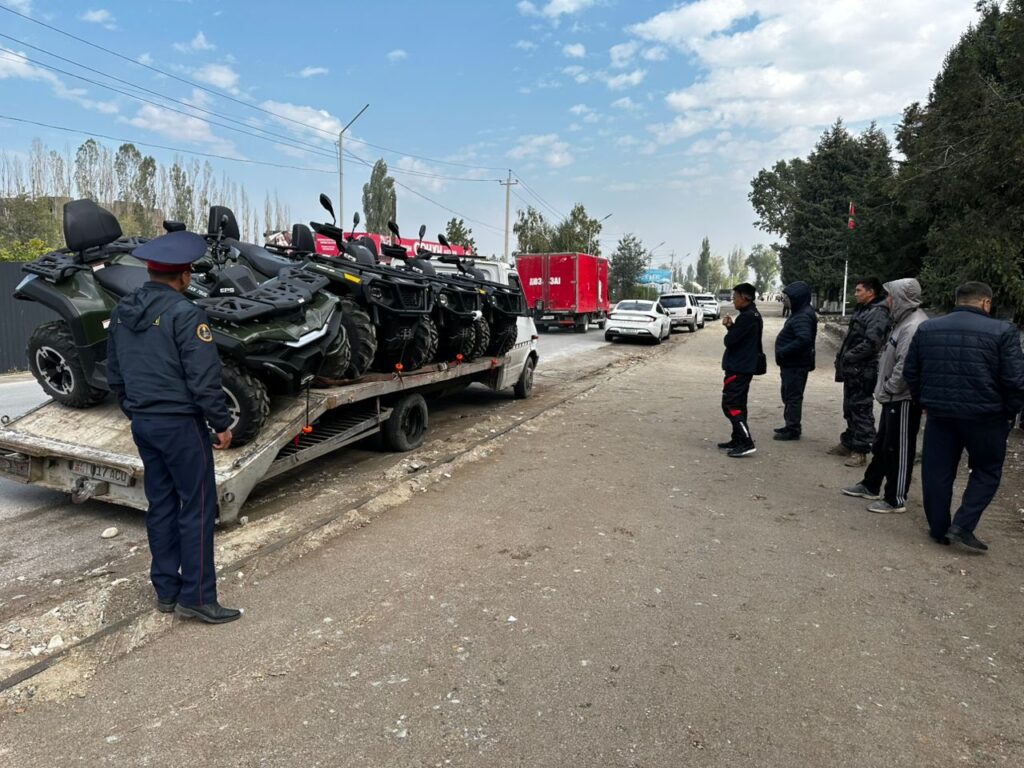
Kyrgyz President Sadyr Japarov has ordered law enforcement and environmental agencies to begin fining and in severe cases, confiscating vehicles used in a manner that damages mountain ecosystems, particularly in nature reserves and alpine pastures. In a social media post featuring a video of individuals riding quad bikes through mountainous terrain, reportedly within a protected area, Japarov called on the Ministries of Internal Affairs and Natural Resources to take immediate action. “Those driving gasoline-powered vehicles in mountain reserves and pastures should have them confiscated,” the president declared. Japarov said such incidents are occurring nationwide, with the reckless use of off-road vehicles and quad bikes leading to the destruction of fragile slopes and pastureland. “As seen in the video, quad bikes tear up slopes, burn grass, and destroy pastures. Most often these are our youth, but also adults and tourists. Despite existing roads, some choose to drive onto pastures, carving new tracks and damaging the natural landscape,” he said. He emphasized that this behavior degrades mountain ecosystems by trampling vegetation, damaging soil, and accelerating erosion. The president has directed the government to draft legislation authorizing the police and the Ministry of Nature to issue fines and seize vehicles used in ecologically harmful ways. “Where the road ends, continue on foot or horseback. Nature is our shared heritage, and we must preserve it for future generations,” he added. Japarov also called on local authorities to help identify violators and enforce ecological protection measures. Following the president’s directive, the Ministry of Natural Resources, Ecology and Technical Supervision, in coordination with local police, detained a group of individuals operating quad bikes in mountain areas. “They were informed about environmental safety rules, nature conservation, and relevant legislation,” the ministry said. The offenders were each fined 5,500 KGS (approximately $60).

8 months ago