• KGS/USD = 0.01144 0%
  • KZT/USD = 0.00205 0%
  • TJS/USD = 0.10784 0%
  • UZS/USD = 0.00008 0%
  • TMT/USD = 0.28490 0%
  • KGS/USD = 0.01144 0%
  • KZT/USD = 0.00205 0%
  • TJS/USD = 0.10784 0%
  • UZS/USD = 0.00008 0%
  • TMT/USD = 0.28490 0%
  • KGS/USD = 0.01144 0%
  • KZT/USD = 0.00205 0%
  • TJS/USD = 0.10784 0%
  • UZS/USD = 0.00008 0%
  • TMT/USD = 0.28490 0%
  • KGS/USD = 0.01144 0%
  • KZT/USD = 0.00205 0%
  • TJS/USD = 0.10784 0%
  • UZS/USD = 0.00008 0%
  • TMT/USD = 0.28490 0%
  • KGS/USD = 0.01144 0%
  • KZT/USD = 0.00205 0%
  • TJS/USD = 0.10784 0%
  • UZS/USD = 0.00008 0%
  • TMT/USD = 0.28490 0%
  • KGS/USD = 0.01144 0%
  • KZT/USD = 0.00205 0%
  • TJS/USD = 0.10784 0%
  • UZS/USD = 0.00008 0%
  • TMT/USD = 0.28490 0%
  • KGS/USD = 0.01144 0%
  • KZT/USD = 0.00205 0%
  • TJS/USD = 0.10784 0%
  • UZS/USD = 0.00008 0%
  • TMT/USD = 0.28490 0%
  • KGS/USD = 0.01144 0%
  • KZT/USD = 0.00205 0%
  • TJS/USD = 0.10784 0%
  • UZS/USD = 0.00008 0%
  • TMT/USD = 0.28490 0%

Our People > Anton Chipegin

Anton Chipegin's Avatar

Anton Chipegin

Anton was born and grew up in Bishkek, Kyrgyzstan. He worked as a television correspondent, editor and TV presenter on the main television channels of the republic, such as NTS and MIR 24, and also as an economic observer at international news agencies and other media resources of Kyrgyzstan.

Articles

Kyrgyz Anti-Corruption Crackdown: Officials Arrested During Live Meeting in Osh

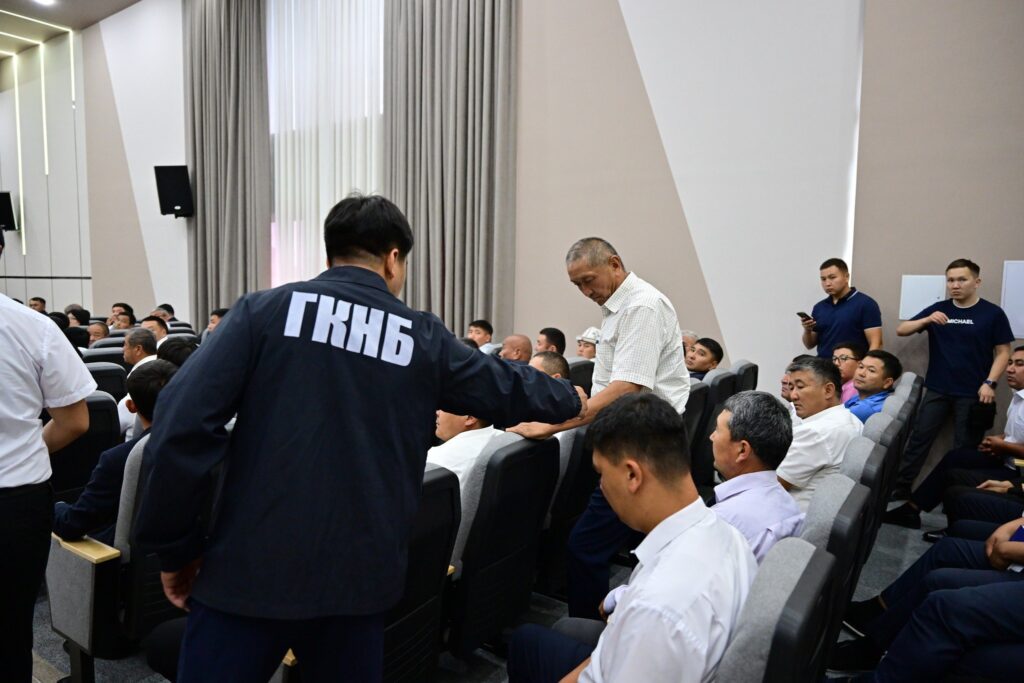
Several officials were arrested during a high-level government meeting in the southern Kyrgyz city of Osh, as part of an ongoing anti-corruption campaign led by the State Committee for National Security (GKNB). Kamchybek Tashiev, chairman of the GKNB, ordered the arrests during a gathering with the heads of state agencies. Six civil servants were detained on the spot after Tashiev accused them of embezzling state funds and providing false information. Among those taken into custody were the head of the Tax Service in the Uzgen district and the deputy head of the Tax Service in the Kara-Suu district. “Take him out, he’s lying!” Tashiev said, pointing to the deputy head of the Kara-Suu Tax Inspectorate. He also stated that the head of the service had already been transferred to the GKNB’s central office in Bishkek for interrogation. The detentions extended beyond the tax authorities. According to local media reports, two employees from the Cadastral Service in the Nookat district, a representative of the judiciary, and a passport office staff member in Uzgen were also arrested. All face allegations of corruption and misappropriation of public funds. These events in Osh follow a series of high-profile detentions in northern Kyrgyzstan. Over the past month, at least three mayors and several senior officials have been arrested in the Chui and Issyk-Kul regions. They are accused of abuse of office, illicit enrichment, and orchestrating corruption networks. During the meeting, Tashiev reiterated the GKNB’s commitment to combating corruption at all levels of government. He referenced the arrest of former State Tax Service head Altynbek Abduvapov in late 2024 as a prominent example. Investigators claim Abduvapov accumulated approximately $55 million in assets through illegal means. “He never had a business of his own. Employees say they gave him bribes ranging from $50,000 to $100,000 every month. We are confiscating everything. Altynbek Abduvapov will now be a poor man,” Tashiev declared. Political analysts suggest the crackdown indicates both an intensification of anti-corruption efforts and a recalibration of power dynamics between Kyrgyzstan’s northern and southern regions. While critics have accused the authorities of selective justice, GKNB officials maintain that the arrests are supported by solid evidence and reveal systemic governance failures.

11 months ago

Russian Inflows Drive Kyrgyz Remittance Surge

Kyrgyzstan recorded a sharp increase in remittance inflows during the first five months of 2025, reaching USD 1.367 billion —a 16% rise compared to the same period in 2024, according to data from the National Bank of the Kyrgyz Republic (NBKR). The increase was particularly notable in April and May, traditionally high-transfer months ahead of the summer season. In May alone, remittances totaled USD 299 million, up from USD 253 million in May 2024. Russia remains the dominant source of remittances, accounting for 94% of total inflows between January and May. The NBKR reported USD 1.2 billion in transfers from Russia during this period, reflecting a year-on-year increase of USD 188 million. This growth comes despite a significant drop in the officially registered number of Kyrgyz labor migrants in Russia from 650,000 in previous years to around 350,000 in 2025. Unofficial estimates, however, suggest the actual figure may exceed one million. The higher remittance volume suggests increased per-capita transfers or improved earnings among Kyrgyz migrants. In 2023, remittances from Russia stood at USD 2.532 billion. Even as the migrant workforce declined sharply in 2024, total transfers from Russia rose by USD 34 million, indicating persistent reliance on income from abroad. Other countries contributed relatively little to Kyrgyzstan’s remittance inflows. Transfers from the United States edged up to USD 27.6 million in the first five months of 2025, an increase of USD 600,000 from the previous year. In contrast, remittances from South Korea and Turkey declined sharply. Transfers from South Korea fell from USD 28.2 million to just USD 1 million, while Turkey’s contribution dropped from USD 6.9 million to USD 4 million. Remittances continue to play a central role in Kyrgyzstan’s economy, historically making up more than 30 percent of GDP. Yet the country’s ongoing reliance on Russia for these financial inflows highlights its exposure to external risks such as geopolitical tensions, currency fluctuations, and changes in foreign labor market policies. Looking ahead, the NBKR expects the upward trend in remittances to persist through 2025. However, long-term sustainability may hinge on diversifying migration destinations and strengthening domestic employment opportunities.

11 months ago

Kyrgyz Lending Surges 55% as Consumer Demand Fuels Growth

From January to May 2025, the volume of new loans issued by commercial banks in Kyrgyzstan rose by 55 percent, according to the Eurasian Development Bank’s (EDB) June macroeconomic forecast. The sharpest increase was recorded in consumer lending, which more than doubled during the period, rising by 2.1 times. As a result, the total loan portfolio of the Kyrgyz banking sector grew by nearly one-third. “High lending rates are supporting domestic demand: retail trade and public catering increased by 25.3 percent during the first five months of the year. Consumer activity will continue to drive economic growth,” the EDB report  states. Similar findings were previously released by the National Bank of the Kyrgyz Republic (NBKR), though with some differences in specific figures. According to the NBKR, net profits of Kyrgyz banks from January to May totaled 12 billion som (approximately 137 million USD). The overall loan portfolio reached 404 billion som (around 4.6 billion USD), with overdue loans amounting to 7.3 billion som (83.5 million USD), or 1.8 percent of the total. The deposit base also showed strong growth: citizens deposited roughly 700 billion som (8 billion USD), reflecting a 17.7 percent increase since the start of the year. Efforts to reduce dollarization have also shown progress. The share of foreign currency assets in banks’ loan portfolios fell by 1.5 percentage points to 18.5 percent. Meanwhile, the proportion of household deposits held in foreign currency declined by 4.6 percentage points to 38.4 percent. According to EDB analysts, several key factors are driving Kyrgyzstan’s economic momentum. These include rising global gold prices, strong domestic consumption, and increased investment. Based on these trends, the bank has revised its 2025 GDP growth forecast for Kyrgyzstan upward by 1.6 percentage points. The country’s economy is now projected to grow by 10.3 percent this year.

11 months ago

Experts Warn of Rights Violations in Kyrgyzstan’s Language Reform Push

The Jogorku Kenesh, Kyrgyzstan’s parliament, has adopted a sweeping package of 18 bills that overhaul the country’s language policy. The new measures significantly curtail the use of Russian, the official language, across key sectors including education, healthcare, the judiciary, and administrative processes. The legislation has drawn sharp criticism from both experts and the wider public. According to the government, the changes are necessary to align existing laws with the constitutional provisions on the state language, Kyrgyz. All 18 bills passed through parliament in a single session comprising three readings. They now await the signature of President Sadyr Japarov. Parliament Speaker Nurlanbek Turgunbek uulu emphasized the urgency of the reforms, warning that the Kyrgyz language is in a “dangerous” state. “Many of us have children and grandchildren who do not speak Kyrgyz. This is shameful. If we continue to neglect our state language, we risk losing our national identity,” he said. Sweeping Language Reforms The adopted laws stipulate that individuals who do not speak Kyrgyz will be barred from holding a wide range of public positions, including parliamentary seats, government posts, judicial and prosecutorial roles, and employment at the National Bank. The legislation mandates Kyrgyz-language proficiency exams for students at the point of admission and grade-level advancement in schools and kindergartens. Public signage, geographic names, and announcements must now appear in Kyrgyz first, with Russian and other languages allowed only as supplementary. All notarized contracts must be drafted in Kyrgyz, with translation into other languages permitted only when necessary. State institutions, including medical facilities, must maintain records exclusively in Kyrgyz. Mounting Concerns Some lawmakers have voiced concerns over the practicality of these reforms. The deputy Gulya Kozhokulova cautioned that insufficient development of medical terminology in Kyrgyz could jeopardize patient safety due to potential errors in diagnoses and prescriptions. MP Dastan Bekeshev highlighted risks to citizens unfamiliar with Kyrgyz when handling legally binding documents, such as loan agreements. Under the new regulations, initial violations of language norms will result in warnings, with repeat offenses drawing fines of up to 17,000 KGS (approximately $200). Public Backlash The legislation has triggered a wave of criticism on social media and among civil society groups. At a roundtable hosted by the Oi Ordo Center for Expert Initiatives, participants asserted that the measures infringe on the rights of at least 1.5 million citizens. An open letter urging President Japarov to reject the legislation was submitted by members of the public, academia, and Bishkek City Council. “Most of the amendments initiated by the National Commission on the State Language lack public backing and have sparked criticism for sharply limiting the use of Russian in socially vital sectors,” the letter stated. Expert Commentary Speaking to The Times of Central Asia, Igor Shestakov, director of the Oi Ordo Center, warned that the amendments contain internal contradictions and ultimately undermine the Kyrgyz language’s development. “These measures primarily restrict the use of Russian. If implemented, they will have far-reaching consequences for banking, legal services, and education, affecting daily life and bureaucratic procedures....

11 months ago

Kyzyl-Ompol Mining Resumes Under New Law, Public Concern Persists

Trial production of titanomagnetite has commenced at the Kyzyl-Ompol deposit near Balykchy in Kyrgyzstan’s Issyk-Kul region, First Deputy Prime Minister Bakyt Torobaev announced in a recent interview with local media. According to Torobaev, the deposit holds an estimated 20 million tons of titanomagnetite, and the total value of useful elements in the subsoil could approach $1 billion. “When this project was just starting, few believed in it. Today we see concrete results: experimental development has begun, infrastructure and technology are being developed. The potential of the deposit is enormous,” he said. Torobaev added that the site is also being used to test new technological solutions that could be implemented elsewhere in the country. A Controversial Resource and Legal Shifts Mining at Kyzyl-Ompol was previously prohibited due to the presence of uranium and thorium, radioactive elements often found alongside titanomagnetite. Their extraction has been banned in Kyrgyzstan since 2019, following widespread public protests over environmental and health concerns. However, a 2023 law lifted the ban under strict environmental compliance conditions. The bill’s explanatory note cited the need for alternative revenue sources in light of economic challenges stemming from the COVID-19 pandemic and regional sanctions. President Sadyr Japarov emphasized that titanomagnetite comprises roughly 95% of the deposit’s reserves. The Ministry of Natural Resources, Ecology, and Technical Supervision has assured the public that current extraction technologies meet all safety and environmental standards and pledged ongoing oversight. Economic Potential and Public Concerns Government estimates suggest that the project’s initial phase could contribute approximately $150 million to the state budget and generate around 1,000 jobs. Torobaev described Kyzyl-Ompol as having the potential to become a “second Kumtor”, a reference to the country’s largest and most profitable gold mine. Nonetheless, public debate continues. Critics caution that the area’s known uranium reserves could pose environmental risks if disturbed, particularly in the ecologically sensitive Issyk-Kul region. Titanomagnetite is used in metallurgy, particularly for producing specialized steels, and also has applications in the chemical and energy sectors. Discovered in 1951, the Kyzyl-Ompol deposit comprises five sites. To date, detailed geological surveys have been conducted on only one, with its reserves officially registered in the state balance.

12 months ago

Kyrgyzstan Rises to Third Place Globally in Gold Exports

Kyrgyzstan ranked third in the world for gold exports in the first quarter of 2025, selling 3.8 tons of the precious metal on the international market, according to data from the World Gold Council. Despite this export success, Kyrgyzstan’s official gold reserves remain among the lowest in Central Asia. The country holds 34.2 tons of gold, compared to Kazakhstan’s 290 tons and Uzbekistan’s 367 tons. Uzbekistan led global gold exports during the same period with nearly 15 tons sold, while Kazakhstan opted to bolster its reserves, adding 6.5 tons in the first three months of the year. However, figures from Kyrgyzstan’s National Bank tell a different story. In June 2025, National Bank Chairman Melis Turgunbaev told parliament that the country’s reserves had reached 52 tons. This suggests either a sharp two-month increase or a discrepancy between national and international reporting standards. “Our analysts monitor gold prices and market conditions daily. We buy or sell gold as needed, just like currency, that's one of the bank's core functions,” Turgunbaev explained. “Last year, we achieved substantial income through effective reserve management. The first five months of this year have also yielded strong results.” Members of parliament expressed satisfaction with the size of the country’s gold and foreign exchange reserves, which currently stand at an estimated $3.7 billion, exceeding Kyrgyzstan’s annual state budget. Kyrgyz mining operations produce approximately 20 tons of gold annually. A significant share of this output is exported, leaving domestic jewelers with limited access to raw materials. Sales channels include the London Commodity Exchange and buyers in Switzerland. The National Bank also offers measured gold bars for public purchase at a modest premium.

12 months ago

Bishkek Mayor Urges Investors to Avoid Corruption and Uphold Kyrgyz Law

Bishkek Mayor Aibek Junushaliyev has called on foreign investors to strictly comply with Kyrgyz legislation and avoid involvement in corrupt practices. His statement, published on the official city hall website, stresses the importance of lawful and transparent cooperation between government agencies and the business sector. “We are confident that only transparent and lawful interaction between government agencies and the business community can become the basis for the sustainable development of the capital and attract investment,” Junushaliyev stated. He affirmed that the mayor’s office remains open to dialogue, ready to support responsible investors, and committed to ensuring full transparency in transactions. However, he warned that any attempts to bypass the law through corrupt means would be met with firm opposition. Background: Deputy Mayor Arrested The mayor’s remarks follow the recent arrest of Bishkek Deputy Mayor Taalaibek Baigaziev by the State Committee for National Security. Baigaziev stands accused of soliciting a $35,000 bribe from a foreign company in exchange for lobbying efforts related to the capital’s thermal power plant reconstruction project. After partially failing to deliver on his promises, he was reportedly caught red-handed while returning a portion of the money. A criminal case has been opened against him. Ongoing Projects and Investment Environment In his statement, Junushaliyev highlighted major investment projects currently underway in Bishkek with foreign participation. These include the construction of a multifunctional residential and business complex on the site of the former hippodrome, a waste-to-energy incineration plant, and the modernization of the city’s sewage treatment facilities. He stressed that all these initiatives are being carried out strictly within the bounds of the law and should serve as a model for future investment. “The city administration will continue to adhere to a policy of openness, legality, and a firm stance against corruption,” he said. “If, during the implementation of a project, you encounter any unlawful actions by officials, such as extortion, coercion, or other forms of corruption, please report them immediately to the city hall’s anti-corruption department or law enforcement authorities.” According to the National Statistical Committee of Kyrgyzstan, foreign investment in Bishkek reached $525 million in 2024, a 50% increase compared to the previous year.

12 months ago

Kyrgyz Transport Minister Wears Camouflage Following Rebuke by State Security Chief

Kyrgyzstan’s Minister of Transport and Communications, Absattyr Syrgabaev, was seen wearing camouflage during a recent site inspection, days after facing public criticism from Kamchybek Tashiev, head of the State Committee for National Security (GKNB) and deputy chairman of the Cabinet. The incident took place during a working visit to the Jalal-Abad region. Tashiev’s reprimand was sparked by the poor condition of a local maternity hospital. He criticized hospital staff for neglecting basic maintenance, including watering trees and keeping the grounds tidy. “Is it really impossible to water them? Why do I have to come here and talk about this?” Tashiev said during the visit. Turning his attention to Syrgabaev, Tashiev accused the minister of ignoring broader infrastructure responsibilities beyond road construction. He urged Syrgabaev to change his appearance to reflect a more hands-on approach. “Until November, don’t wear a suit. Wear camouflage like me and work until nightfall. In winter, you can go back to suits. Otherwise, you’ll keep showing up in Naryn and Ton in business attire. You have to work! Do you hear me?” Tashiev said at a government meeting in Jalal-Abad. Demands for Constant Work Tashiev also directed harsh criticism at regional governors (akims) and other civil servants, insisting they work “around the clock without days off.” He emphasized that every official must act as a “strong manager.” “Stop working one day and resting two!” he demanded. Shortly after these remarks, Syrgabaev appeared in camouflage during a road reconstruction inspection in the Suusamyr Valley, aligning with Tashiev’s directive. The appearance drew attention from local media outlets. Context of Political Pressure This is not the first time Syrgabaev has come under scrutiny. In May 2025, Tashiev gave him a one-month deadline to complete the Balykchy to Cholpon-Ata highway. While the road was completed on time, unfinished sidewalks led to a “final warning” for the minister. A year earlier, he had been criticized for delays in constructing a bridge over the Ala-Archa River in Bishkek. The backdrop of heightened scrutiny comes amid ongoing corruption investigations. In recent months, authorities have arrested the mayors of Tokmok and Kara-Balta, the deputy mayor of Bishkek, and several contractors. In this climate, Tashiev’s public remarks are increasingly viewed as informal mandates, reflecting his growing influence within Kyrgyzstan’s state apparatus.

12 months ago

At EAEU Forum, Kyrgyzstan Calls for Integration in Trade, Logistics, and Migration

At the 4th Eurasian Economic Forum in Minsk, marking the 10th anniversary of the Eurasian Economic Union (EAEU), Kyrgyzstan highlighted ongoing internal barriers that continue to hinder its development. Chief among them are trade delays, logistical bottlenecks, and persistent challenges in labor migration. Deputy Minister of Economy Sultan Akhmatov reaffirmed Kyrgyzstan’s commitment to Eurasian integration and strengthening economic ties with other EAEU member states. According to the ministry’s press office, Akhmatov emphasized the need for deeper investment cooperation and expressed confidence that enhanced integration would bolster regional stability and mutual economic growth. He also advocated for expanded academic exchanges, the development of digital and vocational education, and the creation of joint research platforms across the EAEU. Yet, alongside these ambitions, Akhmatov pointed to systemic obstacles. He urged the removal of trade and customs barriers that burden importers and exporters at border checkpoints. He also emphasized the importance of mutual recognition of quality certifications and ensuring labor mobility within the Union. Labor Migration: An Economic Lifeline Labor migration remains a crucial pillar of Kyrgyzstan’s economy. In 2024, remittances from Kyrgyz migrants, most of whom live and work in Russia, reached $3 billion, equivalent to 24% of national GDP. This figure nearly matches the country’s total exports of $3.8 billion during the same period. However, the number of Kyrgyz labor migrants in Russia has been steadily declining. First Deputy Prime Minister Daniyar Amangeldiev attributed this trend to both domestic economic improvements and new restrictions introduced by Russian authorities, including changes to migration law. As of 2024, foreign workers in Russia are required to sign one-year contracts with employers, a condition that has created legal uncertainty and discouraged long-term employment. “I Left Moscow Because the Rules Changed” Aziret Abdiev, a Kyrgyz welder who worked in Moscow for nearly a decade, shared his reasons for leaving: “I didn’t leave because I disliked the work. I spoke fluent Russian, had a steady job, and was valued for my skills. But over the past year, the pressure increased, inspections, bureaucracy, hostility. It became clear I couldn’t continue. Now I’ve applied for a Schengen visa and will be heading to Lithuania to work in a metal factory.” Expert Opinion: Migration as a Core Integration Priority Kyrgyz experts argue that labor migration is central to the country’s national interest. Raising the issue at the Minsk forum, they contend, was both pragmatic and necessary. “For Kyrgyzstan, labor migration is more than an economic category. It is a matter of social stability, foreign currency inflows, and the future of entire generations,” political analyst Bakyt Baketaev told The Times of Central Asia. According to official statistics, up to one million Kyrgyz citizens work abroad, primarily in EAEU member states. This makes mutual recognition of qualifications, access to social protections and healthcare, and the safeguarding of migrant rights critical priorities for Kyrgyz policymakers. Baketaev believes progress is possible, if Kyrgyzstan acts consistently and professionally while building coalitions within the EAEU. He notes that other member states face similar challenges: “There is room...

12 months ago

Kyrgyzstan Launches Major Gold Exploration at Historic Makmal Deposit

Kyrgyzstan has initiated large-scale geological exploration at the historic Makmal gold deposit in the Jalal-Abad region, marking the first such effort in decades. The announcement was made by Kyrgyzaltyn, the state-owned enterprise responsible for gold and precious metals mining. According to the company, its subsidiary, Makmal Gold Company, has begun exploratory drilling in the southwestern section of the mine, an area previously untouched by mining operations. Soviet-era geological surveys suggest that this zone may hold up to four tons of gold reserves. "Extensive work is underway to extend the life of the Makmal mine," the Kyrgyzaltyn press service stated. "We plan to drill 19 wells at depths ranging from 140 to 400 meters. This will help us better define reserves and create additional employment opportunities." The exploration will proceed in two phases. In the first stage, geologists will drill a total of 3,275 meters. If results are favorable, a one-kilometer tunnel will be constructed to allow for precise reserve estimation, laying the groundwork for future industrial extraction. Kyrgyzaltyn also plans to evaluate other previously unexplored areas of the deposit. Historic and Economic Significance The Makmal deposit, one of Kyrgyzstan’s earliest gold mining sites, began industrial operations in 1986. Originally projected to last ten years, the discovery of new veins has kept the mine active to the present day. Currently, the mine contributes more than 95% of budget revenues for the Toguz-Toro district. Makmalzoloto, the operator, has also invested significantly in regional infrastructure, allocating 54 million Kyrgyz som (approximately $618,000) over the past three years, with an additional 50 million som ($572,000) directed toward charitable initiatives. The company employs more than 500 workers, nearly all of whom are local residents. While the annual output is modest, less than one ton, Makmal remains among the ten largest operational gold mines in the country. Kyrgyzstan has around 2,500 registered mineral deposits, of which 46 are classified as large.

12 months ago