• KGS/USD = 0.01144 0%
  • KZT/USD = 0.00206 0%
  • TJS/USD = 0.10760 0%
  • UZS/USD = 0.00008 0%
  • TMT/USD = 0.28571 0%
  • KGS/USD = 0.01144 0%
  • KZT/USD = 0.00206 0%
  • TJS/USD = 0.10760 0%
  • UZS/USD = 0.00008 0%
  • TMT/USD = 0.28571 0%
  • KGS/USD = 0.01144 0%
  • KZT/USD = 0.00206 0%
  • TJS/USD = 0.10760 0%
  • UZS/USD = 0.00008 0%
  • TMT/USD = 0.28571 0%
  • KGS/USD = 0.01144 0%
  • KZT/USD = 0.00206 0%
  • TJS/USD = 0.10760 0%
  • UZS/USD = 0.00008 0%
  • TMT/USD = 0.28571 0%
  • KGS/USD = 0.01144 0%
  • KZT/USD = 0.00206 0%
  • TJS/USD = 0.10760 0%
  • UZS/USD = 0.00008 0%
  • TMT/USD = 0.28571 0%
  • KGS/USD = 0.01144 0%
  • KZT/USD = 0.00206 0%
  • TJS/USD = 0.10760 0%
  • UZS/USD = 0.00008 0%
  • TMT/USD = 0.28571 0%
  • KGS/USD = 0.01144 0%
  • KZT/USD = 0.00206 0%
  • TJS/USD = 0.10760 0%
  • UZS/USD = 0.00008 0%
  • TMT/USD = 0.28571 0%
  • KGS/USD = 0.01144 0%
  • KZT/USD = 0.00206 0%
  • TJS/USD = 0.10760 0%
  • UZS/USD = 0.00008 0%
  • TMT/USD = 0.28571 0%

Our People > Arindam Banik

Arindam Banik's Avatar

Arindam Banik

Contributor

Arindam Banik is an Indian economist who is the ICCR's Chair of Indian Studies (Economics) at Samarkand State University. The recipient of numerous awards Banik has worked as a consultant for various government and multilateral agencies, including the World Bank and the Asian Development Bank. Banik has authored several books and written for numerous magazines and newspapers.

Articles

Opinion: Trump’s Tariff Policy Will Propel the Asian Century More Rapidly Than Ever Before

The concept of the Asian Century draws a parallel to the characterization of the 19th century as Britain's Imperial Century and the 20th century as the American Century. The Asian Century refers to the anticipated dominance of Asian politics and culture in the 21st century, contingent upon the continuation of specific demographic and economic trends. A study by the Asian Development Bank indicated that by 2050, approximately three billion Asians -- equating to 56.6% of the projected 5.3 billion total inhabitants of Asia -- could attain living standards comparable to those in Europe today. Furthermore, this region is expected to contribute to over half of global output by the middle of this century. It seems pertinent to explore further insights on this topic. China is home to approximately 1.4 billion people, while India's population is expected to reach around 1.45 billion by mid-2025. The share of South-South trade, i.e., trade between emerging economies, is expected to rise significantly, increasing from 18% in 2013 to approximately 40% by 2030. This shift will bring these nations back to a trading prominence reminiscent of their historical dominance roughly 200 years ago. Such a trend underscores the changing dynamics of economic power and highlights the growing importance of these countries in the global marketplace. It is interesting to note that China and India, together, accounted for approximately 50% of the worldwide GDP during the 19th century, according to economist Angus Maddison. However, predicting how these nations will integrate into the global economy proves challenging, as historical events like Germany’s reunification and the fall of the Iron Curtain provide inadequate comparisons for this process. Following those milestones in 1990, a significant number of individuals entered the global economy; yet, the scale of that influx pales in comparison to what is expected with the simultaneous rise of China and India. Whether this development is welcomed or not, the future of the world is inextricably intertwined with the trajectories of these two nations, Russia, and the former communist countries, such as those in Central Asia, as well as Pacific countries. It is widely acknowledged that Asia's impressive economic performance over the three decades leading up to 2024, especially in comparison to the rest of the world, arguably presents the strongest case to date for the emergence of an Asian Century. While this disparity in economic achievement had been recognized for some time, specific individual setbacks -- such as the 1997 Asian financial crisis -- often overshadowed the broader trends and general trajectory. However, by the early 21st century, it became increasingly clear that this superior economic performance was not only sustainable but also possessed a force and significance that could dramatically reshape the global distribution of power. Consequently, leadership in various critical domains -- such as international diplomacy, military strength, technology, and soft power -- may soon be assumed by one or more of Asia's nation-states. The Asia-Pacific Region is also a vast geographical area, from Vladivostok, Russia, in the North to Australia in the south, and...

8 months ago

Opinion: The U.S. Dollar Loses Its Luster as the Uzbek Som Shines

From May 20, 2025, to June 19, 2025, the U.S. dollar declined from 12,885 Uzbek som to 12,625 som, reaching its lowest level since early December 2023. This trend is anticipated to persist. Over the past 30 days, the dollar has depreciated by 2.08% against the som. The Central Bank of Uzbekistan adheres to a flexible exchange rate mechanism, commonly referred to as a floating exchange rate. This approach allows the value of the Uzbek som to be primarily influenced by market forces of supply and demand, rather than being fixed or pegged to another currency. In the context of Uzbekistan, the Central Bank defines the market-determined exchange rate, permitting the som to fluctuate freely based on the interactions between buyers and sellers in the foreign exchange market. In 2017, Uzbekistan transitioned to a flexible exchange rate regime, aligning the som with market conditions and narrowing the gap between the official and parallel exchange rates. This move is expected to enhance export competitiveness, as noted by the European Bank for Reconstruction and Development (EBRD). While the market predominantly determines the exchange rate, the Central Bank reserves the right to intervene in the foreign exchange market to mitigate excessive fluctuations or address significant imbalances. However, it does not maintain a fixed exchange rate. The primary objective of the Central Bank is to uphold price stability, ensuring low and stable inflation. The flexible exchange rate regime empowers the Central Bank to utilize interest rates as a tool to influence inflation and manage the overall economy. Since 2020, the Central Bank of Uzbekistan has been implementing an inflation targeting framework that guides its monetary policy decisions, including those related to the exchange rate. Uzbekistan has recently achieved a remarkable milestone, with its international reserves soaring to an unprecedented $49.6 billion, primarily driven by a substantial increase in gold prices. This significant figure, recorded at the end of last week, represents the highest level of international reserves since the Central Bank of Uzbekistan began tracking this data in 2013. Uzbekistan has been on a remarkable journey of financial growth, marked by a sustained increase in its reserves over the past five months. Since the beginning of the year, the country's reserves have increased by an impressive $8.48 billion, reaching a new historic high of $49.66 billion. In May alone, the reserves saw a substantial boost of $410.2 million, translating to a 0.8% increase compared to April. This consistent upward momentum not only highlights the resilience of Uzbekistan's economy but also demonstrates its ability to adapt and thrive in a dynamic global landscape. Central to this financial ascent has been the role of gold, which has enjoyed significant demand due to its elevated prices in international markets. Over the last month, gold prices surged by 3.27%, rising from $3,280 to $3,390.07 per ounce. When examining the broader trends, it is evident that gold has significantly appreciated, with a striking 25.5% increase since the start of this year and an even more impressive 41.3% surge over...

12 months ago

Unpacking the Effects of Trump’s Tariffs on Central Asia

Trade analysts across Central Asia generally agree that the immediate impact of the United States' tariff policy on the export dynamics of their nations will likely be minimal, as observed in past experiences, except for Kazakhstan. However, there is a palpable concern regarding potential unforeseen consequences arising from a broader global trade conflict. Notably, the timing of the Trump administration's announcement regarding global tariffs on imports coincides with a period when Central Asian countries are actively working to enhance their regional trade relationships. This new tariff policy raises significant doubts about the authenticity of recent U.S. efforts to promote increased trade and investment in the region. The mixed signals coming from Washington may lead Central Asian leaders to re-evaluate their current trade partnerships, especially as they consider the benefits of strengthening ties with China and Russia against the attractiveness of expanding commerce with the United States. Similarly, the European Union may find an opportunity to improve its position, while India could leverage the Chabahar route (a multi-modal transportation route connecting India, Iran, Afghanistan, and potentially Central Asia and Europe). It is worth noting that the market is primarily situated in Asia, and this alternative could have adverse long-term effects on the United States. Kazakhstan, acknowledged as the United States’ largest trading partner in Central Asia, is poised to face significant repercussions from introducing new tariffs set at 27%. In 2024, trade relations between the U.S. and Kazakhstan reached an impressive total of $3.4 billion, with $1.1 billion in U.S. exports to Kazakhstan and $2.3 billion in imports from Kazakhstan to the U.S. However, a statement from the Kazakh Trade Ministry indicates that exports to the U.S. primarily consist of crude oil, uranium, silver, and other raw materials, all exempt from these tariffs. In 2024, Kazakhstan exported only $95.2 million worth of goods, which will now incur surcharges – a relatively modest figure compared to the country’s overall foreign trade turnover of $141.4 billion. Trade analysts suggest that Kazakhstan has little cause for concern, viewing this situation more as a psychological impact than a serious economic threat. Resource-driven Central Asian economies, such as Kazakhstan, may even find enhanced opportunities in the expanding Asian market. Trade dynamics in Central Asia reveal a complex landscape, especially concerning the United States. In 2024, Uzbekistan managed to export a modest $42.4 million worth of goods to the US, a small fraction considering its total foreign trade turnover, which reached an impressive $66 billion for that year. This stark contrast highlights the limited engagement of Uzbekistan in the American market. With its total trade turnover of $16 billion in 2024, Kyrgyzstan similarly struggled with exports to the US, which amounted to merely $16.7 million. This reflects a broader trend where Central Asian economies exhibit low volume exports to the US, suggesting significant barriers or challenges in establishing a foothold in this lucrative market. Tajikistan's economic performance presented an even more sobering picture. Recording a total trade turnover of $8.9 billion, the country achieved only $4.6 million...

1 year ago

Mirziyoyev Champions a Flourishing Central Asia by Enhancing Collaboration With the European Union

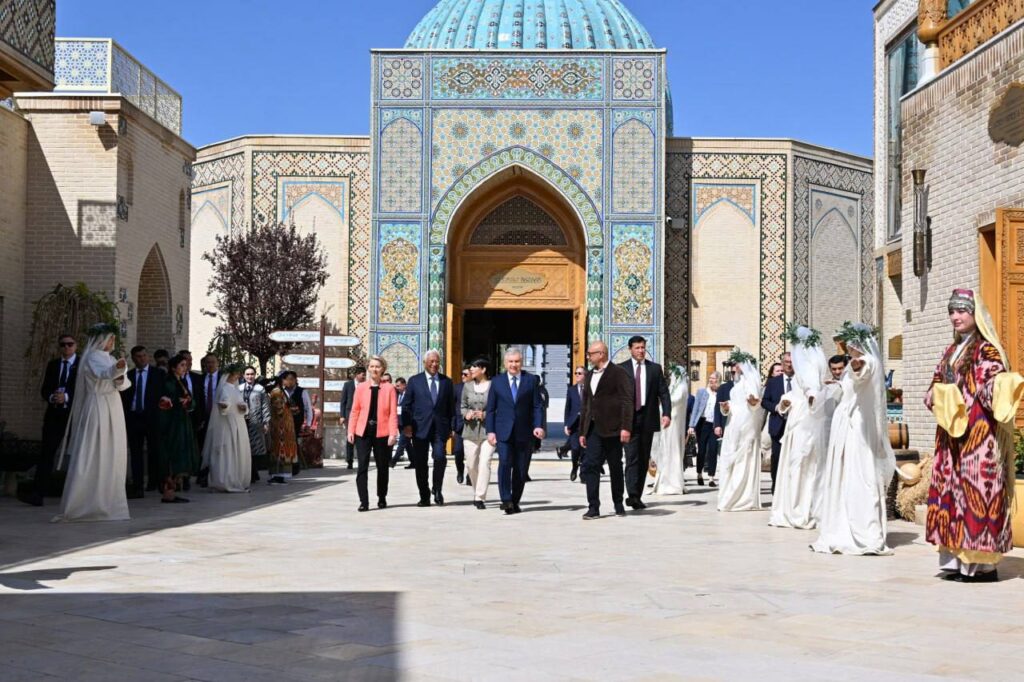
The global landscape is transforming, driven by geopolitical instability, economic uncertainties, and climate-related challenges. These dynamics are fostering innovative forms of international collaboration. A notable example of this shift is the remarkable fourfold increase in trade between Central Asia and the European Union over the past seven years, culminating in an impressive €54 billion. This surge highlights a growing interest among European businesses in the diverse markets of Central Asia, strategically situated at the intersection of crucial global trade routes. Against this backdrop, the Central Asia-EU summit was held over two days in Samarkand, the "Eternal City", on April 3-4, 2025. During his inaugural address on April 3, 2025, Uzbekistan's President Shavkat Mirziyoyev articulated the summit's significance, stating his view that this gathering represented a transformative moment that could redefine regional partnerships. Mirziyoyev reflected on the deep historical connections and shared interests driving the momentum toward closer ties with the EU. The choice of Samarkand — renowned for its rich historical legacy as a center of trade, science, and diplomacy — as the venue for this significant meeting was particularly poignant, as it symbolizes the intersection of cultures and ideas. Mirziyoyev evoked the historical interactions between Amir Temur and European monarchs, underscoring Samarkand as a melting pot of diversity and intellectual exchange. He introduced the notion of the “Samarkand spirit,” which he described as a symbol of unity and interconnectedness that could serve as the foundation for a new chapter in international relations. The President emphasized the sweeping transformations occurring in Central Asia, reinforcing Uzbekistan’s dedication to nurturing good-neighborly relations built on mutual benefit. Miriyoyev candidly acknowledged the region's history of conflicts and disputes but expressed hope for a shift toward constructive dialogue and trust, pointing to the recent resolution of border disputes between Kyrgyzstan and Tajikistan as a concrete example of this positive trajectory. Furthermore, he elaborated on ongoing initiatives to establish border trade zones, joint investment funds, and transportation corridors that could enhance connectivity and economic collaboration. Mirziyoyev outlined several key priorities: fortifying regional security, advancing economic integration, and promoting environmental sustainability. He conveyed a sense of optimism, proclaiming, "We are facing a historic chance to make our region not only sustainable but also prosperous." The President discussed Uzbekistan's comprehensive economic reforms to create a conducive business environment and liberalize the foreign exchange market. He expressed optimism that the Enhanced Partnership and Cooperation Agreement (EPCA) with the EU would significantly enhance trade and investment relations and proposed aligning the EU's Global Gateway strategy with regional transport initiatives to support this. He also advocated for developing an Action Plan for the Trans-Caspian Transport Corridor. Additionally, he believes there is potential to establish Tashkent as a financial center similar to Hong Kong, as the initial conditions meet the necessary criteria. On energy matters, Mirziyoyev positioned Central Asia as a dependable partner for Europe, highlighting the region's potential to contribute to energy stability and decarbonization efforts. He cited the ambitious Green Strategic Corridor project and the prospect of a Central Asia-EU...

1 year ago

A Historic Gathering: The First Central Asia-European Union Summit in Samarkand

Excitement is building in Samarkand as it gears up to host the inaugural Central Asia-European Union Summit. This landmark event promises to pave the way for significant negotiations and collaboration, bringing together leaders and representatives from both regions. With a rich cultural backdrop and a vibrant atmosphere, Samarkand is poised to play a crucial role in shaping the future of partnerships and cooperation between Central Asia and the European Union.  In recent weeks, Uzbekistan has experienced notable advancements in its foreign policy, signaling a proactive approach to international collaboration. A highlighted event was the fruitful engagement between Uzbekistan's head of state and Kaja Kallas, the High-level Representative of the European Union for Foreign Affairs and Security Policy. Additionally, a delegation led by Josef Sikela, the European Union Commissioner for International Cooperation, participated in discussions to foster deeper ties. A significant milestone on the horizon is the inaugural Central Asia-European Union summit, set to unfold in the historic city of Samarkand on April 3-4. During a pivotal meeting on March 27 with Kallas, President Shavkat Mirziyoyev meticulously explored the preparations for this groundbreaking summit, which has captured global attention due to its potential to reshape regional dynamics. The leaders engaged in a rich exchange of ideas focused on bolstering practical cooperation between their regions and planning future collaborative events that could further strengthen these ties. The significance of fostering mutually beneficial cooperation between the two regions in trade and logistics was emphasized during the meeting. This includes harnessing the potential of the Trans-Caspian Transport Corridor, advancing digitalization, promoting green energy, addressing ecological concerns, modernizing infrastructure, and other priority areas. The introduction of effective mechanisms for implementing initiatives and projects in these fields was also highlighted. Participants exchanged views on enhancing Uzbekistan's relations with European Union organizations, discussing adopting a new agreement for enhanced partnership and cooperation and Uzbekistan's accession to the World Trade Organization. Current international and regional policy issues were also addressed. Additionally, on March 18, President Shavkat Mirziyoyev met with a delegation led by Josef Sikela, the European Union Commissioner for International Cooperation. This meeting discussed critical matters regarding further developing multifaceted relations between Uzbekistan and the European Union. Moreover, plans for organizing the inaugural "Central Asia - EU" summit and the Climate Forum in Samarkand were considered. In recent years, bilateral cooperation with the European Union has accelerated across political, trade, economic, investment, and cultural-humanitarian spheres, presenting extensive opportunities for the continued expansion of these ties. A new Enhanced Partnership and Cooperation Agreement between Uzbekistan and the European Union is anticipated to be signed soon. Both parties have expressed a keen interest in promoting joint projects and programs across transport and logistics, energy, digitalization, agriculture, water management, and other key areas. Kallas conveyed warm greetings and best wishes on behalf of key EU figures, including António Costa, the President of the European Council, and Ursula von der Leyen, the President of the European Commission. The discussions underscored the necessity of cultivating mutually beneficial cooperation across various sectors, including...

1 year ago

Climate Change – A Catalyst for Poverty and Environmental Degradation in Central Asia

Climate change encapsulates the gradual yet profound shifts in temperature and weather patterns over extended periods. While these changes can arise naturally from various phenomena — such as fluctuations in solar energy or significant volcanic eruptions — the advent of the industrial age in the 1800s marked a pivotal point where human influence became the predominant force driving climate change. This influence stems chiefly from burning fossil fuels, including coal, oil, and natural gas. The combustion of these fuels releases vast quantities of greenhouse gases into the atmosphere, creating a thick layer that envelops the Earth and traps heat from the sun, resulting in a steady rise in global temperatures. Carbon dioxide (CO2) and methane (CH4) are the most significant greenhouse gases contributing to this crisis. Carbon dioxide predominantly emerges from driving gasoline-powered vehicles and burning coal for heating. Additionally, the widespread practices of deforestation and land conversion continue to elevate carbon dioxide levels. Methane, meanwhile, is primarily produced through agricultural practices and the extraction processes associated with the oil and gas industries. The sectors that bear the heaviest burden in terms of greenhouse gas emissions include energy production, industrial processes, transportation, building operations, agriculture, and land use changes. The ramifications of this unfolding climate crisis are dire, especially for the world’s most vulnerable populations, particularly those residing in poverty. According to alarming insights from the World Bank, the 74 countries with the lowest income levels contribute a mere one-tenth of global greenhouse gas emissions. Yet, ironically, these nations are poised to endure the harshest repercussions of climate change. Over the past ten years, they have experienced an astounding surge in natural disasters, facing approximately eight times the frequency of such events compared to the 1980s. The effects on the lives of vulnerable populations are profound and far-reaching. Many face severe health challenges, including the prevalence of illnesses exacerbated by inadequate healthcare access. Erratic water supply creates a critical situation, often resulting in polluted drinking water that can lead to waterborne diseases. Additionally, the standard of education for these communities tends to be alarmingly poor, limiting future opportunities for young individuals. Many are forced to relocate as refugees, fleeing conflict and instability, which further complicates their lives. Moreover, those who find employment often encounter hazardous working conditions that put their safety and well-being at significant risk. Climate change presents profound security challenges for Central Asia, a region grappling with the dual threats of environmental shifts and social vulnerabilities. The interplay of climate change with existing fragility intensifies the risks to peace, stability, and security across the globe. This convergence will exacerbate human insecurity and escalate socio-economic and political instability. As a result of these changing climatic conditions, critical resources such as water, food, and energy face increasing threats. Countries already characterized by vulnerability — those grappling with conflict or instability — are among the most likely to experience detrimental effects. For instance, reports indicate severe drought conditions have led to a 30-40% decrease in agricultural production in some Central Asian...

1 year ago

Empowering Central Asia: A Unified Approach to Poverty Alleviation

Many developing nations have prioritised the eradication of poverty. They employing various strategies, such as pursuing higher economic growth and more equitable income distribution. These efforts have yielded mixed results, underscoring the importance of caution and awareness of the challenges involved. East Asian countries have made significant strides in eliminating poverty. China has made significant progress, and India has seen more moderate headway. Latin American nations have faced difficulties in reducing poverty due to sluggish economic growth, and unfortunately, poverty has risen in Africa. Extreme poverty has historically not been an issue in Central Asia, because of various support schemes provided by the former Soviet government. Nevertheless, while Central Asia's poverty rates continue to decline, poverty reduction is slowing in some countries. Interestingly, Uzbekistan has made notable progress in reducing poverty since 2021. The poverty headcount rate based on the national poverty line fell from 17.0 per cent in 2021 to 14.1 per cent in 2022 and further declined to 11.0 per cent in 2023. Robust real wage growth was the main driver of the recent poverty reduction. Between 2022 and 2023, increases in wage income accounted for nearly two-thirds of the total poverty reduction. However, wage growth was much higher among skilled workers, especially in urban areas, due to skills shortages in the labour market. The latest official statistics show that the average wage increased the most in the services sectors, with a higher share of high-skilled workers in telecoms, pharmaceuticals, and IT. Consequently, income growth favored the better-off skilled population. Such wage inequality leads to income inequality, measured by the Gini index, increasing from 31.2 in 2022 to 34.5 in 2023. It is also noted that the socio-economic conditions are better in all Central Asian economies than in other developing economies. In Central Asia, poverty reduction has been influenced by several factors, such as implementing a national welfare standard, improved access to quality education, and financial assistance for elderly individuals and households led by single mothers. For example, in Uzbekistan, introducing a national welfare standard in 2021 significantly reduced poverty. The poverty rate decreased from 17 to 11 per cent by 2023, with a more noticeable decline in rural areas (8 percentage points) compared to urban areas (4 percentage points), resulting in approximately 1.6 million individuals being lifted out of poverty. The government's initiatives suggest it is making progress towards halving poverty between 2021 and 2026, indicating a hopeful future for poverty reduction in the region.  Notably, the World Bank has recalculated poverty estimates in Central Asia using updated international poverty lines. For lower-middle-income countries -- which globally include Kyrgyzstan, Tajikistan, and Uzbekistan -- the poverty line is set at US$3.65 per day. In contrast, it is $6.85 daily for upper-middle-income countries like Kazakhstan. According to these new poverty lines, approximately five million people are considered poor using the lower-middle income country threshold, and 20 million people are considered poor using the upper-middle income country threshold. These updated poverty lines account for differences in living costs between countries....

2 years ago

Samarkand: The City that Forged a Country’s Nationhood

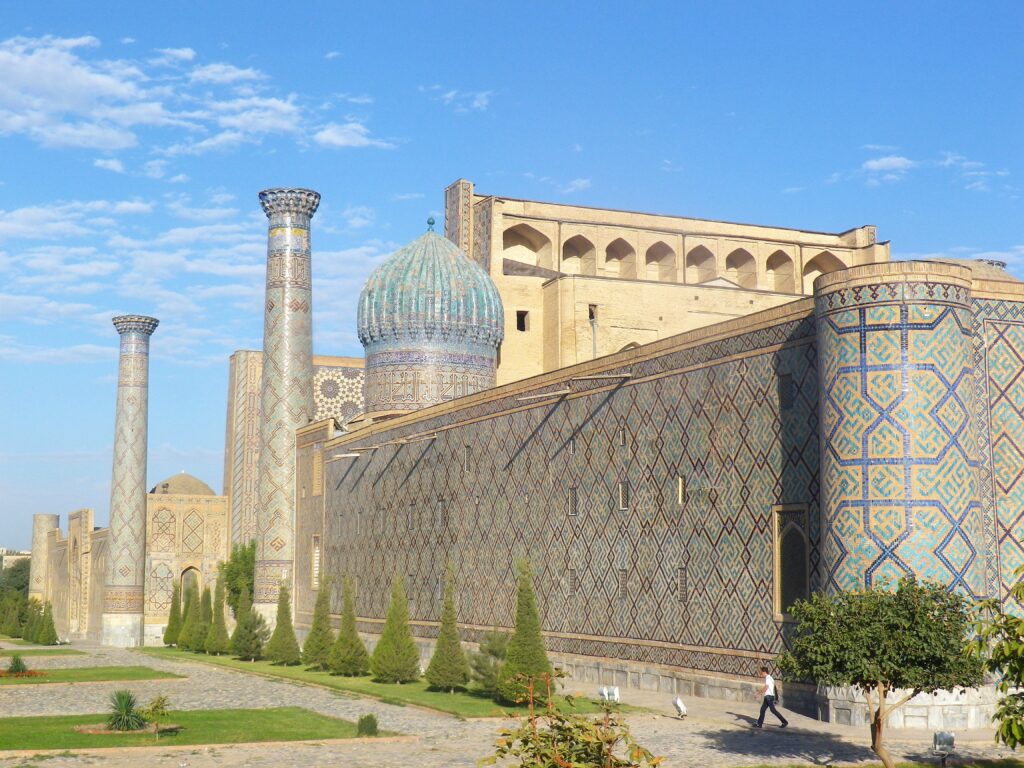
The city of Samarkand holds great significance in the history of Central Asia. The etymology of the name “Samarkand” has multiple possible origins. One train of thought is that it is derived from Sanskrit and Old Persian words, with “Samar” meaning “war” and “kand,” a “square” or “place.” Another roots it in the ancient Sogdian language with “Samar” interpreted as “stone” or “rock,” and “kand,” as “fort” or “town.” Some foreign toponymists claim the name originated in the Sanskrit word “Samaria,” signifying a gathering or meeting, whilst according to certain historical accounts, it evolved from the name of its king, Samar, and “kand,” the Turkish word for city. Yet another theory involves Shamar, a Yemen royal, who after seizing the town from the Sogdians, reconstructed and renamed it Samarkand. Today’s Samarkand, one of Central Asia’s oldest cities, is a testament to its enduring resilience and indomitable spirit against centuries of numerous conquests. According to the Encyclopaedia Britannica, the city then known as Maracanda, was the capital of Sogdiana prior to its conquest by Alexander the Great in the 4th century BC. It was subsequently ruled by various groups, including Central Asian Turks, Arabs, the Samanids of Iran, various Turkic peoples, and the Khwārezm-Shāh dynasty, before being ravaged by Genghis Khan in 1220. After a successful revolt against Mongol rulers in 1365, Samarkand rose to the fore as Central Asia’s economic and cultural capital under the reign of Timur (Tamerlane). In 1550, the city was conquered by Uzbeks and integrated into the Khanate of Bukhara. By the 18th century, the city had fallen into serious decline and remained uninhabited from the 1720s to the 1770s, but once again rose from the ashes when in 1887, it became a provincial capital of the Russian Empire and a railroad center. The city then served as the capital of the Uzbek Soviet Socialist Republic from 1924 to 1936. Samarkand is a city of two parts; the first dating back to medieval times, and the second after the Russian conquest in the 19th century. Despite large-scale destruction by the Russians, the old city’s walls, erected in the 11th century and spanning five miles, remain true to their original plan with the streets running from six gates towards the center housing some of the most magnificent monuments of Central Asian architecture. Constructed between the 14th and 20th centuries, these include the Bībī-Khānom Mosque (1399–1404), commissioned by Timur’s favorite Chinese wife, Timur’s tomb, the Gūr-e Amīr Mausoleum, built around 1405, and the late 15th century Ak Saray tomb with its superb interior fresco. The madrasahs (Islamic schools) of Timur’s grandson, the astronomer Ulūgh Beg (1417–20), and those of Shirdar (1619–1635/36) and Tilakari (mid-17th century) flanking the central Registan Square are but the finest of Samarkand’s many historic mausoleums, madrasahs, and mosques. Famously adorned with magnificent portals, vast colored domes, and remarkable exterior decorations in majolica, mosaic, marble, and gold, the city’s awe-inspiring architecture resulted in Samarkand’s recognition as a UNESCO World Heritage site in 2001. The newer...

2 years ago

The Aral Sea: Addressing Water Issues, Crisis, and Striving for a Better Life in Central Asia

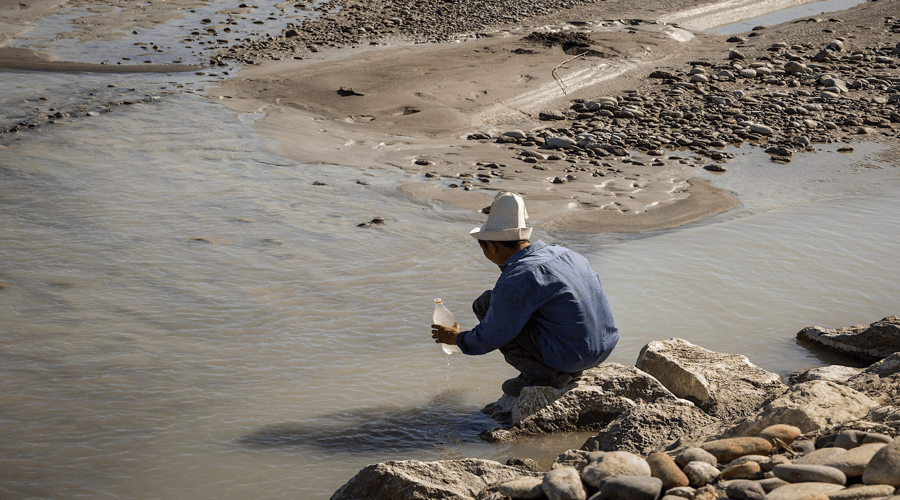
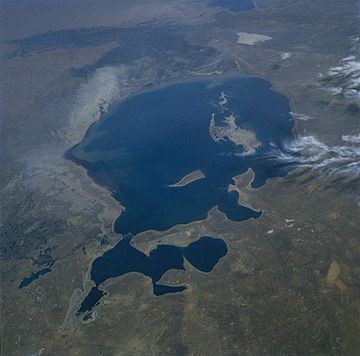
By Arindam Banik and Muhtor Nasirov   The world is currently grappling with the devastating impact of climate change, as rising temperatures have become an undeniable reality. In January 2024, the global temperature exceeded normal levels for the second consecutive month, pushing the global average temperature over the 1.5-degree threshold for the first time. Many human activities, such as unplanned water use, excessive groundwater extraction, and climate change, are thought to be contributing to this situation. One poignant example is the case of the Aral Sea in Central Asia. This once breathtaking and teeming endorheic lake, nestled between Kazakhstan and Uzbekistan, was not just a body of water. It was a symbol of life, a testament to the beauty and resilience of nature. Its azure waters and diverse marine life were a source of sustenance and livelihood for the region's people. It was a vibrant ecosystem, nourished by the almost entire flow of the two main rivers, the Amu Darya and the Syr Darya, in the upstream region of Central Asia. Interestingly, the Amu Darya River used to flow into the Caspian Sea through Uzboy Channel. However, a significant shift occurred during human settlement when the flow of these rivers was redirected into the Aral Sea, marking a crucial turning point in the region's hydrological history. Despite its former glory as the third-largest lake in the world, covering an area of 68,000 km2 (26,300 sq miles), the Aral Sea began shrinking in the 1960s after the rivers that fed it were diverted to support large-scale irrigation for cotton production intended for export. The irrigated area in the Aral Sea Basin has now expanded to eight million hectares. By 2007, it had decreased to only 10 percent of its original size, dividing into four lakes. By 2009, the southeastern lake had vanished, and the southwestern lake had shrunk to a thin strip at the western edge of the former southern sea. In the following years, occasional water flows partially replenished the southeastern lake. In August 2014, NASA satellite images revealed that the eastern basin of the Aral Sea had completely dried up, leading to the formation of the Aralkum Desert. This dramatic change has severely impacted the ecology, risking the survival of numerous fish subspecies and three endemic sturgeon species. The loss of these species disrupts the natural balance and affects the livelihoods of the local communities that depend on fishing. The herring, sand smelt, and gobies were the first planktivorous fish in the lake, and their decline led to the lake's zooplankton population collapse. Consequently, the herring and sand-smelt populations have not recovered. Except for the carp, snakehead, and possibly the pipefish, all introduced species survived the lake’s shrinkage and increased salinity. In an attempt to revive fisheries, the European flounder was introduced. This situation is urgent as the delicate balance of this ecosystem is on the verge of collapse. The region's once-prosperous fishing industry has been devastated, leading to unemployment and economic hardship. Additionally, the diverted Syr Darya River...

2 years ago

How India is Becoming a Robust Soft Power in Central Asia

The middle-income trap, a pressing issue that has led to the stagnation of many successful developing economies, demands immediate attention. This trap, which occurs when a middle-income country can no longer compete internationally in standardized, labor-intensive goods due to relatively high wages, is a result of various factors, including countries most successful demographic characteristics. For instance, access to education has reduced birth rates due to an almost 100% literacy rate defined by 12 years of education. In the process, importing cheap manufacturing products has made local products uncompetitive. In such a situation, the country should have planned to upgrade current skill-based education to high-tech skills such as ICT, pharmaceuticals, etc. This shift to high-tech education holds immense potential for developing countries, offering a pathway out of the middle-income trap. Unfortunately, poor investment in developing high-tech education has led to an inadequate supply of a high-skilled workforce. Developed economies, such as the U.S. and a few European countries, are in an advantageous position to overcome such a trap due to their highly effective immigration policy. Developing countries, such as Brazil, Mexico, Argentina, the Philippines, and almost all Central Asian Republics, meanwhile, suffer. This will be further aggravated if the issue is not addressed urgently. Due to its geographic location and natural resource endowments, Central Asia, a diverse region with a mix of upper-middle and low-income countries, holds significant importance in the global economic landscape. Let's look at a specific case, such as Uzbekistan, a country whose population is growing at 1.3% per annum. Regarding age structure, the 0-14 age group makes up 30.1% of the population, the 15-64 age group 64.6%, and the 65-plus group constitutes just 5.3%. The country has achieved a high literacy rate, with 100% of the population completing 12 years of primary and higher secondary education. However, the country’s GDP per capita is relatively low, at US$ 3,209 (nominal term) and US$ 11,316 (PPP). The country's economy is dominated by the services sector, which contributes 48.4% to the GDP, followed by industry at 33.7%, and agriculture at 17.9%. The poverty line is set at less than US$ 3.2 per day, affecting 10% of the population. The country's labor force is distributed across sectors, with 25.9% in agriculture, 13.2% in industry, and 60.9% in services. The unemployment rate is 5.3%, and underemployment is a significant issue, affecting 20% of the population. The low supply of highly skilled workers challenges further increasing per capita income. The country will likely fall into this middle-income trap because it reaches a certain average income and cannot progress beyond that level. It seems helpful to mention some insights from this perspective. During Soviet times, the growth model of states was determined by their available resources, and Central Asia is rich in abundant resources. However, in most cases, primary resources were taken to other non-resource wealthy states for further value addition. So, the workforce was created in the respective states based on the concerned state's requirements. Workforce migration from one state to another was...

2 years ago