• KGS/USD = 0.01144 0%
  • KZT/USD = 0.00205 0%
  • TJS/USD = 0.10813 -0.18%
  • UZS/USD = 0.00008 0%
  • TMT/USD = 0.28571 0.28%
  • KGS/USD = 0.01144 0%
  • KZT/USD = 0.00205 0%
  • TJS/USD = 0.10813 -0.18%
  • UZS/USD = 0.00008 0%
  • TMT/USD = 0.28571 0.28%
  • KGS/USD = 0.01144 0%
  • KZT/USD = 0.00205 0%
  • TJS/USD = 0.10813 -0.18%
  • UZS/USD = 0.00008 0%
  • TMT/USD = 0.28571 0.28%
  • KGS/USD = 0.01144 0%
  • KZT/USD = 0.00205 0%
  • TJS/USD = 0.10813 -0.18%
  • UZS/USD = 0.00008 0%
  • TMT/USD = 0.28571 0.28%
  • KGS/USD = 0.01144 0%
  • KZT/USD = 0.00205 0%
  • TJS/USD = 0.10813 -0.18%
  • UZS/USD = 0.00008 0%
  • TMT/USD = 0.28571 0.28%
  • KGS/USD = 0.01144 0%
  • KZT/USD = 0.00205 0%
  • TJS/USD = 0.10813 -0.18%
  • UZS/USD = 0.00008 0%
  • TMT/USD = 0.28571 0.28%
  • KGS/USD = 0.01144 0%
  • KZT/USD = 0.00205 0%
  • TJS/USD = 0.10813 -0.18%
  • UZS/USD = 0.00008 0%
  • TMT/USD = 0.28571 0.28%
  • KGS/USD = 0.01144 0%
  • KZT/USD = 0.00205 0%
  • TJS/USD = 0.10813 -0.18%
  • UZS/USD = 0.00008 0%
  • TMT/USD = 0.28571 0.28%

Our People > Davide Cancarini

Davide Cancarini's Avatar

Journalist

Davide Cancarini is an independent researcher and freelance journalist based in Italy. He holds a PhD in Institutions and Policies from the Università Cattolica del Sacro Cuore in Milan and has worked extensively on Central Asian affairs. His articles and research have been published in various national and international outlets and for numerous think tanks.

Articles

Central Asia Faces an Arc of Instability to the South

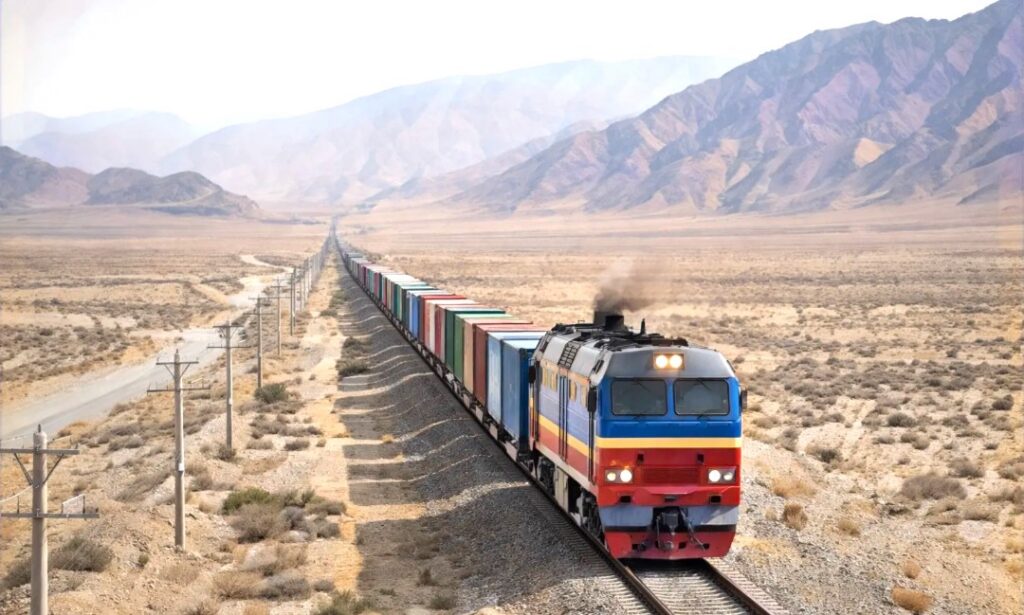
Until a few weeks ago, looking south from Central Asia, observers of the region saw nothing but opportunities for connectivity. Admittedly, Iran on one side and the area between Afghanistan and Pakistan on the other have never been known for their stability. However, the current situation sees two serious conflicts on the southern border of Central Asia, which risk representing an arc of instability that will be difficult to overcome. While the global energy implications of the ongoing war in the Middle East, which began following the joint attack by the United States and Israel on Iran, are likely to be felt for months to come, the greatest risk for the Central Asian region is related to connectivity. This could also compromise significant efforts made in this regard by regional governments. Consider, for example, the recent trip to Pakistan by Kazakh President Kassym-Jomart Tokayev, which focused on the possibility of building a railway from Pakistani ports to Kazakh territory via Afghanistan and Turkmenistan. For much of the past decade, Central Asian governments have invested heavily in opening southern trade routes to global markets. Railways through Afghanistan, port access through Iran, and new logistics corridors to Pakistan were meant to reduce dependence on northern routes and expand the region’s economic options. The sudden emergence of conflicts along the southern frontier now raises questions about how secure those connections will be. The Times of Central Asia spoke with Peter Frankopan, author and Professor of Global History at Oxford University, about the potential implications of the two wars on Central Asia’s southern border. According to him, the main risk is not related to connectivity, but to contagion: “The key issue is about the safety of civilians and the protection of infrastructure in Central Asia,” he told TCA. “In times like these, nothing can be ruled out. With Iran lashing out at neighbors and realizing that attacks on oil, gas and more give it leverage, it is not hard to see what might come next. Second, of course, are threats to national economies. Wars create winners and losers. One can see a boom for some people in Central Asian states, but plenty of pressures, especially on inflation.” Indeed, the economic repercussions of the Middle East conflict are already being felt in the region, particularly in Turkmenistan, which maintains some of the closest trade ties with Iran and shares a long border with the country. Frankopan does not see any particular differences in terms of the danger to Central Asia posed by what is happening in Iran and between Pakistan and Afghanistan: “Clearly, instability in Afghanistan is an immediate concern, but it is not related to Iran and will have its own velocity and rhythms. But the risks of expanding violence and terrorism, of refugees, of narcotics and other illicit trafficking are real - and may well get worse.” Regarding connectivity, one of the topics that Central Asian governments pay the most attention to, according to Frankopan, the current situation should not be considered an...

3 months ago

Kazakhstan Bets on Pakistan for Central Asian Connectivity

In early February, Kazakh President Kassym-Jomart Tokayev made a historic visit to Pakistan. The last such visit was a two-day trip in 2003 by then-President Nursultan Nazarbayev, during which he met with the Pakistani president at the time, General Pervez Musharraf. Kazakhstan’s outreach to Pakistan reflects a broader recalibration of its connectivity strategy, as Astana looks to secure more reliable southbound trade routes amid shifting geopolitical and logistical constraints across Eurasia. The topic of connectivity was already on the table in 2003, and it was also one of the most important issues during the latest visit, with Tokayev discussing the issue with Pakistani Prime Minister Shehbaz Sharif. The trip culminated in the signing of 37 agreements in various fields, including strategic sectors such as mining and, more generally, trade, with the aim of increasing trade from the current $250 million to $1 billion. Official statements indicate that both sides are aiming to reach that target within approximately the next two years. From a political point of view, the bilateral relationship has been elevated to the rank of Strategic Partnership. In an official statement released following the visit, great importance was placed upon the issue of connectivity and logistics between South and Central Asia. From this point of view, the Kazakhstan-Turkmenistan-Afghanistan-Pakistan railway took center stage. If completed, the project would connect Kazakhstan to the ports of Karachi and Gwadar and allow Pakistan to be included in the North–South International Transport Corridor and Trans-Caspian Middle Corridor logistics routes. Speaking to the Pakistani media in the days leading up to Tokayev's trip, the Kazakh ambassador to Pakistan, Yerzhan Kistafin, stated Astana's willingness to fully finance the construction of the infrastructure, at a total cost of around $7 billion. Kazakhstan's move represents an acceleration of a logistical competition in this arena involving various players, with some at the forefront, such as Pakistan and Iran, and others further behind, such as China and India. It has been talked about for some time, but the backbone of the Kazakhstan-Turkmenistan-Afghanistan-Pakistan railway has only recently begun to take shape, as confirmed to The Times of Central Asia by Dr. Nargiza Umarova, Head of the Center for Strategic Connectivity at the Institute for Advanced International Studies (IAIS), Uzbekistan: “In 2024, Kazakhstan joined the project to construct a railway through Afghanistan, also known as the western trans-Afghan route. The Turkmenistan-Afghanistan-Pakistan (TAP) railway corridor is designed to integrate the transport systems of Central and South Asia, which will stimulate trade and economic ties between the two regions. The TAP railway, which runs through western Afghanistan to the border with Pakistan, could be extended to Pakistani ports on the Indian Ocean. This would provide Central Asian countries with an alternative route to the open seas in addition to the southern ports of Iran.” Pakistan's importance as the destination for Kazakhstan's logistics ambitions was confirmed by Dr. Marriyam Siddique, Assistant Professor at the Pakistan Navy War College in Lahore: “Pakistan serves as the primary maritime gateway for Kazakhstan’s 'land-linked' strategy, offering the shortest...

4 months ago

Bridges, Not Blocs: Japan’s Central Asia Approach

Japan is one of the countries that has been most active in recent years in terms of deepening political and economic relations with the republics of Central Asia. However, the geopolitical and ideological grounds for Tokyo's activism have received less attention than those of other countries. In early August 2024, then Prime Minister Fumio Kishida was scheduled to visit the region, but the visit was cancelled at the last minute due to the risk of a major earthquake that could have struck Japan at that time. During his visit, Kishida was also expected to announce the launch of an economic aid package for the Central Asian republics. As confirmed by the Ministry of Foreign Affairs in Tokyo, Japanese Foreign Minister Takeshi Iwaya is visiting the region over the coming days, landing in Kazakhstan on August 24, before moving on to Uzbekistan until August 28. In the two countries, he will meet with his Kazakh and Uzbek counterparts, Murat Nurtleu and Bakhtiyor Saidov, respectively, with the aim in both cases of strengthening bilateral relations. Japan's interest in Central Asia is long-standing: the Central Asia Plus Japan Dialogue format was launched back in 2004, a platform that has been emulated by several countries in the following years. From a political point of view, this is a very smooth relationship, as confirmed to The Times of Central Asia by Timur Dadabaev, Professor of International Relations at the University of Tsukuba. “Japan’s engagement with Central Asia is driven less by immediate material gain and more by its pursuit of trust-building diplomacy,” Dadabaev told TCA. “It is a relationship rooted in Japan’s desire to be seen as a reliable, non-imperial partner that supports the sovereignty, stability, and regional agency of Central Asian states. Unlike other powers, Japan positions itself as a ‘distant neighbor without hidden agendas,’ which makes its initiatives particularly well-received. Over the years, this has translated into Japan being perceived not as a competing hegemon, but as a partner that invests in the region’s human capital, infrastructure, and governance in ways that reinforce independence rather than dependence.” The relationship between Japan and the Central Asian republics is based on many concrete elements - cooperation on energy, migrant workers, and connectivity - which, as Tomohiko Uyama, Professor of Modern History and Politics of Central Asia at Slavic-Eurasian Research Center at the Hokkaido University pointed out to TCA, represent the basis for broader diplomatic engagement. “The relationship between Japan and Central Asia is based on geopolitical factors. For Japan, Central Asia is a region that shares troublesome neighbors, Russia and China,” Uyama said. “Increasing Japan's presence in this region is important for curbing the excessive expansion of China and Russia’s global influence. However, strengthening diplomatic relations requires fostering economic and human relations. Therefore, in addition to its traditional technical cooperation, Japan is seeking to promote decarbonization, transportation connectivity, and human resource development.” Professor Dadabaev also stresses that the two dimensions - the one linked more to concrete elements and the one that has more to...

9 months ago

Turkmenistan’s Diplomatic Moves Amid Iran-Israel Tensions

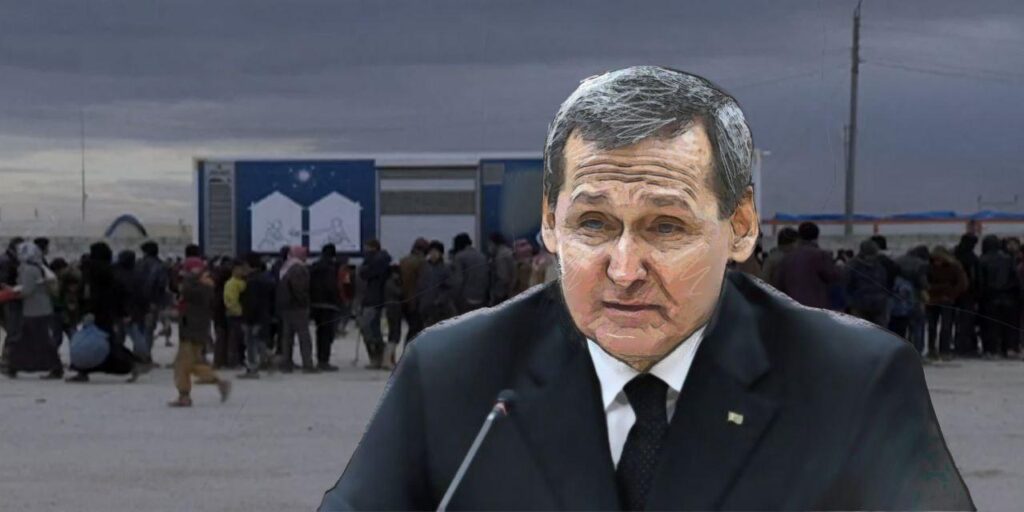
One of the elements most highlighted by the recent military confrontation between Israel and the U.S. on one side and Iran on the other is the geographical relevance of Central Asia to the situation. This is particularly true in the case of Turkmenistan, a country that shares a border of almost 1,200 kilometers with Iran. During the most intense days of the conflict, in a particularly unusual move, Turkmenistan opened its borders to foreign citizens seeking to escape from Iranian territory, which was under Israeli air strikes at the time. On the diplomatic front, there have also been several high-level meetings and talks involving Turkmenistan; just after his meeting in Moscow with Russian President Vladimir Putin, the Iranian Foreign Minister, Abbas Araghchi, travelled to Ashgabat for a meeting with his Turkmen counterpart, Rashid Meredov. The day after, Meredov had a telephone conversation with U.S. Secretary of State Marco Rubio, and Russian Foreign Minister Sergey Lavrov arrived in Ashgabat for a meeting with the Turkmen leader, Serdar Berdimuhamedov. Focusing primarily on the mutual isolation of Turkmenistan and Iran, Luca Anceschi, Professor of Eurasian Studies at the University of Glasgow, gave The Times of Central Asia his interpretation of these developments: “In my opinion, there is a fundamental issue, which is Turkmen isolation. When we see a small shift, we think that things are changing, but nothing changes. The second isolation is that of Iran, which in this case is not intentional. The reality we have seen in recent days is that Iran is isolated at the regional level. Russia has made it clear that Iran is expendable, and has not given reassuring answers. We see that there is an attempt to remedy this forced isolation on the part of Iran. To get out of these regional arrangements, they have tried to go everywhere, including Ashgabat.” Operational agreements on the energy side are certainly weighing on Tehran's desire to reassure Turkmenistan about the stability of the theocratic regime that rules Iran. These agreements are particularly useful to Iran in meeting the energy needs of the northern part of the country, which is remote and poorly connected to the south, where the country’s main natural gas fields are located. According to Temur Umarov, a Fellow at the Carnegie Russia Eurasia Center, “Since 2022, Turkmenistan's visibility in Eurasian politics has certainly increased, and this is also the result of geopolitical changes that have taken place in the region in recent years,” Umarov told TCA. “What happened in Iran further increases Ashgabat's visibility, but it was coincidental that Lavrov's visit to Turkmenistan took place during the clash between Israel and Iran, as it was part of a wider tour of the region by the Russian Foreign Minister.” Another aspect that should be considered is the change in tone on the part of Turkmen diplomacy, which at first glance appears much more assertive than in the past. A few weeks ago, Ashgabat issued a very harsh statement regarding Trump's decision to include Turkmenistan among the countries...

11 months ago

Central Asia and Israel, a Pragmatic Relationship That Never Truly Blossomed

The conflict between Israel and Iran is having both international and regional repercussions. The situation has been further inflamed by the U.S. bombing of several Iranian nuclear sites over the weekend, with Tehran responding by threatening retaliation on U.S. soil through the use of sleeper terrorist cells and the possible closure of the Strait of Hormuz, through which over a fifth of the world’s oil supply passes. While Israel's geographical position places it at the heart of the Middle East, Iran's location brings the Islamic Republic into close contact with Central Asia. The consequences of the conflict are therefore likely to be felt heavily in the Central Asian region. The close relations between Tehran and the capitals of Central Asia, due in part to their geographical proximity, are often highlighted. Less explored is the nature of the relationship between Tel Aviv and Central Asia and the lines along which it has developed since the dissolution of the Soviet Union. On both the Israeli and Central Asian sides, despite all the differences, relations began in the early 1990s, mainly based on certain mutual interests. From Israel's point of view, relations with Central Asia would mean expanding the circle of Muslim countries with which it had friendly ties, gaining greater influence in the region, and reducing its diplomatic isolation. From the Central Asian perspective, the appeal lay in increasing the number of its international partners, coupled with a desire to access Israeli know-how in numerous fields, and the possibility, through relations with Tel Aviv, of having a privileged channel of dialogue with the United States. More than three decades after the dissolution of the Soviet Union, relations remain good for the most part. “The positive relationship between Israel and Central Asia is driven by a combination of strategic, economic, and geopolitical factors,” Dr Zeev Levin, Coordinator of the Central Asian Research Unit at the Harry S. Truman Institute, told The Times of Central Asia. “One of the primary drivers is mutual interest in security and counterterrorism. Economically, Israel’s expertise in water management, agriculture, and technology is highly attractive to the arid, resource-seeking nations of Central Asia that aim to modernize their infrastructure and diversify their economies beyond oil and gas. Additionally, fostering ties with Israel provides a means of diversifying the foreign policy portfolios of the Central Asian republics.” This positive relationship, however, seems to have lost momentum in recent years due to several factors. Central Asian republics have increasingly oriented towards the East, moving closer to China and other players such as South Korea, Japan, and India, or towards other partners, such as the European ones, with Italy at the forefront in this regard. As Levin points out, the relation has cooled due to several factors: “Central Asian republics did look to Israel in the first decade of independence, but in the last decade to a much lesser extent, since Turkey and China are less complicated and cheaper options. For Israel, the region was never a priority or a point of...

12 months ago

Italy Raises the Bar in Central Asia: What to Expect from Giorgia Meloni’s Visit

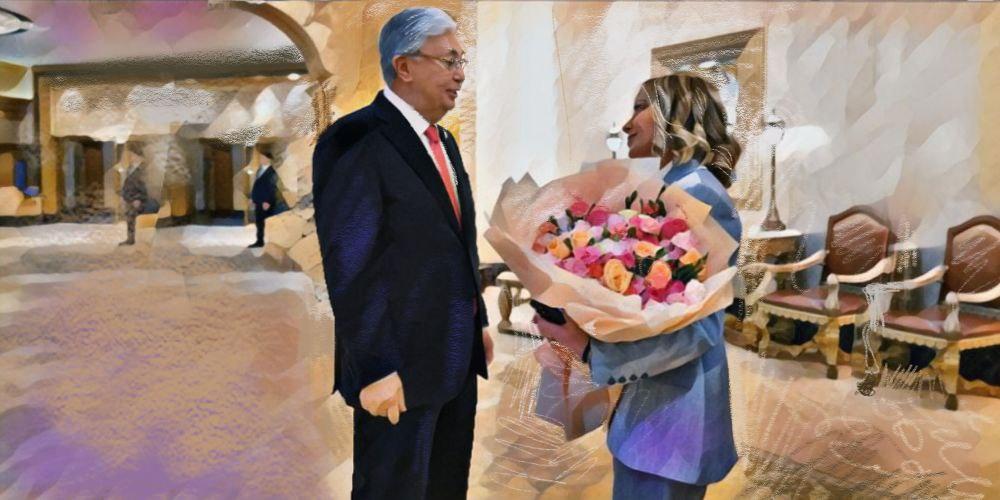
In recent years, Italy has emerged as one of the European countries most keen to maintain close relations with the countries of Central Asia. In mid-April, confirmation arrived that Prime Minister Giorgia Meloni would be travelling to the region this spring. The purpose of the trip is to visit Uzbekistan and Kazakhstan and attend a summit in Astana with the presidents of the five countries.  Meloni's visit is scheduled for the end of May, although the exact dates are not yet known. Italy was the first European country to involve the Central Asia region in a "1+5" summit. The first meeting was held in Rome in December 2019, and involved the then Italian Foreign Minister, Luigi Di Maio, and all Central Asian Foreign Ministers. This meeting took place a few months after Italy, the first and only EU country to take this step, signed a memorandum of understanding with China on the Belt & Road Initiative (in 2023, Rome decided to withdraw from the project). Central Asia is one of the regions at the heart of the original BRI project: the launch was announced in Kazakhstan in 2013. The most recent meeting at foreign minister level took place in May 2024, again in Rome, and was attended by the current Italian Foreign Minister, Antonio Tajani. But now Italy has decided to raise the bar and directly involve Meloni and her Central Asian counterparts. The multilateral forum is complemented by frequent visits to Italy by leaders from the region: Uzbekistan's Mirziyoyev in June 2023, Kazakhstan's Kassym-Jomart Tokayev in January 2024 and Tajikistan's Emomali Rahmon at the end of April 2024. For Italy, President Sergio Mattarella visited Uzbekistan in November 2023 and Kazakhstan in March 2025. Italy is one of the main economic partners in the region, and especially in Kazakhstan; the country ranks third (behind only China and Russia) in terms of trade with Astana. Trade turnover between Kazakhstan and Italy rose 25% in 2024 and reached almost $20 billion. The relationship is particularly strong in the energy sector, with over $18 billion accounted for exports of Kazakh oil and petroleum products in 2024. The Italian national oil and natural gas company Eni has been present in Kazakhstan since 1992, where it is a co-operator of the Karachaganak oil field and participates in the North Caspian Sea PSA consortium responsible for operations at the Kashagan oil field. Other significant sectors of trade between Italy and Kazakhstan are those of agricultural machinery and agricultural production. One area that could be subject to greater cooperation is defense, as demonstrated by the visit to Italy by Kazakhstan's Minister of Defense, Ruslan Zhakssylykov, in March this year. The potential is truly remarkable: during Mattarella's aforementioned flash visit to the country this March, with a meeting with Tokayev held directly at Astana airport, the Italian president emphasized the potential for further deepening the strategic partnership between Rome and Astana, which has been in place since 2011. Speaking of official documents, in June 2023, Italy and Uzbekistan...

1 year ago

India and Pakistan: A Central Asian Perspective on Two Military Giants

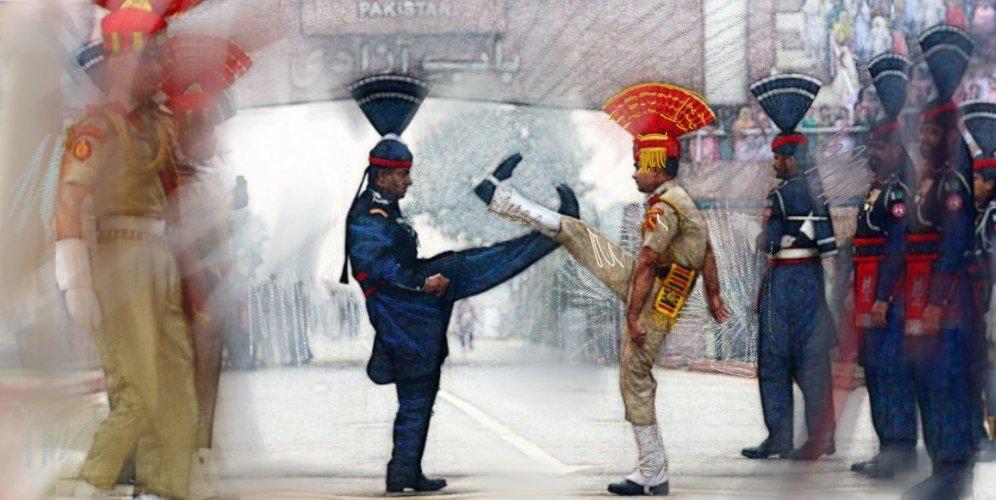
The new round of heavy clashes involving India and Pakistan over the disputed region of Kashmir – then settled by a bilateral adherence to a “full-scale ceasefire” – has also been a confrontation involving the players surrounding the two Asian giants. The involvement of some of them took place in plain sight: take the case of Turkey's President Recep Tayyip Erdoğan, a staunch ally of Pakistan, which sent the country a military ship and a group of fighter jets. Or China, which in recent years has invested tens of billions of dollars in Pakistan under the Belt & Road Initiative, and has become by far the largest supplier of military equipment to Islamabad. Beijing immediately called on both sides to engage in diplomacy. On the Indian front, as reported by recent research on the subject, New Delhi is purchasing weapons from an increasingly varied group of countries, including Russia, France, Israel and the United States. The ceasefire saw direct involvement from Washington, which acted as mediator between the two sides. Given also its geographical proximity to the Indian subcontinent, when it comes to Central Asia it is clear that the region may be called into question in any confrontation between India and Pakistan – or that, at least, would be heavily affected by it. During the strikes carried out by India against Pakistan following the deadly attack in Indian-controlled Kashmir, the Indian media emphasized the strategic role that the military base India allegedly operates in Tajikistan could play in a possible open confrontation with Pakistan. Indian experts pointed out that the base could have given New Delhi the ability to strike Pakistan from the west, seriously compromising Islamabad's air defense capabilities. Furthermore, China was also called into question in India's alleged use of the military outpost, as New Delhi is said to be monitoring China's movements on the northern front using its presence in Tajikistan. This base is Ayni Airbase, a Soviet-era military facility located near the Tajik capital Dushanbe. The facts we know for certain point to an Indian involvement in the Tajik base which appears to have ended around 2015. In 2002, India, in collaboration with Tajikistan and Russia, financed an operation to refurbish the base, investing around $70 million in the project. Among the changes made was the lengthening of the runway, which was intended to ensure that it could be used by aircraft operated by the Indian armed forces. As also stated in the report on Central Asian armed forces drafted by the DC-based The Oxus Society for Central Asian Affairs, after a phase in which it seemed that India would play a concrete role in the management of the base, Dushanbe subsequently backtracked, partly due to pressure from Russia. The same path was followed by New Delhi's involvement in the Farkhor airbase, initially used to reach Afghanistan by land by landing Indian cargo planes at the base, located near the border between Tajikistan and Afghanistan. Over the years, the logistical importance of the structure gradually...

1 year ago

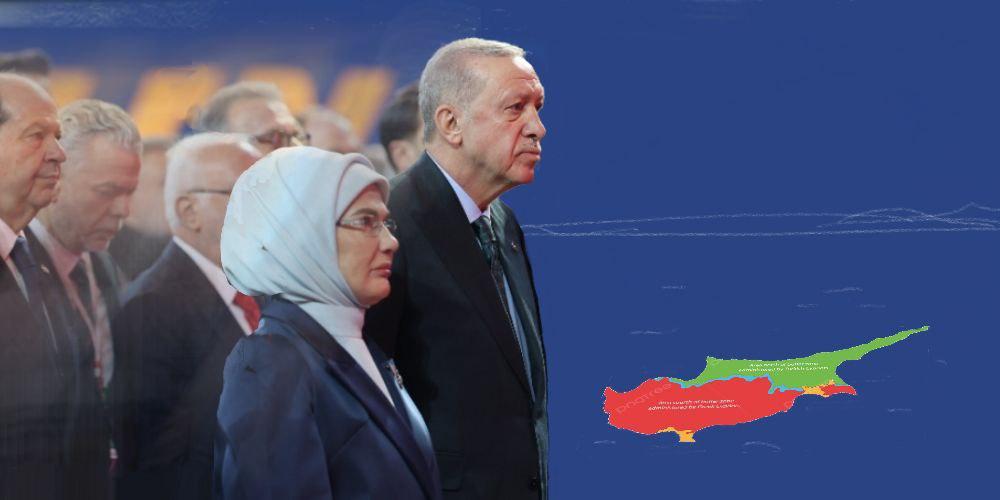
Central Asia Creates a Rift in the Turkic World Over Cyprus

Since the beginning of the Russian invasion of Ukraine, the five Central Asian republics have been performing a very complex balancing act. In some cases, this dynamic has forced them to make difficult decisions from a geopolitical point of view. This is the case with what has happened in recent weeks regarding diplomatic recognition of the Republic of Cyprus, a member of the European Union since 2004. Between December 2024 and the end of March 2025, Uzbekistan, Kazakhstan and Turkmenistan have each appointed diplomatic representatives in the Republic of Cyprus. Kazakhstan has decided to open its own embassy in Cyprus directly, while Uzbekistan and Turkmenistan have accredited their respective ambassadors in Italy as diplomatic representatives for the Eastern Mediterranean Island also. Looking at the calendar, it doesn't seem to be a coincidence that these decisions were taken in the weeks leading up to the first historic summit between the European Union and Central Asia at the level of heads of state and government. The fourth point of the official joint declaration issued at the end of the meeting clarifies the matter: the text clearly states the support of the parties involved - the European Union and Central Asia - for United Nations Security Council Resolutions 541 (1983) and 550 (1984). These two resolutions make it clear that the only recognized authority on the island is that of the Republic of Cyprus. In recent years, there has been no shortage of explicit references to the Cyprus issue in relations between the European Union and Central Asia. This was the case, for example, in September 2023: during a conference in Brussels, Kazakhstan, Uzbekistan, Turkmenistan, Kyrgyzstan, and Tajikistan were warned against officially accepting the Turkish Republic of Northern Cyprus (TNRT) as an observer member of the Ankara-led Organization of Turkic States (OTS). Dietmar Krissler, head of the European External Action Service's Central Asia desk, spoke of the possible “negative effects” for the Central Asian members if they were to ratify TRNT's access to the Organization as an observer. Returning to the summit held in Samarkand at the beginning of April, the President of the European Commission, Ursula von der Leyen, announced during the discussions that €12 billion would be invested in Central Asia in various sectors. By also using the prospect of these investments, the European Union's diplomatic pressure on the Central Asian republics over Cyprus has been successful. As BBC Türkçe reports, this is not just a formal declaration of intent: in the official joint statement, future cooperation is in fact closely linked to compliance with the principles contained in the two UN resolutions, a very clear position. From Turkey's point of view, however, the picture is quite different. Turkey is the only country in the world to officially recognize the TRNC, which became a self-proclaimed independent entity in 1984 after Turkey invaded part of the island in 1974. Over the years, Ankara’s pressure has succeeded in preventing relations between the Central Asian republics and the Republic of Cyprus from going as...

1 year ago