• KGS/USD = 0.01144 0%
  • KZT/USD = 0.00201 0%
  • TJS/USD = 0.10433 0%
  • UZS/USD = 0.00008 0%
  • TMT/USD = 0.28571 0%
  • KGS/USD = 0.01144 0%
  • KZT/USD = 0.00201 0%
  • TJS/USD = 0.10433 0%
  • UZS/USD = 0.00008 0%
  • TMT/USD = 0.28571 0%
  • KGS/USD = 0.01144 0%
  • KZT/USD = 0.00201 0%
  • TJS/USD = 0.10433 0%
  • UZS/USD = 0.00008 0%
  • TMT/USD = 0.28571 0%
  • KGS/USD = 0.01144 0%
  • KZT/USD = 0.00201 0%
  • TJS/USD = 0.10433 0%
  • UZS/USD = 0.00008 0%
  • TMT/USD = 0.28571 0%
  • KGS/USD = 0.01144 0%
  • KZT/USD = 0.00201 0%
  • TJS/USD = 0.10433 0%
  • UZS/USD = 0.00008 0%
  • TMT/USD = 0.28571 0%
  • KGS/USD = 0.01144 0%
  • KZT/USD = 0.00201 0%
  • TJS/USD = 0.10433 0%
  • UZS/USD = 0.00008 0%
  • TMT/USD = 0.28571 0%
  • KGS/USD = 0.01144 0%
  • KZT/USD = 0.00201 0%
  • TJS/USD = 0.10433 0%
  • UZS/USD = 0.00008 0%
  • TMT/USD = 0.28571 0%
  • KGS/USD = 0.01144 0%
  • KZT/USD = 0.00201 0%
  • TJS/USD = 0.10433 0%
  • UZS/USD = 0.00008 0%
  • TMT/USD = 0.28571 0%

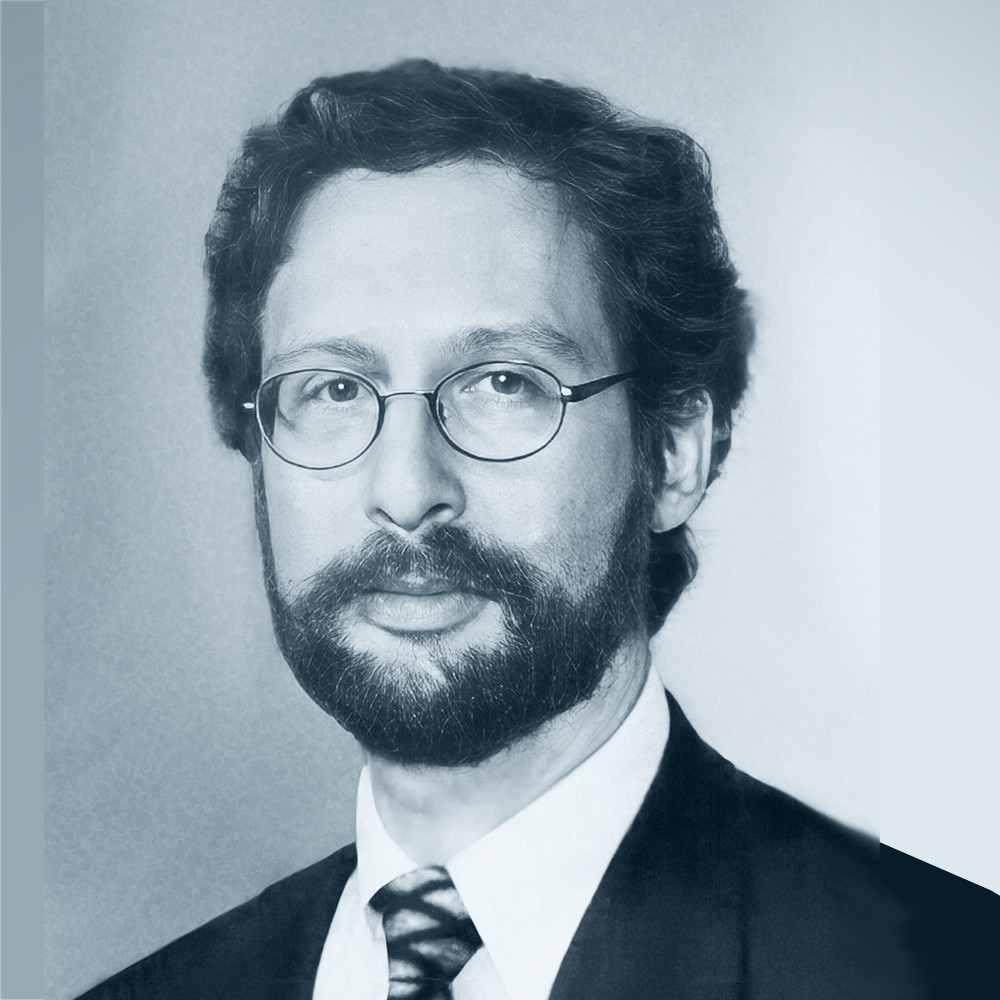
Our People > Dr. Robert M. Cutler

Dr. Robert M. Cutler's Avatar

Dr. Robert M. Cutler

Senior Editor and Contributor

Robert M. Cutler has written and consulted on Central Asian affairs for over 30 years at all levels. He was a founding member of the Central Eurasian Studies Society’s executive board and founding editor of its Perspectives publication. He has written for Asia Times, Foreign Policy Magazine, The National Interest, Euractiv, Radio Free Europe, National Post (Toronto), FSU Oil & Gas Monitor, and many other outlets.

He directs the NATO Association of Canada’s Energy Security Program, where he is also senior fellow, and is a practitioner member at the University of Waterloo’s Institute for Complexity and Innovation. Educated at MIT, the Graduate Institute of International Studies (Geneva), and the University of Michigan, he was for many years a senior researcher at Carleton University’s Institute of European, Russian, and Eurasian Studies, and is past chairman of the Montreal Press Club’s Board of Directors.

Articles

Uzbekistan and China Deepen Ties Across Strategic, Economic, and Soft-Power Fronts

Uzbekistan and China have significantly expanded their bilateral relationship in the last month. The meeting between Presidents Shavkat Mirziyoyev and Xi Jinping on June 17, 2025, in Astana, during the second China–Central Asia Summit, formally endorsed what both states termed a “multi-dimensional strategic partnership.”  The occasion marked the conclusion of bilateral negotiations on Uzbekistan's accession to the World Trade Organization. This membership is both procedural and symbolic, as it signals Uzbekistan's intensifying participation in global economic architecture. In particular, it serves to legitimize the country's market-opening reforms in the eyes of international partners. Strategic Dialogue and the Evolution of Political Ties The June 2025 summit meeting built upon groundwork laid during Mirziyoyev's January 2024 state visit to China, when a suite of agreements were reached that catalyzed the creation of a Strategic Dialogue between the two countries' foreign ministries. A year later, in January 2025, this was formally upgraded to an “all-weather comprehensive strategic partnership”. This phrase signifies that the dialogue was acquiring operational substance in the form of diversified sectoral initiatives spanning infrastructure, innovation, security, and energy. For Uzbekistan, this initiative marks a sustained effort to define itself not only as a recipient of foreign capital but as a co-architect of regionally significant configurations. Trade and investment data point to a structurally intensifying relationship. Bilateral trade stood at $14 billion in 2024, up from $13 billion the previous year, with both sides aiming for $20 billion in the near term. As of February 2025, 3,467 Chinese firms were active in Uzbekistan, an increase of over 1,000 from the prior year. However, the $9.8 billion trade deficit in China's favor remains politically sensitive, highlighting asymmetries even as cooperation deepens. Sectoral Investment and Institutional Coordination A joint investment portfolio exceeding $60 billion undergirds this integration. Key projects include special economic zones, technoparks, and localized production of BYD electric vehicles. The sectoral spread extends to renewable energy, mining, logistics, metallurgy, pharmaceuticals, and smart agriculture. Financial institutions such as the Silk Road Fund and China Eximbank are underwriting emblematic initiatives, including the Olympic Village in Tashkent. On June 28, 2025, Uzbekistan's Deputy Minister of Investments, Industry and Trade met with Chinese leather industry representatives to coordinate manufacturing projects in Andijan and Ohangaron. These dynamics were further institutionalized at the Uzbekistan–China Interregional Forum held June 1–2, 2025, in Samarkand, where Uzbekistan's Deputy Prime Minister Jamshid Khodjaev emphasized that Chinese investment has increased fivefold since 2017. Although this was technically a regional event, it reinforced — as a public-facing moment of alignment between central planning and international economic engagement — a national-level policy architecture receptive to external capital, particularly from China. Infrastructure and Energy At the infrastructural core of bilateral cooperation stands the China–Kyrgyzstan–Uzbekistan (CKU) railway. Both presidents re-emphasized the project's strategic relevance, identifying it as essential to transcontinental logistical continuity from East Asia to Europe. The project has not only economic but also geopolitical significance, situating Uzbekistan as a connective node rather than a peripheral conduit. If completed on time, it may also reduce...

8 months ago

Iran–Israel War Highlights Central Asia as Zone of Strategic Stability

The explosive conflict between Iran and Israel, including coordinated U.S. strikes on Iranian nuclear infrastructure, has drawn global attention to the Persian Gulf and Levant. The escalatory spectacle, however, has blinded most observers to a quieter structural shift. This is the rising indispensability of Central Asia, including its linkages with the South Caucasus. Unaligned in rhetoric and untouched by spillover, Central Asia's very stability quietly threw into relief its increasing centrality to Eurasian energy and logistics calculations. As maritime chokepoints came into question and ideological rhetoric became more inflamed, Central Asia offers a reminder that the most valuable nodes in a network are the ones that continue operating silently and without disruption. Neither Israel nor Iran has real operational depth in Central Asia, and this has made a difference. Unlike Lebanon, Iraq, or Yemen — where proxy networks or ideological leverage allowed Tehran to externalize confrontation — no such mechanisms exist east of the Caspian Sea. Iran’s efforts in Tajikistan, grounded in shared linguistic heritage and periodic religious diplomacy, today remain cultural and informational rather than sectarian and clientelist. The influence of Iran's Islamic Revolutionary Guard Corps (IRGC) in Central Asia is minimal; Israeli presence, while diplomatically steady in places like Kazakhstan and Uzbekistan, is neither controversial nor militarized. There are no significant arms flows or dual-use infrastructure for either side to use. As a result, Central Asia has remained untouched by the conflict. Although the Iran–Israel conflict is relatively geographically localized, it has shed light on global systems far beyond the immediate zone of combat. Although not so far from the missile trajectories and nuclear facilities, Central Asia and the South Caucasus are remarkably insulated from their effects. Rather than becoming another theater of contestation, they have demonstrated their value as stabilizing elements at a time of heightened geostrategic volatility. It is no longer optional to take into account the Central Asian space, which geoeconomically includes Azerbaijan, now a permanent fixture at the region's summits. As the war now produces a phase of reactive adaptation in international geoeconomics and diplomacy, the region has become a control parameter of the international system rather than a fluctuating variable dependent upon it. The Iran–Israel conflict has drawn new attention to the vulnerability of maritime energy corridors, especially the Strait of Hormuz, through which a fifth of the world’s oil passes. While contingency planning has focused on naval logistics and airpower deterrents in the Gulf, the Eurasian interior has remained materially unaffected, reflecting its structural indispensability. Central Asia and the South Caucasus, particularly Kazakhstan and Azerbaijan, offer existing and potential overland alternatives that bypass maritime chokepoints entirely. Kazakhstan’s oil continues to flow via the Caspian Pipeline Consortium (CPC) pipeline to the Black Sea, while Azerbaijan’s infrastructure, anchored by the Baku–Tbilisi–Ceyhan (BTC) corridor, links Caspian energy to Mediterranean terminals. These routes are not replacements for Persian Gulf volumes, but, as redundancies, they acquire significance as stabilizing arteries as well as increased relevance in moments of system stress. The war has thus sharpened a fact...

9 months ago

Kazakhstan Reshapes Its U.S. Partnership

On June 12, U.S. Secretary of State Marco Rubio met with Kazakhstan's Deputy Prime Minister–Foreign Minister Murat Nurtleu in Washington. According to the State Department readout, the American side reiterated its commitment to Kazakhstan’s independence, sovereignty, and territorial integrity while the two diplomats discussed the expansion of “opportunities for bilateral trade and investment” and the importance of “trusted infrastructure and a favorable regulatory landscape for U.S. companies in Kazakhstan.” Other policy issue-areas targeted for cooperation included the expansion of security cooperation, promotion of regional integration (through the C5+1 diplomatic platform), and exploration of commercial opportunities “particularly in the technology and critical minerals sectors.” The bilateral meeting is an expression of deeper structural adaptation within a rapidly transforming international system. While U.S.-Kazakhstan relations were once characterized by only episodic contact and simple tactical cooperation, they have recently been reconstituted into a stable and operationally integrated bilateral relationship with system-wide relevance. Trade between the United States and Kazakhstan reached $4.1 billion in 2023, a 30 percent increase from the year prior, with projections for 2025 surpassing $4.5 billion by mid-year. Long anchored in oil exports and machinery imports, the bilateral trade structure is now undergoing strategic deepening. Kazakhstan’s 12 percent share of global uranium reserves, alongside its emerging lithium sector and other rare earth elements, makes one of the most alluring partners in U.S. efforts to restructure supply chains and reduce overdependence on China, owing to its export reliability, geographic position between major powers, and regulatory openness to Western investment. Kazakhstan, for its part, is demonstrating a granular grasp of what structural integration into global supply networks requires. Domestic reforms have included the modernization of investment regimes and coordinated institutional adjustments across ministries and frameworks such as the Astana International Financial Centre. Nonetheless, uneven rail capacity, limited downstream processing, and gaps in customs harmonization still pose material constraints to full Western alignment. The C5+1 framework, launched in 2015 and revitalized since 2021, has matured into a semi-institutionalized platform for intra-regional coordination. Thanks partly to Kazakhstan's initiatives, it now offers both practical counterweights to Russian influence and Chinese economic presence, including infrastructure collaboration and trade diversification, as well as symbolic ones like diplomatic visibility and regional leadership signaling. More than a diplomatic forum, it reflects a broader regional strategy in which Central Asian states, led by Astana, seek to institutionalize a distinct strategic space through multilateral formats. This architecture enables selective cooperation on infrastructure, trade, and regulatory standards while preserving flexibility amid the competing pressures of a multipolar order. Foreign Minister Murat Nurtleu has been instrumental in this conceptual and operational shift. After serving as Chief of Staff to the President from 2022 to 2023, he was appointed Deputy Prime Minister–Minister of Foreign Affairs in April 2023. His career trajectory—including postings at Kazakhstan’s UN Mission in Geneva (overlapping with Tokayev's tenure as Director General of the UN Office in Geneva) and his leadership in Asia-Africa diplomatic affairs—reflects an evolving strategic mindset. Nurtleu has emerged not merely as a representative of state policy but...

9 months ago

President Tokayev: Kazakhstan Charts Its Own Course

In a rare, candid interview with Al Jazeera, President Kassym-Jomart Tokayev of Kazakhstan projected a steady, pragmatic vision for his country’s future, portraying it as a stabilizing force amid turbulent global currents. Tokayev explained how his government is navigating complex pressures at home and abroad, from economic modernization and digital transformation to balancing ties with Russia, China, Europe, and the United States. The message was one of controlled ambition: Kazakhstan will not be rushed, but rather steer a measured course of reform and integration, balancing domestic stability with global engagement. Tokayev opened the interview by acknowledging the obstacles facing Kazakhstan’s domestic reforms, notably the global pandemic and the war in Ukraine. These external shocks, he explained, have tested the country’s resilience and delayed the delivery of the “New Kazakhstan” that he promised three years ago. Yet he remained firm in his commitment to a gradual but determined path forward. “We must be frank, we must be pragmatic, but at the same time we need to be very much bold,” he said. Domestically, Tokayev defended his record on political reform, including the legalization of opposition parties and the introduction of a one-term presidency of seven years. “I have already announced that I will step down” in 2029, he said, adding that this was “a demand of my people.” This latter move is unprecedented in the region. Tokayev characterized Kazakhstan’s laws as “quite democratic,” dismissing criticisms from organizations like the Organisation for Security and Co-operation in Europe and Human Rights Watch as biased and detached from the country’s political and historical context. "I don't believe that we should follow recommendations of human rights organizations nowadays," he said, also mentioning foreign funders behind certain NGOs, which he left unnamed. Acknowledging the need for further reforms, particularly in media freedom and civil liberties, Tokayev made clear that stability remains the overriding priority. “Without stability, there will be no reforms, no modernization, no transformation of our society,” he said. Tokayev emphasized Kazakhstan's commitment to a “law and order” strategy to promote greater stability, where the laws fully comply with international standards. Tokayev's remarks on measured progress typify his leadership style, which admits the complexity of transformation while setting pragmatic goals. His program of a “fair and just Kazakhstan” reflects his awareness of domestic discontent with wealth disparities that simmer beneath the surface of economic expansion. The country's economy remains dominated by hydrocarbon fuels, which account for over half of exports. Tokayev’s vision of transforming Kazakhstan into a “non-hydrocarbon country” by 2060 strikes a pragmatic note. “Coal in our domestic energy balance accounts for 73%. We cannot give up coal just overnight,” he said, signaling both realism and the limits of immediate energy transition. The diversification of transport routes — including the Trans-Caspian International Transport Route (the Middle Corridor) and the Baku-Tbilisi-Ceyhan pipeline — aligns with his goal of mitigating overdependence on Russia and ensuring economic security amid global uncertainty. Tokayev’s foreign policy strikes a careful balance between continuity and adaptation. While acknowledging Kazakhstan’s reliance on...

9 months ago

Tokayev Honors Victims While Putin Rewrites Stalin’s Past

On May 31, 2025, President Kassym-Jomart Tokayev of Kazakhstan stood at the Museum and Memorial Complex “ALZhIR,” which Stalin had established in 1937 as a camp in the Soviet Gulag. Akmola was the name of Astana at the time, and “ALZhIR” is a Russian acronym for “Akmola Camp of Wives of Traitors to the Motherland.” The former Gulag camp, as its name indicates, was for women (a total of roughly 8,000, not to mention over 1,500 children born in the camp) who were detained solely for their familial associations with accused intellectuals or political dissidents. The full name of the Complex, which opened in 2007, is the Museum and Memorial Complex in Memory of Victims of Political Repression and Totalitarianism. In a solemn wreath-laying ceremony, declaring the imperative to preserve memory and confront the Soviet past directly, Tokayev provided a stark contrast to simultaneous developments in Russia, where orchestrated celebrations and symbolic gestures have contributed to the resurrection and sanitization of Stalin’s legacy. [caption id="attachment_32500" align="aligncenter" width="1200"] The Museum and Memorial Complex “ALZhIR”; image: TCA [/caption] This year, Russia’s state apparatus has initiated a broad and deliberate campaign to reinsert Stalin into the country’s national consciousness. Major new monuments have been erected, existing public spaces have been renamed, and state-controlled media have popularized new narratives of Stalin’s leadership. The unveiling of a statue of Stalin in mid-May at the Taganskaya metro, one of Moscow’s busiest stations, received a significant degree of international attention. It was a meticulous restoration of the bas-relief sculpture, “The People’s Gratitude to the Commander-in-Chief,” a work that had been destroyed during the Khrushchev-era de-Stalinization. Cities like Vologda, where Stalin was exiled from 1911 to 1914, have joined this revival, with local leaders organizing public lectures praising his wartime “strategic genius.” Volgograd’s airport was renamed as Stalingrad International Airport by presidential decree. The 80th anniversary of the Soviet victory over Nazi Germany provided a ready pretext for these efforts. The resurrection of Stalin’s image in Russia serves more than a commemorative function. It represents a strategic deployment of a historical narrative to justify present-day authoritarian practices. President Vladimir Putin has repeatedly drawn explicit parallels between the sacrifices of the Battle of Stalingrad and contemporary military operations in Ukraine, framing the use of force as a historical imperative. State-controlled media in Russia reinforce this framing, while educational curricula have been revised to highlight Stalin’s leadership while marginalizing the atrocities of his regime. This selective memory is an active construction of ideological hegemony, consolidating state power through the manipulation of historical truth. Yet while Russia is reconstructing a mythic narrative that merges nostalgia with political expediency, Kazakhstan is confronting the traumas of its past. Over the past five years, the State Commission on the Rehabilitation of Victims of Political Repression has reviewed thousands of cases, exonerating over 300,000 individuals. Public debates, academic conferences, and community initiatives have reinforced this commitment, along with the publication of survivor testimonies and the release of new archival materials. These materials cover not just...

9 months ago