
• KGS/USD = 0.01144 0%
  • KZT/USD = 0.00211 0%
  • TJS/USD = 0.10803 0%
  • UZS/USD = 0.00008 0%
  • TMT/USD = 0.28571 0%
  • KGS/USD = 0.01144 0%
  • KZT/USD = 0.00211 0%
  • TJS/USD = 0.10803 0%
  • UZS/USD = 0.00008 0%
  • TMT/USD = 0.28571 0%
  • KGS/USD = 0.01144 0%
  • KZT/USD = 0.00211 0%
  • TJS/USD = 0.10803 0%
  • UZS/USD = 0.00008 0%
  • TMT/USD = 0.28571 0%
  • KGS/USD = 0.01144 0%
  • KZT/USD = 0.00211 0%
  • TJS/USD = 0.10803 0%
  • UZS/USD = 0.00008 0%
  • TMT/USD = 0.28571 0%
  • KGS/USD = 0.01144 0%
  • KZT/USD = 0.00211 0%
  • TJS/USD = 0.10803 0%
  • UZS/USD = 0.00008 0%
  • TMT/USD = 0.28571 0%
  • KGS/USD = 0.01144 0%
  • KZT/USD = 0.00211 0%
  • TJS/USD = 0.10803 0%
  • UZS/USD = 0.00008 0%
  • TMT/USD = 0.28571 0%
  • KGS/USD = 0.01144 0%
  • KZT/USD = 0.00211 0%
  • TJS/USD = 0.10803 0%
  • UZS/USD = 0.00008 0%
  • TMT/USD = 0.28571 0%
  • KGS/USD = 0.01144 0%
  • KZT/USD = 0.00211 0%
  • TJS/USD = 0.10803 0%
  • UZS/USD = 0.00008 0%
  • TMT/USD = 0.28571 0%

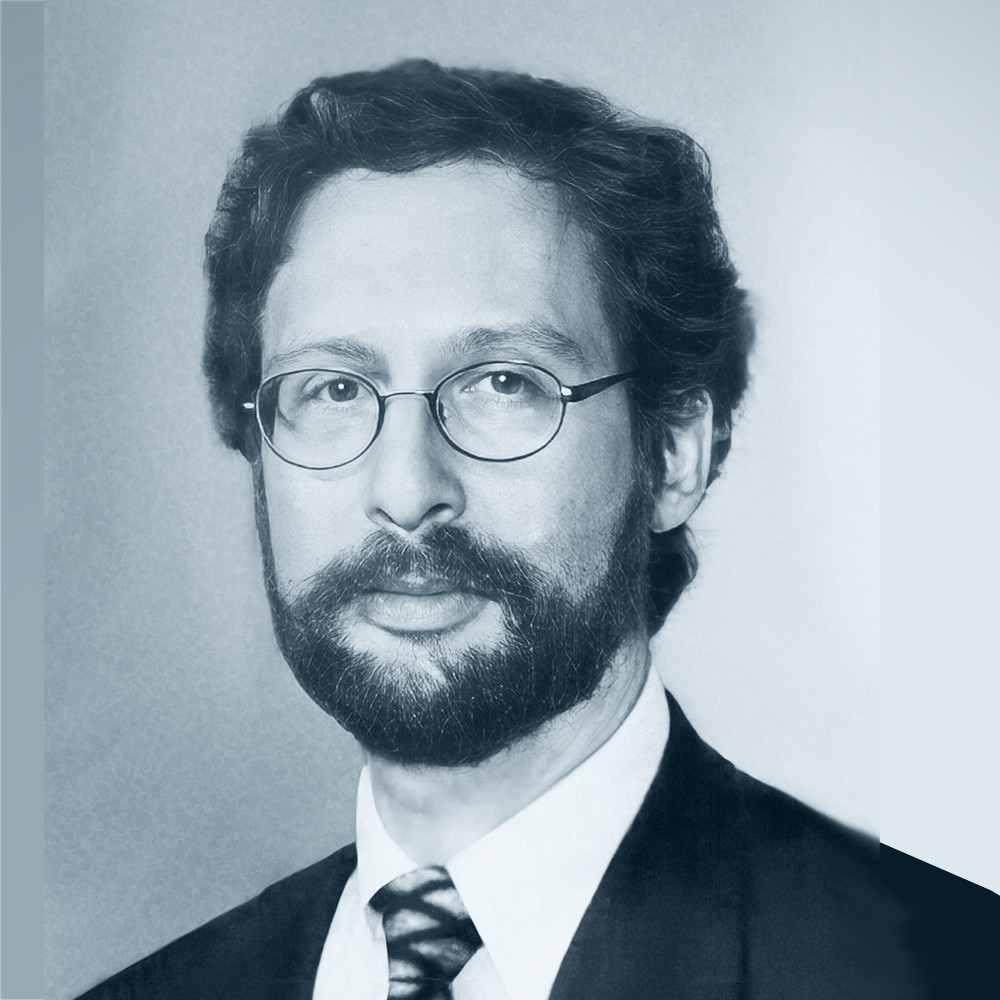
Our People > Dr. Robert M. Cutler

Dr. Robert M. Cutler's Avatar

Dr. Robert M. Cutler

Senior Editor and Contributor

Robert M. Cutler has written and consulted on Central Asian affairs for over 30 years at all levels. He was a founding member of the Central Eurasian Studies Society’s executive board and founding editor of its Perspectives publication. He has written for Asia Times, Foreign Policy Magazine, The National Interest, Euractiv, Radio Free Europe, National Post (Toronto), FSU Oil & Gas Monitor, and many other outlets.

He directs the NATO Association of Canada’s Energy Security Program, where he is also senior fellow, and is a practitioner member at the University of Waterloo’s Institute for Complexity and Innovation. Educated at MIT, the Graduate Institute of International Studies (Geneva), and the University of Michigan, he was for many years a senior researcher at Carleton University’s Institute of European, Russian, and Eurasian Studies, and is past chairman of the Montreal Press Club’s Board of Directors.

Articles

Kazakhstan Consolidates Leadership at the Tianjin SCO Summit

The 2025 Shanghai Cooperation Organization (SCO) Summit, which convened in Tianjin (also known as Tientsin) in China from August 31 to September 1, was the largest in the bloc’s twenty-five-year history. It gathered more than twenty heads of state and institutional leaders, among them China’s Xi Jinping, Russia’s Vladimir Putin, India’s Narendra Modi, Pakistan’s Shehbaz Sharif, Iran’s Masoud Pezeshkian, Kazakhstan’s Kassym-Jomart Tokayev, and UN Secretary-General António Guterres. The agenda ranged widely: counterterrorism, supply chain resilience, energy transition, and climate cooperation all featured. For Beijing, the event was the centerpiece of its SCO presidency. Chinese officials cast it as a demonstration of “true multilateralism” at a time when protectionism and bloc politics are resurgent. The summit’s final product, the Tianjin Declaration, mapped strategic priorities to 2035. It stressed four pillars: collective security, economic integration, digital transformation, and sustainable development. Underpinning this ambition was trade estimated to be worth over $512 billion between China and SCO members in 2024, illustrating the economic weight now embedded in the organization. Over the past year, Kazakhstan’s policy entrepreneurship has heightened the significance of its spell as chair spanning 2024-2025. The country's prominence derives not only from these initiatives but also from its structural position as the largest economy on the Caspian Sea, endowed with the world’s largest reserves of uranium and significant critical minerals. Thanks to its successful implementation of a multi-vector foreign policy aligning with its national strategy priorities, including new energy and transportation agendas, Kazakhstan was able to consolidate its leadership profile. Policy Initiatives and Prolific Activism As one of the six founding members, Kazakhstan had chaired the SCO through 2024. At the 2024 Astana Summit, Tokayev unveiled initiatives that set the foundation for Tianjin. He called for the establishment of a UN Regional Center for Sustainable Development Goals in Central Asia and Afghanistan, arguing that the region’s fragility requires a dedicated UN presence. He also proposed an International Agency for Biological Security, intended to manage risks exposed by the pandemic era, and the creation of an SCO Investment Fund to finance joint projects in infrastructure and technology. During that year, Kazakhstan organized over 140 events in security, economic, and cultural fields, a scale that exceeded most previous chairs. This activism reinforced Astana’s image as a policy entrepreneur within Eurasia’s multilateral institutions. Energy cooperation emerged as the most concrete innovation. In 2024, under Kazakhstan’s presidency and at its motivation, the organization produced a new “SCO Strategy for Energy Cooperation to 2030” committing members to mutual coordination not only in hydrocarbons but also in renewable energy deployment, cross-border grids, and green finance.  In Tianjin in 2025, this framework was carried forward as members endorsed an action plan translating the strategy into specific mechanisms for project financing, technical standards, and pilot cross-border infrastructure. In this way, Kazakhstan’s energy agenda was embedded into the SCO’s medium-term program going forward. Cultural diplomacy was another theme. The “Spiritual Shrines of SCO Countries” project, launched under Kazakhstan’s chairmanship, sought to catalogue and promote shared civilizational heritage. Tokayev also advanced...

9 months ago

How Armenia–Azerbaijan Peace Lowers Corridor Risk for Central Asia

The framework announced on 8 August 2025 in Washington for Armenia–Azerbaijan peace and development resets the security–economics equation in the South Caucasus and holds deep implications for Central Asia. At its core is the mutual recognition of territorial integrity, renunciation of force, and a transit arrangement under Armenian jurisdiction linking mainland Azerbaijan with its exclave of Nakhchivan across the Syunik province. For Central Asia, the immediate significance is the de-risking of the westbound Caspian–Caucasus–Anatolia artery centered on Azerbaijan’s Alat Port and the Baku–Tbilisi–Kars (BTK) rail route. As reported by Azerbaijan Railways, BTK’s operating capacity was lifted to 5 million tons/year (t/y) in May 2024 and has a path for expanding to 17 million tons in later phases. Alat currently lists 13 berths and dedicated ferry roll-on/roll-off (“ro-ro”) facilities. A dependable Armenian-jurisdiction link would create a second, legally unambiguous passage across the South Caucasus. Single-route dependence through Georgia would be reduced, as would the variance of end-to-end journey times. That reliability directly benefits Kazakhstan and Turkmenistan, whose westbound flows move by rail-ferry from Aktau/Kuryk to Alat and from Turkmenbashi to Alat before continuing overland toward Türkiye. Peace Reframes the Middle Corridor These developments also strengthen the business case for incremental investments in ports, ferries, rail paths, and energy interconnectors tied to the Middle Corridor, including swap-based energy routing already practiced between Azerbaijan and Kazakhstan. At Alat, confirmed as the hinge of the Middle Corridor, political risk converts into bankable time, which prices into contracts, which later in turn finances small but decisive capacity steps; bankable time begets bankable trade. Conflict risk in the South Caucasus has been a priced variable since 2020. A durable peace narrows that risk band and yields three operational effects with country-specific salience. First, marine war-risk and cargo premiums in nearby high-risk theaters such as the Gulf, typically ranging from 0.2–0.3% of hull value, rose to 0.5% during recent tensions. This figure offers a benchmark for how underwriters re-price routes as perceived closure risk changes. Second, forwarders can trim buffer time, improving asset utilization for rail paths and ro-ro (roll on, roll off) rotations pairing the Caspian ports (Alat, Aktau/Kuryk, Turkmenbashi). Third, carriers gain confidence to publish regular rotations and pre-position equipment; the Azerbaijan Caspian Shipping Company notes 1–2-day intervals in favorable conditions and shows multiple departures on a given day (e.g., August 15 listed Alat–Kuryk, Alat–Turkmenbashi, etc.). Lower variance is not cosmetic; it is collateral for contracts. Banks recognize collateral. Insurers do, too. When variability falls, rate discovery improves; as a result, multi-month slots or rail-path agreements become financeable. This is precisely the mechanism exporters from Kazakhstan and Turkmenistan need to secure predictable capacity into Azerbaijan and onward to Türkiye. Reliability also changes routing choices. At Alat, rail-ferry cargo arriving from Aktau/Kuryk or Turkmenbashi can be planned to run either via Georgia or via Syunik toward Kars, whichever route minimizes dwell time and schedule variance for the onward leg. Even where pure distance savings are modest, gains in reliability reduce movements of empty containers. They also...

9 months ago

As UN’s Guterres Returns to Central Asia, Kazakhstan Advances Its Role as Regional Convenor

UN Secretary-General António Guterres returned to Central Asia this weekend, joining President Kassym-Jomart Tokayev in Astana to inaugurate a new UN Regional Center for Sustainable Development Goals (SDGs), with a scope covering Central Asia and Afghanistan. The initiative is meant to support regional economies, ease migration pressures, and introduce a framework for incremental political stabilization in Afghanistan. After Astana, Guterres is expected in Awaza, Turkmenistan, where he will address a UN conference focused on the challenges facing landlocked developing countries (LLDCs), notably trade, infrastructure, and regional resilience. It is Guterres's first visit to the region since July 2024, when he visited all five Central Asian republics. This time, the context has shifted. Long considered a peripheral space, or merely a corridor between larger powers, Central Asia has now become integral to multilateral thinking. The SDG Center in Almaty and the LLDC forum in Ashgabat reflect that change. Institutions are catching up to geography. Kazakhstan’s role is pivotal. Under Tokayev’s presidency, it has moved steadily into a position of structural convenor. That position rests on four broad dynamics: the diplomatic adjustments in the region following Russia’s war in Ukraine; the emergence of the Middle Corridor; Afghanistan’s reentry into regional frameworks via development; and the UN’s own internal recalibrations. The first is strategic drift away from Moscow. Since 2022, Kazakhstan has maintained a working relationship with Russia while expanding cooperation with China, the EU, and the Gulf. The tone has been restrained, but the implications are more consequential. This is a definitive move that has allowed the country to present itself as a non-aligned anchor for multilateral initiatives. The second is logistical. The Trans-Caspian International Trade Route (TITR, Middle Corridor) connects China to Europe across Kazakhstan, the South Caucasus, and Turkey. Its significance has grown as Russian routes become riskier. Almaty’s selection as the SDG Center’s home is no coincidence: it manifests the marriage of infrastructure with diplomacy. The third dynamic centers on Afghanistan. Direct diplomacy remains difficult here, but the need to address such issue-areas as humanitarian need, border tension, and migration does not go away. The SDG Center’s inclusion of Afghanistan in its mandate offers a different path: containment through technical coordination. That model works only where the host is both stable and neutral and Kazakhstan, under Tokayev’s reforms, fits that bill. Fourth is the institutional side. Since 2020, Guterres has promoted what he calls “networked multilateralism,” which seeks to shift in how the UN extends itself into contested spaces. The idea is to move from template-based programming drawn up in central bureaucratic offices to regionally adapted coordination centers. The Almaty SDG Center fits that mold. It is not a field office but a mechanism for structured interdependence in a space that resists more direct approaches. On August 3, Guterres and Tokayev signed the host-country agreement. The legal formalities were expected, but the clear signal given is that the UN is willing to treat Central Asia not simply as a collection of national teams, but as a zone where development...

10 months ago

What Will Kazakhstan Make of the Novorossiysk Constraint?

Russia’s July decree requiring FSB approval for foreign vessels entering Novorossiysk introduces a new procedural constraint into the regional export environment. Modest in scope, the measure nevertheless grants Moscow a latent mechanism for influencing Kazakhstan’s primary oil export route via the CPC pipeline, and by extension, its westward orientation. The CPC terminus, long treated as infrastructurally neutral, has been “recoded” as a site of discretionary oversight. This development coincides with the gradual erosion of the energy governance model inaugurated by foreign concessions at Tengiz, Karachaganak, and Kashagan, where Production Sharing Agreements (PSAs) created juridical islands largely external to domestic legal and fiscal regimes. It is possible that a new phase is emerging whereby infrastructural flows are re-anchored in sovereign discretion, as an accumulation of procedural instruments favors regional currencies and reduces Western intermediation. Kazakhstan’s energy model was built on upstream Western capital and downstream Russian transit. The fragility of that erstwhile equilibrium has now been revealed, even though the disrupter is not a single actor but a convergence of pressures. This dual-dependency now appears more vulnerable, unsettled by converging geopolitical and institutional pressures. The superficial continuity of physical infrastructure masks deeper shifts in logistical autonomy, fiscal sovereignty, and international alignment. Structural Exposure and Strategic Compression The fiscal layer exposes the shifts. Revenues from Western-operated concessions are routed into the National Fund, which reinvests them into foreign debt instruments, often issued by the same economies that operate Kazakhstan’s extractive infrastructure. Kazakhstan’s export of physical assets and reinvestment into external liabilities constitutes a structural contradiction. The state’s constitutional control over subsoil resources is not matched by operational authority. The CPC pipeline, though formally multinational, is routed entirely through Russian territory. The new decree does not immediately alter its function, but it inserts a potential instrument of political leverage. The bargaining terrain has consequently already shifted: what was previously a matter of contractual detail is now entangled with external discretion. For the present, the decree’s practical impact is limited, but it reveals the current system’s embedded asymmetry. Moscow’s move signals a readiness to formalize political leverage. It lays the groundwork for a possible reconfiguration of Eurasian energy flows under post-conflict conditions. In this vision, transactions would be conducted through sovereign institutions, denominated in rubles, tenge, or other regional currencies. The intent is clear: to reduce reliance on Western frameworks and to re-anchor Russia’s “peripheries” within its institutional orbit. The maneuver unfolds within a broader context of strategic adjustment. Europe is searching for non-Russian energy inputs. Turkey is expanding corridor-based integration. China’s Belt and Road Initiative continues to institutionalize long-term infrastructural absorption. Kazakhstan has become a contested node within overlapping geopolitical networks that pull it in different vectorial directions. Against this backdrop, the once legal-technical re-negotiations over Tengiz, Karachaganak, and Kashagan are situated within a tectonically shifting geopolitical matrix. Trans-Caspian connectors, digital corridors, and regulatory frameworks are coalescing into a new infrastructural logic. The decree has little practical effect for now, but it points to a deeper condition where sovereignty is declared but not...

10 months ago

Kazakhstan and Turkey Reshape Their Eurasian Partnership

President Kassym-Jomart Tokayev’s visit to Ankara consolidated bilateral ties, but it also marked a deeper strategic inflection. The visit marks a broader regional convergence between two major Eurasian actors as they coordinate a strategic regional architecture. Thus, Tokayev’s language emphasized an “expanded strategic partnership,” signaling a move beyond traditional trade or cultural diplomacy. Ankara, for its part, went well beyond symbolic gestures in its response, with binding institutional agreements and substantive infrastructural commitments. The timing of the visit underscores its significance against the current geopolitical backdrop, where Central Asia is once again the object of keen attention from external actors vying for footholds and influence. In this context, the Kazakhstan–Turkey axis appears not as a knee-jerk reaction to outside machinations but as a deliberate autonomous regional vector that enhances the agency of both countries. Strategic Depth of the Tokayev Visit Tokayev’s trip to Turkey represents an assertion of multidimensional regional agency: Kazakhstan’s long-standing multi-vector foreign policy was once a balancing act among great powers, but it has now entered a phase of selective consolidation. This bilateral intensification indexes a shift in the configuration of Eurasian geoeconomics, as strategic weight disperses across an increasingly differentiated agentic field. The Astana–Ankara alignment means that both countries can act with diminished external dependence, even as global architectures become more unstable and contested. Tokayev’s diplomacy suggests the emergence of an equilibrium strategy anchored in regional connectivity rather than bloc affiliation. Ankara’s perspective is equally structural. The shared vocabulary — “coordination,” “deepening,” “integration” — signals a logic of long-horizon strategic cooperation. Complementarities Across the Bilateral Core The current Kazakhstan–Turkey relationship exhibits a structurally complementary relationship rarely sustained at this depth between two regional powers so geographically distant from one another. On one side, Kazakhstan brings economic scale, resource depth, and transit centrality to the Middle Corridor. On the other, Turkey brings not only industrial experience and defense sector credibility but maritime access, NATO membership, and a flexible political reach into Europe, the Middle East, and the Mediterranean basin. The evolution of mutual strategic trust based on converging structural interests binds these capacities of the two sides together. For Kazakhstan, Turkey provides logistical continuity and downstream industrial expansion; Ankara also diversifies Astana's international geoeconomic network. For Turkey, Kazakhstan provides resource access, eastward corridors, and meta-regional relevance beyond the Black Sea. These structural interests converge across multiple material economic sectors: energy, defense-industrial cooperation, agrotechnology, education, and digital logistics. Nor is this convergence driven solely by state policy: both countries’ private sectors increasingly perceive each other as entry points into economic systems adjacent to one another. The Organization of Turkic States (OTS) as an Institutional Amplifier The Organization of Turkic States (OTS), now maturing into an institutionalized platform for regional legitimacy with a shared symbolic and infrastructural vocabulary, enables Kazakhstan–Turkey cooperation to transcend the limits of bilateralism while maintaining its coherence. Joint positions on transport, trade, education, and foreign policy are advanced and discussed within a common multilateral setting where proposals are negotiated horizontally with other Turkic states. Through...

10 months ago