• KZT/USD = 0.00222
  • TJS/USD = 0.10860
  • UZS/USD = 0.00008
  • TMT/USD = 0.29850
  • KZT/USD = 0.00222
  • TJS/USD = 0.10860
  • UZS/USD = 0.00008
  • TMT/USD = 0.29850
  • KZT/USD = 0.00222
  • TJS/USD = 0.10860
  • UZS/USD = 0.00008
  • TMT/USD = 0.29850
  • KZT/USD = 0.00222
  • TJS/USD = 0.10860
  • UZS/USD = 0.00008
  • TMT/USD = 0.29850
  • KZT/USD = 0.00222
  • TJS/USD = 0.10860
  • UZS/USD = 0.00008
  • TMT/USD = 0.29850
  • KZT/USD = 0.00222
  • TJS/USD = 0.10860
  • UZS/USD = 0.00008
  • TMT/USD = 0.29850
  • KZT/USD = 0.00222
  • TJS/USD = 0.10860
  • UZS/USD = 0.00008
  • TMT/USD = 0.29850
  • KZT/USD = 0.00222
  • TJS/USD = 0.10860
  • UZS/USD = 0.00008
  • TMT/USD = 0.29850
26 October 2026

Our People > Vagit Ismailov

Vagit Ismailov's Avatar

Vagit Ismailov

Journalist

Vagit Ismailov is a Kazakhstani journalist. He has worked in leading regional and national publications.

Articles

Tokayev Sets August 23 Election Date as Kazakhstan’s New Constitution Takes Effect

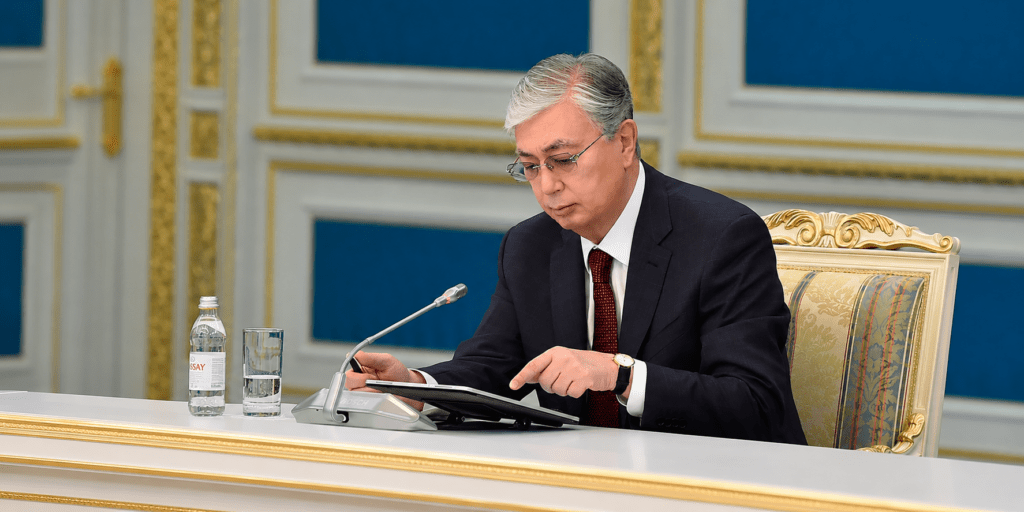
Kazakh President Kassym-Jomart Tokayev declared the start of a “new era” in the country’s history on July 1, as Kazakhstan’s new Constitution officially came into force following its approval in a nationwide referendum on March 15. “Today marks the beginning of a new era in the history of sovereign Kazakhstan. We are embarking on the path of steady progress, political and economic reforms, and large-scale modernization,” Tokayev said in an official address published on the presidential website. According to Tokayev, the new Constitution represents a fundamental restructuring of Kazakhstan’s political system and a transformation of the country’s key state and civil institutions. He said the March 15 referendum reflected what he described as a historic choice by the Kazakh people, one that would shape the country’s development for decades to come. Tokayev also noted that Constitution Day is now symbolically linked to the start of the “Nauryznama” decade, connecting Kazakhstan’s traditional spring renewal celebrations with the principles of the new Basic Law. In his address, Tokayev said the new constitutional framework would strengthen the values of law and order, hard work, progress, environmental responsibility, and national unity. On the same day, Tokayev signed a decree calling elections to Kazakhstan’s new unicameral parliament, the Kurultai, for August 23, 2026. As previously reported by The Times of Central Asia, Kazakhstan’s new Constitution formally entered into force on July 1, 2026, following the March referendum. As part of the constitutional transition, the country’s previous bicameral legislature, the Mazhilis and the Senate, ceased operations, making way for the new parliamentary structure.

4 months ago

Turkmenistan Fines Citizens Over Social Media Likes as Digital Controls Tighten

Authorities in Turkmenistan have tightened control over citizens’ online activity, with district courts in Ashgabat reportedly hearing administrative cases daily against people accused of liking or commenting on posts critical of the government on TikTok, YouTube, and other social media platforms. The cases were reported by Chronicles of Turkmenistan. The platforms in question remain inaccessible in Turkmenistan without VPN services, which the government has systematically tried to block. According to available information, security services are identifying citizens who regularly visit banned online resources. Those individuals are then summoned to police stations, where they are interrogated and warned about the consequences of further online activity. The cases are then transferred to lower courts. In most instances, first-time offenders are fined approximately $10. There have also been separate cases in which obscene language online has served as grounds for administrative prosecution. In Turkmenabat, authorities have begun transferring internet subscribers from outdated ADSL connections to Ethernet. As previously reported by Chronicles of Turkmenistan, telecommunications workers are replacing old cables and installing new lines in apartments at no charge. However, users must purchase their own routers, which currently cost between $25 and $30 in local markets. According to the latest CIVICUS report, Turkmenistan has significantly tightened digital controls and restrictions on access to uncensored information in recent months. In its updated assessment, CIVICUS notes that despite official statements about improving digital infrastructure, Turkmenistan’s government has also increased pressure on alternative internet access channels, including equipment linked to Starlink. The organization warns that the expansion of Ethernet networks may also be intended to increase centralized monitoring and control of internet traffic. In neighboring Tajikistan, the legal direction has been different. As previously reported by The Times of Central Asia, President Emomali Rahmon signed a law in May 2025 decriminalizing likes and other reactions to social media posts that had previously carried criminal liability. Turkmenistan’s practice of fining citizens for online activity points in the opposite direction, toward tighter state control over the internet in a country where access to independent information remains severely restricted.

4 months ago

Switzerland Becomes Tajikistan’s Third-Largest Trading Partner

Switzerland became Tajikistan’s third-largest trading partner in the first five months of 2026, overtaking Kazakhstan and ranking behind only China and Russia, Avesta reported, citing Tajikistan’s statistics agency. Trade turnover between Tajikistan and Switzerland exceeded $1.013 billion between January and May, marking a sharp rise that pushed the country into the top three trading partners for the first time. The shift represents a significant change from 2025, when Kazakhstan held third place with trade turnover exceeding $1.19 billion, while trade with Switzerland totaled about $386.5 million, nearly half the 2024 level. In the first five months of 2026, Kazakhstan fell to fourth place with around $649 million in bilateral trade, while Switzerland moved up to third. Switzerland also became the leading destination for Tajik exports, accounting for 36.3% of the country’s total exports, or $508.2 million. China ranked second with a 25.7% share, followed by Turkey at 7.6%. China and Russia remain Tajikistan’s two largest trading partners overall. Trade with China reached nearly $1.44 billion during the reporting period, up 50% year-on-year, while trade with Russia rose 23.1% to $1.11 billion. In imports, China accounted for 24.7% of total inbound trade, followed by Russia at 24%, Kazakhstan at 13.8%, and Switzerland at 11.6%. Tajikistan’s total foreign trade turnover for January-May 2026 exceeded $5.7 billion, up 48.5% from the same period a year earlier. Imports accounted for nearly $4.37 billion, while exports totaled about $1.4 billion. The country’s main exports included mineral products, base metals and metal goods, textiles, and agricultural products. Imports were dominated by mineral products, machinery and equipment, metals, food products, and chemicals. The sharp increase in trade with Switzerland likely reflects the role of precious metals and other commodity-linked transactions in Tajikistan’s trade structure.

4 months ago

Tajikistan Secures $1.7 Million Grant to Digitize Free Economic Zones

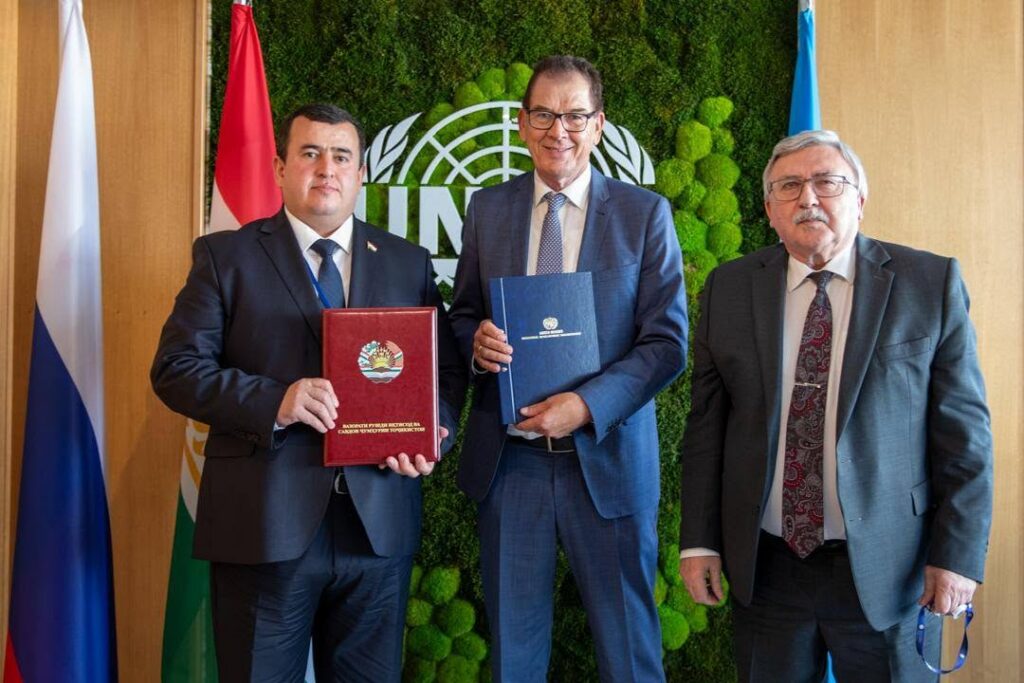
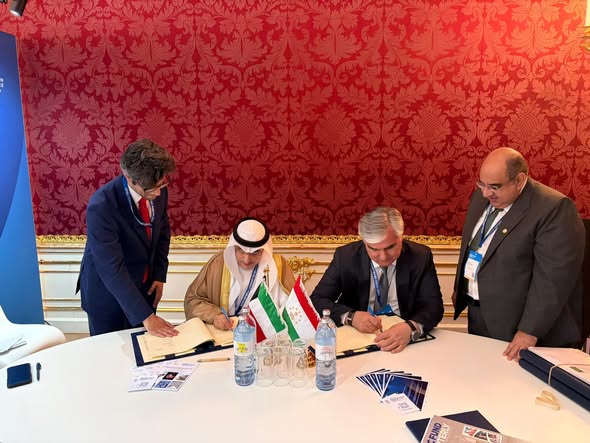
Tajikistan will receive a $1.7 million grant to introduce a “Single Window” digital system in the country’s free economic zones to simplify administrative procedures and improve the investment climate. The project agreement was signed in Vienna during a meeting between representatives of Tajikistan’s government, the United Nations Industrial Development Organization, and the Russian Federation. According to Tajikistan’s Ministry of Economic Development and Trade, the talks were attended by Minister of Economic Development and Trade Abdurakhmonzoda Abdurakhmon Safarali, Tajikistan’s ambassador to Austria, Manuchehr Jobir, UNIDO Director General Gerd Müller, and Russia’s permanent representative to international organizations in Vienna, Mikhail Ulyanov. Following the meeting, Abdurakhmonzoda and Müller signed the grant agreement, with the funding to be provided by Russia through UNIDO. The new system is expected to speed up the digitalization of Tajikistan’s free economic zones by simplifying administrative procedures and making their work more transparent. Officials say the platform will also improve conditions for attracting foreign investment and supporting business development. The “Single Window” model is widely used internationally to simplify interactions between businesses and government agencies by centralizing permits, customs procedures, and regulatory approvals within one digital platform.

4 months ago

Rats Reported at Turkmen Presidential Residence Near Ashgabat

A reported rat infestation at a Turkmen presidential residence near Ashgabat has prompted an overnight extermination operation at the compound in Archabil. According to Chronicles of Turkmenistan, sanitary workers were sent from Ashgabat to the presidential country residence on the night of June 15-16 after rats were found around the grounds. The operation reportedly lasted several hours. Pest-control teams flooded burrows and underground tunnels with water, collected the dead rats, and then treated the area with chemicals. Several carcasses were sent for laboratory testing at the Institute of Clinical Medicine and Epidemiology, housed in the former anti-plague station building. The tests reportedly found no dangerous infectious diseases. The rodents were identified as brown rats, also known as Norway rats. The species is common in urban environments and can carry diseases including leptospirosis, salmonellosis, and murine typhus. The apparent rise in rat numbers in Ashgabat and nearby areas has been linked to the regular killing of stray cats and dogs by city authorities. With fewer natural predators, they said, rats can spread more easily. Animal round-ups are a recurring feature of official preparations in Turkmenistan. In May, Turkmen.News reported that stray cats and dogs were removed from the western port city of Turkmenbashi ahead of a visit by President Serdar Berdimuhamedov. According to the outlet, this was not done subtly, with some animals “were bludgeoned to death with sticks and iron bars” in public view, including in front of children. The reported infestation is awkward for a state that presents Ashgabat and its elite residences as models of cleanliness and order. Turkmenistan’s government has not commented publicly on the incident.

4 months ago

EU-Turkmenistan Human Rights Dialogue Presses Ashgabat on Rights

The European Union used its latest human rights dialogue with Turkmenistan to press Ashgabat on the gap between outward engagement and domestic control. The 18th annual EU-Turkmenistan Human Rights Dialogue was held in Ashgabat on June 22. It came during a period of slightly more visible contact between Turkmenistan and the outside world, including a rare visit by a Reuters reporting team earlier this year. Reuters said its journalists were able to travel unescorted and report freely, an unusual development in a country long known for strict visa controls and heavily managed media access. Whether that points to a genuine opening remains unclear. Turkmenistan has also spoken of simplifying its visa regime, joining the World Trade Organization, and diversifying its heavily state-led economy. The human rights picture remains highly restrictive. Rights groups continue to rank Turkmenistan among the world’s most closed states for journalists, civil society, and political dissent. The country placed 173rd out of 180 in the 2026 World Press Freedom Index. The Turkmen delegation at the dialogue was led by Deputy Foreign Minister Mehri Byashimova. The EU delegation was headed by Dietmar Krissler, head of the Central Asia Division at the European External Action Service. Brussels’ public account of the meeting focused on areas where it wants Turkmenistan to go further. The EU called for stronger anti-discrimination measures, tougher action against sexual and gender-based violence, the criminalization of domestic violence, and the decriminalization of consensual same-sex relations between adults. The bloc welcomed Turkmenistan’s cooperation with the International Labour Organization on eliminating forced and child labor. That issue has long been central to outside criticism of Turkmenistan, particularly in the cotton sector. Earlier this year, the EU and ILO launched a project aimed at strengthening action against forced and child labor in the country. The dialogue also reached some of Turkmenistan’s most sensitive rights issues. The EU raised concern over human rights defenders, including reports of transnational repression, and handed the Turkmen delegation a list of individual cases. Prison conditions were another focus. The EU cited reports of torture and ill-treatment, and urged Turkmenistan to work more closely with civil society on enforced disappearances. Rights groups have repeatedly called on Brussels to tie closer relations with Ashgabat to measurable progress on such cases. The EU praised Turkmenistan’s efforts to reduce statelessness, while also calling on the authorities to ensure equal access to consular services for all Turkmen citizens living abroad. Turkmen overseas have reported difficulties renewing passports and obtaining basic consular support, leaving some in precarious legal positions. The EU also called for unrestricted internet access and a safer environment for civil society organizations. The meeting reflects the tension in the EU’s current approach to Turkmenistan. Brussels is engaging Ashgabat more actively, as it is with the rest of Central Asia, but continues to keep human rights on the formal agenda. For Turkmenistan, even limited external access and more regular dialogue can be presented as movement. For the EU and rights groups, the test is whether that access leads...

4 months ago

Tajikistan and UK Expand Cooperation in Education and Science

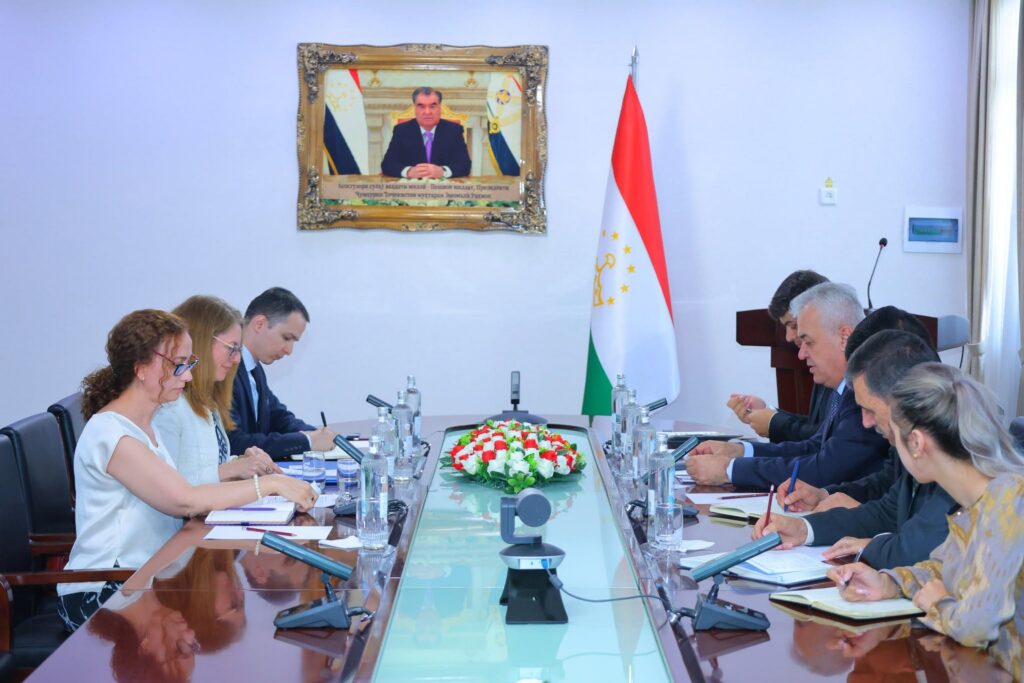
Tajikistan and the United Kingdom intend to expand cooperation in education, science, and specialist training. These issues were discussed by Tajikistan’s Minister of Education and Science Rahim Saidzoda and the UK ambassador to Dushanbe, Katherine Smitton, Avesta.tj reported. Representatives of the British Embassy and officials from Tajikistan’s Ministry of Education and Science also attended the meeting. The ministry’s press service described a memorandum of understanding as a key step in expanding the partnership. The agreement is between Tajikistan’s Ministry of Education and Science and the UK Foreign, Commonwealth & Development Office. It was signed in London on February 26, 2026. It provides for cooperation in science and higher education, including English for Specific Purposes. The ministry said the agreement covers student and faculty exchanges and joint research. It also includes English-language teaching and digital technologies in education. The two sides discussed closer ties between universities in Tajikistan and UK institutions. They discussed links with the University of Oxford and the University of Cambridge. Cooperation with the University of Westminster and the British Council was also raised. The participants reviewed Tajikistan’s delegation’s participation in the Education World Forum 2026 in London. The talks also covered opening a branch or representative office of a leading UK university in Tajikistan. They discussed joint educational programs and dual degrees. Other topics included artificial intelligence in education and inclusive education. The participants said they would continue academic exchanges and improve education quality assessment systems. They also discussed research and innovation cooperation. Smitton said the UK was ready to continue supporting joint projects in education and scientific research, including English-language teaching. She also praised education reforms in Tajikistan.

4 months ago

Tajikistan to Receive $20 Million Kuwait Fund Loan for Schools

Tajikistan will receive concessional financing equivalent to about $20 million from the Kuwait Fund for Arab Economic Development to implement an education-sector project. The funds will be used to build and equip schools in different regions of the country. According to Tajikistan’s Ministry of Finance, the agreement was signed in Vienna during a meeting between Finance Minister Faiziddin Qahhorzoda and Waleed Al-Bahar, acting director general of the Kuwait Fund for Arab Economic Development. The parties signed a loan agreement for the School Development project, under which the fund will provide Tajikistan with a concessional loan of 6 million Kuwaiti dinars, equivalent to about $20 million. Additional financing of $4.5 million will be provided by the Government of Tajikistan. According to the Finance Ministry, the authorities expect the project to expand educational infrastructure and improve the quality of general education as the number of schoolchildren grows. The program includes the construction of new facilities and the provision of equipment for schools in a number of cities and districts across the country. In recent years, Tajikistan has sought international concessional financing for social infrastructure, including education and healthcare. It has also drawn financing for public utilities.

4 months ago

Kazakhstan Remains Far Less Remittance-Dependent Than Its Neighbors

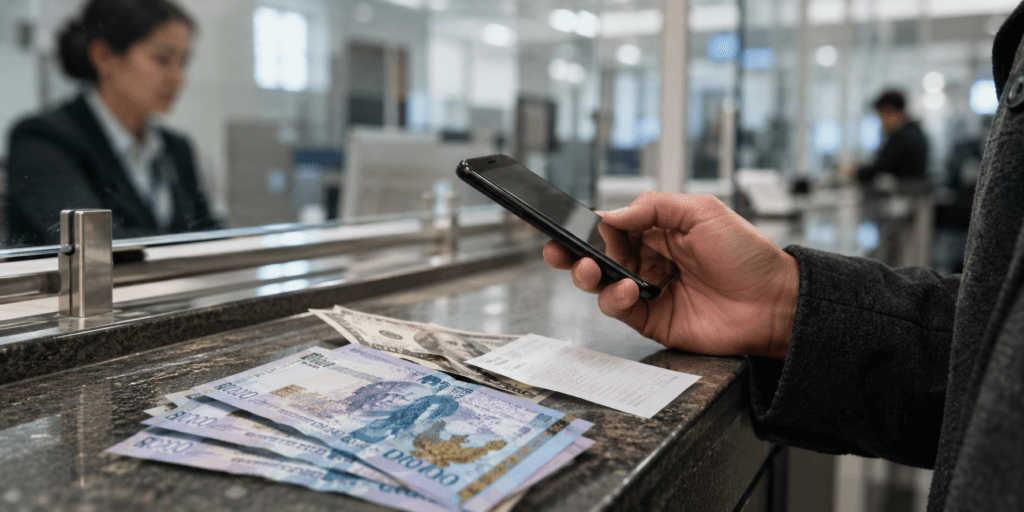
Money transfers from abroad play very different roles in different economies. In some countries, funds sent by labor migrants are a key source of household income. In Kazakhstan, however, their impact remains minimal. That is the conclusion reached by analysts at Finprom.kz. According to the study, the volume of international money transfers through remittance systems in Kazakhstan continues to decline. In January-April 2026, around $376.3 million was sent abroad from Kazakhstan, compared with $388.8 million in the same period last year. Inflows from other countries also decreased, from $138.2 million to $128.8 million. Kazakhstan has traditionally sent significantly more money abroad than it receives. In the first four months of this year, outgoing transfers were almost three times higher than incoming transfers. This trend has persisted for many years and indicates that remittance inflows do not have a significant impact on the country’s economy. Russia remains the main destination for outgoing transfers. From January to April, around $162.2 million was sent there, compared with $135.7 million a year earlier. It was followed by Uzbekistan with $66.5 million and Turkey with $63.9 million. Among the countries from which Kazakhstan receives the largest amount of money, Russia also ranks first with $29 million. The U.S. follows with $21.6 million, and Turkey with $16.5 million. Another $13.7 million came from Uzbekistan. Analysts say the dynamics of transfers between Kazakhstan and Uzbekistan are particularly illustrative. In January-April this year, the volume of transfers from Kazakhstan to the neighboring country was almost five times higher than the reverse flow. This pattern has been observed for many years. For comparison, in the same period of 2015, around $23.1 million was sent from Kazakhstan to Uzbekistan, while only $4.9 million came in the opposite direction. In 2021, the figures stood at $114.5 million and $33.3 million, respectively. The money-transfer data covers remittance systems, while the World Bank’s GDP comparison uses the broader category of personal remittances received. Both measures point to the same conclusion: Kazakhstan is not structurally dependent on remittance inflows. Comparing the role of remittances in different economies reveals an even sharper contrast. According to World Bank data, remittance inflows worldwide averaged 0.8% of GDP in 2024. Tajikistan was the most remittance-dependent country in the World Bank’s 2024 data, with remittances accounting for 47.9% of GDP. High dependence was also seen in Kyrgyzstan at 26.6%, Nepal at 26.2%, and Honduras at 25.7%. Uzbekistan, where remittances accounted for 14.4% of GDP, ranked among the world’s 15 most remittance-dependent countries. Among former Soviet states, only Tajikistan and Kyrgyzstan recorded higher levels. Against this backdrop, Kazakhstan stands out as one of the least dependent countries. In 2024, incoming remittances accounted for just 0.1% of GDP. The same figure was recorded in Russia. Compared with Uzbekistan, Kazakhstan’s dependence on foreign remittance inflows is dozens of times lower. Long-term statistics also confirm this gap: over the past decade, Kazakhstan’s inbound remittances have consistently remained within the range of 0.1-0.3% of GDP, while in Uzbekistan, the figure rose from 8.4% in...

4 months ago

Uzbekistan and BRICS New Development Bank Agree on $4.5 Billion Joint Project Portfolio

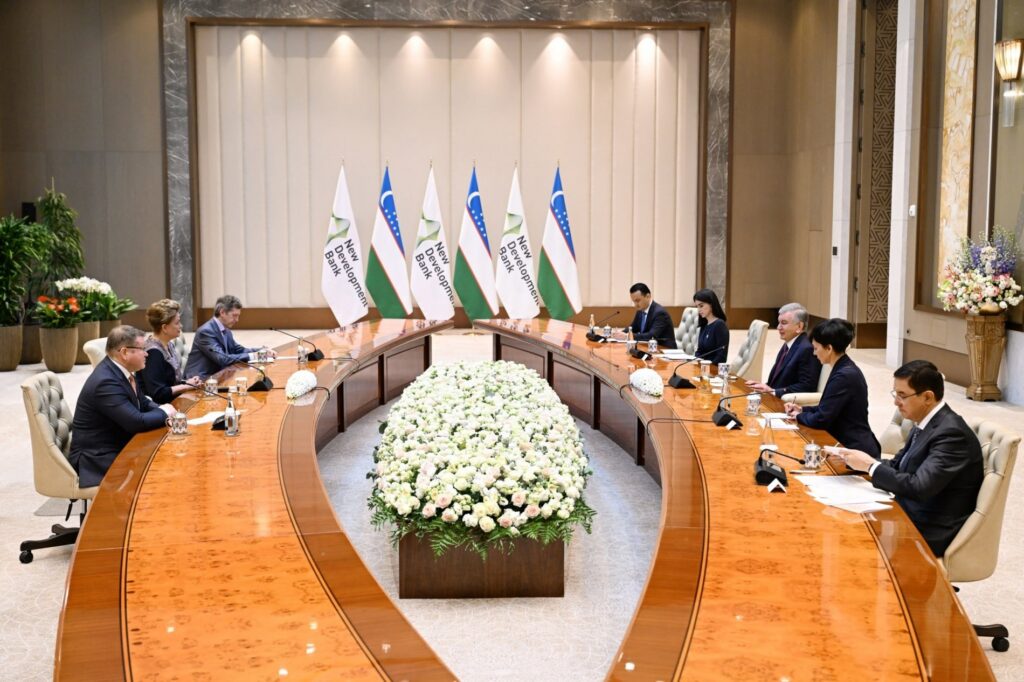
Uzbekistan’s President Shavkat Mirziyoyev has held talks with Dilma Rousseff, president of the New Development Bank (NDB), who arrived in Tashkent to take part in the Tashkent International Investment Forum. According to Uzbekistan’s presidential press service, Mirziyoyev and Rousseff discussed prospects for expanding cooperation with the NDB, including the implementation of agreements reached during previous negotiations. Rousseff praised Uzbekistan’s economic reforms and said the bank was ready to support the country’s priority socioeconomic development goals. The meeting also covered Uzbekistan’s recent accession to the NDB. Uzbekistan officially became the bank’s 10th shareholder in June 2026 and the first Central Asian country to join the institution. Mirziyoyev and Rousseff agreed to form a medium-term portfolio of joint projects in energy, water management, transport and engineering infrastructure, and support for the private and social sectors. NDB expert missions will help implement the initiatives. In May, Uzbekistan’s Ministry of Investment, Industry and Trade said a project portfolio worth $4.5 billion had been prepared for financing through the NDB. It includes projects in transport, energy, construction, and industry. In particular, the possibility of attracting funds for the construction of a nuclear power plant is under consideration. The meeting also covered the NDB’s participation in major regional transport and logistics projects, as well as Uzbekistan’s environmental transformation programs. The NDB was created by BRICS countries in 2014. It is one of the main financial institutions of the Global South. The bank holds an AA+ credit rating and is developing alternative financial mechanisms, including settlements in national currencies. According to the presidential press service, Uzbekistan’s accession to the NDB will help diversify sources of external financing and attract concessional investment for economic modernization.

4 months ago